
Best Cable Solutions for Western Australian Mining Ports: Engineering Strategies for Extreme UV, Salt, Dust, and High Mechanical Stress Environments
The best cable solutions for WA mining ports facing extreme UV, salt, dust, and high mechanical stress. Compare reeling, trailing, and hybrid cables for maximum uptime and reliability.
hongjing.Wang@Feichun
6/10/202618 min read
Introduction: Why Western Australian Mining Ports Demand Extreme Cable Performance
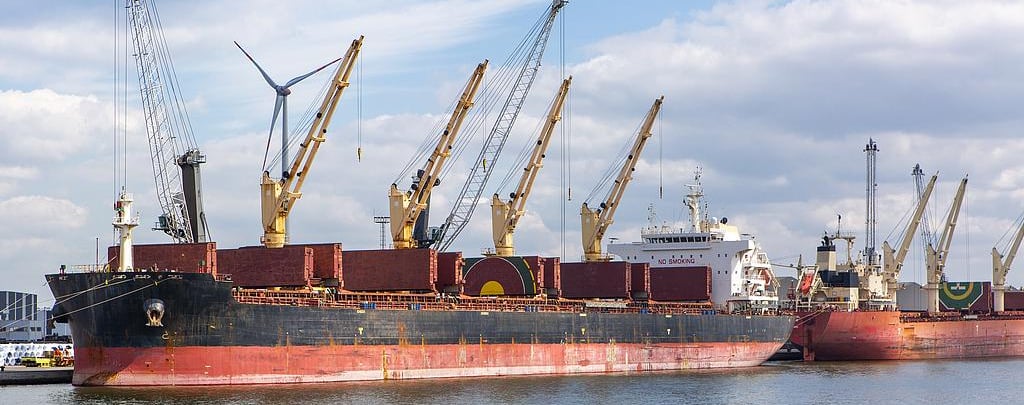
There's a particular kind of brutal that Western Australia's mining ports dish out, and you don't really appreciate it until you've stood on a wharf at Port Hedland in February with the sun hammering down, salt crusting on every exposed surface, and a fine red haze of iron ore dust hanging in the air. This is where some of the most punishing industrial conditions on the planet meet some of the most valuable export infrastructure in the country, and the cables running through it all are expected to just keep working. Most of the time, against considerable odds, they do. But when they don't, the consequences are measured in tens of thousands of dollars an hour.
The headline ports tell the story. Port Hedland is the world's largest bulk export port by tonnage, handling iron ore, lithium, and salt around the clock and moving well over half a billion tonnes a year through its berths. Up the coast, the Dampier and Karratha region runs Rio Tinto's iron ore, LNG, and solar salt operations, with the Dampier Bulk Handling Facility expansion commissioning through 2026 to capture still more export demand. Down south, Fremantle handles the more diversified container and general cargo trade. Every one of these operates under continuous export pressure, where the equipment simply cannot afford to stop.
What makes the cable problem here so distinctive is that the stresses don't arrive one at a time. They stack. A reeling cable on a ship loader at Port Hedland is simultaneously coping with extreme UV radiation, a salt-laden marine atmosphere, abrasive iron ore dust, high vibration and mechanical movement, and the relentless fatigue of continuous reeling and festoon cycling. Any one of these will degrade a cable over time. Together, they tear through anything that wasn't specifically engineered to survive the combination. This is the core engineering reality that catches out so many operators: a standard industrial cable, perfectly competent in a temperate factory, fails quickly and expensively when you throw the full WA cocktail at it.
The conclusion that follows is the one this entire article is built around: in this environment, cable selection directly determines port uptime and operational cost efficiency. It isn't a minor procurement line item to be settled on price. It's a system-level engineering decision that ripples through every aspect of the operation. Get it right and the cables fade into the background, doing their job for years. Get it wrong and they become the single most disruptive component on the site. Over the following sections we'll map out the environmental stress profile in detail, look at the equipment that depends on dynamic cable systems, work through the best cable types for each application — drawing on the actual product ranges from both Prysmian and Feichun — examine how these cables fail and what it costs when they do, and finish with a practical engineering strategy for getting the selection right. Let's get into it.
Environmental Stress Profile of Western Australian Mining Ports
Before you can specify a cable, you have to understand precisely what you're specifying it against. The WA mining port environment is a compound assault, and each component attacks the cable in a different way.
Extreme UV Radiation Exposure
Start with the sun, because it never lets up. UV index levels at Port Hedland routinely climb into the extreme range, well beyond anything experienced in temperate climates, and the exposure is continuous through the long Pilbara summer. For a cable jacket, ultraviolet radiation is a slow chemical wrecking ball. It breaks down the polymer chains in the sheath material through photo-degradation, and the effects compound year on year.
The progression is predictable. A standard cable jacket first loses its surface gloss, then begins to chalk, then becomes brittle and loses the flexibility it absolutely must retain in a moving application. Once it's lost that elasticity, surface cracking follows, and from there the sheath failure accelerates. The cruel part is how quiet it is — by the time the damage is visible to a walk-by inspection, the polymer has been degrading for a long time and the cable is well down the road to failure. UV-stabilised compounds aren't a nice-to-have in this setting; they're the baseline requirement for anything mounted outdoors, which at a WA port is almost everything.
Salt Corrosion and Coastal Atmosphere
Then there's the salt. These are coastal ports, and the marine atmosphere means continuous exposure to salt fog and marine spray that coats every surface. At a place like Port Hedland, where Dampier Salt runs one of the world's largest solar salt operations right alongside the iron ore trade, the chloride load in the air is relentless. Chloride ingress accelerates the degradation of cable materials and, critically, attacks the moment any opening appears.
The failure mechanism is insidious because it works from the inside once it gets a foothold. As long as the jacket is intact, it holds the salt out. But the moment jacket integrity is compromised — by UV cracking, by abrasion, by a mechanical nick — the chloride-laden moisture finds its way in, and the corrosion spreads internally. Conductors and shielding layers, never designed to face the marine atmosphere directly, become vulnerable to corrosion and eventual electrical failure. Salt, in other words, turns every small jacket breach into a much larger internal problem.
Iron Ore Dust and Abrasive Environment
The third stressor is uniquely a mining-port problem: dust. Iron ore handling generates heavy particulate contamination, and that fine, hard, abrasive dust gets everywhere. On its own, dust is a nuisance. Combined with moisture — from marine humidity, from washdown, from the occasional rain — it becomes an abrasive paste that dramatically increases surface wear on anything it contacts.
For moving cable systems, this is a serious problem. The mechanical wear is intensified wherever the cable moves against a surface or against itself — on reels, in festoon systems, over guide rollers. The dusty, gritty environment effectively turns every movement into a low-grade grinding operation against the jacket. Abrasion becomes a primary driver of premature jacket wear, thinning the sheath until the inner layers are exposed. This is why abrasion resistance ranks so highly in any WA port cable specification, and why the cheap, soft-jacketed options fail so fast.
Thermal Cycling and Temperature Extremes
Finally, the temperature. Daytime temperatures in the Pilbara frequently sit in the 35–45°C range, and some periods push toward 50°C. But it isn't just the heat — it's the cycling. The desert climate means rapid cooling at night, so the cable expands in the heat of the day and contracts in the cool of the night, over and over. Those thermal expansion stress cycles work the materials mechanically, adding yet another fatigue mechanism on top of everything else.
A cable here has to maintain its performance and flexibility across this whole range, staying intact and supple under both high daytime heat and cooler night conditions. The good news is that the best elastomer-based reeling and trailing cables are rated for exactly this kind of range — the Prysmian elastomeric mining range, for instance, is specified for fully flexible operation down to -35°C or even -50°C and up to +80°C, while the Feichun mining range similarly uses EPR insulation and chlorinated-rubber sheaths rated to comparable extremes. That thermal headroom is what allows these cables to shrug off the daily Pilbara temperature swing that would slowly destroy a lesser product.
Industrial Equipment Relying on Dynamic Cable Systems
The environmental stresses bite hardest where the cable is moving, and at a mining port a great deal of the critical equipment depends on dynamic cable systems. Understanding the equipment is the bridge to understanding which cable goes where.
Ship Loaders
The ship loader is the beating heart of a bulk export terminal, and it relies on high-speed reeling systems for boom extension and cargo loading. These machines move continuously through a loading cycle, and the reeling cable that feeds them has to pay out and retract relentlessly while carrying full medium-voltage power. That demands a cable with high tensile strength to survive the dynamic loads and strong torsional resistance to cope with the twisting of the reeling action. Because ship loaders run more or less continuously during a loading window, the cable accumulates high-cycle fatigue stress fast — which is exactly why reeling-grade construction, not general-purpose flexible cable, is essential here.
Stackers and Reclaimers
Out in the stockyard, stackers and reclaimers travel long distances along their rails, building and drawing down the enormous ore stockpiles. These are long-travel-distance systems operating in the dustiest part of the whole operation, right in the heart of the stockpile. Depending on the motion design, they use either reeling or festoon cable systems to maintain power along their travel. The large moving structures also generate high structural vibration, and that vibration feeds continuously into the cable, accumulating fatigue. The combination of long travel, heavy dust, and constant vibration makes stacker-reclaimer cabling one of the more demanding duties on site — and a place where both reeling cables and trailing cables earn their keep.
Belt Conveyor Systems
Tying the whole operation together are the belt conveyor systems that move material continuously across the terminal. These run for kilometres in some cases, exposed to the same dust and vibration as everything else. Their cabling is typically trailing or fixed installation rather than high-flex reeling, so the priority shifts: what matters here is abrasion and dust resistance and the ability to withstand continuous vibration, rather than extreme flexibility. A robust, abrasion-resistant fixed-installation or trailing cable laid alongside the conveyor is the right tool, and it's a duty where cables originally developed for open-cast mining transfer directly to the port environment.
Gantry Cranes
Finally, the gantry cranes used in container and general cargo handling — most prominent at a diversified port like Fremantle but present across the sector — bring their own mix. They use a combination of festoon, reeling, and hybrid cable systems depending on the design, and they're exposed to the full sweep of wind, salt, and mechanical movement. As critical systems in port container handling operations, their cabling has to combine flex life, abrasion resistance, and environmental durability all at once. This is the application where the high-speed reeling cables — the kind regularly specified into container-crane reeling drums worldwide — come into their own.
Best Cable Types for Western Australian Mining Ports
With the environment and the equipment understood, we can match cable types to duties. The important thing to grasp — and the point you specifically asked me to keep front of mind — is that many of these cable types are not confined to either mining or ports. A medium-voltage reeling cable developed for an open-cast excavator works just as well on a port ship loader; a trailing cable built for a mine conveyor suits a port conveyor equally. The cable doesn't care whether the dust is iron ore in a stockyard or iron ore on a wharf. So the ranges below draw freely across both the mining and port worlds.
Reeling Cables for High-Dynamic Applications
Reeling cables are the workhorses for the highest-dynamic duties — ship loaders and stacker-reclaimers above all. They must withstand high-speed winding and continuous bending cycles while carrying medium-voltage power, and they're commonly specified in medium-voltage designs for these heavy industrial systems. Enhanced elastomer or PUR-based jackets are strongly preferred for the durability they bring against abrasion and the elements.
This is where both catalogues offer directly applicable products. From Prysmian's mining range, the PROTOLON family of medium-voltage reeling cables — designation (N)TSCGEWOEU — is purpose-built for this duty, available as the standard PROTOLON(M), with integrated fibre optic, or as PROTOLON(IQ) (N)TSKCGEWOEU with an embedded sensor for condition monitoring. These are rated across 3.6/6 kV to 20/35 kV, with reeling travel speeds up to 240 m/min, tensile force to 30 N/mm², torsion to ±100°/m, a high-grade 5GM5 sheath with very good abrasion resistance, and multi-plane S-bending capability. The Feichun mining catalogue offers the directly comparable equivalent: its (N)TSCGEWOEU Medium Voltage Reeling Cable, available both without and with fibre optics, built around class-5 flexible copper conductors, EPR type 3GI3 insulation, a polyester anti-torsion braid, and a chlorinated-rubber 5GM3/5GM5 outer sheath that is flame retardant and oil resistant. Feichun's range spans 3.6/6 kV up to 18/30 kV, and the fibre-optic version integrates up to 12 optical elements (for example 3×95+2×50/2+12×LWL) for exactly the kind of data transmission a modern automated port needs. The two products share the same designation, the same anti-torsion construction philosophy, and the same target applications — gantry cranes, spreaders, loading bridges, and large mobile equipment — which makes the Feichun cable a direct substitute for the Prysmian reeling cable in a WA port reeling drum.
Festoon Cable Systems for Crane and Conveyor Applications
Festoon systems, where the cable hangs in loops from a track and gathers and extends as the equipment moves laterally, are common on cranes and some conveyor arrangements. They come in flat or round designs depending on installation constraints, and they demand high flexibility for the continuous lateral movement. In a WA port they must also resist UV degradation from the constant sun and abrasion from the mechanical motion of the festoon trolleys. The heavy-duty flexible cables in both ranges suit this duty — for example, Feichun's (N)SSHOEU heavy-duty flexible cables and the heat-resistant EPR-insulated, 5GM5-sheathed variants are built for mobile equipment under very high mechanical loads outdoors, which describes festoon service precisely.
Trailing Cables for Mobile Mining and Port Equipment
Trailing cables serve mobile systems that drag a cable behind them as they move, and they need to combine continuous-movement capability with serious mechanical robustness under vibration load. A crucial point for the WA market: trailing cables for mobile mining equipment must comply with Australian mining standards, the relevant AS/NZS requirements, and pilot-core designs are often required for safety monitoring so the system can detect a cable fault before it becomes a hazard.
Both catalogues are rich here. Prysmian's TENAX-SAS (NTSCGEWOEU) is a medium-voltage trailing cable specified as abrasion and cold resistant down to -50°C, while the PROTOLON(SB) and PROTOLON(SB-SAM) trailing cables offer versions with or without a metallic screen and with optimised dimensions. Feichun's open-cast NTSCGEWOEU Flexible Medium Voltage Trailing Cable is built for the same duty — power supply to large material handling machines such as excavators under extremely high mechanical stress, with particular suitability where abrasion and chafing are expected in trailing operation. Its construction uses class-5 tinned copper conductors, 3GI3 EPR insulation, an extremely tear-resistant reinforcing tape, and twin 5GM5 sheaths that are abrasion, tear, oil, and ozone resistant and inseparably bonded together. Feichun's underground and heavy-duty ranges also include the safety-oriented designs with pilot cores and monitoring conductors — such as the NSSHCGEOEU coal-cutter cables and the NTSWOEU E-loader cable built to VDE 0250 Part 813 with copper-steel armour braid — that translate directly to the pilot-core monitoring expectations of Australian mobile equipment.
Hybrid Power and Fibre Optic Cables
The most advanced duty is the hybrid cable that combines electrical power transmission with real-time data communication in a single cable. These are increasingly critical for modern automated port systems, because they enable monitoring of system performance and predictive maintenance — letting operators see a developing fault before it becomes a failure. They're especially valuable in high-vibration and remote-controlled environments, which describes the automated and semi-automated terminals spreading across the Australian port sector.
Here the fibre-optic-integrated reeling cables are the key products. Prysmian's PROTOLON(M) with FO carries integrated fibre alongside the power cores, and the PROTOLON(IQ) goes further with an embedded sensor. Feichun's (N)TSCGEWOEU Medium Voltage Reeling Cable With Fiber Optics integrates 12 fibre-optic elements (50/125, 62.5/125, or E9/125 µm) within a protective sheath inside the reeling cable, suitable for motorised reeling on monospiral or level-wind reelers. For a port moving toward automation and condition-based maintenance, these hybrid cables collapse what would otherwise be separate power and data runs into one robust, reeling-rated package.
Cable Failure Mechanisms in WA Mining Port Environments
Understanding how these cables fail — and they will fail if mis-specified — is what lets you design against it. The failure modes map directly onto the environmental stresses we opened with, and in practice they cascade into one another.
UV-Induced Jacket Cracking
The first and most common is UV-induced jacket cracking. Continuous sunlight exposure drives the polymer breakdown described earlier, and the loss of elasticity results in surface cracking of the sheath. The danger is that once cracks appear, they open the door to every other form of environmental damage — the crack admits salt, moisture, and dust, and the degradation accelerates rapidly from that point. UV cracking is rarely the thing that finally kills the cable, but it's very often the thing that starts the chain.
Saltwater Ingress and Internal Corrosion
That chain frequently runs next to saltwater ingress and internal corrosion. The micro-cracks created by UV or abrasion allow chloride-laden moisture and salt to penetrate the jacket. Once inside, the salt attacks the conductors, which gradually corrode from within. Electrical performance degradation — rising resistance, intermittent faults, insulation breakdown — precedes the full failure, often giving confusing symptoms that are hard to trace until the cable is opened up. This is the mechanism that makes a marine-grade, water-resistant sheath system so valuable; both the Prysmian and Feichun ranges include sheath compounds rated for good-to-excellent water resistance precisely to hold this mechanism at bay.
Mechanical Fatigue from Reeling Operations
Independent of the environment, there's the purely mechanical killer: fatigue from reeling operations. Repeated bending cycles under high-speed operation work the conductors and the jacket relentlessly, and the cumulative stress eventually causes internal conductor fracture — the copper strands fatigue and break inside an outwardly intact cable. This is one of the most common failure modes in ship loader systems specifically, because of their continuous high-cycle duty. It's also exactly the failure that anti-torsion braid construction and fine class-5/class-6 stranding are designed to resist, which is why reeling-rated cables carry those features and general-purpose cables don't.
Abrasion and Vibration-Induced Damage
Finally, abrasion and vibration-induced damage. The iron ore dust combined with mechanical vibration accelerates surface wear, and the cable jacket thins until the insulation beneath is exposed. Once the insulation is compromised, the result is short circuits or signal instability — and in a system carrying both power and control or fibre signals, signal instability can be just as disruptive as a power fault. This is the mechanism that makes the abrasion-resistant 5GM5 sheath, rated "very good" to "excellent" for abrasion in both catalogues, the non-negotiable choice for any moving cable in a WA stockyard or wharf.
Cost Impact of Cable Failures in Mining Port Operations
The engineering case for premium cable only becomes compelling when you put it in dollar terms, and at a WA mining port the dollars are large. Unplanned downtime in these operations can run to extremely high hourly losses, because the export machine is enormous and every hour it's stopped is an hour of lost throughput at a port that might move hundreds of millions of tonnes a year. A major piece of port equipment going down — a ship loader, say — can halt a full ship-loading operation, with a vessel sitting at berth or at anchor unable to be worked.
The costs stack up across several categories. There's the lost export throughput, the most direct hit, as ore that should be flowing onto a ship simply isn't. There are demurrage penalties, the charges that accrue when a vessel is held up beyond its allotted time — and at the scale of Capesize bulk carriers, demurrage is punishing. There's the repair and replacement labour, the cost of getting technicians and equipment to a remote Pilbara site, often at short notice, to replace a cable that may be 900 kilometres from the nearest suitable warehouse. And there's the broader supply-chain disruption that ripples out when a major export node stutters.
The arithmetic is unforgiving: even short cable failures can escalate into multi-million-dollar annual losses once you total the downtime, the penalties, and the emergency logistics across a year of operation. This is precisely why premium cable selection significantly reduces total cost of ownership. A cable that costs more upfront but lasts two or three times as long, and crucially doesn't fail unexpectedly mid-cycle, eliminates not just replacement purchases but the far larger costs of downtime and emergency procurement. In the WA context, the premium on a properly specified reeling or trailing cable is trivial against the cost of a single avoidable ship-loader stoppage.
Leading Global Cable Brands Used in Mining Ports
A handful of brands dominate the serious end of this market, and it's worth knowing what each brings — both to specify well and to understand where directly comparable alternatives exist.
Prysmian Group
Prysmian has a strong presence in mining and heavy-duty reeling systems, backed by its German-made elastomeric mining cable range that it describes as field-proven across thousands of operations, developed in close cooperation with major mining operators. It's known for high mechanical strength and long lifecycle performance, and its PROTOLON and TENAX ranges are well suited to ship loaders, cranes, and extreme flex applications. The PROTOLON(M) reeling cable, with its 240 m/min reeling speed and high tensile and torsion ratings, is a benchmark product for exactly the high-dynamic duties found at a WA port.
Nexans
Nexans maintains strong mining cable product lines — its POWERMINE series among them — and is widely used across Australian mining and port infrastructure, supported by established Australian distribution networks. Its products are optimised for dust, vibration, and harsh environmental conditions, which makes them a natural fit for the Pilbara. The presence of local distribution is itself a meaningful advantage in a market where lead time to remote sites is a constant concern.
LAPP Group
LAPP focuses on industrial automation and flexible cable systems, with strong performance in dynamic movement and machinery applications. While less focused on the heaviest medium-voltage reeling duties than Prysmian, LAPP cables are widely used in port automation systems and auxiliary equipment — the control, automation, and lower-voltage flexible cabling that surrounds the big reeling and trailing runs. In a modern automated terminal, that auxiliary layer is substantial.
Where a Performance-Matched Alternative Fits
Alongside these established names, it's worth noting where a directly comparable, performance-matched alternative sits — because the engineering behind these cables is well understood and openly specified. Feichun's mining and port cable range is built explicitly to the same German VDE standards that underpin the Prysmian range: its reeling cables are built to VDE 0250 Part 813, its heavy-duty and coal-cutter cables to VDE 0250 Part 812, its conductors to class 5/6 of DIN VDE 0295, all using the same EPR 3GI3 insulation and 5GM5 chlorinated-rubber sheath systems. Crucially, the designations match almost exactly — Feichun's (N)TSCGEWOEU reeling cable against Prysmian's PROTOLON (N)TSCGEWOEU; its fibre-optic reeling variant against PROTOLON(M) with FO; its trailing cables against the TENAX and PROTOLON(SB) trailing range. The construction philosophy is identical: anti-torsion polyester braid, semiconductive layers, oil- and flame-resistant sheaths, multi-voltage ranges from 3.6/6 kV upward. For a WA operator facing premium import pricing and long lead times, a VDE-standard, designation-matched alternative built to the same construction specification represents a substitution case that's easy to justify on total cost of ownership — same engineering, same standards, shorter supply lines, lower delivered cost.
Engineering Strategy for Optimal Cable Selection in WA Ports
Pulling it together, selecting cable well for a WA mining port comes down to a disciplined, multi-factor strategy rather than a single product choice.
Environmental Matching Strategy
The first principle is environmental matching: the cable selection must align with the specific conditions at the installation point. That means assessing the UV exposure intensity (which at a Pilbara port is always extreme for anything outdoors), the salt corrosion risk level (always high at these coastal sites), the dust abrasion severity (severe anywhere near ore handling), and the mechanical movement frequency (which determines whether you need reeling-grade, festoon-grade, or fixed/trailing construction). Each factor pushes the specification toward particular sheath compounds, voltage ratings, and construction features. A cable specified for one factor while ignoring another is the classic source of premature failure.
Mechanical Design Considerations
Second, the mechanical design around the cable matters as much as the cable itself. Proper bending radius design is critical — bend a reeling cable tighter than its rated minimum and you've designed in fatigue failure regardless of how good the cable is. Fleet angle alignment, the angle at which the cable winds onto the drum, directly impacts cable lifespan; a poor fleet angle causes uneven winding and localised stress that will wreck even a premium cable prematurely. And the reeling speed must be matched with the cable's fatigue rating — running a cable rated for 120 m/min at higher speeds, or pushing past the manufacturer's recommended limits, shortens life dramatically. These are commissioning-stage decisions that cost almost nothing to get right and a fortune to get wrong.
Material Selection Strategy
Third, material selection tailors the cable to the WA reality. PUR and advanced elastomer jackets are preferred for their abrasion resistance against the dust-and-grit assault. UV-stabilised compounds are required for the outdoor exposure that defines these sites. And oil and chemical resistance is required for the mining environment, where hydraulic oil and grease contact is routine around the heavy machinery. The 5GM5 chlorinated-rubber sheaths common to both the Prysmian and Feichun mining ranges deliver this combination — abrasion, oil, flame, and weather resistance in one compound — which is exactly why they dominate the serious end of this market.
Lifecycle Cost Optimisation Approach
Finally, and most importantly for the people signing the purchase orders, the decision must be made on lifecycle cost, not initial price. The initial price is genuinely not the key factor here. Total cost of ownership is determined by failure frequency, maintenance intervals, and above all downtime cost — and in a WA mining port, downtime cost dwarfs everything else. A premium cable that fails less often and lasts longer often reduces long-term operational cost significantly, even at several times the purchase price of a cheap alternative, because it eliminates the catastrophic downtime events that the cheap cable invites. The right question is never "what does this cable cost?" but "what does it cost me when this cable fails in the middle of a loading window?"
Conclusion: Engineering Cable Systems for Extreme Australian Mining Conditions
Western Australian mining ports represent one of the most demanding cable environments anywhere on earth — a place where extreme UV, relentless salt, abrasive ore dust, severe thermal cycling, and continuous high-cycle mechanical stress all converge on the same length of cable at the same time. No single off-the-shelf product is a magic answer to all of it. The right approach is to treat cable performance as a system-level engineering decision, in which the cable, the mechanical design, the environment, and the lifecycle economics are all weighed together.
What that looks like in practice is a combination of four things working in concert: correct cable type selection (reeling, festoon, trailing, or hybrid, matched to the equipment and its motion); environmental matching against the specific UV, salt, dust, and movement profile; mechanical design optimisation covering bending radius, fleet angle, and reeling speed; and high-quality material engineering, meaning UV-stabilised, abrasion-resistant, oil-resistant elastomer or PUR sheath systems built to recognised standards. Get all four right and the cable becomes what it should be — an invisible, reliable component that keeps the export machine running.
Expert Summary
If there's one hard-won lesson worth leaving you with, it's that in a WA mining port the cable almost never fails for one reason — it fails because several stresses found the same weak point at once, and the cable wasn't engineered for the combination. The UV cracks the jacket, the salt gets into the crack, the dust grinds it wider, the vibration fatigues the conductor, and one morning a ship loader stops with a vessel waiting at berth. Every link in that chain is preventable with the right specification, and the prevention is always cheaper than the failure.
The practical path is clear and it's the same whether you're buying from Prysmian, Nexans, or a performance-matched alternative built to the same VDE standards. Specify reeling-grade construction — anti-torsion braid, class-5 fine stranding, 5GM5 abrasion-and-oil-resistant sheath — for the high-dynamic ship loader and crane duties. Use the fibre-integrated hybrid versions where the port is moving toward automation and condition monitoring, because seeing a fault coming is worth far more than reacting to one. Carry robust trailing and fixed-installation cables, with pilot cores where AS/NZS safety monitoring demands them, for the conveyors and long-travel stacker-reclaimers. And remember throughout that these cable families cross freely between mining and port duty — a reeling cable proven on an open-cast excavator is just as at home on a Port Hedland ship loader. Above all, make the call on lifecycle cost, not sticker price. In an environment this punishing, the cheapest cable is almost always the most expensive one in the end. Specify for the combination of stresses, build in the mechanical fundamentals, validate against the standards, and the cable will quietly do its job through summers that would destroy anything less.
How to Reach Us
Get in Touch
SiteMap
Product Catalogue
Festoon Cable
Shore Power Cable




Scan to add us on WeChat