
Cable Corkscrewing Prevention: How to Avoid Motion Cable Damage in Robotics & Cable Carriers
Learn what cable corkscrewing is, its causes, and proven prevention strategies. Discover how to prevent motion cable damage through proper installation and bend radius management.
hongjing.Wang@Feichun
12/18/20256 min read
ntroduction: Why Cable Corkscrewing Deserves Serious Attention
In today’s industrial automation environments, cables are no longer static utilities hidden inside cabinets. They are dynamic mechanical components, continuously moving, flexing, and responding to complex force patterns. Whether installed in robot arms, cable carriers, automated gantries, or material handling systems, motion cables are subjected to stresses that directly influence system reliability.
One of the most misunderstood yet destructive failure modes in these applications is cable corkscrewing. While often dismissed as a cosmetic issue at first glance, corkscrewing is a clear indicator of deeper mechanical imbalance within the cable structure. Left unaddressed, it almost always leads to motion cable damage, conductor failure, and unplanned downtime.
For engineers, maintenance managers, and OEM designers, understanding cable corkscrewing is not optional. It is a critical part of designing reliable motion systems and avoiding premature cable failure.
What Is Cable Corkscrewing and How Does It Manifest?
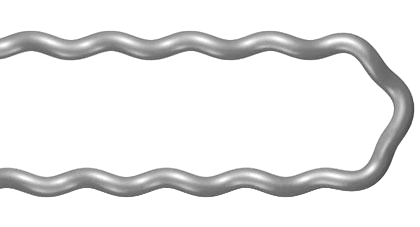
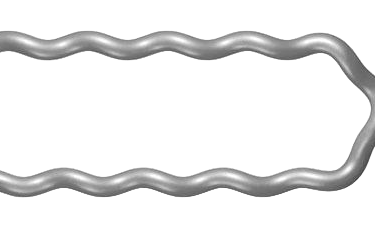
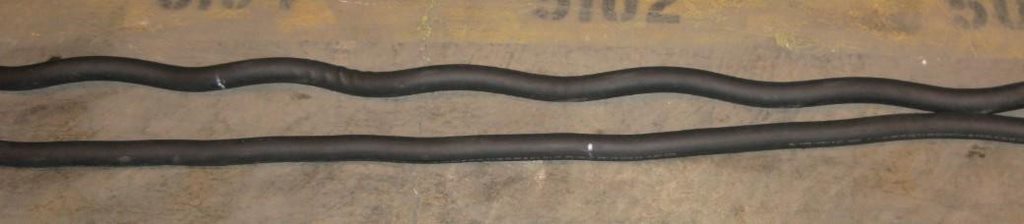
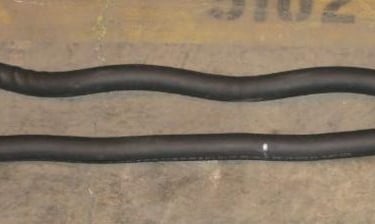
Cable corkscrewing refers to a condition where a cable’s geometry changes from its intended straight, round profile into a twisted, spiral-like shape resembling a traditional corkscrew. Instead of lying smoothly in a cable carrier or along a robot axis, the cable develops tight undulations along its length.
This visual deformation is not random. It is the physical result of conductor migration, where internal conductors shift away from their original stranding configuration. As conductors move, they exert uneven pressure on surrounding elements, leading to distortion of both the cable core and the outer jacket.
Corkscrewing occurs predominantly in motion applications rather than static installations. In fixed wiring, conductors remain largely stationary. In contrast, dynamic systems introduce repetitive bending, rolling motion, and tension variation, all of which amplify internal stress.
Industrially, corkscrewing is most commonly observed in robotics, cable carrier systems, CNC machinery, automated storage and retrieval systems, and other motion control environments where cables experience high flex-cycle counts.
Why Cable Corkscrewing Is So Common in Motion Applications
The fundamental reason corkscrewing occurs lies in how forces behave inside a moving cable. During flexing, conductors are constantly subjected to compression and elongation. Over thousands or millions of cycles, even small design or installation flaws become magnified.
In many cases, the cable is blamed when the real issue lies elsewhere—improper installation, insufficient space, excessive tension, or system-level design oversights. Cable corkscrewing is rarely caused by a single factor; instead, it is the result of multiple stresses acting together over time.
Understanding these interacting causes is the first step toward effective cable corkscrewing prevention.
Cable Design and Construction: The Foundation of Corkscrewing Risk
Not all cables are created equal when it comes to motion performance. One of the most critical differences lies in internal construction.
Layered cable designs arrange conductors in concentric layers around a core. While this approach simplifies manufacturing, it offers limited resistance to internal movement. Under repeated motion, these layers compress and shift, releasing torsional stress that promotes corkscrewing.
Bundled cable designs, by contrast, group conductors into more stable bundles. This structure provides greater internal cohesion and significantly reduces the likelihood of conductor migration. Bundled designs tend to perform better in demanding motion environments because they maintain internal geometry under stress.
Core design is equally important. A core with insufficient tensile strength allows excessive bending and twisting, while an overly rigid core limits flexibility and accelerates fatigue. Motion cables must strike a precise balance between strength and flexibility.
The cable jacket also plays a structural role. Beyond environmental protection, a properly engineered jacket helps maintain cable geometry. Reinforced jackets constrain internal elements and reduce the risk of deformation, while weak or overly soft jackets allow internal shifting that leads directly to corkscrewing.
Conductor Migration: The Mechanical Root of Corkscrewing
At its core, cable corkscrewing is caused by conductor length imbalance. During repeated flexing, some conductors effectively become longer while others become shorter. This imbalance disrupts the cable’s neutral axis and forces the structure to twist to relieve internal stress.
Once conductor migration begins, the process is self-reinforcing. Each additional flex cycle worsens the imbalance, increasing the severity of the corkscrew shape. This is why early-stage corkscrewing should never be ignored—it rarely stabilizes on its own.
The Role of Tension, Flexing, and Environmental Stress
Excessive tension is one of the fastest ways to trigger corkscrewing. When a cable is pulled beyond its design limits, conductors can be drawn out of their intended lay length. This not only accelerates deformation but can also lead to the cable core puncturing the jacket.
Repeated flexing compounds the problem. In high-duty-cycle applications, even small deviations from best practices accumulate into significant damage. Environmental factors such as temperature extremes, chemical exposure, and vibration further exacerbate internal stress.
Installation Mistakes That Lead Directly to Corkscrewing
Improper installation is one of the most common contributors to cable corkscrewing. Routing cables unnaturally, over-tightening clamps, or failing to provide sufficient slack forces the cable to absorb stress through deformation.
In many systems, cables are installed late in the design process, leaving little room to meet bend radius or spacing requirements. These compromises almost always result in shortened cable life.
Specific Failure Mechanisms in Real-World Systems
Excessive tension often pulls conductors out of their original lay, disrupting internal configuration. Once this happens, corkscrewing begins almost immediately, followed by jacket damage and eventual electrical failure.
Tight bend radii are another major contributor. When a cable is bent beyond manufacturer specifications, forces cannot equalize along its length. Stress concentrates at specific points, accelerating conductor migration and motion cable damage.
Insufficient spacing inside cable carriers further restricts natural movement. Crowded cables compress against each other, increasing friction and preventing smooth flexing. Over time, this compression promotes corkscrewing and early failure.
Improper alignment—especially in systems with multiple pulleys or complex robot motion—introduces asymmetric stress. When cables twist unnaturally to follow misaligned paths, deformation becomes unavoidable.
The Quiet Zone: One of the Most Overlooked Prevention Tools
One of the most effective yet underutilized methods of cable corkscrewing prevention is proper implementation of the quiet zone.
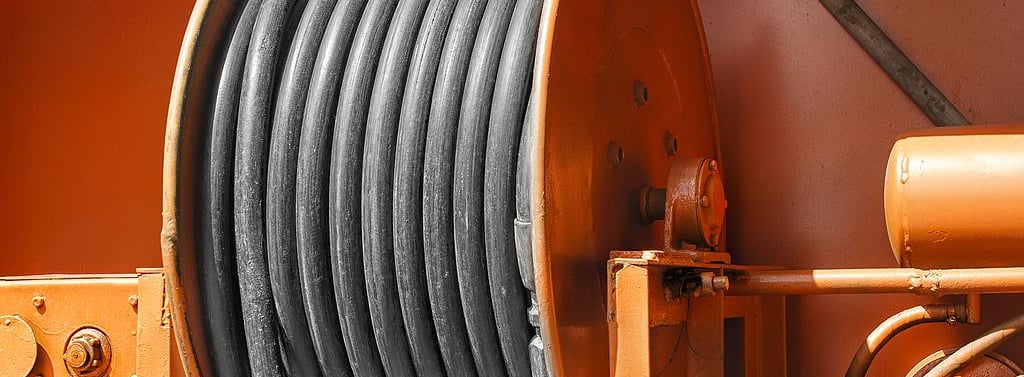
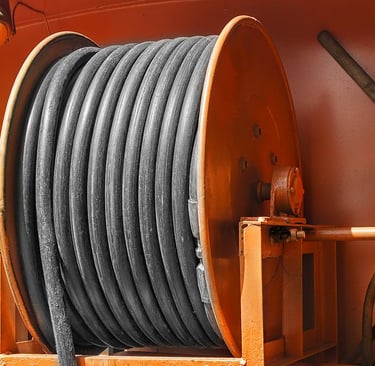
The quiet zone is a supported length of cable immediately outside the cable carrier or moving system where the cable remains free from tight bends, clamps, or connectors. Its purpose is to allow internal forces generated during flexing to dissipate naturally before encountering restrictions.
When a cable undergoes a 180-degree bend, conductors on the inside compress while those on the outside elongate. In dynamic systems, these forces travel along the cable rather than remaining localized. If they encounter a restriction too quickly, they reflect back and become additive.
A quiet zone acts as a buffer, allowing these forces to attenuate rather than accumulate.
Understanding Force Propagation Inside Moving Cables
The behavior of internal forces can be compared to wave propagation. In a large, open environment, waves dissipate naturally. In a confined space, they reflect and amplify.
Without an adequate quiet zone, forces generated during flexing reflect off clamps, connectors, or tight bends. Over repeated cycles, this reflection leads to conductor length imbalance and initiates corkscrewing.
Once a new neutral axis forms inside the cable, deformation accelerates rapidly.
How Long Should a Quiet Zone Be?
There is no universal answer, but general guidance suggests quiet zone lengths between 15 and 50 times the cable outer diameter. The optimal length depends on several factors, including conductor count, wire gauge, shielding complexity, and total cable length.
Heavier, more complex cables require longer quiet zones. In long cable carrier systems, limiting cabling layers to two or fewer significantly improves performance. Lower conductor count cables are generally more forgiving and may tolerate shorter quiet zones.
Bend Radius Compliance Is Not Optional
Minimum bend radius specifications are often treated as suggestions rather than requirements. This is a costly mistake.
Tight bends restrict a cable’s ability to equalize internal forces. When bend radius limits are violated, corkscrewing risk increases dramatically. What may seem like a minor routing compromise can result in catastrophic failure over time.
Service loops, cable supports, and thoughtful routing can help meet bend radius requirements even in constrained spaces.
Looking Beyond the Cable: System-Level Thinking
Cables do not operate in isolation. Connectors, clamps, and cable carriers all influence performance.
Inconsistent conductor length preparation during termination introduces internal stress before the cable even enters service. Poor clamping distorts cable geometry and disrupts internal alignment. Misconfigured cable tracks amplify all of these issues.
Reliable systems require holistic design, where every component supports long-term cable integrity.
Maintenance and Early Detection
Regular inspection is essential for motion cable maintenance. Early signs of corkscrewing—subtle twisting, uneven jacket wear, or abnormal tracking—should prompt immediate investigation.
Predictive maintenance programs that monitor wear patterns and flex-cycle performance significantly reduce unexpected failures.
Key Takeaways and Final Thoughts
Cable corkscrewing is not an unavoidable reality of motion systems. It is a predictable, preventable failure mode rooted in design, installation, and system integration.
By selecting appropriate motion cable designs, respecting bend radius and quiet zone requirements, and treating the cable as part of a complete mechanical system, engineers can dramatically improve reliability and longevity.
Cutting corners may reduce upfront costs, but it inevitably increases downtime, replacement expenses, and operational risk. Investing in proper cable practices pays dividends in uptime, safety, and long-term performance.
How to Reach Us
Get in Touch
SiteMap
Product Catalogue
Festoon Cable
Shore Power Cable




Scan to add us on WeChat