
Cable Selection for the Fremantle Port Modernisation: A Practical Engineering Guide for Australia's Next Wave of Port Electrification
Meta description: A practical engineering guide to crane cable selection for the Fremantle Port modernisation and Westport project. Covers RTG, STS, stacker reclaimer and ship unloader cabling, plus how to match Prysmian, Nexans, Conductix-Wampfler and LAPP performance at a better price and shorter lead time.
hongjing.Wang@Feichun
6/5/202616 min read
Why we wrote this guide
If you work in or around Western Australia's container trade, you already know that something big is coming. The Westport program is no longer a slide in a planning workshop. The WA Government has committed real money to detailed planning, set a relocation horizon in the late 2030s, and put Kwinana's Outer Harbour at the centre of the state's container future for the next hundred years. That is a generational shift in how cargo moves through Perth.
What gets discussed far less often is the unglamorous layer of hardware that quietly decides whether all of that automation, electrification and capacity actually works on the day. We mean the cables. The reeling cables that feed a ship-to-shore crane as it tracks along the quay. The festoon systems that follow a rubber-tyred gantry up and down a container block. The hybrid power-plus-fibre runs that carry both the energy and the data that an automated terminal lives on. When those fail, the crane stops, the vessel waits, and the bill arrives in increments that make the original cable cost look like a rounding error.
This guide is written for the engineers, procurement leads, maintenance managers and terminal planners who will be making cable decisions over the next decade. It is deliberately practical. We will walk through where Fremantle and Westport are heading, why electrification is reshaping cable demand, what each piece of crane equipment actually asks of its cabling, the failure modes that bite hardest in a coastal Australian environment, and how to think about specification and supplier selection without getting lost in marketing language. Along the way we will be honest about something most cable articles tiptoe around: the big global brand names you have heard of are genuinely good, but they are not the only path to a quality outcome. Everything those manufacturers can do, we can match on performance, and in most cases we can do it at a better price with a shorter lead time. We will explain exactly why that is possible and how to verify it for yourself, because you should never take a supplier's word for performance. You should make them prove it.
Read it end to end and you will have a working mental model for the whole topic. Skim the headings and you will still pick up the points that matter most for your next purchase order.
Part one: where Fremantle and Westport are actually going
Let us set the scene properly, because the engineering decisions only make sense against the backdrop of what the port is becoming.
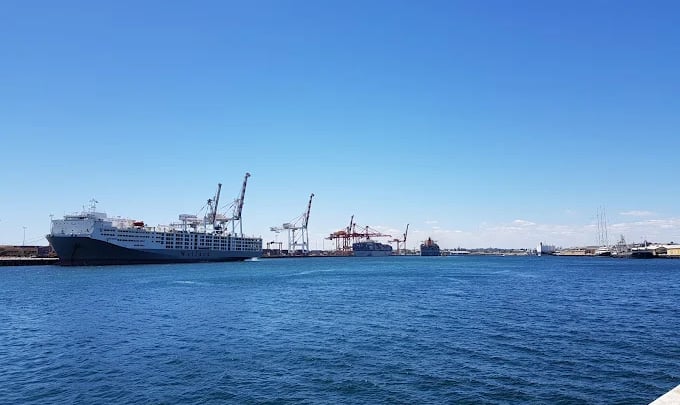
Fremantle is Western Australia's largest multi-cargo port and the gateway for the overwhelming majority of the state's container trade. It sits in the national top tier of container ports, and it has been setting throughput records in recent years. In the most recent reporting periods the Inner Harbour has been pushing toward and past the 890,000 TEU mark across a calendar year, with growth that has repeatedly run ahead of forecast. That is a healthy, busy port. It is also a port with a ceiling.
The accepted planning figure is that Fremantle's Inner Harbour can be stretched to roughly 1.4 million TEU before the constraints become genuinely painful. Those constraints are not abstract. The harbour is hemmed in by the city, the rail and road connections have limits, and the channel and berth geometry were never designed for the largest container vessels now plying the major trades. As WA's population keeps climbing and containerised freight demand climbs with it, the gap between what the port can handle and what the state will need starts to open up sometime in the 2030s. Government analysis has put very large dollar figures on the economic drag of doing nothing once that ceiling is reached, which is the core argument for acting before the wall is hit rather than after.
Enter Westport. This is the WA Government's planning and delivery program to move container trade from Fremantle to a new, purpose-built terminal in the Kwinana Outer Harbour, within and around Cockburn Sound, roughly thirty kilometres south of the Perth CBD. The preferred design unites container handling with the existing bulk operations at Kwinana, supported by new marine infrastructure including a shipping channel, turning basin and breakwater, plus substantial new road and rail links. The state has committed hundreds of millions of dollars to detailed planning, and the environmental review process for the Outer Harbour development has been moving through its formal stages. The working timeline points at the container trade relocating in the late 2030s, although it is worth noting that the schedule has been the subject of real public debate, with some advisory analysis favouring a later move and keeping Fremantle running longer. The exact year will keep moving. The direction will not.
There is a parallel storyline that matters here too. The Future of Fremantle planning work envisions the Inner Harbour land being progressively repurposed into a major waterfront city precinct once trade relocates, unlocking a couple of hundred hectares of prime urban land. So the modernisation is not only about a new port at Kwinana. It is about a managed handover, and that has implications for timing. Investment decisions, including cable infrastructure decisions, will be made in waves over more than a decade, some at the existing port to keep it running reliably until the move, and some at the new facility built to a far more ambitious automation and electrification standard.
For anyone specifying cables, the practical takeaway is this. You are not buying for a single project with a single delivery date. You are buying across a long transition in which two things are true at once: the legacy port must stay dependable, and the new port will demand a much higher class of electrified, automated, monitored infrastructure. The cable strategy has to serve both ends of that spectrum.
Part two: why electrification is rewriting the cable order book
For most of the last century, port equipment ran on diesel. A rubber-tyred gantry crane carried its own engine and generator, burned fuel, and trailed a haze of particulates across the container yard. That model is being dismantled, in Australia and worldwide, for reasons that stack on top of each other: decarbonisation targets, air-quality and noise pressure in increasingly urban port surrounds, the operating-cost advantage of grid electricity over diesel, and the simple fact that automated, electrified equipment is more controllable and more data-rich than a diesel machine ever was.
Several distinct trends are converging, and each one changes what the cabling has to do.
The first is the electrification of rubber-tyred gantry cranes, usually badged E-RTG. Instead of an onboard diesel generator, the crane draws power from the grid through a conductor bar or a motorised cable reel that pays out and retrieves a heavy flexible cable as the crane travels along the block. That cable is now a safety-critical, motion-critical component. It flexes thousands of times a day, it sits outdoors in the weather, and if it fails the crane is dead until it is replaced.
The second is the continued growth and automation of ship-to-shore cranes. STS cranes are the giants at the quay edge that lift containers on and off the vessel. They have always needed serious power. As they get larger to handle bigger ships, and as automation and remote operation get layered on, they need more power and they need clean, reliable data alongside it. That pushes the industry toward medium-voltage power feeds and toward hybrid cables that carry copper power cores and optical fibres in the same jacket.
The third is the rise of automated horizontal transport and yard equipment, along with the broader move toward shore power, where berthed vessels plug into the grid instead of idling their auxiliary engines. All of this adds up to more cable, more demanding cable, and cable that is doing more jobs at once than it used to.
The net effect on demand is straightforward. The modern port needs far more high-flexibility reeling cable, far more festoon cable for continuous movement, and a rapidly growing volume of hybrid cables that bundle power, control and fibre. The cable is no longer a commodity you buy by the metre and forget. It is part of the operating system of the terminal.
Part three: matching the cable to the machine
Cable selection goes wrong most often when someone treats all crane cable as interchangeable. It is not. Each major equipment type imposes a different combination of demands, and the right cable is the one engineered for that specific duty. Let us go through the main players.
Rubber-tyred gantry cranes
RTGs roam the container stacking yard. They are mobile, they change direction frequently, and an electrified RTG is tethered to its power source by a cable that must tolerate near-constant motion. The dominant requirements here are flexibility and fatigue endurance. The cable is wound and unwound on a reel, or carried in a festoon, through an enormous number of cycles over its life. It is bent repeatedly at the same points. It must resist that mechanical fatigue without the conductors work-hardening and fracturing, and without the jacket cracking. It also sits in the open yard, so it has to shrug off sun, heat and the salt-laden air. Vibration resistance matters because the machine is moving over a working surface. The wrong cable in this role does not fail dramatically on day one. It fails slowly, over months, as micro-damage accumulates, and then it lets go at the worst possible moment.
Ship-to-shore cranes
STS cranes are the heart of the quay. They demand high-capacity power delivery, increasingly at medium voltage so that the conductor cross-section stays manageable, and they increasingly demand integrated communications for automation, condition monitoring and remote control. This is the natural home of the hybrid cable, where power cores and optical fibres travel together. The cable has to handle the electrical stress of medium-voltage operation without insulation breakdown, it has to flex as the crane tracks along the wharf, and it has to do all of that right at the waterline, where the salt exposure is at its most aggressive. Reliability here is paramount, because a stopped STS crane means a stopped vessel, and a stopped vessel is the most expensive idle object in the entire supply chain.
Stacker reclaimers
Step across to the bulk side of the operation, which is exactly where Kwinana already lives, and the environment changes character. Stacker reclaimers travel long distances on rails, building and drawing down stockpiles of grain, alumina, mineral sands, fertiliser and the like. The defining challenges here are abrasive dust, heavy vibration, and long travel. The cabling has to survive a gritty, dusty environment that works its way into everything, while still flexing reliably over long travel distances. Mechanical robustness and abrasion resistance move to the front of the priority list.
Ship unloaders
Bulk ship unloaders, common across Kwinana operations, combine many of the same pressures: continuous dynamic loading, long and repetitive movement, and abrasive material handling, all in an exposed marine setting. These machines ask for high mechanical tensile strength and tough jacketing that can take continuous mechanical work without degrading. A cable that is merely flexible is not enough. It has to be flexible and strong and abrasion-resistant at the same time, which is a harder engineering target than any one of those properties alone.
The lesson across all four is the same. The correct specification flows from the duty cycle and the environment of the specific machine, not from a generic catalogue category. Get that mapping right and the cable lasts. Get it wrong and you are buying the same cable twice.
Part four: the performance requirements that actually matter
When you strip away the brochures, a port cable has to satisfy three families of requirements at once: electrical, mechanical and environmental. The art of specification is refusing to trade one off against the others when the application needs all three.
On the electrical side, the spread is wide. Low-voltage systems in the 0.6/1 kV class cover RTGs and a lot of auxiliary equipment. Medium-voltage systems, often 6/10 kV or higher, feed the main power of large STS cranes, because pushing big power at low voltage means impractically fat copper. And cutting across both is the growing requirement for hybrid construction, where power conductors share the cable with optical fibres for the data backbone that automation depends on. The electrical design has to deliver the required current and voltage rating with margin, manage heat so the insulation does not cook over years of loaded operation, and, in the hybrid case, protect the fibres from the mechanical and thermal stresses that the power cores experience.
On the mechanical side, the headline property is high flexibility for reeling and festoon duty, but flexibility alone is a trap. The cable also needs controlled torsion resistance for any application where it twists as it coils, because uncontrolled torsion is a slow killer of internal structure. And it needs genuine tensile strength for long-span movement, so the cable can carry its own weight and the dynamic loads of the machine without the conductors taking strain they were never meant to bear. A well-engineered crane cable manages these forces through its internal architecture, the way the cores are laid up, the reinforcing elements, and the support members, so that the parts designed to carry electricity are not also being asked to carry the mechanical load.
On the environmental side, the Australian coast is about as hostile as it gets short of an offshore platform. The cable has to resist ultraviolet radiation and ozone, which attack polymers from the outside in. It has to resist saltwater and salt fog corrosion, which is relentless on any exposed marine site and especially so at Fremantle and Kwinana. It has to resist oil, chemical exposure and abrasion. And it has to tolerate a wide temperature range, because outdoor equipment bakes in the WA summer and the cable expands and contracts through every daily cycle. This is why high-quality crane cables lean on advanced jacket materials, typically polyurethane or specially formulated rubber compounds, rather than ordinary PVC. The jacket is the cable's skin, and in this environment a cheap skin is a false economy.
Hold onto that three-way framing, because it is the lens through which you should read every specification sheet and every supplier claim. A cable that is electrically adequate but mechanically marginal will fail. So will one that is mechanically superb but jacketed in the wrong polymer for a salt environment. The cable that lasts is the one engineered to satisfy all three simultaneously for the specific duty in front of it.
Part five: how port cables fail in the real world
It is worth being blunt about failure, because understanding how cables die is the fastest route to specifying ones that live. Australian port operators run into the same recurring failure modes, and almost all of them are foreseeable.
Mechanical fatigue is the classic. Repeated bending cycles, a poorly designed fleet angle on the reel, and excessive tension during operation all accumulate damage in the conductors and the jacket. The cable does not announce its decline. It quietly degrades until a conductor strand fractures or the jacket splits, and then you have an unplanned outage. Good specification and good installation geometry are the defences.
Environmental degradation is the slow burn. UV exposure, salt corrosion and the daily thermal cycling of an exposed cable conspire to age the jacket. The polymer embrittles, micro-cracks form, and once the protective skin is compromised, moisture and salt reach the insulation underneath. This is why jacket material choice and UV stabilisation are not optional niceties on a coastal site. They are the difference between a cable that lasts its design life and one that fails years early.
Electrical stress is the failure mode that punishes under-specification. Overheating from sustained overload, poor system design, or simply running a cable closer to its limits than it should be, all drive the insulation toward breakdown. A cable sized and rated with proper margin tolerates the real-world peaks. One specified to the bare minimum to save money has nothing left in reserve when the duty cycle gets demanding.
Operational damage rounds out the list, and it is the most preventable of all. Improper installation, crane misalignment, mechanical impact during container handling, a reel that is not maintained, a guide that has worn. These are not cable-quality problems as such, but they destroy good cable just as effectively as a manufacturing defect. The point is that cable reliability is a system property. The best cable in the world, badly installed and poorly maintained, will still let you down.
A closer look at jacket cracking
Jacket cracking deserves its own paragraph because it is so common in coastal ports and so often misdiagnosed as a manufacturing fault when it is actually an environmental and specification story. In Fremantle's marine setting, several mechanisms work together. Continuous UV from outdoor operation breaks down polymer chains at the surface. Salt spray and chloride penetration attack the material and find their way into any micro-opening. Ozone and oxidation embrittle the polymer over time. Mechanical stress from constant reeling and festoon movement flexes the jacket through countless cycles. And thermal expansion and contraction, as the cable heats in the sun and cools at night, opens and closes tiny stresses in the surface again and again. Individually, any one of these is survivable. Together, on a cable jacketed in the wrong material, they produce surface embrittlement, then micro-cracking, then a path for moisture to the insulation, and eventually electrical failure. The fix is upstream: specify a jacket compound formulated for UV, ozone and salt resistance, and the cracking problem largely designs itself out.
Part six: the global brand-name manufacturers, and an honest word about alternatives
Now to the part of the conversation that procurement teams really care about. When a port plans a major cable purchase, a handful of global manufacturers come up by reflex. They have earned their reputations and it is worth understanding what each is known for.
Prysmian is one of the largest cable groups in the world and a long-established supplier of reeling and festoon cables for large container terminals, with a strong position in electrified port systems. Nexans is another global heavyweight, well regarded for flexible industrial cables built for the dynamic, moving applications that cranes and automated equipment demand. Conductix-Wampfler approaches the problem from the energy-transmission-system angle, supplying cable reels, festoon systems and integrated crane electrification packages rather than just the cable itself. And LAPP is widely known for its crane cable lines built for harsh industrial duty, with a reputation for flexibility and durability.
These are capable companies and we are not going to pretend otherwise. But here is the part that too many buyers never get told plainly: the engineering behind a high-performance crane cable is well understood, the materials are available on the open market, and the performance is verifiable against published standards. A premium brand on the jacket does not contain secret physics. It contains good conductor design, the right jacket compound, sound internal architecture, and rigorous testing. All of that can be matched.
That is the core of our message, and we will say it directly. Everything those brand-name manufacturers can deliver, we can deliver. The same flexibility for reeling and festoon duty. The same controlled torsion resistance. The same tensile strength for long-span movement. The same UV, ozone, salt-fog, oil and abrasion resistance from properly specified polyurethane and rubber jacket compounds. The same low-voltage and medium-voltage electrical performance. The same hybrid power-plus-fibre constructions for automated STS systems. We engineer to the same international standards, and we will hand you the test reports to prove it rather than asking you to trust the logo.
What we add on top of matching the performance is two advantages that matter enormously across a decade-long modernisation program: better pricing and shorter lead times. We can usually offer a meaningfully lower delivered cost for equivalent specification, because our cost structure is not carrying the overhead that the largest legacy brands build into their pricing. And we can usually deliver faster, which on a live terminal is not a minor convenience. When a critical reeling cable fails, the question that decides the size of your loss is not what the cable cost. It is how many days the crane sits idle waiting for the replacement. A supplier who can ship the right cable to the right specification in a fraction of the time is worth more than a famous name on a longer lead.
We would never ask you to take that on faith, and you should not. The right way to test any supplier, us included, is to demand the evidence: published performance specifications against recognised standards, type-test and routine-test certificates, material datasheets for the jacket and insulation compounds, documented track record in comparable marine and port applications, and clear warranty terms. Put us side by side with any brand name you like on those criteria. Compare the actual specifications, the actual test data, the actual delivered price and the actual lead time. We are confident in where that comparison lands, which is exactly why we encourage you to run it rigorously rather than skip it.
Part seven: a strategic approach to cable selection for the Westport era
Pulling the threads together, here is how we would frame cable strategy for an organisation operating through the Fremantle-to-Kwinana transition.
Start from the duty cycle and the environment, every time. Before anyone looks at a brand or a price, define what the specific machine does, how often it moves, how it flexes and twists, what voltage and data it carries, and what the cable will be exposed to outdoors on a salt-laden coast. That specification is the contract. Everything else is sourcing against it.
Prioritise the constructions the modern port actually needs. High-flexibility reeling cables for STS crane electrification. Durable festoon systems for RTG and yard operations. Hybrid cables that integrate power, control and fibre for automated and remotely operated equipment. Enhanced UV and saltwater resistance as a baseline, not an upgrade, given the Fremantle and Kwinana environment. And compatibility with automation and condition-monitoring systems, because the new port will be instrumented to a degree the old one never was, and the cabling is part of that nervous system.
Future-proof deliberately. The whole point of Westport is higher capacity, higher crane speeds, more automation and lower lifetime emissions and maintenance. Cable chosen only for today's duty will be the bottleneck tomorrow. Specify with headroom on electrical rating, mechanical endurance and environmental resistance so the cable can serve the trajectory of the terminal, not just its opening day.
Treat reliability as a system, not a component. The most carefully specified cable still depends on correct installation geometry, sensible fleet angles, maintained reels and guides, and a maintenance regime that catches degradation before it becomes failure. Pair good cable with good practice and you get the long, quiet service life that makes the whole investment pay off.
And on sourcing, run the rigorous comparison we described. Hold every candidate, premium brand and challenger alike, to the same evidence-based test of specification, certification, track record, price and lead time. That discipline protects you from overpaying for a logo and from underbuying on a critical spec. It is also, frankly, the process by which we expect to win your business on the merits.
Part eight: the bigger picture
It is easy to think of cable as plumbing, the stuff behind the walls that nobody notices until it leaks. In a modernising, electrifying, automating port, that mental model is dangerously out of date. The cable is no longer a passive component. It is mission-critical infrastructure, and it is doing more every year: keeping cranes moving continuously, carrying the data that automation runs on, delivering the energy that replaces diesel, and underwriting the operational safety of an increasingly complex terminal.
Australia's container trade is heading somewhere genuinely ambitious. Fremantle has carried the state superbly and is pushing the limits of what its harbour can do. Westport is the answer to what comes next: a modern, electrified, automated, higher-capacity port at Kwinana built to serve WA for the long haul, alongside a reimagined waterfront city where the old container terminal stands today. That transformation will be built out of thousands of decisions, and a surprising number of them are cable decisions.
Choosing the right crane cable, specified honestly against the real duty and environment, sourced from a supplier who can prove the performance, beat the price and shorten the lead time, is one of the quiet decisions that determines whether the grand plan actually runs smoothly on the day. We think it is worth getting right, we are ready to match anything the big names can do, and we are happy to be tested on every claim we have just made. That is the conversation we would like to have with you.
How to Reach Us
Get in Touch
SiteMap
Product Catalogue
Festoon Cable
Shore Power Cable




Scan to add us on WeChat