
Cables and Cable Glands for Hazardous Locations: NEC, CEC, and IEC Standards Comparison
Complete guide to cables and cable glands for hazardous locations. Compare NEC (USA), CEC (Canada), and IEC (International) standards. Learn about approved cable types, sealing requirements, and compliance for Class I Division 1, Zone 1, and flameproof applications.
hongjing.Wang@Feichun
12/1/20256 min read
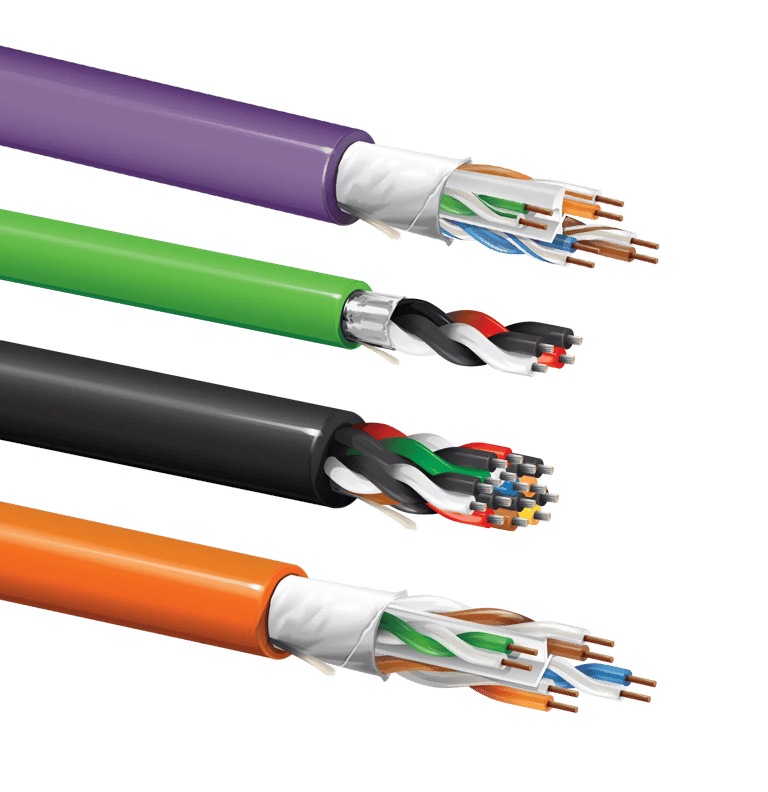
Understanding the Critical Importance of Compliant Cable Systems
In facilities where flammable gases, vapors, or combustible dusts are present, the selection of appropriate cables and cable glands can mean the difference between safe operation and catastrophic failure. Hazardous location cables must prevent ignition sources while maintaining reliable electrical connections under demanding conditions. Yet navigating the complex landscape of NEC standards in the United States, CEC standards in Canada, and IEC standards internationally presents significant challenges for engineers and facility managers alike.
The fundamental question many professionals face is straightforward: which cables and glands are approved for my hazardous area project? The answer, however, depends entirely on which regulatory framework governs your installation. Understanding these three distinct approaches—and their critical differences—is essential for multinational projects, compliance verification, and ensuring personnel safety in explosive atmosphere environments.
Hazardous Location Classifications: The Foundation of Cable Selection
Before selecting cables or cable glands, you must understand how different standards classify hazardous areas. North American systems use Division classifications, while international standards employ Zone designations.
Class I Division classifications (NEC/CEC terminology) separate hazardous areas into two categories. Class I Division 1 locations experience present or likely hazard conditions where ignitable concentrations exist continuously, intermittently, or periodically during normal operations. Division 2 areas face unlikely or accidental hazard conditions where explosive atmospheres appear only during abnormal situations.
Zone classifications (IEC terminology) provide more granular differentiation. Zone 0 represents areas where explosive atmospheres are present continuously or for long periods. Zone 1 encompasses locations where explosive atmospheres are likely during normal operation. Zone 2 covers areas where explosive atmospheres are unlikely and exist only briefly if they occur.
These classifications directly impact which cable types and gland specifications are permissible. A cable approved for Class I Division 2 cannot simply be used in Division 1 applications without proper certification. Similarly, Zone 1 hazardous location cables require different construction and Ex-certified cable glands compared to Zone 2 installations.


NEC (USA) Standards: Product-Based Approval Requirements
The National Electrical Code establishes a product-based approval system where only specifically listed cable types may be installed in hazardous locations. This philosophy prioritizes pre-tested, documented performance over flexible interpretation.
Approved cable types for Class I applications include MC-HL (Metal Clad – Hazardous Location) cables, ITC-HL (Instrumentation Tray Cable – Hazardous Location), and TC-ER-HL (Tray Cable Extra-Hard Usage – Hazardous Location) under specific restrictions. These cables undergo rigorous testing per UL 2225 hazardous location cable testing protocols, including impact resistance, crush resistance, flame propagation, and low-temperature performance evaluations.
Class I Division 1 approved cable types face the strictest requirements. Listed sealing fittings for hazardous areas are mandatory at all terminations to prevent gas migration through cable assemblies. Critically, interlocked armor cables Division 1 prohibition means traditional flexible armored cables cannot be used regardless of their mechanical protection capabilities. The NEC requires listed fittings and termination sealing specifically designed and tested for Division 1 service.
A common question arises: "Can compression seals be used in Division 1 installations?" Under NEC requirements, compression seals must be specifically listed for the application. Generic compression fittings without proper UL certification for hazardous locations do not satisfy code requirements, regardless of their apparent sealing capability.
Class I Division 2 applications permit greater flexibility. Ordinary-rated glands may be acceptable under certain enclosure rating conditions, and cable selection expands beyond the limited Division 1 options. However, proper documentation of cable certification remains essential for inspection approval.
CEC (Canada) Standards: Similar Approach with Canadian Specifications
The Canadian Electrical Code follows a similar product-based philosophy while establishing its own approved cable types and certification requirements.
TECK-HL cable specifications for Canada dominate hazardous location installations. Governed by CSA C22.2 No. 174 standard requirements, TECK-HL cables feature aluminum or copper conductors with specialized jacketing and armoring designed specifically for hazardous environments. The 2018 CEC edition significantly expanded approval to multiple cable types, including TECK 90, ACIC, and shipboard cables, providing greater options for designers.
Intrinsically safe wiring Zone 0 requirements mandate that only intrinsically safe circuits may enter Zone 0 areas. The cables and glands must meet rigorous specifications ensuring they cannot store or release sufficient energy to ignite explosive atmospheres even under fault conditions.
For Zone 2 and Division 2 applications, the CEC allows ordinary-rated glands if the overall enclosure rating provides adequate protection. This practical allowance recognizes that lower hazard classifications permit reduced protection levels when properly engineered.
A persistent challenge involves compression seals CEC hazardous areas acceptance. While technically permitted under certain interpretations, compression seals face rare acceptance from Canadian authorities having jurisdiction. Alternative sealing methods using listed barrier glands or compound-filled seals prove more reliably acceptable during inspections.
IEC (International) Standards: Principle-Based Flexibility
IEC 60079-14 cable construction rules establish a fundamentally different approach. Rather than listing specific approved products, IEC defines performance requirements that cables must meet, leaving manufacturers free to develop compliant solutions.
Any cable meeting construction requirements is permissible if it features:
Sheathed construction with compact design
Non-hygroscopic fillers preventing moisture ingress
Robust extruded bedding providing mechanical protection
Prohibition against "easy tear" sheaths unless cables are installed in conduit systems
This principle-based system enables innovation and competition while maintaining safety standards through clearly defined performance criteria.
Ex-certified cable glands for flameproof enclosures must carry appropriate Ex certification matching the protection concept: Ex d for flameproof, Ex e for increased safety, Ex t for dust protection. Unlike NEC/CEC product listings, IEC certification focuses on the gland's ability to maintain protection integrity under defined test conditions.
Flameproof enclosure cable routing requirements present two options. The barrier gland 3-meter cable length rule IEC permits either installing a certified barrier gland directly on the flameproof enclosure or routing at least three meters of cable before terminating in a non-flameproof junction box. This flexibility allows designers to optimize layouts for specific installation constraints.
The IP54 minimum rating cable glands requirement ensures basic environmental protection against dust ingress and water spray. Higher IP ratings become necessary in more demanding environments such as offshore installations or chemical processing areas with washdown requirements.
Critical Differences: What Engineers Must Know
The philosophical divide between product-based and principle-based approaches creates practical challenges for multinational hazardous area cable compliance projects.
MC-HL vs ITC-HL cable differences illustrate product-specific considerations under NEC standards. MC-HL cables provide superior mechanical protection with metallic armor suitable for exposed runs, while ITC-HL cables offer smaller diameter for instrumentation circuits but require additional protection in mechanically vulnerable locations.
Gas migration testing hazardous location cables receives different treatment across standards. NEC and CEC rely on product testing during certification, assuming listed cables prevent gas migration. IEC Annex E recommends testing but does not mandate it for all installations, leaving engineers to determine when analysis proves necessary based on specific application risks.
Extra-hard usage cords Class I Division 1 applications demonstrate varying flexibility. NEC and CEC permit properly rated extra-hard service cords for equipment connections, recognizing practical needs for movable equipment. IEC restricts flexible cable usage to robust rubber or elastomeric types meeting stringent mechanical and environmental specifications.
Common Questions and Practical Solutions
"Can I use NEC-approved cables in an IEC system?" Not automatically. While some cables may satisfy both NEC listings and IEC construction requirements, you must verify compliance with IEC 60079-14 construction rules independently. The UL listing alone does not constitute IEC compliance.
"What is the difference between Ex d and Ex e glands?" Ex d glands provide flameproof protection, containing any internal explosion and preventing ignition of external atmospheres. Ex e glands offer increased safety through enhanced creepage distances, terminal protection, and construction quality preventing ignition under normal and specified fault conditions. Selection depends on the protected equipment's certification type.
"How do I verify if a cable is certified for hazardous locations?" For NEC/CEC installations, confirm the cable marking includes the appropriate hazardous location designation (MC-HL, ITC-HL, TECK-HL) and verify the manufacturer's UL or CSA listing. For IEC installations, review the manufacturer's construction documentation demonstrating compliance with IEC 60079-14 requirements and obtain Ex certification documentation for glands.
"Are compression seals ever acceptable for hazardous areas?" Under NEC standards, compression seals must carry specific UL listing for hazardous locations. CEC technically permits them but authorities rarely accept compression seals in practice. IEC does not specifically address compression seals, instead requiring Ex-certified glands or the 3-meter cable rule for flameproof applications.
Installation Best Practices and Compliance Verification
Successful hazardous location installations require meticulous planning and documentation. Begin by identifying which standard governs your project based on geographic location, facility ownership, and customer specifications.
Develop comprehensive cable and gland specifications referencing applicable standards and required certifications. For multinational facilities, consider whether separate systems meeting different standards or a unified approach using cables and glands satisfying multiple frameworks proves more practical.
Maintain complete certification records for all cables and glands installed. Inspectors will require documentation proving compliance, and missing records can necessitate costly removal and replacement even when components actually meet requirements.
During installation, follow manufacturer specifications for bend radius, pulling tension, and termination procedures. Improper installation can compromise even the highest-quality certified components.
Conclusion: Navigating the Standards Landscape
Understanding cables and cable glands for hazardous locations across NEC, CEC, and IEC frameworks enables informed decisions protecting both personnel and facilities. The product-based approaches of NEC and CEC provide clear, tested solutions with straightforward compliance verification. IEC's principle-based system offers flexibility and innovation potential while requiring more detailed construction analysis.
For projects within a single jurisdiction, following the applicable standard proves straightforward once you understand its requirements. Multinational facilities demand careful analysis to determine whether multiple parallel systems, mutual compliance strategies, or harmonized specifications best serve project goals.
Regardless of which standard applies, never compromise on hazardous location cable and gland certification. The consequences of non-compliance range from failed inspections and project delays to catastrophic incidents endangering lives and facilities. Invest the time to understand requirements, specify appropriate materials, and document compliance thoroughly. Your diligence ensures safe, reliable electrical installations in hazardous environments worldwide.
How to Reach Us
Get in Touch
SiteMap
Product Catalogue
Festoon Cable
Shore Power Cable




Scan to add us on WeChat