
Case Study: Mining Cable Abrasion Failure — Real-World Lessons from the Pilbara, Coal Operations and Material Handling Systems
Mining cable abrasion failures cost Australian operations tens of thousands per incident. Real case studies from the Pilbara, coal mines and reclaimers reveal the root causes — and how the right AS/NZS-rated cable stops the bleeding.
hongjing.Wang@Feichun
6/12/202612 min read
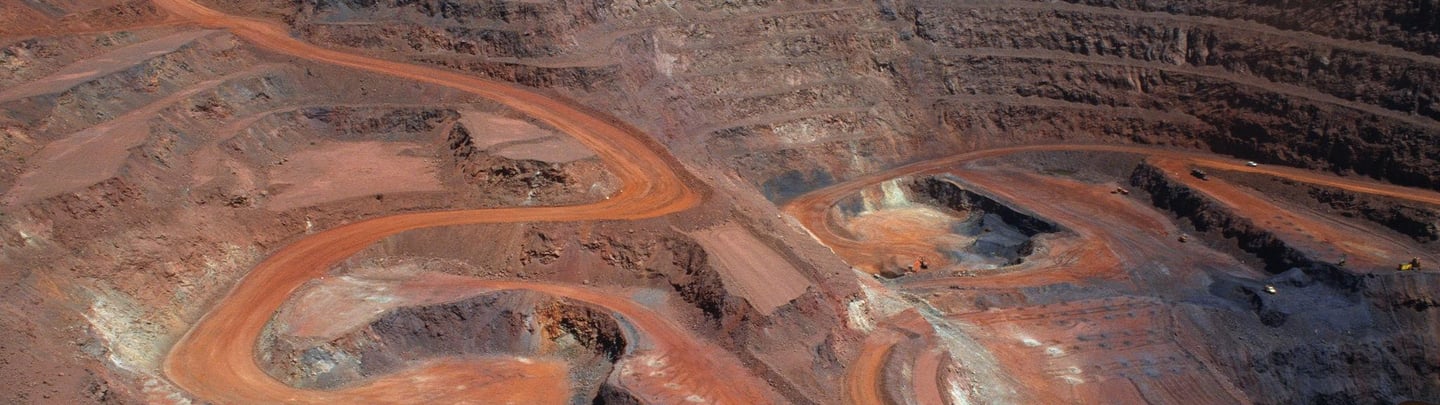
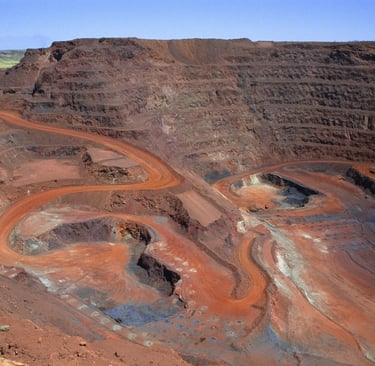
Ask anyone who's run cables on a working mine site and they'll tell you the same thing: the cable rarely dies of an electrical fault. It dies of a thousand small mechanical insults. A drag across rough ground here, a haul truck tyre there, a bit of grit working its way into a nick in the jacket, and slowly the cable that was supposed to last years starts failing in months.
In a Pilbara iron ore operation or an underground coal mine, that's not a maintenance footnote. A single trailing or reeling cable failure can mean thousands of dollars in replacement cost and tens of thousands more in lost production while the equipment sits idle and the shift supervisor works the phones. Multiply that across a fleet running around the clock and abrasion stops being a nuisance and becomes a line item that gets noticed in head office.
This article walks through real-world mining cable abrasion failures — from Australian coal and iron ore sites, North American operations and global mining more broadly — and pulls out the root causes, the financial damage, and the lessons that actually change outcomes. Where a particular cable construction would have solved the problem, we'll point to the AS/NZS-rated type that fits, because in this country the standard the cable is built to is half the story.
Why Mining Cables Cop Such Severe Abrasion Damage
Abrasion, Crushing and Fatigue Aren't the Same Thing
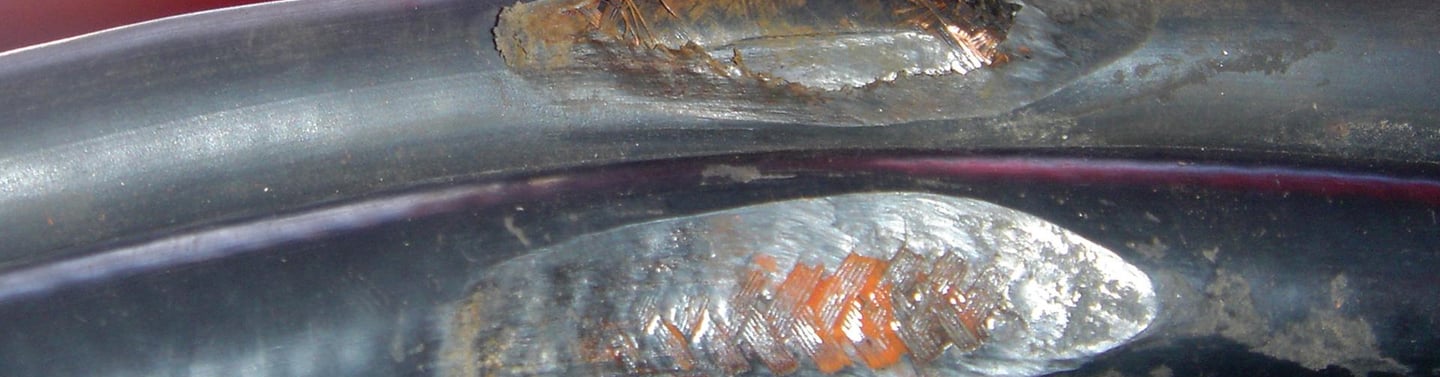
It's worth being precise here, because these three failure modes get lumped together and they shouldn't be. Abrasion is the gradual wearing-away of the outer jacket through friction. Crushing is sudden compressive damage — a tyre, a track, a dropped rock — that deforms the cable's internal structure. Fatigue is the cumulative weakening from repeated bending and flexing, the kind that builds invisibly until something cracks.
The problem on a mine site is that cables rarely face just one of these. A trailing cable on a shuttle car is dragged across rough ground (abrasion), flexed through tight loops thousands of times a shift (fatigue), and occasionally run over by something heavy (crushing) — all at once. They compound each other. A jacket already thinned by abrasion crushes far more easily. A cable already fatigued cracks sooner under tension.
And of all of them, abrasion is usually the one you see first. It's the visible warning that a larger failure process has already begun, which is exactly why a worn jacket should never be written off as cosmetic.
How Jacket Damage Becomes Electrical Failure
The failure sequence is depressingly consistent, and understanding it is the whole argument for catching abrasion early:
Outer jacket wear → insulation damage → dust ingress → moisture penetration → conductor exposure → electrical fault and unplanned downtime.
Each stage feeds the next. Once the jacket is breached, abrasive dust gets in. Dust opens the path for moisture. Moisture plus exposed conductor equals a fault — and on a mine, a fault means the machine stops. By the time you get an electrical trip, the mechanical damage that caused it has usually been developing for weeks. That's why the operators who do best treat jacket inspection as a frontline activity, not an afterthought.
The Pilbara: One of the Harshest Cable Environments on Earth
Western Australia's Pilbara region deserves its reputation. Few places on the planet are tougher on a cable.
Iron Ore Dust as an Abrasive
Iron ore fines are not soft. The dust that coats everything in a Pilbara operation acts like a fine grinding paste, and when it gets trapped between a cable and a roller, or a cable and the ground, every movement becomes an abrasion cycle. The dust works its way into the contact points and creates continuous friction that wears the jacket from the outside in. A cable that would last comfortably in a clean environment can be ground down dramatically faster when iron ore dust is doing the work.
UV and Heat
The Pilbara routinely sees daytime temperatures of 40–50°C, under some of the most intense ultraviolet radiation on the continent. That combination accelerates sheath ageing, drives down cable flexibility, and leads to premature cracking. A sheath that's gone hard and brittle from years of sun doesn't flex — it splits, and a split is just an abrasion failure waiting for somewhere to start. This is one reason the heavy-duty PCP, CSP and CPE sheath compounds specified in AS/NZS 1802 and 2802 cables matter so much: they're formulated to hold up under exactly this kind of thermal and UV punishment.
Heavy Mobile Equipment
Then there's the machinery. Draglines, electric shovels, haul trucks, dozers, stacker reclaimers and conveyor systems all share ground with trailing and reeling cables, and every one of them is a crushing, dragging or impact risk. A haul truck doesn't notice a cable. A dozer towing a cable boat across uneven ground subjects that cable to tension and abrasion it was never meant to take if it's the wrong construction for the job.
The Most Common Types of Mining Cable Abrasion Failure
Jacket Abrasion from Ground Contact and Dragging
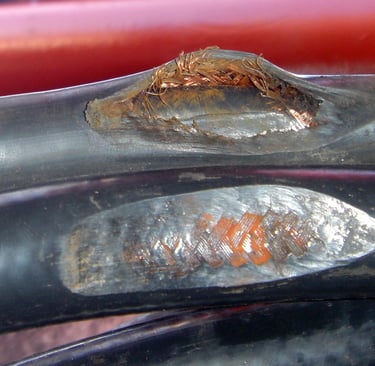
The classic. Symptoms run from surface scuffing through to cracking, reduced elongation performance, and — in the worst cases — the outer jacket worn clean down to the shielding layer. The usual culprits are cables dragging on the ground, worn rollers that have stopped rolling and started scraping, sharp cable tray edges, towing operations, and plain old improper routing.
This is where cable choice does real work. For shuttle car trailing duty, Type 275 is built specifically for the job — its earth cores are designed to reduce wire breaks during reeling while the cable is under tension, which is precisely the condition that destroys lesser cables. For the broader feeder and trailing role, the Type 241 family carries an overall semiconductive screen and open-weave textile reinforcement that helps the cable take dragging and flexing without the jacket surrendering early.
Crushing Damage from Mining Equipment
Haul trucks, shuttle cars, continuous miners, dozers and stacker reclaimers all crush cables, and crushing does its damage on the inside — deforming insulation and conductor structures even when the jacket looks intact. The danger is that crush damage is often invisible from the outside until it becomes an electrical fault.
Where crushing is a known hazard, armour earns its keep. Type 260 is a pliable-armoured construction — galvanised mild steel strands laid over the inner sheath — designed for exactly the applications where mechanical protection and strength are required. For sand mining and similar feeder duty where damage is likely, Type 412 brings the same pliable steel armour to reduce costly downtime. The armour won't make a cable invincible, but it turns a fault-causing crush into a survivable one.
Dust Ingress and Progressive Deterioration
Abrasive dust doesn't need a gaping wound to get in — microscopic cracks in the jacket are enough. Once inside, contamination works steadily toward insulation breakdown, and combined with the moisture that inevitably follows, it ends in failure. This is the slow, quiet failure mode, and it's why a cable with a robust, crack-resistant heavy-duty sheath outperforms a general-purpose cable dramatically over a service life, even when both look fine on day one.
Twisting, Corkscrewing and Mechanical Fatigue
Excessive tension and twisting during operation produce corkscrewing — a permanent helical deformation — along with earth conductor damage and internal structural distortion. Corkscrewing turns up again and again in poorly managed trailing cable systems, and it's a reliable sign that the cable is being asked to absorb torsion it can't handle, or that the reeling system is feeding it tension it was never designed for.
Real-World Mining Cable Abrasion Failure Case Studies
Theory only goes so far. Here's what actually happens on site.
Case Study 1: Aggregate Plant Vibration and Abrasion (TPC Wire & Cable, Texas)
A leading aggregate producer running a concrete and precast facility had portable cords failing roughly every two months across forty continuously operating vibration motors. The cause was severe abrasion compounded by constant vibration. The damage tally was concrete: six cable replacements a year, USD $11,674 in cost, and fifty hours of lost production. Switching to an abrasion-resistant portable cable cut the replacement frequency and recovered the production time. The lesson is the one that runs through this whole article — an abrasion-resistant jacket isn't a premium nicety, it's a lifecycle-cost decision.
Case Study 2: Underground Coal Mine Haulage (TPC Wire & Cable, Pennsylvania)
A Pennsylvania underground coal operation saw trailing cables failing to abrasion every two months. Worse than the cost was the safety dimension: the damage was affecting emergency shut-off cable systems, which raised the operational risk well beyond a simple reliability problem. Maintenance costs topped USD $7,600 in ten months before a heavy-duty mining cable brought the failures down and reliability up. When a cable failure compromises an emergency stop circuit, the cable spec has stopped being a procurement question and become a safety one.
Case Study 3: Queensland Coal Mines Trailing Cable Management (Resources Safety & Health Queensland)
An official Queensland Government review of cable damage in coal mining laid out the major causes with bureaucratic clarity: interaction with shuttle cars, continuous miners, multi-bolters and longwall equipment. Just as telling were the common operational errors — setting machine shoes down on cables, pulling cable boats with dozers, dropping rocks onto cables, and chafing during towing. The safety consequences listed were sobering: electric shock, burns, fire and energy-release incidents. The headline lesson is uncomfortable but important — a large share of cable damage comes down to how cables are handled, not just how they're built. The best cable in the world still needs to be kept out from under the machine shoe.
For the continuous miner and longwall machines named in these incidents, the cables are doing genuinely demanding work. Type 241 is built as a main feeder for continuous miners, while the very flexible Type 245, with its three central pilot/control cores for earth-continuity monitoring, is purpose-made for longwall shearer duty. Matching the cable type to the machine is the first line of defence; good handling practice is the second.
Case Study 4: Australian Surface Trailing Cable Damage Reports (2014–2015)
An analysis of ninety reported surface cable damage incidents found the most frequent causes were machinery interaction, falling rocks, excessive strain, bend-radius violations and towing-related abrasion. The pattern reinforces a theme: cable management remains a critical, ongoing issue in surface mining, and mechanical damage dominates the failure statistics. Bend-radius violations are worth singling out — every cable has a minimum bending radius, and the AS/NZS reeling and trailing cables carry specified minimums (for permanently repeating reeling, 10 to 12 times the cable diameter) that exist precisely because going tighter destroys cables.
Case Study 5: Pilbara Dragline Trailing Cable Abrasion
Dragline excavators in Pilbara iron ore operations subject their trailing cables to continuous flexing, tensile loading, ground contact and relentless abrasive dust — simultaneously. The failure progression is the familiar one: jacket wear leads to insulation damage and eventually to short-circuit risk. The design requirement that follows is unambiguous — dragline trailing cables need superior abrasion resistance and tensile strength, not general-purpose construction.
This is exactly the niche the Type 409 series addresses, with its larger sizes intended specifically for power supply to draglines, shovels and drills. For applications where a copper-screened cable is wanted but lighter weight and smaller diameter help with handling, Type 450 spans dragline duty through to slow reeling.
Case Study 6: Heavy Dust Loads and Cable Carriers
A study of cable carriers in mining equipment under heavy dust loads documented how dust drives seal degradation, bearing contamination and accelerated jacket wear — a reminder that the cable doesn't exist in isolation. The whole carrier system degrades together, and dust is the common accelerant. Reliability planning that ignores the dust environment is planning to be surprised.
Case Study 7: Stacker Reclaimer Cable Twisting and Fatigue
In material-handling environments, stacker reclaimers subject cables to continuous twisting, and twisting breeds fatigue. The reliability challenges that follow have pushed some operators toward alternative solutions like slip rings to reduce cable wear — but where a reeling cable is the right answer, the construction has to be chosen for minimal diameter and mass to handle the geometry. Type 455 is designed for precisely this, with reduced insulation and sheath thickness and no cradle, making it particularly suited to stacker-reclaimer applications.
Case Study 8: Incorrect Cable Selection (Igus Abrasion Analysis)
A published abrasion analysis showed a textbook case of incorrect cable selection: the outer jacket worn right down to the shield layer, leading to machine failure from mechanical damage. The standard industrial cable simply wasn't built for the duty. The lesson for mining is direct — a cable rated for a benign industrial environment will be eaten alive in an abrasive one, and the saving on purchase price is repaid many times over in failures.
Case Study 9: The Dozer Crush Test
In a durability demonstration, a 170,000-pound dozer was driven over a mining cable. The result: minimal abrasion and no electrical failure. It's a vivid illustration of what purpose-built, heavy-duty construction can withstand — and a useful counterpoint to the failure stories. The difference between a cable that survives a dozer and one that fails in two months isn't luck. It's construction, compound and the standard it's built to.
What These Case Studies Reveal
Mechanical Damage Is the Primary Driver
Across these cases, one statistic recurs: more than sixty percent of cable failures originate from mechanical damage, not electrical fault. The implication for anyone specifying or maintaining cable is clear — if you want to move the reliability needle, you work the mechanical problem first.
Abrasion Rarely Travels Alone
Abrasion is almost always found in company — with tension, twisting, impact, dust contamination and excessive bending. That's why single-issue thinking ("we just need a tougher jacket") usually under-solves the problem. The cable has to be right across the whole basket of stresses it'll actually see.
Cable Selection Is Often the Root Cause
Strip back enough of these failures and you reach the same root: a cable whose construction didn't match its duty. The fix isn't always a better cable in the abstract — it's the right cable, built to the right standard, for that specific application.
The Financial Impact
Direct Costs
The obvious ones: cable replacement, labour and installation. These are the numbers that show up on the purchase order, and they're the ones people tend to focus on when comparing cable prices — which is exactly the trap.
Indirect Costs
The expensive ones live here: downtime, lost production, delayed shipments and emergency maintenance call-outs. On a high-throughput operation, an hour of unplanned downtime can dwarf the entire cost of the cable that caused it.
A Representative Cost Picture
Stack up a single significant cable failure event — replacement cable, labour to fit it, and the downtime cost of the stopped equipment — and the total losses for one incident can exceed AUD $60,000. Run that scenario two to four times a year, which is entirely realistic for an operation using the wrong cable, and annual losses climb into the AUD $120,000–240,000 range. Against numbers like that, the premium for a correctly specified, AS/NZS-rated mining cable is rounding error.
Selecting the Right Cable for Abrasive Mining Applications
The case studies keep pointing back to cable choice, so here's the practical mapping for the common mining applications, using the AS/NZS-rated types:
For shuttle cars, Type 275 trailing cable is purpose-built, with earth cores designed to resist wire breaks under reeling tension. For draglines and shovels, the Type 409 series carries power to the big mobile machines and is matched to that duty. For longwall shearers, the very flexible Type 245 is made for the job, with central pilot/control cores for earth-continuity monitoring. Where mechanical protection is the priority, the pliable-armoured Type 260 provides steel-strand armour for crushing and impact resistance. And for reeling and flexible applications generally, the Type 241 family — including the more flexible Superflex variant with its smaller natural bending radius — covers continuous miners, pumps and power supply.
The thread tying these together is that each is built to AS/NZS 1802:2003 or AS/NZS 2802:2000, with heavy-duty (and on Class 1 cables, extra-heavy-duty) PCP, CSP or CPE sheaths formulated for abrasion, heat and oil resistance. The standard isn't paperwork — it's the specification that determines whether the cable survives the Pilbara or feeds the failure statistics.
Best Practices for Preventing Abrasion Failure
The cable is half the equation; how it's run is the other half. The operators who get long cable life tend to do the same handful of things well:
Improve cable routing so the cable isn't dragged across abrasive surfaces or sharp edges any more than it has to be. Reduce ground contact wherever possible — a cable off the ground isn't being abraded by it. Maintain rollers and cable guides so they keep rolling rather than scraping; a seized roller is an abrasion machine. Control cable tension to keep it within the rated pulling tension and away from the twisting that causes corkscrewing. Respect the minimum bend radius — for permanently repeating reeling, that's 10–12 times the cable diameter under AS/NZS, and going tighter is a direct route to fatigue failure. Inspect jackets routinely, because catching abrasion at the surface-wear stage is the difference between a planned replacement and an unplanned outage. And implement predictive maintenance so cables are retired on evidence rather than after they fail.
Conclusion
The failures examined here — from Pilbara draglines to Queensland longwalls, Texan aggregate plants to stacker reclaimers — all tell the same story. Abrasion isn't a minor maintenance issue. It's one of the most significant threats to mining cable reliability, and mechanical damage consistently leads to downtime, safety risks and serious financial loss.
The good news is that it's a solvable problem. The operators who break the cycle do two things: they match the cable construction to the duty — the right AS/NZS-rated type for the machine and the environment — and they handle and route those cables properly once installed. Do both, and the case studies that fill this article stop being your story. Cable life extends, maintenance costs fall, and the equipment stays running, which on a mine site is the only metric that ultimately matters.
Expert Summary
The view from the field: In two decades around mine-site cabling, I've almost never seen a trailing or reeling cable die of an electrical cause that wasn't preceded by mechanical damage. The jacket goes first. Everything else follows. So if you take one thing from these case studies, make it this — your cable reliability programme should be built around protecting and monitoring the sheath, not around chasing electrical faults after they've already happened.
On selection, resist the temptation to compare cables on purchase price alone. A general-purpose cable that costs less per metre and fails every two months is the most expensive cable on the site once you count downtime. Specify to the duty: Type 275 for shuttle cars, Type 409 for draglines and shovels, Type 245 for longwall shearers, Type 260 where crushing is a risk, and the Type 241 family for general reeling and continuous-miner feed — all built to AS/NZS 1802 or 2802 with heavy-duty sheaths. Then give your supplier the full picture of the environment, the equipment and the duty cycle before you order, not after the first failure.
And finally, remember that even a perfectly specified cable can be destroyed by poor handling. Keep it off sharp edges, keep the rollers turning, respect the bend radius, and inspect the jacket on a schedule. The cable and the practice work together — get both right and the AUD $60,000-a-pop failures simply stop happening.
How to Reach Us
Get in Touch
SiteMap
Product Catalogue
Festoon Cable
Shore Power Cable




Scan to add us on WeChat