
Crane Cable Challenges at Port Hedland Bulk Export Facilities
A practical guide to crane and reeling cable challenges at Port Hedland — extreme heat, UV, salt spray and iron ore dust — plus how to choose the right reeling cable for ship loaders, stacker reclaimers and bulk handling gear.
hongjing.Wang@Feichun
6/4/202611 min read
Crane Cable Challenges at Port Hedland Bulk Export Facilities
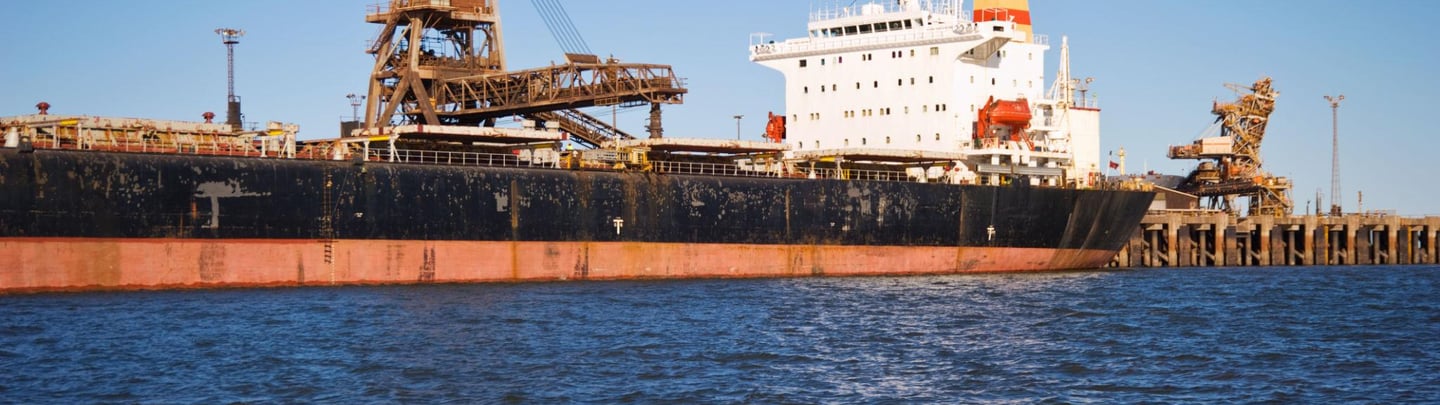
If you maintain bulk handling equipment in the Pilbara, you already know the cables are the part that quietly decides whether a shift runs or stops. Everything else on a ship loader can be engineered to last decades. The reeling cable, though, lives a hard life out in the weather, gets dragged across rollers thousands of times a week, and cops everything the Port Hedland climate throws at it. When it fails, it usually fails at the worst possible moment — mid-load, with a bulk carrier on demurrage and a queue building out in the anchorage.
This article walks through why Port Hedland is such a brutal environment for crane and reeling cables, the failure modes that show up again and again at bulk export terminals, and what actually matters when you're specifying a replacement. There's also a section most cable suppliers never bother to write — a back-of-the-envelope look at how many bending cycles a single ship loader cable racks up in a year. If you've ever wondered why your cables wear out faster than the brochure suggested, that maths is worth five minutes of your time.
Why Port Hedland Is a Special Case
Port Hedland sits on the coast of Western Australia's Pilbara region, and it is the largest bulk export port in the world by tonnage. In the 2024–25 financial year the port moved 577.7 million tonnes of cargo — a one per cent lift on the year before — which is the bulk of the throughput handled across the whole Pilbara Ports network. The overwhelming majority of that is iron ore, with lithium concentrate, salt and manganese filling out the rest, feeding the export programs of BHP, Rio Tinto, Fortescue and others.
What makes the port a genuinely difficult place to keep cables alive is the combination of three things at once: it runs flat out around the clock, it uses very large mobile machines that demand long, fast cable travel, and it does all of this in one of the harshest natural environments on the continent. Take any one of those factors on its own and you can manage it. Stack all three on top of each other and you have a situation where a standard industrial flexible cable simply won't survive.
Unlike a factory or a warehouse, where a crane might run a few hours a day and rest at night, Port Hedland equipment often runs continuously with very little downtime. The cable never really gets a break, which means there's no recovery period for the rubber compounds and no slack in the maintenance schedule for a leisurely replacement. Reliability isn't a nice-to-have here — it's the whole game.
The Machines That Depend on These Cables
A few classes of equipment do the heavy lifting at a bulk terminal, and each puts a slightly different kind of stress on its cables.
Ship loaders are the machines that actually fill the vessels. They travel long distances along the wharf, often at high speed, paying cable in and out of a reeling drum as they go. Fast travel plus long runs equals a lot of cable movement, and that movement is where the wear happens.
Stacker reclaimers manage the enormous stockpiles in the yard. They move continuously, swinging a boom and travelling along rails, which means their cables face both long travel distances and constant low-level flexing rather than the occasional big movement.
Bucket wheel reclaimers dig into the stockpiles to recover material. They run more or less non-stop and put high torsional and tensile loads through their cables, because the machine is twisting and pulling as it works.
Conveyor transfer systems carry the material between all of these. They're less about dramatic movement and more about reliable power and control delivery, often over long fixed runs in dusty, exposed locations.
The common thread is that none of these are gentle, stationary applications. They all move, and the cable has to move with them, repeatedly, for years.
The Environmental Challenges
Extreme Pilbara Heat
Summer in the Pilbara is relentless. Ambient air temperatures regularly push past 45°C, and the surface temperature of steel structures and cable reels sitting in direct sun can climb well above 60°C. On top of the raw heat, there's heavy thermal cycling — scorching days followed by cooler nights, repeated over and over.
Heat is hard on cables in several ways. It ages insulation, gradually changing the chemistry of the polymer until it loses its electrical and mechanical properties. It robs the cable of flexibility, so a sheath that was supple when installed becomes stiff and prone to splitting. It can crack jackets outright. And as conductors warm up, their electrical resistance rises, which means more heat generated for the same current — a feedback loop that nobody wants in a power cable.
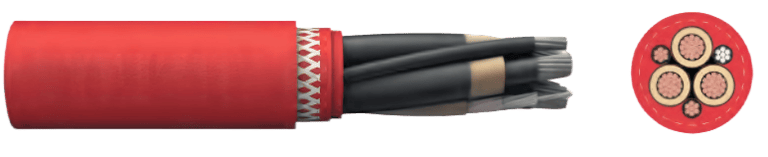
This is why the temperature rating on a cable's datasheet matters so much in the Pilbara. A cable like the PROTOLON (N)TSCGEWOEU is rated for conductor temperatures up to 90°C, with an ambient operating range that comfortably covers fixed installation down to −50°C and up to +80°C. That headroom is exactly what you want when the reel itself might be sitting at 60°C before the cable even starts carrying load.
Intense UV Radiation
Western Australia gets some of the highest ultraviolet levels measured anywhere on earth, and UV is quietly destructive to the wrong kind of cable jacket. Over months and years of exposure, UV breaks down the polymer chains at the surface of an ordinary sheath. The visible result is a jacket that fades, chalks, hardens and eventually develops a network of fine surface cracks. Once those cracks form, they become entry points for moisture and dust, and the mechanical strength of the sheath drops away.
This is the single biggest reason cheap industrial PVC-jacketed cables fail prematurely in the Pilbara. They were never designed for sustained outdoor UV exposure, and they simply don't last. A reeling cable specified for this region needs a sheath compound that's genuinely weather-stable. The PROTOLON design uses a high-grade rubber outer sheath that's rated for unrestricted use outdoors and is specifically resistant to ozone, UV and moisture — which is the kind of specification language you actually want to see, rather than a vague "suitable for outdoor use".
Salt Spray and Corrosion
Port Hedland is a marine environment, full stop. The air carries salt, the humidity is high, and coastal winds drive that salt-laden moisture into every piece of equipment on the wharf. For cables, the danger isn't really the rubber — it's the metal inside.
Bare copper corrodes when salt and moisture get to it, and corroded conductors mean rising resistance, localised heating and eventually failure. Any metallic armour can degrade the same way, and connectors and terminations are particularly vulnerable because that's where the conductor is exposed. The defence against all of this is tinned copper. Coating each copper strand in tin gives a corrosion-resistant barrier that dramatically slows the chemistry that kills marine cables.
The PROTOLON (N)TSCGEWOEU uses tinned, very finely stranded electrolytic copper for both the main conductors and the earth conductor. The tinning addresses the corrosion problem, and the fine stranding is what gives the cable its flexibility — two requirements that a Port Hedland cable has to satisfy simultaneously.
Iron Ore Dust and Abrasion
This is the challenge that gets overlooked most often, and it's a serious one. Iron ore dust is everywhere at a bulk terminal — fine, dark, abrasive and persistent. It settles on reeling drums, works its way onto guide rollers, and coats the cable itself. Every time the cable winds onto a dusty reel or passes over a grit-covered roller, that dust acts like sandpaper on the sheath.
The effects build up slowly but surely. Dust accumulation on reels changes how the cable seats and increases friction. It wears the jacket from the outside in. It raises the drag on roller systems, which in turn raises the tension the cable has to withstand. Over a stockyard machine's working life, abrasion from iron ore dust can be the dominant cause of sheath wear, quite apart from anything the sun or the salt is doing.
The answer is a genuinely abrasion-resistant outer sheath. The PROTOLON design tackles this with a "sandwich" sheath structure — a double-layer outer sheath built from tear-proof, abrasion-resistant rubber compounds, with a reinforcing polyester braid bonded between the inner and outer sheaths. That construction is what lets the cable shrug off the constant scuffing that a Pilbara stockyard delivers.
How the Cables Actually Fail
When you look at decommissioned reeling cables from bulk export terminals, the same handful of failure modes turn up over and over.
Outer jacket cracking is usually the first visible sign of trouble. It's driven by UV exposure, sustained heat and sometimes chemical contamination, and once the jacket is compromised everything else accelerates.
Conductor fatigue is the failure that the bending-cycle maths below explains. Continuous reeling and repeated bending work-harden the copper strands until individual wires begin to break. Fine stranding delays this enormously, which is one of the reasons reeling cables use it, but no conductor bends forever.
Crushing and mechanical damage tends to happen at specific spots — on the reeling drum where layers press together, in roller systems, and at guide pulleys. These are concentrated stress points where a cable can be physically squashed or pinched.
Moisture and corrosion damage shows up most in the wettest, most exposed locations: wharf ship loaders and marine transfer stations that take the full force of spray and humidity. This is where tinned conductors and a proven water-resistant design earn their keep.
How Many Reeling Cycles Does a Port Hedland Ship Loader Perform Each Year?
Here's the section worth slowing down for, because the answer surprises a lot of people — including some who've been specifying cables for years.
Let's build a realistic example. Picture a ship loader on a wharf with a cable travel length of 300 metres, reeling at a speed of 120 metres per minute, running 20 hours a day. Those are entirely ordinary numbers for a busy Pilbara berth.
Start with a single one-way travel. At 120 metres per minute, covering 300 metres takes 2.5 minutes. A full out-and-back movement — the loader travels out and then returns — is therefore about 5 minutes, and each of those round trips winds the cable onto the reel and off again, which is one major bending cycle for the section of cable at the drum.
Now do the arithmetic across a working day:
A 20-hour day gives you 1,200 minutes of operation. Divide that by the 5-minute round trip and you get roughly 240 bending cycles per day. Over a 30-day month that's about 7,200 bending cycles per month. And across a full year of operation, you land at somewhere around 87,600 bending cycles per year — and that's the conservative count, treating each out-and-back as a single cycle. If you count each individual pass over the reel as a bend, which is closer to what the cable physically experiences, the figure roughly doubles to over 175,000 bends a year.
Sit with that number for a moment. A single ship loader cable is being flexed and reeled the better part of a hundred thousand times every year, in 60°C heat, under UV, while coated in abrasive ore dust. No wonder fatigue resistance and sheath durability aren't optional extras. The reason a purpose-built reeling cable costs more than a generic flexible cable is that it's engineered to absorb that punishment — through fine stranding, a reinforcing braid, and rubber compounds chosen for flex life rather than just initial flexibility.
When you frame a cable purchase against 87,600-plus cycles a year, the question stops being "which cable is cheapest" and becomes "which cable survives the cycle count with margin to spare". That's the right question.
What to Specify for Port Hedland
Pulling the environmental and mechanical realities together, a cable destined for Port Hedland bulk handling needs to tick a specific set of boxes.
It has to be highly flexible, because continuous reeling, long travel and dynamic bending are the whole job. It needs a UV-resistant outer sheath built for sustained Australian outdoor exposure, not a generic indoor-rated jacket. It must offer saltwater and chemical resistance, with tinned conductors to fight marine corrosion at the terminal. It needs real abrasion resistance to handle iron ore dust, spillage and the general grit of a conveyor environment. And it should cover a wide temperature range — ideally something in the order of −40°C to +90°C — so that neither a freezing pre-dawn start nor a blazing afternoon takes it outside its rated envelope.
None of these requirements is exotic on its own. The difficulty is finding a cable that genuinely satisfies all of them at once, because that's what the Pilbara demands.
The Recommended Cable: PROTOLON (N)TSCGEWOEU
For ship loaders, stacker reclaimers, bucket wheel reclaimers and rail-mounted bulk handling equipment, the cable worth building a specification around is the PROTOLON (N)TSCGEWOEU medium-voltage reeling cable. It's one of the most established reeling cable designs in the German port, stacker-reclaimer, ship-loader and bucket-wheel sector, and that pedigree maps almost perfectly onto Port Hedland's application set.
What makes it suit this environment is the way each design feature answers a specific Pilbara problem. The finely stranded, tinned copper conductors address both flexibility and salt corrosion. The EPR-based insulation carries the 90°C conductor rating that the heat demands. The double-layer "sandwich" sheath system, with its anti-torsion polyester braid vulcanised between the inner and outer rubber layers, delivers the combination of flexibility, tear resistance and abrasion resistance that the reeling cycles and the ore dust require. The PCP-based outer sheath is explicitly rated for unrestricted outdoor use against ozone, UV and moisture. And the cable is designed from the ground up for high travel speeds, dynamic tensile loads, repeated changes of direction and torsional stress — which is to say, exactly the duty a ship loader imposes.
The cable is available across a range of medium-voltage ratings — from 1.8/3 kV up through 3.6/6 kV, 6/10 kV, 8.7/15 kV and 12/20 kV — and in a spread of conductor cross-sections to match the current the equipment actually draws. As a practical illustration, a three-core construction with a 95 square millimetre conductor and a split earth conductor carries a nominal rating in the region of 300 amps and a maximum permissible tensile force around the 5,700 newton mark, with a dynamic tensile capacity higher still. The point isn't the individual figure — it's that the range exists, so the cable can be matched to the machine rather than the machine being forced to live with a generic cable.
Crucially, the design is rated for gantry reeling operation with no travel-speed restriction up to 240 metres per minute, beyond which the manufacturer simply asks to be consulted. For a ship loader running the kind of cycle count we worked through above, that headroom is precisely what separates a cable that lasts from one that doesn't.
The underlying logic is straightforward. The Port Hedland combination — extreme heat, intense UV, marine corrosion and abrasive ore dust, all at once, all the time — calls for a cable engineered specifically for heavy-duty reeling, not a standard industrial flexible cable pressed into a job it was never built for. The PROTOLON (N)TSCGEWOEU is that purpose-built cable.
Choosing the Right Supplier
The cable is only part of the decision. The supplier behind it matters just as much, especially for equipment that can't afford unplanned downtime. When you're weighing up who to buy from, the things worth pressing on are genuine mining-industry experience, real reeling-cable expertise rather than general cable trading, and demonstrable compliance with the relevant IEC and Australian requirements for your application.
Beyond that, look for custom design capability, because Pilbara installations frequently have requirements that don't fit a catalogue exactly. Ask about technical support — someone who can help you match cable to duty and troubleshoot a problem is worth a great deal when a machine is down. And be realistic about lead times and availability, since a perfect cable that's six months away doesn't help when a ship loader cable fails next week.
The Bottom Line
Port Hedland is about as demanding an environment for crane and reeling cables as exists anywhere on the planet. Extreme temperatures, ferocious UV, marine corrosion and abrasive iron ore dust combine to shorten the life of any cable that wasn't designed for the job — and as the bending-cycle maths shows, the sheer volume of mechanical work a reeling cable performs each year leaves no room for a marginal product.
For ship loaders, stacker reclaimers, bucket wheel reclaimers and the rest of the bulk handling fleet, investing in a purpose-built, high-performance reeling cable like the PROTOLON (N)TSCGEWOEU is one of the more reliable ways to cut downtime, trim maintenance costs and reduce operational risk. In a port that moves more bulk cargo than any other on earth, choosing a cable engineered specifically for mining and port duty isn't an indulgence — it's the baseline for keeping the gateway open.
How to Reach Us
Get in Touch
SiteMap
Product Catalogue
Festoon Cable
Shore Power Cable




Scan to add us on WeChat