
Crane Cable Compliance Checklist for Australian Projects
A practical guide to crane cable compliance for Australian projects—covering AS/NZS 5000, AS/NZS 1802, IEC 60228, fire performance and a pre-purchase checklist.
hongjing.Wang@Feichun
6/11/202612 min read
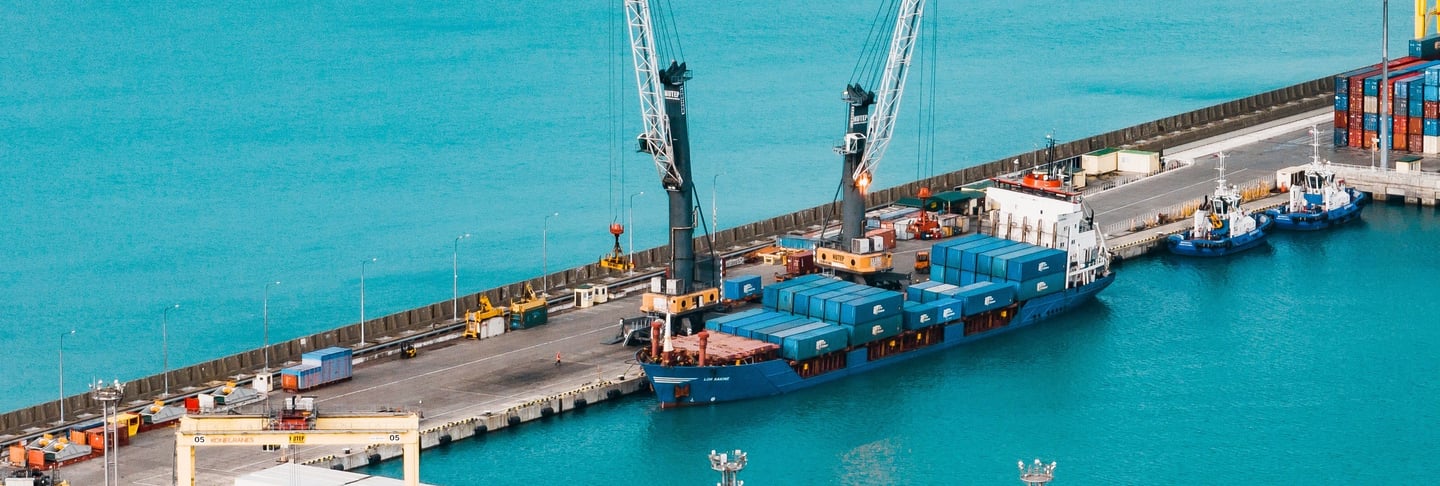
Crane cables don't have an easy life. They're under continuous movement, tension and bending, all while copping whatever the environment throws at them—sun, salt, oil, dust and temperature swings. So when it comes to specifying and buying them for an Australian project, "near enough" isn't good enough.
Get the compliance wrong and the consequences land fast: installation delays, failed inspections, higher maintenance bills down the track, and—most importantly—safety risks that no project can carry. And here's the wrinkle that catches a lot of buyers out. Australian mining, port, bulk-handling and industrial projects often need cables that satisfy multiple Australian and international standards at once, not a single tidy specification you can tick off and forget.
This guide is here to cut through that. It'll help you understand which standards commonly apply, which requirements are genuinely mandatory versus project-specific, and—critically—what documentation a supplier should be putting in front of you before you commit to a purchase. By the end you'll have a practical checklist you can take into any tender or procurement conversation.
Why crane cable compliance is more than just voltage rating
It's easy to glance at a cable, confirm it's rated for the voltage, and assume the job's done. That's where a lot of compliance headaches begin.
The difference between product compliance and installation compliance
There are really two separate compliance questions, and they're often confused.
Product standards define how the cable itself is built and how it performs—the conductor construction, the insulation, the sheath, the mechanical and electrical properties. Installation standards define how that cable is selected, routed and installed once it's on site.
In an Australian context, that distinction shows up clearly in two reference points. The AS/NZS 5000 series sits largely on the product side, governing cable construction and performance. The AS/NZS 3000 Wiring Rules sit on the installation side, governing how the electrical work is actually done.
A cable can be a perfectly compliant product and still end up part of a non-compliant installation if the selection or routing doesn't line up with the Wiring Rules. Both halves have to be right.
Why dynamic applications require additional verification
Most electrical standards were written with fixed, static wiring in mind—cable that gets pulled into place once and then sits there for thirty years. Crane cables are a different animal entirely. They live in:
Reeling systems, winding on and off drums continuously
Festoon systems, gathering and spreading along a track
Crane travel applications, moving back and forth across a wharf or yard
Continuous flexing environments where the cable never really stops moving
Because of that constant motion, crane cables routinely face requirements that go well beyond what a conventional fixed power cable ever has to meet. Voltage rating is the easy part. Flex life, torsion handling and tensile capacity are where the real verification work sits—and where a "compliant" cable can still be the wrong cable if those dynamic properties aren't checked.
Understanding Australian cable standards
Let's walk through the Australian frameworks you'll most often see referenced on a crane, reeling or festoon project.
AS/NZS 5000.1
AS/NZS 5000.1 covers polymeric-insulated cables rated up to and including 0.6/1 kV. This is the workhorse standard for a huge slice of industrial power and control circuits, and it's highly relevant to ports, terminals and automation systems where most of the power and control reeling cables sit in that 0.6/1 kV band.
Procurement teams typically reference this standard when they're specifying the low-voltage power and control cabling that feeds cranes, conveyors and the broader automation infrastructure. If your reeling cable is carrying power or control at 0.6/1 kV, this is the framework that's most likely in play.
AS/NZS 5000.2
AS/NZS 5000.2 deals with cables rated at 450/750 V, generally aimed at fixed wiring and industrial installations. The main practical difference from 5000.1 is the voltage band and the intended application—5000.2 leans towards the lighter-duty fixed wiring inside switchboards, control panels and machine wiring, rather than the heavier 0.6/1 kV power runs covered by 5000.1.
For crane projects you'll more often be living in 5000.1 territory, but 5000.2 still turns up for the internal wiring and lighter control circuits, so it's worth knowing where the line sits.
AS/NZS 3000 – Wiring Rules
AS/NZS 3000, the Wiring Rules, is Australia's primary electrical installation standard. Crucially, its focus is on installation practices rather than how a cable is manufactured. It's the standard that inspectors and certifiers lean on heavily during project approval and commissioning.
This is why cable selection can never happen in isolation. Even a beautifully constructed, fully product-compliant cable has to be selected and installed in a way that aligns with the overall AS/NZS 3000 installation compliance. The Wiring Rules are where the product and the installation have to meet in the middle, and it's where a lot of sign-off either happens smoothly or stalls.
Special considerations for flexible crane cables
Why standard building cables are not suitable
It bears repeating, because it's a genuinely common and expensive mistake: standard building or fixed-wiring cables are not suitable for crane duty. They simply aren't built for the punishment.
The killers are repeated bending, torsion (twisting) and the cumulative mechanical fatigue that comes from constant movement. A fixed cable expects to be installed once and left alone. A crane cable has to survive millions of flex cycles, and that demands a fundamentally different, dynamically rated construction—finely stranded flexible conductors, purpose-built sheaths and, in the heavier duties, anti-torsion reinforcement.
AS/NZS 1802 and flexible trailing cables
AS/NZS 1802 covers flexible trailing cables built for industrial and mining applications. The emphasis is on mechanical robustness and suitability for portable and mobile equipment environments, where the cable is dragged, flexed and knocked about rather than sitting still.
Engineers often reach for AS/NZS 1802 as a reference point when evaluating flexible power cables for demanding mobile duty, because it sets expectations around the kind of mechanical toughness that crane and trailing applications need.
AS/NZS 2802 and mining-type flexible cables
AS/NZS 2802 steps things up to heavy-duty flexible cables for mining and mobile equipment, with enhanced mechanical protection built in.
There's a strong overlap here that's worth understanding. The demands placed on mining-type flexible cables—heavy mechanical loads, abrasion, constant movement, rough environments—mirror many crane cable applications closely. A bulk-handling stacker-reclaimer or a port crane reel isn't a world away from a piece of mobile mining plant in terms of what the cable endures. That's why mining cable requirements frequently inform crane cable selection, particularly on resources and bulk-handling projects.
When crane cables require additional performance criteria
Here's the point that ties this section together: meeting a standard isn't the same as being fit for purpose.
A cable can satisfy the relevant AS/NZS framework on paper and still fall short in service if the application demands more—and crane applications very often do. Think about:
High-speed reeling that subjects the cable to rapid acceleration and tension cycling
Long travel distances that increase the cable's mechanical workload
High tensile loads from the scale of movement and cable weight
Outdoor operation with all the environmental exposure that brings
Compliance alone may not guarantee suitability. The standards set the floor; the application sets the bar. Both need attention.
IEC standards commonly referenced in crane cable specifications
Alongside the Australian frameworks, a handful of IEC standards turn up again and again in crane cable specifications—particularly for verifying conductor and fire performance. These are the ones worth knowing.
IEC 60228 – Conductor requirements
IEC 60228 defines conductor classes and conductor resistance. For crane cables, the class that matters most is Class 5—the flexible conductor class—and sometimes finer.
The reason Class 5 conductors are so commonly specified comes down to a simple relationship: flexibility and service life are linked. A more finely stranded conductor flexes more readily and survives far more bending cycles before fatigue sets in. Specify a stiffer, lower-class conductor into a high-flex reeling application and you're effectively designing in early failure. This is why a credible crane cable datasheet will almost always cite Class 5 (or finer) to IEC 60228.
IEC 60332 – Flame retardant performance
IEC 60332 governs flame-retardant performance, covering fire propagation testing and the limitation of flame spread along a cable.
Industrial facilities increasingly require flame-retardant cables as a baseline, and for good reason. In a dense terminal, plant room or yard full of equipment, a cable that helps limit flame spread rather than feeding a fire is a meaningful safety asset. IEC 60332 (often the 60332-1 single-cable test) is one of the most frequently cited fire-performance references on crane cable specs.
IEC 60754 – Halogen gas emissions
IEC 60754 deals with the corrosive gases a cable emits when it burns. The concern here is that halogen-based materials can release corrosive gas during a fire, which damages nearby equipment and infrastructure.
This becomes particularly relevant in enclosed industrial environments, where corrosive combustion products have nowhere to go and can wreck sensitive electronics and machinery well beyond the immediate fire. Where equipment protection matters, low-halogen or halogen-free cables tested against IEC 60754 come into the conversation.
IEC 61034 – Smoke emission characteristics
IEC 61034 covers smoke density—how much smoke a burning cable produces and how badly it obscures visibility.
The driver here is safety during a fire incident. Heavy smoke makes evacuation and emergency response far harder. That's why low-smoke performance is often specified in ports, tunnels and public infrastructure, where people need to be able to see and move during an emergency. If your project has any public-safety or confined-space dimension, expect IEC 61034 to appear.
Flame retardant vs fire resistant – a common source of confusion
These two terms get used interchangeably all the time, and they shouldn't be. They mean genuinely different things.
What flame retardant actually means
A flame-retardant cable is designed to limit flame spread and reduce fire propagation. In plain terms, it resists becoming a wick that carries fire along its length. It's not claiming to keep working in a fire—it's claiming not to make the fire worse.
What fire resistant means
A fire-resistant cable is a different proposition. It's designed to maintain circuit integrity during a fire—to keep carrying current for a defined period while it's actually burning. That's what supports emergency systems like alarms, evacuation lighting and critical controls that have to keep functioning when everything else is on fire.
Which requirement is more common for crane applications
For most crane cable specifications, the focus is on flame retardancy—limiting fire spread—rather than full fire resistance. Crane reeling cables generally aren't part of a life-safety circuit that has to survive a fire, so flame-retardant performance is the usual baseline.
Fire resistance, where it's required at all, tends to be driven by a project-specific risk assessment rather than being a default crane cable requirement. The takeaway: don't pay for fire resistance you don't need, but do confirm which one your specification is actually asking for, because the words are not interchangeable.
Environmental compliance requirements frequently seen in Australian projects
Beyond electrical and fire performance, environmental and chemical compliance declarations are increasingly part of the procurement conversation—even on Australian projects.
RoHS compliance
RoHS (Restriction of Hazardous Substances) restricts the use of certain hazardous materials in products. While it originates as a European framework, it's become a widely recognised international procurement requirement, and many EPC contractors now request RoHS declarations as a matter of course. If your project has international stakeholders or follows a global procurement framework, expect RoHS to come up.
REACH compliance
REACH concerns the management of chemical substances and supply-chain transparency around them. Like RoHS, it's European in origin but frequently requested well outside Europe, because it gives buyers assurance about what's actually in the product. REACH documentation is increasingly a standard ask in tender packages, regardless of where the project sits.
Why documentation matters
Here's the part that separates a smooth procurement from a painful one. Declarations, test reports and material certificates are what turn a claim into evidence.
A supplier telling you a cable is compliant is not the same as a supplier handing you the test report that proves it. On any serious project, supporting evidence beats marketing claims every time—and the absence of documentation is a red flag, not a detail. If a supplier can't readily produce the certificates, that tells you something important before you've spent a dollar.
Additional requirements commonly seen in port and automation projects
Port and automation projects layer on a set of environmental and mechanical requirements that reflect where these cables actually work.
UV resistance is essential because port cranes operate outdoors, exposed to continuous solar radiation that degrades unprotected jackets over time.
Oil and grease resistance matters wherever hydraulic systems and industrial machinery are present—which is everywhere on a terminal. A cable that isn't oil-resistant swells and softens on contact, so this gets written into specifications as standard.
Moisture and marine environment protection comes into play at ports, coastal terminals and bulk-handling facilities, where salt-laden air and persistent moisture attack cables that aren't built to resist them.
Mechanical durability—tensile strength, abrasion resistance and flex life—is the catch-all that determines whether the cable survives its working life at all. These properties are frequently spelled out explicitly in technical specifications precisely because they're what crane duty hammers hardest.
None of these are exotic. But all of them belong in the specification, and all of them deserve confirmation against the supplier's datasheet rather than assumption.
Is CPR relevant for Australian crane cable projects?
Understanding CPR
CPR stands for Construction Products Regulation—a European classification system covering the fire behaviour of construction products, including cables. It's a European framework, so the natural question for an Australian buyer is: does it apply to me?
When CPR may still be required
Often the answer is no. But not always. CPR can still find its way into an Australian project through a few channels:
European EPC contractors running the project to their home frameworks
International port projects with global owners or operators
Global procurement frameworks that standardise on CPR across all regions
In those situations, CPR compliance may be written into the tender even though it isn't an Australian legal requirement.
How buyers should verify CPR requirements
The way to handle this is simple and worth doing early. Review the tender documents to see whether CPR is mentioned. Confirm the owner's specifications. And verify the supplier's documentation can meet it if it's required. Don't assume CPR is irrelevant just because the project is in Australia—check, because retrofitting a CPR requirement late is far more painful than confirming it up front.
Practical crane cable compliance checklist before purchase
Here's the part to keep handy. Before you commit to a crane, reeling or festoon cable purchase, work through these checks:
Verify conductor construction. Confirm Class 5 flexibility (or finer) where the application requires it, in line with IEC 60228.
Verify Australian Standard references. Confirm the specific AS/NZS requirements your project calls for—commonly the AS/NZS 5000 series, AS/NZS 3000, and where relevant AS/NZS 1802 or AS/NZS 2802.
Verify fire performance. Confirm whether the project needs flame-retardant or fire-resistant cable—and remember they're not the same thing.
Verify environmental resistance. Confirm UV, oil and moisture resistance suited to the actual operating environment.
Verify IEC test compliance. Review the relevant reports against IEC 60228, IEC 60332, IEC 60754 and IEC 61034.
Verify environmental declarations. Confirm RoHS and REACH documentation is available.
Verify third-party testing. Request test certificates and compliance reports rather than accepting claims at face value.
Verify application suitability. Confirm the cable is genuinely compatible with your specific reeling, festoon or drag-chain operation—not just compliant in the abstract.
If a supplier can satisfy every item on that list with documentation in hand, you're in good shape. If they stumble on several, that's your signal to keep looking.
Choosing a crane cable supplier beyond compliance
Compliance is the starting point, not the finish line
It's worth being clear-eyed about this: compliance gets you to the start line, not across it. Two cables can both be fully compliant and still perform very differently in service.
What separates them is mechanical performance, real-world flex life, and the service support behind the product. A cable that meets every standard but fails early under your actual duty cycle hasn't saved you anything. Compliance is necessary, but on its own it's not sufficient.
Documentation buyers should request
When you're assessing any supplier, ask for the full evidence package:
Test reports against the relevant IEC and AS/NZS standards
Technical datasheets with the mechanical and electrical properties laid out
Compliance declarations including RoHS and REACH where required
Quality certifications covering the manufacturer's quality systems
A supplier who can produce all of this readily is one who takes compliance seriously. One who can't is a risk you can see coming.
Evaluating alternative suppliers
This is where it pays to look beyond the obvious names. FeiChun is worth evaluating as an alternative for Australian crane, reeling and festoon cable requirements, offering:
Equivalent technical performance to major international brands
Compliance with relevant Australian and IEC requirements
Flexible production lengths
Faster lead times
Competitive pricing
Support across crane, reeling and festoon applications
The broader point is this: for many Australian projects, procurement decisions are increasingly influenced not only by compliance, but by lead time, budget constraints and supply flexibility. The cable has to meet the standards—that's non-negotiable—but among compliant options, the supplier who can deliver the right length, on the right timeline, at the right price often wins the work. Evaluating compliance, mechanical performance, documentation quality and supplier capability together is what gets the best outcome.
Key takeaways
Australian crane cable compliance isn't a single box to tick—it involves both Australian and international standards working together. The most commonly referenced Australian frameworks are the AS/NZS 5000 series, AS/NZS 3000, AS/NZS 1802 and AS/NZS 2802, while IEC 60228, IEC 60332, IEC 60754 and IEC 61034 are frequently used to verify conductor and fire performance.
On top of the technical standards, environmental declarations like RoHS and REACH, along with proper test reports, are now routinely required during procurement—and documentation, not marketing claims, is what counts.
Above all, the projects that go smoothly are the ones that evaluate compliance, mechanical performance, documentation quality and supplier capability as a single picture rather than fixating on any one of them. Compliance is the foundation. Fit-for-purpose performance and a capable supplier are what build on it.
Looking for crane, reeling or festoon cables that meet Australian project requirements while offering flexible lengths, competitive pricing and shorter lead times? Contact FeiChun to discuss your application and compliance requirements.
How to Reach Us
Get in Touch
SiteMap
Product Catalogue
Festoon Cable
Shore Power Cable




Scan to add us on WeChat