
Diagnosing Flat Cable Delamination: Causes, Inspection Steps and Prevention Strategies
Spot flat cable delamination early. A diagnostic guide to layer separation, jacket cracking and edge splitting in crane and festoon cables—causes, inspection and prevention.
hongjing.Wang@Feichun
6/11/202611 min read
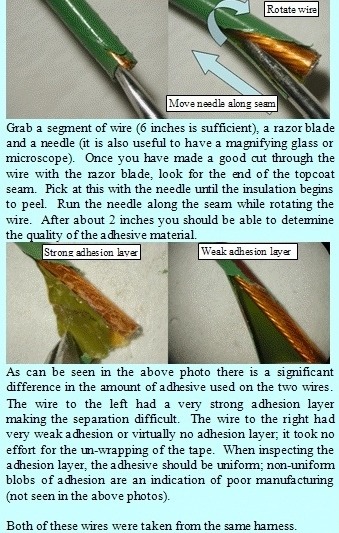
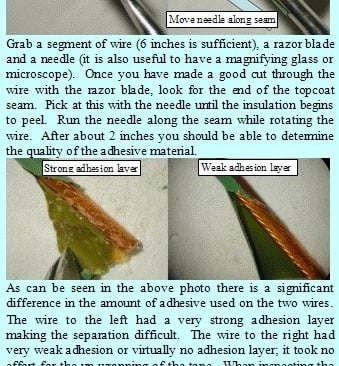
Flat cables turn up everywhere in heavy industry—cranes, festoon systems, automated warehouses, ports, mining equipment and all manner of moving machinery. Their flat profile is part of the appeal: they flex readily in one plane, pack neatly into festoon trolleys, and save space where a bundle of round cables would be a nightmare to manage.
But that same flat structure has a vulnerability. Repeated bending, tension, environmental exposure and the odd installation shortcut can, over time, cause the layers within the cable to come apart. That's delamination, and if you've landed here, there's a fair chance you're already looking at it on one of your machines.
Here's why it matters. Delamination is rarely the end of the story—it's usually an early warning that bigger trouble is coming. Left alone, it progresses to conductor exposure, electrical faults, unexpected downtime and genuine safety risks. Catching it early is the difference between a planned cable swap and an unplanned shutdown.
This guide walks through the lot: what delamination actually is, how to spot the warning signs, what real-world failures teach us, the root causes, a step-by-step inspection procedure, a field checklist, and how to prevent it happening again.
What is flat cable delamination?
Understanding layer separation in flat cables
Delamination is, simply put, the separation of layers within a flat cable's structure. A flat cable isn't a single solid object—it's a layered assembly, and delamination is what happens when those layers stop behaving as one.
In practice it shows up as:
Separation between the outer jacket and the conductor layer, where the sheath starts lifting away from what it's meant to protect
Separation between internal cable layers, breaking down the cable's structural integrity from the inside
Failure of the adhesive bonding layers that are supposed to hold everything together
Structural deformation caused by long-term mechanical stress reshaping the cable
Whatever the specific form, the result is the same: a cable that's no longer the unified, predictable component it was when it left the factory.
Why delamination usually develops gradually
One of the most important things to understand about delamination is that it almost never happens overnight. It's a slow-burn failure.
Three processes drive it, and all of them take time. There's progressive fatigue, where each flex cycle does a tiny amount of damage that accumulates. There's environmental degradation, as heat, cold, moisture and UV slowly break down the materials. And there's the sheer volume of repeated flexing cycles a working cable racks up—often millions over its service life.
Because it builds gradually over months or years, delamination gives you a window. The cable usually tells you it's in trouble well before it fails outright—if someone's looking. That's the entire premise behind regular inspection.
Common signs of flat cable delamination
Knowing what to look for turns a vague "this cable looks a bit rough" into an actionable diagnosis. The signs tend to progress through roughly four stages.
Edge splitting
The edges of a flat cable are where stress concentrates, so they're often the first place trouble appears. Look for small cracks forming along the cable edges. These edge regions cop the most strain during bending, which makes them a classic early-stage warning indicator.
Catch it here and you've caught it early. Edge splitting is the cable's polite first knock on the door.
Jacket cracking
Next comes surface cracking across the jacket itself. This is typically aging-related damage, driven heavily by UV and broader environmental exposure. A jacket that's spent years in the Australian sun and weather will eventually start to craze and crack on the surface as the material ages and loses flexibility.
Jacket cracking tells you the outer protective layer is breaking down—and once that barrier is compromised, moisture and contaminants have a way in.
Layer separation
This is delamination becoming visible. You'll see layers physically lifting, bulging sections where the bonding has let go, and other signs of internal structural failure. Where edge splitting and jacket cracking are surface symptoms, visible layer separation means the problem has progressed into the body of the cable.
At this stage the cable's mechanical integrity is genuinely compromised, and replacement should be firmly on the agenda.
Conductor exposure
This is the advanced failure stage, and it's the one you never want to reach. When the layers have separated and the jacket has broken down far enough, the conductors themselves become exposed.
This is an immediate electrical safety hazard—risk of shock, short circuit and arc faults—and it demands immediate replacement. There's no monitoring or watching-and-waiting at this point. A cable with exposed conductors is a cable that needs to come out of service now.
Real-world failure cases from heavy equipment applications
It's worth grounding the theory in what actually goes wrong in the field. The following cases come from heavy equipment crews discussing cable failures on cranes and telehandlers. They involve mechanical lifting cables rather than flat electrical cables specifically—but the failure mechanisms (overload, misalignment and bending-point fatigue) translate directly to how and why flat cables delaminate. The lessons are the valuable part.
Case study 1 – Cable failure during boom retraction
In one discussion, a telehandler's boom cables snapped while the operator was retracting the boom with a heavy concrete culvert still on the forks. The machine had worked flawlessly for years under lighter duty. The failure also damaged nearby hydraulic hoses. The consensus among the experienced operators was that the machine had been asked to do something it wasn't designed for—retracting a near-maximum load with the boom out horizontal—generating forces well beyond what the cables were meant to take.
The lesson: even a properly specified cable will fail if it's subjected to forces beyond its design limits. Overload and abnormal loading don't care how good your cable is. For flat cables, this is the same story that plays out as sudden tension spikes tearing bonding layers apart.
Case study 2 – Repeated pulley jumping and cable damage
In another case, a crane's proportioning cable repeatedly jumped off its sheave at full extension, and each time it did, it sustained damage. The owner had already been through three cables. The sheaves themselves showed no wear and the anchors were secure—so the real culprits, as other mechanics pointed out, were uneven cable tension and worn wear pads allowing the boom to sit slightly crooked on extension. That misalignment let the cable wander off the sheave and chew itself up over and over.
The lesson: improper pulley behaviour, fleet-angle problems and routing errors create recurring mechanical stress that accumulates over time. A cable doesn't have to be overloaded to fail—it just has to be repeatedly stressed in the wrong spot. For flat cables, that same misalignment drives edge splitting and progressive delamination.
Case study 3 – Stress concentration at a bending point
A third discussion centred on a wire rope that let go near its becket (the anchored end where the rope bends around a fixed point) after long service. The operator was lifting a bunk of OSB when the rope failed. The bending region near the becket was identified as a likely weak point—the spot where the cable bends repeatedly is the spot that fatigues first.
The lesson: areas of repeated bending become fatigue hotspots and deserve regular, targeted inspection. On a flat cable, the equivalent is the section that flexes around the same radius on every cycle—that's where delamination will start, and that's where your eyes should go first.
The most common causes of flat cable delamination
Pull all of that together and the causes of flat cable delamination sort into a handful of recurring culprits.
Bending radius below specification
This is one of the leading causes, full stop. Every cable has a minimum bending radius, and it exists for a reason. Flex the cable tighter than that radius—repeatedly—and you dramatically accelerate fatigue in the bonding layers. The adhesive and the materials simply can't tolerate being bent that hard, that often.
A bending radius below spec is the single most common own-goal in flat cable installations, and it's entirely preventable with correct path design.
Undersized pulleys and guide rollers
Closely related: pulleys and guide rollers that are too small. An undersized pulley forces the cable around a tight radius, which means excessive bending stress, concentrated mechanical loading and repetitive deformation at the same point every cycle.
This ties straight back to Case Study 2. When the guidance hardware isn't right—whether it's too small or out of alignment—the cable pays the price slowly but surely.
Excessive unsupported length
A long, unsupported run of flat cable carries its own weight, and that has consequences. The cable sags under its self-weight, and during movement that sag turns into dynamic loading—the cable bouncing, swinging and pulling against itself.
Those long unsupported sections create continuous stress accumulation, working the cable structure even when nothing dramatic is happening. Proper support intervals keep that in check.
Excessive tension and shock loading
Then there's the brutal, sudden stuff: excessive tension and shock loading. Sharp acceleration, hard emergency stops and overloaded systems all hit the cable with forces it has to absorb instantly.
This is Case Study 1 in cable form. A single severe shock load can tear bonding layers apart, and a system that regularly subjects the cable to these spikes will delaminate it far faster than steady operation ever would.
Environmental exposure
The environment does its own slow damage, and it works in several directions at once:
High temperatures soften the cable materials and degrade the adhesive bonding
Low temperatures make the jacket brittle and prone to crack formation
Moisture and humidity cause material deterioration and reduce bonding strength
UV exposure ages the jacket and triggers surface cracking
In a place like an Australian port or mine site, a cable can face several of these at once—baking heat, cold mornings, salt-laden moisture and relentless sun—which is exactly why environmental rating matters so much.
Poor cable construction or material quality
Finally, the uncomfortable truth: not all flat cables are built for dynamic duty. Some delaminate early simply because they were never engineered to flex continuously in the first place.
The tell-tale weaknesses are weak adhesive systems, a lack of reinforcement layers, inadequate tensile elements and generally inferior manufacturing. A cable like that might look identical to a quality one on the drum, but it'll come apart in a fraction of the cycles. Application-rated construction isn't a marketing nicety—it's the difference between a cable that lasts and one that doesn't.
Step-by-step flat cable delamination inspection procedure
When you've got a suspect cable, work through it methodically rather than eyeballing it and hoping. Here's a sound sequence.
Step 1 – Perform a visual inspection. Start broad. Walk the cable and look for cracks, bulges, abrasion marks and any general surface damage. You're building an overall picture before you zero in.
Step 2 – Inspect cable edges. Now get specific about the edges, since that's where trouble starts. Look closely for edge splitting, any layer lifting, and localised damage concentrated along the sides.
Step 3 – Check for layer separation. Move to the body of the cable. Using careful manual inspection—gently flexing and feeling along the cable—look for signs of internal detachment and any areas showing abnormal thickness or bulging, which indicate layers have come apart inside.
Step 4 – Inspect pulleys and cable routing. The cable doesn't exist in isolation. Check the pulley diameter against the cable's requirements, assess the fleet angle, confirm alignment is true, and identify any wear points where the cable contacts hardware.
Step 5 – Evaluate tension and unsupported length. Look at how the cable is loaded and supported. Check the tension settings, identify any sagging sections, and review the support intervals along the run.
Step 6 – Determine the root cause. Finally, classify what you've found. Is it a bending radius issue, a pulley design issue, a tension issue, an environmental issue, or a product quality issue? Pinning down the category is what lets you fix the cause rather than just swapping the cable and waiting for it to happen again.
Flat cable delamination inspection checklist
Keep this one handy for the field. It's meant to read like an engineer's walk-around guide, not a formal spec—run down it on site and tick off what you've checked.
Visible surface damage — any cracks, gouges or abrasion across the cable
Edge cracking — splitting or fissures along the cable edges
Jacket cracking — surface crazing or cracks in the outer sheath
Layer separation — lifting, bulging or internal detachment
Conductor exposure — any sign conductors are breaking through (immediate action)
Pulley condition — wear, grooving or damage on the sheaves
Pulley diameter suitability — is the pulley big enough for the cable's bending radius?
Routing alignment — does the cable track true through its path?
Fleet angle condition — is the angle into the pulley within tolerance?
Bending radius compliance — is the cable ever bent tighter than its minimum radius?
Tension level verification — is the cable too tight, too loose, or uneven?
Unsupported length assessment — are runs supported at proper intervals?
Heat damage indicators — softening, discolouration or deformation from heat
Moisture exposure indicators — swelling, staining or material breakdown from moisture
UV aging indicators — surface chalking, fading or brittleness from sun exposure
If several of these are showing, you're not looking at a one-off—you're looking at a systemic issue that'll keep recurring until the underlying cause is addressed.
How to prevent flat cable delamination
Diagnosis is only half the job. Here's how to stop it happening in the first place.
Select the correct cable type
It starts with choosing a cable built for the actual application. Two broad categories cover most heavy-duty dynamic work.
Festoon flat cable is suited to applications where the cable gathers and spreads along a track, such as overhead cranes, port equipment and automated handling systems. The flat profile is ideal for the controlled, single-plane folding a festoon system demands.
Drum reeling cable is built for motorised cable reels, long-travel applications and high-speed movement systems, where the cable winds on and off a drum continuously. The construction priorities here—flex life, tensile capacity, anti-torsion behaviour—differ from festoon duty, which is exactly why matching the cable to the system matters.
Maintain proper bending radius
Since under-radius bending is a top cause, respecting the minimum bending radius is a top prevention measure. Follow the manufacturer's specifications, design the cable path correctly from the outset, and avoid any geometry that forces repetitive over-bending. Getting the path right on paper saves a world of pain in service.
Use proper pulley and guide systems
Match the guidance hardware to the cable. That means an adequate pulley diameter (big enough to keep the cable within its bending radius), correct alignment so the cable tracks straight, and a setup that reduces edge stress rather than concentrating it. Good pulleys and guides spread the load instead of punishing one spot.
Control tension and unsupported length
Keep the mechanical loading sensible. Adjust tension so the cable is neither strained nor slack, add support points to break up long unsupported runs, and design the system to reduce dynamic loading from sag and movement. A well-supported, properly tensioned cable lives a far longer life.
Consider environmental conditions
Spec the cable for where it actually works. For ports, outdoor cranes and mining operations in particular, that means confirming UV resistance, oil resistance, moisture resistance and ozone resistance. These aren't optional extras in harsh Australian conditions—they're what keeps the jacket and bonding intact through years of sun, salt, oil and weather.
Choosing flat cables for demanding dynamic applications
Why application matching is critical
The single biggest lever you have is choosing the right cable for the job. Not all flat cables are designed for continuous movement—plenty are built for static or light-duty use and simply won't survive a high-cycle dynamic application. Dynamic duty requires specialised construction, and using a general-purpose flat cable where a dynamic-rated one belongs is a delamination failure waiting to happen.
Features to look for
When you're assessing a flat cable for serious dynamic work, look for:
Reinforced tensile members that take the pulling load off the conductors
High-flex conductors (finely stranded) engineered for millions of bending cycles
Durable jacket materials rated for the environment they'll face
Long flex-life design as a deliberate construction goal, not an afterthought
These are the features that separate a cable that lasts from one that delaminates inside a year.
Alternative solutions for crane and festoon systems
If you're weighing up suppliers, FeiChun's flat cables are worth a look. They're designed for the demanding dynamic applications where delamination is a real risk, including:
Festoon systems
Crane applications
Port automation
Material handling equipment
Mining machinery
The advantages FeiChun brings to the table include high flex-life construction, enhanced tensile strength, UV and oil resistance options, custom cable lengths, faster lead times, and competitive pricing compared with major international brands. For an operation that's been burnt by repeated flat cable failures, that combination of dynamic-rated construction plus supply flexibility is a practical answer rather than just another drum of cable.
Key takeaways
Delamination is one of the most common early indicators of flat cable failure, and the good news is that it announces itself well before catastrophe—if you're inspecting for it. Most failures trace back to a short list of causes: bending radius violations, pulley design problems, excessive tension, environmental exposure, or unsuitable cable construction.
Regular inspection is what lets you catch the problem at the edge-splitting or jacket-cracking stage, long before conductor exposure forces a system shutdown. And when it comes to stopping delamination for good, proper cable selection and sound installation practices are the most effective measures by a wide margin. The right cable, in the right path, with the right support, simply lasts.
If you're experiencing repeated flat cable failures in festoon, crane or automated handling systems, FeiChun can help. We'll evaluate your application and recommend high-flex cable solutions designed for long service life in demanding environments. Get in touch to talk through what's failing and why.
How to Reach Us
Get in Touch
SiteMap
Product Catalogue
Festoon Cable
Shore Power Cable




Scan to add us on WeChat