European Harmonised Cable Standards: Complete Guide to CENELEC HAR Cables for Industrial, Domestic & Commercial Applications
Comprehensive guide to European harmonised cable standards (HAR). Explore CENELEC requirements, cable types for industrial, domestic & commercial use with compliance benefits.
hongjing.Wang@Feichun
12/15/20258 min read
Introduction to European Harmonised Cable Standards
In today's interconnected European marketplace, the need for unified technical specifications has never been more critical. European harmonised cable standards represent a comprehensive framework that ensures electrical cables meet consistent quality, safety, and performance criteria across all member states. These standards, developed and maintained by CENELEC (European Committee for Electrotechnical Standardization), have revolutionized how cables are manufactured, tested, and deployed throughout Europe.
The harmonised approach eliminates technical barriers that once complicated cross-border trade, allowing manufacturers to produce cables that are recognized and accepted in all 33 CENELEC member countries and 14 affiliate nations. At the heart of this system lies the distinctive <HAR> marking, which appears on cable outer sheaths, identification threads, or printed tapes, signifying full compliance with CENELEC standards.
The BS EN 50525 standards series forms the backbone of European cable standardisation, covering everything from voltage ratings and conductor specifications to insulation materials and environmental performance. This comprehensive framework ensures that whether you're installing cables in Stockholm or Seville, the same high standards apply.
Understanding CENELEC Standards & HAR Compliance
CENELEC's regulatory authority extends across the European electrical sector, where it works closely with the European Commission to develop standards that promote safety, interoperability, and innovation. The organization's mission centers on creating technical requirements that cover mechanical properties (such as tensile strength and flexibility), electrical characteristics (including voltage ratings and insulation resistance), and material specifications (determining conductor composition and sheath materials).
The benefits of adopting harmonised standards are substantial. Manufacturers gain access to a unified market without needing multiple certifications for different countries. Installers can specify cables with confidence, knowing they meet recognized safety benchmarks. End-users benefit from enhanced protection and reliability. Most importantly, once CENELEC adopts a harmonised standard, all member states must integrate it into their national regulations, ensuring true cross-border compatibility.
CENELEC cable certification requires rigorous testing and documentation. The HAR marking placement follows strict guidelines, serving as a visible guarantee that cables have undergone proper evaluation and meet all technical requirements. This marking system has become the gold standard for electrical cable standards throughout Europe.
Harmonised Rubber Flexible Cables: Types & Applications
Rubber flexible cables represent some of the most versatile options in the harmonised cable portfolio, designed to withstand demanding conditions while maintaining excellent electrical performance.
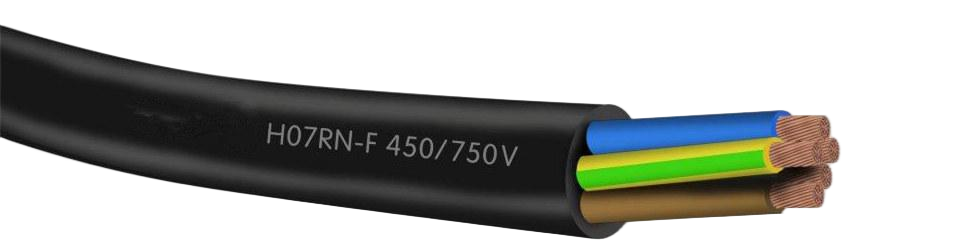
H07RN-F Cable (450/750V) stands as a workhorse for industrial machinery applications. Its rubber sheath provides exceptional resistance to mechanical stress, oils, and chemicals, making it ideal for mobile power supplies, temporary power installations, and equipment that requires frequent repositioning. The cable's flexibility allows it to bend repeatedly without degrading, essential for applications like construction site power distribution and industrial robotics.
H07BN4-F Cable features a Heat & Oil Resistant & Flame Retardant Chlorosulphonated Polyethylene (HOFR CSP) sheath, specifically engineered for harsh industrial environments. This cable excels in manufacturing facilities where exposure to petroleum products and elevated temperatures is routine, such as automotive production lines and metal processing plants.
H07ZZ-F LSZH Cable addresses fire-critical environments where human safety is paramount. Complying with BS EN 50525-3-21, this 450/750V cable produces minimal smoke and zero halogen emissions during fire conditions, making it the preferred choice for underground transportation systems, hospitals, and high-rise buildings where evacuation routes must remain visible and breathable.
For domestic and light industrial use, H05BN4-F Cable offers similar HOFR properties at a 300/500V rating, suitable for household power tools and light manufacturing equipment. H05RR-F Cable serves household appliances with its plain copper conductors and flexible design, commonly found in vacuum cleaners, kitchen mixers, and portable heaters.
H05GG-F Cable employs tinned copper conductors capable of withstanding temperatures up to 110°C, ideal for appliances generating significant heat such as industrial ovens, dryers, and heated process equipment. H05RNH-F External Festoon cables provide weather-resistant solutions for outdoor domestic applications, including garden equipment and external lighting installations, with oil resistance for added durability.
Harmonised Welding Cables & Industrial Power Distribution
Welding operations demand cables that can handle extreme conditions, and European harmonised cable standards compliance ensures these critical components meet rigorous requirements.
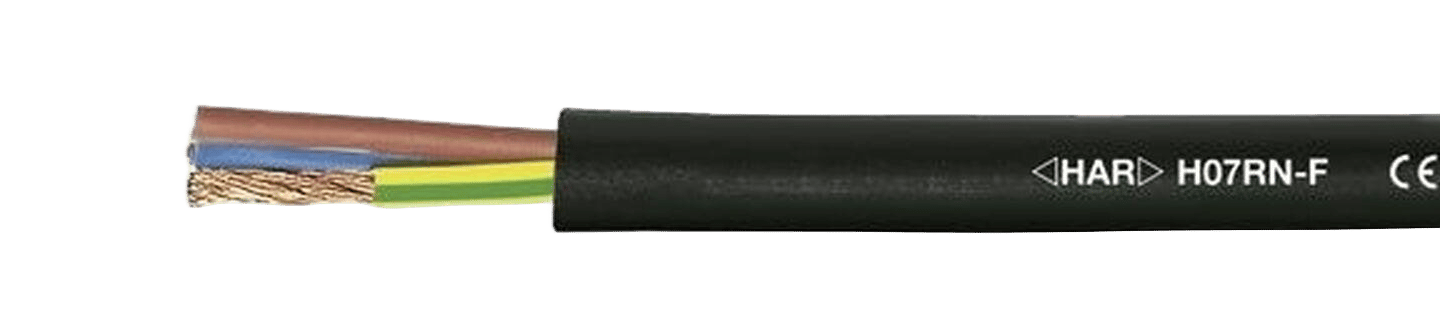
H01N2-E Cable, standardized under BS EN 50525-2-81, is specifically designed for distributing power from welding machines to welding tools. Its construction withstands the adverse conditions typical in welding environments, including spatter, heat, and mechanical abuse. The cable's robust design ensures consistent power delivery even when subjected to rough handling on factory floors or construction sites.
H01N2-D Cable matches all welding activities, from manual arc welding to automated spot welding systems in automotive assembly lines. Its mechanical stress resistance and temperature tolerance make it suitable for both stationary installations and mobile welding operations. These cables must endure constant flexing, dragging across surfaces, and exposure to welding heat, requirements that CENELEC standards address comprehensively.
Fixed Wiring Cables for Installation & Building Infrastructure
Building infrastructure requires cables designed for permanent installation, and harmonised standards ensure these critical components deliver long-term reliability.
H07V-R Cable utilizes Class 2 stranded conductors, offering flexibility that simplifies installation in conduits and cable trays. H07V-U Cable employs Class 1 solid conductors, providing superior rigidity for straight runs where flexibility is less critical. Both variants comply with BS EN 50525-2-31 and serve as the foundation for fixed electrical installations in residential, commercial, and industrial buildings.
H07Z-R LSZH conduit wiring represents a significant advancement in fire safety for fixed installations. This cable type addresses the growing concern about toxic fumes in enclosed spaces, making it mandatory in many public buildings, schools, and healthcare facilities where fire safety regulations are strictest. The advantages over non-harmonised alternatives include guaranteed performance specifications, international recognition, and simplified procurement processes.
Harmonised PVC Cables for Domestic & Commercial Applications
PVC cables dominate domestic and commercial installations due to their cost-effectiveness, ease of handling, and reliable performance.
H05V-K & H07V-K Cables offer flexible single-core solutions for panel wiring and appliance connections. The 300/500V H05V-K rating suits light-duty applications, while the 450/750V H07V-K handles more demanding commercial installations. These cables simplify inventory management as they're recognized throughout Europe.
H03VV-F Cable serves portable household appliances—radios, table lamps, phone chargers—where lightweight flexibility and safety are priorities. H05VV-F Cable steps up to handle washing machines, refrigerators, and kitchen equipment requiring higher current capacity and greater durability.
H07V2K Tri-Rated Cable distinguishes itself with 105°C temperature tolerance, essential for control panels, industrial equipment, and applications where elevated ambient temperatures or conductor heating require additional thermal margin. This cable meets standards from multiple countries simultaneously, simplifying international equipment manufacturing.
H03VVH2-F Flexible PVC provides economical solutions for indoor light-duty applications where fire performance requirements are less stringent. H05V2V2-F Cable offers 90°C temperature rating, suitable for domestic appliances and light industrial equipment. H05VVH6-F Elevator & conveyor system cables handle dynamic applications where cables experience continuous flexing and movement, incorporating design features that extend service life in these demanding conditions.
Low Smoke Zero Halogen (LSZH) Cables: Fire Safety Solutions
LSZH cable technology represents one of the most significant advancements in fire safety. Traditional PVC cables, when burning, release hydrochloric acid and dense black smoke that obscures vision and damages equipment. LSZH cables eliminate these hazards through halogen-free compounds that produce minimal smoke and non-corrosive gases.
H05Z-K & H07Z-K Flexible LSZH cables provide internal appliance wiring solutions that enhance product safety, particularly important for equipment used in hospitals, schools, and public facilities. H05Z1Z1-F Cable serves public area installations where fire codes mandate reduced toxic fumes and halogen-free properties.
Applications in hospitals demand LSZH solutions because smoke could endanger patients unable to evacuate quickly. Public transportation systems—subways, trains, airports—specify LSZH cables to maintain visibility during emergencies. Data centers increasingly adopt LSZH cables to protect sensitive equipment from corrosive gases that could result from traditional cable fires.
Testing, Certification & Compliance Standards
Ensuring cables meet harmonised standards requires comprehensive testing protocols. Key testing parameters include mechanical stress resistance (measuring how cables withstand pulling, bending, and impact), electrical properties (insulation resistance, voltage withstand, conductor resistance), and temperature tolerance (performance across rated temperature ranges).
The BS EN 50525 series standards breakdown covers:
Part 2-11 through 2-31: PVC insulated cables for general purposes
Part 2-81: Welding cables
Part 3-21: LSZH flexible cables
Part 3-41: LSZH fixed wiring cables
Compliance verification involves sample testing, factory inspections, and ongoing quality assurance programs. Third-party certification bodies assess manufacturing processes and test results, issuing certificates recognized throughout Europe. This international recognition of harmonised certificates eliminates redundant testing and reduces time-to-market for cable manufacturers.
Advantages of Choosing Harmonised Cables
The standardisation benefits extend beyond regulatory compliance. Cross-border compatibility means a single cable specification works across all European markets, reducing procurement complexity for international projects. Uniform quality and safety standards ensure consistent performance regardless of where cables are purchased or installed.
Reduced technical barriers simplify the specification process—engineers can reference HAR codes knowing all stakeholders understand the requirements. Long-term cost savings emerge from standardisation through larger production runs, interchangeable components, and simplified inventory management. Enhanced reliability and performance guarantees stem from rigorous testing requirements that exceed many national standards.
Regulatory compliance and risk reduction represent perhaps the most compelling advantages. Using harmonised cables demonstrates due diligence, potentially limiting liability in case of incidents. Insurance companies increasingly recognize the value of certified installations, sometimes offering preferential rates for projects using harmonised components.
Common Cable Selection Challenges & Solutions
Question: How do I choose between 300/500V and 450/750V rated cables for a new installation?
The voltage rating should exceed your system voltage with appropriate safety margin. For standard European domestic installations (230V single-phase), 300/500V cables suffice for fixed appliances. However, 450/750V cables provide additional safety margin and are mandatory for three-phase industrial installations (400V). Consider future expansion—specifying 450/750V initially provides flexibility for later upgrades without rewiring.
Question: When is LSZH cable justified despite higher costs?
LSZH cables are essential in any environment where fire smoke could trap occupants or where equipment damage from corrosive fumes would be catastrophic. This includes public buildings, transportation infrastructure, data centers, and hospitals. While initial costs run 20-40% higher than PVC equivalents, the liability reduction and life-safety benefits justify the investment. Many jurisdictions now mandate LSZH in specific applications, making the choice regulatory rather than optional.
Question: Can I mix harmonised and non-harmonised cables in the same installation?
While technically possible, mixing cable types complicates compliance verification and maintenance. Harmonised cables offer superior traceability—the HAR marking provides immediate identification. For professional installations, consistency simplifies inspection, troubleshooting, and future modifications. The marginal cost difference rarely justifies mixing cable types, especially considering documentation and compliance overhead.
Question: How do environmental factors affect cable selection?
Temperature extremes, moisture, chemical exposure, UV radiation, and mechanical stress all influence cable performance. For outdoor applications, UV-resistant sheaths prevent degradation. Chemical environments require oil-resistant compounds like HOFR CSP. High-temperature applications demand cables rated beyond ambient conditions—a 90°C cable in a 40°C environment may only handle 50°C conductor temperature rise before exceeding ratings. Always consult cable specifications and consider worst-case environmental conditions.
Conclusion: Why European Harmonised Standards Matter
European harmonised cable standards have transformed the electrical industry, creating a unified marketplace that benefits manufacturers, installers, and end-users alike. From H07RN-F industrial cables to H05Z1Z1-F fire-safety solutions, the HAR cable types and applications span every conceivable installation requirement.
Future trends point toward even greater standardisation, with emerging technologies like renewable energy systems and electric vehicle charging infrastructure driving new cable requirements. CENELEC continues adapting standards to address these evolving needs while maintaining backward compatibility with existing installations.
The importance of CENELEC standards for European market integration cannot be overstated. These standards enable the free movement of electrical products while ensuring safety remains paramount. As building codes grow more stringent and fire safety concerns intensify, harmonised cable standards provide the framework for responsible electrical installations.
Quality assurance in cable selection ultimately protects people, property, and investments. Whether specifying cables for a residential renovation or industrial facility, choosing HAR-certified products demonstrates commitment to safety, reliability, and professional standards. The comprehensive testing, consistent specifications, and international recognition make harmonised cables the intelligent choice for any European electrical project.
By understanding HAR cable types and applications guide principles, electrical professionals can navigate the complex landscape of cable selection with confidence, ensuring their installations meet both current regulations and future needs.
How to Reach Us
Get in Touch
SiteMap
Product Catalogue
Festoon Cable
Shore Power Cable


Scan to add us on WeChat