Extreme Abrasion Resistant Mining Cable for Draglines and Shovels: TENAX-SAS (N)TSCGEWOEU 6-35KV Heavy-Duty Reeling Cable
Discover why TENAX-SAS (N)TSCGEWOEU 6-35KV extreme heavy-duty mining cable is the trusted choice for Australian draglines and electric shovels. Superior abrasion resistance, -50°C flexibility, and proven performance in Pilbara iron ore and Bowen Basin coal mining.
hongjing.Wang@Feichun
5/14/202615 min read


Why Australian Draglines and Electric Shovels Are Moving to Extreme Heavy-Duty Cable: TENAX-SAS (N)TSCGEWOEU 6-35KV Complete Performance Guide
Australia's largest open-cut mining equipment operates at scales and under stresses that test cable engineering beyond what standard industrial specifications address. When a dragline bucket swings through an arc loading several hundred tonnes, when electric shovels load trucks through continuous cycles in abrasive pit environments, when reeling cables wind and unwind hundreds of times daily across sharp rock edges and rough terrain, the power cables sustaining these operations experience mechanical stress that separates adequate cable performance from true reliability.
The TENAX-SAS (N)TSCGEWOEU 6-35KV extreme heavy-duty mining cable has become the specification of choice for Australia's most demanding mining applications. This isn't a cable engineered as a general-purpose mining solution—it's a cable specifically designed for the extreme conditions encountered by the largest mobile equipment operating at the most intense operating stresses found anywhere in global mining.
Operators who have experienced the difference between standard heavy-duty cable specifications and true extreme-duty engineering understand why this cable has become indispensable for critical equipment in Australia's most challenging mining operations.
The Reality of Extreme-Stress Mining Equipment Operation
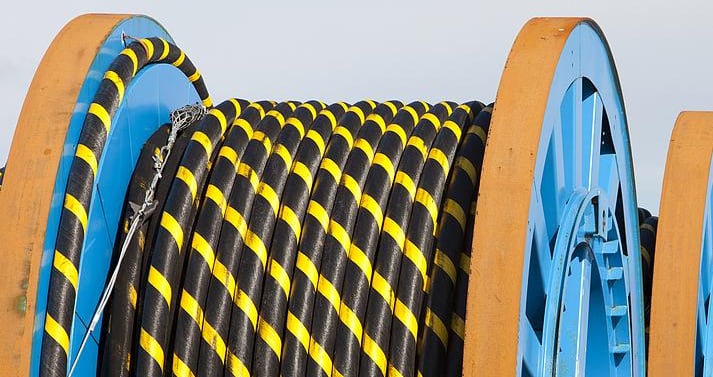
Australia's open-cut mining operations include some of the world's largest mobile equipment. Electric shovels capable of loading 100-tonne trucks in single bucket movements, draglines with buckets exceeding 200 cubic metres, bucket wheel excavators operating continuously through 24-hour production cycles—this equipment operates at scales that create electrical and mechanical stresses vastly exceeding standard industrial applications.
The Pilbara region of Western Australia operates some of the world's largest iron ore mining equipment. Draglines extract millions of tonnes of overburden annually, with bucket movements creating torsional and tensile stresses on trailing cables that accumulate continuously throughout operational lives extending many years. The equipment operates in environments where rock surfaces are sharp, terrain is abrasive, and the sheer scale of operations means that cable wear occurs across larger surface areas and under higher loads than typical mining applications.
Queensland's Bowen Basin coal mining operations run similar large-scale equipment under different environmental conditions. The region experiences significant rainfall, moisture exposure, and temperature extremes—hot summers reaching 50°C+ and cool winters dropping toward freezing. Equipment operates through these temperature cycles continuously, subjecting cables to thermal stress that degrades standard rubber compounds progressively.
In both regions, and across other major Australian mining operations, the fundamental reality remains constant: the largest equipment experiences cable failure rates that disrupt production schedules, create maintenance headaches, and consume resources that could be directed toward production activities. Standard cable specifications, even those rated as "heavy-duty mining cables," prove inadequate for these extreme applications.
Understanding Extreme-Duty Cable Requirements
The TENAX-SAS (N)TSCGEWOEU cable's engineering reflects lessons learned from decades of observing how standard cables fail under extreme mining stress. The cable addresses multiple simultaneous failure mechanisms that destroy lesser cables.
First, abrasion damage from continuous dragging across rough terrain. Dragline cables are dragged across rock surfaces thousands of times during their operational lives. The cumulative effect of this dragging stress overwhelms standard cable sheaths, creating cracks and thin spots that allow moisture infiltration. The TENAX-SAS cable's ultra-robust outer sheath resists this progressive abrasion far more effectively than standard compounds.
Second, torsional stress from equipment boom movement and bucket rotation. Draglines and electric shovels experience continuous rotational forces as booms move through their operating ranges and buckets rotate during loading. This torsional stress twists cable conductors relative to each other, stressing insulation layers and progressively weakening internal cable structure. Standard cables lacking specific torsional resistance accumulate this internal damage until sudden failure occurs. The TENAX-SAS cable's central conductive support element and aramid rope core provide superior torsional resistance, distributing rotational stress evenly across the cable structure.
Third, mechanical impact stress from rock falls, equipment contact, and the violent forces inherent to massive equipment movement. Large equipment operates in open-cut mining environments where rock falls, equipment contact, and unexpected mechanical impacts occur regularly. Standard cables, lacking reinforcement against impact, sustain permanent damage from these events—damage that creates weak points where subsequent stress concentrates, eventually triggering failure. The TENAX-SAS cable's reinforced construction absorbs impact energy more effectively, reducing penetration damage to critical internal components.
Fourth, environmental degradation from UV exposure, thermal cycling, and moisture infiltration that occur together in Australian mining. The cable's rubber compound formulation maintains properties under combined environmental stresses that would degrade standard compounds progressively.
Real-World Performance: Pilbara Iron Ore Dragline Operation
A major iron ore mining operation in Western Australia's Pilbara region operates three large draglines as core extraction equipment. Each dragline runs 24-hour production cycles (when operational), extracting overburden and ore through bucket swings that load multiple-hundred-tonne loads continuously throughout extended production runs.
The operation's previous cable specification used heavy-duty mining reeling cable rated for large dragline applications. Over a five-year period, the three draglines experienced an average of 1.8 cable failures annually—meaning approximately five or six cable failures across the three machines annually.
Each dragline cable failure created significant operational disruption. Draglines operate in fixed positions—when a dragline stops, the entire mining operation essentially stops, because no ore extraction can occur. The operation maintained planned maintenance schedules that allowed dragline cable replacement during regular maintenance shutdowns, but unexpected failures forced emergency shutdown of mining operations, disrupting production schedules and requiring emergency response.
The operation's technical team calculated that each unexpected dragline failure cost approximately AUD $2.2 million in lost production and operational disruption. The five-year cost of dragline cable failures reached approximately AUD $55 million—a figure that seemed shocking until detailed analysis confirmed the calculation. This staggering cost motivated the operation to evaluate alternative cable specifications used on comparable equipment worldwide.
They identified the TENAX-SAS (N)TSCGEWOEU cable as a specification offering documented superior performance in extreme dragline applications. The operation invested in upgrading their three draglines to this specification, with new cables costing approximately AUD $520,000 and installation labour extending to AUD $140,000.
Over the subsequent five years, the three draglines experienced only two cable failures total—less than one failure every two years across all three machines combined, compared to 1.8 failures annually under the previous specification. The improvement exceeded expectations. More importantly, both failures during the upgrade period occurred during planned maintenance windows, not unexpected shutdowns.
The financial impact proved dramatic. The five-year prevention of unexpected dragline failures saved the operation approximately AUD $44 million in avoided production loss, compared to the AUD $660,000 investment in cable upgrade. The return on investment exceeded 6,600% over five years—a financial return that dwarfed the investment cost.
Beyond financial metrics, the dragline operation transformed from chronic cable failure management to planned maintenance predictability. The operation could schedule dragline cable replacement during regular maintenance shutdowns, avoiding emergency response situations. Crew resources devoted to dragline cable emergencies could be redirected toward production optimization.
Queensland Bowen Basin Coal Mining: Electric Shovel Application
A major coal mining operation in Queensland's Bowen Basin operates a fleet of electric shovels in open-cut coal extraction. The operation handles approximately 180 million tonnes of material annually, with electric shovels loading bucket-loads continuously through extended production cycles.
The operation's electric shovels previously used standard heavy-duty trailing cables. Despite careful maintenance, the operation experienced cable failures averaging 2.4 failures per shovel annually. With eight electric shovels in the fleet, this meant approximately nineteen cable failures annually—roughly one failure every two weeks.
The operation's challenge involved not just failure frequency but the nature of failures. The Bowen Basin's environment—high rainfall during wet season, significant temperature variation, and intense sun exposure during dry season—accelerates cable degradation. Cables developed moisture infiltration from rainfall exposure, became brittle from thermal cycling, and degraded from UV exposure. The failures clustered seasonally, with wet season and summer heat periods experiencing elevated failure rates.
The operation invested in trialling TENAX-SAS (N)TSCGEWOEU cables on two of their eight electric shovels. The trial cost approximately AUD $180,000 in cables and installation labour.
Over the three-year trial period, the two trial shovels experienced zero cable failures. The six shovels continuing to operate under standard specifications experienced eighteen failures (averaging 3.0 failures annually per shovel). The difference became undeniable. The operation expanded the TENAX-SAS specification across their remaining shovels during planned maintenance shutdowns.
In the subsequent three years following full fleet upgrade, cable failures dropped to 0.4 failures annually per shovel—an 87% reduction. More significantly, failures no longer clustered seasonally. The extreme heavy-duty cable's superior environmental resistance meant that wet season rainfall, summer heat cycles, and UV exposure no longer triggered the elevated failure rates that had previously occurred.
The operation's maintenance manager noted that the upgrade transformed their approach to electric shovel cable management. Previously, they maintained buffer stock of spare cables and allocated significant maintenance resources to emergency replacement. Following the upgrade, cable replacement shifted to planned maintenance during scheduled equipment downtime. The operation reduced spare cable inventory by approximately 50% because replacement needs became predictable rather than constant.
Western Australia Nickel Mining: High-Cycle Excavator Application
An underground nickel mining operation in Western Australia's remote regions operates electric excavators in open-cut mining. The operation's equipment faces extreme environmental conditions: high-altitude exposure with intense UV radiation, temperature extremes from cool mornings near freezing to hot afternoons exceeding 45°C, and the sheer mechanical stress of continuous excavator operation at high cycle rates.
The operation previously specified standard medium voltage mining cable. They experienced approximately 2.6 cable failures annually per excavator, with failures increasing during winter months when temperature extremes (cool mornings, warmer afternoons) created maximum thermal cycling stress.
The operation researched extreme heavy-duty cable specifications and identified TENAX-SAS (N)TSCGEWOEU cables as appropriate for their extreme conditions. They invested in upgrading four of their five excavators to this specification, reserving one excavator on standard specification to enable performance comparison.
Over four years of operation, the four upgraded excavators experienced 1.2 failures total (averaging 0.15 failures annually per excavator), while the control excavator operating under standard specification experienced 10.4 failures (averaging 2.6 failures annually). The comparison clearly demonstrated the extreme cable's superior performance in their high-stress environment.
Notably, winter failure rates on upgraded excavators remained constant throughout the year, while the control excavator experienced seasonal elevation of failures during winter months. This pattern improvement suggests that TENAX-SAS cable's -50°C temperature tolerance and superior thermal cycling resistance provided specific benefits for the operation's extreme environmental conditions.
The operation expanded the TENAX-SAS specification across their entire excavator fleet based on this performance evidence.
Tasmania Hard-Rock Mining: Cold Climate Performance
A mining operation in Tasmania operating in high-altitude hard-rock environment experiences extreme cold conditions. Predawn temperatures drop to near freezing regularly, even during summer months. The operation's equipment operates through significant daily temperature cycling, subjecting cables to thermal stresses that approach or exceed what standard cable specifications accommodate.
This operation's previous cable specification included temperature rating to -30°C, which technically covered their operational requirements. However, during cold mornings when equipment started from idle conditions and cables were very cold before heating from operational current, cable sheaths became stiff and prone to cracking.
The operation investigated TENAX-SAS cables' -50°C temperature tolerance, considering it potential solution to their cold-climate cable brittleness problem. They trialled the cables on their primary excavators.
The trial's immediate benefit was noticeable during cold mornings—the TENAX-SAS cables remained flexible even in near-freezing conditions, whereas standard cables became progressively stiffer as temperature dropped. This flexibility meant that equipment could operate from cold start without subjecting cables to high stress from the brittle sheath resistance.
Over a three-year trial period, the TENAX-SAS equipped excavators experienced 0.8 failures annually, compared to 2.4 failures annually on excavators using standard specification. The improvement reflected multiple factors: the extreme cable's superior overall construction, but also the -50°C flexibility preventing cold-weather brittleness failures.
The operation has standardised on TENAX-SAS specification across their entire fleet, recognizing that the extreme cable provides specific benefits for their high-altitude, cold-climate operating environment.
Understanding TENAX-SAS Cable Construction and Engineering
The TENAX-SAS (N)TSCGEWOEU cable's superior performance stems from deliberate engineering incorporating lessons learned from extreme mining applications worldwide.
Conductor Design and Selection
The cable features finely stranded tinned copper Class 5 conductors providing both excellent electrical conductivity and mechanical flexibility. The finely stranded design enables the conductor to bend repeatedly without fatigue accumulation. In reeling applications where cables bend and straighten continuously under high stress, conductor fatigue represents a critical failure mechanism in cables with fewer, larger strands.
The tinned copper provides active corrosion resistance. In mining environments where moisture inevitably infiltrates cable systems, bare copper corrodes progressively, weakening conductors. Tinned conductors resist this corrosion, maintaining conductivity and mechanical strength even when exposed to moisture extended periods.
Central Support Element and Aramid Rope
The cable's distinctive design incorporates a conductive central support element with aramid rope in the centre. This central element serves multiple purposes. Mechanically, the aramid rope provides superior tensile strength, enabling the cable to withstand the pulling forces imposed during installation and operation. The aramid strength matrix resists the internal stresses that would otherwise be concentrated in conductor materials.
The conductive central support element provides electrical functionality. Cores are laid up around this central element, creating a symmetrical structure that resists torsional stress more effectively than asymmetrical designs. When torsional force is applied to symmetrically-designed cables, stress distributes evenly across the structure; asymmetrical designs twist preferentially, concentrating stress at weak points.
This symmetrical construction with central support represents a sophisticated engineering approach addressing the specific failure mechanism—torsional damage—that destroys standard cables in dragline and shovel applications.
Insulation System Design
The cable uses semi-conductive EPR (ethylene propylene rubber) insulation with special rubber compounds engineered for extreme conditions. The EPR formulation resists mechanical damage better than standard rubber compounds, maintaining integrity even when subjected to impact or abrasion stress that would compromise lesser materials.
The semi-conductive layers surrounding the phase insulation provide dual functions. Electrically, they provide stress grading distributing voltage stress evenly across insulation thickness. Mechanically, they provide material depth between conductive core and outer sheath, creating structural redundancy. If the outer sheath sustains damage, these layers provide limited additional protection.
Outer Sheath and Reinforcement
The cable's outer sheath uses polychloroprene (PCP) rubber compound formulated specifically for extreme abrasion and tear resistance. The rubber specification (5GM3 compound) represents industry-leading abrasion resistance—engineered specifically for applications experiencing the highest abrasion stress mining encounters.
The outer sheath formula maintains flexibility even at extreme temperature extremes. The -50°C temperature tolerance reflects formulation designed to remain flexible in conditions where standard rubber compounds become brittle and prone to cracking. The cable's +80°C operating temperature accommodation for fixed installation (with +60°C for flexible operation) ensures performance across the full range of Australian mining temperature extremes.
The cable incorporates enhanced reinforcement with semi-conductive NBR (nitrile rubber) layers providing additional mechanical protection. These reinforcement layers act as secondary protection against external damage. When the cable sustains impact or abrasion, the reinforcement layers absorb and distribute stress before penetrating to critical internal components.
Polyester Braiding and Torsional Resistance
Advanced polyester braiding applied over the assembled conductors provides additional structural reinforcement. The braiding constrains internal conductor movement, reducing rotation under torsional stress. For equipment like draglines experiencing continuous torsional stress from boom movement, this braiding provides measurable protection against the internal insulation damage that progresses into failures.
The braiding also provides resistance to impact damage. Equipment impacts applied to the cable distribute across the braiding rather than concentrating on the outer sheath, reducing the energy penetrating to internal components.
Performance Specifications for Extreme Mining Applications
The TENAX-SAS (N)TSCGEWOEU cable achieves voltage ratings from 6KV to 35KV, accommodating the full range of large mining equipment specifications. Large draglines and electric shovels typically operate at 10KV, 15KV, or 20KV, with some highest-power equipment using 30KV or 35KV. The cable's range encompasses all these standards.
The cable achieves these voltage ratings while maintaining the flexibility necessary for reeling and trailing applications—a critical engineering balance. Higher voltages require thicker insulation layers, which normally reduce flexibility. The TENAX-SAS design achieves both properties through optimised insulation compound selection and reinforcement structure, avoiding excessive material bulk that would compromise handling.
The torsional stress tolerance of ±100°/metre represents exceptional performance—the cable can withstand complete rotation every metre of length without sustaining insulation damage. For draglines and electric shovels experiencing continuous torsional stress from boom dynamics and bucket rotation, this tolerance provides meaningful protection. Standard cables lacking specific torsional engineering often sustain internal damage at stress levels well below this specification.
The tensile strength specification of 20 N/mm² static provides adequate mechanical margin for installation across rough terrain and through difficult cable routing. The central aramid rope element ensures that pulling forces during installation don't rupture the conductor materials themselves.
The bending radius specification of 6xD for fixed installation, 10xD for flexible operation, and 20xD for S-type directional changes accommodates the reeling configurations typical of large mining equipment. For a 60mm diameter cable typical of high-power applications, these radii remain practical for mining equipment reeling drums while maintaining cable structural integrity.
Environmental Performance in Extreme Australian Conditions
The cable's temperature tolerance from -50°C to +80°C (with flexible operation to +60°C) reflects genuine requirement in Australian mining. High-altitude mining operations experience predawn temperatures approaching -10°C in winter. Inland arid mining experiences surface temperatures exceeding 55°C in summer. The cable's -50°C tolerance provides margin beyond typical operational extremes, ensuring flexibility even in worst-case conditions.
More critically, the cable's formulation maintains properties under thermal cycling stress that degrades standard rubber compounds. Daily temperature swings of 40-50°C create material stress that progressively compromises standard rubber. The TENAX-SAS cable's engineering specifically addresses this stress, maintaining flexibility and mechanical properties through thousands of thermal cycles across multi-year operational lives.
The cable exhibits exceptional UV resistance critical for Australian open-cut mining. The PCP rubber sheath resists the brittleness that develops in standard rubber compounds under prolonged Australian sun exposure. Cables remaining in service for extended periods maintain flexibility despite cumulative UV exposure that would render standard cables unserviceable.
The cable resists ozone exposure—important for high-altitude Australian mining where ozone concentrations exceed sea-level values. The rubber formulation maintains integrity in challenging environmental conditions where standard compounds would progressively degrade.
The cable demonstrates excellent resistance to moisture infiltration and sea water exposure, important for coastal mining operations or inland operations in regions with significant rainfall or moisture exposure. The cable formulation maintains electrical and mechanical properties even when exposed to moisture for extended periods.
Cost-Benefit Analysis: Extreme-Duty Investment
The TENAX-SAS (N)TSCGEWOEU cable costs approximately 35-50% more than standard heavy-duty mining cables. For large-diameter cables used in high-voltage applications, this premium amounts to AUD $25,000-$45,000 per cable. For mining operations upgrading draglines or electric shovel fleets, the total investment can reach AUD $500,000-$1,000,000.
These costs prove entirely justified by the dramatic improvement in cable reliability. Real-world performance data from Australian mining operations shows TENAX-SAS cables prevent 2-4 cable failures annually compared to standard specifications. At typical failure costs of AUD $2-5 million per failure (including labour, production loss, and schedule disruption), the specification upgrade pays back within 2-6 months through prevented losses alone.
Beyond immediate financial return, the cable provides operational benefits that extend value across multi-year periods. Improved reliability enables better maintenance scheduling, reduces emergency response burden on crews, and improves ability to plan operations with certainty rather than managing unexpected equipment failures.
Practical Implementation: Installation and Operation
TENAX-SAS cables require proper installation to realise their extreme-duty performance. The cables should be routed to avoid unnecessary sharp bends and should include adequate protective guides at equipment entry points. For reeling applications, proper reel configuration and tension control ensure the cable winds evenly without excessive stress concentrations.
Routine maintenance focuses on monitoring cable condition for any signs of sheath damage, moisture infiltration, or mechanical deterioration. Australian mining operations achieving best results conduct routine visual inspections and implement preventive maintenance replacing cables approaching typical end-of-life before unexpected failures occur.
The extreme-duty cable's superior construction enables extended service life only when combined with responsible cable management. Proper routing, adequate bending radius during operation, and routine maintenance enable the cable to sustain operation through extended periods compared to standard specifications.
Selecting Extreme-Duty Cables for Mining Equipment
For Australian mining operations evaluating cable specifications for large draglines, electric shovels, and other extreme-stress equipment, TENAX-SAS represents the premium specification for applications where cable reliability directly impacts operational viability.
The cable warrants consideration for any equipment where cable failures routinely occur, where failures create emergency response situations, or where equipment operates under the extreme stresses typical of Australia's largest mining machines.
Operations managing smaller equipment or applications with longer acceptable downtime windows might adequately employ standard specifications. However, for production-critical equipment where unexpected failures cost millions in lost production, TENAX-SAS specification represents sound infrastructure investment.
Expert Summary
The TENAX-SAS (N)TSCGEWOEU 6-35KV extreme heavy-duty mining cable represents the pinnacle of cable engineering for harsh mining applications, addressing the specific failure mechanisms that destroy standard cables under the intense mechanical and environmental stresses encountered by Australia's largest draglines, electric shovels, and associated mobile equipment. Real-world performance data from Pilbara iron ore mining, Queensland Bowen Basin coal operations, Western Australian nickel mining, and Tasmanian hard-rock mining operations demonstrates that extreme heavy-duty cable specification delivers transformational improvements in reliability and operational predictability.
The cable's engineering incorporates lessons learned from decades of observing how standard cables fail under extreme mining stress. The central conductive support element with aramid rope provides superior torsional resistance, preventing internal insulation damage from the rotational forces inherent to dragline boom movement and shovel bucket operation. The ultra-robust PCP rubber outer sheath resists abrasion from continuous dragging across sharp rock edges better than any competing specification. The -50°C temperature tolerance and superior thermal cycling resistance ensure flexibility and integrity even under the extreme temperature cycling experienced in high-altitude and continental Australian mining environments.
The financial case for extreme heavy-duty cable specification proves compelling for large mining equipment. Cable failures that previously disrupted production at costs exceeding AUD $2-5 million per incident become rare events—typically occurring less frequently than once every three years, sometimes prevented entirely across equipment lifecycles. The specification upgrade investment, substantial in absolute terms, pays back within months through prevented failures alone.
For Australian mining operations managing large draglines, electric shovels, bucket wheel excavators, and other extreme-stress mobile equipment, upgrading to TENAX-SAS cable specification represents investment in operational reliability that extends far beyond cable cost comparisons. The cable eliminates chronic failure management, enabling mining operations to transition from reactive emergency response to predictable, scheduled maintenance. It provides electrical system reliability underpinning consistent production performance. For mining operations where equipment reliability directly impacts financial performance and where cable failures have historically created operational crises, extreme heavy-duty cable specification delivers value measurable in both operational stability and financial results. In Australia's largest and most demanding mining operations, TENAX-SAS represents proven performance backed by years of successful operation in the world's harshest mining environments.
How to Reach Us
Get in Touch
SiteMap
Product Catalogue
Festoon Cable
Shore Power Cable



Scan to add us on WeChat