
Feichun vs Major Global Crane Cable Manufacturers
Compare Feichun with Prysmian, LAPP, TKD, Nexans and HELUKABEL on performance, delivery and lifecycle cost to choose the right crane cable for your project.
hongjing.Wang@Feichun
6/17/202621 min read

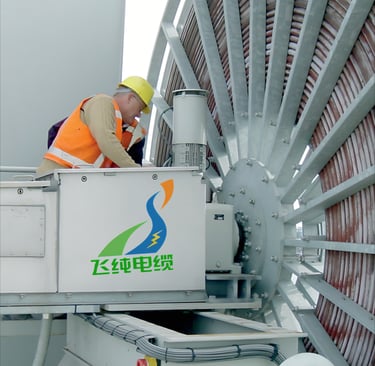
Crane cables don't get much glory. They sit on reels and in festoon loops, winding and flexing through millions of cycles while the cranes, loaders and reclaimers they feed do the visible work. Yet across Australian ports, mine sites, steel plants, bulk handling terminals and automated industrial facilities, the choice of crane cable supplier quietly shapes some of the things project teams care about most: how reliably the equipment runs, how often maintenance crews get called out, whether the project hits its schedule, and what the whole installation costs over its life.
For decades, the crane cable conversation in this part of the world has been dominated by a handful of European names. Prysmian, LAPP, TKD, Nexans and HELUKABEL built their reputations over generations, and for many engineers they remain the default answer. But the market has been shifting. Lead times on specialised European cable have stretched, budgets have tightened, and project teams have grown more willing to look at alternatives. Among the Chinese manufacturers drawing increased interest is Feichun, a specialist in mining, trailing, reeling and port equipment cables.
This article compares Feichun with the established global players across the dimensions that actually matter in a buying decision: product range, technical capability, delivery time, and overall project value. The aim isn't to crown a winner, because there isn't one that fits every situation. It's to give you a clear, even-handed framework for working out which supplier suits which project, so you can make the call on the merits rather than on reputation alone.
Comparing Crane Cable Brands for Mining, Port, and Heavy Industrial Applications
Understanding the Global Crane Cable Market
Why Crane Cable Selection Matters
It's worth being concrete about where these cables actually work, because the breadth of demanding applications explains why selection matters so much.
Port cranes rely on flexible reeling and festoon cables to carry power and control to machinery that travels along quays and lifts loads continuously. Ship loaders feeding bulk carriers travel long distances along berths while luffing their booms and reeling their cables without pause. Stacker reclaimers in stockyards combine travelling, slewing, luffing and reclaiming motion, subjecting their cables to bending and twisting from multiple directions at once. Mining equipment, the excavators, draglines, crushers and mobile plant of open-cast and underground operations, drags trailing and reeling cables through some of the harshest conditions any cable faces. Conveyor systems threading whole facilities together depend on power, drive and instrumentation cables for uninterrupted material flow. And heavy industrial machinery across steel plants and manufacturing relies on cables that flex, reel and endure in hot, dirty, mechanically aggressive settings.
What ties all of these together is the cost of getting it wrong. A crane cable failure doesn't just mean replacing a length of cable. It means a machine stops, and when a machine stops, the consequences cascade. A container crane that's offline isn't moving boxes. A ship loader that's down may hold up a vessel on demurrage. A reclaimer out of action can choke an entire materials handling chain. The downtime, the emergency maintenance, the disrupted schedule, these routinely cost far more than the cable itself. That's the real reason crane cable selection deserves serious attention: the cable is cheap relative to the operation it keeps running, and a failure is expensive out of all proportion to the part that caused it.
Key Factors Influencing Purchasing Decisions
Given those stakes, buyers weigh a consistent set of criteria when choosing a crane cable supplier, and it's useful to lay them out up front because the rest of this article comes back to them.
Mechanical performance sits near the top, because crane cables fail mechanically far more often than electrically. Reliability, the cable's proven ability to keep working through its rated life without nasty surprises, follows closely. Delivery time has risen sharply in importance as supply chains have lengthened and project schedules have tightened. Technical support, the engineering help a supplier provides in matching the right cable to the application and solving problems when they arise, matters more than buyers sometimes realise. Compliance requirements, the standards and certifications a project demands, can be decisive, particularly on regulated or owner-specified work. And total project cost, viewed across the whole lifecycle rather than just the purchase price, is the lens through which all the others ultimately get judged.
No single supplier tops every one of these criteria for every project. The art of good procurement is working out which criteria matter most for the project in front of you, and choosing accordingly.
Overview of Major Global Crane Cable Manufacturers
Before comparing them, it's worth a brief introduction to each of the main players, because their reputations and product ranges shape how they're perceived in the market.
Prysmian
Prysmian is one of the largest cable manufacturers in the world, with a vast global footprint across virtually every cable category. In the crane and reeling space, it carries a strong reputation built over many years, and its cables are widely specified in port infrastructure, mining projects and heavy-duty reeling systems around the world.
Among the solutions associated with this kind of supplier are the well-established reeling cable types known by their German-derived designations, such as the heavy-duty low-voltage reeling cable for power and control duty and the medium-voltage reeling cables for the most demanding mining and port applications. Prysmian's scale, engineering depth and global presence make it a frequent default choice on major projects, particularly where an owner or specifier wants a name with an extensive track record behind it.
LAPP
LAPP occupies a strong position in the industrial cable sector, with a particular emphasis on flexibility, torsional resistance and industrial automation. Its crane and reeling offerings sit within well-known product families, including its drum-reeling cable range, its festoon cable range, and its dedicated crane cable line.
The company's focus tends toward applications where cables flex, reel and twist repeatedly, and where integration with automated industrial systems matters. For buyers who value a supplier with deep expertise in flexible and automation-oriented cabling, LAPP is a recognised and respected name.
TKD
TKD has built its experience around mobile power supply applications, the reeling and trailing duties where cables have to follow moving machinery reliably. Its reeling cable products are used in industrial cranes, reeling systems and outdoor installations, where the combination of mechanical movement and weather exposure demands robust, purpose-built cable.
TKD is perhaps less universally known than the very largest manufacturers, but within its areas of focus it carries solid credibility, particularly for buyers whose primary need is dependable mobile power supply cabling for cranes and similar equipment.
Nexans
Nexans is another of the global cable heavyweights, with a broad presence across the world market and a substantial portfolio of heavy-duty handling cable solutions. Its drum-reeling and handling cable ranges are designed for demanding mechanical environments, the reeling, flexing and abrasion of port and industrial machinery.
Like Prysmian, Nexans brings scale, engineering resources and global recognition, which makes it a common presence on large international projects and a supplier that owners and specifiers are comfortable naming.
HELUKABEL
HELUKABEL offers a wide range of cables for reeling applications, festoon systems and mining equipment, with a reputation centred on durability and industrial performance. Its products serve the same demanding duties as the other major brands, flexing, reeling and enduring in harsh industrial settings.
HELUKABEL is well regarded among engineers who value a broad, dependable industrial cable range, and it competes across many of the same applications as the larger manufacturers.
Feichun
Feichun is a Chinese manufacturer that positions itself as a specialist in the demanding end of the market, focusing on mining cables, trailing cables, reeling cables and port equipment cables. Rather than spreading across every cable category, it concentrates on the heavy industrial applications where mechanical performance is paramount.
A defining feature of Feichun's positioning is its emphasis on customised cable solutions for heavy industrial applications. Where some large manufacturers lead with standard catalogue products, Feichun presents flexibility, the ability to tailor conductor sizes, constructions and mechanical characteristics to a project's specific needs, as a core part of its offer. Combined with the supply chain advantages of Chinese manufacturing, this customisation focus is central to how it competes against the established European names.
Manufacturing Locations and Supply Chain Advantages
A good deal of the real difference between these suppliers comes down not to the cables themselves but to where and how they're made, and what that means for the buyer.
European Manufacturing Networks
The European manufacturers carry genuine advantages rooted in their manufacturing networks and history. Long-established engineering expertise is the first: these companies have been designing and refining crane cables for generations, accumulating deep knowledge of what works in demanding applications. Extensive certification systems are the second, with European production typically backed by comprehensive testing and approval regimes that give buyers confidence the cable meets recognised standards. And strong global brand recognition is the third, the simple but real value of a name that owners, engineers and financiers around the world already know and trust.
These strengths are not trivial, and they explain a lot of European dominance in the market. But they come with trade-offs. European production schedules for specialised crane cable can be long, particularly for non-standard constructions that have to be slotted into busy manufacturing programmes. And international logistics, shipping heavy cable drums from Europe to Australia, adds time, cost and complexity, with all the risks that long supply chains carry, from shipping delays to currency movements. For a buyer in Australia facing a tight schedule, the combination of long production lead times and lengthy shipping can be a real constraint, however excellent the cable itself.
Feichun's Manufacturing Capability in China
Feichun's competitive case rests substantially on its manufacturing model. Its production facilities are geared toward the heavy industrial cable categories it specialises in, and Chinese manufacturing more broadly offers a degree of supply chain flexibility and manufacturing scalability that can be harder to find in established European networks running at capacity.
The practical upshot is lead time. Where integrated production and local sourcing of materials allow a manufacturer to move quickly, and where there's capacity to take on custom orders without queuing behind a long programme of standard production, the result can be considerably shorter delivery times. For a project where the cable is on the critical path, that speed can matter as much as any technical specification. It's worth being clear-eyed here: faster manufacturing is a genuine advantage when it's real, but buyers should verify it for their specific order rather than assuming it, just as they should verify technical performance rather than assuming it. The point is that Feichun's manufacturing model gives it a credible lever, lead time, that the European incumbents often struggle to match.
Comparing Technical Performance
Brand reputation and supply chains aside, a crane cable ultimately has to perform, and performance in this world is overwhelmingly about mechanical capability. Let's work through the dimensions that decide whether a cable survives its application.
Bending Radius Requirements
Minimum bending radius is one of the most important specifications for any crane cable, and it's critical across the whole range of applications: reeling systems, mining machinery, ship loaders and stacker reclaimers all bend their cables continuously, and the radius they bend to governs both the immediate stress and the long-term fatigue the cable suffers.
The principle is straightforward. A cable forced to bend around too tight a radius experiences higher stress and fatigues faster, while a more generous radius gentles every flex and extends cable life. Purpose-built reeling cables are rated for specific minimum bending radii in different duties, for example tighter radii permitted in reeling service than the cable would tolerate if it weren't built for the job, and looser radii required over deflection pulleys or where the cable changes direction sharply. The cable's construction is what makes these radii achievable: finely stranded flexible conductors, well-chosen insulation and a reinforced structure all allow a cable to bend tighter and more often without failing.
When comparing suppliers, the bending radius ratings are a concrete, comparable performance figure. A buyer should look past the brand and check what minimum radius each candidate cable is actually rated for in the relevant duty, because that number directly affects whether the cable will survive the drum or guide geometry of the specific installation. This is exactly the kind of specification where a like-for-like comparison cuts through brand assumptions.
Torsional Resistance
Torsional performance, a cable's ability to withstand twisting, is critical wherever cables reel or follow rotating equipment, and it's an area where ordinary cables fail and purpose-built ones earn their keep. It matters in rotating equipment of all kinds, in container cranes that reel cable as they travel, in mining machinery that drags and twists its supply, and in mobile handling systems generally.
The reason twisting is so destructive is that, unlike a simple bend, it works the cable's internal structure against itself, and without dedicated provision the cores and reinforcement progressively tear apart. The answer is anti-torsion cable structure: reinforcing braids of synthetic or polyamide threads, and constructions specifically arranged to absorb repeated twisting cycle after cycle. A cable with genuine anti-torsion construction can survive torsional loads that would quickly destroy a conventional cable, which directly extends operational life in any application that twists its cables.
Both the European specialists and Feichun build anti-torsion construction into their heavy-duty reeling cables, because it's essential for the applications they target. The meaningful comparison for a buyer is the rated torsional stress each cable can handle, expressed as a permitted twist per metre, and the quality of the anti-torsion construction behind that rating. As with bending radius, this is a comparable technical figure that lets a buyer judge cables on substance rather than name.
Mechanical Durability
Step back and the broad theme is mechanical durability, the cluster of properties that determine how well a cable survives physical punishment. Several characteristics make up the picture. Abrasion resistance protects the jacket against grinding wear from contact, dust and grit. Crush resistance guards against the sidewall pressure and compression of multi-layer reeling. Tensile strength lets the cable bear the pulling loads of long travel runs and heavy self-weight without damage. And repeated bending endurance, the ability to flex through enormous cycle counts without the conductors fatiguing or the insulation failing, underpins the cable's whole working life.
The crucial insight here is that these mechanical factors are often more important than the electrical specifications alone. It's tempting to compare crane cables primarily on voltage rating and conductor size, because those numbers are easy to match. But crane cables overwhelmingly fail for mechanical reasons, not electrical ones, so a cable that's electrically perfect but mechanically inadequate will still let you down. When comparing any supplier's offering, the durability characteristics deserve at least as much scrutiny as the electrical ratings, and arguably more. This is true regardless of brand, and it's the single most important shift in mindset for a buyer comparing crane cable options.
Operating Speed and Dynamic Performance
Modern crane and handling equipment moves fast, and speed adds its own set of demands. There's a direct relationship between travel speed, reeling speed, cable tension and mechanical loading: the faster a machine travels and reels, the more dynamic the loads on its cable become, with sharper acceleration spikes, higher peak tensions and more aggressive cycling.
This is why high-speed applications require specialised cable designs rather than general-purpose cables. A cable rated for modest reeling speeds may simply not cope with a fast-moving, high-cycle application, fatiguing prematurely under the elevated dynamic loads. Purpose-built reeling and festoon cables are rated for specific maximum reeling and travel speeds, and the better designs are built to handle high speeds, with festoon cables in particular rated for rapid trolley travel and reeling cables rated for demanding reeling speeds.
For a buyer comparing suppliers, the speed ratings are another comparable specification worth checking against the actual demands of the application. A cable that's a perfect match in every other respect but under-rated for the installation's operating speed is a poor choice, whichever brand it carries. Matching the cable's dynamic performance ratings to the real-world speeds of the equipment is part of comparing cables on substance.
Comparing Typical Crane Cable Solutions
With the performance dimensions established, it's worth looking at how the suppliers line up across the main cable categories, because the comparison plays out differently in each.
Medium-Voltage Reeling Cable Applications
At the demanding top end sit medium-voltage reeling cables, used where high power has to be delivered to large mobile machinery over long runs. Their applications include mining operations, bucket wheel reclaimers, large stacker reclaimers and major port machinery, the biggest, most power-hungry mobile equipment on a site.
These cables combine full medium-voltage construction, semi-conductive screens, special EPDM rubber insulation, strippable insulation screens, with heavy mechanical reinforcement: a synthetic thermosetting inner sheath, an anti-torsion braid of polyamide threads, and a tough thermosetting outer sheath, often in a high-visibility colour, with the option of an integrated fibre optic module for combined power and data. They're rated for very high reeling speeds, large tensile loads and significant torsional stress, and they're built to work in wet or dry conditions, in mining, and even in explosion-risk areas.
Comparing Feichun's medium-voltage reeling cable against the equivalent European solutions is, in practice, a comparison of comparable constructions, because both are built to the same general design philosophy for the same severe applications. The meaningful differences for a buyer are likely to lie less in the fundamental construction, which follows established engineering for this duty, and more in the specifics: the exact ratings, the quality of materials and manufacturing, the certifications carried, the lead time, and the price. This is precisely the situation where comparing actual specifications, rather than relying on brand reputation, pays off, because the cables are doing the same job in the same way and the decision comes down to which package of performance, availability and value best suits the project.
Low-Voltage Crane Cable Applications
In the broader low-voltage space sit the workhorse crane cables, the heavy-duty rubber reeling cables for power and control, along with the various drum-reeling product ranges the European brands offer. These cover the large middle ground of crane and reeling duty: the many cranes, loaders and reclaimers that need flexible, reeling-capable power and control cable but at low rather than medium voltage.
Across this category, the suppliers' offerings serve broadly similar use cases, flexible reeling duty under high mechanical stress, with finely stranded conductors, reinforced construction and tough outdoor-rated jackets. The European drum-reeling ranges, the dedicated crane cable lines, the reeling cable products and Feichun's low-voltage reeling cables are, at the level of application, doing much the same thing. The similarities outweigh the differences in basic function. Where they diverge is again in the particulars: the exact mechanical ratings, the construction quality, the available cross-sections and core counts, the certifications, the delivery time and the cost. For most low-voltage crane cable applications, the sensible approach is to define exactly what the application needs and then compare each supplier's offering against those needs, rather than assuming any one brand is inherently the right answer.
Festoon and Trailing Cable Applications
Beyond reeling lie festoon and trailing applications, where cables follow movement in different ways. Festoon systems carry cable in loops that gather and extend as a trolley travels, trolley systems move power along tracks, and trailing duty has the cable dragged directly by moving machinery. Each suits a particular cable design: flexible round festoon cables built for high-speed trolley travel and frequent bending, and trailing cables built to be dragged and flexed reliably.
The major manufacturers all address these applications with dedicated product families, and Feichun likewise offers cables for festoon and trailing duty. The key principle across this whole category is that application matching matters more than brand selection. A festoon cable and a reeling cable are different things built for different motions, and using the right type for the actual application is far more important than which company's badge is on it. A correctly matched cable from any capable supplier will outperform a mismatched cable from the most prestigious one. This is the recurring lesson of the comparison: get the application match right first, then compare capable suppliers on the specifics.
Delivery Time and Project Scheduling
Technical performance decides whether a cable works, but delivery time often decides whether a project runs on schedule, and it has become one of the sharpest points of difference between suppliers.
Challenges of Long Lead Times
Specialised crane cables are not commodity items sitting on every shelf. When a project needs a particular medium-voltage reeling cable or a custom construction, and that cable has a long production lead time, the consequences ripple through the whole programme.
Construction schedules can slip when cable that's needed for installation simply isn't available, leaving crews and equipment waiting. Maintenance shutdowns are especially exposed, because a planned shutdown is a fixed window in which work has to be completed, and if replacement cable doesn't arrive in time the shutdown overruns or has to be rescheduled at significant cost. Equipment commissioning stalls when the cable needed to energise and test new machinery is delayed, pushing back the date the asset starts earning. In each case, the cable, a relatively modest part of the overall project value, ends up dictating the timeline, which is a frustrating and expensive position to be in.
The Importance of Fast Delivery
It's no surprise, then, that many buyers now prioritise delivery alongside, or even ahead of, other factors. Production speed, the manufacturer's ability to make the cable quickly, has become a genuine differentiator. Inventory availability, whether suitable cable can be supplied from stock rather than made to order, can be decisive for urgent needs. And flexible manufacturing, the capacity to slot in a custom or urgent order without a long queue, is increasingly valued.
The underlying logic is risk reduction. A shorter, more reliable lead time takes the cable off the critical path and removes a major source of schedule risk. For projects where timing is tight, a planned shutdown, a commissioning deadline, an urgent replacement to get a downed machine running, a supplier who can deliver quickly may offer more practical value than one with a more prestigious name but a longer queue. This is the area where Feichun's manufacturing model offers its clearest potential advantage, and where, conversely, the established European brands can be at their most constrained. As always, the sensible approach is to verify the actual lead time for the specific order rather than assuming it, but the structural advantage of flexible, scalable manufacturing is real.
Cost Considerations Beyond Purchase Price
Money matters, but the way buyers think about cost has matured, and the smartest procurement looks well beyond the number on the invoice.
Initial Investment Versus Lifecycle Cost
The headline purchase price is the most visible cost, but it's often a poor guide to the true cost of a crane cable. The figure that matters is lifecycle cost, which brings together the purchase price, the cable's service life, the downtime risk it carries, and how frequently it has to be replaced.
A cable that's cheaper to buy but fails sooner, brings the machine down each time it goes, and has to be replaced more often can easily cost far more over its life than a dearer cable that lasts, runs reliably and rarely fails. Conversely, paying a premium delivers value only if it buys genuinely longer life and greater reliability, not merely a more famous name. The discipline buyers need is to evaluate all four factors together, purchase price, service life, downtime risk and replacement frequency, rather than fixating on the first. When that fuller calculation is done honestly, the cheapest cable is sometimes the dearest in the long run, and a mid-priced cable that performs reliably is sometimes the best value of all. The lesson cuts both ways: it argues against reflexively buying the cheapest option, and equally against assuming the most expensive brand automatically delivers the best lifecycle value.
Budget-Sensitive Projects
That said, capital expenditure is a real constraint, and on many projects reducing upfront cost is a genuine priority, whether because of tight budgets, competitive tendering, or commercial pressures that put a premium on capex savings. In these scenarios, the willingness to evaluate alternative suppliers during the tender process has grown markedly.
This is much of the reason interest in manufacturers like Feichun has increased. Where a project is budget-sensitive and the application doesn't carry a hard requirement for a specific named brand, procurement teams increasingly bring alternative suppliers into the evaluation to test whether comparable performance can be had at a lower price. There's nothing improper about this; it's prudent procurement. The key is to ensure the comparison is genuinely like-for-like on performance and compliance, so that a lower price reflects a real cost advantage rather than a hidden shortfall in capability. Done well, evaluating alternatives on budget-sensitive projects can deliver real savings without compromising reliability. Done carelessly, it can trade a small capex saving for a large lifecycle cost, which is exactly the trap the lifecycle-cost discipline is meant to avoid.
When to Choose a European Crane Cable Brand
The honest answer to "which supplier should I use" is that it depends on the project, so it's worth spelling out the situations that genuinely favour each side. Several types of project lean toward the established European brands.
Projects with Strict Specification Requirements
Where a project carries strict specification and certification requirements, the established European brands often have the edge. International EPC projects, where engineering, procurement and construction are bundled under demanding contractual terms, frequently come with rigorous specifications that favour suppliers with comprehensive certification and proven compliance. Government infrastructure projects often carry their own stringent requirements and procurement rules. Owner-specified brands are sometimes simply mandated, with the owner naming acceptable manufacturers and leaving no room for alternatives. And complex certification requirements, where a cable has to demonstrate compliance with multiple standards and approvals, play to the strengths of manufacturers with extensive, well-documented certification systems.
In these environments, the established European brands are often preferred not because their cable is necessarily better for the application, but because their certification depth, documentation and recognised compliance reduce risk and satisfy the project's formal requirements. When the specification is strict and the paperwork is part of the deliverable, a supplier built around comprehensive certification is a natural fit.
Projects Requiring Proven Global References
The other situation that favours the European incumbents is where proven track record carries real weight. On major, high-stakes projects, decision-makers often want the reassurance of a long history of successful installations, a supplier whose cables have demonstrably performed in similar applications around the world over many years.
This value of an extensive installation history and proven global references is genuine. It reduces perceived risk, satisfies cautious stakeholders, and provides a body of evidence that the cable will perform. For projects where the cost of failure is very high and decision-makers are risk-averse, the long track record of an established European brand can be worth paying for in its own right, independent of any specification-by-specification comparison. Reputation, in these cases, is itself a form of risk management.
When Feichun May Be a Suitable Alternative
Equally, there are clear situations where a manufacturer like Feichun deserves serious consideration, and pretending otherwise would do buyers a disservice.
Projects Requiring Faster Delivery
The most compelling case is where production schedule is critical. When a project's timing hinges on getting cable quickly, a planned shutdown with a fixed window, a commissioning deadline that's slipping, an urgent replacement to revive a downed machine, the supplier who can manufacture and deliver fastest may offer the most practical value, regardless of brand prestige. This is where flexible, scalable manufacturing turns into a concrete advantage, and where the long lead times of capacity-constrained European production can become the deciding disadvantage. For schedule-driven needs, fast delivery isn't a nice-to-have; it's the whole point.
Budget-Conscious Industrial Projects
The second case is budget pressure. On projects where reducing cost is a genuine priority and there's no hard requirement for a specific named brand, procurement teams routinely evaluate alternative suppliers to bring the price down, and a specialist manufacturer offering comparable performance at a lower price can be a strong fit. The essential safeguard, as always, is a genuinely like-for-like comparison on performance and compliance, so that the saving is real rather than a disguised reduction in capability. Where that comparison holds up, a budget-conscious project can capture meaningful savings by choosing a capable alternative supplier.
Customised Cable Requirements
The third case is customisation, and it's one of Feichun's distinctive strengths. Some applications need special conductor sizes that fall outside standard ranges, customised constructions tailored to unusual mechanical or electrical demands, or project-specific mechanical performance that a catalogue product doesn't quite deliver. A manufacturer whose model is built around flexibility and made-to-order production can often accommodate these needs more readily than a large producer geared to high-volume standard lines.
Where a project's requirements are genuinely bespoke, manufacturing flexibility becomes a real competitive advantage, the ability to build exactly what the application needs rather than forcing the application to fit an off-the-shelf product. For customised requirements, a supplier that treats tailoring as core business, rather than an inconvenient exception, can be exactly the right partner.
Key Questions to Ask Before Selecting a Crane Cable Supplier
Whichever way a project leans, the path to a good decision runs through a few essential questions. Asking them rigorously is what turns a brand-led guess into a sound, defensible choice.
Does the Cable Match the Application?
The first and most important question is whether the cable genuinely fits what the application demands. That means evaluating the reeling requirements, will the cable be wound on a drum, and if so, single or multi-layer, the torsional loading the application imposes, the travel distance and the tension and weight it generates, and the overall mechanical stress the cable will face.
A cable that doesn't match the application will fail regardless of how reputable its maker is, so this question comes before any consideration of brand. Defining the application's real demands precisely, and checking each candidate cable against them, is the foundation of every good crane cable decision. Get this right and the rest of the comparison becomes far clearer; get it wrong and no amount of brand prestige will save the installation.
Can the Supplier Meet Delivery Requirements?
The second question is whether the supplier can actually deliver within the project's timeline. Because lead times vary so much between suppliers and orders, production and logistics schedules should be evaluated early, not discovered late when the cable is already on the critical path.
This means asking concrete questions up front: what's the real production lead time for this specific cable, what's the shipping time to site, and what's the supplier's track record for delivering on schedule? Building delivery into the evaluation from the start avoids the nasty surprise of selecting a technically perfect cable that can't arrive when it's needed. For schedule-sensitive projects especially, this question can carry as much weight as the technical comparison.
Are Technical Specifications Fully Comparable?
The third question, and the one that ties the whole article together, is whether the buyer is genuinely comparing actual performance rather than brand names. It's easy to assume that a famous brand must be better and an unfamiliar one must be inferior, but that assumption can mislead in both directions.
The disciplined approach is to compare the real performance requirements, the bending radius ratings, the torsional stress ratings, the mechanical durability characteristics, the speed ratings, the certifications, against each candidate cable on a like-for-like basis. When the comparison is done on substance, the right choice often becomes clear in a way that brand reputation alone could never reveal. Sometimes the established brand genuinely is the best fit; sometimes a capable alternative matches it at lower cost or shorter lead time. Either way, comparing specifications rather than reputations is what produces a decision the buyer can stand behind.
Conclusion
There is no single crane cable manufacturer that is best for every project, and any article promising otherwise would be selling something. Prysmian, LAPP, TKD, Nexans and HELUKABEL all offer proven, capable solutions for demanding industrial environments, backed by deep engineering expertise, comprehensive certification and long global track records. Feichun offers a credible alternative for projects that prioritise manufacturing flexibility, shorter lead times and competitive pricing, particularly where customisation matters and where no specific brand is mandated.
The most effective approach is the one this comparison keeps returning to: evaluate cable performance, application requirements, delivery schedules and total lifecycle value before committing, rather than deciding on reputation alone. The established European brands earn their place on projects with strict specifications, complex certification requirements and a need for proven global references, where their certification depth and track record are themselves a form of risk management. Alternative suppliers like Feichun earn theirs where speed, budget or bespoke requirements are the deciding factors, and where a genuine like-for-like comparison confirms the performance is there.
For the engineers and procurement teams making these calls across Australian ports, mines and heavy industrial facilities, the practical takeaway is to focus on technical suitability rather than brand reputation. Define exactly what the application needs, compare each capable supplier honestly against those needs and against the project's delivery and budget realities, and choose the cable that best fits the whole picture. Done that way, the decision is sound whichever supplier it lands on, because it rests on the substance of the cable and the realities of the project rather than on the familiarity of a name.
How to Reach Us
Get in Touch
SiteMap
Product Catalogue
Festoon Cable
Shore Power Cable




Scan to add us on WeChat