FESTOONFLEX C-PUR-HF D12YC11Y: Comprehensive Technical Guide to Low Voltage Screened Round Cables for Festoon Systems
Discover FESTOONFLEX C-PUR-HF D12YC11Y low voltage screened round cable specifications. Halogen-free PUR sheath cable for festoon systems, drag lines & materials handling. EMC-compliant energy control cable for severe conditions with frequent bending. Technical data & applications.
hongjing.Wang@Feichun
12/3/202519 min read

Introduction & Overview
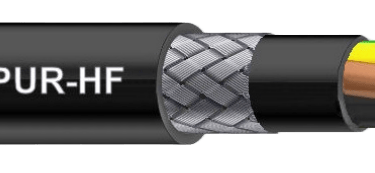
The FESTOONFLEX C-PUR-HF D12YC11Y represents a specialized solution in industrial power distribution, specifically engineered for demanding festoon system applications. This low voltage screened round cable combines advanced polyurethane sheath technology with electromagnetic compatibility features, making it an ideal choice for materials handling equipment, crane systems, and industrial machinery requiring frequent bending cycles under severe operational conditions.
What is FESTOONFLEX C-PUR-HF D12YC11Y Cable
The FESTOONFLEX C-PUR-HF D12YC11Y is a halogen-free, polyurethane-sheathed power and control cable designed for energy transmission in festoon systems, drag lines, and materials handling applications. The designation "D12YC11Y" indicates its specialized construction: D12Y refers to the PETP-based halogen-free insulation compound, C signifies the conducting non-metal casing (overall copper braid screen), and 11Y denotes the halogen-free polyurethane outer sheath. This EMC-compliant energy control cable features an overall copper braid screen that provides superior electromagnetic interference protection, making it particularly suitable for installations where power cables must operate near sensitive data transmission systems.
Cable Type Classification
As a low voltage screened festoon cable, the FESTOONFLEX C-PUR-HF D12YC11Y falls within the category of flexible power supply cables rated for 0.6/1 kV (600-1000V) systems. The cable is classified as a halogen-free PUR sheath cable with integrated electromagnetic shielding, suitable for both indoor and outdoor festoon operation. Its construction meets the demanding requirements of DIN VDE standards while incorporating enhanced features for severe industrial conditions.
Primary Application Areas
This screened festoon cable for severe conditions excels in multiple industrial sectors. Primary applications include gantry crane systems where the cable must withstand continuous movement cycles, hall gantry cranes operating in manufacturing facilities, rack material handling equipment in warehouse automation, and transportation systems requiring reliable power distribution. The cable's drag line machine tool cable capabilities make it suitable for CNC machinery and automated production lines. Additionally, its EMC-compliant design ensures interference-free operation in environments with multiple electrical systems operating simultaneously.
Key Market Segments
The FESTOONFLEX C-PUR-HF D12YC11Y serves critical roles across diverse industries. Port and terminal operations rely on this cable for container handling cranes where exposure to harsh weather and frequent motion cycles demand exceptional durability. Manufacturing facilities utilize it for overhead crane systems and automated guided vehicles. The construction industry employs these cables in tower cranes and mobile equipment. Automotive manufacturing plants depend on this frequent bending resistant power cable for assembly line conveyors and robotic systems. The aerospace sector uses it for hangar crane installations, while heavy equipment operations in mining and material processing benefit from its robust construction and EMC protection capabilities.
Technical Specifications & Design Features
Conductor Properties
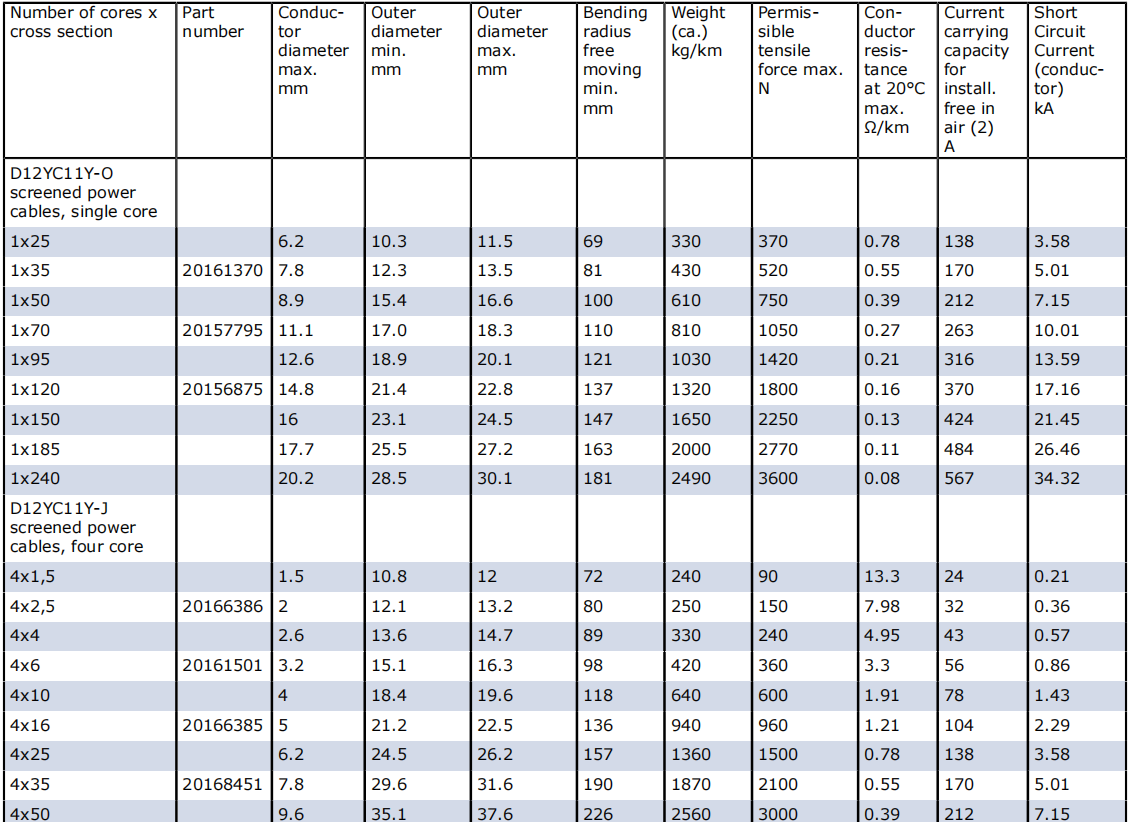
The FESTOONFLEX C-PUR-HF D12YC11Y utilizes plain copper conductors manufactured to flexibility class 5 according to DIN EN 60228 / DIN VDE 0295. This classification ensures optimal flexibility for applications involving continuous movement and frequent bending cycles. The fine stranding of the copper conductors provides excellent mechanical flexibility while maintaining low electrical resistance for efficient power transmission. Available conductor cross-sections range from 1.5mm² to 50mm² for power cores, with control cable variants offering cross-sections from 1.5mm² to 2.5mm². The plain copper construction without tinning reduces manufacturing costs while maintaining excellent conductivity, with maximum conductor resistance values carefully specified for each cross-section to ensure consistent electrical performance.
Insulation System
The cable employs a halogen-free compound based on polyester (PETP) for core insulation. This material selection provides several critical advantages: excellent electrical insulation properties, superior resistance to thermal aging, and environmentally friendly composition without halogen elements that could produce toxic gases during combustion. For cables with up to 5 cores, color coding follows DIN VDE 0293-308 standards, using distinct colors for easy identification during installation and maintenance. Cables with 6 or more cores feature natural-colored insulation with black numbering for clear core identification. The polyester-based insulation maintains its properties across a wide temperature range from -50°C to +80°C during fixed installation, ensuring reliable operation in diverse environmental conditions.
Screening & Shielding
The distinguishing feature of this 0.61 kV festoon system cable is its comprehensive electromagnetic compatibility design. A braid screen constructed from tinned copper wires surrounds the core assembly, providing effective electromagnetic interference protection. The tinned copper construction enhances corrosion resistance, particularly important in humid industrial environments or outdoor applications. This screening system achieves transfer impedance optimization at multiple frequencies, ensuring effective EMC protection across the operational spectrum. The braid coverage exceeds 80%, delivering superior shielding effectiveness compared to standard unscreened cables. This robust screening makes the cable particularly suitable for applications where power transmission occurs near sensitive control systems or data cables, preventing electromagnetic interference that could disrupt operations.
Core Arrangement & Inner Sheath
The cores and pairs within the cable are twisted with short lay length around a central element. This arrangement minimizes electromagnetic field generation and enhances the cable's flexibility characteristics. Due to technical manufacturing requirements, some cross-sections incorporate an additional polyurethane inner sheath beneath the copper braid screen. This inner sheath provides mechanical protection for the core assembly and serves as a substrate for the braid application, ensuring consistent screening performance throughout the cable's service life. The short lay length of the core arrangement contributes to the cable's excellent bending characteristics while maintaining stable electrical properties during motion cycles.
Outer Sheath Construction
The outer sheath consists of halogen-free polyurethane compound featuring flame-retardant properties. This black, opaque sheath provides exceptional mechanical protection against abrasion, tearing, and impact damage common in industrial festoon applications. Polyurethane's superior abrasion resistance compared to traditional rubber compounds significantly extends cable service life in applications involving contact with guide systems or support structures. The halogen-free formulation ensures that in the unlikely event of fire, the cable produces minimal smoke and no corrosive or toxic halogen gases, enhancing safety in occupied spaces. The flame-retardant characteristics comply with IEC 60332-1 standards, providing additional fire safety protection. White imprint marking on the black sheath provides clear identification including cable type, core configuration, cross-section, and manufacturing date for traceability and maintenance purposes.

Electrical Performance Parameters
Voltage Ratings & Test Standards
The FESTOONFLEX C-PUR-HF D12YC11Y is rated for 0.6/1 kV (600-1000V) systems, with U₀ representing the voltage between one conductor and earth (600V) and U representing the voltage between conductors (1000V). The maximum permissible AC operating voltage extends to 0.7/1.2 kV, providing a 20% safety margin above nominal ratings. For DC applications, the maximum operating voltage reaches 0.9/1.8 kV, calculated as 1.5 times the AC rating. The cable undergoes rigorous AC testing at 4 kV for 5 minutes, demonstrating its insulation integrity and electrical safety. These voltage ratings make the cable suitable for standard industrial three-phase power distribution systems operating at 400V or 480V, with adequate safety margins for voltage variations and transient conditions.
Peak Voltage & Converter Compatibility
An important specification for modern industrial applications is the cable's peak voltage capability of 2400V. This characteristic proves particularly relevant in installations utilizing variable frequency drives (VFDs) or other power electronic converters. Modern IGBT-based converters generate high-frequency switching transients with steep voltage rise times that can stress cable insulation systems. The FESTOONFLEX C-PUR-HF D12YC11Y's design accommodates these challenging conditions, with insulation capable of withstanding peak voltages up to 2400V without degradation. The cable's maximum AC voltage rating for frequency converter connections is specified at 690V, ensuring safe operation even with converter-generated harmonics and voltage overshoots.
Current Carrying Capacity
Current carrying capacity for the FESTOONFLEX C-PUR-HF D12YC11Y follows DIN VDE 0298-4 standards, with values determined by conductor cross-section, ambient temperature, and installation method. For example, a 4x16mm² power cable can safely carry approximately 104 amperes when installed free in air at 30°C ambient temperature. Larger cross-sections provide proportionally higher capacities: 4x25mm² handles approximately 138A, while 4x35mm² manages 170A under the same conditions. These ratings assume continuous duty operation with all cores loaded. Installation factors such as grouping with other cables, elevated ambient temperatures, or enclosure within cable carriers require application of derating factors to maintain safe operating temperatures. The cable's 90°C maximum conductor temperature provides adequate thermal margin for most industrial applications while ensuring long insulation life.
Short Circuit Performance
During short circuit conditions, the FESTOONFLEX C-PUR-HF D12YC11Y's conductors can withstand temperatures up to 250°C for brief durations. Short circuit current capacity depends on conductor cross-section and fault duration. For a 1-second fault duration, a 16mm² conductor can handle approximately 2.29 kA, while a 35mm² conductor withstands approximately 5.01 kA. These values ensure that during electrical faults, the cable conductors remain intact until protective devices operate, preventing additional hazards from cable failure. The polyurethane insulation and sheath materials maintain their integrity during these brief temperature excursions, though immediate inspection and testing should follow any short circuit event to verify continued cable integrity.
Chemical & Environmental Resistance
Fire Resistance Properties
The FESTOONFLEX C-PUR-HF D12YC11Y demonstrates fire resistance characteristics similar to IEC 60332-1 standards. When exposed to a standardized flame source, the cable exhibits limited flame propagation and self-extinguishing behavior once the ignition source is removed. The halogen-free composition proves particularly valuable in occupied spaces or sensitive environments. During combustion, halogen-free materials produce significantly less smoke than conventional PVC cables, maintaining better visibility for evacuation. More critically, they generate no corrosive hydrogen chloride or other halogen acids that could damage electronic equipment or pose inhalation hazards. This environmental consideration makes the cable suitable for applications in data centers, control rooms, hospitals, transportation facilities, and other locations where fire safety extends beyond simple flame containment to include smoke toxicity and equipment protection concerns.
Oil & Chemical Resistance
The polyurethane outer sheath provides good resistance to oils, greases, and many industrial chemicals commonly encountered in manufacturing and materials handling environments. Testing according to DIN EN 60811-404 standards verifies the sheath's stability when exposed to standardized test oils. This oil resistance proves essential in applications such as metalworking facilities where cutting fluids and hydraulic oils may contact cables, or in automotive manufacturing where various lubricants and cleaning solvents are prevalent. The cable maintains its mechanical properties and flexibility even after prolonged exposure to these substances, ensuring reliable long-term performance. However, for applications involving continuous immersion in aggressive chemicals or specialized solvents, consultation with technical specialists is recommended to verify compatibility with specific substances.
Weather & Moisture Resistance
Unrestricted outdoor and indoor use characterizes the FESTOONFLEX C-PUR-HF D12YC11Y's versatility. The polyurethane sheath resists ozone degradation, a common failure mechanism for rubber cables exposed to atmospheric ozone or generated by electrical equipment. UV radiation resistance ensures that outdoor installations maintain mechanical integrity despite continuous sun exposure. The cable's moisture resistance extends to permanent water exposure, with suitability for use in water (excluding drinking water applications) up to 50 meters depth. This exceptional water resistance enables applications in wash-down environments, outdoor installations exposed to rain, and even underwater operations such as port facilities where cables may be temporarily submerged. The combination of weather resistance properties ensures that the cable maintains consistent electrical and mechanical performance regardless of environmental conditions, from desert heat to arctic cold, from humid tropical climates to dry industrial environments.
Thermal Performance Characteristics
Operating Temperature Range
The FESTOONFLEX C-PUR-HF D12YC11Y operates across an impressive temperature spectrum. During fixed installation, the cable functions reliably from -50°C to +80°C, accommodating extreme environmental conditions from arctic outdoor installations to heated industrial environments. For fully flexible operation involving continuous motion, the temperature range extends from -40°C to +80°C. This slight restriction at the cold end reflects the increased stiffness of materials at extremely low temperatures, which could affect bending characteristics during motion. The maximum permissible conductor temperature during normal operation reaches 90°C, providing adequate thermal margin for current-carrying capacity while ensuring long insulation life. This temperature rating balances electrical efficiency with material longevity, as lower operating temperatures extend insulation life exponentially.
Short Circuit Temperature Limits
During short circuit faults, conductor temperatures may briefly spike to 250°C without causing permanent cable damage. This short-term thermal rating ensures that the cable survives electrical faults until protective devices operate, preventing secondary damage from cable failure. The polyester-based insulation and polyurethane sheath maintain structural integrity at these elevated temperatures, though any short circuit event should trigger cable inspection to verify continued serviceability. The 250°C short circuit temperature represents a carefully calculated limit that balances fault current withstand capability against material degradation thresholds, ensuring both safety and reliability.
Thermal Cycling Considerations
In festoon applications, cables experience thermal cycling as conductors heat during operation and cool during idle periods. The FESTOONFLEX C-PUR-HF D12YC11Y's material selection accommodates these cycles without degradation. The polyurethane sheath maintains flexibility across the operating temperature range, preventing stress concentration during cold operation that could lead to cracking. The polyester insulation exhibits excellent thermal stability, resisting aging even with repeated temperature variations. This thermal cycling resistance contributes significantly to the cable's extended service life in demanding applications where continuous motion combines with variable electrical loads.
Mechanical Properties & Performance
Tensile Loading Capacity
The cable withstands maximum tensile loads of 15 N/mm² during operation, calculated based on total conductor cross-section. For a 4x25mm² cable (100mm² total conductor area), this translates to 1500N maximum permissible tension. This specification ensures that the cable can support its own weight during vertical festoon installations while accommodating additional dynamic loads from acceleration and deceleration cycles. The tensile load limit prevents conductor overstressing that could lead to strand breakage or elongation. In applications requiring higher tensile loads, such as very long vertical drops or high-acceleration systems, special cable designs with integrated support elements should be considered. The specified limit applies to the combination of static weight and dynamic operational forces, requiring careful load analysis during system design.
Torsional Stress Management
Unlike some festoon cables that tolerate limited torsion, the FESTOONFLEX C-PUR-HF D12YC11Y is designed with "torsional stress not allowed" specification. This design philosophy recognizes that in properly designed festoon systems, cable torsion should not occur. The cable's construction optimizes for linear motion and bending rather than twisting, which could damage the copper braid screen and compromise EMC protection. Systems should incorporate swivel connections, proper alignment, and guidance that prevents cable twisting. If torsional loads are unavoidable in a specific application, alternative cable designs featuring torsion-resistant constructions should be specified. This restriction emphasizes the importance of proper system design in achieving optimal cable performance and longevity.
Minimum Bending Radius Requirements
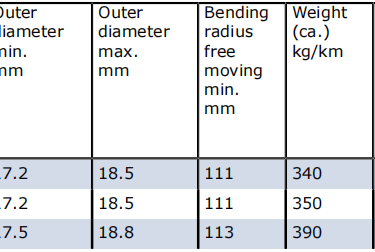
The specified minimum bending radius of 6 × D (where D equals cable diameter) represents a critical installation parameter. For a cable with 20mm diameter, the minimum bending radius equals 120mm. This specification, proven through flexing tests according to HD 22.2 part 3.1 standards, ensures that repeated bending cycles do not cause conductor fatigue or insulation damage. Tighter bending radii concentrate stress in the cable structure, accelerating failure mechanisms. In festoon systems, maintaining proper bending radii at direction changes, entries, and collector units proves essential for achieving expected cable life. The 6 × D specification provides a practical balance between compact system design and cable reliability, though larger radii further enhance service life in critical applications.
Travel Speed Capabilities
For festoon system applications, the FESTOONFLEX C-PUR-HF D12YC11Y supports travel speeds up to 210 meters per minute. This specification addresses the dynamic stresses from acceleration, deceleration, and continuous motion at operating speed. At 210 m/min, crane trolleys or other moving equipment can achieve rapid positioning while maintaining cable integrity. The speed limitation reflects the cumulative stress from flexing cycles, tensile loading, and potential impact with guide systems. For chain system applications, the same 210 m/min limit applies, though the recommendation notes that trouble-free operation depends on multiple factors including chain length. Longer chain systems may require reduced operating speeds to prevent excessive dynamic loading. Applications requiring higher speeds should involve consultation with cable manufacturers to verify suitability and potentially specify enhanced construction variants.
Core Configurations & Available Designs
Power Cable Configurations
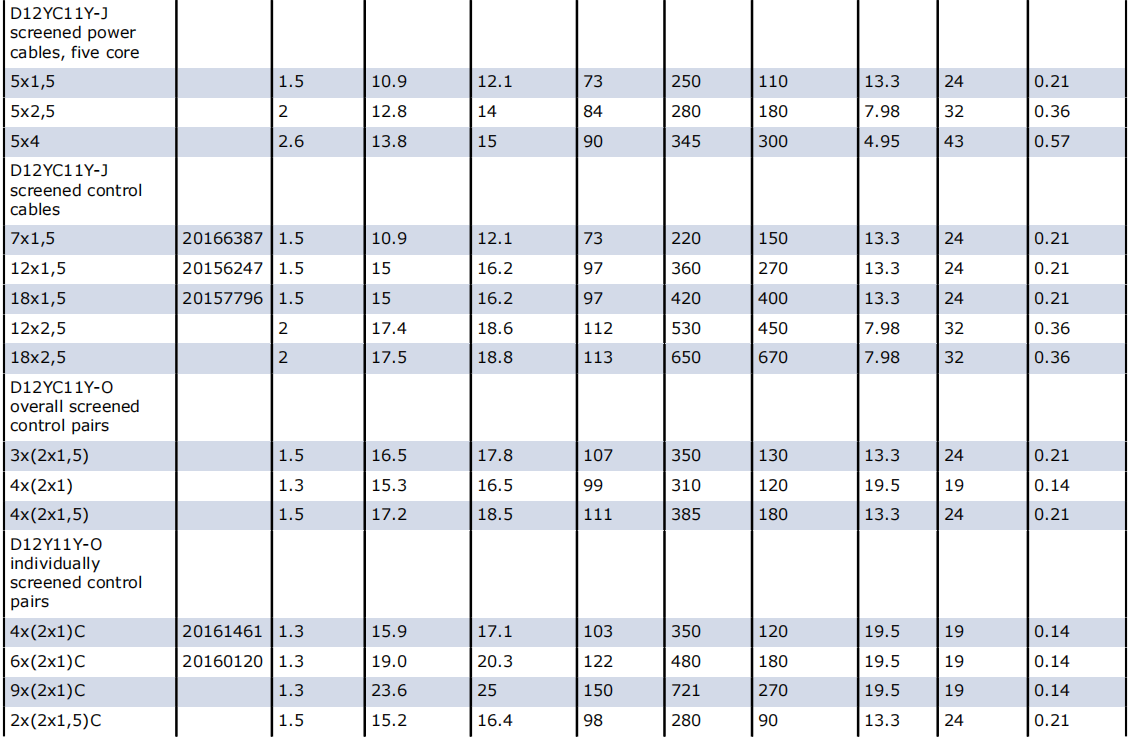
The FESTOONFLEX C-PUR-HF D12YC11Y is available in multiple power cable configurations to suit diverse application requirements. Single-core designs range from 1x25mm² to 1x240mm², providing flexibility for high-current single-phase or DC applications. These configurations prove particularly valuable in specialized materials handling equipment requiring individual conductor routing. Four-core power cables, spanning from 4x1.5mm² to 4x50mm², serve three-phase power distribution with a separate protective earth conductor. This configuration suits most industrial machinery requiring motor power supplies. Five-core designs, available from 5x1.5mm² to 5x4mm², accommodate applications needing neutral conductors in addition to three phases and earth, common in systems with mixed single-phase and three-phase loads.
Control Cable Variants
For control and signaling applications, the cable offers screened control configurations. Seven-core variants (7x1.5mm²) provide multi-circuit control capabilities with overall screening to prevent electromagnetic interference. Twelve-core (12x1.5mm²) and eighteen-core (18x1.5mm²) configurations enable complex control systems with multiple channels operating within a single screened cable. Control cables ranging to 18x2.5mm² accommodate higher-current control circuits or extended cable runs requiring lower resistance. The overall copper braid screen protecting all cores proves particularly effective for control applications, as it prevents external electromagnetic fields from inducing unwanted signals in control circuits while simultaneously preventing the control signals from radiating interference to adjacent systems.
Twisted Pair Configurations
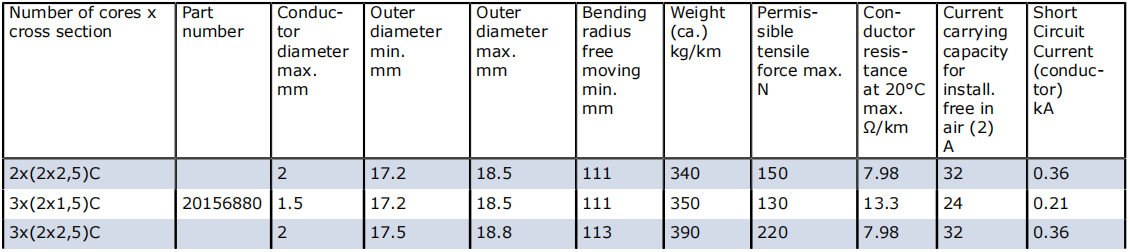
For applications requiring balanced signaling or enhanced interference immunity, the cable is available with overall screened twisted pair configurations and individually screened control pair variants. Overall screened designs include 3x(2x1.5mm²), 4x(2x1mm²), and 4x(2x1.5mm²) configurations, where pairs are twisted together with all pairs protected by a common screen. This arrangement suits applications like RS-485 communications or balanced control signals. Individually screened pair variants, such as 4x(2x1)C, 6x(2x1)C, and 9x(2x1)C, provide maximum interference immunity by screening each pair separately. These configurations excel in industrial Ethernet, Profibus, or other fieldbus applications where each data channel requires independent electromagnetic protection. The "(C)" designation indicates the presence of copper braid screening around each individual pair.
Application Scenarios & Use Cases
Festoon System Applications
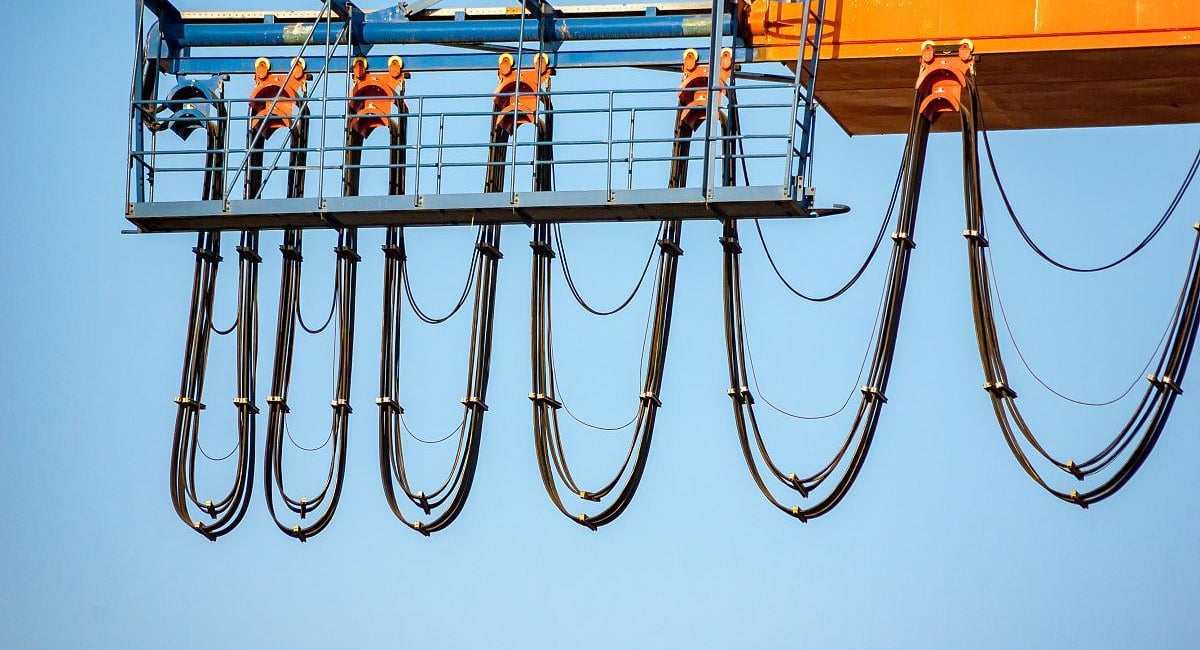
Gantry crane applications represent a primary use case for the FESTOONFLEX C-PUR-HF D12YC11Y. In these installations, the cable travels horizontally along the crane bridge, following the trolley movement as it positions loads. The cable typically runs in a festoon system with multiple support brackets maintaining proper sag between supports while allowing smooth travel. The screened construction prevents interference with load cell systems and radio remote controls common in modern cranes. Hall gantry cranes operating in manufacturing facilities benefit similarly, where the cable must provide reliable power despite continuous duty cycles and frequent direction changes. Rack material handling equipment in automated warehouses relies on this cable for pick-and-place operations, where consistent electrical performance proves critical for positioning accuracy and data transmission to warehouse management systems.
Industrial Machinery Power Supply
Machine tool power supply represents another significant application area. CNC machining centers require stable power delivery to spindle motors, axis drives, and control systems. The FESTOONFLEX C-PUR-HF D12YC11Y's screening prevents motor drive switching noise from interfering with precision control electronics. Flexible motor power cable applications benefit from the polyurethane sheath's resistance to cutting fluids and coolants prevalent in metalworking environments. Drag line systems for movable machine components, such as cross slides or tool changers, utilize the cable's frequent bending resistance to maintain reliable operation through millions of motion cycles. Materials handling equipment including conveyor systems, automated guided vehicles, and robotic work cells all benefit from the cable's combination of mechanical durability and electromagnetic compatibility.
Severe Operating Conditions
The cable design specifically addresses high mechanical stress environments where frequent bending combines with exposure to challenging conditions. Outdoor crane installations face weather extremes from scorching summer heat to winter cold, with rain, snow, and UV exposure adding to environmental challenges. The polyurethane sheath withstands these conditions without cracking or degrading. Severe weather condition applications might include port container cranes operating 24/7 in coastal environments with salt spray and wind loading. EMC-sensitive applications prove increasingly common as industrial automation advances. Modern factories incorporate numerous variable frequency drives, switching power supplies, and wireless communications systems, creating dense electromagnetic environments. The FESTOONFLEX C-PUR-HF D12YC11Y's screening ensures that power distribution cables do not contribute to or suffer from this electromagnetic congestion, maintaining reliable operation of both power and control systems.
EMC & Electromagnetic Compatibility
Interference Mitigation Design
The cable's electromagnetic compatibility design addresses both emission control and immunity enhancement. The copper braid screen functions as a Faraday cage, containing electromagnetic fields generated by current flow within the cable while simultaneously blocking external fields from inducing currents in the conductors. This bidirectional protection proves essential in modern industrial environments where multiple electrical systems operate in close proximity. The tinned copper construction of the braid enhances its effectiveness by providing excellent conductivity while resisting corrosion that could compromise screening over time. The continuous braid coverage, exceeding 80% of the cable surface, ensures minimal electromagnetic leakage, achieving screening effectiveness that meets stringent industrial EMC requirements.
EMC Standards Compliance
The cable achieves compliance with EN 55011/55022 emission standards, which specify maximum permissible electromagnetic interference for industrial, scientific, and medical equipment. This compliance ensures that installations using the FESTOONFLEX C-PUR-HF D12YC11Y meet regulatory requirements without requiring additional EMC mitigation measures. Maximum emission value achievement across the frequency spectrum from kHz through GHz prevents interference with radio communications, wireless control systems, and sensitive measurement equipment. The cable's transfer impedance characteristics, optimized at 1 MHz, 10 MHz, and 30 MHz frequency points, provide effective screening across the range where most industrial control and communication systems operate.
Power-to-Data Cable Separation
A fundamental EMC principle involves maintaining separation between power and data cables to prevent interference. However, in festoon systems and materials handling equipment, physical constraints often limit separation distances. The FESTOONFLEX C-PUR-HF D12YC11Y's screened construction provides effective electromagnetic isolation even when power and data cables run in parallel or cross at close spacing. The overall copper braid screen prevents the electromagnetic fields generated by power current from inducing interference voltages in adjacent data cables. This characteristic enables more compact festoon system designs while maintaining reliable communication channel operation. For critical applications, using screened data cables in combination with the screened power cable creates a comprehensive EMC solution that ensures interference-free operation regardless of system complexity or electromagnetic environment severity.
Installation & Operational Guidelines
Recommended Installation Practices
Proper installation begins with careful cable routing planning. In festoon systems, maintaining consistent support spacing prevents excessive sagging that could cause shock loading during acceleration. Support brackets should incorporate smooth-radius cable guides that prevent sharp edges from damaging the polyurethane sheath. The cable should be secured at termination points using appropriate cable glands that provide strain relief without compressing the cable excessively. The copper braid screen requires proper grounding at both cable ends to function effectively. Ground connections should utilize the cable's earth conductor in combination with the braid screen to provide low-impedance fault current paths and effective EMC protection. During installation, avoid exceeding the minimum bending radius of 6 × D at entries, festoon curves, and termination points. Pre-forming cable loops to proper radii before installation reduces stress during operation.
Travel Speed & System Configuration Considerations
For festoon system operation up to 210 m/min, proper system design prevents operational problems. Ensure that support spacing allows natural catenary formation without excessive sag that could cause the cable to contact structures during motion. Acceleration and deceleration rates should be controlled to prevent shock loading from sudden starts or stops. In chain system applications, chain length significantly impacts reliable operation. Long chains require reduced speeds to prevent dynamic whipping forces from damaging cables. The cable manufacturer should be consulted for chains exceeding standard lengths or applications requiring speeds approaching the 210 m/min maximum. Regular inspection of festoon systems helps identify wear patterns, support bracket issues, or alignment problems before they cause cable failure.
Cable Routing Best Practices
Support element integration in festoon designs requires attention to cable weight distribution. Vertical drops or long horizontal runs may require tension-relieving support structures that prevent excessive loading on the cable. The FESTOONFLEX C-PUR-HF D12YC11Y's 15 N/mm² tensile load limit must accommodate both static cable weight and dynamic operational forces. In complex three-dimensional festoon systems, maintaining consistent cable path geometry throughout the travel range prevents torsional loading that could damage the braid screen. Cable routing should minimize direction changes while ensuring that all bends maintain proper radii. Special attention should be paid to entry points where the cable transitions from mobile to stationary installations, as these locations experience maximum stress during operation.
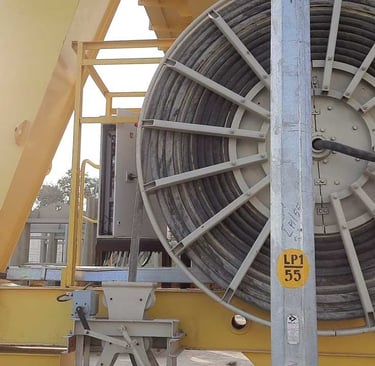
Common Installation Challenges & Solutions
Problem: Premature Cable Failure in Festoon Systems
Issue Identification: Cables failing after fewer operating cycles than expected, with visible damage at support points or direction changes.
Root Causes: The most common cause involves insufficient bending radius at festoon curves or entry points, concentrating mechanical stress and accelerating conductor fatigue. Excessive travel speed or acceleration rates create dynamic shock loads exceeding the cable's mechanical capabilities. Improper support spacing causes excessive sag, resulting in impact loading when the cable snaps taut during motion reversal. Sharp edges on support brackets or guides cut into the polyurethane sheath, creating failure initiation points.
Solutions: Measure all bending radii during installation and operation, ensuring minimum 6 × D clearance at all points. For a 20mm diameter cable, this requires 120mm minimum radius. Reduce travel speeds if dynamic loading appears excessive, particularly in long chain systems. Adjust support bracket spacing to maintain shallow catenary curves between supports. Inspect all cable contact surfaces for sharp edges, using sandpaper or files to create smooth radiused surfaces. Consider retrofitting additional support brackets if sag between existing supports appears excessive.
Problem: Electromagnetic Interference Issues
Issue Identification: Control system malfunctions, communication errors, or sensor signal corruption occurring when drive motors operate or loads switch.
Root Causes: Incomplete or improper screen grounding prevents the copper braid from effectively containing electromagnetic fields. Damaged braid screening from mechanical abuse or excessive bending allows electromagnetic leakage. Insufficient separation between power and unscreened data cables in festoon systems permits coupling of interference.
Solutions: Verify screen grounding at both cable ends using low-impedance connections to the facility grounding system. Use cable glands specifically designed for screened cables that provide 360-degree screen contact. Inspect cables for physical damage that might have torn the braid screen, replacing damaged sections. If using unscreened data cables in parallel with power cables, maintain maximum practical separation or replace with screened data cables. For severe EMC environments, consider using individually screened control pairs rather than overall screened configurations, as this provides superior interference immunity for critical signals.
Problem: Cable Stiffness in Cold Environments
Issue Identification: Increased resistance to motion or motor overload during cold weather operation, particularly during startup after idle periods in unheated facilities.
Root Causes: While the FESTOONFLEX C-PUR-HF D12YC11Y operates to -40°C in flexible applications, material stiffness increases at cold temperatures. The polyurethane sheath becomes less flexible, requiring more force for bending. In extreme cold approaching the specification limit, accumulated ice or frost between cable and supports further increases resistance.
Solutions: For outdoor installations in severe climates, consider heated festoon housings that maintain cable temperatures above freezing. Reduce travel speeds during cold weather to decrease dynamic loading. Implement gradual warm-up procedures in intermittent-operation systems, running brief motion cycles to flex the cable before commencing full operation. Ensure that support brackets cannot trap water that might freeze and restrict cable movement. In extreme cold environments regularly experiencing temperatures below -40°C, consult the cable manufacturer regarding special cold-resistant compound formulations.
Problem: Water Ingress at Cable Terminations
Issue Identification: Electrical failures traced to moisture entering the cable through termination points, despite the cable's rated water resistance.
Root Causes: The FESTOONFLEX C-PUR-HF D12YC11Y withstands immersion to 50 meters depth, but this rating assumes intact cable with properly sealed ends. Improperly installed cable glands allow moisture infiltration through capillary action along conductor strands. Damaged polyurethane sheath at termination points creates entry paths for water. Condensation in unsealed junction boxes creates moisture exposure at connections.
Solutions: Use only IP66 or IP67 rated cable glands appropriate for the cable diameter and sheath material. Follow manufacturer instructions precisely during gland installation, ensuring all sealing elements compress correctly. Apply cable end sealing compound on conductor ends within junction boxes to prevent capillary wicking along strands. Install junction boxes with drain provisions and orient entry points downward where possible to prevent water accumulation. In wash-down environments, specify stainless steel cable glands and junction boxes with superior corrosion resistance.
Problem: Reduced Cable Lifetime in High-Cycle Applications
Issue Identification: Cables requiring replacement more frequently than anticipated based on calculated cycle life, particularly in high-speed or high-duty-cycle applications.
Root Causes: Actual operating conditions exceeding design assumptions for number of bending cycles, tensile loading, or speed. Acceleration and deceleration forces creating shock loading not accounted for in static calculations. Environmental factors like temperature cycling, chemical exposure, or UV radiation accelerating material aging beyond standard expectations.
Solutions: Conduct detailed operating profile analysis including actual speeds, accelerations, duty cycles, and environmental exposure. Compare actual operating parameters against cable specifications to identify areas of concern. Consider upgrading to enhanced construction variants if operating conditions approach or exceed standard cable specifications. Implement preventive maintenance program with regular cable inspections to identify early wear indicators before failure occurs. For critical applications, establish spare cable inventory to minimize downtime when replacement becomes necessary. Consult with cable manufacturers regarding custom constructions optimized for specific operating profiles if standard products cannot meet application requirements.
Conclusion
The FESTOONFLEX C-PUR-HF D12YC11Y low voltage screened round cable represents a comprehensive solution for demanding festoon system applications requiring both mechanical durability and electromagnetic compatibility. Its halogen-free polyurethane sheath construction provides superior environmental resistance and safety characteristics, while the integrated copper braid screen ensures interference-free operation in complex electromagnetic environments. With proper installation following recommended practices and attention to operational parameters including bending radii, travel speeds, and environmental protection, this cable delivers reliable performance across a wide range of industrial materials handling applications. Understanding the cable's specifications, capabilities, and limitations enables system designers and maintenance personnel to optimize installations for maximum reliability and service life, ensuring that power distribution systems meet the demanding requirements of modern automated industrial facilities.
How to Reach Us
Get in Touch
SiteMap
Product Catalogue
Festoon Cable
Shore Power Cable


Scan to add us on WeChat