Heavy-Duty Mining Cables for Australia's Open-Cut Operations: The Complete Technical and Procurement Guide
From trailing cables on Bowen Basin draglines to reeling systems on Pilbara iron ore stackers — this guide covers everything electrical engineers and procurement professionals need to know about selecting, specifying, and managing heavy-duty mining cables in Australia's harshest operating environments.
hongjing.Wang@Feichun
6/1/202630 min read
Introduction: Why Cable Selection Is a Production-Critical Decision
There's a conversation that happens on Australian mine sites that rarely makes it into procurement reports. It goes something like this:
An electrical supervisor picks up the phone at 2 am. A trailing cable on one of the draglines has failed — not a minor surface scuff, but a full insulation breakdown at a stress point near the machine interface. The machine is down. The shift is lost. And the nearest suitable replacement cable is sitting in a warehouse in Brisbane, 900 kilometres away.
By the time the logistics are sorted, the maintenance crew mobilised, and the replacement installed, the operation has lost 18 hours of production on a machine that costs thousands of dollars per operating hour to run. The cable that failed cost a fraction of that.
This scenario plays out more often than it should across Australian open-cut and underground operations — not because site electrical teams don't know what they're doing, but because cable selection in the mining environment involves a genuinely complex set of trade-offs that aren't fully captured in a standard product data sheet.
This guide is written for the people who have to make those decisions: electrical engineers building cable schedules for capital projects, maintenance supervisors managing ageing fleet assets, and procurement professionals trying to balance total cost of ownership against budget constraints in a market where supply chain reliability matters as much as unit price.
The Australian Mining Cable Environment: What Makes It Different
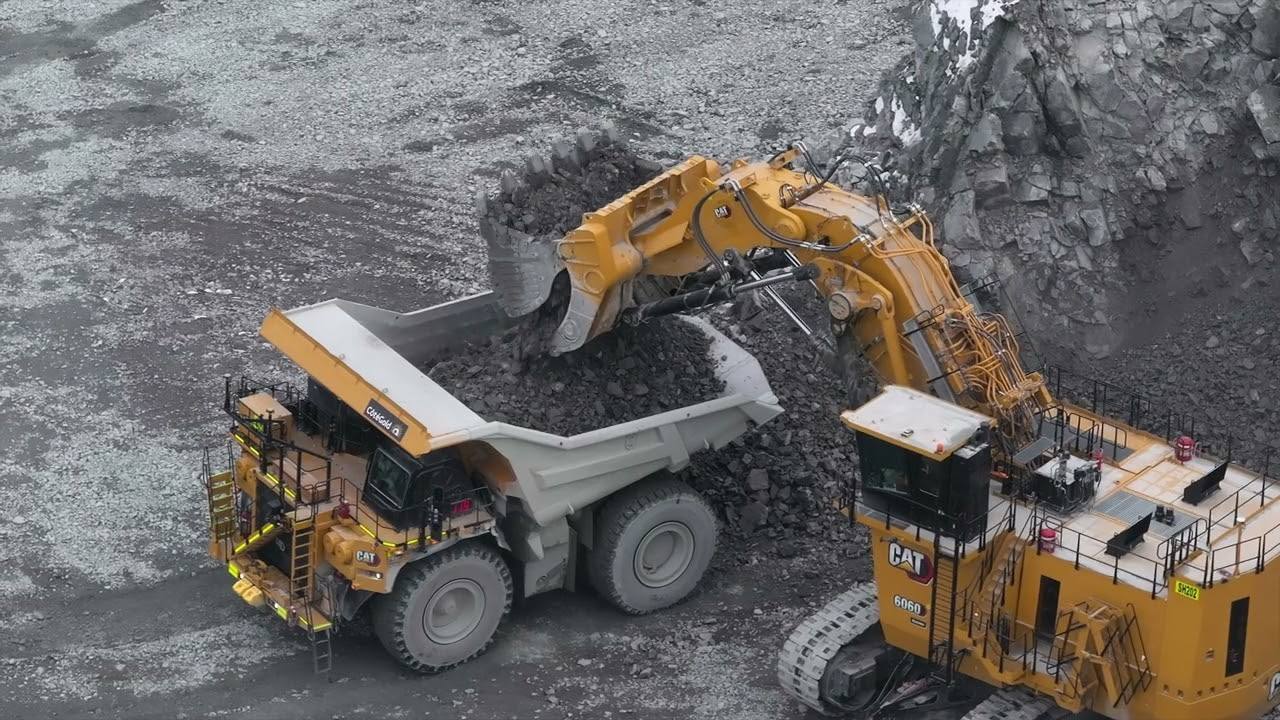
Before getting into product specifications, it's worth being clear about what Australian mining operations ask of their cables — because the conditions here are genuinely different from the European and North American environments where many mining cable standards were originally developed.
Temperature Extremes and Diurnal Swings
A surface mining operation in Central Queensland might see ambient temperatures reach 45°C at midday and drop to 12°C overnight. In the Pilbara, summer ground surface temperatures near dark conveyor structures can exceed 70°C. At the same time, operations in alpine areas of New South Wales and Victoria can experience frost and near-freezing conditions through winter months.
This diurnal and seasonal swing is demanding on cable insulation compounds. Standard compounds that perform adequately in a controlled European industrial environment can stiffen, crack, or degrade prematurely under sustained Australian heat and UV exposure. Cable specifications for Australian operations should include ambient temperature ratings across the full operational range, not just a nominal figure.
UV Intensity
Australia's solar UV index is among the highest on earth. For cables installed in surface positions — along conveyor structures, in cable trays exposed to open sky, or in trailing arrangements on surface equipment — UV resistance is not a secondary consideration. It is a primary determinant of sheath longevity.
Cables specified without verified UV resistance will show sheath surface cracking within 12 to 24 months in exposed positions, compromising mechanical protection and accelerating moisture ingress.
Dust, Mud, and Chemical Exposure
Australian open-cut operations generate extraordinary volumes of dust — coal dust, iron ore fines, and silica-bearing rock dust — that ingress into every surface of exposed equipment. Combined with the haul road dust suppressants, hydraulic fluid, diesel fuel, and chemical agents used in blasting and ore processing, the chemical environment around cables is aggressive.
Oil and fuel resistance in the outer sheath compound is not a luxury specification for Australian mining cables. It is a baseline requirement, particularly for cables installed in proximity to mobile plant.
Remote Location and Supply Chain Constraints
Many of Australia's largest mining operations are located in areas with limited industrial infrastructure. The Pilbara operations in Western Australia are among the most geographically isolated large-scale industrial developments on earth. The Bowen Basin coalfields in Queensland, while better serviced, still present significant logistical challenges for emergency cable supply.
The practical consequence is straightforward: cables that fail prematurely in these locations impose costs that are disproportionate to their purchase price. A cable that costs 20% more but lasts twice as long doesn't just save money on replacement parts — it eliminates the logistical nightmare of emergency procurement in a remote environment.
Cable Types and Applications: A Complete Reference for Australian Mining
Medium Voltage Reeling Cables
Primary applications: Excavators, bucket wheel excavators, mobile crushers, stacker-reclaimers, cable reeling drums, bulk material handling systems, and any application requiring repeated dynamic movement of a medium voltage power supply.
Medium voltage reeling cables are among the most mechanically demanding electrical products in industrial use. They must withstand continuous cycles of extension, retraction, bending, and torsional stress — often at elevated speeds and in environments where mechanical damage from contact with ground surfaces or structures is a constant risk.
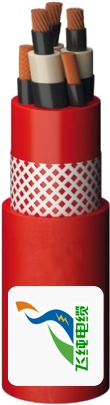
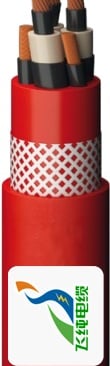
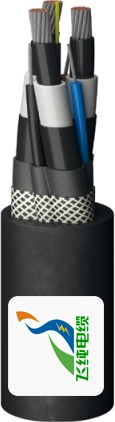
The workhorse of this category is the PROTOLON (M) R-(N)TSCGEWOEU, available from 3.6/6 kV through to 20/35 kV. It uses very finely stranded class FS copper conductors, EPR insulation with semi-conductive inner and outer screening layers, a polyester braid armour layer, and a polychloroprene outer sheath compound (5GM5). The split earth conductor arrangement — with earth conductors distributed in the interstices between the three main cores — is a key design feature that maintains earth continuity under torsional loads. Conductor sizes run from 3×25 mm² up to 3×300 mm², covering the full range of Australian open-cut excavator and crusher applications. Rated tensile strengths range from 1,500 N at the 3×25 mm² end up to 18,000 N for the 3×300 mm² construction, and current carrying capacities from 131 A to 620 A depending on conductor size and voltage rating.
The key design parameters that differentiate this class of product from a commodity cable include:
Conductor construction: Very finely stranded copper conductors (class FS) provide the flexibility required for high-cycle reeling without work-hardening and conductor fatigue. Standard class 5 stranding is not adequate for true high-cycle reeling applications.
Insulation compound: EPR insulation, formulated with semi-conductive inner and outer layers for medium voltage screening integrity, provides the electrical performance and flexibility required across the full temperature range — from -30°C in flexible operation up to +80°C ambient.
Earth conductor arrangement: The split earth conductor arrangement prevents the earth path from being compromised by differential movement between cable elements under torsional load — a failure mode that affects conventional earth designs in dynamic applications.
Armour and sheathing: A polyester braid armour layer beneath the outer sheath provides mechanical reinforcement without compromising flexibility, critical at drum edges and during S-type direction changes.
For Australian operations, the voltage range requirement typically spans from 3.6/6 kV for smaller excavator and mobile crusher applications through to 12/20 kV and 20/35 kV for major installations. The PROTOLON (M) at 6/10 kV in the 3×95+3×50/3 construction, for example, delivers 301 A current carrying capacity with a maximum tensile strength of 5,700 N and an overall cable diameter of 52.8 to 56.8 mm — a representative mid-range specification for excavator reeling on Australian open-cut coal and iron ore operations.
Key mechanical specifications: torsional stress tolerance of ±100°/m, reeling travel speed up to 120 m/min, rewinding up to 100 m/min, bending radius 10×D for flexible operation and 20×D minimum for S-type directional changes.
For operations integrating real-time monitoring, condition-based maintenance, or autonomous control systems, the PROTOLON (M) R-(N)TSCGEWOEU LWL variant integrates optical fibre elements — six tubes, each carrying one to four fibres, laid around a central support element — directly into the cable assembly. This combines power and data transmission in a single mechanically robust structure, eliminating separate communication cable runs and ensuring the data connection follows exactly the same mechanical path as the power supply. Available across the same 3.6/6 kV to 20/35 kV voltage range with the same conductor size options as the standard PROTOLON (M).
For higher-speed reeling applications — particularly stacker-reclaimers and automated bulk handling systems with demanding cycle geometry — the TROMMELFLEX-M-PUR D2X11Y and TROMMELFLEX-M-PUR BRAIDED D2X11Y provide a low voltage (0.6/1 kV) reeling solution with halogen-free polyurethane outer sheath, optimised for underground and surface mining reel applications. The standard TROMMELFLEX-M-PUR handles travel speeds up to 60 m/min; the BRAIDED variant, with its central aramid carrier element and braided armour layer, handles up to 100 m/min with a 25 N/mm² tensile strength rating. Both are available in conductor configurations from 3×25+3G6+2×1 up to 3×240+3G50+2×1.5 mm².
Medium Voltage Trailing Cables
Primary applications: Draglines, electric rope shovels, large excavators in trailing configurations, high-tension trailing applications with sustained abrasion exposure.
Trailing cables differ from reeling cables in their mechanical load profile. Where a reeling cable is subjected to controlled, repetitive bending on a drum, a trailing cable is dragged along ground surfaces, subjected to variable torsion from machine movement, exposed to impact from rocks and debris, and abraded by continuous contact with rough ground.
The outer sheath specification is consequently the most critical design element in a trailing cable. High-grade polychloroprene compounds, formulated specifically for abrasion and chafing resistance, are the standard for Australian dragline and shovel trailing applications.
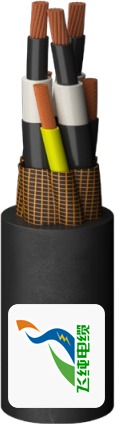
PROTOLON (SB) NTSCGEWOEU — Standard trailing range: The established benchmark for Australian open-cut excavator trailing applications, covering 1.8/3 kV to 18/30 kV. Constructed with finely stranded tinned copper class 5 conductors, EPR insulation (PROTOLON Special compound 3GI3), semi-conductive NBR easy-strip outer screen, polyester braid armour, and polychloroprene outer sheath (5GM5). Torsional stress tolerance ±100°/m, 15 N/mm² static tensile strength. Conductor range 3×25 mm² to 3×185 mm² across voltage levels. This cable holds MSHA P-189-4 approval alongside DIN VDE and GOST-R certifications — relevant for Australian operations with export documentation requirements or US-standard contractual specifications.
PROTOLON (SB-SAM) (N)TSCGEWOEU — Optimised wall thickness trailing: For applications where cable weight and diameter are critical — very long trailing runs, applications with tight bending radius requirements, or large rope shovel applications where cable mass at the machine interface directly affects drag loads — the SAM variant achieves equivalent electrical performance in a physically smaller package through optimised insulation wall thickness. Available from 3.6/6 kV to 12/20 kV with conductor sizes 3×25 mm² to 3×240 mm². The 20 N/mm² static tensile strength rating is an improvement over the standard SB series.
PROTOLON (SB-SAM) SHD-GC and PROTOLON (SB) SHD-GC — Shielded heavy-duty ground check trailing: Conforming to ANSI/NEMA WC 58 ICEA S-75-381, these cables incorporate individual concentric mix screens of tinned copper and coloured polyester yarn over each main core, plus integrated ground check (GC) conductors and ground conductors in the outer interstices. The PROTOLON (SB) SHD-GC covers 5 kV, 8 kV, and 15 kV ratings; the TENAX PUR SHD-GC provides the same at 8 kV with a halogen-free PUR outer sheath. These are increasingly specified in Australian operations seeking the additional ground fault detection capability of the continuous core shield arrangement.
TENAX-SAS (N)TSCGEWOEU — Cold-flexible trailing for demanding applications: The TENAX-SAS is engineered for applications where standard compound trailing cables would stiffen and fail. Fully flexible operation down to -50°C, available from 3.6/6 kV to 20/35 kV with conductor sizes from 3×16 mm² up to 3×300 mm² — the widest conductor range in the trailing cable category. The outer sheath compound is specifically described as "extremely robust and tough against abrasion and tearing," and the aramid rope central element with cores laid up around a conductive central support provides superior torsional load distribution compared to conventional trailing cable designs. Torsional stress tolerance ±100°/m with 20 N/mm² static tensile strength. The larger constructions — 3×240+2×70+1×16 at 20/35 kV, for example — carry current ratings of 574 A with maximum tensile strengths of 18,000 N, covering the most demanding large-shovel trailing applications.
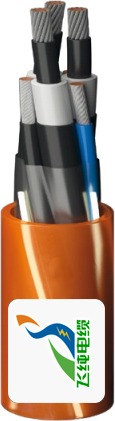
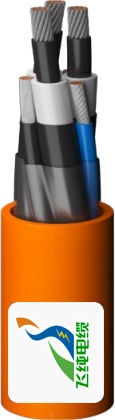
TENAX-PUR (N)TSCGEH3S — PUR-sheathed trailing for extreme abrasion environments: Where the outer sheath abrasion resistance requirement exceeds what polychloroprene can provide, the TENAX-PUR substitutes a polyurethane (PUR) outer sheath — available in orange, yellow, or custom colours on request — with halogen-free and cold-flexible (-50°C) performance. Rated at 3.6/6 kV and 6/10 kV, with conductor sizes from 3×16 mm² to 3×240 mm². Permanent tensile strength 25 N/mm² static. The PUR sheath compound is resistant to abrasion, tearing, oil, ozone, and UV — a genuine step up in sheath durability for the most punishing ground contact applications.
TENAX-LUMEN (N)TSCGH3S — Luminescent trailing cable: A self-illuminating MV trailing cable for applications where cable visibility in low-light or dark conditions is a personnel safety requirement. Electroluminescent strings embedded in the outer interstices of the cable core, covered by a transparent PUR outer sheath, allow the cable to illuminate its own position even when de-energised. Rated at 3.6/6 kV and 6/10 kV with conductor sizes from 3×35 mm² to 3×240 mm². The electroluminescent strings operate at up to 125 V AC and 2,000 Hz with approximately 15 A/km current absorption and 360° irradiation with greater than 95% light homogeneity. Relevant for Australian operations where trailing cables cross vehicle movement corridors or pedestrian paths in low-visibility conditions.
Low Voltage Reeling Cables for Mobile Mining Equipment
Primary applications: Drill rigs, LHD machines, scoops, shuttle cars, and other mobile mining equipment requiring flexible low voltage power supply via cable reel.
The LV reeling cable market for mobile mining equipment has specific requirements that differentiate it from general industrial flexible cable applications.
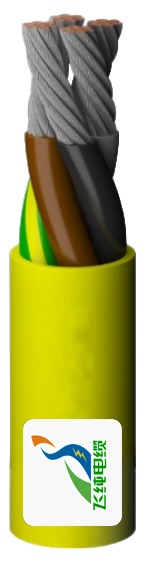
The TROMMELFLEX-M-PUR D2X11Y (0.6/1 kV) is specifically engineered for reeling applications on drilling machines, scoops, and LHD equipment in underground and surface mining. It uses finely stranded class 5 copper conductors, XLPE core insulation, and a halogen-free polyurethane (PUR) outer sheath, with cores twisted with a very short lay length to maximise flexibility. Available conductor configurations run from 3×25+3G6+2×1 mm² up to 3×240+3G50+2×1.5 mm², covering everything from small drill rigs to large LHD drive systems. Standard travel speed is 60 m/min for underground reel operation, with a torsional stress tolerance of ±50°/m and a 20 N/mm² permanent tensile strength rating. The 4G70+2×(10×2.5)+1×(8×1.5)C construction provides a combined power and control cable option for equipment requiring integrated signal transmission alongside the main power supply.
The TROMMELFLEX-M-PUR BRAIDED D2X11Y (0.6/1 kV) is the higher-performance variant, adding a central aramid carrier element and a braided armour layer (material: braiding over halogenfree polymer inner sheath) beneath the PUR outer sheath. This construction raises the travel speed to 100 m/min, the tensile strength to 25 N/mm², and provides additional mechanical protection in confined drive headings where cable abrasion from rib contact is a constant issue. Available in the same broad conductor range — 3×25+3G6 up to 3×240+3G50+2×1.5 mm² — with bending radius 4×D fixed and 8×D reeling operation. Both TROMMELFLEX variants carry DIN EN 60228/IEC 60228/VDE 0295 conductor certification and IEC 60502-1 compound compliance.
Key design features that differentiate quality LV reeling cables from generic flexible cable include: optimised overall diameter for maximum reel capacity, halogen-free sheathing for underground compliance, central reinforcement elements for tensile load management, and integrated control cores where power and signal must share a single cable run.
Halogen-Free Low Voltage Power Cables for Mobile Applications
Primary applications: Power supply to mobile equipment in tunnelling, underground mining, and enclosed space applications; any application where personnel exposure to toxic gases from cable fire is a safety concern.
The halogen-free requirement in mining power cables is driven by a straightforward safety principle: in the event of a cable fire in an enclosed or semi-enclosed space, halogenated sheath compounds release hydrogen chloride and other toxic gases that can incapacitate personnel before they can evacuate. Halogen-free compounds, while typically less flexible and more expensive than PVC alternatives, eliminate this risk.
For Australian operations, halogen-free LV power cables are most commonly specified for underground coal mining (mandatory in most jurisdictions), tunnelling and civil construction projects adjacent to or connected to mining operations, processing plant enclosed cable routes, and any surface application where cables pass through structures with limited ventilation.
TUNNELFLEX-PUR HF (without antitwisting protection): For applications where the cable moves in one plane only — a cable boom that extends and retracts in a fixed direction, for example — the TUNNELFLEX-PUR HF provides halogen-free power supply at 0.6/1 kV with a maximum travel speed of 60 m/min. Plain copper class 5 conductors, XLPE special compound insulation (brown/black/grey), and HFFR thermoplastic polyurethane for both inner and outer sheath layers. Conductor range from 4G10 mm² to 3×240+3G50 mm², with current carrying capacities from 74 A to 540 A. Available with or without integrated 2×1 or 2×1.5 mm² control cores. Certified to DIN EN 60228/IEC 60228/VDE 0295, IEC 60754-1 (halogen-free), and DIN EN 60332-1-2 (fire performance).
TUNNELFLEX-R-PUR HF (with antitwisting protection): For applications involving complex cable routing with directional changes — festoon systems, portal cranes, equipment with multiple axes of movement — the R-PUR HF adds a synthetic mesh anti-twisting layer beneath the HFFR PUR outer sheath. This maintains cable geometry and prevents torsional accumulation over the cable run, raising the maximum travel speed to 120 m/min. Identical conductor range and current carrying capacity to the standard TUNNELFLEX-PUR HF, with the same control core options. The weight premium over the non-antitwisting variant is minimal — for a 3×95+3G16 construction, the difference is 3,710 kg/km versus 3,640 kg/km — making the R-PUR HF the better default specification wherever multi-directional movement is a possibility rather than a certainty.
Dredging and Submersible Pump Cables
Primary applications: Dredge connections, floating plant power supply, submersible pump installations, dewatering operations in open-cut and underground settings.
Cables for wet and submerged applications have specific design requirements centred on waterproofing integrity and resistance to the chemical characteristics of the water environment — which in a mining context may include acid mine drainage, process chemical carry-over, and sediment-laden slurry.
The PROTOLON (ST) NTSCGEWOEU is the standard medium voltage dredging and water-immersion cable, available from 1.8/3 kV to 18/30 kV. The outer sheath is chlorinated polyethylene (CM/CPE, special compound 5GM3 waterproof), and the inner sheath uses a special waterproof EPR compound to prevent moisture migration along the cable core. Sea water resistance is rated "excellent" with a maximum operating depth of 500 m — covering the full range of Australian dredging and floating plant applications. Torsional stress tolerance ±100°/m with a 15 N/mm² permanent tensile strength rating. Available from 3×16 mm² to 3×240 mm² conductor sizes across the voltage range, with current carrying capacities from 99 A to 574 A. Also MSHA P-189-4 approved and GOST-R certified.
For dredge applications requiring individual phase shielding — installations subject to VDE 0168 requirements or where individual core fault detection is specified — the PROTOLON (ST) 3E NTSCGEWOEU adds individual concentric protective-earth conductors distributed over the insulation of each main core. Available from 1.8/3 kV to 18/30 kV with conductor sizes from 3×25 mm² to 3×240 mm². The torsional stress tolerance on this screened variant is ±25°/m, reflecting the more constrained movement typical of installations where VDE 0168 compliance is required.
For low voltage submersible pump and dewatering applications, the PROTOMONT NSSHOEU (0.6/1 kV) is the primary option. This rubber-insulated flexible cable uses EPR insulation (PROTOLON compound 3GI3) and a chlorinated polyethylene outer sheath (5GM5), with a water depth rating of up to 2,000 m — far exceeding the requirements of virtually any Australian mining dewatering application. Single-core configurations from 1×16 mm² to 1×500 mm² cover individual pump supply cables; three-core configurations from 3×1.5 mm² to 3×185/95 mm² (with neutral/earth) cover the full range of three-phase pump motor sizes. The cable is suitable for permanent immersion in waste water up to 40°C, as well as industrial water, surface water, and seawater. For dewatering in aggressive water chemistry — acid mine drainage, high mineral load — the resistance properties should be verified against the specific water analysis for the site.
The halogen-free low voltage alternative for dewatering in enclosed or underground settings is the (N)SSHOEU PUR (0.6/1 kV), which substitutes a polyurethane outer sheath for the CPE compound of the PROTOMONT, providing halogen-free performance with a maximum water depth of 10 m. Available in configurations from 3×2.5 mm² up to 4×185 mm², covering small to medium dewatering pump applications in underground settings where halogen-free construction is mandated.
Semi-Flexible Installation Cables
Primary applications: Alongside conveyor belts (including shiftable belt installations), cable booms, connection between upper and lower car on large material handling machines, submersible pump connections with limited movement.
Shiftable belt installations are a feature of Australian open-cut mining operations that creates a specific and often underappreciated cable challenge. As the pit advances and the belt moves, the cable must be flexible enough to accommodate repositioning while providing the mechanical robustness required for a semi-permanent fixed installation. Neither a standard trailing cable nor a conventional fixed-installation armoured cable is optimal.
The PROTOLON (M) F-(N)TSCGEWOEU (6 kV to 35 kV) is the primary product for alongside-belt and semi-fixed applications in the medium voltage range. Constructed with finely stranded class 5 copper conductors, EPR insulation (PROTOLON HS compound 3GI3), semi-conductive NBR easy-strip outer screen, and a chlorinated polyethylene outer sheath (5GM3), with the protective earth conductor split into three and distributed in the outer interstices. Sea water resistance is "excellent" with a maximum immersion depth of 10 m, and torsional stress tolerance is ±100°/m. Available from 3×25 mm² to 3×300 mm² conductor sizes at 3.6/6 kV through 20/35 kV, with current carrying capacities from 131 A to 660 A. The 20/35 kV variant in a 3×300+3×150/3 construction — the largest available — weighs 19,000 kg/km and is rated for 660 A, covering the most demanding large-excavator connection requirements in the semi-flexible category.
For the lower voltage end of the semi-flexible category — alongside-belt power supply to conveyor drives at 1.8/3 kV, submersible pump connections, and upper-to-lower car connections on smaller material handling machines — the PROTOLON (M) F-(N)TSWOEU at 1.8/3 kV provides a simpler construction without the split earth arrangement. Currently available in a 3×70 mm² construction at 1.8/3 kV, delivering 250 A current carrying capacity.
For fixed and flexible low voltage installations on open-cut sites — including quarries, construction areas adjacent to mining operations, and general site power distribution — the PROTOMONT NSSHOEU (0.6/1 kV) covers the LV semi-fixed category with the same rubber/CPE construction and 2,000 m water depth rating as the pump cable variants, in a broad range of single, three, four, and five-core configurations. The four-core 4×185 mm² construction at the top of the range delivers 461 A with a 67.3 to 71.3 mm overall diameter.
Technical Specification Comparison: Key Parameters for Australian Applications
When comparing medium voltage mining cable products for Australian applications, the following parameters represent the minimum technical data points that should be evaluated — and verified against the actual conditions of your specific application, not just the nominal operating case.
Rated voltage (U0/U) is the starting point and a non-negotiable. The cable's rated voltage must match the site's medium voltage distribution system with an appropriate safety margin. A 6/10 kV rated cable is suitable for a 6.6 kV system; an 8.7/15 kV rating is appropriate for an 11 kV system. Mismatching this parameter is not a minor specification error — it is a safety and insulation failure risk.
Maximum conductor temperature should be 90°C for all standard mining cable applications. This is the industry baseline, and any product rated below this figure should be treated with caution in continuous-duty mining applications.
Flexible installation temperature range is where many generic cable specifications fall short for Australian conditions. The minimum requirement for Australian surface mining operations is -30°C to +80°C for the flexible operating range. For operations in alpine regions or those specifying cold-flexible cables for extreme winter resilience, verify that the compound is rated to -50°C in full flexible operation — not just for static installation.
Torsional stress tolerance is the parameter that most directly predicts trailing and reeling cable longevity in dynamic applications. The minimum acceptable rating for true dynamic applications — trailing and reeling — is ±100°/m. Semi-fixed applications can accept ±50°/m. Products that don't specify torsional tolerance at all should not be considered for dynamic mining applications.
Travel speed must be matched to the actual reel or festoon speed in the application. Reeling operation speeds up to 120 m/min are achievable with well-engineered products; rewinding speeds up to 100 m/min are standard. Specifying a cable with an inadequate travel speed rating guarantees premature mechanical failure.
Tensile strength should be calculated from first principles for the specific application — cable weight multiplied by the relevant span length — with an appropriate dynamic safety factor applied. The rated tensile strength figures in product data sheets are maximums; the application calculation must sit comfortably below them.
Flame retardancy to EN/IEC 60332-1-2 is the mandatory minimum for all mining cable applications in Australia. This is not a specification element to trade away for cost reduction.
Oil resistance is a baseline requirement for every cable installed in proximity to mobile plant, conveyor drives, or processing equipment. The Australian mining environment — with its combination of hydraulic fluid, diesel fuel, and haul road chemical suppressants — makes oil resistance a functional necessity, not an optional upgrade.
UV resistance is mandatory for all cables in surface-exposed positions. This includes trailing cables, reeling cables on surface excavators, conveyor belt power supply cables, and any fixed-route cable in an open cable tray. The UV intensity of the Australian sun will destroy an unprotected sheath compound in 12 to 24 months.
Halogen-free construction is mandatory for underground coal mining applications in Australia across all states, and is required for enclosed cable routes in processing plants and structures with limited ventilation. For open-air surface applications it is application-specific, but the safety case for specifying halogen-free where practical is straightforward and increasingly standard practice across the industry.
Australian Case Studies: Heavy-Duty Mining Cables in the Field
Case Study 1: Bowen Basin Coal — Dragline Trailing Cable Life Extension
A major thermal coal producer operating three walking draglines in Queensland's Bowen Basin had been experiencing trailing cable replacement cycles of 14 to 18 months on two machines. Both machines were on large overburden removal operations with active walking cycles, and the trailing cables were showing accelerated sheath wear at ground contact points and torsional stress cracking at the machine interface.
The site electrical engineer identified two contributing factors: the existing cable's outer sheath compound was not optimised for the specific combination of abrasion loads and torsional stress in the application, and the earth conductor arrangement was showing signs of fatigue at the stress concentration points near the drag shoe.
A trial was conducted using a medium voltage trailing cable with an enhanced abrasion-resistant polychloroprene outer sheath compound, split earth conductor arrangement for improved torsional load distribution, and a polyester braid reinforcement layer. The trial cable was installed on the most demanding of the two machines and monitored through a full 18-month cycle.
At the 18-month inspection, the trial cable showed no structural failure, minimal surface wear, and no evidence of torsional fatigue at the machine interface — compared to the two replacement cycles that would have been expected with the previous product over the same period.
The operation subsequently transitioned all three dragline trailing installations to the upgraded specification. The annualised cable cost reduction was significant, but the more meaningful operational outcome was the elimination of two unplanned production interruptions per year on each machine — interruptions that had previously required emergency cable procurement and extended shutdown periods.
Operational profile consistent with Bowen Basin coal dragline operations; specific operator details aggregated for commercial confidentiality.
Case Study 2: Pilbara Iron Ore — Stacker-Reclaimer Reeling System Upgrade
A large integrated iron ore operation in Western Australia's Pilbara region was running a stacker-reclaimer complex with cable reeling systems feeding 6/10 kV power to the machines. Throughput demands on the complex had increased substantially over a two-year period, resulting in significantly higher drum cycle rates than the original design basis.
The existing reeling cables were rated for the electrical load but were showing premature insulation degradation — specifically, micro-cracking of the EPR insulation compound at the inner radius of drum bends. Investigation identified that the cables had been selected for a lower cycle rate and the increased throughput had moved the application outside the product's mechanical design envelope.
The engineering review selected a medium voltage reeling cable specifically engineered for high-cycle applications, with optimised wall thickness for drum geometry, a very finely stranded class FS conductor for reduced bending stiffness, and mechanical parameters verified against the actual cycle rate and drum dimensions in the application.
The weight reduction achieved by the new cable — approximately 28% lighter than the previous product in the equivalent construction — also reduced the mechanical loading on the drum drive, improving drive motor reliability and reducing drive gear wear.
Cable performance at the 12-month post-installation inspection showed no evidence of insulation stress, and the operation confirmed plans to standardise the specification across all reeling systems in the complex at the next planned cable replacement cycle.
Application profile consistent with Pilbara iron ore stacker-reclaimer operations; specific site and operator details aggregated.
Case Study 3: Hunter Valley Underground Coal — LHD Fleet Electrification Program
An underground coal operation in the Hunter Valley initiated an electrification program for its LHD fleet as part of a broader carbon reduction and ventilation improvement initiative. Replacing diesel LHDs with electric alternatives reduces both direct emissions and the ventilation air volume required to dilute diesel exhaust — a significant operational benefit in an underground coal environment.
The cable specification for the LHD reel systems required halogen-free construction (mandatory for underground coal in NSW), a maximum reel speed of 100 m/min to match the machine drive speed, integrated control cores for traction control signal transmission, and an outer sheath compound resistant to the oil and water exposure in a working drive heading.
A braided-armour low voltage reeling cable with HFFR polyurethane sheath and central aramid carrier element was selected. The braided armour provided additional mechanical protection compared to a standard sheated cable without compromising the drum winding geometry, and the aramid carrier element allowed the cable to handle pulling forces in tight headings without transferring tensile loads to the conductors.
Twelve months after fleet commissioning, all five LHDs in the first deployment group were reporting zero cable-related downtime. The maintenance schedule at the six-month inspection showed minimal sheath wear and no evidence of conductor fatigue or control core damage. The operation is now extending the electrification program to a second fleet group and has adopted the cable specification as the standard for all future LHD deployments.
Based on application profile consistent with Hunter Valley underground coal LHD electrification programs; specific details aggregated.
Case Study 4: Queensland Coastal Dredging — Marine-Grade Trailing Cable for Floating Dredge
A mineral sands operation on Queensland's coast operates a floating dredge connected to shore-based processing infrastructure via a medium voltage cable run partially submerged and partially trailing on the water surface. The application involves significant mechanical stress from wave action, current loads on the submerged section, and torsional forces as the dredge swings on its anchor point.
The cable specification required sea water resistance for the outer sheath and inner compound, torsional stress tolerance matching the swing radius and anchor chain dynamics, a CPE outer sheath for chemical resistance against the saline and mineral-laden water, and voltage rating matched to the 6/10 kV distribution system.
A medium voltage flexible dredging cable rated for 500 m water depth, with CPE outer sheath and waterproof EPR inner sheath, was installed. The cable has been in continuous service through two cyclone seasons without failure — a meaningful test in a coastal Queensland environment where significant wave heights and current loads during weather events place extraordinary demands on submerged cable installations.
Operational profile consistent with Queensland coastal mineral sands dredging operations.
Case Study 5: NSW Open-Cut Coal — Shiftable Belt Electrification
A large open-cut coal operation in New South Wales operates an extensive shiftable conveyor belt system that advances with the pit development. The high-voltage power supply to the belt drives requires cable runs that must be repositioned every two to four weeks as the belt moves, placing demands on the cable that are intermediate between a true trailing cable and a conventional fixed-installation product.
Previous practice had been to use armoured fixed-installation MV cable, which was damaged during repositioning moves due to insufficient flexibility, with the consequent replacement cost and downtime burden. An alternative using standard trailing cable was tried but resulted in premature outer sheath wear from sustained ground contact in a semi-fixed position.
A semi-flexible installation cable — specifically engineered for alongside-belt and shiftable unit applications — was specified for the next repositioning cycle. The cable provides the flexibility required for periodic repositioning without the vulnerability to sustained ground contact that affects true trailing cables, and the mechanical parameters are optimised for the low-frequency movement cycle of a shiftable belt operation.
After four repositioning cycles over an eight-month period, the cable showed no damage from the moves and no evidence of accelerated wear in the fixed-position intervals. The operation confirmed the specification for all future shiftable belt power supply runs.
Application profile consistent with NSW open-cut coal shiftable belt operations.
Beyond the Cable: Support Services That Matter for Australian Operations
VLF Cable Testing
Very Low Frequency (VLF) testing of medium voltage cable insulation provides a reliable, non-destructive method for assessing cable insulation condition without the extended downtime required for traditional high-voltage DC testing.
For Australian mining operations, VLF testing is most valuable in two contexts:
Acceptance testing of new installations: Confirming that cables are correctly installed, undamaged, and free from installation faults before energisation. Catching problems at this stage is far less costly than discovering them under load.
Condition assessment of aged cables: Identifying cables approaching end of insulation life before they fail in service. This enables planned, scheduled replacement rather than emergency response.
Portable VLF testing systems capable of testing up to 60 kV at 0.1 Hz test frequency, covering 240 mm² cables to 5 km testing lengths, are available for on-site deployment — relevant for remote operations where taking cables off-site for testing is impractical.
Asset Monitoring Systems
Modern IoT-based cable monitoring systems — such as partial discharge monitoring, temperature tracking, and humidity sensing across the cable system — represent a meaningful capability for operations looking to transition from time-based to condition-based maintenance regimes.
For large operations running extensive medium voltage cable networks, continuous partial discharge monitoring can identify developing insulation faults weeks or months before they cause a failure, enabling planned intervention during scheduled maintenance windows rather than emergency response outside of them.
These systems are compatible with various SCADA protocols and can be configured for specific maintenance and asset management strategies — relevant for Australian operations with existing SCADA infrastructure.
Cable Repair and Reconnection Services
For remote mining operations, the availability of professional cable repair services using original materials and proven techniques — vulcanisation, shrink-on, or cast-resin — can mean the difference between a six-hour repair and a 48-hour emergency procurement exercise.
On-site repair capability, supported by installation sets of original materials, enables site electrical teams to address minor cable damage rapidly while maintaining the integrity of the cable system. For critical assets where replacement lead times are measured in days rather than hours, this capability has direct operational value.
Fibre-Optic Integration and Testing
As Australian mining operations increasingly deploy autonomous haulage systems, real-time environmental monitoring, and high-bandwidth communications infrastructure, the integration of fibre-optic elements into mining cable assemblies becomes more relevant.
Integrated fibre-optic mining cables — combining power conductors and optical fibre elements in a single mechanically robust assembly — simplify installation in dynamic applications and ensure that communications infrastructure follows the same mechanical path as the power supply. This is particularly relevant for rope shovel and excavator reeling applications where running a separate communications cable alongside the power cable creates additional installation complexity and failure modes.
Fibre-optic testing services — including OTDR reflectometry, attenuation measurement, and visual inspection — support commissioning and ongoing maintenance of these integrated systems.
Procurement Considerations for Australian Mining Operations
Total Cost of Ownership vs. Unit Price
The most common error in mining cable procurement is evaluating cables on unit price without accounting for total cost of ownership over the expected service life. The relevant cost elements are:
Cable purchase price: The most visible cost, and the least representative of actual economic value.
Installation cost: Typically consistent across products of similar construction, but can vary for heavier or larger-diameter cables that require different handling equipment.
Service life: A cable that costs 25% more but lasts twice as long has a 38% lower annualised cable cost — before accounting for the installation cost savings from fewer replacement cycles.
Unplanned downtime cost: The critical factor that dominates the TCO calculation for production-critical applications. A single unplanned cable failure on a major excavator can cost more in production loss than the entire cable lifecycle cost. Products with verified service life in comparable applications reduce this risk.
Emergency procurement premium: In remote locations, emergency procurement of cable replacements typically attracts freight premiums and may require air freight for time-critical situations. Products with longer service life reduce the frequency of this exposure.
Maintenance labour cost: Inspection, testing, and minor repair activities over the cable's service life contribute to total ownership cost. Products with more robust construction typically require less frequent inspection intervention.
Standards and Regulatory Compliance
Mining cables installed in Australian operations must comply with applicable state electrical safety regulations and relevant Australian Standards. Key points for procurement teams:
Medium voltage cables in Australian mining operations are typically governed by state electrical safety regulations under the relevant electrical equipment safety framework
Underground coal mining has specific cable requirements under state mine safety legislation, including mandatory flame retardancy and, in most jurisdictions, halogen-free construction for certain applications
Cables manufactured to IEC and DIN VDE standards are generally accepted for Australian applications, but verification with the site's electrical engineer of record is recommended for any non-standard application
MSHA certification (P-189 series) may be required for certain underground applications or where US-standard compliance is specified in project documentation
Supply Chain and Lead Time Management
For remote Australian operations, supply chain reliability is as important as product specification. Key questions for procurement evaluation:
What is the standard lead time for the specified product from local stock?
Is the product available from Australian-based distributors, or is it imported to order?
What is the emergency supply capability — can urgent orders be air-freighted if required?
Is a strategic spares holding recommendation available for the specific application?
For major capital projects, engaging with cable suppliers early in the design phase enables product availability to be confirmed and lead times built into the project schedule — avoiding the situation where a project is delayed because a specified cable is not available within the construction programme.
Specification Writing for Tenders
When writing cable specifications for Australian mining tenders, the following elements should be explicitly called out to ensure competitive comparisons are made on a like-for-like basis:
Rated voltage (U0/U and Um)
Conductor construction (class 5 or class FS)
Insulation compound type
Screen/shielding arrangement
Armour type and material
Outer sheath compound and specific chemical resistances required (oil, UV, ozone, sea water)
Halogen-free requirement (yes/no)
Temperature range (ambient operating minimum and maximum)
Torsional stress tolerance
Travel speed (for dynamic applications)
Tensile strength
Applicable standards and certifications
Specifications that omit these details create the conditions for lowest-cost-compliance procurement, where suppliers meet the minimum technical threshold rather than providing the product genuinely suited to the application.
Frequently Asked Questions: Mining Cable Selection in Australia
Q: What voltage rating do I need for open-cut excavator trailing cables?
A: This depends on the site's medium voltage distribution system. Australian open-cut coal operations commonly operate at 6.6 kV or 11 kV distribution. Iron ore and other hard rock operations may use different voltages. The cable's rated voltage (U0/U) should be selected to provide an adequate safety margin above the operating voltage — for example, a 6/10 kV rated cable is appropriate for a 6.6 kV system with a 10 kV maximum. Confirm the site distribution voltage with the project electrical engineer.
Q: What's the difference between a reeling cable and a trailing cable?
A: Both are flexible medium voltage cables designed for dynamic movement, but they're engineered for different mechanical load profiles. Reeling cables are designed for controlled, cyclic bending over a drum — the primary stress is bending at the drum entry point, and the cable geometry is optimised for good drum winding behaviour. Trailing cables are designed for open-ended dragging and towing on ground surfaces — the primary stresses are abrasion from ground contact, torsion from machine movement, and impact from debris. Using a reeling cable in a trailing application, or vice versa, will typically result in premature failure.
Q: Do I need halogen-free cables for surface open-cut operations?
A: Halogen-free construction is mandatory for most underground coal mining applications in Australia. For surface open-cut operations, the requirement depends on the specific installation — cables installed in enclosed cable routes, processing plant structures, or other areas with limited ventilation may require halogen-free construction. Cables in open-air trailing or reeling applications on surface equipment typically don't require halogen-free construction, but confirm with your electrical engineer of record and relevant state regulations.
Q: How do I manage cable assets in a remote location?
A: The key strategies are: specification of cables with verified service life in comparable applications (reducing replacement frequency), establishment of a strategic spares holding for critical assets (eliminating emergency procurement dependency), implementation of a regular inspection and testing regime (catching developing faults before failure), and maintaining repair materials and capability on-site for minor damage (enabling rapid response to surface damage without full cable replacement).
Q: What is the typical service life for a dragline trailing cable?
A: Service life varies significantly with application severity. In a demanding dragline trailing application — long trailing runs, active walking cycles, abrasive ground contact — service lives of 18 to 36 months are typical for well-specified products. In less severe applications, service lives of 3 to 5 years or more are achievable. The key driver of premature failure is invariably specification mismatch: a cable specified for a less demanding application than the one it's actually performing.
Conclusion: Getting Cable Specification Right Pays Off
Cable selection in Australian mining isn't a glamorous part of the project engineering process. It doesn't attract the same attention as equipment selection, process design, or infrastructure layout. But the downstream consequences of getting it wrong are felt acutely — in production losses, maintenance costs, supply chain stress, and safety incidents.
The principles that drive good cable specification are consistent across applications: understand the actual mechanical and environmental conditions the cable will experience (not just the nominal conditions), verify that the product's rated parameters cover those conditions with an adequate margin, evaluate total cost of ownership rather than unit price, and ensure the supply chain can support the operation's needs in both routine and emergency scenarios.
For procurement and electrical engineering teams in Australian mining, the investment in getting specification right at the start of a project or maintenance cycle pays back consistently over the cable's service life — in fewer failures, less unplanned downtime, and lower total ownership cost.
The alternative — buying to the lowest unit price, accepting the first product that meets a minimum specification threshold, and hoping for the best — is a strategy that eventually produces the 2 am phone call that nobody wants to receive.
Quick Reference: Cable Type Selection Guide for Australian Mining Applications
The following guidance covers the most common mining cable applications across Australian open-cut and underground operations. For each application, the cable type, typical voltage range, and the single most important specification priority are outlined.
Dragline trailing is one of the most demanding applications in the open-cut environment. The correct cable type is a medium voltage abrasion-grade trailing cable, typically rated from 3.6/6 kV through to 18/30 kV depending on the site distribution system. The overriding specification priority is outer sheath abrasion and chafing resistance, followed closely by torsional stress tolerance — draglines walk, swing, and drag simultaneously, and the cable needs to handle all three.
Rope shovel trailing requires medium voltage trailing cables across the 3.6/6 kV to 12/20 kV range. The primary specification priority here is tensile strength combined with torsional tolerance — rope shovels move aggressively, and the cable takes significant longitudinal loads during digging cycles. Undersizing the tensile rating is a common cause of premature conductor fatigue in this application.
Excavator and bucket wheel reeling calls for medium voltage reeling cables from 3.6/6 kV up to 20/35 kV. Drum winding performance is the critical specification — the cable must lay consistently on the drum across the full range of operating temperatures, and the cycle speed rating must match the actual reel drive speed. Selecting a cable rated for a lower cycle speed than the application demands is the most frequent cause of early failure in excavator reeling applications.
Stacker-reclaimer reeling sits in the medium voltage reeling category, typically 6/10 kV to 12/20 kV, but with a heavier emphasis on high-cycle endurance than a standard excavator application. Stacker-reclaimers in high-throughput iron ore and coal operations accumulate drum cycles at a rate that can quickly expose the limits of a cable selected for a more modest cycle regime. Weight reduction is also meaningful here, as lighter cables reduce drive loading at high cycle rates.
Shiftable belt power supply requires semi-flexible medium voltage cable from 3.6/6 kV to 20/35 kV. Neither a standard trailing cable nor a fixed-installation armoured cable is appropriate. The defining specification requirement is the combination of adequate flexibility for periodic repositioning moves with the mechanical robustness to withstand sustained ground contact during the fixed-position intervals between moves.
LHD and drill reel applications in both underground coal and hard rock settings call for low voltage reeling cables at 0.6/1 kV with halogen-free construction. The critical specification priorities are the halogen-free mandate for underground coal, reel speed rating matched to the machine drive, and the presence of a central aramid carrier element to manage tensile loads in confined headings without stressing the conductors.
Dredge and floating plant connections require medium voltage dredging cables from 1.8/3 kV to 18/30 kV. Sea water resistance in both the outer sheath and inner waterproofing compound is the non-negotiable specification requirement, along with a depth rating appropriate for the installation — standard dredging cables are rated for 500 m water depth, which covers the vast majority of Australian dredging applications.
Submersible pump installations, which are pervasive across Australian open-cut dewatering operations, require low voltage flexible rubber cable at 0.6/1 kV. Water depth rating — up to 2,000 m for the premium rubber cable products — and chemical resistance matched to the specific water chemistry at the site are the primary selection criteria. Tensile strength is also relevant for deep pump installations where the cable may need to support some portion of the pump weight during installation and retrieval.
Underground coal mobile equipment — continuous miners, shuttle cars, coal cutters — requires low voltage mobile cables at 0.6/1 kV with mandatory halogen-free construction and verified flame retardancy to EN/IEC 60332-1-2. There is no flexibility on the halogen-free requirement in underground coal; it is a regulatory baseline in every Australian state.
Conveyor belt power supply in fixed or semi-fixed surface installations uses medium voltage semi-flexible cables across the 3.6/6 kV to 20/35 kV range. UV resistance is the primary sheath specification requirement for surface-exposed installations, followed by the mechanical robustness required to withstand the physical environment of an active open-cut conveyor corridor — vehicle overpasses, rock fall exposure, and sustained mechanical vibration from the belt drive structures.
How to Reach Us
Get in Touch
SiteMap
Product Catalogue
Festoon Cable
Shore Power Cable


Scan to add us on WeChat