
Heavy-Duty Underwater Power Supply Cable for Dredging Equipment | 30 kV Marine Screened Cable for Water Applications
Discover our 30 kV marine power supply cable for dredgers, floating docks, and pumps in saltwater environments. VDE 0168-compliant screened cable with exceptional mechanical strength.
hongjing.Wang@Feichun
10/27/202511 min read
Introduction
Marine and dredging operations demand power supply solutions that can withstand the harshest underwater environments while maintaining unwavering electrical performance. The (ST) 3E NTSCGEWOEU series represents a specialized category of medium voltage cables engineered specifically for demanding marine applications, offering voltage ratings from 3 kV to 30 kV. What distinguishes this cable solution from conventional marine cables is its screened design with individual concentric copper shields on each core, providing enhanced electrical safety and ground-check capabilities essential for dredging equipment operations. Furthermore, this cable meets the stringent requirements of VDE 0168 compliance standard, making it the preferred choice for connection to dredgers, floating docks, submersible pumps, and other marine equipment subjected to extreme mechanical stresses in challenging water environments.
Product Overview & Specifications
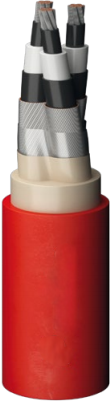
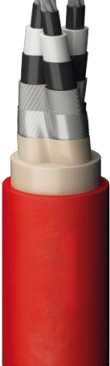
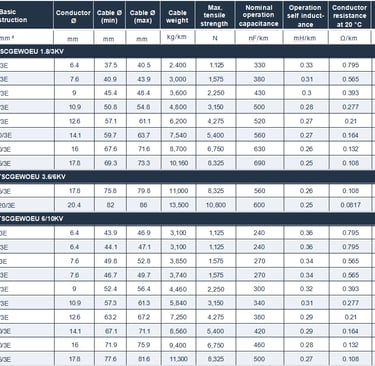
The (ST) 3E NTSCGEWOEU cable series features a sophisticated construction designed to excel in underwater applications. At its core, the cable utilizes finely stranded tinned copper conductors of class 5 flexibility, ensuring excellent electrical conductivity while resisting corrosion in marine environments. Each conductor is surrounded by semi-conductive EPR insulation, followed by EPR rubber insulation using specialized compound 3GI3, which provides superior electrical properties and mechanical durability.
The defining characteristic of this 30 kV screened cable for marine applications is its individual concentric protective earth conductors distributed over the insulation of the three main cores. This screening configuration distinguishes it from standard split-earth designs, offering enhanced safety for dredging operations where equipment grounding is critical. The three main conductors are laid up together with these individual concentric protective earth conductors, creating a robust cable assembly.
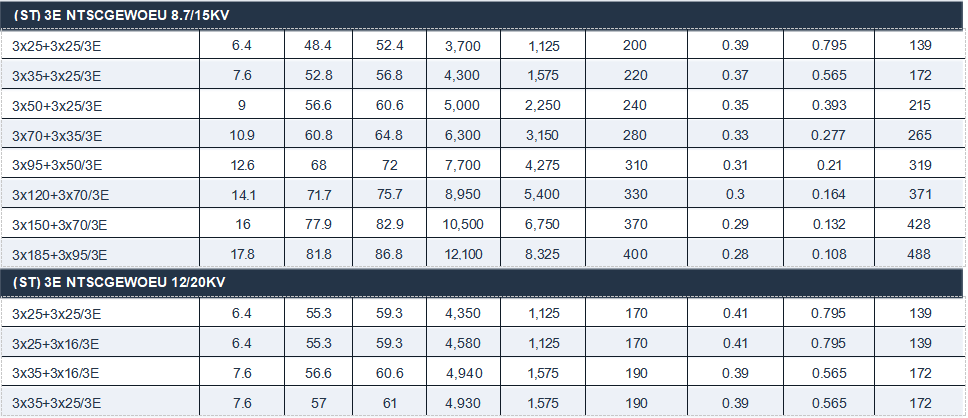
For waterproofing, the cable employs a special EPR compound inner sheath, followed by an outer sheath of chlorinated polyethylene (CM/CPE) using special compound 5GM3. This dual-layer waterproof barrier ensures the cable performs reliably even when continuously submerged in challenging water conditions. The cable is available in voltage ratings spanning 1.8/3 kV through 18/30 kV, with the higher voltage variants particularly suited for large-scale dredging operations requiring substantial power transmission.
The cable complies with numerous international standards including DIN VDE 0250-813, DIN VDE 0298-4, MSHA P-189-4, DIN EN 60811-404, DIN EN 50525-2-21, GOST-R/-K/-B Fire Certificate, and DIN EN 60332-1-2 for fire performance. Most importantly for dredging applications, the screened cable design makes it suitable for use with dredging equipment according to VDE 0168 standards.
Primary Applications
This power supply cable for dredgers and floating docks excels across multiple marine and industrial water applications:
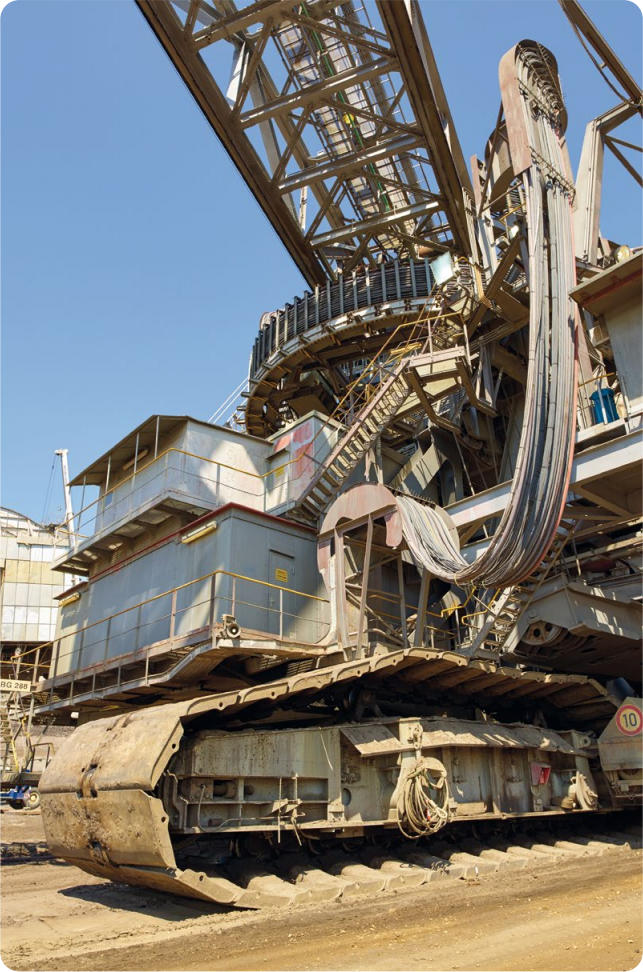
Dredging Equipment: The cable serves as the primary power connection for dredgers and dredging machinery, where it must withstand constant movement, vibration, and mechanical stress while submerged. The screened design provides essential safety features for equipment operating in conductive water environments, where electrical faults could pose severe risks to personnel and equipment.
Floating Infrastructure: Floating docks, pontoons, barges, and marine platforms require reliable power supplies that can accommodate constant movement from waves and tides. This cable's flexible construction and waterproof design make it ideal for these installations, maintaining electrical integrity despite continuous flexing and environmental exposure.
Pumping Systems: Both submersible and floating pump applications benefit from this cable's specialized construction. Whether supplying power to deep-well pumps, sewage transfer pumps, or industrial water pumps, the cable delivers reliable performance at specified water depths while resisting chemical exposure from various water compositions.
Heavy Industrial Marine Use: Port facilities, offshore construction sites, marine salvage operations, and industrial waterfront facilities all represent demanding environments where this high mechanical stress marine power cable demonstrates its value through extended service life and minimal downtime.

Environmental Performance
The cable's environmental capabilities extend across multiple challenging conditions that would compromise standard electrical cables:
Saltwater Resistance: The cable is explicitly designed as a saltwater resistant underwater power cable, suitable for continuous immersion in seawater environments. The tinned copper conductors resist corrosion, while the specialized chlorinated polyethylene outer sheath maintains its integrity despite constant exposure to salt water's corrosive properties. This makes the cable ideal for coastal dredging operations, offshore installations, and marine port facilities.
Brackish Water Compatibility: Many dredging operations occur in estuaries, river mouths, and coastal areas where freshwater and saltwater mix. This cable for use in saltwater and brackish water performs reliably in these variable salinity conditions, maintaining electrical properties and mechanical strength regardless of water composition fluctuations.
Sewage Water Usage: Industrial wastewater treatment, municipal sewage systems, and contaminated water handling require cables that resist chemical exposure beyond simple water immersion. The cable's chemical-resistant sheathing enables operation in sewage water, industrial wastewater, and other contaminated aqueous environments where conventional cables would degrade rapidly.
Deep Water Capability: The cable is rated for use at water depths up to 500 meters, making it suitable for deep dredging operations, offshore installations, and underwater construction projects. The robust construction withstands the substantial hydrostatic pressures encountered at these depths while maintaining electrical insulation integrity.
Temperature & Pressure Tolerance: With an operational temperature range from -40°C to +80°C for fixed installations and -25°C to +60°C for flexible applications, the cable accommodates diverse climate conditions. The maximum conductor temperature reaches 90°C during normal operation, with short-circuit capacity up to 250°C, providing substantial thermal margins for demanding applications.
Mechanical & Technical Advantages
The cable's mechanical properties represent a critical advantage for demanding marine applications:
High Mechanical Stress Resistance: Dredging equipment subjects cables to extreme mechanical forces through dragging, tension, compression, and impact. The cable's permanent tensile strength specification of 15 N/mm² ensures it withstands these stresses without conductor damage or insulation failure. The reinforced construction distributes mechanical loads effectively across the cable assembly.
Robust Outer Sheath Protection: The chlorinated polyethylene outer sheath provides exceptional protection against abrasion, tearing, and mechanical damage. This durability proves essential when cables must traverse rough surfaces, navigate through confined spaces in vessel hulls, or withstand contact with heavy equipment and debris commonly encountered in dredging environments.
Flexibility for Installation: Despite its robust construction, the cable maintains sufficient flexibility for practical installation. The bending radius requirements—6 times cable diameter for fixed installations and 10 times cable diameter for flexible operations—enable routing through cramped equipment compartments and around obstacles without risking cable damage. This flexibility simplifies installation and reduces labor costs.
Vibration Resistance: Dredging equipment and pumps generate substantial vibration during operation. The cable's construction resists vibration-induced fatigue, preventing conductor breakage and insulation cracking that plague lesser cables in vibration-prone applications. The tinned copper stranding and resilient insulation materials absorb vibration energy without degradation.
Durability Against Abrasion and Impact: The cable's layered construction—from conductor through multiple insulation and sheath layers—provides defense-in-depth against physical damage. Even if the outer sheath sustains abrasion or impact damage, the inner layers continue providing electrical insulation and waterproofing, preventing catastrophic failure and extending service life.
Safety & Regulatory Features
Safety considerations dominate marine electrical installations, particularly for dredging operations where equipment operates in conductive environments:
VDE 0168 Standard Compliance: This VDE 0168 compliant dredging cable meets the specific safety requirements for cables used with dredging equipment. The individual concentric screening on each core enables effective ground-check monitoring, allowing detection of insulation degradation before it progresses to dangerous fault conditions. This proactive safety feature protects personnel and expensive equipment.
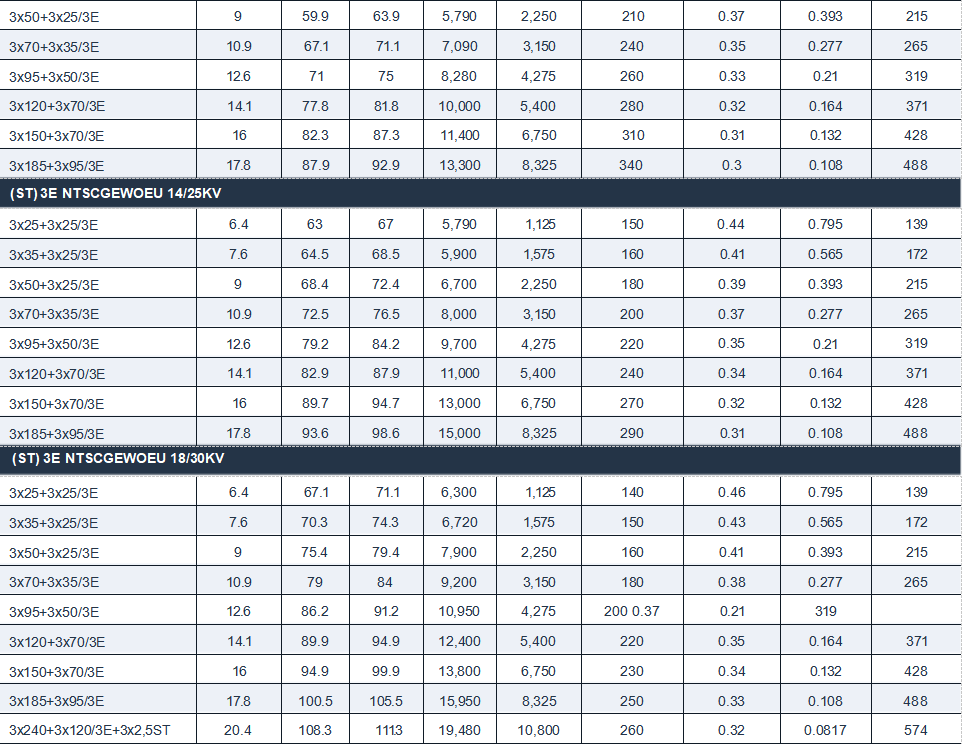
Electrical Safety Certifications: The cable complies with comprehensive international electrical safety standards, ensuring consistent performance across global installations. Test voltages range from 6 kV for the lowest voltage variant to 43 kV for the 18/30 kV version, confirming substantial safety margins above rated operating voltages.
Protective Screening Against Electromagnetic Interference: The individual concentric copper screens on each core provide effective electromagnetic shielding, reducing electromagnetic interference (EMI) that could disrupt sensitive electronic control systems on modern dredging equipment. This screening also ensures proper equipotential bonding throughout the cable system.
Fail-Safe Design Features: The cable's construction incorporates multiple protective barriers between energized conductors and the external environment. The semi-conductive layers ensure uniform electrical stress distribution, preventing localized insulation degradation. The waterproof inner sheath provides a secondary moisture barrier even if the outer sheath is compromised.
Installation & Maintenance
Proper installation and maintenance practices maximize the cable's service life and ensure reliable performance:
Installation Best Practices: When installing this submersible pump power supply cable or connecting dredging equipment, ensure adequate support to prevent excessive tensile stress. Use appropriate cable entry glands that maintain waterproof integrity while accommodating cable movement. Route cables to minimize sharp bends, exceeding minimum bending radius requirements by comfortable margins. In mobile applications like dredgers, provide adequate service loops to accommodate equipment movement without stressing the cable.
Recommended Handling Procedures: Handle cables carefully during installation to avoid damage to the outer sheath. Avoid dragging cables over sharp edges or rough surfaces. When pulling cables through conduits or cable trays, use appropriate lubricants and limit pulling tension to specified maximums. Store cable reels on end or on properly sized horizontal supports to prevent sheath deformation.
Maintenance Tips: Periodically inspect accessible cable sections for sheath damage, particularly at cable entry points and areas subject to movement or abrasion. Test insulation resistance annually or after any significant mechanical impact or suspected water ingress. Monitor ground-check conductors (where utilized) for insulation degradation warnings. Clean cable surfaces exposed to marine growth or sediment buildup to prevent accelerated sheath degradation.
Storage Recommendations: Store cables in covered areas protected from direct sunlight, as UV exposure can degrade outer sheaths over time despite their UV-resistant formulation. Maintain storage temperatures within specified limits. Keep cables away from chemical storage areas where vapors might attack sheath materials. Ensure cable reels remain properly supported to prevent deformation.
Industry Applications & Case Studies
The cable's versatility enables deployment across diverse marine and industrial water applications:
Dredging Operations: Harbor deepening projects, channel maintenance, beach replenishment, and land reclamation all rely on dredgers requiring robust marine power supply cables. These operations demand cables that function reliably despite continuous submersion, mechanical stress from vessel movement, and exposure to various water qualities including sediment-laden water. The screened design provides essential safety in these conductive environments where electrical faults could endanger crew members and damage expensive dredging equipment.
Port and Harbor Infrastructure: Modern ports require extensive electrical infrastructure to power cargo handling equipment, vessel servicing facilities, and floating installations. Underwater cable runs between shore facilities and floating docks or pontoons demand cables like this series that resist saltwater corrosion while maintaining flexibility for tidal movements. The 30 kV power cable variants provide capacity for large-scale port electrical systems.
Water Treatment Facilities: Municipal and industrial water treatment plants frequently employ submersible pumps and underwater equipment requiring reliable power supplies. The cable's resistance to sewage water and various chemical exposures makes it suitable for these demanding applications where conventional cables would deteriorate rapidly. The extended lifespan reduces replacement frequency and minimizes system downtime.
Offshore Marine Construction: Underwater construction projects—including bridge foundations, offshore platforms, and underwater pipelines—require temporary or permanent power supplies for equipment operating in marine environments. The cable's deep water capability and robust construction suit these applications where reliability is paramount and cable replacement is expensive and disruptive.
Industrial Water Management Systems: Mines, industrial facilities, and civil engineering projects often require managing large volumes of water through pumping systems. The cable supplies power to pumps operating in mine sumps, industrial water retention ponds, and construction site dewatering systems, where its flexibility and environmental resistance provide practical advantages over rigid cable designs.


Why Choose This Cable Solution
Several compelling factors distinguish this heavy-duty power cable as the optimal choice for demanding marine applications:
Superior Performance in Challenging Marine Environments: The cable's specialized construction addresses the specific challenges of marine applications—saltwater corrosion, mechanical stress, deep water pressures, and continuous submersion. Unlike general-purpose cables adapted for marine use, this cable was engineered from the ground up for underwater applications, resulting in superior long-term performance.
Cost-Effective Long-Term Investment: While premium-quality marine cables command higher initial costs than general-purpose alternatives, the extended service life and reduced maintenance requirements deliver superior total cost of ownership. Avoiding premature cable failures prevents expensive equipment downtime, emergency repairs, and the substantial costs of submarine cable replacement operations.
Reduced Downtime and Replacement Frequency: Equipment reliability directly impacts operational profitability in capital-intensive industries like dredging. This cable's proven durability minimizes unplanned downtime, enabling consistent equipment utilization and predictable maintenance scheduling rather than reactive emergency repairs that disrupt operations and escalate costs.
Compatibility with Existing Dredging Equipment: The VDE 0168 compliance and screened design ensure compatibility with modern dredging equipment safety systems, including ground-check monitoring. The cable integrates seamlessly with existing electrical infrastructure, avoiding costly system modifications or compatibility issues.
Expert Engineering and Manufacturing Standards: The cable reflects decades of experience in specialized cable design for demanding applications. Comprehensive testing protocols verify performance before deployment, while quality manufacturing ensures consistent product specifications. Multiple international certifications confirm compliance with rigorous safety and performance standards.
Frequently Asked Questions About Marine Cable Applications
Q: What maximum water depth can this cable safely operate at?
A: The cable is rated for continuous operation at water depths up to 500 meters. The robust construction withstands the significant hydrostatic pressures at these depths while maintaining electrical insulation integrity and waterproof properties. For deeper applications, consult technical specifications for specialized variants.
Q: How does the screened design benefit dredging operations?
A: The individual concentric copper screens on each core enable ground-check monitoring capabilities essential for dredging equipment safety per VDE 0168 standards. This screening detects insulation degradation before dangerous fault conditions develop, providing proactive warning of potential failures and enabling scheduled maintenance rather than emergency repairs.
Q: Can this cable withstand the abrasion encountered when dragging along sea floors?
A: While the cable features robust sheath protection against abrasion and mechanical damage, direct dragging along sea floors is not recommended as this would cause accelerated wear. For applications requiring bottom contact, use protective conduit or cable armor, or select from specialized variants designed for enhanced abrasion resistance. Proper cable routing and adequate slack provision minimize bottom contact in most dredging applications.
Q: What distinguishes this cable from standard submersible pump cables?
A: Unlike basic submersible cables, this series provides medium voltage capacity (up to 30 kV), individual core screening for enhanced safety, VDE 0168 compliance for dredging equipment, and construction specifically optimized for extreme mechanical stress environments. These features enable applications beyond simple pump connections, including large-scale dredging operations and heavy industrial marine equipment.
Q: How frequently should the cable be inspected in continuous submersion applications?
A: Implement visual inspections of accessible cable sections quarterly, examining for sheath damage, unusual deformation, or signs of marine growth that might indicate prolonged immersion issues. Conduct electrical testing including insulation resistance measurements annually or immediately following any significant mechanical impact, suspected water ingress, or ground-check monitoring alerts.
Q: Is special training required for installers working with this cable?
A: Installers should possess experience with medium voltage electrical systems and marine electrical installations. Familiarity with cable handling procedures, termination techniques for screened cables, waterproof gland installation, and marine safety protocols is essential. While the cable employs standard termination methods, the marine environment and voltage levels demand qualified, experienced installation personnel.
Conclusion
For demanding marine applications requiring unwavering electrical performance in hostile underwater environments, the (ST) 3E NTSCGEWOEU series delivers proven reliability and comprehensive safety features. From dredging operations to floating infrastructure, submersible pumps to offshore construction, this cable provides the robust performance that marine and industrial water applications demand. The combination of saltwater resistance, deep water capability, individual core screening, VDE 0168 compliance, and exceptional mechanical durability creates a solution optimized for the world's harshest underwater electrical environments.
Organizations seeking dependable marine power supply solutions benefit from selecting cables specifically engineered for their intended environment rather than adapting general-purpose products to demanding applications. The superior long-term performance, reduced maintenance requirements, and enhanced safety features justify the investment in premium-quality marine cables designed and manufactured to exacting standards.
For detailed technical specifications, application engineering support, or information about specific configurations optimized for your marine equipment requirements, contact qualified marine cable specialists who can provide expert guidance in selecting appropriate cable solutions for your specific operational parameters and environmental conditions.
How to Reach Us
Get in Touch
SiteMap
Product Catalogue
Festoon Cable
Shore Power Cable


Scan to add us on WeChat