High-Performance (SB)NTSCGEWOEU 3/30 kV Power & Connection Cable for Heavy-Duty Open-Cast Excavators | Abrasion-Resistant Long-Trailing Mining Cable
Discover the (SB)NTSCGEWOEU 3/30 kV abrasion-resistant long-trailing mining cable designed as power supply and connection cable for large excavators in open-cast mines. Learn about its durability, high-stress performance, and maintenance best practices.
hongjing.Wang@Feichun
10/15/202515 min read
Introduction
Open-cast mining operations demand electrical infrastructure that can withstand some of the most punishing conditions in industrial environments. Large material handling machines such as excavators, draglines, and mobile crushers require continuous, reliable power delivery while operating in environments characterized by extreme mechanical stress, abrasive materials, and constant movement. The (SB)NTSCGEWOEU 3/30 kV cable represents a specialized engineering solution designed specifically to meet these demanding requirements.
This medium voltage flexible trailing cable serves as both a power supply and connection cable for large excavators in open-cast mines, where traditional fixed installation cables would fail rapidly. The cable's design addresses the unique challenges of trailing operation—a condition where cables are dragged across rough terrain, subjected to chaffing, abrasion, and dynamic mechanical loads that would quickly compromise conventional power transmission solutions. Understanding the technical specifications, application parameters, and maintenance requirements of this heavy-duty trailing cable for open-cast excavators is essential for mining operations seeking to maximize equipment uptime and operational safety.
Key Features
Mechanical Robustness and Abrasion Resistance
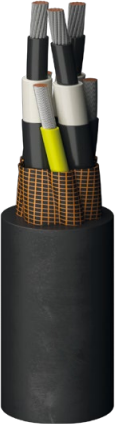
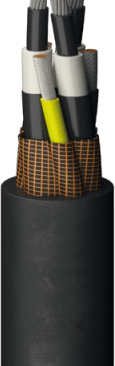
The (SB)NTSCGEWOEU 3/30 kV cable incorporates a multilayer protective design engineered to withstand the severe abrasion and chaffing stresses inherent in trailing operations. The cable construction features finely stranded tinned copper conductors (class 5) that provide excellent flexibility while maintaining structural integrity under repeated bending cycles. The conductor design utilizes semi-conductive special rubber compounds that prevent corona discharge and ensure uniform electrical field distribution.
The insulation system employs EPR (Ethylene Propylene Rubber) with specialized compounds that deliver superior mechanical resistance compared to standard materials. This high mechanical stress power supply cable features an inner sheath of polychloroprene (PCP) that provides the first line of defense against environmental hazards, followed by a polyester braiding reinforcement layer that distributes tensile loads and prevents cable deformation. The outer sheath, also constructed from polychloroprene with specialized compound formulations, offers exceptional resistance to tearing, cutting, and surface abrasion—critical properties when cables are continuously dragged across rock, gravel, and other abrasive surfaces common in open-cast mining environments.
The cable's permanent tensile strength rating of 15 N/mm² static load capacity ensures it can support its own weight and withstand pulling forces during relocation of mining equipment. This abrasion-resistant connection cable for mining machines demonstrates oil resistance, ozone resistance, and UV resistance, allowing it to perform reliably when exposed to hydraulic fluids, sunlight, and atmospheric oxidants that would degrade less robust cable designs.
Flexible Trailing Performance Under High Stress
Flexibility represents a critical design parameter for cables subjected to continuous movement and repositioning. The (SB)NTSCGEWOEU 3/30 kV cable achieves exceptional flexibility through several engineering innovations. The three-core design incorporates split earth conductors positioned in the interstices between phase conductors, creating a balanced, symmetrical structure that minimizes internal stress concentrations during bending.
The cable's bending radius specifications—6 x D for fixed installation and 10 x D for flexible operation—indicate its ability to navigate tight curves and obstacles without sustaining internal damage. The torsional stress rating of +/- 100°/m demonstrates the cable's resistance to twisting forces that occur when excavator booms rotate or when cables are wound onto storage reels.
Temperature performance ranges from -25°C to 60°C in flexible installation applications, with the cable maintaining its mechanical properties across this spectrum. The maximum conductor temperature of 90°C during normal operation and 250°C during short circuit conditions provides substantial thermal margins that prevent insulation degradation even during peak loading scenarios.
High-Voltage Power Transmission Capability
The voltage rating structure of this long-trailing power cable spans from 1.8/3 kV up to 20/35 kV, accommodating the diverse power requirements of modern mining equipment. The designation system follows the format U0/U (Um), where U0 represents the voltage between conductor and earth, U represents the voltage between conductors, and Um indicates the maximum system voltage. This range allows a single cable design to serve various equipment types, from smaller auxiliary machinery to large-scale excavators requiring higher voltage supply for powerful electric motors.
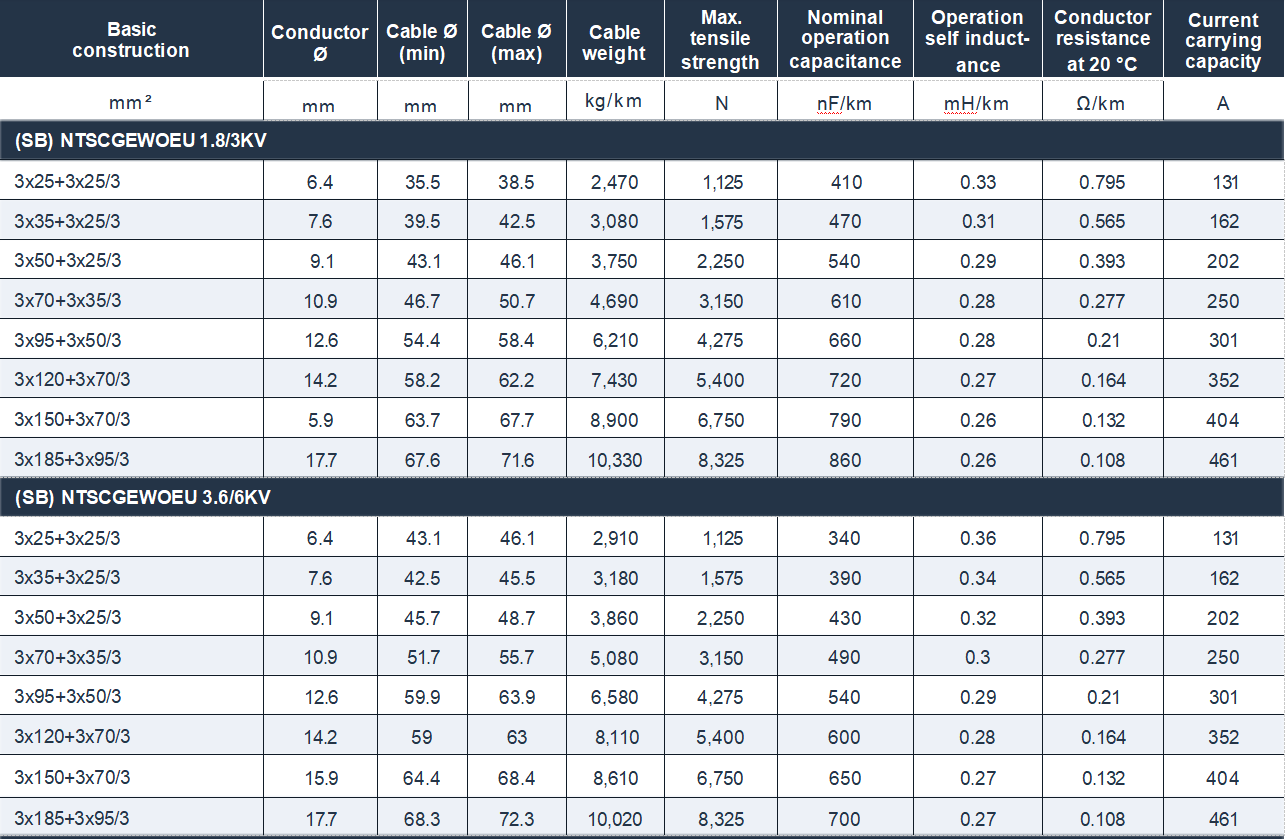
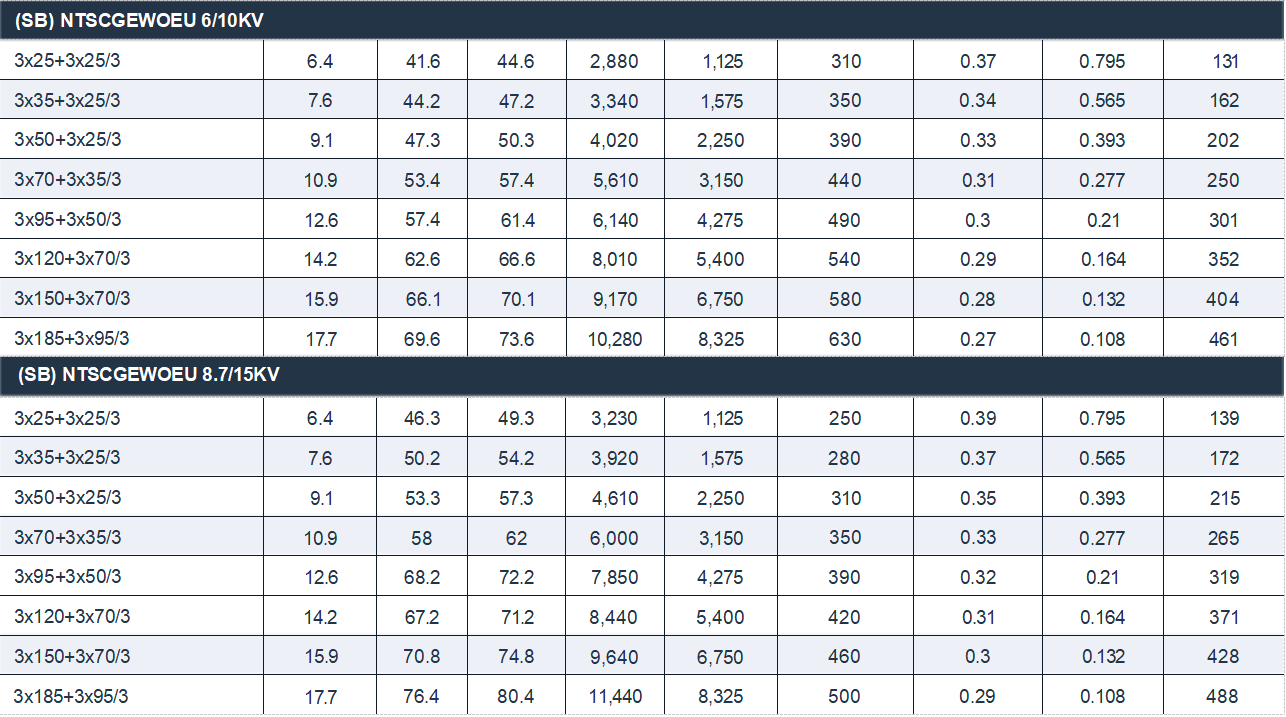
Electrical performance characteristics include carefully controlled capacitance and inductance values that minimize reactive power losses during transmission. The nominal operation capacitance ranges from 170 to 930 nF/km depending on voltage rating and conductor size, while operation self-inductance values between 0.23 and 0.45 mH/km ensure efficient power delivery with minimal electromagnetic interference.
Current carrying capacity varies with conductor cross-sectional area, ranging from 131 A for 25 mm² conductors up to 620 A for 300 mm² conductors at the 3.6/6 kV rating. These ampacity values account for the thermal dissipation characteristics of the cable's construction and surrounding environment, ensuring conductors remain within safe temperature limits during continuous operation.
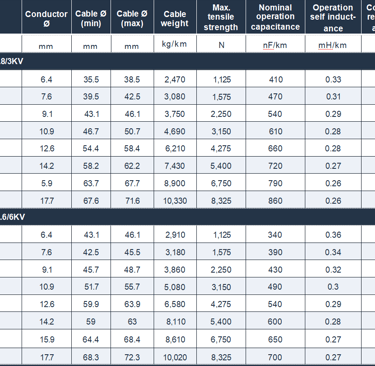
Technical Specifications
Voltage Rating: 3/30 kV
The (SB)NTSCGEWOEU 3/30 kV cable family encompasses multiple voltage classifications to match specific mining equipment requirements. The 1.8/3 kV (3.6 kV Um) variant serves lower-voltage auxiliary equipment with a test voltage of 6 kV. The 3.6/6 kV (7.2 kV Um) configuration represents a common specification for medium-power excavators, tested at 11 kV. Higher-power applications utilize the 6/10 kV (12 kV Um) rating with 17 kV testing, or the 8.7/15 kV (17.5 kV Um) rating tested at 24 kV.
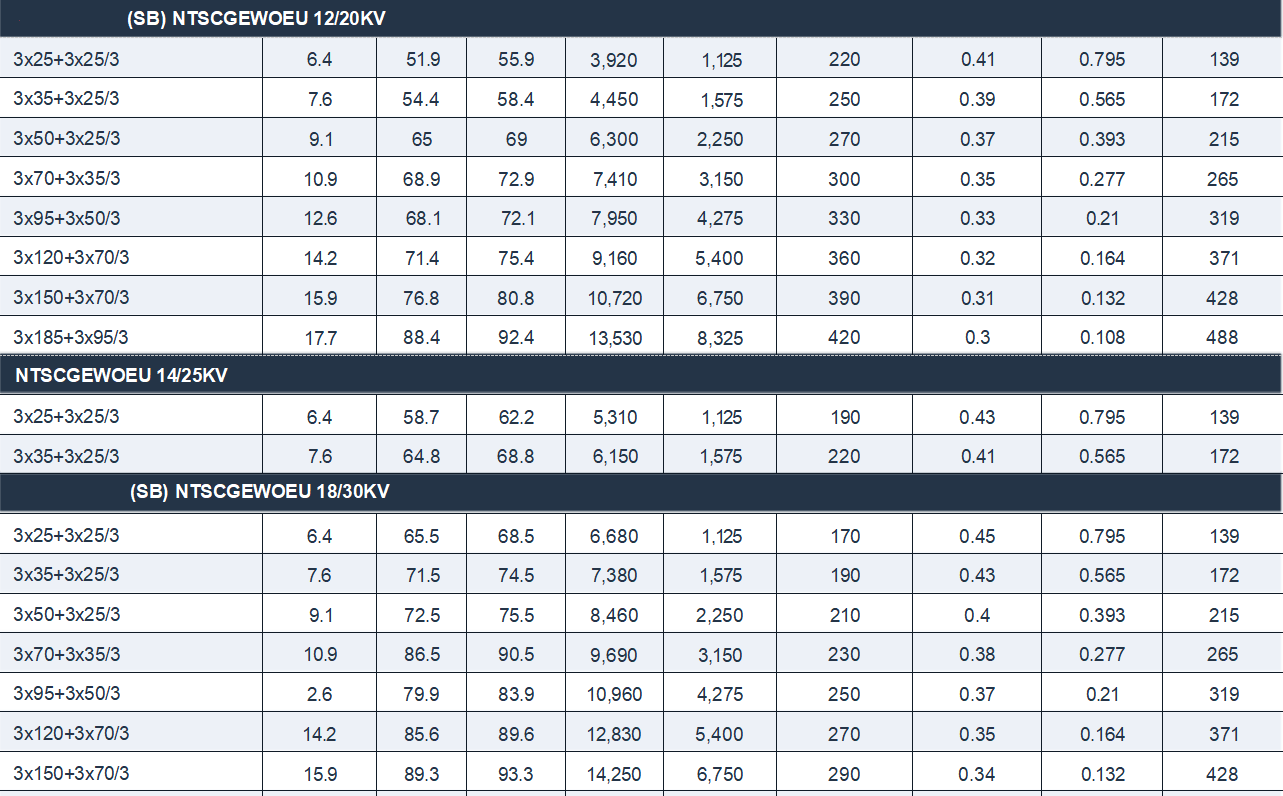
For the most demanding large-scale excavators, the 12/20 kV (24 kV Um) variant withstands 29 kV testing, while the 14/25 kV (29 kV Um) and 18/30 kV (36 kV Um) ratings provide power transmission capability for the largest mining equipment with test voltages of 36 kV and 43 kV respectively. Each voltage class maintains consistent mechanical and environmental performance characteristics, allowing operations to standardize on handling and installation procedures across their cable inventory.
Conductor Materials and Cross-Sectional Design
The conductor system utilizes finely stranded copper with tin plating (class 5 stranding) that provides multiple benefits. Tin plating prevents copper oxidation that would increase contact resistance at termination points and protects against corrosive elements present in mining environments. The fine stranding—consisting of numerous small-diameter wires twisted together—delivers the flexibility necessary for trailing applications while maintaining the electrical conductivity advantages of copper.
Conductor cross-sections range from 16 mm² to 300 mm², with split earth conductor configurations typically one or two sizes smaller than phase conductors. For example, a 3x185+3x95/3 designation indicates three 185 mm² phase conductors with three 95 mm² earth conductors divided among the cable interstices. Alternative configurations incorporate separate protective earth conductors and pilot cores for equipment control and monitoring signals, such as 3x185+2x95/2+1x10ST, which includes two 95 mm² earth conductors and a 10 mm² signal conductor.
The split earth conductor design distributes ground fault return paths around the cable circumference, reducing electromagnetic coupling with phase conductors and improving overall electrical performance. This arrangement also enhances mechanical balance, contributing to the cable's flexibility and resistance to deformation.
Insulation and Sheath Composition for Chaffing Protection
The insulation system represents the cable's primary defense against electrical breakdown and contributes significantly to its abrasion-resistant mining cable characteristics. Each phase conductor receives individual insulation consisting of an inner semi-conductive EPR layer that ensures uniform electric field distribution across the insulation surface, followed by the main EPR insulation layer formulated with specialized compounds for enhanced mechanical properties.
An outer semi-conductive NBR (Nitrile Butadiene Rubber) layer with easy-strip properties facilitates termination while providing additional mechanical protection. The semi-conductive layers prevent the formation of electrical stress concentrations at the conductor-insulation interface that could lead to partial discharge and premature failure.
The three insulated phase conductors, along with split earth conductors, are laid up together with a tear-resistant reinforcing tape over the assembly. This tape adds torsional rigidity and prevents individual cores from shifting within the cable structure. The inner sheath, constructed from polychloroprene (PCP) with specialized compound 5GM5, creates a protective barrier against moisture ingress and provides the first layer of mechanical defense.
Polyester braiding reinforcement overlays the inner sheath, distributing tensile loads uniformly across the cable cross-section and significantly enhancing resistance to tearing forces. The outer sheath, also polychloroprene-based, incorporates additives that improve abrasion resistance, chemical resistance, and flame retardancy according to EN/IEC 60332-1-2 standards.

Application Scenarios
Power Supply for Large Material Handling Machines
Open-cast mining operations rely on massive material handling equipment to extract and transport mineral resources efficiently. Excavators, draglines, bucket-wheel excavators, and mobile crushers represent capital investments often exceeding millions of dollars, making their continuous operation essential for mining economics. These machines require substantial electrical power—often hundreds of kilowatts or even megawatts—delivered reliably despite their frequent repositioning across mining sites.
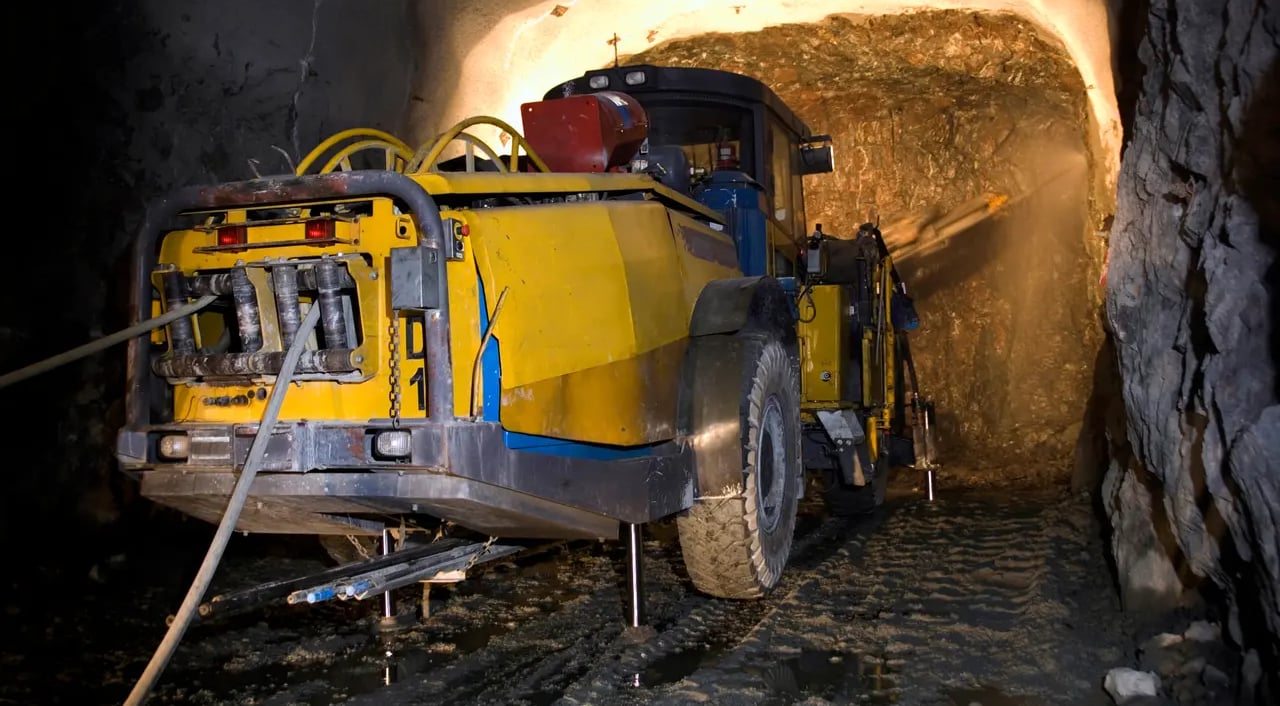
The (SB)NTSCGEWOEU 3/30 kV cable serves as the umbilical connection between stationary power distribution networks and mobile mining equipment. Unlike fixed installation cables that assume static mounting positions, this heavy-duty trailing cable for open-cast excavators must accommodate constant movement as equipment traverses mining benches, relocates to new dig faces, or maneuvers around obstacles. The cable may extend hundreds of meters from distribution points to active equipment, creating substantial mechanical loads from its own weight alone.
Temperature extremes pose additional challenges. Mining operations continue year-round, exposing cables to sub-zero conditions in winter and intense solar heating in summer. The cable's temperature performance range of -40°C to 80°C for fixed sections and -25°C to 60°C for flexible sections ensures reliable operation across seasonal variations and geographic locations.
Connection Cable for Excavators in Opencast Mines
Excavators represent the workhorses of open-cast mining, with models ranging from modest 100-ton machines to colossal 800-ton units. Electric excavators offer significant advantages over diesel-hydraulic alternatives, including lower operating costs, reduced emissions, and superior power-to-weight ratios. However, these benefits depend entirely on reliable electrical connections that can withstand the operational realities of mining environments.
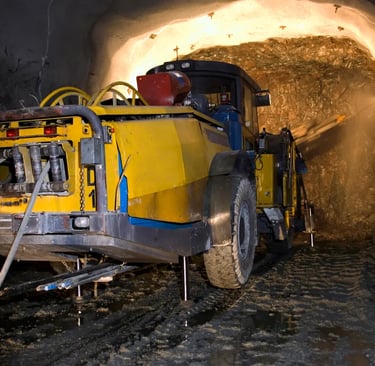
As excavators dig, swing, dump, and reposition, their power cables experience complex mechanical loading. The cable may be dragged across rough ground, run over by support vehicles, buried under falling rock, or subjected to sharp bends around equipment structures. Each of these conditions creates abrasion, crushing, cutting, or bending stresses that conventional cables cannot tolerate.
The abrasion-resistant connection cable for mining machines addresses these challenges through its robust construction. The outer sheath's formulation specifically targets resistance to chaffing—the gradual wearing away of material through repeated contact with abrasive surfaces. Field experience demonstrates that this cable design can operate for years in trailing applications where standard industrial cables would fail within months.
Suitability for Trailing Operation in Abrasive Environments
Trailing operation defines a particularly demanding cable application where the cable is neither fully supported nor completely free-hanging but rather dragged along the ground or over support structures as equipment moves. This creates continuous abrasion against rock, soil, and debris, combined with dynamic bending and tensioning cycles.
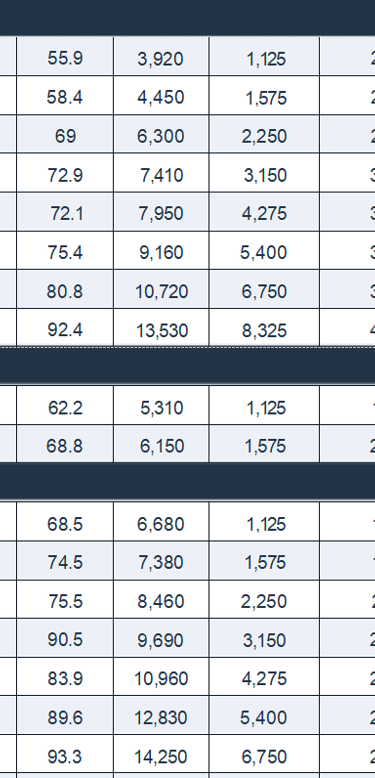
The high mechanical stress power supply cable design specifically addresses trailing operation requirements through several features. The cable's weight-to-strength ratio ensures it can support its own span between support points without excessive sag that would increase ground contact and abrasion. The maximum tensile strength values—ranging from 1,125 N for 25 mm² configurations to 18,000 N for 300 mm² variants—provide substantial safety margins against breaking under typical operational loads.
The cable's flame retardant properties according to EN/IEC 60332-1-2 standards ensure that external fire sources, such as cutting operations or equipment malfunctions, will not propagate along the cable length. Oil resistance protects against hydraulic fluid spills common around heavy equipment, while UV resistance prevents degradation from constant sunlight exposure typical in open-cast operations.
Benefits for Mining Operations
Reduced Downtime and Maintenance Costs
Equipment downtime represents one of the most significant cost factors in mining operations. When excavators or other material handling equipment lose power due to cable failure, not only does the affected machine stop production, but downstream processes depending on that equipment's output also suffer disruption. A single cable failure can cascade through the production chain, affecting crusher throughput, conveyor loading, and ultimately the mining operation's daily output tonnage.
The (SB)NTSCGEWOEU 3/30 kV cable's extended service life under extreme mechanical stress directly translates to reduced frequency of cable replacement and associated downtime. The cable's construction withstands the abrasive forces that would destroy lesser cables, extending replacement intervals from months to years in typical applications. This longevity reduces not only the direct costs of replacement cables but also the substantial indirect costs of equipment downtime, emergency mobilization of maintenance crews, and disrupted production schedules.
Maintenance costs decrease through multiple mechanisms. The cable's robust outer sheath resists damage that would require premature replacement, while its moisture-resistant construction prevents water ingress that could cause insulation breakdown. The flame retardant properties minimize fire hazards that could damage cables and surrounding equipment, reducing both equipment damage and potential safety incidents.
Enhanced Operational Safety and Reliability
Safety represents the paramount concern in mining operations, where equipment operates under high voltage in proximity to personnel and other machinery. Cable failures can create multiple safety hazards, including electrical shock risks, fire hazards, and equipment control loss that could endanger workers.
The long-trailing power cable design incorporates multiple safety features. The split earth conductor configuration ensures reliable ground fault protection by providing multiple parallel paths for fault currents. This redundancy means that even if one earth conductor sustains damage, remaining conductors continue to provide protective grounding. The semi-conductive layers in the insulation system prevent partial discharge—a precursor to insulation breakdown that could lead to catastrophic failure.
The cable's mechanical robustness itself contributes to safety by reducing the likelihood of unexpected failures. When cables fail predictably at end-of-life rather than catastrophically during operation, maintenance can be scheduled during planned downtime, eliminating the risks associated with emergency repairs in active mining areas.
Reliability extends beyond safety to operational predictability. Mining operations depend on equipment availability to meet production targets and contractual obligations. The (SB)NTSCGEWOEU 3/30 kV cable's consistent performance across temperature ranges, mechanical stresses, and environmental exposures enables operations to forecast maintenance requirements accurately and plan cable replacements during scheduled maintenance windows rather than responding to unexpected failures.
Long Service Life Under Extreme Mechanical Stress
The economic value of extended service life cannot be overstated in capital-intensive mining operations. While the initial acquisition cost of high-performance cables exceeds that of standard industrial cables, the total cost of ownership calculation must account for service life, replacement frequency, installation labor, and downtime costs.
Field experience demonstrates that this abrasion-resistant mining cable can operate for three to five years or longer in trailing applications, compared to six to eighteen months for conventional cables. This extended service interval means that over a typical ten-year mine life, operations might replace cables twice rather than six to eight times, dramatically reducing both material costs and labor expenses associated with cable replacement.
The cable's resistance to environmental degradation extends service life beyond what mechanical protection alone would provide. Ozone resistance prevents cracking of rubber compounds exposed to atmospheric ozone, particularly in areas with industrial pollution. UV resistance maintains sheath properties despite constant sunlight exposure. Oil and chemical resistance protect against inadvertent exposure to lubricants, fuels, and cleaning agents common in equipment operation areas.
Installation and Maintenance Guidelines
Best Practices for Trailing Cable Deployment
Proper installation significantly influences cable service life and reliability. The cable's bending radius specifications—minimum 6 x cable diameter for fixed installations and 10 x diameter for flexible sections—must be strictly observed during deployment. Sharp bends create stress concentrations in insulation and conductors that accelerate fatigue failure. When cables route around obstacles or equipment structures, cable supports should maintain these minimum radii.
Cable routing should minimize ground contact where practical. While the heavy-duty trailing cable for open-cast excavators tolerates trailing operation, reducing unnecessary abrasion extends service life. Cable festoon systems, elevated cable guides, or periodic support structures can lift cables off the ground during operation while allowing freedom of movement as equipment repositions.
Termination quality directly affects reliability. Cable ends must be properly prepared with clean, square cuts of conductors and insulation. Semi-conductive layers require careful stripping to expose insulation at specified dimensions without nicking or scoring the insulation surface. Termination hardware must match the cable's voltage rating and mechanical specifications, with all connections torqued to manufacturer specifications to ensure both electrical continuity and mechanical strength.
Protection against traffic and equipment movement represents another critical consideration. While the abrasion-resistant connection cable for mining machines withstands significant abuse, deliberate exposure to crushing loads from vehicle traffic or material spillage should be avoided through appropriate routing and physical barriers where necessary.
Inspection Intervals and Wear Monitoring
Systematic inspection programs enable early detection of cable degradation before failure occurs. Visual inspections should be conducted at regular intervals—typically weekly for cables in continuous trailing service. Inspectors should look for outer sheath damage including cuts, abrasions, deformation, and any exposure of internal cable layers. Particular attention should focus on areas where cables route over sharp edges, contact moving equipment parts, or experience high bending stress.
Areas showing significant outer sheath wear require more detailed evaluation. While the cable's multilayer construction provides redundancy, progressive damage through successive protective layers eventually compromises insulation integrity. Sheath wear exceeding 50% of thickness in any location should trigger increased monitoring or cable replacement planning.
Electrical testing complements visual inspection for detecting internal degradation not visible externally. Insulation resistance testing, performed with megohm meters at appropriate test voltages, identifies moisture ingress or insulation deterioration. Resistance measurements below manufacturer specifications indicate compromised insulation requiring investigation. Very Low Frequency (VLF) testing technology, as mentioned in the source documentation, provides more sophisticated diagnostic capability by applying sinusoidal test voltages that reveal incipient insulation weaknesses before they cause operational failures.
Thermal imaging during operation can detect problems invisible to visual inspection. Hot spots on cable surfaces indicate high-resistance connections, excessive current loading, or localized insulation damage. Regular thermal surveys enable trending of cable conditions and early intervention before thermal damage propagates.
Replacement Criteria and Recycling Options
Clear replacement criteria prevent both premature cable retirement (wasting remaining service life) and delayed replacement (risking failure and associated costs). Cables should be replaced when visual inspection reveals damage penetrating to conductor insulation, when electrical testing indicates insulation resistance below acceptable thresholds, or when thermal monitoring detects persistent abnormal heating.
Service age alone should not determine replacement in the absence of physical or electrical deterioration. The high mechanical stress power supply cable's robust construction often enables service well beyond typical expectations if operating conditions remain within specifications and the cable has not sustained damage.
When cables reach end-of-life, recycling options maximize value recovery and environmental responsibility. Copper conductors retain substantial scrap value, incentivizing proper cable disposal through recycling channels. Many cable manufacturers and specialized recycling facilities accept end-of-life cables, recovering copper, processing rubber compounds for reuse, and properly disposing of materials that cannot be recycled.
Documentation of cable service history aids operations in optimizing replacement intervals. Recording installation dates, operating conditions, inspection findings, and failure modes builds institutional knowledge that improves future cable selection and maintenance practices.
Conclusion
Summary of Performance Advantages
The (SB)NTSCGEWOEU 3/30 kV cable represents a specialized engineering solution optimized for the unique demands of open-cast mining power distribution. Its multilayer protective construction, incorporating specialized rubber compounds, reinforcement braiding, and abrasion-resistant sheaths, delivers exceptional durability in trailing applications where conventional cables fail rapidly. The cable's electrical performance across voltage ratings from 1.8/3 kV to 20/35 kV accommodates diverse mining equipment requirements while maintaining consistent mechanical properties.
Key performance advantages include extended service life in abrasive environments, reliable operation across extreme temperature ranges, resistance to oils, chemicals, and environmental degradation, and mechanical flexibility that tolerates the dynamic loading of trailing operation. These characteristics combine to deliver the reliability essential for continuous mining operations where equipment downtime directly impacts profitability.
ROI and Productivity Gains in Heavy-Duty Mining
The economic justification for high-performance cables extends beyond simple material cost comparison. While premium cables command higher initial prices, total cost of ownership analysis consistently demonstrates superior value through reduced replacement frequency, minimized downtime, and enhanced operational reliability. A cable lasting five years rather than one year delivers obvious cost advantages, but the indirect benefits of avoiding unexpected failures—including preserved production schedules, reduced emergency maintenance costs, and improved safety outcomes—often exceed the direct material savings.
Productivity gains manifest through equipment availability. Mining operations run on tight schedules with production targets measured in tons per hour. Every hour of equipment availability contributes to meeting these targets and fulfilling customer commitments. The abrasion-resistant mining cable's reliability ensures that electrical distribution does not become the limiting factor in equipment productivity.
For mining operations seeking to optimize their electrical infrastructure, the (SB)NTSCGEWOEU 3/30 kV cable family provides proven performance in the industry's most demanding applications. Its engineering reflects decades of experience in mining cable design, incorporating lessons learned from field operations worldwide. Whether powering massive excavators, connecting mobile crushers, or supplying auxiliary mining equipment, this long-trailing power cable delivers the durability, safety, and reliability that modern open-cast mining operations demand.
Frequently Asked Questions
Q: How do I determine the appropriate conductor size for my excavator application?
A: Conductor sizing depends on the excavator's rated power, operating voltage, cable length, and ambient temperature. Ampacity tables in technical documentation provide current carrying capacity for each conductor size. Calculate the load current (power divided by voltage and power factor), then select a conductor size with ampacity exceeding the load current by an appropriate safety margin (typically 25%). For longer cable runs, also verify that voltage drop remains within acceptable limits (typically 3-5%).
Q: What causes premature cable failure in trailing applications, and how can it be prevented?
A: Premature failures typically result from excessive abrasion, repeated bending beyond minimum radius specifications, crushing from vehicle traffic, or chemical exposure exceeding the cable's resistance capabilities. Prevention strategies include proper cable routing to minimize ground contact, maintaining specified bending radii, installing physical barriers against vehicle traffic, prompt cleanup of chemical spills, and regular inspection to detect damage before it becomes critical.
Q: Can this cable operate partially or fully submerged in water?
A: While the cable's construction provides excellent moisture resistance and can tolerate temporary water exposure, it is not rated for continuous submersion. For applications involving water depths beyond surface moisture, specialized dredging cable variants with enhanced water sealing should be specified. If water exposure occurs during operation, increase inspection frequency and conduct insulation resistance testing to detect any moisture ingress early.
Q: How should I store spare cable inventory to prevent degradation?
A: Store cables indoors in climate-controlled environments when possible, protected from direct sunlight, temperature extremes, and chemical exposure. Maintain storage temperatures between 5°C and 35°C with relative humidity below 70%. Store cable reels vertically if possible to minimize deformation, and rotate stock to ensure oldest inventory is used first. Inspect stored cables annually for any signs of sheath deterioration or mechanical damage.
How to Reach Us
Get in Touch
SiteMap
Product Catalogue
Festoon Cable
Shore Power Cable


Scan to add us on WeChat