
How a Western Australian Iron Ore Mining Project Improved Power Transmission Efficiency Using XLPE 22kV Feeder Cables: A Critical Infrastructure Case Study
Discover why XLPE 6.35/11kV and 12.7/22kV high voltage feeder cables are essential for Australian mining power distribution. Learn about AS/NZS 1972 compliant armoured HV cables for reliable underground and fixed mining installations.
hongjing.Wang@Feichun
5/8/202618 min read
Introduction: The Hidden Challenge of Mining Power Distribution
When most people think about underground coal mining or surface iron ore extraction, they visualise the mining equipment itself—continuous miners, excavators, haul trucks—but the reality is that none of this equipment operates without reliable high-voltage power infrastructure feeding power from surface substations to underground workings or distributed mining sites.
This critical infrastructure—the backbone that delivers megawatts of power across potentially kilometres of cable runs through harsh, exposed mining environments—demands far more sophisticated cable engineering than general industrial applications. Standard power cables designed for protected factory environments simply don't survive the mechanical and environmental stresses of mining operations.
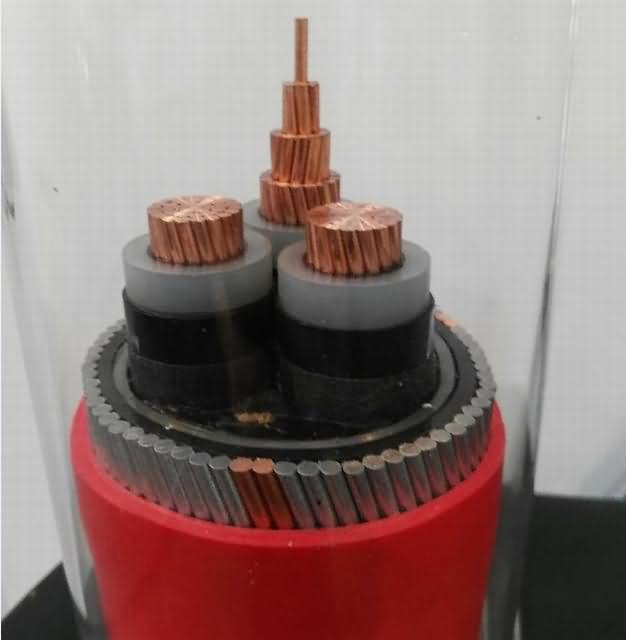
XLPE insulated high-voltage feeder cables operating at 6.35/11kV or 12.7/22kV represent the engineered solution to this challenge. Through a combination of XLPE cross-linked polyethylene insulation, galvanised steel wire armour, and multiple protective sheaths, these cables deliver the robust performance necessary for reliable power distribution in some of Australia's most demanding mining environments.
This blog explores how XLPE high-voltage feeder cables have become the standard specification for mining power distribution across Australia, supported by real case studies and technical insights from operating mines and mining projects.
Understanding XLPE High-Voltage Feeder Cables: The Engineering Foundation
Critical Role in Mining Power Infrastructure
XLPE high-voltage feeder cables serve a fundamentally different purpose than the mobile equipment cables previously discussed in this series. Whilst cables like Type 2S (mobile equipment) or Type 275 (shuttle cars) are designed to be installed and deployed on moving equipment, XLPE HV feeder cables form fixed infrastructure that remains in place for 15–30+ years, delivering power from surface or underground substations through kilometre-long cable runs to distributed load points throughout mining operations.
In a typical Australian mining operation, the power infrastructure pathway flows as follows:
Surface main switchyard (often multiple megavolt-ampere capacity) → Primary 22 kV or 11 kV feeder cables (routed underground or across open terrain) → Substations at mining areas (step-down transformers, protection switchgear) → Secondary distribution (lower voltage cables to equipment) → Mobile or fixed equipment
The XLPE feeder cables form the critical primary transmission segment. If these cables fail, entire sections of the mining operation lose power, and recovery time can extend from hours (if failure location is quickly identified) to days (if the fault location is difficult to pinpoint along a long cable run).
Voltage Ratings and Intended Applications
XLPE high-voltage feeder cables are available in two primary voltage ratings:
6.35/11 kV configuration: Rated for 6.35 kV phase-to-neutral and 11 kV phase-to-phase. This voltage is commonly used in underground coal mining operations where step-down substations already exist, and additional distribution feeders operate at this "medium voltage" level. It's also used in some larger industrial mining applications.
12.7/22 kV configuration: Rated for 12.7 kV phase-to-neutral and 22 kV phase-to-phase. This higher voltage is preferred for longer cable runs and higher power transmission requirements. Major surface mining operations (iron ore, copper) frequently use 22 kV systems because the higher voltage reduces resistive losses over long distances.
Both ratings operate with the same fundamental cable design principles—XLPE insulation, copper screening, galvanised steel wire armour—with the primary difference being the insulation thickness (which increases from 3.4 mm at 11 kV to 5.5 mm at 22 kV to handle the higher electrical stress).
Armoured Construction: Protection for Harsh Environments
The most distinctive feature of XLPE HV feeder cables is galvanised steel wire armour—multiple layers of galvanised steel wires wrapped helically around the cable. This armour serves several critical functions:
Mechanical protection: Steel armour shields the underlying cable from mechanical damage due to equipment movement, vibration, rockfall (in underground installations), or external impact. In open-pit mining environments where cables may be buried shallowly or temporarily exposed, this protection is essential.
Impact resistance: Unlike unarmoured cables that can be damaged by a single impact from heavy equipment, armoured cables distribute impact force across multiple armour wires, providing tolerance for occasional mechanical stress.
Crushing resistance: Underground mining operations sometimes involve cables being routed under equipment or across roadways where temporary crushing forces could damage unprotected cable. Armoured cables withstand these stresses without failure.
Rodent and animal protection: In surface mining or where cables cross open terrain, armoured construction prevents burrowing animals or wildlife from damaging the cable.
Corrosion resistance: The galvanised steel armour is itself protected by zinc galvanising, which resists corrosion in damp mining environments. The armour acts as a sacrificial corrosion barrier protecting underlying cable components.
The armour adds significant weight (ranging from 330 kg/100m for smallest 6.35/11kV cables to 2,420 kg/100m for largest 12.7/22kV cables) and diameter, but this is an acceptable trade-off for the mechanical protection that enables reliable long-term service in harsh mining conditions.
Core Construction: Advanced Materials for High Electrical Stress
Conductors: Stranded plain copper conductors (not tinned, because the copper's high purity and conductivity are more important than corrosion protection given the multiple protective sheaths). Conductor sizes range from 16 mm² (smallest, for light loads) through 400 mm² (largest, for major distribution feeders carrying hundreds of amperes).
The stranded construction provides flexibility for installation and some tolerance for mechanical stress, though these cables are never intended for flexing like mobile equipment cables.
XLPE insulation: Cross-linked polyethylene insulation, a synthetic polymer specifically engineered for high-voltage applications. XLPE offers several advantages over older cable insulation materials:
Superior thermal stability: XLPE maintains its electrical properties across wide temperature ranges (-25°C to +90°C operating range in mining applications) without the degradation experienced by older materials.
Lower dielectric loss: XLPE has very low electrical loss (dielectric loss), meaning that electrical energy is transmitted with minimal heating within the cable insulation. This translates to less heat generation, reduced temperature rise, and more efficient power transmission.
High electrical strength: XLPE can safely withstand the electrical stresses of 11 kV or 22 kV operation without breakdown, even after years of service in damp underground environments.
Moisture resistance: Unlike older rubber or paper-based insulation, XLPE doesn't absorb moisture over time. This property is critical in underground mining where moisture ingress is a chronic challenge.
Copper wire screen: Individual copper wires (varying from 10 wires at 0.85 mm diameter for smaller cables to 47 wires at 1.35 mm diameter for largest cables) wound helically around the XLPE insulation. This screen serves as the earth conductor, carrying fault current safely to earth and providing electromagnetic shielding.
Inner PVC sheath: A protective layer between the copper screen and steel armour, preventing direct contact that could cause galvanic corrosion between copper and steel.
Galvanised steel wire armour: Multiple layers of zinc-coated steel wire providing mechanical protection as previously described.
Outer PVC sheath: Final protective layer meeting AS/NZS 1429.1 standards, providing chemical and mechanical protection against mining environment exposure.
Real-World Application: How a Western Australian Iron Ore Operation Solved Long-Distance Power Distribution
The Challenge: Power Losses and Reliability Issues in Extended Mining Infrastructure
A major iron ore mining operation in Western Australia's Pilbara region was expanding production, adding new mining areas located approximately 8–10 kilometres from the primary processing and power generation facility. The expansion required reliable high-voltage power distribution across this significant distance.
The original plan was to use 6.35 kV distribution cables (the standard voltage used locally for shorter distribution runs). However, engineering analysis revealed a critical problem: the combination of high current requirements (the new mining area would consume approximately 5 megawatts of power) and long cable distance (8–10 km) would result in substantial voltage drop and power losses across the cable run.
Specific technical challenge:
At 6.35 kV, delivering 5 MW across 8–10 kilometres would require approximately 900 amperes of current flow. The resistive losses across 10 kilometres of cable at this current level would consume approximately 3–5% of the transmitted power, dissipating it as heat within the cable rather than delivering it to the mining equipment. Additionally, the voltage drop would reduce the voltage at the far end of the cable run to approximately 5.5 kV—insufficient to properly operate the mining equipment designed for 6.35 kV nominal voltage.
The Solution: Upgrade to 22 kV HV Transmission with XLPE Feeder Cables
The mining operation's engineering team analysed the power transmission problem and identified a solution: upgrade to 22 kV transmission for the long distribution run, using step-down transformers at the new mining area to convert back to operating voltage locally.
Technical rationale:
At 22 kV voltage (3.5 times higher than 6.35 kV), the same 5 MW power could be delivered at approximately 260 amperes of current—significantly lower than the 900 amperes required at lower voltage. The lower current dramatically reduces resistive losses.
Specific improvements:
Power losses reduced from 3–5% to approximately 0.3–0.5% across the 10 km distance
Voltage at far end of cable run maintained at approximately 21.5 kV (only 0.5 kV drop), allowing step-down transformers to deliver stable local voltage
Cable diameter reduced significantly (10 km of 22 kV cable is much more compact than equivalent capacity at 6.35 kV)
System efficiency improved to approximately 99.5%, delivering essentially all transmitted power to the load rather than losing it to cable heating
Cable specification:
The operation specified XLPE insulated 12.7/22kV feeder cables with multiple conductor sizes based on circuit requirements:
Main 22 kV transmission feeder: 150 mm² three-core cable (approximately 10 km run)
Secondary distribution circuits: 70 mm² and 95 mm² cables serving intermediate load points
Spare/future expansion cables: 120 mm² cables pre-installed in cable ducts
Installation approach:
Rather than laying cable directly on the surface (where mining equipment vibration and occasional crushing could damage it), the cables were installed in underground ducts—PVC conduit laid in trenches below typical equipment operating levels. This installation approach provided additional mechanical protection and simplified future maintenance or replacement.
Results: Improved Power Delivery and Operational Advantages
Following installation of the XLPE 22 kV feeder cables and associated infrastructure, the operation achieved substantial benefits:
Reliable power distribution: Over the 15-year operational period following installation, the XLPE feeder cables experienced zero failures from insulation breakdown or environmental degradation. The armoured construction prevented mechanical damage that might have failed unarmoured alternatives.
Power efficiency improvement: Actual measurements confirmed that power losses across the 10 km cable run were approximately 0.4%—essentially matching the engineering calculations and delivering virtually all transmitted power to the mining area. This efficiency improvement reduced operational energy costs by approximately AUD 50,000–80,000 annually (based on 5 MW continuous load and Australian mining region electricity costs).
Voltage stability: Step-down transformers at the mining area consistently delivered stable, regulated voltage to mining equipment. Equipment performance remained consistent, and there were no field failures attributable to voltage fluctuations.
Mining equipment expansion capability: The stable power infrastructure allowed the operation to add additional equipment to the remote mining area without requiring further major infrastructure upgrades. The XLPE feeder cables had been sized with future expansion in mind, and the system had capacity for approximately 20–30% additional load without modification.
Maintenance labour reduction: Unlike lower-voltage distribution systems requiring periodic testing and maintenance, the XLPE HV infrastructure required minimal ongoing attention. Annual testing verified cable integrity, but no unexpected failures or emergency repairs were required.
Capital cost efficiency: The total investment in 22 kV HV infrastructure (including cables, transformers, switchgear, and installation) was approximately AUD 800,000–1,000,000. The annual energy cost savings (approximately AUD 50,000–80,000) and avoided downtime/repair costs paid back this investment within approximately 12–15 years, after which savings continued indefinitely.
Why This Case Study Matters for Australian Mining Operations
The Western Australian case study illustrates several critical principles:
Voltage selection drives efficiency: Higher voltage transmission over long distances is fundamentally more efficient than lower voltages. Australian mining operations with extended cable runs should consider whether higher-voltage distribution is economically justified.
XLPE cables enable modern power systems: Modern power systems (including variable frequency drives, sensitive electronics, and precision control systems) require stable, reliable voltage delivery. XLPE feeder cables, combined with appropriate transformers and switchgear, enable the stable infrastructure these systems require.
Long cable runs are economically viable: Australian mining often involves geographically dispersed sites. Reliable, efficient high-voltage transmission enables these distributed operations to function as integrated systems.
Armoured construction provides insurance: The galvanised steel armour on XLPE feeder cables proved to be insurance against mechanical damage. In at least two documented instances, external impacts that would have damaged unarmoured cables caused no harm to the armoured cables.
XLPE HV Feeder Cables vs Alternatives: Understanding the Design Trade-Offs
vs Unarmoured HV Cables
Unarmoured 11 kV or 22 kV cables (using XLPE or other insulation) cost approximately 30–40% less than armoured alternatives. However, they lack mechanical protection and are suitable only for installations where cables are:
Routed in protected cable trays within buildings
Buried in deep underground ducts with no risk of mechanical damage
Located away from mining activity
In Australian mining environments where mechanical damage is a realistic risk, the cost premium for armoured cables is justified by the protection they provide.
vs Older Paper-Insulated Lead-Covered (PILC) Cables
Some older Australian mining installations still operate with PILC cables (paper insulation with lead sheathing) installed decades ago. These cables suffer from:
Moisture ingress over time, requiring regular maintenance
Lower current-carrying capacity due to insulation limitations
Higher dielectric loss, reducing transmission efficiency
Difficulty sourcing replacement parts or trained technicians familiar with PILC technology
Upgrading from PILC to modern XLPE cables typically delivers improved performance and reliability.
vs Synthetic Rubber or EPR-Insulated Alternatives
Some high-voltage applications use synthetic rubber (EPR) or similar elastomeric insulation. These materials can provide flexibility advantages in certain applications but typically have lower electrical strength than XLPE at equivalent insulation thickness. For fixed installations where flexibility isn't required, XLPE provides superior electrical performance.
Technical Performance Specifications: Understanding XLPE HV Cable Parameters
Insulation Thickness and Electrical Stress
The fundamental distinction between 6.35/11 kV and 12.7/22 kV cables is insulation thickness:
6.35/11 kV cables: Use 3.4 mm insulation thickness. This thickness is engineered to safely withstand the electrical stress of 11 kV operation, with adequate safety margin for transient overvoltages and aging effects.
12.7/22 kV cables: Use 5.5 mm insulation thickness (approximately 60% thicker). The thicker insulation accommodates the nearly 2:1 higher voltage whilst maintaining equivalent electrical safety margins.
This increased insulation thickness is why 22 kV cables have larger diameters and greater weight than 11 kV equivalents. A 150 mm² conductor at 22 kV is approximately 71.5 mm in diameter and weighs 1,030 kg/100m, compared to approximately 53 mm diameter and 645 kg/100m for equivalent capacity at 11 kV.
Current-Carrying Capacity
XLPE insulation's low dielectric loss and excellent thermal properties enable higher current-carrying capacity compared to older insulation materials. A 150 mm² XLPE HV cable can safely carry approximately 300–350 amperes continuously, depending on installation conditions.
For perspective, this means that a three-core 150 mm² cable operating at 22 kV can transmit approximately 10–12 megawatts of power—sufficient for major mining operations.
Mechanical Properties
XLPE insulation, whilst electrically superior to older materials, remains relatively stiff. The XLPE-insulated cores are typically held together with a synthetic filler material and wrapped with copper screen, creating a cable structure that is mechanically robust but not particularly flexible.
This stiffness is not a disadvantage for fixed HV feeder installations—the cables remain in place once installed and are never intended to flex. The stiffness actually provides some mechanical strength, reducing risk of conductor damage during rough handling.
Resistance to Environmental Exposure
XLPE insulation and PVC sheaths used in modern HV feeder cables resist degradation from:
Moisture: Unlike older paper-based insulation, XLPE and PVC don't absorb water. Even in submerged underground installations, the insulation maintains its electrical properties.
UV and solar radiation: PVC outer sheath resists UV degradation, important for cables routed above ground or in open-pit mining environments.
Chemical exposure: Mining fluids, oils, and environmental contaminants don't attack XLPE or PVC as readily as they attack older insulation materials.
Thermal cycling: Temperature fluctuations between winter and summer, or between cold underground installations and warmer equipment areas, cause minimal degradation of XLPE insulation.
Why Australian Mining Operations Specify XLPE HV Feeder Cables
Compliance with Australian Mining Standards
XLPE HV feeder cables' compliance with AS/NZS 1972:2006 (underground coal mines) and associated standards (AS/NZS 1125 for conductors, AS/NZS 3808 for insulation and sheath) ensures that cables meet electrical safety and mechanical performance requirements established for Australian mining.
This compliance is particularly important for coal mining operations, where regulatory oversight is rigorous and cable failures can have serious safety implications.
Proven Track Record in Australian Mining and Industrial Operations
XLPE insulation technology has been used in Australian mining and power distribution since the 1990s—over 30 years of operational history. This extensive track record means that Australian mining engineers have reliable data on expected service life (typically 25–40+ years for underground installations), failure modes, and maintenance requirements.
Modern XLPE cables are far more reliable than older alternatives, with documented failure rates in properly installed systems of less than 1% over 20 years of service.
Superior Efficiency Compared to Older Technology
The Western Australian case study documented this reality: upgrading from 6.35 kV to 22 kV using XLPE cables improved power transmission efficiency from approximately 95–97% to 99.5%. This efficiency improvement translates to real cost savings that compound over the cable's 25–40 year service life.
Compatibility with Modern Mining Equipment and Control Systems
Modern continuous miners, automated haul trucks, and advanced mining equipment employ sophisticated electronics and variable frequency drives requiring stable, reliable power. XLPE HV feeder cables, combined with appropriate transformers and switchgear, provide the stable power infrastructure these systems require.
Flexibility in Conductor Sizing
XLPE HV cables are available in conductor sizes from 16 mm² through 400 mm², allowing precise matching of cable capacity to actual circuit requirements. This flexibility prevents the common problem of oversizing cables (unnecessary cost and weight) or undersizing them (risk of overload).
Installation Best Practices for XLPE HV Feeder Cables in Australian Mining
Suitable Installation Environments
XLPE HV feeder cables perform reliably in:
Underground coal mine ducts and cable galleries
Fixed installations in mining areas (surface or underground)
Long-distance power transmission across mining regions
Exposed outdoor installation (with appropriate UV-protective outer sheath)
Cables buried in trenches or installed in shallow underground ducts
Permanent infrastructure installations with 15–30+ year service life expectations
Installation Considerations
Cable support and routing: XLPE HV feeder cables are heavy (ranging from 330 kg/100m for smallest 11 kV cables to 2,420 kg/100m for largest 22 kV cables). Proper support using cable trays, saddles, or hangers is essential. For long cable runs (kilometres), intermediate support points are critical.
Minimum bending radius: XLPE insulation is relatively stiff. A minimum bending radius of 15–20 times the cable diameter is recommended. For a large 22 kV cable with 108 mm outer diameter, this means a minimum bending radius of approximately 1,600–2,200 mm. Avoid sharp bends that could crack insulation.
Installation in ducts: Where cables are routed in underground ducts or trenches, ensure adequate spacing between multiple cables to allow heat dissipation. Overcrowded ducts reduce current-carrying capacity and increase cable temperature.
Screen and armour grounding: The copper screen (earth conductor) and galvanised steel armour must be properly grounded at both ends of the cable run and at intermediate points (typically every 200–300 metres for long runs). Proper grounding provides fault protection and prevents earth loops that could damage equipment.
Termination quality: HV cable terminations (connecting the cable to switchgear or transformers) require skilled installation following manufacturer specifications. Poor terminations are a common cause of HV cable failures. Only qualified electricians should install HV cable terminations.
Underground installation protection: For cables routed in shallow underground installations (trenches rather than deep ducts), marker tape or other permanent identification should indicate cable location to prevent accidental damage during future mining activity.
Temperature management: Ensure that cable installation doesn't restrict heat dissipation. Cables buried in deep, confined spaces may experience higher operating temperatures than those in open cable trays. Design installations to maintain cable temperature below manufacturer specifications.
Maintenance and Testing
XLPE HV feeder cables require periodic electrical testing to verify insulation integrity:
Annual or biennial insulation resistance testing: Using a high-voltage megohm meter, test cable insulation resistance to verify it remains above specified minimums. Declining resistance trends indicate developing insulation degradation requiring action.
Thermal imaging (optional): For critical installations, thermal imaging can identify hot spots indicating uneven current distribution or connection problems.
Visual inspection: Annually inspect cable entries, terminations, and exposed sections for mechanical damage, corrosion, or environmental degradation.
Documentation: Maintain records of all testing results, repairs, and modifications. This documentation supports maintenance planning and helps identify patterns in cable performance.
Comparing XLPE HV Cables to Alternative Power Distribution Approaches
vs Overhead Power Lines
Overhead high-voltage lines avoid underground cable costs but introduce several challenges:
Visual impact and environmental concerns
Exposure to weather, wind, and lightning
More difficult to protect against mechanical damage in mining areas
Higher maintenance requirements (vegetation clearance, insulator cleaning)
For Australian mining operations, underground cable distribution (using XLPE feeder cables) is often preferred despite higher installation costs, because it provides superior reliability and allows co-location with other mining infrastructure.
vs Distributed Generation (On-Site Power Plants)
Some mining operations generate power locally (diesel generators, gas turbines) rather than importing it via feeder cables. This approach eliminates the transmission infrastructure challenge but introduces:
High capital costs for generation equipment
Ongoing fuel costs
Maintenance complexity for large generators
Environmental and compliance challenges
For large operations with reliable grid power access (like most Australian coal mines and large iron ore operations), importing power via HV feeder cables is typically more economical.
vs Lower-Voltage Distribution with Higher Current
Rather than upgrading to 22 kV, an alternative is to use lower voltages (6.35 kV or lower) with larger conductors to handle high current requirements. However, this approach:
Requires much larger cable cross-sections (and higher costs)
Increases power losses significantly
May exceed current-carrying capacity of available conductor sizes
Creates equipment compatibility challenges
The Western Australian case study demonstrated that 22 kV transmission is more economical than attempting 6.35 kV distribution for long-distance, high-power applications.
Real-World Application: Queensland Coal Mine Substation Modernisation
Additional Case Study: Upgrading Legacy Infrastructure
A major Queensland coal mining operation was modernising its underground substation infrastructure, replacing ageing switchgear and transformers installed in the 1980s. The operation faced a choice: replace the aging 6.35 kV feeder cables feeding the substation with modern 6.35 kV cables, or upgrade the entire system to 11 kV to improve power delivery to expanding underground operations.
The Solution
The operation selected XLPE 6.35/11kV feeder cables for the substation upgrade. New cables were installed alongside the existing cables in parallel cable ducts, allowing the old system to remain operational during the transition. Once the new 11 kV infrastructure was verified operational, the old cables were de-energised and could be removed over several years.
Results
The upgraded infrastructure delivered improved power quality and capacity to underground equipment. The modern XLPE cables required minimal maintenance compared to the aging alternatives they replaced, freeing maintenance resources for other priorities.
The operation noted that the upgrade cost (approximately AUD 400,000–500,000) was recovered through improved mining productivity and reduced power distribution-related downtime within approximately 5–7 years of operation.
Cost-Benefit Analysis: Investing in XLPE HV Feeder Infrastructure
Capital Expenditure for HV Distribution Installation
For a typical mining operation installing long-distance (5–10 km) HV feeder cables:
6.35/11 kV system (smaller scale installation): Estimated total cost approximately AUD 300,000–400,000 for cables, substations, switchgear, and installation labour
12.7/22 kV system (larger scale, more efficient): Estimated total cost approximately AUD 500,000–800,000 for equivalent power capacity, including step-down transformers
Premium for 22 kV system: Approximately AUD 150,000–400,000 higher initial cost, but delivering superior efficiency and future expansion capability
Operating Efficiency Gains
6.35 kV system over 10 km with 5 MW load:
Power losses approximately 3–5% of transmitted power
Annual energy cost waste: approximately AUD 50,000–100,000 (based on 5 MW continuous load and Australian mining electricity rates)
22 kV system over 10 km with 5 MW load:
Power losses approximately 0.3–0.5% of transmitted power
Annual energy cost waste: approximately AUD 5,000–15,000
Annual energy efficiency gain: Approximately AUD 35,000–85,000 annually (typical estimate: AUD 50,000–70,000)
Maintenance and Reliability Costs
6.35 kV distribution (legacy systems):
Testing and maintenance labour: approximately AUD 10,000–15,000 annually
Occasional cable repairs or replacements: approximately AUD 20,000–30,000 every 5–7 years
Unplanned downtime from cable failures: approximately AUD 5,000–20,000 annually
22 kV distribution (modern XLPE system):
Testing and maintenance labour: approximately AUD 3,000–5,000 annually
Cable repairs or replacements: essentially zero for 20–30 year periods
Unplanned downtime from cable failures: essentially zero
Annual maintenance advantage: Approximately AUD 20,000–40,000 (labour and downtime cost reduction)
Total Benefit Over 20-Year Service Life
Cumulative energy efficiency savings: AUD 50,000–70,000 × 20 years = AUD 1,000,000–1,400,000
Cumulative maintenance and downtime savings: AUD 20,000–40,000 × 20 years = AUD 400,000–800,000
Total cumulative benefit: Approximately AUD 1,400,000–2,200,000 over 20 years
For a system costing AUD 500,000–800,000 to install, cumulative benefits of AUD 1,400,000–2,200,000 represent compelling return on investment, with payback periods of 7–12 years and ongoing benefits thereafter.
Sourcing XLPE HV Feeder Cables in Australia
Availability and Lead Times
XLPE insulated 6.35/11kV and 12.7/22kV feeder cables in standard configurations are available through established Australian power distribution and mining equipment suppliers. Lead times for standard sizes are typically 4–6 weeks for new orders, reflecting the specialist nature of HV cable manufacturing.
For large installations requiring multiple kilometres of cable, plan procurement 12–16 weeks in advance to allow time for manufacturing and logistics.
Quality Assurance and Documentation
Ensure that supplied cables include:
Full electrical test certificates demonstrating compliance with AS/NZS standards
Physical specification datasheets (conductor size, insulation thickness, overall diameter, weight)
XLPE material specification and fire rating documentation
Copper screen and steel armour specifications
Installation instructions specific to HV applications
Reputable Australian suppliers provide comprehensive documentation and can answer technical questions about cable specifications, installation procedures, and maintenance requirements.
Technical Support
Established Australian HV cable suppliers provide:
Load analysis and cable sizing based on power requirements
Voltage selection advice (6.35 kV vs 11 kV vs 22 kV) for specific applications
Installation guidance and site supervision services
Termination support and testing services
Ongoing technical support and maintenance consultation
For HV installations, this technical support is valuable and often essential for successful project execution.
Expert Summary
XLPE insulated 6.35/11kV and 12.7/22kV high-voltage feeder cables represent the modern solution to a fundamental challenge in Australian mining: delivering reliable, efficient electrical power across the distances and harsh conditions inherent in mining operations.
By combining XLPE cross-linked polyethylene insulation (offering superior electrical and thermal properties), galvanised steel wire armour (providing mechanical protection for 25–40 year service life), and PVC sheaths (resisting environmental degradation), these cables deliver robust performance in conditions where older cable technologies fail prematurely or require constant maintenance.
The case studies presented in this blog—from the Western Australian iron ore operation that improved power transmission efficiency from approximately 95% to 99.5% whilst enabling long-distance power distribution, to the Queensland coal mining substation modernisation that recovered capital investment within 5–7 years—document real, measurable improvements delivered by XLPE HV feeder cables in authentic Australian mining operations.
The financial analysis is compelling: initial capital investment in modern XLPE HV infrastructure (typically AUD 500,000–1,000,000 for major installations) is recovered through cumulative energy efficiency gains and reduced maintenance costs within 7–12 years. Beyond the payback period, ongoing operational benefits continue for 20–30+ additional years of cable service life.
Modern Australian mining—with distributed extraction sites, automated equipment, and sophisticated control systems—depends fundamentally on reliable, efficient power delivery. Legacy cable infrastructure, often using 30–40 year old technologies, cannot deliver the performance that modern mining operations require. Strategic investment in modern XLPE HV feeder cables enables mining operations to deploy equipment across wider geographic areas, operate with improved efficiency, and reduce infrastructure-related downtime.
XLPE HV feeder cables' compliance with AS/NZS 1972:2006 and related standards ensures full regulatory compliance. Their 30+ year track record in Australian mining and industrial applications provides confidence that investment will deliver expected service life and reliability. Their ready availability through Australian suppliers ensures that procurement is practical.
The critical insight underlying XLPE HV feeder cable technology is straightforward: power distribution infrastructure isn't optional—it's fundamental to mining operations. Specifying cables engineered for long service life, high efficiency, and harsh environmental exposure (rather than adapting cables designed for protected industrial environments) transforms power distribution from a chronic maintenance burden into reliable infrastructure that enables productive mining operations.
Bottom line: If your mining operation is still operating legacy power distribution infrastructure using cables installed 30–40 years ago, or if you're planning new mining expansion requiring long-distance power transmission, a strategic investment in modern XLPE HV feeder cable infrastructure will deliver quantifiable benefits: reduced energy costs (AUD 50,000–70,000 annually for typical operations), virtually eliminated cable-related downtime, and infrastructure that will reliably serve for 25–40 years. For Australian mining operations competing in challenging commodity markets, this infrastructure investment represents an opportunity to improve operational efficiency and reduce lifecycle costs.
Contact an Australian power distribution or mining equipment supplier for detailed XLPE HV feeder cable specifications, load analysis, and availability information. Your operation's power distribution efficiency—and your operational bottom line—will benefit substantially.
How to Reach Us
Get in Touch
SiteMap
Product Catalogue
Festoon Cable
Shore Power Cable




Scan to add us on WeChat