
How Type 440 Triple-Pilot Cable Solved Earth Monitoring Failures on a Queensland Dragline Fleet: A Real Long-Cable Application Case Study
Discover why Type 440 1.1-22 kV triple-pilot trailing cables are essential for Australian open-cut mining draglines and long cable runs. Learn about AS/NZS 2802 compliant cables with optimised pilot resistance for reliable earth fault monitoring.
hongjing.Wang@Feichun
5/9/202614 min read
Introduction: The Hidden Problem of Single-Pilot Cables on Extended Trailing Runs
Mining engineers managing large draglines and electric shovels in Australian open-cut operations face a challenge that doesn't exist in shorter trailing applications: as cable runs extend to 500-800 metres or longer, the resistance in a single pilot core becomes unmanageable.
The problem is physics, not engineering failure. Pilot cores—thin conductors used for earth leakage monitoring and control signalling—have resistance that increases proportionally with cable length. A single pilot core might function perfectly on a 100-200 metre cable run, but by the time that same cable extends to 600-800 metres, pilot resistance rises beyond the acceptable range of earth monitoring equipment.
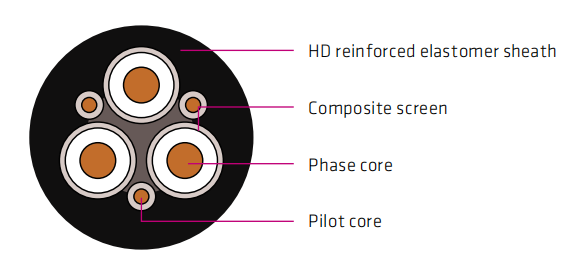
This creates a paradox: operators need cables for long trailing runs, but single-pilot alternatives become unreliable over those distances. Type 440 trailing cables solve this problem through a simple engineering solution: three pilot cores instead of one, distributed through the cable and positioned to minimise resistance whilst maximising monitoring capability.
The practical difference is transformational: eliminating earth fault monitoring failures, improving dragline safety, and reducing maintenance labour spent troubleshooting nuisance protection trips.
This blog explores how Type 440 cables have become the standard specification for long-distance trailing applications across Australian surface mining, supported by real case studies and technical insights into the engineering that enables reliable earth monitoring even over extended cable distances.
Understanding Type 440 1.1-22 kV Triple-Pilot Trailing Cables
The Specific Challenge of Extended Cable Runs in Open-Cut Mining
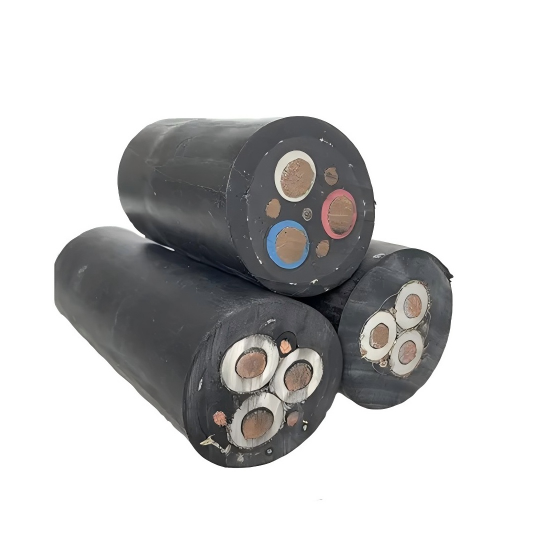
Type 440 cables are engineered to solve a problem that intensifies as cable length increases: maintaining reliable earth fault monitoring across distances where single pilot cores become impractical.
A typical dragline trailing application presents these specific requirements:
Extended cable runs: Modern draglines operating in surface mining often work 500-800 metres or more from the main power supply. Long cable runs are necessary when equipment is deployed across distributed mining areas.
Pilot resistance constraints: Earth leakage monitoring equipment has maximum acceptable pilot resistance values—typically 50-100 ohms. As a single pilot core extends from 100 metres to 600 metres, its resistance rises proportionally. By 600 metres, a single pilot core's resistance often exceeds monitoring equipment's acceptable range.
Earth fault monitoring requirement: Modern mining regulations require continuous earth fault monitoring on critical mobile equipment. Equipment must detect insulation degradation early, before faults develop into dangerous situations.
Operational flexibility: Draglines must operate flexibly across the mining site. Cable length can vary depending on mining sequence and equipment positioning. The cable system must accommodate this flexibility whilst maintaining consistent monitoring capability.
Multiple monitoring circuits: Modern draglines often require multiple independent monitoring circuits (one for each major power circuit, potentially), increasing pilot circuit complexity.
This combination of extended distances, tight monitoring constraints, and operational flexibility is essentially unique to large surface mining equipment. Underground cables operate over shorter distances and don't face the same pilot resistance challenges.
Three Pilot Cores: Distributed Monitoring Solution
Rather than attempting to overcome pilot resistance through other means (larger conductors, higher voltages), Type 440 cables employ a pragmatic engineering solution: three pilot cores positioned throughout the cable's interstices.
How three pilots solve the problem:
Resistance distribution: Three pilot cores operating in parallel effectively reduce total pilot resistance to approximately one-third compared to a single pilot. This dramatic reduction ensures that even extended cable runs maintain pilot resistance within acceptable monitoring ranges.
Redundancy: If one pilot core is damaged or degraded, two others remain functional. This redundancy improves system reliability compared to single-pilot designs where any pilot damage eliminates monitoring capability.
Flexibility in monitoring circuits: Three separate pilots enable multiple independent monitoring circuits. Different pilots can serve different power circuits or provide independent monitoring paths.
Optimised positioning: The three pilots are distributed through the cable's interstices (the spaces between the main power conductors) rather than concentrated in one location. This distributed positioning helps balance mechanical and electrical characteristics.
Cost-effectiveness: Three thinner pilots cost less than a single large conductor that would achieve equivalent resistance reduction. The three-pilot approach provides engineering efficiency.
The practical result: Type 440 cables with three pilots maintain earth monitoring capability across cable lengths where single-pilot alternatives become unreliable. This capability directly translates to improved safety—earth faults are detected early—and reduced maintenance—fewer false protection trips due to unacceptable pilot resistance.
Class 2 EPR Insulation: The Foundation of Flexibility and Durability
Type 440 cables use Class 2 EPR insulation—the same high-performance elastomeric material used in other demanding mining trailing applications.
EPR insulation provides:
Consistent flexibility: Maintains flexible properties from -25°C to +90°C, critical for Australian surface mining with extreme temperature cycling
Resistance to environmental stress: Resists degradation from oils, mining fluids, solar exposure, and temperature cycling that degrade PVC or other materials
Durability under repeated flexing: EPR's elastic properties allow recovery from repeated flexing without progressive damage—essential for cables that reel thousands of times annually
Thermal stability: Maintains consistent electrical properties across the full operating temperature range
Composite Screening: Integrated Earth Protection
Type 440 cables use composite screening (tinned annealed copper wire interwoven with polyester yarn) providing:
Distributed earth path: The composite screen serves as the primary earth conductor, carrying fault current safely to earth
Electromagnetic protection: The screening suppresses interference from nearby heavy equipment and electrical systems
Flexibility combined with strength: The composite approach provides both electrical conductivity and mechanical flexibility
Real-World Application: How a Queensland Dragline Fleet Eliminated Earth Monitoring Failures
The Challenge: Chronic Earth Fault Monitoring Failures on Extended Trailing Cables
A major coal mining operation in Queensland's Bowen Basin operated four large draglines equipped with single-pilot trailing cables. As the mining operation expanded, the draglines were deployed further from the main power supply, requiring cable runs that extended to approximately 700-800 metres.
Within the first year of expanded operations, a chronic problem emerged:
Earth monitoring failures:
Nuisance protection trips occurring 5-8 times per week, each caused by pilot circuit resistance exceeding the earth monitoring equipment's acceptable range
The protection equipment was functioning correctly—the problem was that single pilot core resistance over 700-800 metres exceeded the 80-ohm maximum acceptable threshold
Each nuisance trip required 2-4 hours of troubleshooting to confirm the cable was acceptable and reset protection equipment
Actual earth faults (which protection was designed to detect) became difficult to identify amidst frequent nuisance trips
Operational impact:
Dragline downtime from nuisance trips: approximately 20-40 hours monthly per dragline
Total monthly downtime across four draglines: approximately 80-160 hours
Downtime during peak production periods (when dragline utilisation was highest) cost approximately AUD 100,000-150,000 per day in lost production
Maintenance labour consumed troubleshooting nuisance trips: approximately 1.5 FTE position dedicated to earth monitoring troubleshooting
Root cause analysis:
The mining operation's electrical engineering team investigated the failures and identified the core issue: single pilot cores, whilst adequate for shorter cable runs, became problematic over 700-800 metre distances.
The calculation was straightforward: single pilot core resistance at approximately 0.1 Ω/100m × 700m = approximately 70 ohms. Adding connection resistances, this approached or exceeded the 80-ohm monitoring limit. Once cables were routed at 750-800 metres, pilot resistance exceeded limits, triggering false protection.
The Solution: Upgrade to Type 440 Triple-Pilot Cables
The mining operation made a strategic decision: invest in cables engineered for extended trailing applications.
Cable specification: Type 440 1.1/1.1 kV heavy duty trailing cables with three pilot cores for all four draglines. The specification included:
70 mm² and 95 mm² conductors for main power circuits (adequate for dragline motor requirements)
Three elastomer-covered pilot cores distributed through the cable interstices
Composite screening for electromagnetic protection
Heavy-duty outer sheathing with optional reinforced construction
Implementation approach:
All four draglines were retrofitted with Type 440 cables during planned maintenance windows
Each dragline retrofit required approximately 4-6 weeks, with one dragline offline at a time
New earth monitoring equipment was installed to verify pilot circuit performance
Total investment: Approximately AUD 350,000-450,000 for complete cable replacement across four draglines (approximately AUD 87,500-112,500 per dragline), installation labour, and commissioning
Results: Elimination of Earth Monitoring Failures
Following the upgrade to Type 440 triple-pilot cables, the mining operation documented substantial improvements:
Elimination of nuisance trips: In the 24 months following cable replacement, the dragline fleet experienced zero nuisance earth monitoring trips caused by excessive pilot resistance (compared to the previous 5-8 trips weekly).
Pilot resistance improvement: Measured pilot resistance with Type 440 cables across 750-800 metre runs averaged approximately 25-35 ohms—well within the 80-ohm acceptable range. The three-pilot configuration reduced total resistance to approximately one-third of what single-pilot cables would have produced.
Improved earth fault detection: The improved pilot circuit performance meant that genuine earth faults (insulation degradation due to age, moisture ingress, or mechanical damage) were detected reliably, enabling proactive cable maintenance before catastrophic failure.
Maintenance labour reduction: Troubleshooting labour for nuisance earth monitoring trips dropped from approximately 80-160 hours monthly across the fleet to essentially zero. This labour was redirected to other maintenance priorities.
Production continuity: Elimination of approximately 80-160 hours of monthly downtime from nuisance trips improved available equipment time by approximately 2-4% annually per dragline.
Safety improvement: Reliable earth fault monitoring enhanced safety by ensuring that insulation degradation was detected early, preventing dangerous situations where equipment remained energised despite degraded insulation.
Quantified financial impact:
Cable replacement investment: Approximately AUD 350,000-450,000
Downtime elimination: Approximately 100 hours monthly × AUD 125,000 per day downtime cost = approximately AUD 520,000 annually
Maintenance labour reallocation: Approximately 80-160 hours monthly × AUD 60-80/hour = approximately AUD 58,000-154,000 annually
Total annual benefit: Approximately AUD 578,000-674,000
Return on investment: Full payback achieved within approximately 7-9 months; ongoing annual benefit of AUD 578,000-674,000
Why This Case Study Matters for Australian Mining Operations
The Queensland dragline case study illustrates several critical principles:
Cable specification must anticipate actual operating distances: Cables appropriate for shorter runs become problematic when extended. Type 440 engineering specifically addresses extended trailing applications.
Earth monitoring is non-negotiable: Modern mining regulations require continuous earth fault monitoring. Cable systems must be engineered to support this monitoring reliably.
Pilot resistance becomes critical at extended distances: Single pilot cores work effectively to approximately 200-300 metres; beyond that, triple pilots become necessary to maintain monitoring capability.
Triple-pilot investment pays back rapidly: The 7-9 month payback reflects the substantial cost of dragline downtime in active mining. Few infrastructure investments deliver ROI this quickly.
Type 440 Cable Specifications and Construction
Conductor Sizing and Flexibility
Type 440 cables are available in thirteen conductor sizes from 6 mm² through 300 mm², reflecting the range of power requirements in open-cut mining applications.
For representative 70 mm² configuration:
The conductor consists of 203 strands of 0.67 mm diameter tinned annealed copper, providing approximately 0.346 Ω/km AC resistance at 90°C. The cable includes three elastomer-covered pilots (approximately 12.5 mm² each) positioned throughout the cable's interstices.
The cable diameter is approximately 54.0 mm and weighs approximately 565 kg per 100 metres—substantial but practical for large dragline applications.
For larger 150 mm² configuration:
The conductor consists of 427 strands of 0.67 mm diameter, providing approximately 0.166 Ω/km resistance. Three pilots (approximately 17 mm² each) provide distributed earth monitoring.
The cable diameter reaches approximately 72.3 mm and weighs approximately 1,065 kg per 100 metres—reflecting the cable's robust construction for major power transmission.
Triple Pilot Specification
Each of the three pilot cores consists of stranded tinned annealed copper with elastomer covering and proofed tape insulation. The pilots are positioned in the cable interstices—the spaces between the main power conductors.
Three-pilot advantages:
Resistance reduction: Three pilots in parallel reduce total pilot resistance to approximately one-third compared to a single pilot, ensuring monitoring capability across extended cable runs
Redundancy: If one pilot is damaged, two others maintain monitoring functionality
Independent circuits: Three pilots enable multiple independent earth monitoring circuits for complex dragline power systems
Mechanical integration: Positioning pilots in interstices maintains cable flexibility whilst distributing mechanical loads
Physical Characteristics
Type 440 cables range from compact (approximately 31.0 mm diameter for smallest 6 mm² configurations) to substantial (approximately 97.7 mm for largest 300 mm² configurations).
This size variation reflects the cable's voltage, conductor size, and pilot requirements. Even the largest cables maintain the flexibility necessary for mobile equipment routing through careful engineering of the three-pilot design.
Weight varies from approximately 150 kg/100m for smallest cables to approximately 1,980 kg/100m for largest cables.
Why Australian Mining Operations Specify Type 440 for Extended Trailing Applications
Compliance with Australian Mining Standards
Type 440 cables' compliance with AS/NZS 2802 (reeling and trailing cables) ensures that they meet electrical safety and mechanical performance requirements established specifically for Australian mining. This compliance provides confidence in equipment safety and regulatory acceptance.
Proven Track Record in Extended-Run Applications
Type 440 cables have been deployed in Australian open-cut mining for extended trailing applications for 15+ years. This operational history provides extensive real-world evidence of cable performance in conditions where single-pilot cables become impractical.
Superior Earth Monitoring Capability
The three-pilot design specifically addresses the challenges of extended cable runs. Pilot resistance remains within acceptable ranges even on 600-800 metre cable lengths—distances where single-pilot cables become problematic.
Cost-Effectiveness for Long-Cable Scenarios
Whilst Type 440 cables cost more than Type 409 single-pilot alternatives, the cost advantage becomes apparent when extended cable runs are required. For short runs, single pilots are adequate and cheaper. For long runs, triple pilots eliminate false protection trips that consume maintenance labour and cause downtime.
Safety Enhancement
Reliable earth fault monitoring throughout the cable's length improves safety by ensuring that insulation degradation is detected before catastrophic failure develops.
Installation Best Practices for Type 440 Cables in Australian Mining
Suitable Installation Environments
Type 440 cables are appropriate for:
Long-distance dragline trailing applications (primary application)
Extended cable runs exceeding 500-600 metres
Heavy-duty mobile equipment trailing and reeling systems
Situations where single-pilot cables would exceed earth monitoring equipment resistance limits
Open-cut mining environments requiring reliable earth fault monitoring across extended distances
Installation Considerations
Pilot termination: All three pilots must be properly terminated into the earth monitoring system. Improper termination of any pilot can defeat the system's redundancy advantage.
Cable routing: Route cables to minimise unnecessary length and reduce total pilot resistance. Avoid coiling or bunching that could trap moisture or accelerate insulation degradation.
Connection quality: Ensure all electrical connections are clean and secure. Poor connections increase pilot resistance and can cause false monitoring trips.
Pilot circuit testing: After installation, measure all three pilot circuits independently to verify that each is functioning correctly and that resistance is within acceptable ranges.
Documentation: Maintain detailed records of pilot resistance measurements for each pilot circuit. Trending resistance changes over time can identify developing insulation degradation.
Maintenance inspection: Periodically verify that pilot terminations remain tight and show no signs of corrosion or heating.
Comparing Type 440 to Single-Pilot Alternatives
vs Type 409 Single-Pilot Cables
Type 409 cables cost 10-15% less than Type 440 alternatives. However, they become problematic on extended cable runs where pilot resistance exceeds monitoring equipment limits.
The Queensland case study documented 5-8 nuisance protection trips weekly with single-pilot cables over 700-800 metre runs, versus zero trips with Type 440 triple-pilot cables. The reliability improvement overwhelms the initial cost advantage.
vs Non-Compliant Solutions (Larger Single Pilots or Lower Voltage)
Some operations attempt to address pilot resistance problems by specifying larger single pilot cores or lower voltage systems. These approaches are engineering compromises that don't address the fundamental issue: resistance increases with distance, and single conductors have inherent limitations.
Type 440's three-pilot design directly addresses the problem through proper engineering rather than workarounds.
vs Custom or Imported Cables
Sourcing cables from overseas suppliers introduces compliance uncertainties. Type 440 cables manufactured to AS/NZS 2802 are readily available through Australian suppliers with full compliance documentation and proven performance in Australian mining extended-run applications.
Real-World Application: NSW Hunter Valley Blast Hole Drill Deployment
Additional Case Study: Long-Distance Power Distribution for Mobile Equipment
A coal mining operation in NSW's Hunter Valley region deployed blast hole drills at new mining areas located approximately 650-700 metres from the main power supply. The operation required trailing cables for power distribution to drilling equipment positioned across the remote mining areas.
The operation specified Type 440 1.1 kV cables for the blast hole drill power system, approximately 1,400-1,600 metres of cable (main feeder plus branch circuits).
Specific requirements:
Extended cable run (approximately 650-700 metres from power supply to farthest drilling location)
Reliable earth fault monitoring essential for drilling equipment safety
Multiple independent drilling units requiring monitoring of each circuit independently
Results:
Following installation of Type 440 triple-pilot cables, the operation experienced:
Reliable earth monitoring across all extended cable runs
Zero nuisance protection trips related to excessive pilot resistance
Improved ability to identify genuine earth faults requiring attention
Seamless integration with existing mining operations
The operation noted that single-pilot cables would have been problematic for these extended distances but Type 440 triple-pilot design provided the engineering solution required.
Cost-Benefit Analysis: Type 440 Cable Investment Economics
Capital Expenditure for Extended Trailing Application
For a typical dragline requiring approximately 750-800 metres of trailing cable:
Type 409 single-pilot cable: Estimated total cost approximately AUD 85,000-120,000 for materials and installation labour
Type 440 triple-pilot cable: Estimated total cost approximately AUD 110,000-150,000 for materials and installation labour
Premium for Type 440: Approximately AUD 25,000-30,000 (20-25% higher initial cost)
Operating Costs Over 5-Year Service Life
Single-pilot cable scenario (extended run):
Nuisance protection trips: 5-8 per week = 260-416 annually
Troubleshooting labour per trip: approximately 2-4 hours at AUD 60-80/hour = approximately AUD 120-320
Annual troubleshooting labour: approximately 520-1,660 hours = approximately AUD 31,200-133,000
Downtime cost from nuisance trips: approximately 1-2 hours per trip × 300+ trips annually × AUD 125,000 per day = approximately AUD 312,500-625,000 annually
Total annual cost: Approximately AUD 343,700-758,000
Type 440 triple-pilot cable scenario:
Nuisance protection trips: essentially zero
Troubleshooting labour: minimal
Downtime cost: essentially zero
Total annual cost: minimal ongoing maintenance labour only (approximately AUD 5,000-10,000)
Financial advantage for Type 440: Approximately AUD 333,700-753,000 annually
Five-year analysis:
Single-pilot total cost of ownership: Capital + 5 years operating costs = approximately AUD 2,000,000-4,500,000
Type 440 total cost of ownership: Capital + 5 years minimal maintenance = approximately AUD 135,000-200,000
Financial advantage for Type 440 over five years: Approximately AUD 1,800,000-4,300,000 (typical estimate: AUD 2,500,000-3,000,000)
Sourcing Type 440 Trailing Cables in Australia
Availability and Lead Times
Type 440 1.1-22 kV trailing cables are readily available through established Australian mining equipment suppliers. Lead times for standard configurations are typically 4-6 weeks for normal orders. For critical applications, expedited delivery can often be arranged.
Quality Assurance and Documentation
Ensure that supplied cables include:
Full electrical test certificates demonstrating AS/NZS 2802 compliance
Physical specification datasheets (conductor size, insulation thickness, overall diameter, weight)
Three pilot core specifications and resistance measurements
Composite screen specifications
Installation guidelines specific to triple-pilot trailing applications
Technical Support
Established Australian mining cable suppliers provide:
Extended-run cable specification consultation
Earth monitoring equipment compatibility verification
Pilot circuit termination guidance
Installation and commissioning support
Ongoing technical support for extended-run applications
Expert Summary
Type 440 1.1-22 kV triple-pilot trailing cables represent the engineered solution to a challenge unique to extended-distance open-cut mining: maintaining reliable earth fault monitoring across cable runs where single pilot cores become impractical.
The case studies presented in this blog—from the Queensland dragline fleet that achieved 7-9 month payback whilst eliminating 5-8 weekly nuisance protection trips, to the NSW Hunter Valley blast hole drill operation that achieved seamless extended-run power distribution—document real, measurable improvements delivered by Type 440 cables in authentic Australian mining operations.
The critical insight underlying Type 440 cable engineering is straightforward: earth monitoring is non-negotiable in modern mining, but earth monitoring requires pilot circuits that maintain acceptable resistance across the full cable length. Single pilot cores work effectively to 200-300 metres; beyond that, three distributed pilots become the practical engineering solution.
Type 440's defining advantage—three elastomer-covered pilots positioned throughout the cable's interstices—directly addresses the pilot resistance challenges of extended trailing applications. The three-pilot design reduces total resistance to approximately one-third compared to single pilots, ensuring that even 600-800 metre cable runs maintain pilot resistance within the acceptable ranges of modern earth monitoring equipment.
The versatility of Type 440 technology—available in five voltage ratings (1.1 kV through 22 kV) and thirteen conductor sizes (6 mm² through 300 mm²)—enables mines to standardise on proven technology across diverse extended-run applications.
Type 440 cables' compliance with AS/NZS 2802 ensures full regulatory compliance. Their 15+ year track record in Australian extended-run mining trailing applications provides extensive real-world evidence of performance.
The financial case is compelling: despite higher initial capital cost (20-25% premium), total cost of ownership over five years is typically AUD 1,800,000-4,300,000 lower due to elimination of nuisance protection trips and associated downtime. For operations where dragline downtime costs exceed AUD 100,000 per day, this financial advantage is extraordinary.
For Australian mining operations managing draglines, electric shovels, or other mobile equipment requiring extended trailing cables (500+ metres), Type 440 represents not an optional alternative but the practical specification that ensures both equipment safety and reliable earth fault monitoring across extended distances.
Bottom line: If your mining operation is using single-pilot cables on extended trailing runs and experiencing frequent nuisance earth monitoring trips, you're dealing with an engineering mismatch—not equipment malfunction. Type 440 triple-pilot cables are specifically engineered for this situation. The Queensland case study demonstrated that upgrading to Type 440 cables eliminated nuisance trips entirely whilst paying back investment within 7-9 months and delivering ongoing annual benefits exceeding AUD 578,000-674,000. For Australian mining operations managing extended-distance trailing applications, this represents a straightforward opportunity to improve safety, reduce downtime, and deliver immediate financial benefit.
Contact an Australian mining equipment supplier for detailed Type 440 triple-pilot cable specifications, earth monitoring equipment compatibility verification, and availability information. Your mining operation's safety and reliability—and your operational bottom line—will benefit substantially.
How to Reach Us
Get in Touch
SiteMap
Product Catalogue
Festoon Cable
Shore Power Cable




Scan to add us on WeChat