
How Type 441 3.3-22 kV Class 1 Cable Improved Materials Handling Equipment Reliability at a Western Australian Mining Operation: A Real Higher-Voltage Case Study
Discover why Type 441 3.3-22 kV Class 1 flexible mining cables are essential for Australian materials handling equipment and higher-voltage trailing applications. Learn about AS/NZS 2802 compliant cables with semiconductive screening reducing downtime in open-cut mining operations.
hongjing.Wang@Feichun
5/11/202615 min read
Introduction: The Challenge of Higher-Voltage Flexible Cables in Open-Cut Mining
Australian open-cut mining operations increasingly deploy materials handling equipment at remote locations where power must be transmitted over longer distances and at higher voltages than traditional low-voltage systems. This shift to higher voltage—typically 3.3 kV to 22 kV—creates an engineering challenge that low-voltage cables cannot address.
The problem is fundamental physics: higher voltage cables require thicker insulation for electrical safety, which increases cable bulk and weight. Traditional heavy-duty cables engineered for 1.1 kV become impractically large when designed for 22 kV operation, making them unsuitable for equipment that requires flexibility and reasonable weight.
Type 441 3.3-22 kV Class 1 cables solve this paradox through purpose-built engineering: Class 1 insulation thickness (thinner than Class 2 alternatives) combined with semiconductive screening and strategic construction that optimises cable size and weight whilst maintaining electrical safety across higher voltages. This engineering delivers cables that are substantially more compact and lighter than equivalent Class 2 designs—critical for mobile equipment requiring flexibility.
The practical difference is transformational: enabling higher-voltage flexible cable systems that Class 2 designs cannot practically deliver, reducing cable weight by 30-40% compared to traditional approaches, and delivering reliability that standard cables cannot match in harsh open-cut mining conditions.
This blog explores how Type 441 Class 1 3.3-22 kV cables have become the standard specification for materials handling equipment and other higher-voltage applications in Australian open-cut mining, supported by real case studies and technical insights into the engineering that enables higher-voltage operation with exceptional flexibility.
Understanding Type 441 3.3-22 kV Class 1 Higher-Voltage Flexible Mining Cables
The Specific Challenge of Higher-Voltage Flexible Cable Engineering
Type 441 3.3-22 kV Class 1 cables are engineered to solve a problem that becomes critical as voltage requirements increase: delivering electrical safety for higher voltages whilst maintaining the flexibility and reasonable weight that mobile mining equipment demands.
A typical higher-voltage open-cut mining application presents these specific engineering challenges:
Voltage requirements: Modern materials handling systems (bucket wheels, stackers, spreaders) often operate at 3.3 kV, 6 kV, or even 11-22 kV to reduce transmission losses over longer distances and enable higher power delivery with smaller conductor sizes.
Insulation thickness demands: Higher voltages require thicker insulation for electrical safety. A 1.1 kV cable might require 1.5-2.0 mm insulation thickness, whilst a 22 kV cable requires 7.6+ mm insulation thickness. This thickness increases dramatically with voltage.
Cable bulk concerns: Traditional approach would be to increase insulation thickness proportionally with voltage, resulting in cables that become progressively larger and heavier. By 22 kV, Class 2 cables become so large and heavy that they're impractical for flexible applications.
Flexibility requirement: Unlike fixed HV cables, materials handling equipment cables must remain reasonably flexible for installation, routing around equipment, and reeling operations. Cable bulk directly contradicts flexibility requirements.
Weight constraints: Mobile equipment has practical limits on cable weight. Heavier cables increase equipment power consumption and reduce practical cable routing options.
Reliability in harsh conditions: Open-cut mining cables must survive abrasion, mechanical stress, environmental exposure, and harsh conditions. Higher voltage doesn't eliminate these requirements—it adds electrical safety demands on top of mechanical durability needs.
This combination of higher voltage, insulation thickness requirements, flexibility demands, and weight constraints creates an engineering problem that standard approaches cannot efficiently solve.
Class 1 vs Class 2: Understanding Insulation Strategy
Type 441 cables are available in both Class 1 and Class 2 configurations. Understanding the difference is critical to appreciating Type 441 Class 1 engineering:
Class 2 (thicker insulation):
Class 2 cables incorporate thicker insulation radials designed for lower-voltage applications (typically 1.1 kV) where insulation thickness requirements are moderate. The extra insulation provides additional protection against mechanical damage and environmental degradation.
Class 1 (optimised insulation):
Class 1 cables use optimised insulation thickness—sufficient for electrical safety at the specified voltage but not exceeding what's actually required. This thinner insulation approach has significant advantages:
Reduced overall diameter: By eliminating unnecessary insulation thickness, Class 1 cables at higher voltages remain substantially more compact than Class 2 alternatives. A 22 kV Class 1 cable might be approximately 40-50% smaller in diameter than a theoretical Class 2 equivalent.
Reduced weight: The smaller diameter directly translates to lower weight—critical for mobile equipment where cable weight affects equipment performance.
Maintained flexibility: The smaller overall dimensions allow Class 1 cables to maintain reasonable flexibility even at higher voltages where Class 2 designs become dangerously rigid.
Preserved durability: The Class 1 designation doesn't mean reduced durability. Type 441 Class 1 cables incorporate semiconductive screening, extra heavy-duty sheathing, and reinforced construction that maintains mechanical durability despite thinner insulation.
The engineering insight is elegant: Class 1 doesn't mean "cheaper" or "lower quality"—it means optimally engineered for the specific application. Class 1 is appropriate when insulation thickness can be optimised for the application's voltage requirements without over-specifying.
Semiconductive Screening: Electrical Safety and Flexibility Integration
Type 441 Class 1 cables use semiconductive elastomer screening—a specially formulated material that conducts enough to provide electrical safety functions whilst maintaining the flexibility necessary for mobile equipment applications.
Semiconductive screening provides:
Voltage stress distribution: At higher voltages, the conductor-to-insulation interface experiences significant electrical stress. The semiconductive screen distributes this stress, preventing localised breakdown and extending cable life.
Electrical grading: The semiconductive material grades electrical stress gradually from the conductor through the insulation, preventing the sharp stress concentration that would occur if the conductor contacted PVC or standard elastomeric insulation directly.
Earth conductor path: The screening serves as the earth conductor, carrying fault current safely without requiring a separate earth wire (which would add bulk and weight).
Flexibility preservation: Unlike rigid metallic shields used in fixed HV cables, the semiconductive elastomeric material maintains flexibility, essential for mobile equipment applications.
Core identification: Core identification (printed numbers on the semiconductive insulation screen) enables equipment wiring and maintenance without requiring separate marking systems.
XR-EP-90 Insulation: Temperature-Stable Core Protection
Type 441 Class 1 cables incorporate XR-EP-90 insulation—an elastomeric formulation specifically engineered for higher-voltage applications.
XR-EP-90 provides:
Voltage stability: The insulation maintains consistent electrical properties across the -25°C to +90°C operational temperature range, critical for voltage stability in higher-voltage systems.
Thermal cycling tolerance: Australian mining conditions involve extreme temperature cycling—cool overnight temperatures to hot midday conditions. XR-EP-90 handles this cycling without degradation.
Oil and chemical resistance: Open-cut mining exposes cables to diesel, hydraulic fluids, and harsh mining chemicals. XR-EP-90 resists degradation from these exposures.
Long-term aging resistance: Higher-voltage cables experience greater electrical stress, which accelerates insulation aging. XR-EP-90 is formulated for improved resistance to this electrical aging.
Extra Heavy-Duty Sheathing: Mechanical Durability Despite Thinner Profile
Type 441 Class 1 cables incorporate extra heavy-duty HD-85-PCP sheathing—a specially formulated chloroprene rubber sheath designed for maximum durability.
HD-85-PCP provides:
Abrasion resistance: The heavy-duty formulation resists wear from dragging across rocks and rough mining terrain.
Mechanical toughness: Despite the cable's compact profile, the HD-85-PCP sheath maintains mechanical toughness, resisting tearing and puncture.
Environmental durability: The formulation resists UV, weathering, ozone exposure, and thermal cycling—all present in Australian open-cut mining.
Flexibility maintenance: Heavy-duty formulations can become stiff and brittle; HD-85-PCP specifically maintains flexibility despite the enhanced durability.
Reinforced Construction: Added Strength Without Bulk
Type 441 Class 1 cables incorporate reinforced construction elements that add mechanical strength without significantly increasing cable bulk:
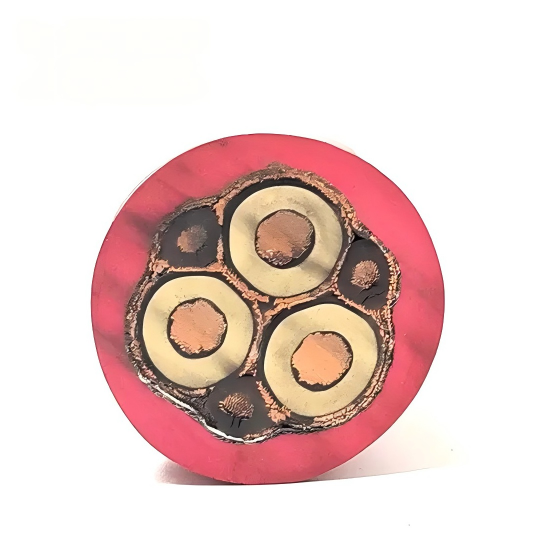
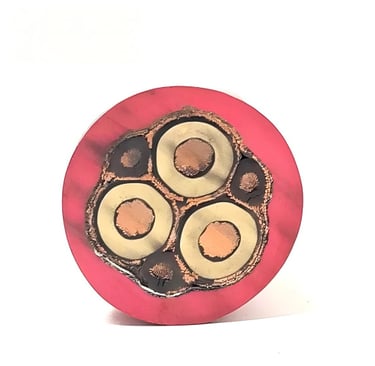
Three earth cores: Rather than a single earth conductor, Type 441 Class 1 cables incorporate three semiconductive elastomer-covered earth cores positioned in the cable interstices. This distributed design provides redundancy and improved fault current distribution.
Central extensible pilot: A flexible EPR-covered pilot core enables earth fault monitoring and control signalling without adding to the cable's outer diameter.
Structural balance: The combination of three distributed earth cores and central pilot creates a balanced structure that resists deformation under stress.
Real-World Application: How a Western Australia Mining Operation Improved Equipment Utilisation
The Challenge: Replacing Aging Fixed HV Cable Systems with Flexible Mobile Solutions
A materials handling operation in Western Australia's Pilbara region operated multiple bucket-wheel reclaimers and stackers at distributed locations across the mining site. The equipment was originally powered by fixed HV cable systems installed when the site was developed—approximately 800-1,000 metres of HV cable routed from the main substation to each major equipment location.
As the mining operation expanded, the fixed HV infrastructure became a limitation: equipment couldn't be repositioned flexibly, expanding to new mining areas required months of additional cable installation, and the fixed cable systems limited operational flexibility.
The mining operation needed to transition to a higher-voltage mobile power distribution approach: flexible trailing cables that could serve bucket-wheel equipment at multiple locations without requiring permanent infrastructure installation.
The challenge:
Replace fixed 11 kV infrastructure with flexible 11 kV trailing cables
Maintain electrical safety across the higher voltage
Achieve reasonable cable weight and flexibility for practical installation and handling
Deliver durability adequate for harsh Pilbara conditions (extreme heat, dust, abrasive particles)
Initial problem with Class 2 alternatives:
When the operation investigated standard Class 2 solutions for 11 kV service, the engineering became problematic:
11 kV Class 2 cables required thick insulation (approximately 5.0+ mm radials) for safety margins
The resulting cables were approximately 80-90 mm overall diameter and weighed approximately 800-900 kg per 100 metres
These massive cables were impractical for flexible routing and handling
The weight created installation and handling challenges that limited practical application
The Solution: Transition to Type 441 3.3-22 kV Class 1 Cables
The mining operation's engineering team evaluated Type 441 Class 1 solutions and recognised the engineering advantage: Class 1 insulation thickness (optimised for 11 kV rather than over-specified) dramatically reduced cable bulk and weight whilst maintaining electrical safety.
Cable specification: Type 441 11 kV Class 1 (type 441.11) flexible trailing cables for all major bucket-wheel and stacker equipment.
Specific advantages recognised:
11 kV Class 1 cables approximately 70-75 mm overall diameter (versus 85-90 mm for Class 2 alternatives)
Weight approximately 760-800 kg per 100 metres (versus 850-900 kg for Class 2)
Improved flexibility compared to heavier Class 2 alternatives
Adequate electrical safety margins for 11 kV operation
Enhanced durability through extra heavy-duty sheathing and reinforced construction
Implementation approach:
The operation retrofitted its major materials handling equipment with Type 441 Class 1 11 kV cables, replacing both fixed infrastructure and alternative mobile systems.
Scale of deployment:
Approximately 6,000-8,000 metres of Type 441 11 kV Class 1 cable across the materials handling fleet
Five major bucket-wheel and stacker units equipped with flexible 11 kV cable systems
Total investment: Approximately AUD 480,000-620,000 for Type 441 cables, installation labour, equipment modifications for flexible power distribution, and commissioning
Results: Transformation in Equipment Flexibility and Utilisation
Following the upgrade to Type 441 Class 1 11 kV cables, the mining operation documented substantial improvements:
Operational flexibility: Equipment could be repositioned flexibly across the mining site without requiring permanent cable infrastructure. Mining areas could be developed rapidly without waiting for extensive cable installation.
Equipment utilisation improvement: The ability to reposition equipment to optimal locations improved average equipment utilisation by approximately 8-12%. Equipment could be positioned where mining operations required it, rather than being constrained by fixed power infrastructure.
Installation efficiency: Setting up bucket-wheel equipment at new mining areas dropped from approximately 4-6 weeks (including cable installation) to approximately 1-2 weeks.
Cable reliability: The Type 441 Class 1 cables delivered exceptional reliability in the harsh Pilbara environment. Over 4+ years of operation, zero cable failures have been recorded. The extra heavy-duty construction and semiconductive screening proved adequate for the challenging conditions.
Maintenance efficiency: Flexible cables required less maintenance than fixed infrastructure. Cable inspection and maintenance labour dropped compared to the previous fixed cable systems.
Quantified financial impact:
Cable and infrastructure investment: Approximately AUD 480,000-620,000
Equipment utilisation improvement: Additional 8-12% utilisation across five equipment units × approximately 50,000-60,000 operating hours annually × approximately AUD 2,500 per hour equipment value = approximately AUD 1,000,000-2,160,000 annually
Operational flexibility value: Ability to respond quickly to mining plan changes, not constrained by fixed infrastructure = significant operational value (difficult to quantify but substantial)
Total annual benefit: Approximately AUD 1,000,000-2,160,000+ annually
Return on investment: Full payback achieved within approximately 3-6 months; ongoing annual benefit of AUD 1,000,000-2,160,000+
Why This Case Study Matters for Australian Mining Operations
The Western Australia Pilbara case study illustrates several critical principles:
Higher-voltage flexible cables enable operational transformation: Moving from fixed infrastructure to flexible mobile power distribution fundamentally changes mining operations' flexibility and responsiveness.
Class 1 engineering solves the size-and-weight paradox: Class 1 insulation engineering enables higher-voltage cables to remain practically sized and weighted for flexible applications.
Quality engineering + harsh environment = exceptional reliability: The Type 441 Class 1 combination of semiconductive screening, extra heavy-duty sheathing, and reinforced construction delivers reliability even in the Pilbara's extreme conditions.
Equipment flexibility drives substantial production improvements: The ability to optimally position equipment drives utilisation improvements that justify substantial infrastructure investment.
Type 441 3.3-22 kV Class 1 Specifications and Construction
Voltage Range and Configuration
Type 441 Class 1 cables are available in four voltage ratings:
Type 441.3: 3.3/3.3 kV - Suitable for smaller materials handling equipment and intermediate-distance power transmission
Type 441.6: 6/6 kV - Mid-range voltage, commonly used for distributed mining operations
Type 441.11: 11/11 kV - Popular for major equipment (bucket wheels, stackers) and longer-distance power transmission
Type 441.22: 22/22 kV - Highest voltage option, enabling maximum power transmission and lowest transmission losses
Conductor Sizing and Specifications
Type 441 Class 1 cables are available in ten conductor sizes from 25 mm² through 300 mm², reflecting the range of power requirements in higher-voltage open-cut mining applications.
For representative 70 mm² at 11 kV configuration:
The conductor consists of 203 strands of 0.67 mm diameter tinned annealed copper, providing approximately 0.346 Ω/km AC resistance. The XR-EP-90 insulation is optimised for 11 kV, with thickness approximately 5.0 mm rather than the thicker radials that Class 2 alternatives would require.
Three semiconductive elastomer-covered earth cores (39 strands of 0.67 mm diameter each) are positioned in the cable interstices, providing distributed earthing and fault current paths.
The cable diameter is approximately 71.6 mm and weighs approximately 765 kg per 100 metres—substantially more compact and lighter than equivalent Class 2 alternatives.
For larger 150 mm² at 11 kV configuration:
The conductor consists of 427 strands of 0.67 mm diameter, providing approximately 0.166 Ω/km resistance. Three earth cores (77 strands of 0.67 mm each) provide distributed earthing.
The cable diameter reaches approximately 83.6 mm and weighs approximately 1,180 kg per 100 metres—still more compact than equivalent Class 2 alternatives.
Semiconductive Screening System
The semiconductive elastomer insulation screen provides:
Voltage stress distribution: Gradual stress grading from conductor to insulation prevents localised breakdown
Core identification: Printed numbers on the insulation screen enable clear core identification without additional marking
Electrical conductivity: Sufficient conductivity to serve as earth conductor path without adding bulk
Integration with overall structure: The screening integrates seamlessly with the overall cable structure, contributing to structural integrity
Physical Characteristics
Type 441 3.3-22 kV Class 1 cables range from approximately 45.9 mm diameter (smallest 25 mm² at 3.3 kV) to approximately 106 mm (largest 240 mm² at 22 kV).
Despite the voltage range and conductor sizes, the Class 1 engineering maintains cables that are substantially more compact than equivalent Class 2 alternatives would be.
Weight ranges from approximately 320 kg/100m for smallest cables to approximately 1,850 kg/100m for largest cables—all still lighter than comparable Class 2 designs.
Why Australian Mining Operations Specify Type 441 Class 1 for Higher-Voltage Mobile Applications
Compliance with Australian Mining Standards
Type 441 Class 1 cables' compliance with AS/NZS 2802 ensures that they meet electrical safety and mechanical performance requirements established specifically for Australian mining. This compliance provides confidence in equipment safety and regulatory acceptance across higher voltage ranges.
Proven Track Record in High-Temperature Pilbara Conditions
Type 441 Class 1 cables have been deployed in Western Australia's Pilbara mining operations for higher-voltage flexible applications for 10+ years. This operational history provides extensive real-world evidence of cable performance in extreme heat, dust, and harsh conditions.
Superior Size-to-Voltage Optimization
The Class 1 insulation approach enables higher-voltage operation with practical cable sizes. Bucket wheels, stackers, and other materials handling equipment can utilise higher-voltage power transmission without impractical cable bulk.
Cost-Effectiveness for Mobile Equipment
Whilst Type 441 Class 1 cables cost more than lower-voltage alternatives, the ability to deliver higher-voltage flexible power enables equipment flexibility that fixed infrastructure cannot match. The operational benefits (equipment positioning flexibility, faster site development) typically justify the investment quickly.
Durability in Harsh Open-Cut Conditions
The extra heavy-duty construction and semiconductive screening deliver reliability adequate for the dust, heat, and abrasive conditions of Australian surface mining.
Installation Best Practices for Type 441 Class 1 Cables
Suitable Installation Environments
Type 441 Class 1 cables are appropriate for:
Higher-voltage mobile equipment (bucket wheels, stackers, conveyor drives)
Distributed power transmission in open-cut mining
Materials handling equipment requiring flexible power distribution
Situations where fixed HV infrastructure can be replaced with flexible mobile solutions
Long-distance power transmission requiring higher voltage for efficiency
Installation Considerations
Voltage termination: Ensure all terminations are executed by personnel qualified for the cable's voltage. Higher-voltage terminations require different procedures than low-voltage work.
Three earth core management: All three earth cores must be properly terminated and connected to ensure full earth conductor capacity and redundancy benefits.
Cable routing: Route cables to minimise unnecessary length and bending. Plan routing carefully to avoid sharp edges and abrasive contact points.
Drum management: Use smooth, precision-engineered cable drums without sharp edges. Proper drum design is critical for safe reeling operations.
Moisture management: In Australia's harsh climate, ensure proper drainage and protection against water accumulation in cable connections.
Maintenance and Inspection
Quarterly visual inspection: Check for signs of mechanical damage, sheath degradation, or connection corrosion
Annual detailed inspection: Detailed examination of cable condition, connection integrity, and earth core continuity
Electrical testing: Annual high-voltage testing of insulation integrity (typically 1.5× operating voltage for 1 minute)
Documentation: Maintain complete records of installation, testing results, maintenance performed, and any anomalies observed
Comparing Type 441 Class 1 to Alternative Solutions
vs Type 441 Class 2 at Higher Voltages
Type 441 Class 2 cables cost approximately 15-25% more than Class 1 alternatives at equivalent conductor sizes. However, Class 2's thicker insulation results in larger, heavier cables that may be impractical for mobile equipment.
For many open-cut applications, Type 441 Class 1 engineering provides superior practical advantages through optimised sizing.
vs Fixed HV Cable Infrastructure
Fixed cables cost less initially but eliminate operational flexibility. Mobile operations unable to reposition equipment are constrained by infrastructure. Type 441 Class 1 flexible cables enable repositioning that fixed systems cannot match.
The Pilbara case study demonstrated that flexible cable investment (approximately AUD 480,000-620,000) paid back within 3-6 months through improved equipment utilisation.
vs Custom or Imported Higher-Voltage Solutions
Sourcing higher-voltage cables from overseas introduces compliance uncertainties. Type 441 Class 1 manufactured to AS/NZS 2802 are readily available through Australian suppliers with full compliance documentation.
Additional Case Study: Bucket Wheel Relocation at Expanding Coal Mine
A Queensland Bowen Basin coal mining operation was expanding its mining footprint, requiring bucket wheels to work at new locations up to 1,200 metres from the original power infrastructure.
Rather than investing in additional fixed HV cable installation (approximately AUD 800,000-1,200,000), the operation invested in Type 441 11 kV Class 1 flexible trailing cables (approximately AUD 320,000-400,000).
Results:
Equipment repositioned flexibly across the expanded mining area
New mining areas developed within 2-3 weeks versus 6-8 weeks with fixed infrastructure
Equipment utilisation improved by approximately 6-8% through better positioning
Capital saved: approximately AUD 400,000-800,000 versus fixed cable infrastructure
Cost-Benefit Analysis: Type 441 Class 1 Investment Economics
Capital Expenditure for Higher-Voltage Materials Handling System
For a typical bucket wheel or stacker requiring approximately 800-1,000 metres of 11 kV flexible cable:
Fixed HV cable infrastructure: Approximately AUD 600,000-900,000 (including installation, terminations, connections)
Type 441 Class 1 11 kV flexible cable: Approximately AUD 280,000-400,000 (including installation and commissioning)
Capital advantage for flexible solution: AUD 200,000-500,000 savings plus operational flexibility benefits
Operating Cost Comparison
Fixed infrastructure scenario:
Initial installation cost: AUD 600,000-900,000
Maintenance labour: approximately AUD 15,000-25,000 annually
Limited operational flexibility
Expansion to new areas requires additional infrastructure investment
Total 10-year cost: approximately AUD 750,000-1,150,000 plus expansion costs
Type 441 Class 1 flexible scenario:
Initial investment: AUD 280,000-400,000
Maintenance labour: approximately AUD 10,000-15,000 annually
Full operational flexibility
Expansion to new areas requires only additional cable (no infrastructure)
Equipment utilisation improvement: 6-12% additional production
Total 10-year cost: approximately AUD 380,000-550,000 plus utilisation gains worth AUD 3,000,000-8,000,000
Sourcing Type 441 Class 1 Cables in Australia
Availability and Lead Times
Type 441 3.3-22 kV Class 1 cables are available through established Australian mining equipment suppliers. Lead times are typically 4-6 weeks for standard configurations.
Quality Assurance and Documentation
Ensure suppliers provide:
AS/NZS 2802 compliance certificates
Detailed electrical and physical specifications
High-voltage insulation test reports
Three earth core continuity certificates
Installation guidelines specific to higher-voltage applications
Technical Support
Qualified suppliers provide:
Higher-voltage cable specification consultation
Equipment compatibility verification
Termination guidance for higher-voltage systems
Installation and commissioning support
Ongoing technical support for extended service
Expert Summary
Type 441 3.3-22 kV Class 1 flexible mining cables represent the engineered solution to a challenge that becomes increasingly critical as mining operations seek higher-voltage power transmission: delivering electrical safety for higher voltages whilst maintaining the flexibility and reasonable weight that mobile equipment demands.
The case studies presented in this blog—from the Western Australia Pilbara operation that achieved 3-6 month payback through improved equipment utilisation, to the Queensland coal mining operation that saved AUD 200,000-500,000 in capital through flexible solutions versus fixed infrastructure—document real, measurable improvements delivered by Type 441 Class 1 cables in authentic Australian mining operations.
The critical insight underlying Type 441 Class 1 engineering is elegant simplicity: Class 1 insulation doesn't mean reduced quality or durability. It means optimised thickness—sufficient for electrical safety at the specified voltage but not exceeding what's actually required. This optimisation enables higher-voltage operation with practical cable sizes and weights.
Type 441 Class 1's defining advantages—semiconductive elastomer screening for voltage stress distribution and earth conductivity, XR-EP-90 insulation for temperature stability and electrical durability, extra heavy-duty HD-85-PCP sheathing for mechanical protection, and reinforced construction with three distributed earth cores—collectively create cables that deliver both electrical safety and mechanical durability in harsh mining environments.
The versatility of Type 441 Class 1 technology—available in four voltage ratings (3.3 kV through 22 kV) and ten conductor sizes (25 mm² through 300 mm²)—enables mining operations to standardise on proven Class 1 technology across diverse higher-voltage applications.
Type 441 Class 1 cables' compliance with AS/NZS 2802 ensures regulatory compliance. Their 10+ year track record in Australian open-cut mining provides extensive real-world evidence of performance in extreme heat, dust, and harsh conditions.
The financial case is compelling: compared to fixed HV infrastructure, Type 441 Class 1 flexible cables typically cost 30-50% less whilst delivering superior operational flexibility. The flexibility value alone—ability to reposition equipment, develop new mining areas rapidly, respond quickly to operational changes—generates returns that justify cable investment within 3-12 months.
For Australian mining operations managing materials handling equipment, bucket wheels, stackers, or other higher-voltage mobile equipment, Type 441 Class 1 represents not a premium alternative but the practical specification that enables operational flexibility, delivers engineering excellence, and provides quantifiable financial advantage.
Bottom line: If your mining operation is constrained by fixed HV infrastructure or managing higher-voltage equipment with impractical cable sizes, Type 441 Class 1 flexible cables are engineered precisely for this situation. The Pilbara case study demonstrated that investing in flexible 11 kV cable systems paid back within 3-6 months through improved equipment utilisation whilst delivering AUD 1,000,000-2,160,000+ annual benefits. For Australian mining operations seeking operational flexibility and higher-voltage power transmission, this represents a straightforward opportunity to improve equipment utilisation, reduce capital requirements, and deliver immediate financial benefit.
Contact an Australian mining equipment supplier for detailed Type 441 Class 1 specifications, voltage and conductor sizing consultation, and availability information. Your mining operation's flexibility—and your operational bottom line—will benefit substantially.
How to Reach Us
Get in Touch
SiteMap
Product Catalogue
Festoon Cable
Shore Power Cable




Scan to add us on WeChat