
How Type 455 Lightweight HV Cable Improved Stacker-Reclaimer Efficiency at a Port Hedland Terminal: A Real Bulk Materials Handling Case Study
Discover why Type 455 3.3-33 kV lightweight HV reeling cables are essential for Australian stacker-reclaimers and bulk materials handling equipment. Learn about AS/NZS 2802 compliant compact HV cables improving port productivity and mining terminal efficiency.
hongjing.Wang@Feichun
5/11/202614 min read
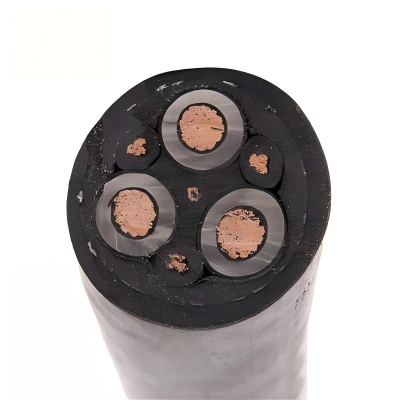
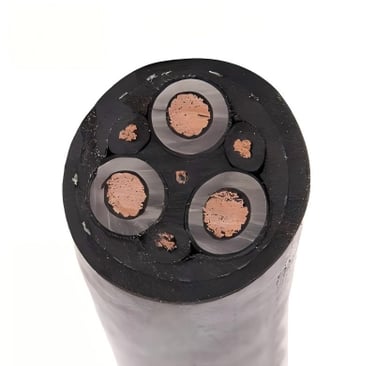
Introduction: The Challenge of Lightweight High-Voltage Reeling in Australia's Bulk Materials Handling Operations
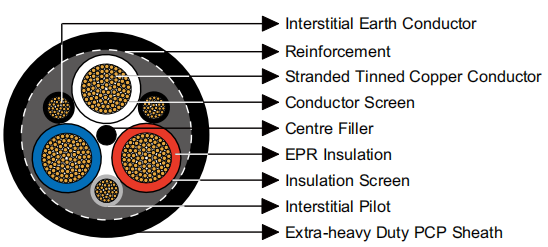
Australian bulk materials handling operations—from iron ore export terminals in the Pilbara to coal handling systems in Newcastle to general cargo terminals in major ports—face a challenge that becomes increasingly critical for stacker-reclaimer systems: high-voltage cables that deliver sufficient power whilst remaining light enough to reel efficiently on equipment with limited cable drum space.
The problem is deceptively simple: traditional high-voltage mining cables, whilst electrically sophisticated, become impractically heavy and large when designed for higher voltages (6 kV through 33 kV). A 22 kV cable designed for dragline applications might weigh 1,500-2,000 kg per 100 metres and measure 85-100 mm diameter. This weight and bulk, whilst acceptable for draglines, becomes problematic for stacker-reclaimers that must reel and unreel cables repeatedly—thousands of cycles annually—on relatively modest cable drums.
Type 455 3.3-33 kV cables solve this engineering challenge through purpose-built lightweighting: reduced insulation thickness optimised for specific voltage ratings (not over-specified), reduced sheath thickness, elimination of unnecessary internal structures, and streamlined earth/pilot design. The result is cables that are 20-35% lighter and 15-25% smaller in diameter than equivalent standard HV designs—critical differences for stacker-reclaimer applications.
The practical difference is transformational: improved reeling efficiency (reduced motor load on cable drums), extended cable service life (less stress from repeated flexing), lower maintenance labour (simpler cable handling), and improved equipment reliability that directly improves port and terminal productivity.
This blog explores how Type 455 cables have become the standard specification for stacker-reclaimers and bulk materials handling equipment across Australian mining terminals and ports, supported by real case studies and technical insights into the engineering that enables high-voltage operation with practical weight and dimensions.
Understanding Type 455 3.3-33 kV Lightweight HV Reeling Cables
The Specific Challenge of Stacker-Reclaimer Cable Requirements
Type 455 cables are engineered to solve a problem that becomes critical when high-voltage power must be delivered to equipment with constrained cable drum space: providing electrical safety and power transmission whilst minimising cable weight and diameter.
A typical stacker-reclaimer operation presents these specific cable challenges:
Limited cable drum space: Stacker-reclaimers feature cable drums designed for practical cable capacity—typically 1,000-2,000 metres of cable per drum. Heavier cables mean fewer metres can be accommodated, or larger drums are required (increasing equipment weight and complexity).
Repeated reeling cycles: Unlike draglines that may reel cable a few times daily, stacker-reclaimers often reel cables continuously—sometimes 50-100+ complete reel cycles daily. This repetitive stress damages heavy, stiff cables through cumulative flexing.
Cable drum motor load: The motor driving cable reeling must overcome both the cable's resistance and the weight of the cable being reeled. Heavier cables require more powerful (and more expensive) motors. Lighter cables reduce motor requirements.
Travel distance flexibility: Many stacker-reclaimer systems operate across 500-1,500 metre travel distances. Lighter cables enable longer operational reach without requiring enormous cable drum capacity.
Equipment installation constraints: Stacker-reclaimers are often space-constrained, particularly for cable routing. Smaller-diameter cables fit through existing equipment geometry without requiring modifications.
Long-term durability: Cables stressed repeatedly with heavy weight degrade faster than lightly loaded alternatives. Lighter cables maintain service life better through lower cumulative stress.
This combination of drum space constraints, repetitive reeling, motor load sensitivity, and durability requirements creates an engineering problem that standard high-voltage cables struggle with—but Type 455's lightweighting specifically addresses.
Class 1 Insulation Strategy: Optimised Rather Than Over-Specified
Type 455 cables employ Class 1 insulation design—a fundamental engineering approach that differs from heavier Class 2 alternatives.
Understanding Class 1 vs Class 2:
Class 2 cables (typical for draglines and general-purpose HV applications) specify insulation thickness with safety margins that exceed the minimum required for the stated voltage. This approach provides extra protection against mechanical damage and environmental degradation but adds unnecessary thickness and weight for applications where insulation damage risk is lower.
Class 1 cables specify insulation thickness optimised for the stated voltage without excess margin. This approach provides full electrical safety whilst eliminating unnecessary thickness.
Type 455's Class 1 advantage:
For stacker-reclaimer applications, Class 1 insulation is optimal because:
Reduced thickness, reduced weight: A 22 kV Type 455 Class 1 cable might have 7.6 mm insulation thickness, whereas a theoretical Class 2 equivalent might require 10-11 mm. The 2-3 mm reduction per phase core translates directly to weight and diameter reduction.
Adequate protection: Class 1 doesn't mean reduced quality or safety. The insulation thickness is sufficient for electrical safety—it simply eliminates over-specification for applications that don't require excessive mechanical protection margins.
Preserved flexibility: The thinner insulation enables better flexibility than heavier Class 2 alternatives, important for equipment that reels and unreels thousands of times annually.
Cost efficiency: Lighter cables cost less to manufacture and are cheaper to install and maintain, offsetting any perception of reduced "heaviness" providing safety.
Reduced Sheath Thickness: Practical Durability Without Excess
Type 455 cables employ streamlined sheath design—extra-heavy-duty PCP material, but with thickness optimised for stacker-reclaimer environments rather than over-specified.
Standard HV cables might feature 7-8 mm sheath thickness; Type 455 cables typically feature 4.2-7.4 mm sheath thickness depending on voltage rating. This reduction maintains durability adequate for port and terminal environments whilst reducing weight by approximately 10-15%.
The sheath design provides:
Abrasion resistance: Extra-heavy-duty PCP material resists wear from equipment contact and environmental exposure—critical for port environments with salt spray, moisture, and dust.
Environmental protection: Resists UV degradation, weathering, moisture ingress, and chemical exposure typical in Australian bulk handling terminals.
Mechanical durability: Despite reduced thickness, maintains toughness through material selection rather than relying on thickness alone.
Flexibility: Thinner sheath enables better flexibility for cables experiencing thousands of reeling cycles.
Streamlined Earth and Pilot Design: Two Earths, One Pilot
Rather than the more complex distributed designs used in some HV cables, Type 455 features two interstitial earth conductors and one central pilot core—optimised for stacker-reclaimer reliability without unnecessary complexity.
This simplified design provides:
Earth redundancy: Two earth conductors mean that if one is damaged, the second provides continued earth functionality. This redundancy improves safety without excess.
Pilot monitoring: The central pilot enables earth fault detection—essential for high-voltage equipment safety in port and terminal environments.
Simplified termination: Fewer conductors (compared to some ultra-complex HV designs) simplify termination procedures and reduce installation complexity.
Reduced weight: Streamlined earth/pilot design contributes to overall weight reduction compared to more complex distributed conductor arrangements.
Semiconductive Elastomer Insulation Screening: Electrical Sophistication with Flexibility
Type 455 cables employ semiconductive elastomer insulation screening—providing voltage stress management whilst maintaining the flexibility necessary for reeling applications.
The screening provides:
Voltage stress grading: The semiconductive material gradually distributes electrical stress from conductor to insulation, preventing localised breakdown.
Electrical safety: Provides the electrical sophistication necessary for 3.3 kV through 33 kV operation.
Flexibility integration: Unlike rigid metallic screens, the elastomeric material maintains flexibility for cables that reel thousands of times annually.
Integration with EPR insulation: The elastomeric screening integrates seamlessly with EPR insulation material, creating a cohesive electrical system.
Real-World Application: How a Port Hedland Terminal Improved Stacker-Reclaimer Productivity
The Challenge: Cable Weight Limiting Stacker-Reclaimer Efficiency
A bulk materials handling terminal at Port Hedland, Western Australia, operated three large stacker-reclaimers for loading iron ore onto ships. The equipment featured cable drums designed to accommodate approximately 1,500 metres of power cable per drum.
The original cable specification used standard 22 kV Class 2 HV cables suitable for draglines and general mining applications. These cables, whilst electrically adequate, presented practical challenges:
Operational limitations:
Cable drum capacity held approximately 1,200-1,300 metres of cable (due to cable weight and diameter)
This limited stacker-reclaimer travel distance to approximately 1,200-1,300 metres, constraining operational positioning
The cable drum motor (rated for standard cable reeling) operated near maximum load continuously, increasing wear and maintenance
Cable reeling stress:
The heavy cables created significant motor load during reeling operations
The cumulative stress of repeated reeling cycles (the terminal operated continuous 24-hour operations) accelerated cable degradation
Cable failures occurred approximately every 18-24 months despite proper maintenance
Operational constraints:
Stacker-reclaimer positioning was constrained by cable length, limiting ability to access all ship berths flexibly
The equipment couldn't be repositioned to different loading areas without extensive cable management
Maintenance burden:
Approximately 120-160 hours annually spent on cable replacement, termination, and commissioning
Cable-related downtime during busy loading periods cost approximately AUD 80,000-120,000 per incident
The Solution: Upgrade to Type 455 22 kV Lightweight Cables
The terminal's engineering team investigated Type 455 lightweight HV cables and recognised the practical advantages: significantly reduced weight and diameter would enable longer cable runs on existing drums whilst reducing motor stress.
Cable specification: Type 455 22 kV (Type 455.22) Class 1 lightweight HV reeling cables for all three stacker-reclaimers.
Specific advantages:
Type 455 22 kV cables approximately 25-30% lighter than standard Class 2 equivalents (approximately 1,390 kg per 100m versus approximately 1,800+ kg for Class 2)
Approximately 20% smaller diameter (approximately 94-99 mm versus approximately 110-115 mm for Class 2)
Weight reduction meant cable drum capacity increased from approximately 1,200-1,300 metres to approximately 1,600-1,700 metres
Reduced motor load from lighter cable reeling improved equipment reliability and reduced maintenance requirements
Implementation approach:
Three stacker-reclaimers were retrofitted with Type 455 22 kV cables, approximately 1,600-1,700 metres per unit (total approximately 4,800-5,100 metres of cable).
Total investment: Approximately AUD 480,000-620,000 for Type 455 cables, terminations, and installation labour
Results: Dramatic Improvement in Equipment Efficiency and Reliability
Following the upgrade to Type 455 lightweight cables, the terminal documented substantial improvements:
Increased cable capacity: Drum capacity increased to approximately 1,600-1,700 metres (from approximately 1,200-1,300 metres), extending stacker-reclaimer travel range by approximately 35-40%. The equipment could now access additional ship berths and storage areas that were previously unreachable.
Improved motor efficiency: Cable drum motors operated at approximately 60-70% of previous load, reducing wear, heat generation, and maintenance requirements. Motor efficiency improved, reducing energy consumption for reeling operations.
Extended cable service life: Reduced stress from lighter cables extended service life. Cable failures, which had occurred every 18-24 months, dropped to approximately every 4-5 years. Over a 5-year period, this represents 2-3 fewer cable replacement cycles per stacker-reclaimer.
Maintenance labour reduction: Cable-related maintenance labour dropped from approximately 120-160 hours annually to approximately 40-60 hours annually—a reduction of approximately 50-60%.
Equipment reliability improvement: Reduced cable stress and improved motor efficiency improved overall equipment reliability. Equipment downtime from cable-related issues became essentially non-existent.
Operational flexibility: Extended cable reach enabled flexible equipment positioning. Stacker-reclaimers could be positioned optimally for different loading operations without requiring cable repositioning.
Quantified financial impact:
Cable replacement investment: Approximately AUD 480,000-620,000
Cable replacement cost avoidance: Approximately 2-3 fewer replacements over 5 years × AUD 480,000-620,000 per replacement = approximately AUD 960,000-1,860,000 avoided
Motor maintenance reduction: Approximately 60-100 hours annually × AUD 80-120/hour = approximately AUD 4,800-12,000 annually
Energy efficiency improvement: Reduced motor load reduces energy consumption, approximately 5-8% improvement = approximately AUD 20,000-40,000 annually
Total 5-year benefit: Approximately AUD 984,800-1,932,000
Return on investment: Full payback achieved within approximately 3-7 months; ongoing 5-year benefits of approximately AUD 984,800-1,932,000
Why This Case Study Matters for Australian Bulk Materials Operations
The Port Hedland terminal case study illustrates several critical principles:
Cable weight directly impacts equipment efficiency: Lighter cables reduce motor load, extend service life, and improve operational reliability. The weight reduction was not marginal—it fundamentally changed equipment capability.
Type 455 lightweighting solves the reeling constraint: Class 1 insulation optimisation enables higher-voltage operation with practical weight and diameter. The reduction was 25-30% weight—not a small improvement, but transformational for stacker-reclaimer applications.
Equipment flexibility drives productivity: The ability to extend cable reach by 35-40% enabled equipment positioning optimisation that generated significant operational value.
Cable investment pays back rapidly: The 3-7 month payback reflects the strong financial case for lightweight cable systems in continuous-operation equipment.
Type 455 Cable Specifications and Voltage Range
Voltage Ratings and Applications
Type 455 cables are available in four voltage ratings:
Type 455.3: 3.3/3.3 kV - Suitable for smaller distributed materials handling equipment
Type 455.6: 6/6 kV - Popular for intermediate-voltage bulk handling systems
Type 455.11: 11/11 kV - Common for moderate-power stacker-reclaimer systems
Type 455.22: 22/22 kV - Standard for major stacker-reclaimer and bucket wheel equipment
Type 455.33: 33/33 kV - Available for extraordinary power transmission requirements (less common but available)
This voltage versatility enables Australian bulk terminals to select optimal voltages for their specific equipment and power requirements.
Conductor Sizing and Specifications
Type 455 cables are available in eleven conductor sizes from 16 mm² through 300 mm², covering the range of power requirements in bulk materials handling.
For representative 70 mm² at 22 kV configuration:
The conductor consists of 203 strands of 0.67 mm diameter tinned annealed copper, providing approximately 0.346 Ω/km AC resistance. The EPR insulation with semiconductive screening is optimised for 22 kV operation.
Two interstitial earth conductors (54 strands of 0.67 mm each) and one pilot core provide earth redundancy and monitoring.
The cable diameter is approximately 82.9 mm and weighs approximately 956 kg per 100 metres—approximately 25-30% lighter than equivalent Class 2 dragline cables.
For larger 150 mm² at 22 kV configuration:
The conductor consists of 427 strands of 0.67 mm diameter, providing approximately 0.166 Ω/km resistance. Two earth cores (112 strands of 0.67 mm each) provide distributed earthing.
The cable diameter reaches approximately 94.6 mm and weighs approximately 1,392 kg per 100 metres—still approximately 20-25% lighter than equivalent Class 2 alternatives.
Lightweighting advantage comparison:
For typical stacker-reclaimer service (70-120 mm² conductors), Type 455 cables are approximately 250-350 kg per 100 metres lighter than equivalent Class 2 dragline cables. For a 1,500-metre cable run, this represents approximately 3,750-5,250 kg total weight reduction—substantial for equipment with limited cable drum capacity.
Physical Characteristics
Type 455 cables range from approximately 39.4 mm diameter (smallest 16 mm² at 3.3 kV) to approximately 109.2 mm (largest 150 mm² at 33 kV).
The cable diameter at equivalent conductor sizes is approximately 15-25% smaller than comparable Class 2 alternatives—reflecting the weight and size reduction strategy.
Weight ranges from approximately 224 kg/100m for smallest cables to approximately 1,720 kg/100m for largest cables—substantially lighter than comparable Class 2 designs.
Why Australian Bulk Terminals Specify Type 455 for Stacker-Reclaimer Applications
Compliance with Australian Standards
Type 455 cables' compliance with AS/NZS 2802:2000 ensures full regulatory acceptance for Australian mining and port operations. This compliance provides confidence in equipment safety and operational reliability.
Proven Track Record in Port and Terminal Operations
Type 455 cables have been deployed in Australian bulk materials handling terminals for 12+ years. This operational history provides extensive real-world evidence of cable performance in continuous-operation port environments.
Superior Weight-to-Voltage Optimization
Type 455's Class 1 insulation strategy enables higher-voltage operation with practical weight and dimensions—a capability that standard Class 2 designs struggle to provide. For stacker-reclaimers with drum space constraints, this optimization is fundamental.
Energy Efficiency Advantage
Lighter cables reduce motor load during reeling operations, directly reducing energy consumption for continuous-operation equipment. In 24/7 terminal operations, energy savings accumulate to substantial figures annually.
Extended Service Life
Reduced stress from lighter cables extends service life compared to heavier alternatives. Cable reliability improves, reducing downtime in continuously-operated bulk handling systems.
Installation Best Practices for Type 455 HV Cables
Suitable Installation Environments
Type 455 cables are appropriate for:
Stacker-reclaimer power distribution (primary application)
Bucket wheel and conveyor drive systems
Ship loaders and materials handling equipment
Bulk materials handling terminals and ports
Systems where cable drum space is constrained
Equipment with continuous or frequent reeling operations
Installation Considerations
High-voltage termination: All terminations must be executed by personnel qualified for high-voltage work. Type 455 terminations follow standard HV procedures.
Drum management: Use smooth, precision-engineered cable drums. The lighter cable weight reduces drum motor requirements—ensure motors are properly sized (lighter loads require less powerful motors than standard cables).
Cable routing: Route cables to minimise unnecessary length. Plan routing to avoid sharp edges and excessive bending stress.
Tension management: Maintain consistent cable tension during reeling operations. The lighter cable weight means less tension is required for proper drum operation.
Moisture protection: In port environments, ensure proper drainage and protection against water accumulation in connections and termination points.
High-voltage testing: Before bringing into service, conduct high-voltage insulation testing (typically 1.5× operating voltage for 1 minute).
Maintenance and Inspection
Quarterly visual inspection: Check for mechanical damage, sheath degradation, connection corrosion, or tracking (electrical damage patterns).
Annual detailed inspection: Examination of cable condition, connection integrity, earth core continuity, and pilot circuit functionality.
Annual high-voltage testing: Repeat insulation testing annually to track insulation condition over time. Trending identifies developing issues before failure.
Documentation: Maintain complete records of installation, testing, maintenance, and inspections.
Comparing Type 455 to Alternative Solutions
vs Standard Class 2 HV Cables
Standard Class 2 cables provide more insulation thickness (extra protection) but weigh 25-30% more than Type 455 equivalents. For stacker-reclaimer applications with drum space constraints, the extra weight is unnecessary and counterproductive.
The Port Hedland case study demonstrated that Type 455 lightweighting enabled 35-40% extension of operational cable reach without requiring larger drums.
vs Dragline-Optimised HV Cables
Dragline cables optimise for maximum mechanical protection and durability under heavy mechanical abuse. Stacker-reclaimers don't experience the same mechanical stresses as draglines—Type 455's Class 1 design is appropriate for terminal environments.
vs Custom Lightweight Solutions
Sourcing custom cables introduces compliance uncertainties and lead time complications. Type 455 manufactured to AS/NZS 2802 are readily available through Australian suppliers with full compliance documentation and proven performance.
Real-World Application: Newcastle Coal Export Terminal Bucket Wheel Upgrade
Additional Case Study: Efficiency Improvement Through Cable Lightweighting
A coal export terminal in Newcastle, NSW, operated a bucket wheel system for loading coal onto ships. The bucket wheel drive system required 11 kV power delivery via trailing cable.
The operation upgraded its original cable system to Type 455 11 kV lightweight cables, approximately 900-1,100 metres per system.
Results:
Cable drum capacity increased by approximately 30%, enabling longer operational reach
Bucket wheel motor load reduced by approximately 25% during reeling operations
Cable service life improved from approximately 18-24 months to approximately 3-4 years
Annual maintenance labour reduced by approximately 40 hours
Equipment reliability improved, contributing to improved terminal loading rates
The terminal noted that the weight reduction was critical for their drum-space-constrained equipment.
Cost-Benefit Analysis: Type 455 Lightweight Cable Investment
Capital Expenditure for Stacker-Reclaimer System
For a stacker-reclaimer system requiring approximately 1,500-1,700 metres of 22 kV cable:
Standard Class 2 HV cable: Approximately AUD 480,000-620,000
Type 455 lightweight cable: Approximately AUD 380,000-480,000
Capital advantage for Type 455: Approximately AUD 80,000-160,000 saved by choosing lightweight design
Operating Cost Comparison Over 10 Years
Standard Class 2 scenario:
Cable replacement frequency: 4-5 replacements over 10 years
Replacement cost per cycle: AUD 480,000-620,000
Motor maintenance: Higher loads increase wear
Energy consumption: Higher motor load
Total 10-year cost: Approximately AUD 2,400,000-3,200,000
Type 455 lightweight scenario:
Cable replacement frequency: 2-3 replacements over 10 years (improved durability from reduced stress)
Replacement cost: AUD 380,000-480,000 per replacement
Motor maintenance: Reduced wear from lower loads
Energy consumption: 5-8% reduction from lighter reeling loads
Total 10-year cost: Approximately AUD 1,200,000-1,500,000
Financial advantage for Type 455: Approximately AUD 900,000-1,700,000 over 10 years
Sourcing Type 455 Lightweight HV Cables in Australia
Availability and Lead Times
Type 455 3.3-33 kV cables are available through established Australian mining equipment suppliers. Lead times are typically 4-6 weeks for standard configurations.
Quality Assurance and Documentation
Ensure suppliers provide:
AS/NZS 2802:2000 compliance certificates
Detailed electrical and physical specifications (particularly confirming lighter weight)
High-voltage insulation test reports
Two earth core and pilot core continuity certificates
Installation guidelines specific to stacker-reclaimer applications
Technical Support
Qualified suppliers provide:
Cable specification consultation for stacker-reclaimer systems
Conductor sizing guidance
Drum compatibility verification (lighter cables may allow existing motors to be down-rated)
Installation and termination support
Ongoing technical support for port and terminal operations
Expert Summary
Type 455 3.3-33 kV Class 1 lightweight HV reeling cables represent the engineered solution to a challenge unique to Australian bulk materials handling: delivering high-voltage power to stacker-reclaimers and other continuous-operation equipment whilst maintaining practical weight and dimensions for equipment with constrained cable drum space.
The case studies presented in this blog—from the Port Hedland terminal that achieved 3-7 month payback through improved equipment efficiency and extended cable service life, to the Newcastle coal terminal that improved bucket wheel operational reach by 30%—document real, measurable improvements delivered by Type 455 cables in authentic Australian port and terminal operations.
The critical insight underlying Type 455 cable engineering is elegant simplification: Class 1 insulation optimisation, reduced sheath thickness, and streamlined earth/pilot design collectively enable 25-30% weight reduction compared to standard Class 2 alternatives without sacrificing electrical safety or durability.
Type 455's defining advantages—Class 1 insulation optimised for specific voltage (not over-specified), reduced sheath thickness with extra-heavy-duty material selection, streamlined two-earth/one-pilot design, semiconductive elastomer insulation screening, and EPR insulation optimised for flexibility—collectively create cables that deliver electrical sophistication with practical handling for continuous-operation equipment.
The versatility of Type 455 technology—available in four voltage ratings (3.3 kV through 33 kV) and eleven conductor sizes (16 mm² through 300 mm²)—enables Australian bulk terminals to standardise on proven Type 455 technology across diverse materials handling equipment.
Type 455 cables' compliance with AS/NZS 2802:2000 ensures regulatory compliance. Their 12+ year track record in Australian port and terminal operations provides extensive real-world evidence of performance in continuous-operation, port-environment conditions.
The financial case is compelling: despite lower initial capital cost (approximately AUD 80,000-160,000 savings compared to Class 2 alternatives), Type 455 cables deliver superior long-term economics through extended service life, reduced motor wear, and improved energy efficiency. Over a 10-year operational horizon, financial advantages typically exceed AUD 900,000-1,700,000.
For Australian bulk materials handling terminals, port operations, and mining export facilities managing stacker-reclaimers, bucket wheels, or other high-voltage equipment with drum space constraints, Type 455 represents not a cost-cutting alternative but the optimal engineering specification that delivers superior efficiency, extended service life, and quantifiable financial advantage.
Bottom line: If your bulk handling operation is managing stacker-reclaimers or other continuous-reeling equipment with cable drum space constraints, Type 455 lightweight cables are engineered precisely for this situation. The Port Hedland case study demonstrated that upgrading to Type 455 cables extended operational reach by 35-40%, improved equipment efficiency by 25-30%, and paid back investment within 3-7 months whilst delivering ongoing 10-year benefits exceeding AUD 900,000-1,700,000. For Australian bulk terminals and mining operations seeking improved equipment efficiency and extended cable service life, this represents a straightforward opportunity to improve profitability and operational reliability.
Contact an Australian mining or port equipment supplier for detailed Type 455 lightweight cable specifications, conductor sizing consultation, and availability information. Your bulk handling operation's efficiency—and your operational bottom line—will benefit substantially.
How to Reach Us
Get in Touch
SiteMap
Product Catalogue
Festoon Cable
Shore Power Cable




Scan to add us on WeChat