JZ-HF / OZ-HF PVC Drag Chain Cable Certified to DIN VDE — Flexible and Durable for Machine Applications
Explore the JZ-HF / OZ-HF PVC drag chain cable compliant with DIN VDE standards, built for flexibility, oil resistance, and reliability in moving machinery.
hongjing.Wang@Feichun
2/5/20269 min read
Introduction: Meeting Industrial Motion Needs with Flexible PVC Cables
Modern industrial automation demands cables that can withstand constant movement, bending, and mechanical stress without compromising electrical performance. As manufacturing facilities increasingly adopt robotics, automated guided vehicles, and complex machinery with moving components, the need for reliable drag chain cables has never been more critical. These specialized cables must endure millions of bending cycles while maintaining signal integrity and power delivery in challenging environments.
The JZ-HF / OZ-HF series represents a sophisticated solution to these industrial motion challenges. Engineered specifically for drag chain applications, these PVC cables combine mechanical flexibility with electrical reliability, meeting stringent European standards while delivering the durability required in demanding production environments. Whether installed in precision machine tools, robotic assembly lines, or automated material handling systems, these cables provide the performance consistency that modern manufacturing requires.
Certified Quality: Compliance with DIN VDE and EN Standards
The JZ-HF / OZ-HF cable series carries certification to DIN VDE 0285-525-2-51 and DIN EN 50525-2-51 standards, which define specific requirements for PVC-insulated cables used in industrial applications. These certifications represent more than regulatory compliance—they guarantee that every meter of cable meets precise specifications for conductor construction, insulation thickness, voltage withstand capability, and material composition.
DIN VDE standards, developed by the Association for Electrical, Electronic and Information Technologies in Germany, establish rigorous testing protocols that cables must pass before receiving certification. This includes verification of flame retardancy according to DIN EN 60332-1-2, oil resistance testing per DIN EN 60811-404, and validation of electrical performance under specified conditions. For industrial users, these certifications provide assurance that the cable will perform safely and reliably throughout its service life.
The international recognition of EN standards facilitates specification across multinational operations, ensuring consistent performance regardless of installation location. Equipment manufacturers and system integrators benefit from this standardization, as it simplifies the selection process and reduces the risk of compatibility issues when sourcing components from different suppliers.
Technical Overview: Built for Performance
The electrical specifications of the JZ-HF / OZ-HF series reflect careful engineering for industrial power and control applications. With a nominal voltage rating of 300/500 V AC (U0/U), these cables safely handle standard industrial voltage levels while providing adequate safety margins. The test voltage of 4000 V between cores and breakdown voltage of 8000 V demonstrate substantial insulation integrity, protecting against voltage spikes and ensuring long-term reliability in electrically noisy environments.
Temperature performance spans a wide operational envelope. In flexible applications with continuous movement, the cables operate reliably from -10°C to +80°C, accommodating most indoor industrial environments including temperature fluctuations near heat-generating equipment. For fixed installations where the cable remains stationary, the lower temperature limit extends to -40°C, making these cables suitable for cold storage facilities or unheated areas during winter months.
Bending radius requirements directly impact installation planning and cable longevity. For flexible applications, the minimum bending radius of 7.5 times the outer diameter ensures adequate stress distribution during movement, preventing premature conductor fatigue or insulation damage. Fixed installations permit a tighter radius of 4 times the outer diameter, allowing more compact routing where the cable does not undergo repeated flexing. Adhering to these specifications is essential for achieving the expected service life in drag chain systems.
Cable Structure: Engineered for Motion
The construction of JZ-HF / OZ-HF cables follows a systematic layered approach optimized for mechanical endurance and electrical performance. At the core, bare copper conductors are manufactured to Class 6 specifications according to DIN VDE 0295 and IEC 60228, indicating extra fine stranding. This fine stranding—significantly more individual wire strands than standard cables—provides the flexibility essential for repeated bending cycles while maintaining low electrical resistance.
Each conductor receives individual insulation using PVC compound type Z 7225, chosen for its balance of electrical properties, mechanical strength, and cost-effectiveness. The insulation thickness is precisely controlled to meet voltage withstand requirements while keeping the overall cable diameter manageable. Core identification follows DIN VDE 0293-334 conventions, with black cores featuring consecutive white numbering, enabling quick identification during installation and troubleshooting.
The protective conductor arrangement varies with core count. Cables with three or more cores designated with "G" include a green-yellow (GN-YE) protective conductor positioned in the outer layer for easy identification. Variants designated with "x" (OZ series) omit the protective conductor for applications where grounding occurs through alternative means. This flexibility in configuration allows specification of the exact conductor arrangement needed for each application.
Conductor assembly employs optimized lay lengths—the distance along the cable axis required for one complete helical rotation of stranded elements. These precisely calculated lay lengths distribute bending stress evenly across conductors during flexing, preventing individual conductor breakage. Fleece wrapping over each stranding layer provides cushioning and maintains proper geometric relationships between layers during movement.
The outer sheath utilizes oil-resistant special PVC according to DIN VDE 0207-363-4-1 and DIN EN 50363-4-1 (compound type TM5). This formulation resists degradation from industrial oils, cutting fluids, and hydraulic fluids commonly encountered in manufacturing environments. The grey color (RAL 7001) provides professional appearance while concealing minor soiling that occurs in industrial settings. Metric length marking printed on the sheath facilitates inventory management and installation verification.


Key Properties: Built to Last
Oil resistance stands as a defining characteristic of these cables, tested according to DIN VDE 0473-811-404, DIN EN 60811-404, and IEC 60811-404 standards. Manufacturing equipment frequently employs hydraulic systems, lubricants, and cooling fluids that can contact electrical cables. Standard PVC compounds may swell, soften, or crack when exposed to petroleum-based substances, but the TM5 compound used in the JZ-HF / OZ-HF sheath maintains its integrity even with prolonged oil contact, preventing premature failure.
The flame-retardant properties certified to DIN EN 60332-1-2 provide critical safety benefits. In the unlikely event of electrical fault or external fire exposure, the cable resists flame propagation, containing the fire and reducing the risk of equipment damage or facility evacuation. This characteristic is particularly valuable in enclosed machine bases or cable trays where multiple cables run together.
Material selection reflects environmental and manufacturing considerations. The cadmium-free composition eliminates a toxic heavy metal from the product lifecycle, supporting sustainability initiatives and simplifying end-of-life disposal. Silicone-free materials prevent contamination issues in painting and coating operations where silicone can interfere with adhesion. The formulation also avoids substances that harm lacquer wetting properties, making these cables suitable for installation near finishing processes.
EAC certification enables legal sale and installation in Eurasian Economic Union member states, including Russia, Belarus, Kazakhstan, Armenia, and Kyrgyzstan. This expands the potential market and simplifies specification for multinational companies operating across these regions.
Application Scenarios: Where JZ-HF / OZ-HF PVC Cables Excel
Drag chain applications represent the primary use case for these cables. Energy chains—also called cable carriers or cable tracks—guide and protect cables on moving machine components, constraining the bending radius and preventing tangling. Common implementations include:
CNC Machine Tools: Modern machining centers feature moving tables, spindles, and tool changers requiring electrical connections that travel with the motion. Drag chains route power and control cables from stationary electrical cabinets to moving machine elements. The JZ-HF / OZ-HF cables endure the constant back-and-forth motion while maintaining signal integrity for precision servo motors and position encoders. Oil resistance proves essential here, as cutting fluid mist permeates the machine enclosure.
Industrial Robots: Articulated robots in welding, painting, and assembly operations require cables that flex repeatedly at multiple joints. While robot manufacturers often specify specialized torsion cables for the robot arm itself, the base connection from the control cabinet to the robot mounting point frequently employs drag chain systems. The cables must withstand millions of cycles without conductor breakage or insulation failure.
Automated Storage and Retrieval Systems: Warehouse automation systems use traveling cranes or shuttles that move along rails accessing storage positions. These systems may operate continuously for years, requiring cables that maintain reliability despite constant movement. The numbered core identification simplifies troubleshooting during the rare instances when maintenance is required.
Packaging Machinery: High-speed packaging lines incorporate moving elements for product handling, form-fill-seal operations, and labeling. Electrical connections to these moving components traditionally used festoon systems or cable reels, but modern machines increasingly employ drag chains for their compact design and predictable cable management.
The technical documentation specifies installation in dry and damp rooms but explicitly excludes outdoor use. The PVC materials, while resistant to many chemicals, degrade under prolonged UV exposure and may become brittle in extreme cold or excessively soft in high heat beyond the rated temperature range. Covered outdoor applications—such as within enclosed equipment that happens to be located outside—may be acceptable, but exposed outdoor runs require cables with UV-resistant materials and expanded temperature ratings.
Critical installation requirements include operating without tensile stress and without forced motion control. These cables rely on the drag chain to support their weight and guide their movement; directly hanging cables from moving equipment or using them as structural elements will cause premature failure. Similarly, forced motion control—where the cable must transmit mechanical force—exceeds the design parameters. Applications requiring tensile strength or force transmission need cables with strain relief elements or alternative construction.
Common Cable Challenges and Solutions
Challenge: Premature Conductor Breakage in Drag Chain Applications
Conductor breakage often results from bending radius violations or improper drag chain fill ratios. Solution: Calculate the minimum bending radius based on the cable outer diameter (7.5 × OD for flexible applications) and select drag chains with adequate internal radius. Maintain cable fill at 50-60% of the chain's internal cross-sectional area to prevent cable pinching and allow proper movement distribution. Avoid mixing cables of vastly different diameters in the same chain, as this can cause uneven stress distribution.
Challenge: Insulation Cracking After Extended Service
While these cables resist oil degradation, exposure to incompatible chemicals or extreme temperatures beyond ratings will damage insulation. Solution: Verify that all substances the cable may contact are compatible with PVC materials. If the environment includes solvents, strong acids, or temperatures exceeding +80°C, consider alternative cable types with polyurethane or thermoplastic elastomer sheaths. Implement preventive replacement schedules based on manufacturer recommendations and operational conditions rather than waiting for failures.
Challenge: Electrical Noise Affecting Control Signals
Unshielded cables like the JZ-HF / OZ-HF series can experience electromagnetic interference in environments with variable frequency drives, welding equipment, or high-power motors. Solution: Separate power and control cables into different drag chains or use physical barriers within chains. For sensitive control applications requiring high noise immunity, specify shielded cable variants or twisted pair constructions designed for data transmission. Ground the drag chain metalwork properly to provide additional noise mitigation.
Challenge: Difficulty Identifying Cores During Installation
Although cores feature numbered markings, dim lighting or accumulated dirt can obscure identification. Solution: Clean cable ends thoroughly before termination. Use cable markers or heat-shrink labels at connection points to maintain clear identification throughout the system lifecycle. Document the wiring scheme with photographs and wiring diagrams accessible to maintenance personnel. Consider cables with color-coded cores for applications where rapid visual identification provides operational benefits.
Why Choose JZ-HF / OZ-HF Cables for Dynamic Applications
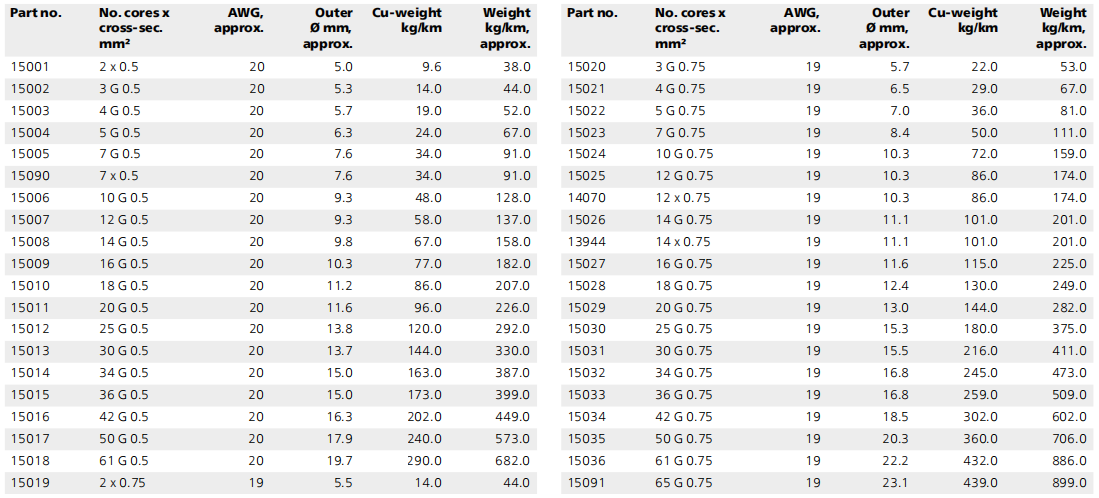
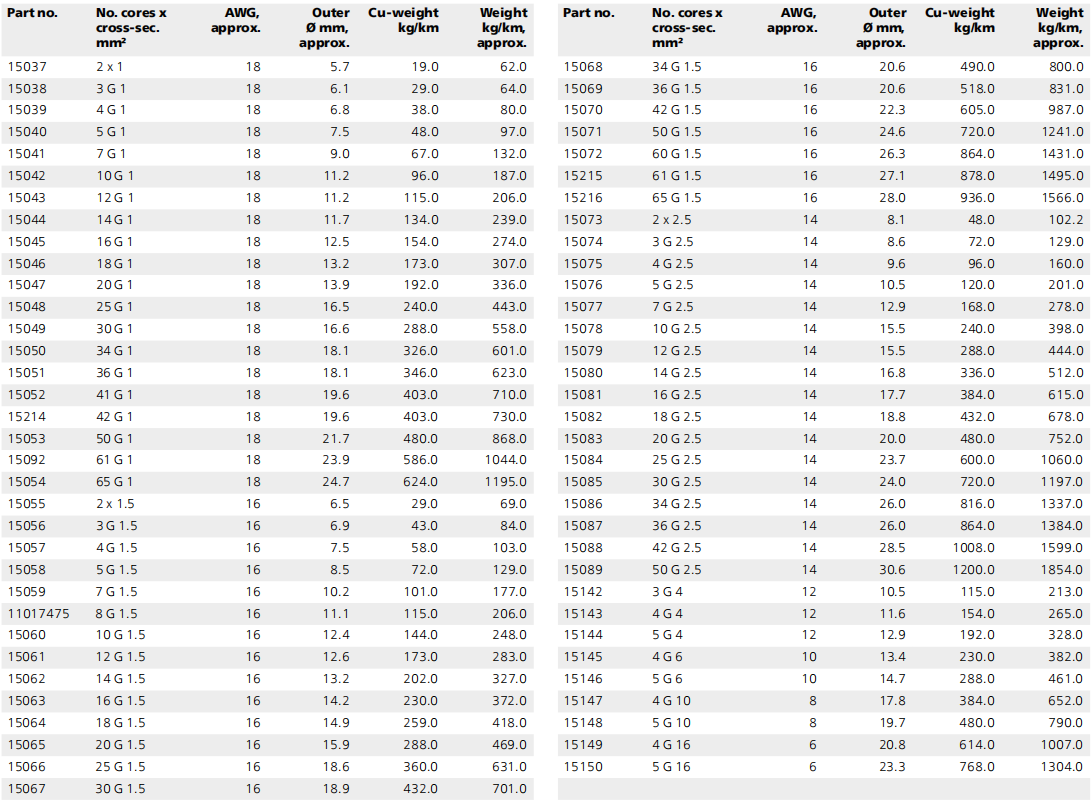
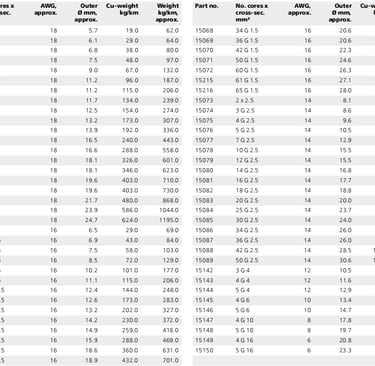
The comprehensive range of conductor configurations—from 2×0.5 mm² through 5G16 mm²—accommodates diverse application requirements within a single product family. Smaller cross-sections suit control and signal applications where numerous cores run to limit switches, sensors, and indicator lights. Larger conductors handle motor power, heating elements, and high-current loads. This variety simplifies specification and inventory management, as most applications find appropriate variants within the series.
Cost-effectiveness compared to specialized high-flex or continuous-flex cables makes the JZ-HF / OZ-HF series attractive for moderate-duty applications. While specialized cables designed for millions of cycles in demanding conditions command premium prices, many industrial applications operate intermittently or at moderate speeds where these PVC cables provide adequate service life at lower investment. The economic advantage becomes particularly significant when outfitting entire production facilities with hundreds or thousands of meters of cable.
The proven performance in drag chain applications—explicitly mentioned in the technical documentation—provides confidence based on extensive field experience. Manufacturers who certify cables as drag chain suitable have typically conducted accelerated life testing simulating years of operational cycles, validating the construction approach. This testing reduces the risk of premature failures that disrupt production and require emergency replacements.
Installation convenience stems from the cable's handling characteristics and standardized construction. The flexibility at room temperature facilitates routing through drag chains and around obstacles without requiring heat or specialized tools. The numbered core identification accelerates termination, particularly in multi-core variants with dozens of conductors. Compatibility with standard industrial connectors and terminal blocks eliminates the need for special termination hardware.
Conclusion: Reliable Motion Starts with the Right Cable
Selecting appropriate cables for moving machinery applications directly impacts equipment reliability, maintenance costs, and production uptime. The JZ-HF / OZ-HF PVC drag chain cable series delivers a well-engineered solution for indoor industrial automation, combining compliance with recognized standards, proven construction techniques, and practical features that simplify installation and operation.
The certification to DIN VDE and EN standards provides assurance of quality and safety, while the oil-resistant construction addresses common environmental challenges in manufacturing facilities. The range of available configurations supports applications from simple two-conductor connections through complex multi-core power and control systems. When installed within specified parameters—respecting bending radius limits, avoiding tensile stress, and operating within the temperature range—these cables deliver reliable performance throughout their service life.
For engineers and maintenance professionals specifying cables for new equipment or replacement applications, careful attention to application requirements ensures optimal cable selection. Consider movement patterns, environmental conditions, electrical loads, and expected service life when evaluating options. Consult manufacturer specifications and technical support resources to address unique application challenges or verify compatibility with specific operational requirements. Investment in appropriate cable selection, proper installation practices, and preventive maintenance schedules maximizes equipment availability and operational efficiency, supporting the productivity goals that drive modern manufacturing.
How to Reach Us
Get in Touch
SiteMap
Product Catalogue
Festoon Cable
Shore Power Cable


Scan to add us on WeChat