

MP-GC Three-Conductor Mine Power Feeder Cable 5kV with PVC Jacket: Comprehensive Guide to Underground Mining Power Distribution
MP-GC three-conductor mine power feeder cable with PVC jacket, rated 5kV, designed for underground mining power distribution systems. Features XLPE insulation, ground check and grounding conductors, and complies.
hongjing.Wang@Feichun
12/31/202511 min read
Overview of MP-GC Three-Conductor Mine Power Feeder Cable 5kV
The MP-GC three-conductor mine power feeder cable 5kV represents a critical component in modern mining power distribution systems, engineered specifically to meet the demanding requirements of underground and surface mining operations. This specialized cable design incorporates advanced materials and construction techniques to deliver reliable electrical power transmission in some of the most challenging industrial environments encountered worldwide.
Designed as a robust solution for medium-voltage applications, the MP-GC mine power feeder cable 5kV serves as the electrical backbone connecting various units within mine distribution networks. The designation "MP-GC" indicates Mine Power with Ground Check capability, a crucial safety feature that enables continuous monitoring of the grounding system integrity—an essential requirement in hazardous mining environments where equipment failures can have catastrophic consequences.
The cable's three-conductor configuration provides efficient power transmission while maintaining compact dimensions suitable for installation in confined underground spaces. The PVC jacket mining power feeder cable construction offers an optimal balance between mechanical protection, chemical resistance, and cost-effectiveness, making it a preferred choice for mining operators seeking dependable performance without excessive capital expenditure.
In contemporary mining operations, where continuous productivity depends on uninterrupted power supply, the selection of appropriate mine power distribution cable 5kV becomes a strategic decision affecting operational safety, maintenance costs, and regulatory compliance. The MP-GC cable addresses these concerns through its comprehensive design approach, which considers not only electrical performance but also the practical realities of mining installation and maintenance procedures.
Application and Use Cases
The underground mining power distribution cable 5kV finds extensive application throughout modern mining facilities, serving as the primary power transmission medium between surface substations and underground load centers. These cables typically connect portable substations to mining machinery, providing the electrical energy necessary for drilling equipment, conveyor systems, ventilation fans, pumping stations, and material handling devices operating at 5kV nominal voltage.
One of the most common applications involves the installation of mine power feeder cable for direct burial between distribution panels and mobile equipment. In longwall mining operations, for instance, these cables must withstand repeated relocation as mining faces advance, requiring exceptional mechanical strength and flexibility. The cable's construction accommodates these demands through its stranded copper conductor design and reinforced jacket system.
Surface mining applications also benefit from the 5kV mining cable PVC jacket configuration, particularly in open-pit operations where cables may be exposed to direct sunlight, temperature extremes, and occasional mechanical impact from heavy equipment traffic. The PVC outer sheath provides adequate protection against these environmental factors while maintaining the flexibility required for installation around obstacles and through cable trays or conduit systems.
Underground substation connections represent another critical application area where the MP-GC three-conductor mine power feeder cable 5kV excels. These installations typically involve permanent or semi-permanent cable routes running through dedicated cable galleries or attached to tunnel walls, requiring cables that can maintain performance over extended periods with minimal maintenance intervention. The cable's XLPE insulation system ensures long-term dielectric stability even in the damp conditions commonly encountered in underground mining environments.
Portable power distribution systems used in development headings and exploratory drilling operations rely heavily on the flexibility and durability of these specialized cables. As mining operations extend into new areas, power distribution must follow, often requiring rapid cable deployment and subsequent relocation. The mine power feeder cable's design facilitates these dynamic installation requirements while maintaining the electrical integrity necessary for safe equipment operation.
Standards and Compliance
Compliance with recognized industry standards constitutes a fundamental requirement for mining power cables, ensuring that products meet minimum safety and performance criteria established through decades of industry experience and engineering analysis. The MP-GC three-conductor mine power feeder cable 5kV adheres to multiple internationally recognized standards, providing mining operators with confidence in the cable's suitability for critical power distribution applications.
The primary standard governing this cable's construction is ICEA S-75-381/NEMA WC 58, which specifically addresses portable and power feeder cables for use in mines. This comprehensive standard establishes requirements for conductor construction, insulation materials, voltage ratings, thickness specifications, and testing protocols that ensure consistent quality across manufacturers. Compliance with ICEA S-75-381/NEMA WC 58 indicates that the cable has been designed and manufactured according to specifications developed specifically for mining applications, incorporating lessons learned from decades of field experience.
ASTM B-8 compliance governs the conductor construction, specifying requirements for stranded copper conductors including wire diameter, stranding configuration, and conductivity levels. This standard ensures that conductors possess adequate current-carrying capacity while maintaining the flexibility necessary for mining installations. The use of annealed copper per ASTM B-8 specifications guarantees optimal electrical conductivity and mechanical properties essential for reliable long-term performance.
For mining operations in Canada or projects requiring compliance with Canadian electrical codes, the cable meets CAN/CSA C22.2 No. 96 requirements. This Canadian standard addresses portable power cables for underground mining applications, establishing additional requirements for construction, testing, and performance that align with Canadian mining safety regulations. Dual compliance with both U.S. and Canadian standards provides flexibility for multinational mining companies operating facilities across North America.
These standards collectively ensure that the 5kV mine power feeder cable can withstand the unique challenges of mining environments, including exposure to moisture, mechanical stress, chemical contamination, and temperature variations, while maintaining electrical safety and operational reliability throughout its service life.
Construction and Design Features
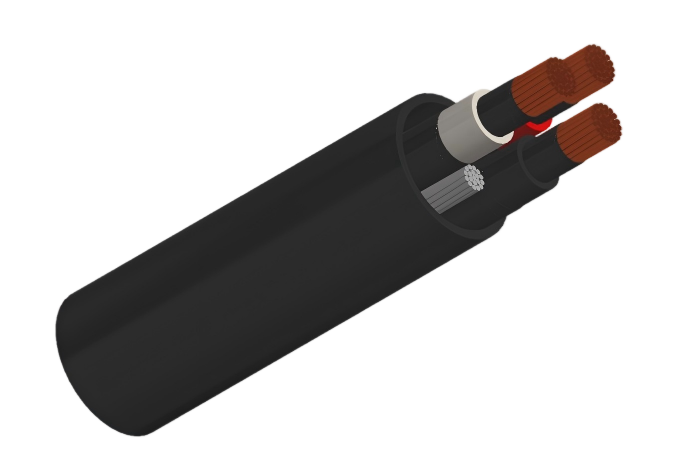
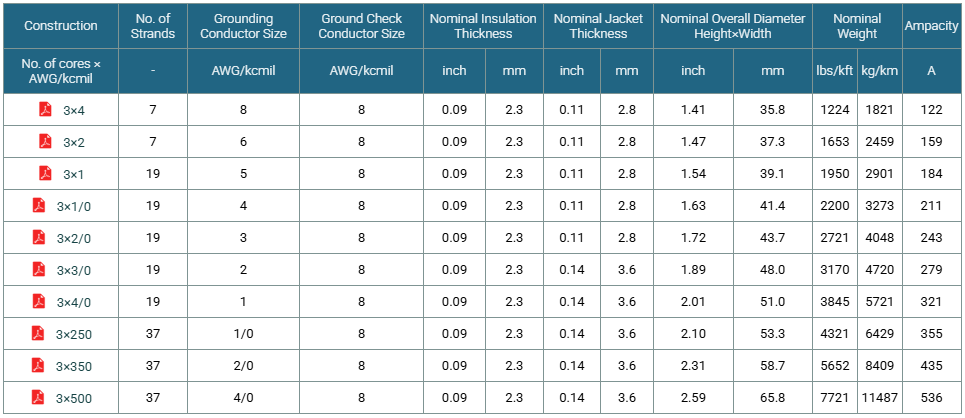
The construction of the MP-GC mine power feeder cable 5kV employs a multi-layer design approach, with each component serving specific electrical and mechanical functions essential to overall cable performance in demanding mining applications.
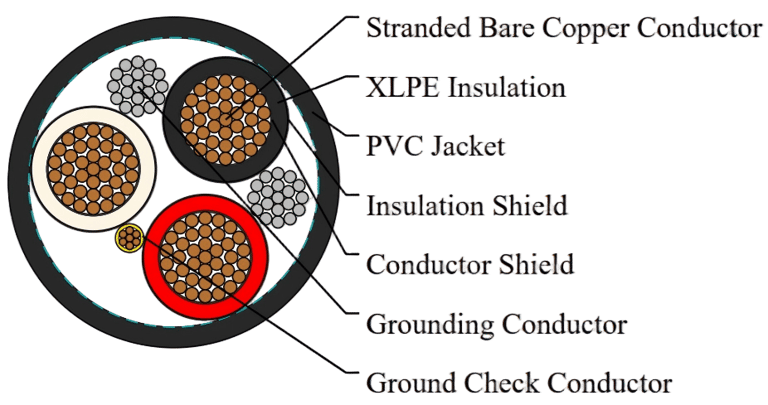
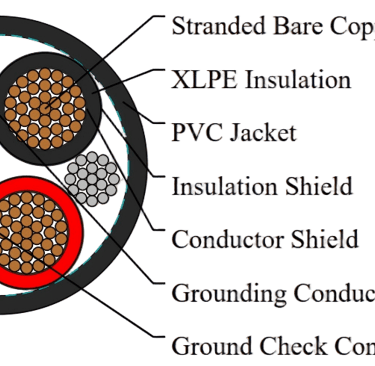
Conductors: The cable utilizes stranded annealed bare copper conductors conforming to ASTM B-8 specifications. Stranding provides enhanced flexibility compared to solid conductors, facilitating installation in confined spaces and around obstacles commonly encountered in underground mining environments. The annealing process ensures maximum conductivity while reducing conductor stiffness, allowing the cable to withstand repeated flexing during installation and service without conductor breakage. The bare copper construction eliminates concerns about coating deterioration that might compromise electrical connections at termination points.
Insulation System: Cross-linked polyethylene (XLPE) insulation provides the primary dielectric barrier between conductors, offering superior electrical performance and thermal stability compared to traditional thermoplastic compounds. The XLPE material exhibits excellent resistance to moisture penetration and maintains its dielectric properties across a wide temperature range, ensuring consistent performance in the variable conditions of mining operations. Each insulated conductor incorporates a semiconducting conductor shield applied over the conductor surface to ensure uniform voltage stress distribution across the insulation thickness, eliminating localized stress concentrations that could lead to premature failure.
Over the XLPE insulation, an insulation shield consisting of a semiconducting layer plus helically applied copper tape provides a defined outer surface for voltage termination and serves as a grounding plane for capacitive currents. This shield system is essential for medium-voltage cable performance, controlling the electric field distribution and facilitating proper cable termination using industry-standard accessories.
Grounding System: The MP-GC designation indicates the inclusion of both a ground check conductor and a grounding conductor, distinguishing this cable from standard mine power cables. The yellow polypropylene-insulated ground check conductor enables continuous monitoring of the grounding system integrity, allowing detection of ground conductor damage or disconnection before hazardous conditions develop. This monitoring capability represents a critical safety feature in underground mining, where ground faults can create life-threatening situations.
The tinned copper grounding conductor provides the primary fault current path, sized according to code requirements to safely carry fault currents until protective devices operate. Tinning protects the copper from corrosion in damp mining environments, ensuring long-term grounding system reliability.
Outer Jacket: The black PVC jacket provides mechanical protection against abrasion, impact, and chemical exposure while maintaining adequate flexibility for installation. PVC offers good resistance to oils, many chemicals, and moisture, making it suitable for the contaminated environments typical of mining operations. The black color provides UV resistance for cables that may be temporarily exposed to sunlight during storage or surface installation, while also offering heat resistance compared to lighter-colored materials.
Mechanical and Thermal Performance
Understanding the mechanical and thermal performance characteristics of the underground mining power distribution cable 5kV enables proper installation planning and ensures that the cable operates within its design parameters throughout its service life.
The minimum bending radius specification of 12 times the overall cable diameter (12×OD) represents a critical installation parameter that must be observed during cable pulling, routing, and termination. Exceeding this bending limit—attempting to bend the cable too sharply—can damage the conductor strands, crack the insulation, or compromise the shielding system, potentially leading to premature cable failure. In underground mining installations where space constraints may tempt installers to exceed bending limits, proper planning must ensure adequate clearances for cable routing that respects this minimum radius requirement.
The maximum conductor operating temperature of +90°C establishes the thermal limit for continuous cable operation under load. This temperature rating reflects the thermal endurance of the XLPE insulation system and ensures that the cable can carry its rated current continuously without degradation. Mining operators must ensure that cable sizing calculations account for installation conditions including ambient temperature, grouping with other cables, and burial depth to prevent conductor temperatures from exceeding this limit during normal operation.
These thermal characteristics enable the cable to deliver reliable performance in the elevated ambient temperatures often encountered in deep underground mining operations, where geothermal heating can raise tunnel temperatures significantly above surface conditions. The XLPE insulation's thermal stability ensures consistent electrical properties even as temperatures approach the maximum operating limit, maintaining dielectric strength and preventing premature aging.
The combination of mechanical flexibility and thermal performance makes the MP-GC cable suitable for both mobile installations subject to frequent relocation and fixed installations requiring long-term reliability with minimal maintenance intervention. The cable's ability to withstand the mechanical stresses of installation and the thermal demands of continuous operation contributes to extended service life and reduced total cost of ownership for mining power distribution systems.
Optional Jacket Materials and Customization
While the standard PVC jacket mining power feeder cable configuration addresses the majority of mining applications, certain operational environments or specific mine requirements may necessitate alternative jacket materials offering enhanced performance characteristics. Manufacturers typically offer several jacket options to accommodate diverse application needs.
CSP (Chlorosulfonated Polyethylene): CSP jackets provide superior resistance to ozone, weathering, and abrasion compared to standard PVC, making them ideal for cables that may be exposed to outdoor conditions or stored for extended periods before installation. The material's excellent flexibility at low temperatures suits mining operations in cold climates where standard PVC may become stiff and difficult to handle.
PCP (Polychloroprene/Neoprene): PCP offers enhanced oil and chemical resistance along with good flame resistance, suitable for areas where hydrocarbon contamination is prevalent, such as around diesel equipment or fuel storage areas. The material maintains flexibility across a wide temperature range while providing mechanical protection comparable to PVC.
NBR (Nitrile Butadiene Rubber): NBR jackets deliver exceptional oil and chemical resistance, particularly against petroleum-based products, making them the preferred choice for applications in close proximity to hydraulic equipment or fuel handling facilities. The rubber construction provides excellent abrasion resistance and flexibility, though at a higher cost than thermoplastic alternatives.
TPU (Thermoplastic Polyurethane): TPU jackets offer outstanding abrasion resistance and mechanical toughness while maintaining excellent low-temperature flexibility. These properties make TPU-jacketed cables ideal for mobile equipment applications where cables experience frequent flexing and contact with sharp edges or rough surfaces.
Customization options extend beyond jacket material selection to include conductor sizing, insulation thickness modifications for higher voltage ratings, armor layers for enhanced mechanical protection, and specialized marking schemes for project-specific identification requirements. Mining operators working with cable manufacturers can specify custom MP-GC mine power feeder cable 5kV configurations that precisely match their unique application requirements, local regulatory mandates, and operational preferences.


Typical Mining Applications and Advantages
The versatility of the 5kV mining cable PVC jacket design enables its deployment across virtually all mining power distribution scenarios, from permanent infrastructure installations to temporary power feeds for mobile equipment.
Mine Power Distribution Networks: The cable forms the backbone of medium-voltage distribution systems connecting surface substations to underground load centers, enabling efficient power transmission over extended distances with minimal voltage drop. The 5kV rating represents an optimal balance between transmission efficiency and equipment cost for most medium-sized mining operations.
Loader and Shuttle Car Applications: Mobile loading equipment requires flexible power cables capable of withstanding constant movement, occasional dragging across rough surfaces, and exposure to coal dust, rock particles, and moisture. The cable's construction addresses these demands through its stranded conductor design and protective jacket system.
Conveyor System Power Feeds: Belt conveyor installations stretching for miles through underground workings rely on feeder cables that can be installed once and provide decades of reliable service with minimal maintenance. The mine power feeder cable for direct burial configuration supports installation methods ranging from direct earth burial to mounting on cable trays or attachment to tunnel structures.
Pumping Stations: Underground water management systems operating high-capacity pumps require reliable power feeds capable of delivering consistent performance in continuously damp environments. The cable's moisture-resistant construction ensures electrical integrity even when partially submerged or exposed to constant high humidity.
Mobile Substation Connections: As mining operations advance, portable substations must be relocated periodically, necessitating power cables that can be disconnected, coiled, transported, and reinstalled multiple times without performance degradation. The cable's flexibility and robust construction enable these repeated handling cycles.
Key Advantages: The MP-GC three-conductor mine power feeder cable 5kV offers mining operators several compelling benefits that justify its selection over alternative cable designs. The integrated ground check system provides continuous monitoring capability that enhances personnel safety and enables predictive maintenance strategies. Compliance with multiple international standards facilitates equipment specification and procurement across multinational mining operations while ensuring regulatory compliance in diverse jurisdictions.
The cost-effectiveness of the 5kV mine power feeder cable stems from its balanced design approach, providing necessary performance characteristics without over-engineering that would increase costs without corresponding operational benefits. The cable's proven reliability in harsh mining environments reduces unplanned downtime and maintenance costs, contributing to improved operational continuity and enhanced productivity.
Common Cable Issues and Solutions
Problem: Premature Cable Failure Due to Mechanical Damage
Mining operators occasionally encounter premature cable failures attributed to mechanical damage from equipment impact, excessive bending, or abrasion against sharp surfaces. These failures typically manifest as insulation breaches leading to ground faults or short circuits.
Solution: Proper cable routing planning represents the primary defense against mechanical damage. Cables should be installed in dedicated cable galleries, protective conduits, or elevated on cable trays wherever possible to isolate them from mobile equipment traffic. Where burial is necessary, adequate depth (minimum 18 inches with warning tape) and route marking prevent excavation damage. Installation procedures must strictly observe minimum bending radius requirements, using appropriate cable supports and guides during pulling operations. In high-traffic areas, supplementary mechanical protection such as rigid conduit or steel wire armor can be specified during cable procurement.
Problem: Ground Check Conductor False Alarms or Monitoring System Failures
The ground check monitoring system may generate false alarms due to moisture infiltration, connection deterioration, or electrical noise, leading to unnecessary production interruptions. Conversely, monitoring system failures may prevent detection of actual ground conductor damage.
Solution: Regular testing and maintenance of the ground check circuit ensures reliable operation. Termination practices must employ proper gland sealing to prevent moisture entry at cable ends, using heat-shrink or cold-applied sealing systems appropriate for mining environments. Ground check conductor connections should incorporate corrosion-resistant terminals with adequate mechanical strain relief. Mining operations should establish baseline ground check resistance values and monitor trends over time, enabling identification of gradual deterioration before complete failure occurs. Installing isolation transformers or filters can minimize electrical noise interference in the monitoring circuit.
Problem: Insulation Degradation in High-Temperature Applications
Cables installed near heat sources or in areas with elevated ambient temperatures may experience accelerated insulation aging, reducing service life and increasing failure risk.
Solution: Proper cable sizing calculations must account for actual installation conditions including derating factors for elevated ambient temperature, grouping with other cables, and thermal resistivity of burial media. Where ambient temperatures exceed standard design assumptions, cable specifications should incorporate higher-temperature insulation grades or alternative insulation materials. Heat sources such as compressed air lines or steam pipes should be separated from cable routes by adequate distance or thermal barriers. Ventilation improvements can reduce ambient temperatures in confined spaces, benefiting both cable performance and personnel comfort.
Problem: Water Ingress and Moisture-Related Failures
Underground mining environments inevitably expose cables to moisture, potentially leading to insulation degradation, corrosion of metallic components, and tracking failures at terminations.
Solution: While the cable design incorporates moisture-resistant materials, proper termination practices remain essential. All cable terminations must employ suitable sealing and moisture barrier systems appropriate for the voltage level and environment. Periodically draining water from low points in cable routes prevents continuous submersion. For installations in particularly wet areas, alternative jacket materials with superior moisture resistance (such as CSP or PCP) should be considered during specification. Installing cables with a slight upward slope toward termination points facilitates moisture drainage rather than accumulation at connections.
The MP-GC three-conductor mine power feeder cable 5kV with PVC jacket represents a thoroughly engineered solution for mining power distribution challenges, combining proven materials, comprehensive safety features, and practical design characteristics that address the realities of mining operations. Proper selection, installation, and maintenance of these cables ensures reliable electrical power delivery that supports safe and productive mining operations for years of service life.
How to Reach Us
Get in Touch
SiteMap
Product Catalogue
Festoon Cable
Shore Power Cable



Scan to add us on WeChat