

MTW Wire (Machine Tool Wire): The Complete Guide to Specs, Standards, and Industrial Applications
Explore the essential guide to MTW Wire (Machine Tool Wire). Learn about its 600V voltage rating, superior flexibility for machinery, and NFPA 79 compliance. Discover how MTW differs from THHN, its wet/dry temperature ratings, and why it is the top choice for industrial control panels and robotics.
hongjing.Wang@Feichun
12/24/20259 min read
Introduction
In the demanding world of industrial automation and manufacturing, reliable electrical connections form the backbone of operational efficiency. At the heart of these critical systems lies MTW Wire—Machine Tool Wire—a specialized conductor engineered specifically for the internal wiring of industrial machinery, control panels, and manufacturing equipment. Unlike standard building wire designed for static installations, MTW wire delivers the exceptional flexibility and durability required in dynamic industrial environments where constant movement, vibration, and exposure to harsh conditions are the norm.
MTW wire represents a purpose-built solution that bridges the gap between basic appliance wiring and the rigorous demands of modern automated systems. Its superior flexibility for industrial machinery, combined with robust insulation and compliance with stringent safety standards, makes it the preferred choice for engineers and technicians designing control systems for CNC equipment, robotics, conveyor systems, and automated production lines.
Technical Specifications & Features
Voltage and Temperature Ratings
MTW wire specifications center on a 600V voltage rating, making it suitable for the majority of industrial control and power distribution applications within machinery. The temperature performance varies based on environmental conditions: in dry locations, MTW wire maintains its integrity at temperatures up to 90°C, while in wet environments, the rating reduces to 60°C. This dual-temperature capability ensures reliable performance across diverse installation scenarios, from climate-controlled manufacturing facilities to areas where moisture or condensation may be present.
Construction and Insulation Material
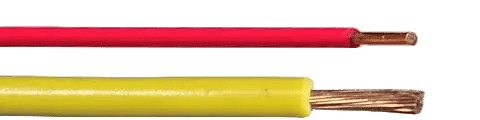
The construction of MTW wire employs PVC (Polyvinyl Chloride) thermoplastic insulation, which provides an optimal balance of mechanical protection, electrical insulation, and cost-effectiveness. The PVC insulation is formulated to meet stringent flame-retardant requirements, adhering to FT1 and UL VW-1 standards. This flame retardance is critical in industrial settings where electrical faults could potentially ignite surrounding materials or propagate fire through cable pathways.
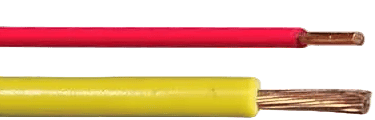
The conductor itself consists of finely stranded copper, typically featuring higher strand counts than comparable building wire. This construction methodology directly contributes to the wire's exceptional flexibility, allowing it to withstand repeated bending cycles without conductor breakage or insulation cracking—a common failure mode in rigid conductors subjected to mechanical stress.
Durability Characteristics
Industrial environments present unique challenges that MTW wire is specifically designed to overcome. The oil-resistant machine tool wire formulation ensures that exposure to hydraulic fluids, lubricants, and coolants commonly found in manufacturing equipment does not degrade the insulation integrity over time. This resistance extends the operational lifespan of installations and reduces maintenance requirements.
Moisture resistance complements the oil resistance, enabling MTW wire to function reliably in both wet and dry temperature ratings without premature degradation. The combination of these protective properties makes MTW wire particularly suitable for installations in machine tool assemblies where exposure to cutting fluids, wash-down procedures, or high-humidity environments is routine.
Flexibility and Installation Advantages
The superior flexibility of MTW wire stands as one of its most valuable attributes for industrial control panels. High strand count construction allows the wire to navigate tight routing paths, make sharp bends without damage, and accommodate the constant flexing associated with moving machinery parts. This flexibility translates directly into easier installation, reduced labor costs, and improved reliability in applications involving robotics, articulated arms, and sliding components.
In confined spaces such as control cabinets or junction boxes, the ability to route flexible wire efficiently means cleaner installations with better airflow and simplified troubleshooting access. The wire's pliability also reduces mechanical stress on terminations, contributing to more secure connections at terminal blocks, switches, and motor leads.
Applications: Where to Use MTW Wire
Industrial Machinery Internal Wiring
Machine tool assemblies represent the primary application domain for MTW wire. CNC machines, lathes, milling equipment, and grinding systems all require extensive internal wiring to connect power supplies, motors, sensors, and control interfaces. The combination of flexibility and oil resistance makes MTW wire ideal for these environments, where metalworking fluids and continuous vibration would quickly degrade lesser wire types.
Robotics applications particularly benefit from MTW wire's mechanical properties. Industrial robots feature articulated joints and moving arms that subject internal wiring to constant flexing through millions of motion cycles. The UL 1063 and NFPA 79 compliant wire standards ensure that MTW wire meets the durability requirements for these demanding applications.
Control Systems and Automation
Automated control panels serve as the nerve centers of modern manufacturing facilities, coordinating complex sequences of operations across multiple machines and processes. MTW wire provides the interconnections between programmable logic controllers (PLCs), variable frequency drives (VFDs), relays, contactors, and field devices. Its 600V voltage rating accommodates both control circuits operating at 24V DC or 120V AC and power distribution circuits feeding motor loads.
Switchboards and motor control centers utilize MTW wire for internal bus connections, control wiring, and connections to protective devices. The flame-retardant properties become particularly important in these concentrated electrical environments where fault currents and arc flash potential necessitate materials that will not contribute to fire propagation.
Dynamic Equipment Installations
Conveyor systems exemplify applications where MTW wire's flexibility and durability prove essential. These systems feature moving belts, chains, or rollers spanning considerable distances with multiple drive motors, sensors, and control points along their length. Cable carriers and festoon systems that supply power and control signals to moving sections benefit from MTW wire's ability to withstand repetitive bending without failure.
Motor controls in manufacturing equipment frequently involve situations where wiring must route through hinged panels, rotating assemblies, or sliding carriages. The flexible wire for industrial machinery applications ensures reliable electrical continuity even as mechanical components move through their operating ranges thousands of times daily.


Comparative Analysis: MTW vs. Other Wires
MTW vs. THHN Wire
Understanding the distinction between MTW and THHN wire is essential for proper wire selection. THHN (Thermoplastic High Heat-resistant Nylon-coated) wire is optimized for building wiring applications where conductors are pulled through conduit and then remain stationary. The nylon outer coating provides excellent abrasion resistance during installation but results in a stiffer conductor less suitable for constant motion.
MTW wire, in contrast, prioritizes flexibility through higher strand counts and specialized insulation compounds. While THHN excels in static building conduit installations, MTW's design specifically addresses the requirements outlined in NFPA 79, the Electrical Standard for Industrial Machinery. This standard emphasizes conductor durability under mechanical stress, appropriate ampacity derating for bundled conductors in machinery, and resistance to industrial contaminants.
The temperature ratings also differ in practical application. THHN offers a higher dry rating (90°C) but lacks the specific approvals for machinery applications. MTW provides equivalent thermal performance while adding the machinery-specific certifications required by inspection authorities and insurance providers.
MTW vs. AWM (Appliance Wiring Material)
AWM designates Appliance Wiring Material, a broad category covering conductors used in appliances and equipment. Significant overlap exists between MTW and AWM specifications, as both target flexible internal wiring applications. However, MTW carries the specific UL 1063 certification and NFPA 79 compliance that AWM alone may not possess.
The practical advantage of dual-rated or triple-rated wire products (MTW/AWM/THWN-2) lies in inventory reduction and application flexibility. A conductor bearing multiple certifications can legally fulfill requirements across different applications, simplifying procurement and reducing the variety of wire types that facilities must stock. Manufacturers producing such multi-rated products essentially create a universal conductor suitable for appliance, machinery, and even some building applications within appropriate voltage and temperature limits.
Standards and Compliance
Regulatory Framework
MTW wire operates within a comprehensive regulatory framework designed to ensure electrical safety and performance reliability. The primary standard governing machine tool wire is UL 1063, which specifies construction requirements, testing protocols, and performance criteria. Products listed to UL 1063 have undergone rigorous evaluation including voltage withstand tests, flame tests, cold bend tests, and heat aging tests that simulate long-term operating conditions.
The National Electrical Code (NEC) recognizes MTW wire for machinery applications, providing installation guidelines regarding ampacity, bundling derating factors, and appropriate uses. Compliance with NEC requirements ensures that installations pass inspection by authorities having jurisdiction and meet insurance underwriter expectations.
For Canadian markets, CSA TEW (Thermoplastic Equipment Wire) serves as the equivalent standard to UL's MTW designation. Products certified to both standards carry dual markings, facilitating cross-border trade and installation in multinational facilities operating under both US and Canadian codes.
Safety and Environmental Standards
NFPA 79 represents the comprehensive electrical standard for industrial machinery, covering everything from conductor selection to grounding methods and short-circuit protection. MTW wire's specific recognition under NFPA 79 provides assurance that it meets the unique requirements of industrial machinery environments, including resistance to industrial oils, coolants, and the mechanical stresses associated with moving equipment.
RoHS (Restriction of Hazardous Substances) compliance ensures that MTW wire production avoids or minimizes the use of lead, mercury, cadmium, hexavalent chromium, and other substances of concern. This environmental compliance becomes increasingly important as manufacturers pursue sustainability goals and seek to meet international environmental regulations for exported equipment.
Common Cable Problems and Solutions
Problem 1: Insulation Cracking in Flexing Applications
Issue: Standard building wire used inappropriately in machinery applications often develops insulation cracks after repeated flexing cycles, leading to short circuits or ground faults.
Solution: Specify MTW wire with its higher strand count and flexible insulation specifically engineered for dynamic applications. For extreme flex applications, consider even more specialized cable types like continuous flex or robot cable, which feature even finer stranding and enhanced insulation systems.
Problem 2: Oil and Coolant Degradation
Issue: Exposure to cutting fluids, hydraulic oils, and coolants can cause standard PVC insulations to swell, soften, or crack, compromising electrical safety.
Solution: MTW wire's industrial-grade PVC formulation resists common industrial fluids. However, for applications involving particularly aggressive chemicals, consult the wire manufacturer's chemical compatibility charts and consider specialized compounds like chlorinated polyethylene (CPE) or chemically resistant thermoplastic elastomers.
Problem 3: Inadequate Ampacity in Bundled Installations
Issue: Machine control panels often contain dozens of conductors bundled together in wire ducts or cable harnesses. The resulting heat buildup can exceed individual conductor temperature ratings even when each wire's ampacity appears adequate for its load.
Solution: Apply NEC ampacity derating factors based on the number of current-carrying conductors in a bundle. For heavily populated panels, consider segregating power and control circuits, using ventilated wire duct, or oversizing conductors to maintain temperatures within limits. The 90°C rating of MTW wire provides some margin compared to 60°C or 75°C rated alternatives.
Problem 4: Termination Failures
Issue: Vibration in machinery causes wire terminations to loosen over time, leading to high-resistance connections, overheating, and potential arc faults.
Solution: Use appropriate termination methods for stranded conductors, including ferrules for European-style terminal blocks or properly sized ring terminals with star washers for screw terminations. Apply thread-locking compound or use lock washers on terminal screws. Perform periodic thermal inspections using infrared cameras to identify developing hot spots before they cause failures.
Problem 5: Incorrect Gauge Selection
Issue: Using oversized conductors wastes money and fills wire ducts unnecessarily, while undersized conductors create fire and equipment damage risks.
Solution: MTW wire is available in gauge sizes from 22 AWG for low-current control circuits up to 500 MCM for high-current power distribution within machinery. Consult NEC tables for appropriate conductor sizing based on load current, voltage drop limitations, and applicable derating factors. For motor circuits, ensure compliance with motor branch circuit conductor sizing rules (typically 125% of motor full-load current).

Frequently Asked Questions
What gauge sizes are available for MTW wire?
MTW wire is manufactured in sizes ranging from 22 AWG for light-duty control applications to 500 MCM for heavy-duty power distribution. Common sizes for control circuits include 18, 16, and 14 AWG, while power circuits typically use 12, 10, 8, and 6 AWG. Larger sizes serve as feeders and bus connections in motor control centers.
Can MTW wire be used in wet environments?
Yes, MTW wire carries a wet location rating of 60°C when properly installed. This rating applies to areas subject to moisture, condensation, or periodic wash-down. However, MTW wire is not suitable for direct burial or immersion applications, which require conductors with water-resistant or waterproof designations.
Is MTW wire interchangeable with THHN in conduit?
While MTW wire can physically be installed in conduit, and some dual-rated products specifically include THHN or THWN-2 ratings, standard MTW wire alone may not meet all requirements for building wiring applications. Conversely, THHN should not be considered equivalent to MTW for machinery applications covered by NFPA 79. When a single wire must serve both purposes, specify triple-rated products marked MTW/THWN-2/AWM.
Does the color coding of MTW wire follow standard conventions?
Yes, MTW wire is available in standard color codes including black, red, blue, white, green, and other colors for circuit identification. Follow NEC requirements for grounded conductors (white or gray), grounding conductors (green or bare), and ungrounded conductors (any color except those reserved for grounded or grounding conductors).
Conclusion
MTW wire stands as the industry standard for reliable internal wiring in industrial machinery, automated control systems, and manufacturing equipment. Its combination of 600V voltage rating, superior flexibility, oil resistance, and compliance with UL 1063 and NFPA 79 standards makes it uniquely suited to the demanding conditions found in modern industrial environments.
The choice between MTW wire and alternatives like THHN or AWM depends on specific application requirements, with MTW excelling in scenarios involving constant flexing, exposure to industrial contaminants, and compliance with machinery-specific electrical codes. For many installations, dual-rated or triple-rated wire products offer the versatility to meet multiple standards while simplifying inventory management.
When designing or maintaining industrial electrical systems, select the appropriate gauge size based on load requirements and apply proper derating factors for bundled installations. Consider environmental conditions including temperature extremes, moisture exposure, and chemical contact. Use proper termination techniques to ensure long-term connection reliability.
By understanding MTW wire's technical characteristics, appropriate applications, and compliance with safety standards, engineers and technicians can design electrical systems that deliver reliable performance throughout the operational life of industrial equipment. Whether specifying wire for new machinery installations or troubleshooting existing systems, MTW wire provides the proven performance that industrial applications demand.
How to Reach Us
Get in Touch
SiteMap
Product Catalogue
Festoon Cable
Shore Power Cable




Scan to add us on WeChat