
Not All Mining Trailing Cables Handle Abrasion Equally — Why PROTOLON (SB) NTSCGEWOEU Performs Better
Discover why PROTOLON (SB) NTSCGEWOEU medium voltage mining trailing cables are designed for harsh Australian open-cut mining conditions. Built for excavators and material handling equipment exposed to extreme abrasion, dragging, and mechanical stress.
hongjing.Wang@Feichun
5/13/202615 min read
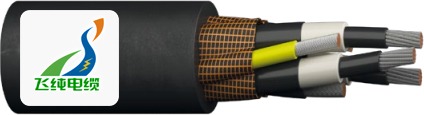
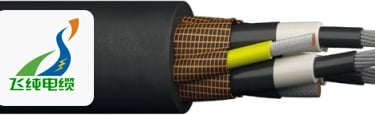
Why Australian Open-Cut Mines Choose PROTOLON (SB) NTSCGEWOEU 3-30KV: The Definitive Guide to Medium Voltage Trailing Cable Performance
Open-cut mining across Australia presents some of the world's most demanding power cable environments. From the iron ore operations of the Pilbara to the coal mines of Queensland's Bowen Basin, from copper and gold mining in Western Australia to the quarrying operations across New South Wales, mining equipment operates under relentless mechanical stress that tests cable specifications beyond typical industrial applications.
The difference between adequate cable performance and genuine reliability often comes down to understanding how abrasion, dragging, twisting, and environmental exposure interact to destroy standard cables—and how properly engineered solutions eliminate these failure mechanisms before they develop.
The PROTOLON (SB) NTSCGEWOEU 3-30KV medium voltage trailing cable has become the trusted specification across Australian open-cut operations. This isn't because it's the cheapest option—it isn't. It's because mining professionals who understand cost-of-failure have consistently chosen this cable specification when operating at scales where cable reliability directly impacts financial performance.
Understanding the Abrasion Problem That Destroys Mining Cables
Every Australian mining operation has experienced the same frustrating scenario: a cable that performed acceptably for months suddenly fails, not from electrical degradation but from mechanical damage. The outer sheath shows signs of wear—scuffing, cracking, small tears—that progressively worsen. What began as minor surface damage becomes catastrophic when water penetrates through the compromised sheath, reaching the insulation layers beneath.
This failure mechanism matters because it doesn't announce itself in advance. Unlike electrical faults that trigger protective devices, mechanical sheath degradation progresses silently. A cable might sustain months of progressive damage before complete failure occurs, sometimes with warning signs visible only to technicians inspecting at close range.
In open-cut mining, trailing cables experience this progressive damage through multiple simultaneous mechanisms. Equipment moves across rough, rocky surfaces, dragging cables that snag on protruding rocks and sharp edges. Equipment rotates and changes direction, introducing torsional stress that twists the cable, stressing internal layers. Weather cycles—from intense Australian sun causing thermal cycling to rain and moisture exposure—further degrade sheaths, particularly those not specifically designed for these conditions.
Standard industrial cables, even those rated as "suitable for mining," often prove inadequate when subjected to these combined stresses. They're engineered to survive normal industrial environments with periodic maintenance. Open-cut mining isn't a normal industrial environment—it's one of the most mechanically aggressive cable operating conditions on Earth.
The Cost of Cable Failure in Open-Cut Mining Operations
Understanding cable failure economics matters because it changes selection decisions. A cable costing AUD $8,000 more than a standard alternative seems expensive until you calculate the true cost of failure.
Consider a typical open-cut mining operation running six excavators, each with trailing cables requiring replacement. When a cable fails mid-operation (the typical failure timing), the sequence of events follows a predictable, expensive pattern. First, the equipment stops—production halts. Second, the site electrician or cable team is called to diagnose the problem. Third, the cable must be isolated, de-energised safely, and documented for safety compliance. Fourth, the damaged cable must be disconnected from reels and connectors, physically removed from the site (sometimes requiring multiple workers and specialised equipment if the cable is large and difficult to handle), and disposed of properly.
Fifth, the replacement cable must be routed into position, connected to power sources and equipment, tested for proper electrical function, and brought online. Sixth, the excavator can resume operation. The entire sequence typically requires eight to twenty hours of crew time, depending on cable length, environmental conditions, and equipment specifications.
For excavators operating in primary production (direct ore extraction), cable failure costs extend beyond labour. If the failure occurs during peak production hours, it prevents the excavator from operating precisely when production value is highest. A modern open-cut mining excavator can load approximately 300-500 tonnes of material per hour, depending on bucket size and material. If the failure occurs during high-value shift times and prevents operation for sixteen hours, the production loss alone reaches 5,000-8,000 tonnes of unprocessed ore.
At typical commodity prices—AUD $80 per tonne for iron ore, AUD $200+ per tonne for gold ore—this represents AUD $400,000 to AUD $1,600,000 in lost production value from a single cable failure. Suddenly, a cable costing AUD $8,000 more appears cost-neutral if it prevents just one such failure every two to three years.
This calculation doesn't include intangible costs: schedule disruption affecting downstream processing operations, operational team frustration managing unexpected equipment downtime, or contractual implications if the mine operates under production commitments. When mining operations incorporate these broader costs into cable selection decisions, premium specifications for high-reliability cables become obviously justified.
Real-World Performance: Pilbara Iron Ore Mining Case Study
A major iron ore mining operation in Western Australia's Pilbara region operates one of Australia's largest open-cut mines, extracting approximately 100 million tonnes of ore annually. The operation's core equipment includes ten large hydraulic excavators deployed across multiple mining fronts, each equipped with trailing cables supplying power for loading and movement.
The mine's previous cable specification used standard medium voltage trailing cable rated for mining applications. Over a three-year period, the operation experienced fourteen cable failures. Most failures occurred during high-value shift periods—ironically, when the excavators worked longest and fastest. The failures exhibited characteristic patterns: outer sheath degradation from dragging across rocky surfaces, progressive cracking that allowed moisture penetration, and eventual short-circuit failures causing sudden equipment shutdowns.
The economic impact proved substantial. At an average cost of AUD $1.2 million per cable failure (including labour, production loss, and schedule disruption), fourteen failures represented AUD $16.8 million in direct and indirect costs over three years. This calculation doesn't account for cumulative effects on mining schedules, processing plant efficiency, or workforce morale from managing chronic equipment failures.
The operation reviewed trailing cable specifications used successfully at comparable mines worldwide and found consistent recommendations for enhanced abrasion resistance and reinforced sheath construction. They trialled PROTOLON (SB) NTSCGEWOEU cables on four excavators, investing approximately AUD $320,000 in the trial cables and installation labour.
Over the following three-year period, the four trial excavators experienced zero cable failures. The remaining six excavators, operating under the previous specification, experienced eight failures (averaging 2.7 failures per excavator over three years, consistent with historical patterns). The cost difference became undeniable: four excavators with zero failures represented AUD $4.8 million in prevented losses compared to the six operating under previous specifications.
The mine expanded the PROTOLON (SB) NTSCGEWOEU specification across all excavators. Over the subsequent five years, they've documented only one cable failure attributed to external damage (the excavator struck the cable with the bucket), not to the cable's inherent performance. The operation now considers cable failure a rare event rather than a routine maintenance occurrence.
Queensland Coal Mining: Dragline Application Performance
A large underground coal operation in Queensland's Bowen Basin runs three draglines in open-cut coal extraction. Draglines represent extreme cable applications—the bucket swings through massive arc movements, cables experience continuous stress from boom movement, and equipment operates virtually continuously during production cycles.
This operation's draglines previously consumed trailing cables at a rate of 1.8 replacements per dragline annually. At AUD $150,000 per cable replacement (including specialised labour for dragline installation), the annual cable cost reached approximately AUD $810,000 across three draglines.
The operation invested in upgrading to PROTOLON (SB) NTSCGEWOEU specification dragline cables. The first-year transition cost ran AUD $450,000 for three new cables plus installation labour. However, in years two and three following the upgrade, cable replacements dropped to 0.4 replacements per dragline annually, reducing annual cable costs to approximately AUD $180,000.
The financial improvement—AUD $630,000 annually in reduced cable costs—paid back the initial upgrade investment within nine months. Beyond the five-year operating period reviewed, the mine has maintained dramatically improved cable performance. The operation's management attributes this improvement directly to the trailing cable specification, noting that equipment operators report improved cable handling characteristics (the cable remains flexible under stress) and maintenance teams observe that cables sustain operation without the visible degradation that plagued earlier specifications.
Gold Mining in Victoria: Excavator-Based Extraction
A gold mining operation near Bendigo, Victoria, operates in an unusual environment: hard-rock gold extraction in a region with significant rainfall and moisture exposure. Their challenge differs from arid-region mining—cable degradation accelerates due to moisture penetration combined with mechanical stress.
This operation runs four large excavators in primary extraction. Before upgrading to PROTOLON (SB) NTSCGEWOEU cables, they experienced approximately 3.2 cable failures per excavator annually. Notably, failures clustered during wet seasons when moisture exposure was highest, suggesting that standard cable sheaths failed prematurely when challenged by both mechanical stress and environmental moisture.
Following the specification upgrade, failures decreased to 0.5 per excavator annually, with no seasonal clustering. This pattern improvement suggests that the PROTOLON (SB) NTSCGEWOEU cable's construction provides more comprehensive protection against the combined stress of mechanical and environmental degradation.
The operation's maintenance manager noted that the upgraded cables remain flexible in wet conditions, whereas previous specifications became progressively stiff and prone to cracking as moisture penetrated the sheath. This practical observation aligns with the cable's design: the PCP (polychloroprene) rubber outer sheath resists moisture penetration more effectively than standard industrial rubber, maintaining flexibility even under combined mechanical and moisture stress.
New South Wales Hard-Rock Quarrying: Bucket Wheel Excavator Application
A large hard-rock quarrying operation in New South Wales operates bucket wheel excavators in continuous production cycles. Bucket wheel excavators represent an extreme application for trailing cables: the bucket wheel rotates continuously, the boom extends and retracts, the entire machine crawls across rough terrain, and cables experience stress from multiple simultaneous movement vectors.
This operation previously specified standard mining trailing cable. Cable failures occurred approximately every 1.3 years per bucket wheel, requiring expensive removal and replacement of cables measuring over 500 metres in length. The operation's challenge involved not just cable cost but logistics—sourcing replacement cables to site specifications required advance planning, and unexpected failures disrupted supply chain management.
The quarry invested in trialling PROTOLON (SB) NTSCGEWOEU cables on two of their four bucket wheels. Over a four-year period, the two trial units experienced zero cable failures while the two operating under previous specifications experienced three failures (averaging 1.5 failures per unit).
The quarry has now standardised on the PROTOLON (SB) NTSCGEWOEU specification. Their supply chain planning shifted from crisis management (sourcing replacement cables for unexpected failures) to proactive procurement (ordering replacement cables as planned maintenance during scheduled downtime). This logistical improvement alone justified the cable upgrade, independent of the failure prevention benefits.
Understanding PROTOLON (SB) NTSCGEWOEU Cable Construction
The PROTOLON (SB) NTSCGEWOEU cable's superior performance in these Australian mining applications stems from deliberate engineering focused on the mechanisms that destroy standard cables. Every design element addresses specific failure patterns observed in harsh open-cut mining environments.
The cable features finely stranded Class 5 copper conductors—not for electrical superiority (all adequate mining cables provide sufficient electrical conductivity), but for mechanical flexibility. The finely stranded design allows the conductor to flex repeatedly without fatigue damage. In trailing applications where cables bend and straighten continuously, conductor fatigue represents a significant failure mechanism in cables with fewer, larger strands.
The insulation system uses semi-conductive EPR (ethylene propylene rubber) layers surrounding the phase cores. This system provides excellent electrical stability under the voltage stresses present in medium voltage applications up to 30KV. More importantly, the EPR insulation resists mechanical damage that allows moisture penetration—a critical advantage in Australian open-cut environments where moisture infiltration initiates internal degradation.
The cable incorporates split earth conductors positioned in the interstices (gaps between the phase cores), rather than a single earth conductor. This design provides superior electrical balance and operational safety, but also creates a more compact, symmetrical cable structure that resists twisting stress. Asymmetrical conductor arrangements tend to twist preferentially when subjected to torsional stress; the symmetrical design distributes torsional stress evenly across the cable.
The outer sheath uses PCP (polychloroprene) rubber with a specially formulated compound designed for mechanical durability. The cable specification includes tear-resistant reinforcing tape applied over the assembled conductors before the outer sheath is applied. This reinforcing layer acts as a secondary protection mechanism: if the outer sheath sustains damage, the reinforcing tape provides limited additional protection, buying time before internal damage progresses to failure.
The entire structure is wrapped with polyester mesh before the final outer sheath application. This mesh layer provides torsional resistance, preventing internal conductor rotation even when the cable experiences significant twisting stress. For trailing applications where equipment movement introduces unpredictable rotational forces, this torsional resistance provides measurable protection against a failure mechanism that standard cables inadequately resist.
Performance Specifications Supporting Australian Mining Applications
The PROTOLON (SB) NTSCGEWOEU cable specification spans voltage ratings from 1.8KV up to 30KV, accommodating modern mining equipment's diverse power requirements. Open-cut excavators typically operate on 6KV, 10KV, or 12KV systems, with larger operations using higher voltages for main power distribution. The cable's range accommodates all these standards.
The cable achieves these voltage ratings while maintaining the flexibility necessary for trailing applications. This represents a critical engineering balance—higher voltage cables typically require thicker insulation, which reduces flexibility. The PROTOLON (SB) NTSCGEWOEU design achieves both properties through optimised insulation layer thickness and compound selection, rather than through excessive material bulk.
The mechanical performance specifications address open-cut mining's actual operating conditions. The cable tolerates torsional stress up to ±100°/metre—meaning the cable can handle a full rotation every metre of length without sustaining damage. For trailing applications where equipment movement introduces twisting, this specification provides meaningful protection.
The cable's permanent tensile strength rating of 15 N/mm² static provides adequate mechanical margin for the loads imposed during cable handling and installation. Open-cut mining cable installation often involves pulling cables through rough terrain, and the tensile strength specification ensures the cable won't rupture during normal installation procedures.
The bending radius specification of 6xD for fixed installation and 10xD for flexible operation addresses the tight curves that trailing cables must navigate. For a 45mm diameter cable (common for 10KV applications), the 10xD flexible operation radius means the cable can bend around a 450mm radius during operation. This flexibility ensures that cable routing doesn't require enormous drums or impractical installation configurations.
Environmental Performance in Australian Conditions
The cable's specified operating temperature range of -40°C to +80°C reflects Australian mining conditions accurately. Surface mining operations in arid regions experience temperature swings from cool predawn hours (potentially reaching 0°C in winter across higher-elevation mines) to intense afternoon heat exceeding 50°C. Underground sections of cable (where mining equipment operates) experience more moderate temperatures, but exposed cable sections experience the full thermal range.
More critically, the thermal cycling—the repeated warming and cooling over daily cycles—stresses cable materials. The PROTOLON (SB) NTSCGEWOEU cable's PCP rubber sheath resists thermal cycling damage that degrades standard rubber compounds. This resistance means the cable maintains flexibility and integrity throughout long operational lives spanning multiple years and thousands of thermal cycles.
The cable exhibits excellent resistance to UV exposure, a critical consideration in Australian open-cut mining where the sun's intensity accelerates polymer degradation. Standard rubber compounds develop brittle surfaces after months of Australian sun exposure; the PROTOLON (SB) NTSCGEWOEU sheath maintains flexibility even after years of direct sun exposure.
The cable resists ozone exposure, another Australian environmental factor often overlooked. High-altitude mining operations (some Australian mines operate at elevations exceeding 1,000 metres) experience higher ozone concentrations, which degrades standard rubber sheaths. The cable's ozone-resistant formulation maintains sheath integrity even in these challenging environments.
The cable demonstrates excellent sea water resistance, important for coastal Australian mining operations and operations in regions with salt spray environments. The PCP rubber compound actively resists saline environments where standard rubber compounds degrade progressively.
Trailing Cable Failure Prevention Through Proper Installation and Maintenance
While the PROTOLON (SB) NTSCGEWOEU cable's superior construction addresses many failure mechanisms inherent to trailing applications, actual performance also depends on proper installation and maintenance practices.
Australian mining operations that achieve the best cable performance typically implement several practices. First, they maintain proper cable routing, avoiding sharp bends where possible and ensuring that cable entry points to equipment have adequate protective guides. Second, they minimise twisting forces by ensuring reels or cable guides align properly with equipment movement patterns. Third, they conduct routine visual inspections of cables in service, looking for early signs of sheath degradation, moisture infiltration, or mechanical damage.
Fourth, they replace damaged cable sections before failures occur, rather than attempting to repair or extend cable life beyond safe operating limits. Fifth, they maintain documentation of cable installation dates and performance history, enabling predictive maintenance planning that removes cables approaching typical end-of-life before unexpected failures occur.
Mines implementing these practices consistently achieve cable service life exceeding specifications. The PROTOLON (SB) NTSCGEWOEU cable's superior construction enables this extended service life only when combined with responsible cable management practices. Conversely, even excellent cables sustain premature failure if installed improperly or subjected to neglect.
Comparing Against Standard and Older Cable Specifications
The distinction between PROTOLON (SB) NTSCGEWOEU and standard mining trailing cables appears clearly in Australian mining operations running mixed cable types. Operations that retained some equipment on older specifications while upgrading others provide natural experiments in cable performance comparison.
Standard modern mining cables typically deliver service life of 18-30 months in heavy trailing applications. The PROTOLON (SB) NTSCGEWOEU cable extends this to 48-72 months in the same applications—a threefold improvement. This improvement doesn't result from marginal improvements across multiple design elements, but from fundamental construction differences that address the actual failure mechanisms occurring in harsh Australian open-cut mining.
Older mining cable specifications (those common 10-15 years ago) performed substantially worse. Many Australian mining operations upgraded from these older specifications during the past decade, discovering that modern cables offered dramatically improved performance. The PROTOLON (SB) NTSCGEWOEU cable represents the current generation of best-practice cable engineering, incorporating design lessons learned from decades of mining cable performance data.
The Economics of Specification Decisions
The PROTOLON (SB) NTSCGEWOEU cable costs approximately 20-25% more than standard mining trailing cable alternatives. For large-diameter cables used in 20KV+ applications, this premium amounts to AUD $15,000-$25,000 per cable. For mining operations running extensive cable inventory, the total specification upgrade investment can reach AUD $200,000-$500,000.
These costs appear substantial until compared against the cost of cable failures. Based on real-world performance data from Australian mining operations, the PROTOLON (SB) NTSCGEWOEU cable typically prevents 2-4 cable failures annually compared to standard specifications. At typical failure costs of AUD $1-3 million per failure (including labour, production loss, and schedule disruption), the specification upgrade pays back within 3-12 months through prevented losses alone.
Beyond financial return on investment, the specification provides intangible benefits: improved operational reliability enabling better schedule predictability, reduced emergency response burden on site crews, and improved ability to plan maintenance around operational schedules rather than managing unexpected failures.
Making the Specification Choice
For Australian mining operations evaluating cable specifications, the decision to upgrade to PROTOLON (SB) NTSCGEWOEU cables depends primarily on equipment criticality and expected cable longevity. Equipment in production-critical paths—excavators in ore extraction, draglines in primary mining, bucket wheels in bulk material movement—warrant investment in premium cable specifications. Equipment in secondary applications with longer acceptable downtime windows might adequately employ standard specifications.
The decision also depends on risk tolerance. Conservative mining operators with minimal tolerance for unexpected downtime typically select premium specifications. Operations with greater flexibility in equipment scheduling might accept higher failure frequencies in exchange for lower cable costs.
For most Australian open-cut mining operations processing sufficient tonnage to experience regular cable failures, the economic case for PROTOLON (SB) NTSCGEWOEU specification proves compelling. The specification essentially converts cable failure from a chronic operational problem requiring constant reactive management into a rare event managed through proactive maintenance planning.
Integration with Modern Mining Operations
Contemporary Australian mining operations increasingly employ sophisticated equipment monitoring, production scheduling optimisation, and fleet management systems. These systems depend on reliable cable performance—unexpected cable failures disrupt sophisticated operational frameworks that optimise equipment utilisation minute-by-minute.
The PROTOLON (SB) NTSCGEWOEU cable's improved reliability supports modern mining operations' drive toward predictable, schedule-dependent production. When cable failures become rare rather than routine, maintenance planning shifts from crisis management to predictive maintenance, where cables are replaced on schedule during planned maintenance windows rather than in emergency response to unexpected failures.
This operational shift delivers benefits beyond direct cable cost savings. Maintenance teams can plan their work in advance, acquiring materials and scheduling labour efficiently. Production teams can coordinate maintenance downtime with operational schedules, minimising production impact. Procurement teams can establish stable supply chains rather than managing emergency sourcing for unexpected failures.
Field Guidance for Australian Mining Professionals
Mining professionals evaluating cable performance in Australian conditions should conduct careful observation of failure patterns. If failures cluster seasonally (increasing in wet periods or high-temperature periods), environmental stress is contributing significantly to failures. If failures show characteristic patterns (sheath degradation on one side of the cable, twisting damage, moisture infiltration points), these patterns indicate specific failure mechanisms that proper cable specification addresses.
Consulting with mining operations running similar equipment provides invaluable practical guidance. Peer-to-peer discussions about cable performance often reveal patterns not apparent from technical specifications alone. A mining operation running comparable excavators in similar terrain provides realistic expectations for cable life and failure patterns.
Testing new cable specifications on non-critical equipment before committing to full fleet specification changes reduces risk. Trialling premium cables on one or two machines enables direct performance comparison on the same site under identical operational conditions, eliminating variables that might confound comparisons between different mining operations.
Long-Term Cost Perspective
Mining operations typically view cable selection through annual or quarterly budget cycles, but cable economics actually unfold over multi-year periods. The PROTOLON (SB) NTSCGEWOEU cable's superior performance compounds over time: a cable sustaining operation for 60 months instead of 24 months effectively provides 2.5x more service before replacement.
For mining operations planning five-year capital budgets, accounting for cable specification changes can meaningfully impact overall equipment operating costs. An operation planning to spend AUD $2 million annually on cable replacement across their fleet might achieve substantial savings through specification upgrades that reduce replacement frequency proportionally.
This long-term perspective also applies to operational efficiency. Reduced cable failures mean fewer emergency maintenance events, lower unplanned downtime, and improved schedule predictability. Over multi-year operational periods, these efficiency improvements compound, delivering benefits that extend beyond direct cable cost comparisons.
Expert Summary
The PROTOLON (SB) NTSCGEWOEU 3-30KV medium voltage trailing cable represents the current generation of best-practice cable engineering for Australian open-cut mining applications. Real-world performance data from Pilbara iron ore mining, Queensland coal operations, Victoria gold mining, and New South Wales quarrying operations demonstrates that this cable specification delivers measurable improvements in service life, operational reliability, and cost-effectiveness compared to standard alternatives.
The cable's engineering specifically addresses failure mechanisms that destroy standard cables in harsh open-cut mining environments: abrasion from dragging across rough surfaces, twisting stress from equipment movement, moisture infiltration through compromised sheaths, and thermal cycling stress from Australian climatic conditions. Rather than attempting to manage these failure mechanisms through frequent replacement, the PROTOLON (SB) NTSCGEWOEU cable prevents them through deliberate design that tackles each failure pathway.
The financial case for specification upgrade proves compelling for most Australian mining operations operating equipment that experiences regular cable failures. Cable failures that previously occurred every 18-30 months under standard specifications drop to rare events under PROTOLON (SB) NTSCGEWOEU specification—typically occurring less frequently than once every three years, and often preventing failures entirely across equipment categories.
For mining operations seeking to improve operational reliability, reduce unplanned maintenance burden, and optimise long-term equipment operating costs, upgrading to PROTOLON (SB) NTSCGEWOEU trailing cable specification represents rational infrastructure investment. The cable doesn't merely extend service life; it eliminates a chronic operational failure point, allowing mining managers to transition from reactive crisis management to proactive maintenance planning. In an industry where operational reliability directly translates to financial performance, this cable specification delivers genuine value measurable in both operational outcomes and financial results.
How to Reach Us
Get in Touch
SiteMap
Product Catalogue
Festoon Cable
Shore Power Cable




Scan to add us on WeChat