
(N)SHTOEU-J Cable at Port of Newcastle — Powering Heavy-Duty Coal Shiploaders & Reclaimers
A Deep Dive into the Reeling Cable Built for Australia's Largest Coal Export Terminal
hongjing.Wang@Feichun
3/10/20268 min read

Introduction: The Port That Never Sleeps
The Port of Newcastle sits at the mouth of the Hunter River on New South Wales' central coast, approximately 160 kilometres north of Sydney. It is consistently ranked as one of the world's largest coal export ports, with an annual throughput capacity exceeding 160 million tonnes. The terminal operates across multiple berths capable of handling the largest bulk carriers afloat, with vessels routinely loading 100,000 to 200,000 tonnes of coal in a single call. The port is the economic backbone of the Hunter Valley coal supply chain, connecting inland mines to global energy markets across Asia, Europe, and beyond. Operations run continuously — 24 hours a day, 365 days a year — with every hour of downtime carrying a direct commercial cost measured in hundreds of thousands of dollars.
To sustain this throughput, the port relies on a fleet of specialised heavy machines: coal shiploaders that swing out over vessel holds and pour bulk material at rates of thousands of tonnes per hour, and stacker/reclaimers that build and manage the vast coal stockpiles that buffer supply between mine output and vessel schedules. These machines are enormous, mobile, and under near-constant mechanical stress — and every one of them depends on a continuous, reliable electrical power supply delivered through flexible reeling cables.
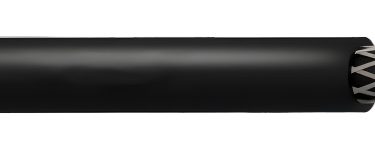
At the heart of this relentless operation lies a piece of engineering that often goes unnoticed: the power cable. Specifically, the (N)SHTOEU-J reeling cable — a specialised flexible cable engineered to endure the brutal conditions of heavy port machinery. In this article, we explore what makes this cable uniquely suited to the demands of Port of Newcastle operations, break down its technical specifications, and explain why sourcing a high-quality version at competitive pricing matters for every port operator.
What is the (N)SHTOEU-J Cable?
The (N)SHTOEU-J (also written as NSHTÖU-J or NSHTOEU-O/J) is a flexible, rubber-sheathed cable designed specifically for mobile power and signalling connections under severe mechanical stress. The name itself is derived from German engineering nomenclature, indicating its rubber compound construction and suitability for winding reel applications. The governing standard is DIN VDE 0250-814.
This cable type is the industry standard for cable reeling drums on harbour cranes and container cranes, stacker/reclaimer boom power supply at coal and bulk terminals, shiploader boom trailing cable systems, conveyor and handling machine power feeds, and mining, tunnelling, and heavy industrial applications.
Application Context: Port Equipment in Action
Shiploaders
Shiploaders are mobile boom structures that extend over a vessel's hold to pour coal or bulk material directly from a conveyor. As the boom extends, retracts, and slews, the power and signalling cable must flex continuously — often across strokes of hundreds of metres — without losing electrical continuity or mechanical integrity. The (N)SHTOEU-J feeds this movement on a cable reel, spooling in and out thousands of times over its service life.
Stacker/Reclaimers
These dual-function machines first build up stockpiles of coal (stacking) and then reclaim the material for transport via conveyor (reclaiming). The boom rotates, raises, and lowers while travelling along a rail track — generating both tensile pull and torsional twist on the cable simultaneously. The (N)SHTOEU-J is engineered to absorb exactly these forces without fatigue cracking or conductor failure.
Why Standard Cables Fail Here
Standard fixed-installation cables are designed to sit still. Port reeling cables face a completely different reality: constant dynamic flexing during machine travel, high tensile loads as the cable is pulled off the drum, torsional stress during boom rotation and slewing, coal dust infiltration into any cable imperfections, marine salt fog causing rapid corrosion of unprotected conductors, and UV radiation along with ozone degradation in outdoor port environments. The (N)SHTOEU-J is purpose-built to outlast all of these challenges.
Technical Specifications
The (N)SHTOEU-J 0.6/1kV cable is rated at a voltage of 0.6/1kV (Uo/U) with a test voltage of 3kV. Its twist limit is 50°/m, and it supports travel speeds of up to 100 m/min — well within the demands of long-stroke shiploader and reclaimer systems.
The temperature rating for flexing operation is -25°C to +90°C, while for fixed installation the range extends to -40°C at the lower end. This makes the cable entirely suitable for the variable coastal climate of New South Wales, from cool winter nights through to peak summer heat.
Cross-section options range from 1.5mm² up to 240mm², and the cable is available in 3-core, 4-core, 5-core, 7-core, 12-core, 18-core, 24-core, 30-core, and up to 56-core configurations — covering everything from lightweight signalling duties through to heavy main power feeds.
Conductor: Tinned Copper Class 5
The use of Class 5 flexible tinned copper conductors is a deliberate choice for port environments. Tinning adds a protective layer against the corrosive effects of marine salt fog, while the fine-stranded Class 5 construction provides the suppleness necessary for continuous dynamic flexing. Untinned bare copper would oxidise rapidly in the salt-laden air common at coastal terminals like Newcastle.
For reference, the maximum DC resistance at 20°C for the tinned conductor ranges from 13.7 Ω/km at 1.5mm² down to 0.108 Ω/km at 185mm².
Anti-Twist Polyester Braid
Perhaps the most distinctive feature of the (N)SHTOEU-J is its internal polyester braid anti-twisting element. During reeling, as the drum rotates and the cable pays out or retracts, torsional forces can cause a standard cable to spin and kink. The polyester braid resists this rotation, preserving cable geometry and dramatically extending service life — particularly critical in multi-layer drum configurations where the cable must traverse up to seven wound layers.
Rubber Sheath System
A three-layer rubber protection system — insulation, inner sheath, and outer sheath — provides exceptional mechanical resilience. This construction delivers outstanding tear resistance, impact absorption, oil resistance (tested to IEC 60811-404), and UV/ozone resistance, all critical for an outdoor coal port environment. The outer sheath is available in black or yellow for site visibility requirements.
Core Identification
Cores are colour-coded for easy identification. The 3-core variant uses Green/Yellow, Blue, and Brown. The 4-core uses Green/Yellow, Brown, Black, and Grey. The 5-core adds Blue to that arrangement. For 7-core and above, cores are numbered in black with white numerals, plus the Green/Yellow earth core. Variants without the Green/Yellow earth core are also available.
Environmental Challenges at Australian Coal Ports
The Port of Newcastle and similar Australian bulk terminals present an unusually demanding combination of environmental stressors.
Coal dust is a pervasive issue — fine particulate penetrates cable joints and conduit entries. The seamless rubber outer sheath of the (N)SHTOEU-J provides an effective barrier against ingress, preventing dust from compromising the internal conductor and insulation layers.
Marine salt fog is ever-present at coastal port locations. Airborne sea salt accelerates corrosion of any exposed metallic surfaces. The combination of tinned copper conductors and a sealed rubber outer sheath provides dual-layer protection that keeps the cable performing over a long service life.
UV radiation and atmospheric ozone in outdoor port environments would rapidly degrade a standard PVC cable sheath. The (N)SHTOEU-J's rubber compound is UV-stabilised (tested to UL 2556 and ISO 4892-2) and ozone-resistant (tested to PN-ISO 1431-1), ensuring the sheath does not crack or embrittle over years of sun exposure.
Temperature variation across the Australian coastal climate — from cool winter mornings to extreme summer afternoons — is comfortably accommodated by the cable's -25°C to +90°C dynamic flexing range.
Standards and Certifications
The (N)SHTOEU-J is manufactured in compliance with an extensive set of international and German standards that validate its performance across all critical parameters.
DIN VDE 0250-814 is the core construction standard for flexible reeling cables of this type. IEC 60228 governs conductor classification and testing. DIN VDE 0207/20 and 0207/21 define the rubber compound specifications, while DIN VDE 0298-4 and 0298-3 provide current capacity and installation guidelines.
Flame propagation resistance is certified to PN-EN 60332-1-2 and IEC 60332-1-2. Oil resistance is tested to PN-EN 60811-404 and IEC 60811-404. UV resistance is verified under UL 2556 and ISO 4892-2, and ozone resistance is confirmed to PN-ISO 1431-1.
The cable also meets the requirements of the EU Low Voltage Directive 2014/35/EU, RoHS Directive 2015/65/EU, and REACH Directive EC 1907/2006 — ensuring full compliance with contemporary environmental and electrical safety regulations.
Current Carrying Capacity and De-Rating
Proper cable selection requires carefully matching the cable's current-carrying capacity to the equipment's load profile, and this is where reeling cable specifications differ significantly from standard installation cables.
The (N)SHTOEU-J is rated across three key installation conditions. Laying on the floor provides the baseline rating. Free in air is slightly higher due to improved convective cooling. Reeled on a drum is significantly reduced due to heat build-up within the wound layers.
As a practical example, a 25mm² cable carries 131A when laying on the floor, 138A when free in air, but only 105A when reeled in a single layer. In a 7-layer reel, that same cable is limited to just 29A. This steep de-rating for multi-layer drum configurations is a critical design consideration that is frequently underestimated when specifying reeling cable systems.
Ambient temperature de-rating must also be applied on top of this. The baseline reference temperature is 30°C, at which the de-rating factor is 1.00. On a hot Australian summer day at 50°C ambient, the factor drops to 0.82 — meaning a cable nominally rated at 131A can only safely carry approximately 107A. At an extreme 80°C ambient, only 41% of the rated capacity remains usable.
Minimum Bending Radius
Exceeding the minimum bending radius is one of the most common causes of premature cable failure in reel systems. Conductor fatigue, insulation cracking, and jacket splitting all accelerate when cables are bent too tightly. The (N)SHTOEU-J specifies minimum bending radii as a multiple of the cable's outer diameter (OD), varying by installation type.
For cables with an outer diameter above 20mm — which covers most power-carrying port variants — the fixed installation minimum is 4× OD, on drums is 5× OD, on deflection pulleys is 7.5× OD, and for free-moving applications is 5× OD.
For smaller cables with OD between 8mm and 12mm, the fixed installation minimum reduces to 3× OD, while the drum and deflection pulley requirements remain 5× OD and 7.5× OD respectively.
As a practical illustration: a 3G50 cable with a 38.3mm outer diameter requires a drum core diameter of at least 191mm. Specifying an undersized drum at this stage will lead to accelerated fatigue and unplanned cable replacement within a fraction of the expected service life.
Why Source Your (N)SHTOEU-J Cable From Us?
Selecting the right supplier for a mission-critical cable is just as important as selecting the right cable specification. Here is what sets our offering apart.
Competitive Pricing Without Compromising Quality
We supply (N)SHTOEU-J cables that fully comply with all relevant DIN VDE and IEC standards, at pricing that reflects our efficient supply chain and direct sourcing relationships. For the bulk volumes required in port environments — where hundreds or even thousands of metres may be needed for a single machine — the cost savings are significant, with no sacrifice of performance or certification compliance.
Full Range of Sizes Available
From compact 3G1.5mm² signalling cables through to heavy 3G240mm² power feeders, and from 3-core through to 56-core variants, our range covers the full spectrum of port and industrial applications. Whether you need a small replacement coil or a large-volume supply for a new machine commissioning, we can fulfil the requirement.
Verified Standard Compliance
All cables we supply are fully documented for compliance with DIN VDE 0250-814, IEC 60228, and all related standards. Our quality assurance process covers testing to IEC 60332-1-2 (flame propagation), IEC 60811-404 (oil resistance), ISO 4892-2 (UV resistance), and PN-ISO 1431-1 (ozone resistance) — the same rigorous regime demanded by the world's toughest port and mining environments.
Technical Support
Our engineering team can assist with cable sizing, de-rating calculations for your specific ambient and reel conditions, and drum configuration advice. Getting the specification right from the outset prevents costly failures and unplanned downtime — particularly important in a port environment where a single machine stoppage can hold up an entire vessel loading schedule.
Conclusion
The (N)SHTOEU-J reeling cable is not a commodity product — it is a precision-engineered component that enables critical port infrastructure to function reliably under some of the most punishing operating conditions in heavy industry. At Australia's major coal export terminals, where a machine stoppage translates directly to lost revenue and vessel delays, the quality of the power cable is a genuine operational concern.
Whether you are maintaining existing shiploaders, commissioning new stacker/reclaimers, or planning a port expansion, our (N)SHTOEU-J cables offer the performance you need at a price that delivers genuine value. Contact us today for a technical consultation and competitive quotation.
Keywords: NSHTOEU-J cable, NSHTÖU-J, reeling cable, port cable, cable reel drum, shiploader cable, stacker reclaimer cable, DIN VDE 0250-814, rubber reeling cable, bulk material handling, Port of Newcastle, heavy duty flexible cable
How to Reach Us
Get in Touch
SiteMap
Product Catalogue
Festoon Cable
Shore Power Cable


Scan to add us on WeChat