
NSHTOEU-J Reeling Cable for Iron Ore Shiploaders: Power Cable Solutions for Bulk Handling Equipment
Learn how NSHTOEU-J rubber reeling cables power shiploaders and rail mounted reclaimers in iron ore terminals such as Port Hedland. Explore cable structure, mechanical requirements, and cost-effective alternatives for heavy-duty port crane applications.
hobgjing.Wang
3/10/20268 min read

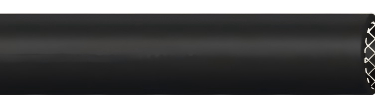
Iron Ore Export Ports and Their Heavy-Duty Material Handling Systems
Why Iron Ore Ports Are Among the Most Demanding Industrial Environments
Iron ore export terminals are some of the most intensive bulk material handling facilities in the world. Ports such as those in Port Hedland, Western Australia, must move hundreds of millions of tons of material every year through a network of large, automated machines — including shiploaders, rail mounted reclaimers, stacker reclaimers, and conveyor systems. Every one of these machines depends on a continuous, uninterrupted power supply, and the cable reeling system sits at the heart of that requirement.
What makes these environments particularly challenging is not any single factor but the combination of them: relentless mechanical cycling, abrasive iron ore dust, extreme heat, strong UV exposure, and long travel distances. A cable that performs well in a conventional industrial plant may fail within weeks under these conditions. The NSHTOEU-J rubber reeling cable is specifically engineered to meet exactly this class of demand.
Structural Design of the NSHTOEU-J Cable
Understanding why this cable performs so reliably in port crane applications begins with its layered structural architecture. Each element of the construction has a defined mechanical and electrical function, and the overall design reflects decades of development experience in heavy-duty reeling applications.
Finely Stranded Tinned Copper Conductors
The main power cores use finely stranded tinned copper conductors manufactured to IEC 60228 Class 5. This is not a generic specification — Class 5 represents the highest flexibility category in the standard, achieved by dividing the conductor cross-section into a large number of very thin individual wires. The result is a conductor that can withstand tens of thousands of bending cycles without work hardening or developing fatigue cracks, which is a critical property in any cable that is wound and unwound continuously throughout its service life.
The tinning applied to each wire strand serves a dual purpose. It prevents oxidation of the copper surface over time, maintaining stable contact resistance at terminations, and it also improves the sliding behaviour between individual strands during bending — reducing internal friction and further extending flex life.
The same conductor construction is used for the ground conductor, which is insulated with green-yellow EPR compound per DIN VDE 0293-308 core colour coding.
EPR Insulation on Each Core
Each power core is insulated with Ethylene Propylene Rubber, designated type 3GI3 to DIN VDE 0207-20. EPR is selected over PVC or XLPE for reeling applications because it combines excellent dielectric performance with outstanding flexibility across a wide temperature range.
EPR retains its physical properties from below -30 °C up to a maximum conductor temperature of 90 °C under continuous operation, with a short-circuit withstand temperature of 200 °C. This thermal range covers the full operating envelope of an iron ore terminal — including cold start conditions during early morning shifts and sustained high temperatures during peak summer operation in the Pilbara region of Western Australia.
Unlike thermoplastic insulations, EPR does not harden significantly at low temperatures, meaning the cable remains pliable and manageable even before the system has warmed up. This prevents the micro-cracking that can develop in stiffer materials when a cold cable is forced around a drum.
Heavy-Duty Rubber Inner Sheath
The assembled cores are enclosed in a heavy-duty rubber inner sheath using quality 5GM3 compound per DIN VDE 0207-21. Critically, this inner sheath is applied in a way that fills the interstices — the voids between the cores — creating a solid, compact cross-section.
This filling has two important effects. First, it prevents the cores from migrating relative to each other during bending and torsion, which would cause uneven stress distribution and premature fatigue. Second, it creates a firm mechanical base for the reinforcement layer that sits above it, allowing that layer to grip and transfer loads uniformly around the cable circumference.
Synthetic Thread Reinforcement Braid
Above the inner sheath sits a reinforcement braid made of synthetic threads, vulcanized into a bond between the inner and outer sheaths. This is one of the most important elements that distinguishes a purpose-built reeling cable from a general flexible cable.
The braid acts as a tensile load-bearing member. In shiploader and reclaimer applications, the cable frequently experiences static tensile loads of up to 15 N/mm² and dynamic tensile peaks up to 20 N/mm² as the reel system takes up slack and the machine accelerates. Without structural reinforcement, these loads would be transferred directly into the conductor strands and insulation, causing elongation, core migration, and ultimately electrical failure. The reinforcement braid intercepts these tensile forces and distributes them longitudinally through the cable structure, protecting the electrical components from mechanical overload.
Heavy-Duty Rubber Outer Sheath
The outer sheath is also manufactured from 5GM3 quality heavy-duty rubber compound, applied in black with inkjet marking for identification. The rubber compound is formulated to provide resistance to oil per DIN EN/IEC 60811-404, and unrestricted outdoor resistance including ozone, UV radiation, and moisture.
In an iron ore stockyard, the outer sheath is the first line of defence against abrasive ore dust, physical contact with cable guides, and environmental degradation. The use of a rubber compound rather than a thermoplastic jacket maintains impact and cut resistance without becoming brittle over time — a property that synthetic rubber retains far more consistently than PVC across the temperature extremes encountered in Australian port environments.
Key Mechanical and Electrical Performance Parameters
The NSHTOEU-J is rated for a reeling speed of up to 120 m/min — covering the full range of travel velocities used by modern shiploader boom cable reels and rail mounted reclaimer trolley systems. The cable is designed to handle torsional stresses of ±25°/m, which accommodates the twisting forces that arise when the cable transitions between different angles of fleet across the drum flanges.
Bending radius requirements are precisely defined per DIN VDE 0298-3: a minimum of 6 times the cable diameter in reeling operation, 7.5 times the diameter over deflection pulleys, and 20 times the diameter where S-type directional changes occur. These values guide the mechanical design of the cable reel system and must be respected to ensure the cable achieves its rated service life.
Electrically, the cable is rated at 0.6/1 kV with a maximum permissible AC operating voltage of 0.7/1.2 kV and DC operating voltage of 0.9/1.8 kV. AC test voltage is 2.5 kV. Current-carrying capacity and de-rating factors follow DIN VDE 0298-4 Table 15, which accounts for the thermal effects of reeling operation — an important consideration since a wound cable dissipates heat less effectively than a cable laid flat.
The cable is available in an extensive range of conductor configurations, from 3×1.5 mm² up to 3×240 mm² for three-core variants, with equivalent ranges for four-core, five-core, and multi-core control configurations up to 30×2.5 mm². Combined power and control constructions such as 3×50+3×25/3 are also available, allowing a single cable to carry both the main drive power and auxiliary control signals to the machine.
Applications in Iron Ore Terminal Operations
Shiploader Boom Cable Reel
The shiploader is one of the most mechanically active machines in any iron ore export terminal. During loading operations, the boom moves laterally and vertically to follow the hold contours of the vessel, while the machine itself travels along the jetty rail to position over each successive hold. The cable reel — typically a motor-driven cylindrical drum — pays out and retrieves cable continuously throughout this movement.
The NSHTOEU-J cable in this application must simultaneously handle bending onto and off the drum, tensile loading from the travel drive, and torsional stress from the varying fleet angle. Its reinforced rubber construction and high-flexibility conductors make it suited to this combination of simultaneous stresses that would degrade a standard flexible cable in a fraction of the expected service life.
Rail Mounted Reclaimer Power Supply
Rail mounted reclaimers operate over stockyard lengths that can exceed several hundred metres. The cable reel on a reclaimer must therefore pay out and retrieve very long cable lengths, often at speed, as the machine travels between stockpile locations and the reclaim point feeding the conveyor system.
At these travel distances, the tensile load on the cable becomes a dominant design consideration. The reinforcement braid in the NSHTOEU-J structure carries this load efficiently, while the heavy-duty outer sheath resists the abrasion that inevitably occurs as the cable passes over ground rollers, cable trays, and guide pulleys along its path.
Stacker and Combined Stacker-Reclaimer Machines
Stacker reclaimers carry out both stacking and reclaiming functions in a single machine, meaning their cable systems must support continuous duty operation across the full stockyard travel range. The demands placed on the cable in this application combine those of the shiploader and the reclaimer — dynamic bending and torsion from the slewing and luffing movements of the boom, combined with long-distance travel loads. The multi-layered mechanical structure of the NSHTOEU-J addresses each of these stress modes simultaneously.
Engineering Value: Service Life, Reliability, and Safety
Extended Service Life Through Purpose-Built Design
Every element of the NSHTOEU-J construction is chosen to maximise the number of bending and load cycles the cable can sustain before requiring replacement. The Class 5 finely stranded conductors resist fatigue. The EPR insulation remains flexible and crack-free across the operating temperature range. The inner sheath prevents core migration. The reinforcement braid carries tensile loads away from the electrical conductors. The outer sheath resists abrasion and environmental attack.
Together, these design decisions translate directly into reduced replacement frequency — an important operational consideration in iron ore terminals, where cable replacement requires crane downtime, rigging labour, and a carefully managed change-out procedure to avoid damaging the reel system or the new cable during installation.
Operational Reliability in Continuous-Duty Environments
Iron ore terminals operate around the clock, with shiploaders and reclaimers running multiple shifts per day throughout vessel loading campaigns. Cable failures in this context do not simply inconvenience — they halt production, delay vessel departures, and can trigger significant demurrage costs. The NSHTOEU-J is designed for this continuous-duty environment, with mechanical parameters verified to DIN VDE standards and electrical performance that remains stable throughout the cable's working life.
The oil resistance qualification to DIN EN/IEC 60811-404 is particularly relevant in port environments where hydraulic and lubricating oils are present on decks and walkways. A cable sheath that swells or degrades on contact with oil can suffer accelerated mechanical failure, making this a critical property in the overall reliability picture.
Safety Performance
The cable meets DIN EN/IEC 60332-1-2 for flame propagation behaviour, an important safety property in enclosed cable routing areas on shiploaders and in cable management systems along jetty structures. The 2.5 kV AC test voltage qualification provides a significant safety margin above the rated operating voltage, confirming the integrity of the insulation system under high-potential test conditions.
The use of tinned copper conductors eliminates the long-term contact resistance increase that can occur at terminations due to copper oxidation, maintaining reliable electrical connections at motor terminals and switchgear interfaces throughout the cable's service life.
Cost-Effective Alternatives and Customisation
As port operators continue to expand terminal capacity and upgrade ageing equipment, the demand for replacement and equivalent NSHTOEU-J cables continues to grow. We manufacture rubber reeling cables to DIN VDE 0250-814 specifications, delivering mechanical performance and electrical characteristics fully equivalent to this cable type.
Our production capability covers the complete range of standard cross-sections and core configurations, as well as custom constructions developed in consultation with port engineering teams for specific reel system parameters. Whether the requirement is for a direct replacement during scheduled maintenance, a new cable for a shiploader upgrade project, or a modified configuration for a new stacker reclaimer installation, we are positioned to supply cables that meet the technical specification while offering competitive pricing through optimised manufacturing processes.
Key areas where we provide value beyond the standard product include flexible minimum order quantities for maintenance spares, short lead times from established raw material stocks, and technical support during cable selection to ensure the chosen construction matches the reel system parameters — drum diameter, fleet angle, travel distance, and operating temperature range — that determine cable service life in practice.
Conclusion
The NSHTOEU-J rubber reeling cable represents a mature, well-engineered solution to one of the most demanding applications in heavy industry: continuous dynamic power supply to the large bulk handling machines that underpin global iron ore export operations. Its layered construction — Class 5 finely stranded tinned copper conductors, EPR insulation, rubber inner sheath, synthetic thread reinforcement braid, and heavy-duty rubber outer sheath — addresses each of the mechanical and environmental challenges present in iron ore terminal environments in a coherent and systematic way.
For port operators, the value of specifying the correct cable type for reel applications is measured not just in the purchase price of the cable but in the operational reliability and service life that a properly designed construction delivers over years of continuous service. With the right manufacturing expertise and quality control, equivalent cables can provide this same level of performance with the flexibility and cost efficiency that modern infrastructure projects require.
For technical enquiries regarding cable specifications, custom configurations, or supply for port crane and bulk handling applications, please contact our engineering team.
How to Reach Us
Get in Touch
SiteMap
Product Catalogue
Festoon Cable
Shore Power Cable


Scan to add us on WeChat