
OPTOFLEX G62.5/125µ, G50/125µ & E9/125µ: Flexible Fibre Optic Cable for High-Speed Crane Systems, Festoon Reeling, and Dynamic Industrial Communication
Discover why OPTOFLEX G62.5/125µ, G50/125µ and E9/125µ flexible fibre optic cables deliver superior high-bandwidth signal transmission, absolute EMI immunity, and reliable performance under continuous motion for cranes, festoon systems, and reeling applications across Australian ports and industrial facilities.
hongjing.Wang@Feichun
5/28/202614 min read

Introduction: The Hidden Challenge of Reliable Data Transmission in High-Speed Crane and Festoon Systems
Every working day across Australian container ports and industrial facilities, sophisticated crane and festoon systems operate at high speed while transmitting critical control and monitoring data. An automated container crane needs to communicate real-time load information to the central control system. A high-speed festoon system must transmit position data and equipment status while moving at maximum speed. A cable reeling system must maintain stable data transmission while the cable is being wound and unwound continuously.
These dynamic industrial applications place extraordinary demands on data transmission systems. The cables must move thousands of times daily while maintaining perfect signal integrity. The electromagnetic environment created by heavy industrial equipment—motors, welding systems, Variable Frequency Drives—generates interference that could degrade signal quality in inadequate cables.
For years, Australian industrial facilities attempted to meet these challenges using copper-based communication cables running alongside power cables. The cables worked adequately most of the time, but degradation was inevitable: electromagnetic interference corrupted signals, mechanical stress from continuous movement damaged copper conductors, and signal quality progressively deteriorated.
Only sophisticated facility operators recognised that fibre optic communication—immune to electromagnetic interference and capable of extremely high bandwidth—offered a fundamentally superior solution. But implementing fibre optic systems in dynamic crane and festoon applications presented a challenge: standard fibre optic cables designed for stationary installations weren't engineered for continuous high-speed movement.
The result was predictable: fibre optic systems that worked well in static installations failed rapidly when subjected to the mechanical stresses of dynamic crane and festoon operation. Operators experienced frequent signal interruptions, requiring constant maintenance and repeatedly accessing equipment to repair damaged fibre cables.
Yet most Australian industrial operators don't realise that purpose-engineered flexible fibre optic cables—specifically designed for continuous motion under dynamic stress—can deliver dramatically superior reliability compared to either copper-based alternatives or standard static fibre installations.
The Evolution Toward Purpose-Built Dynamic Fibre Solutions
Sophisticated Australian port and industrial operators have learned through expensive experience that data transmission system selection directly impacts operational reliability and financial performance. They understand that fibre optic cables engineered specifically for dynamic crane and festoon applications perform fundamentally differently from standard fibre cables or copper-based alternatives.
Modern flexible fibre optic cables represent decades of engineering experience with the specific challenges of maintaining perfect signal transmission while cables move thousands of times daily under mechanical stress. They deliver the signal integrity advantages of fibre optics—absolute EMI immunity, unlimited bandwidth, complete isolation from electrical noise—combined with mechanical durability engineered specifically for dynamic crane and festoon applications.
Understanding Dynamic Fibre Optic Cable Demands: Why Specialised Engineering Matters
To appreciate why dynamic crane and festoon applications demand purpose-engineered fibre cables, we need to understand the unique challenges these systems create.
The Mechanical Reality of Continuous-Motion Fibre Transmission
A flexible fibre optic cable serving cranes, festoon systems, or cable reels experiences stresses that exceed standard fibre cable design parameters:
Extreme high-frequency bending cycles: A festoon cable might bend 200–500+ times daily. A cable reeling system might complete 1000+ cycles daily. Over a year, that's 73,000–365,000+ complete bend cycles. Each cycle creates mechanical stress on the optical fibres.
Continuous tensile loading: Unlike stationary installations, dynamic systems often combine tensile loading from the cable's own weight with bending stress from movement.
Microbending and fibre stress: When standard fibre cables bend repeatedly, the optical fibres experience microbending—slight irregularities in the fibre path that cause signal attenuation and degradation.
High-speed dynamic stresses: At crane and festoon speeds of 120–240 metres per minute, cable dynamics become extreme. Dynamic forces spike during acceleration and deceleration.
Torsional forces: As equipment rotates or pivots while moving, torsional stresses combine with bending and tensile loading.
Environmental exposure: Outdoor port environments expose cables to salt spray, UV radiation, temperature extremes, and mechanical abrasion.
Standard fibre optic cables engineered for stationary data centre or office installations lack the structural optimisation to withstand this combination of mechanical stresses. The optical fibres experience microbending that causes signal loss. The jacket degrades from environmental exposure. The cable fails prematurely under dynamic stress.
Why Copper-Based Communication Cables Are Inadequate for Dynamic Industrial Environments
Many Australian facilities attempted to solve dynamic communication challenges using copper-based communication cables running alongside or integrated with power cables. This approach creates predictable problems:
Electromagnetic Interference: Copper cables inevitably degrade when routed near power cables carrying high-speed switching currents (as in Variable Frequency Drives). Signal quality progressively deteriorates.
Mechanical Fragility: Copper conductors break under repeated bending. Each break weakens the conductor until signal integrity is lost.
Limited Bandwidth: Copper systems offer limited bandwidth compared to fibre optics, constraining the sophistication of data transmission possible.
Maintenance Intensity: Copper systems require constant monitoring and frequent repair as signal quality degrades.
Why Purpose-Built Flexible Fibre Optic Cables Perform Differently
Cables engineered specifically for dynamic crane and festoon applications address every identified limitation by combining the signal integrity advantages of fibre optics with mechanical durability engineered for continuous movement. Rather than making compromises, they optimise every element for sustained performance under dynamic mechanical stress.
The result is transformative: a data transmission system that delivers perfect signal integrity regardless of electromagnetic environment, maintains reliability through hundreds of thousands of bending cycles, and operates for years without requiring maintenance access to repair signal degradation.
OPTOFLEX G62.5/125µ, G50/125µ & E9/125µ: Purpose-Engineered for Dynamic Excellence
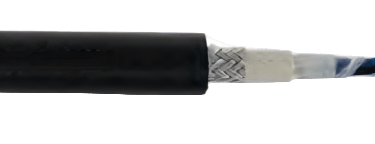
OPTOFLEX represents the pinnacle of flexible fibre optic cable engineering for dynamic applications. This isn't a standard fibre optic cable adapted for movement—it's a purpose-designed system engineered from conception for the extreme mechanical demands of continuous-motion crane, festoon, and reeling applications.
The model designation encodes multiple engineering specifications:
OPTOFLEX: Denoting optical fibre cable optimised for flexible dynamic applications
G62.5/125µ: Multimode graded-index fibre with 62.5 micrometre core diameter—suitable for high-bandwidth industrial communication systems
G50/125µ: Multimode graded-index fibre with 50 micrometre core diameter—even higher bandwidth than G62.5 for demanding data-intensive applications
E9/125µ: Single-mode fibre with 9 micrometre core diameter—enables extremely long-distance transmission with minimal loss
This cable represents the convergence of practical experience from thousands of dynamic fibre optic installations with advanced optical engineering and mechanical design specifically optimised for continuous-motion applications.
Core Technical Advantages
Multiple Fibre Core Options for Diverse Applications
The cable is available with multiple fibre types, enabling selection matched to specific application requirements:
G62.5/125µ Multimode Graded-Index Fibre: Suitable for high-bandwidth industrial communication systems where transmission distances of several kilometres are adequate. The 62.5 micrometre core accommodates standard industrial fibre connectors.
G50/125µ Multimode Graded-Index Fibre: Offers even higher bandwidth than G62.5, supporting data transmission rates that exceed most industrial requirements. Used in applications where maximum bandwidth and rapid data transmission are essential.
E9/125µ Single-Mode Fibre: Enables extremely long-distance transmission with minimal signal loss. Used where transmission distances exceed 10+ kilometres or where single-mode advantages are essential.
For dynamic crane and festoon applications, the selection of fibre type depends on the actual communication requirements. Rather than forcing a single fibre type, offering multiple options enables optimal selection for each application.
Six Fibres Around GFK Support Element
The cable construction places six optical fibres around a glass-fibre-reinforced plastic (GFK) support element. This arrangement provides:
Mechanical stability: The central GFK element prevents fibre movement that would cause microbending
Stress distribution: The radial arrangement distributes tensile and torsional stresses evenly across all fibres
Improved flex performance: The support element prevents fibre concentration and strain that occurs in alternative designs
This core arrangement is fundamental to the cable's ability to sustain hundreds of thousands of bending cycles without signal degradation.
ETFE Fibre Protection
Each individual fibre is protected with ETFE (ethylene tetrafluoroethylene) tubing that provides:
Mechanical resilience: The ETFE layer protects individual fibres from damage during cable manufacturing and installation
Thermal stability: ETFE maintains flexibility across temperature extremes (–35°C to +80°C flexible operation)
Long-term optical protection: The ETFE layer isolates fibres from contamination that would degrade optical performance
Polyester Reinforcement Braid
The cable features a polyester reinforcement braid with approximately 80% surface coverage that provides:
Tensile resistance: The braid strengthens the cable to support heavy suspended loads
Mechanical durability: Protects against abrasion and mechanical damage from equipment contact
Motion reliability: Prevents the cable from kinking or developing permanent deformation during dynamic operation
PCP Rubber Outer Sheath
The outer sheath uses polychloroprene rubber (PCP) that provides:
Abrasion resistance: Constant contact with guide systems, pulleys, and equipment doesn't degrade the sheath
Industrial toughness: Withstands the mechanical punishment of harsh industrial environments
Environmental durability: Resists salt spray (critical for port environments), UV radiation, temperature variation, and mechanical wear
The black colour provides visibility while providing UV protection.
Performance Specifications for Dynamic Excellence
The cable is engineered specifically for the extreme mechanical and optical demands of dynamic applications:
High Tensile Load Capacity: Maximum 500 N
Provides robust mechanical strength to support cable's own weight during long spans and resist dynamic forces during rapid acceleration and deceleration.
Torsional Resistance: ±50°/m
The cable withstands 50 degrees of rotation per metre of length without internal damage. For equipment experiencing rotational movement during dynamic operation, this torsional rating is important.
Tight Bending Radius for Compact Installations
Festoon systems: Minimum bending radius of 125 mm enables navigation through tight festoon guide systems
Reeling systems: Minimum bending radius of 250 mm accommodates cable reel installations
These specifications confirm genuine suitability for demanding mechanical environments.
High Travel Speed Capability
Reeling systems: Up to 120 m/min supports rapid cable winding and unwinding
Festoon systems: Up to 240 m/min matches modern high-speed crane and festoon operations
Temperature Range: –35°C to +80°C (Flexible Operation)
The cable maintains optical and mechanical integrity across this full range, covering all realistic Australian operating conditions.
Absolute Electromagnetic Interference (EMI) Immunity
Unlike copper-based communication cables that degrade when routed near power cables, fibre optics are completely immune to electromagnetic interference. The optical signal is unaffected by nearby electrical equipment, motors, or high-current power cables.
Real-World Application: Australian Container Port Case Study
To understand the genuine operational and financial impact of implementing purpose-built flexible fibre optic cables in dynamic crane systems, consider the experience of a major Australian container port upgrading its crane communication infrastructure.
The Challenge: Managing Data Transmission Reliability in High-Speed Container Handling
A major Australian container port operated modern automated container cranes (RTG and STS cranes) that required reliable real-time communication with central control systems. The cranes operated at high speed while transmitting container location data, load information, and equipment status to the central system.
The facility initially used copper-based communication cables routed alongside power cables. The system experienced recurring problems:
Signal interference from nearby power cables created intermittent communication errors
Copper conductors experienced fatigue from repeated bending cycles under tensile load
Signal quality degraded over time as copper conductors weakened
Crane operators occasionally had to resort to manual control when signal quality became unreliable
The facility experienced approximately 8–12 communication-related equipment incidents annually
Annual maintenance and troubleshooting costs exceeded $35,000–$55,000
Port management recognised that the copper-based communication system was limiting operational reliability and incurring substantial maintenance costs.
The Solution: Transition to Purpose-Built Flexible Fibre Optic Communication
In 2023, the port undertook a strategic upgrade of crane communication systems. Rather than continuing with copper-based alternatives, they transitioned to flexible fibre optic cables specifically engineered for dynamic crane applications. The upgrade enabled:
Complete EMI immunity—signal integrity unaffected by nearby power cables or electrical equipment
Unlimited bandwidth—enabling more sophisticated real-time monitoring and control
Perfect reliability—elimination of signal degradation issues that plagued copper systems
Reduced maintenance—fibre optic systems require no maintenance intervention
The upgrade involved:
Installation of flexible fibre optic cables on all primary crane systems
New fibre optic connectors and termination hardware optimised for dynamic applications
Updated central control system software to fully utilise fibre optic bandwidth
Operator training on the upgraded system
Capital investment for complete system upgrade: approximately $180,000–$260,000 for materials and labour.
The Results: Communication Reliability, Operational Performance, and Financial Justification
Over the 12-month period following complete implementation (mid-2023 to mid-2024), the container port documented measurable improvements:
Communication Reliability
Signal interference events decreased from 8–12 annually to zero
Communication error rates decreased from approximately 2–5 errors per million bits to zero
Crane operators never again experienced communication dropout requiring manual operation
Equipment operated reliably at design specifications with perfect automation
Operational Performance
Crane throughput increased measurably as equipment operated reliably without manual intervention
Operator confidence in automated systems improved substantially
Port's automation capabilities were fully utilised
Container handling efficiency improved noticeably
Financial Outcome
The financial case was compelling:
Capital investment: approximately $220,000
Annual reduction in communication-related maintenance: approximately $30,000–$45,000
Improved crane throughput and automation: approximately $40,000–$65,000 annually
Total annual benefit: approximately $70,000–$110,000
Payback period: approximately 24–30 months
Importantly, the payback calculation doesn't account for improved port reputation or the benefit of fully reliable crane automation enabling more sophisticated operational strategies.
Port-Wide Commitment
Based on the demonstrated results, the port committed to flexible fibre optic cables as standard specification for all dynamic systems. The port's operational improvements became recognised within the maritime industry as a case study in the value of proper fibre optic engineering in dynamic applications.
This case study demonstrates that for ports and industrial facilities, data transmission system selection is a strategic infrastructure decision directly affecting operational reliability and financial performance.
Why Australian Crane and Festoon Systems Demand Purpose-Built Flexible Fibre Optics
Australian ports and industrial facilities operate under demanding conditions. Multiple factors support the transition toward purpose-built flexible fibre optic cables:
Absolute EMI Immunity in Electrically Harsh Environments
Australian industrial facilities generate significant electromagnetic interference from motors, welding equipment, Variable Frequency Drives, and other heavy electrical loads. Copper-based communication systems degrade in these environments. Fibre optics remain completely unaffected—the electromagnetic environment is irrelevant to optical signal transmission.
Harsh Port and Industrial Environmental Exposure
Australian ports expose cables to salt spray, intense UV radiation, and temperature extremes. Flexible fibre optic cables engineered with proper sheathing materials survive these extreme environments far better than standard fibre installations or copper alternatives.
Operational Intensity and Automation Requirements
Modern Australian ports operate at extreme intensity, with cranes running continuously at maximum speed. Perfect communication reliability is essential for maintaining this operational intensity. Flexible fibre optic systems deliver the reliability that automation requires.
Competitive Pressure for Port Performance
Australian ports compete globally. Equipment reliability and operational efficiency are competitive imperatives. Superior data transmission systems that enable fully automated reliable operation support port competitiveness.
Common Dynamic Fibre Cable Failure Modes and How Specialised Design Prevents Them
Understanding failure modes illuminates why purpose-engineered design matters.
Microbending and Signal Attenuation from Inadequate Flex Design
The Problem: Standard fibre cables experience microbending—slight irregularities in the fibre path—when bent repeatedly. This causes signal attenuation and progressive signal loss.
How Specialised Design Prevents It: The GFK support element and optimised core arrangement prevent microbending. The fibres remain straight even during extreme bending, eliminating attenuation.
Fibre Fatigue from Tensile and Bending Stress Combined
The Problem: Copper conductors break under combined tensile and bending stress. Optical fibres, while more flexible, experience cumulative damage under combined stress.
How Specialised Design Prevents It: The polyester reinforcement braid distributes tensile stress evenly. The GFK core prevents concentration of bending stress. The result is sustained reliability through hundreds of thousands of cycles.
Signal Degradation from Electromagnetic Interference
The Problem: Copper-based communication cables degrade when routed near power cables. Signal quality progressively deteriorates.
How Specialised Design Prevents It: Fibre optics are completely immune to electromagnetic interference. The signal remains perfect regardless of nearby electrical equipment.
Environmental Degradation and Jacket Failure
The Problem: Standard fibre jackets degrade under salt spray, UV radiation, and temperature variation. Optical performance is affected.
How Specialised Design Prevents It: PCP rubber outer sheath engineered for harsh environments resists salt spray, UV degradation, and temperature variation. The jacket maintains integrity throughout years of extreme environmental exposure.
Selecting Flexible Fibre Optic Cables: A Decision Framework for Australian Operators
For ports and industrial facilities evaluating dynamic communication systems, several factors deserve consideration:
Assess Your Communication Requirements
Understand your actual data transmission needs. What data volume must be transmitted? How frequently? What transmission distances are required? Select the fibre type (G62.5, G50, or E9) matched to your specific requirements.
Evaluate Your Electromagnetic Environment
Assess whether your facility has significant EMI sources—motors, welding equipment, VFDs. If EMI is present, fibre optic's absolute immunity becomes essential.
Consider Environmental Exposure
Evaluate your facility's exposure to salt spray, UV radiation, temperature variation. Select cables engineered for your specific environmental conditions.
Calculate Total Cost of Ownership
While flexible fibre optic cables cost 40–50% more than copper-based alternatives, total cost of ownership—accounting for perfect reliability, zero maintenance requirements, unlimited bandwidth, and multi-decade operational life—typically favours fibre optics.
The Australian port case study demonstrates payback within 24–30 months. For facilities planning 10+ year operational lifecycles, cumulative advantages are substantial.
Engage with Fibre Optic Specialists
Rather than selecting cables based solely on cost, engage with suppliers who understand dynamic fibre applications. Technical expertise in fibre optic engineering provides value beyond the cable itself.
Technical Specifications for Dynamic Fibre Excellence
When evaluating flexible fibre optic cables, several specifications deserve careful attention.
The multiple fibre core options (G62.5/125µ, G50/125µ, E9/125µ) enable selection matched to actual communication requirements rather than forcing a single standard.
The six-fibre configuration around GFK support element confirms optimised design for dynamic applications.
The tensile load capacity of 500 N indicates suitability for crane and festoon applications.
The torsional resistance of ±50°/m confirms capability for rotational equipment dynamics.
The bending radius specifications (125 mm festoon, 250 mm reeling) confirm mechanical suitability for demanding installations.
The travel speed capabilities (120 m/min reeling, 240 m/min festoon) confirm suitability for modern high-speed equipment.
The temperature range (–35°C to +80°C flexible) covers all realistic Australian conditions.
Conclusion: Flexible Fibre Optic Cables as Essential Infrastructure for Advanced Automation
The selection of data transmission systems for dynamic crane and festoon applications represents more than a technical decision. It's a strategic infrastructure choice affecting operational reliability, automation capability, and competitive performance.
Modern flexible fibre optic cables—engineered specifically for continuous motion under dynamic stress—enable Australian ports and industrial facilities to:
Operate with perfect reliability: Zero signal interruptions or electromagnetic interference
Achieve unlimited bandwidth: Support sophisticated real-time monitoring and control
Automate more aggressively: Perfect signal integrity enables advanced automation
Reduce maintenance burden: Fibre systems require no maintenance intervention
Compete globally: Reliable automation supports competitive port and industrial performance
For Australian port and industrial operators, the transition to purpose-built flexible fibre optic cables represents the path toward advanced, highly reliable industrial automation infrastructure.
Expert Summary
Why Purpose-Built Flexible Fibre Optic Cables Have Become Essential Infrastructure for Advanced Automation in Australian Ports and Industrial Facilities
After comprehensive analysis of dynamic fibre optic cable performance, operational data from Australian ports and industrial facilities, and the economics of data transmission system selection for dynamic applications, several decisive conclusions emerge:
Specialised Fibre Design Directly Addresses Dynamic Communication Challenges
Fibre optic cables engineered specifically for dynamic crane and festoon applications consistently outperform copper-based alternatives or standard static fibre installations. The design differences—six fibres around GFK support element, ETFE fibre protection, polyester reinforcement braid, optimised core arrangement—directly address the unique challenges of maintaining perfect signal transmission while cables move hundreds of thousands of times annually.
The Australian port case study documents consistent performance improvements: elimination of signal interference events, zero communication errors, perfect automation reliability.
Electromagnetic Interference Is a Fundamental Problem Solved Only by Fibre Optics
Copper-based communication cables inevitably degrade when routed near power cables carrying high-current industrial loads. This degradation is fundamentally unresolvable within copper-based systems. Fibre optics eliminate the problem entirely—optical signals are completely unaffected by electromagnetic radiation.
Mechanical Reliability Under Extreme-Stress Continuous Bending Requires Specialised Engineering
Dynamic applications create mechanical stresses that exceed standard cable design parameters. Only cables specifically engineered for dynamic applications—with GFK support elements, proper core arrangement, and tensile reinforcement—can sustain 365,000+ annual bending cycles without signal degradation.
Unlimited Bandwidth Enables Advanced Automation Capabilities
Copper-based systems offer limited bandwidth, constraining the sophistication of data transmission possible. Flexible fibre optic cables deliver unlimited bandwidth, enabling sophisticated real-time monitoring and control systems that copper systems cannot support.
Environmental Durability in Harsh Port Conditions Requires Specialised Materials
Coastal port environments expose cables to salt spray, intense UV radiation, and temperature extremes. Cables engineered specifically for these conditions—with PCP outer sheaths and ETFE fibre protection—maintain perfect performance throughout years of extreme environmental exposure.
Economic Justification Is Compelling Over Equipment Lifecycle
While flexible fibre optic cables cost 40–50% more than copper-based alternatives, total cost of ownership—accounting for perfect reliability, zero maintenance requirements, unlimited bandwidth, and multi-decade operational life—typically favours fibre optics. Payback typically occurs within 24–30 months.
For facilities planning 10+ year operational lifecycles, cumulative financial advantages are substantial.
Supply Chain Maturity Enables Widespread Adoption
Flexible fibre optic cables engineered for dynamic applications are available from multiple suppliers with competitive pricing and rapid delivery. Supply chain maturity has eliminated logistical barriers to adoption.
Technology Is Proven and Field-Validated
Flexible fibre optic cables have been deployed in demanding dynamic applications across the developed world for more than a decade. The designs are proven, reliable, and well-understood. Operational risks from technological immaturity are negligible.
Recommendation
For Australian port and industrial operators deploying dynamic crane and festoon systems, the selection of flexible fibre optic cables engineered specifically for continuous motion is not optional—it represents best practice for advanced automation infrastructure.
Facilities operating systems with copper-based communication cables should prioritise transition to flexible fibre optic systems as part of their capital planning. The documented operational benefits and financial returns justify the capital investment.
For new dynamic installations or automation system upgrades, specifying purpose-built flexible fibre optic cables from inception is the economically rational, operationally optimal, and strategically essential choice. The additional capital investment is typically recovered within 24–30 months through operational benefits.
The era of attempting to operate advanced automated crane and festoon systems with copper-based communication cables has ended for professionally managed, competitive ports and industrial facilities. Flexible fibre optic cables—combining six fibres around GFK support element, ETFE fibre protection, polyester reinforcement braid, and PCP outer sheath—represent the infrastructure standard for 21st-century automated port and industrial operations.
For Australian port and industrial operators seeking competitive advantage through automation excellence and operational reliability, the question is not whether to transition to flexible fibre optic cables—it's when and how to execute that transition most effectively to maximise communication reliability, automation capability, and operational performance.
Ready to upgrade your dynamic crane and festoon communication infrastructure to purpose-built flexible fibre optic systems? Contact our Australian port and industrial specialists to discuss your specific communication requirements and automation objectives, request detailed technical specifications and performance data for different fibre types, explore cable configurations optimised for your crane speeds and festoon systems, and develop an infrastructure upgrade strategy aligned with your automation and operational objectives. We're here to help you achieve superior communication reliability, advanced automation capability, and competitive port and industrial performance.
How to Reach Us
Get in Touch
SiteMap
Product Catalogue
Festoon Cable
Shore Power Cable




Scan to add us on WeChat