
Port of Newcastle Electrification and Cable Demand
Port of Newcastle is investing in clean energy, container infrastructure and long-term port modernization. Discover how electrification projects are expected to increase demand for reeling cables, medium-voltage power cables, fibre optic cables and automated crane systems across Australian ports.
hongjing.Wang@Feichun
6/8/202636 min read
Introduction
For more than a century, the Port of Newcastle has been defined by one thing above all else: coal. As the world's largest coal export port, it has moved staggering volumes of bulk commodity through its channels, and the rhythm of the place — the ships, the rail, the loaders — has been built around shifting black rock onto vessels bound for Asia. That identity is now changing, and changing faster than most people outside the Hunter realise.
Sitting on the New South Wales coast and serving as Australia's largest port on the east coast, Newcastle is in the middle of a transformation that touches almost every part of how the port operates. Three forces are driving it. The first is decarbonisation — the steady, deliberate move away from the emissions-heavy operations of the past towards a lower-carbon future. The second is electrification — replacing diesel and combustion-driven equipment with electrically powered alternatives across the wharves and yards. The third is automation — the adoption of remotely operated and self-directing equipment that promises higher efficiency and safer operations.
You can see all three forces at work in the port's headline initiatives. The Clean Energy Precinct, a 220-hectare development on Kooragang Island, is set to become a hub for renewable hydrogen and green ammonia production and export. The Newcastle Deepwater Container Terminal, planned for the former BHP steelworks site at Mayfield, would give the port a major foothold in containerised trade for the first time. Underpinning both is the port's commitment to Net Zero by 2040, a science-based target that frames the whole direction of travel. And around all of it sits a broader diversification strategy — a recognition that a port reliant on a single commodity is a port exposed to a single risk.
Here's the thread that connects all of this to the world of electrical infrastructure: every one of these developments runs on electricity, and electricity runs on cable. You cannot electrify a fleet of cranes, build out a container terminal, or stand up a hydrogen production hub without an enormous quantity of specialised cable — medium-voltage power cables, reeling cables for moving equipment, hybrid cables that carry both power and data, and the distribution networks that tie everything together. As the port modernises, demand for this kind of high-performance cable infrastructure is set to grow, not just in volume but in technical sophistication. This article looks at why, and at what it means for the cables that will quietly make the whole transformation possible.
Why This Transformation Matters Beyond Newcastle
It would be a mistake to read Newcastle's story as a local one. What's happening on the Hunter coast is a concentrated version of a shift playing out across Australian ports and, indeed, ports worldwide. Newcastle simply happens to be doing it at scale and in public, with a coal-export legacy that makes the contrast especially stark. If you want to understand where Australian port infrastructure is heading over the next decade — and what that means for everyone who designs, manufactures, supplies or installs electrical cable — Newcastle is the place to look. The lessons here apply to Port Botany, to Brisbane, to Fremantle and to the smaller regional ports that will follow the same path in their own time.
Why Australian Ports Are Accelerating Electrification
Before diving into Newcastle specifically, it's worth understanding the broader context, because no port electrifies in isolation. The pressures pushing Newcastle towards electric equipment and clean energy are national, and in some cases global.
Government Decarbonisation Targets
Australian ports operate within a tightening framework of climate policy. At the national level, Australia has committed to net zero by 2050, and that commitment cascades down through every emitting sector, including maritime and freight. The maritime industry has its own emissions-reduction frameworks and national action planning aimed at cutting the carbon intensity of shipping and port operations, and the peak body for the sector has been developing emissions guidance to help ports measure and reduce their footprints.
Beyond the formal targets, there's a clear policy direction encouraging ports to improve energy efficiency and reduce emissions wherever they can. State governments add their own layers — New South Wales has its own net zero ambitions, and the agencies operating in and around ports have set aggressive interim targets, in some cases aiming for reductions of around three-quarters of their operational emissions well before 2030. The cumulative effect is an environment where electrification isn't just encouraged; it's increasingly expected. A port that drags its feet on decarbonisation faces regulatory pressure, reputational cost, and growing difficulty attracting the kind of investment and trade that now comes with sustainability conditions attached.
There's also a financial dimension that's easy to overlook. Capital increasingly flows towards assets that can demonstrate strong environmental credentials. Lenders, institutional investors and the global firms that move freight are all under their own decarbonisation pressures, and they increasingly favour partners who can show a credible path to lower emissions. A port with strong sustainability ratings and a clear net zero roadmap is simply a more attractive place to invest and trade than one without. This turns decarbonisation from a cost centre into a competitive advantage, and it gives ports a powerful incentive to get ahead of the curve rather than waiting to be pushed. Electrification, with its visible, measurable emissions reductions, is one of the most tangible ways a port can demonstrate that it's serious — and that, in turn, accelerates the adoption of the electrified equipment that drives cable demand.
It's worth being clear-eyed about the scale of the challenge for a port like Newcastle specifically. As the world's largest coal export port, Newcastle carries an emissions profile and a public identity tied tightly to fossil fuels. The bulk of its associated emissions sit downstream, in the burning of the coal it exports, which is beyond the boundary of its own operational targets but very much within the strategic question of the port's long-term future. This is precisely why diversification is framed not as an option but as a necessity. A port whose entire business model rests on a commodity the world is trying to move away from has every reason to build new lines of business — and the electrified, automated, clean-energy-focused activities it's pursuing are both a hedge against that future and a driver of the cable demand this article examines.
Operational Benefits of Electrification
Policy alone doesn't drive change unless the economics stack up, and for port equipment they increasingly do. Electric equipment offers a compelling list of operational advantages over diesel.
The most obvious is fuel cost. Electricity, particularly when sourced from renewables under long-term contracts, can be markedly cheaper to run equipment on than diesel, and it insulates operators from the volatility of fuel prices. Then there are the emissions: electric equipment produces no direct exhaust emissions at the point of use, which matters both for the port's carbon accounts and for the air quality experienced by workers and nearby communities. Efficiency is another draw — electric drives are generally more efficient than combustion engines, converting more of their input energy into useful work and wasting less as heat and noise.
Maintenance is the quieter advantage that often tips the business case. Electric drive systems have far fewer moving parts than diesel engines, no fuel system to maintain, no engine oil to change, and dramatically reduced servicing requirements. For equipment that has to be available around the clock, less downtime for maintenance translates directly into more productive hours. Add it all up, and the reason ports are steadily replacing diesel-powered cranes, straddle carriers and handling equipment with electric alternatives becomes clear: the electric option increasingly wins on cost, on compliance and on reliability all at once.
There are workplace benefits too, which matter more than they might first appear. A yard full of diesel engines is a noisy, fume-laden place to work, and the people operating and maintaining the equipment bear the brunt of it. Electrifying that equipment removes the exhaust at the source and cuts the noise substantially, improving conditions for the workforce and reducing the health and safety exposures associated with diesel emissions. For nearby communities — and Newcastle's port sits close to populated areas — the reduction in emissions and noise is a tangible improvement in local amenity, which in turn smooths the path for the port to operate and expand with community support. These softer benefits don't always appear in a simple cost comparison, but they're real, and they reinforce the case for electrification alongside the harder financial numbers.
The flip side, of course, is that all of these electric machines have to be fed with electricity, reliably and continuously, wherever they are and however they move. The diesel engine carried its energy source on board; the electric machine draws its energy from a network. That shift — from self-contained fuel to networked power — is exactly what creates the demand for distribution cable, reeling cable and the rest of the electrical infrastructure this article examines. Every operational advantage of electrification is purchased with a dependence on cable, and that dependence is the thread connecting the port's strategic ambitions to the unglamorous but essential world of cable specification.
Port of Newcastle's Electrification Vision
With that backdrop in mind, turn to what Newcastle itself is actually building. The port's electrification vision rests on three pillars, each of which carries significant implications for electrical infrastructure.
Clean Energy Precinct Development
The Clean Energy Precinct is the most ambitious single element of the port's transformation. Planned across 220 hectares of redeveloped industrial land on Kooragang Island, it is designed to become an integrated hub for the production, storage, distribution and export of renewable hydrogen and green ammonia. The scale is substantial: the precinct is intended to host well over a gigawatt of electrolytic hydrogen production capacity, drawing on renewable electricity to split water into hydrogen, which can then be used directly or converted into ammonia for easier export to international markets.
The project has attracted serious backing. It has received a major federal funding commitment to support its readiness studies, and it has drawn in heavyweight technical partners with deep experience in the hydrogen and ammonia value chain to advise on the engineering design. The precinct has been progressing through front-end engineering design and environmental impact assessment, with construction anticipated later this decade and full operation targeted around the end of the decade. The port has also begun handling the renewable energy materials flowing into the region, receiving shipments of wind turbine components destined for nearby wind farms — a tangible sign that the energy transition is already changing what moves across the wharves.
What does a hydrogen and ammonia hub mean for electrical infrastructure? In a word: enormous demand. Electrolysis at this scale requires vast quantities of electricity delivered reliably to the production equipment, which means substantial power distribution infrastructure — substations, switchgear, transformers and, threading through all of it, large quantities of medium-voltage and high-voltage cable. A facility producing over a gigawatt of hydrogen is, in electrical terms, a major load centre, and building it out is a cabling project on a scale the port has rarely seen. As power distribution becomes more critical and more extensive throughout the port, the cable networks that carry that power become correspondingly more important.
Consider what the electrical architecture of such a precinct actually involves. Renewable electricity has to be brought into the site, stepped down through transformers, and distributed to banks of electrolysers that split water into hydrogen and oxygen. The electrolysers themselves are significant electrical loads, drawing power continuously when running. Around them sit compression, storage and handling systems for the hydrogen, conversion plant for turning hydrogen into ammonia, and the berth infrastructure for exporting the product — each with its own power and control requirements. Connecting all of this is a dense network of power cable at various voltage levels, control and instrumentation cable monitoring and regulating the process, and communications cable tying the facility's systems together. The studies underpinning the precinct have explicitly covered electrical infrastructure as a core workstream, a recognition that the power system is foundational to the whole enterprise rather than an afterthought.
The precinct also sits within a wider regional energy transition that multiplies the cabling implications. The Hunter region is positioning itself as a renewable energy hub, and the port has already begun handling the physical materials of that transition — large components for wind generation among them. Renewable generation, energy storage, transmission upgrades and industrial electrification across the region all draw on specialised cable, and a port at the centre of this activity becomes both a conduit for those materials and a significant consumer of cable in its own right. The Clean Energy Precinct is the flagship, but it sits in a regional context where the demand for electrical infrastructure is rising broadly.
Newcastle Deepwater Container Terminal
The second pillar is the proposed Newcastle Deepwater Container Terminal, planned for roughly 90 hectares of the former BHP steelworks site at Mayfield. For decades, regulatory and commercial arrangements made it financially unviable for Newcastle to compete in container trade, but those barriers have now been cleared, opening the way for the port to pursue a large-scale container terminal that could handle millions of twenty-foot equivalent units a year and inject billions of dollars of economic activity into the region while supporting many thousands of jobs.
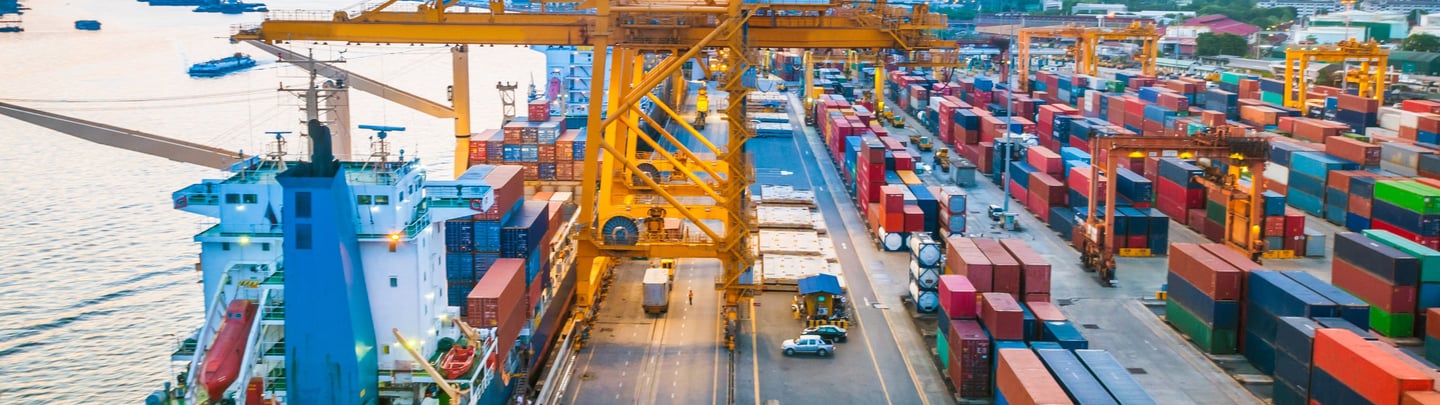
Container operations are a very different beast from bulk handling, and the difference matters enormously for electrical demand. Bulk export — coal, grain, mineral concentrates — relies on conveyors, shiploaders and stackers moving continuous streams of material. Container handling, by contrast, is a precise, equipment-intensive choreography of lifting, stacking, moving and tracking individual boxes. A modern container terminal needs electrified ship-to-shore cranes to lift containers on and off vessels, automated stacking systems to manage the container yard, high-capacity power networks to feed all of that equipment, and advanced communications infrastructure to coordinate the movements and track every container in real time.
Each of those needs is, at root, a cable need. The cranes need power and control cable, much of it on reeling systems because the cranes move. The stacking systems need power and data. The yard needs a distribution network. The communications backbone needs fibre. A container terminal built to modern, electrified, increasingly automated standards is one of the most cable-intensive pieces of infrastructure a port can build, and Newcastle's terminal — if and as it proceeds — would represent a significant new source of demand for exactly the specialised cable types this transformation calls for.
It's worth appreciating just how much equipment a container terminal packs into its operations, because the equipment count drives the cable count. A single ship-to-shore crane is a major installation in its own right, and a terminal needs several to work multiple vessels or multiple bays of a single large vessel simultaneously. Behind the quay cranes sits the yard, which on a modern terminal may be served by rows of automated stacking cranes or fleets of straddle carriers and automated guided vehicles, each a powered, often automated machine with its own cabling. Tying it together is a terminal operating system that tracks every container and coordinates every movement, depending on a communications network that reaches every piece of equipment and every part of the yard. The result is a facility where powered, moving, data-connected equipment is the norm rather than the exception, and where cable — power cable, reeling cable, control cable, fibre — is woven through every operation.
There's a further point specific to Newcastle's situation. The terminal is planned for the former BHP steelworks site, a brownfield location with industrial heritage but also with the rail and deepwater access that makes it attractive. Developing a greenfield-style container terminal on such a site means building much of the electrical infrastructure essentially from scratch — a new distribution network, new substations, new equipment and all the cable to connect them. Unlike incremental upgrades to an existing terminal, a new-build terminal represents a concentrated, large-scale cabling requirement delivered over the construction period. For the cable supply chain, projects of this kind are exactly the sort of demand that electrification and port modernisation generate.
Net Zero 2040 Strategy
The third pillar is less a single project than a guiding commitment: the port's target of reaching net zero across its Scope 1 and 2 emissions, and selected Scope 3 emissions, by 2040. This is a science-based target, aligned with limiting global warming, and it comes with a meaningful interim milestone — a substantial reduction in operational emissions by 2030 from a 2018 baseline. The port has already taken concrete steps in this direction, including securing its electricity from renewable sources under a long-term contract, so that the power feeding its operations is itself clean.
The net zero strategy matters to cable demand because it sets the direction for every equipment and infrastructure decision the port makes. When the default answer to "diesel or electric?" becomes "electric," and when the trajectory points towards more renewable generation, more electrified equipment and more electrically intensive operations, the long-run consequence is steadily rising demand for the electrical infrastructure that makes electric operations possible. Net zero is, in effect, a commitment to electrify, and electrification is a commitment to cable.
How Electrification Changes Cable Demand in Modern Ports
It's worth pausing to make the central argument of this article explicit, because it's easy to assume that "more electric equipment" simply means "a bit more wiring." The reality is more significant than that.
Every electrification project ultimately resolves into cable. You can talk about electric cranes, automated terminals and hydrogen hubs in grand strategic terms, but at the physical level, what makes them work is conductors carrying current and fibres carrying data from one place to another. Take away the cable and the grand vision is just a collection of disconnected machines. Cable is the circulatory system of an electrified port, and as the port electrifies, that circulatory system has to grow and become more capable.
The growth happens along two dimensions at once. The first is quantity: more electric equipment, more substations, more distribution runs and more reeling systems simply mean more metres of cable installed across the port. That's the intuitive part. The second dimension is technical complexity, and it's the part that's easy to underestimate. The cables a modern electrified port needs aren't ordinary industrial cables. They have to handle higher voltages for efficient power distribution, survive a brutal marine environment, flex through millions of cycles on reeling drums without failing, resist abrasion and impact, and in many cases carry data alongside power. As ports electrify and automate, the demand isn't just for more cable — it's for more demanding cable, engineered to specifications that ordinary applications never require. That combination of rising volume and rising sophistication is what makes port electrification such a significant driver for specialised cable.
Medium Voltage Power Cable Requirements
The backbone of any electrified port is its medium-voltage distribution network. As electrical loads grow — bigger cranes, more equipment, hydrogen production, container terminals — distributing power at low voltage becomes inefficient, because the higher currents involved mean larger conductors and greater losses. Medium voltage allows the same power to be moved with lower current, smaller conductors and less loss, which is why electrified ports lean heavily on medium-voltage distribution.
The applications multiply as the port modernises. Crane power supply is a major one — large cranes draw substantial power, and feeding them efficiently across the distances involved calls for medium-voltage cable. Container terminal substations, which step voltage down to usable levels at the point of need, are fed by medium-voltage networks. Bulk handling equipment, even as it electrifies, draws on the same distribution backbone. Shore power infrastructure — the systems that let vessels plug into the port's electricity supply and switch off their auxiliary engines while berthed, cutting emissions and noise in port — requires significant medium-voltage capacity to handle the large loads a docked ship represents. And renewable energy integration, whether feeding clean power into the port or connecting the kind of generation associated with a clean energy precinct, relies on medium-voltage cable to move power between sources, storage and loads.
What sets port medium-voltage cable apart from a typical industrial installation is the environment. A port is one of the harshest places to ask a cable to survive. There's relentless ultraviolet exposure from the sun, which degrades ordinary cable jackets over time. There's salt spray and salt-laden air, which is highly corrosive and attacks both the cable and its terminations. There's mechanical stress from the movement of equipment, the weight of installations, and the constant activity of a working port. A medium-voltage cable specified for a port has to withstand all of this for years, which means specialised jacket materials, robust construction and careful attention to how and where the cable is installed. Choosing a cable rated for a sheltered indoor installation and putting it to work on an exposed wharf is a recipe for early failure. The marine environment is unforgiving, and the cable specification has to respect that.
There's also the matter of how medium-voltage cable is routed and protected across a sprawling port site. Some runs go underground in ducts or trenches, where moisture, ground movement and the risk of accidental damage during other works all come into play. Other runs are above ground on cable trays or supports, exposed to the elements but easier to inspect and maintain. Crossing roadways, rail lines and operational areas demands careful protection against crushing and abrasion. Terminations and joints — the points where cable connects to equipment or to other cable — are particular vulnerabilities, because they're where moisture and salt can find their way in and where electrical stress concentrates. A well-designed port power network pays close attention to these details, because a medium-voltage cable is only as reliable as its weakest termination. As the port's distribution network grows to feed electrified equipment, container terminals and clean energy facilities, the sheer extent of medium-voltage cable to be routed, protected, terminated and maintained grows with it, and the engineering care required scales accordingly.
The reliability stakes are high because medium-voltage distribution sits upstream of so much. A fault in a reeling cable takes one crane out of service; a fault in a medium-voltage feeder can take out a substation and everything it supplies. This is why redundancy, protection systems and quality of installation matter so much at the medium-voltage level, and why operators are well advised to treat medium-voltage cable as critical infrastructure deserving proper specification and installation rather than as a commodity to be minimised on cost. The cheapest medium-voltage solution that fails in five years is far more expensive than the properly engineered one that runs for decades.
Shore Power: A Growing Source of Cable Demand
One application deserves a closer look in its own right, because it sits squarely at the intersection of decarbonisation and cable demand: shore power, sometimes called cold ironing or onshore power supply. The idea is straightforward. When a ship is berthed, it still needs electricity for its onboard systems — lighting, refrigeration, pumps, accommodation and more. Traditionally, vessels meet this demand by running their auxiliary diesel engines while in port, burning fuel and emitting exhaust right at the quayside, often close to communities. Shore power lets the vessel switch those engines off and plug into the port's electricity supply instead, drawing clean grid power while berthed.
The emissions and air-quality benefits are significant, which is why shore power is increasingly part of port decarbonisation strategies and, in some jurisdictions, regulatory requirements. But shore power is also electrically demanding. A large vessel's auxiliary load is substantial — equivalent to a small town in some cases — and delivering that much power to a ship at the berth requires serious electrical infrastructure: high-capacity medium-voltage supply, transformers and switchgear at the quay, connection systems that mate the shore supply to the ship, and the cable to carry it all. The connection itself often involves a cable management system at the berth, because the connection point has to reach the vessel and accommodate its movement and the variation between different ships.
For a port building out shore power capability, this means new medium-voltage feeders, new quayside electrical infrastructure and, in many cases, specialised cable handling systems for the connection — yet another strand of the rising cable demand that electrification brings. As more vessels are equipped to use shore power and as ports expand their capability to provide it, the supporting cable infrastructure grows in step. For a port like Newcastle, with its emphasis on emissions reduction and its position handling large vessels, shore power represents both an environmental opportunity and a further driver of the specialised cable demand running through this whole transformation.
Reeling Cable Demand for Electrified Crane Systems
If medium-voltage cable is the backbone, reeling cable is one of the most critical and most demanding components in port electrification. A reeling cable is the flexible cable that feeds power, and often data, to a piece of equipment that moves — a crane travelling along a wharf, a trolley running across a gantry, a spreader rising and falling. As the equipment moves, the cable winds on and off a motorised reel, flexing and bending continuously. It's a punishing duty, and it's central to almost every electrified moving machine in the port.
How a Reeling Cable System Works
To appreciate why reeling cable is so demanding, it helps to understand what actually happens in a reeling system. The cable runs from a fixed power connection point, through a guide arrangement, onto a motorised reel mounted on the moving equipment — or, in some configurations, from a reel on the structure to a connection on the moving machine. As the equipment travels, the reel rotates to wind the cable in or pay it out, keeping the cable under controlled tension so it neither goes slack and piles on the ground nor snaps tight and shocks the system. A motor, often with sophisticated torque control, manages this winding, adapting to the changing diameter of the cable on the drum as it fills and empties.
The cable in this system is bent and straightened on every cycle, flexed as it winds onto and off the drum, and subjected to the tension the reel maintains. Over a service life that may run to millions of travel cycles, that's an extraordinary amount of mechanical work for the cable to absorb without its conductors fatiguing or its insulation cracking. This is why reeling cable is a specialised product rather than ordinary power cable pressed into service — it's engineered specifically to survive continuous flexing, with conductor constructions, insulation systems and jacket materials chosen to tolerate the bending and the environment. The drum it winds onto matters too: a drum sized correctly for the cable keeps the bending gentle enough to protect it, while an undersized drum can destroy even a well-made cable by bending it too tightly on every wrap. Reeling cable and the reel system that carries it are best thought of as a single engineered system, designed together to deliver power reliably to a machine that never stops moving.
Ship-to-shore cranes — the towering machines that lift containers between vessel and wharf — are among the most cable-intensive pieces of equipment in any container terminal. They involve several distinct cable applications. Gantry travel cabling feeds the crane as it moves along the quay, often over considerable distances, which means the reeling cable has to store and pay out long lengths reliably. Trolley travel cabling feeds the trolley that runs in and out along the crane's boom. Spreader systems — the lifting attachment that grips the container — need power and control signals delivered through cabling that moves with them.
Across all of these, the demands on the cable are severe. It needs high flexibility, because it bends and flexes constantly. It has to handle long travel distances without the reeling system failing or the cable fatiguing. It needs torsion resistance, because reeling and the geometry of cable routing can twist the cable, and a cable that can't tolerate twisting will fail internally. It needs high tensile strength to cope with the forces of acceleration, deceleration and its own weight when long lengths are paid out. A ship-to-shore crane is, from a cabling perspective, a continuous high-cycle test of the reeling cable, and only purpose-built reeling cable stands up to it.
The scale of these cranes amplifies every one of those demands. A modern ship-to-shore crane is an enormous structure, tall enough to reach across the largest container vessels and lift containers many storeys into the air, and it travels along the quay over considerable distances to position itself against different bays and different ships. The reeling cable feeding such a crane may need to store and manage long lengths, handle high power to drive the substantial hoisting and travel motors, and do so reliably through the relentless duty cycle of a busy terminal that works around the clock. The consequences of failure are correspondingly serious: a ship-to-shore crane out of action means a vessel can't be worked efficiently, and on a terminal where berth time is precious and vessel schedules are tight, that's a costly disruption. This is why the cable feeding these cranes is specified with such care, and why operators are willing to invest in properly engineered reeling cable rather than cutting corners — the cost of the cable is trivial next to the cost of an idled crane and a delayed ship.
As ports electrify and as remote operation spreads, ship-to-shore cranes also increasingly need integrated data alongside power, which points towards the hybrid cable designs discussed shortly. A crane that's being operated remotely or monitored continuously needs its data link to be as reliable as its power supply, and delivering both through a coordinated reeling system becomes part of the specification. The ship-to-shore crane, in other words, sits right at the leading edge of the trend towards more capable, more integrated reeling cable.
Electrified RTG Cranes
Rubber-tyred gantry cranes — the mobile cranes that stack and shuffle containers in the yard — have traditionally run on diesel generators, each crane carrying its own engine. As ports electrify, many are converting these diesel RTGs into electrified RTGs, often called E-RTGs, which draw power from the grid instead of burning diesel on board. The shift cuts emissions, slashes fuel costs and reduces the noise and local air pollution of a yard full of diesel engines.
The enabling technology, in many cases, is a motorised cable reel system. Instead of a diesel generator, the electrified crane carries a reel that pays out and winds in a power cable as the crane travels its lane, drawing continuous electrical power from a fixed connection point. This is precisely the kind of application that drives reeling cable demand: every diesel RTG converted to an E-RTG with a cable reel is a new reeling cable installation, and as conversion programmes roll out across Australian ports, the cumulative demand for robust, flexible reeling cable grows accordingly. The trend is firmly towards electrification, and reeling cable rides directly on the back of it.
The economics of RTG conversion are compelling enough to make it one of the clearest electrification wins available to a container terminal. A diesel RTG burns fuel continuously, requires regular engine maintenance, and emits exhaust and noise right in the working yard where people are present. Converting it to draw grid power — whether through a cable reel, a conductor bar system or a hybrid arrangement — cuts the fuel bill dramatically, slashes maintenance, eliminates local emissions and quietens the yard. For a terminal running many RTGs around the clock, the savings add up quickly, and the environmental benefits align neatly with decarbonisation commitments. The cable reel approach in particular preserves the RTG's flexibility to move between lanes and around the yard, which is part of why these cranes were chosen over rail-mounted alternatives in the first place. The reeling cable is what makes that combination of mobility and electric power possible, which places it at the heart of one of the most popular electrification measures in modern terminals. As more Australian terminals pursue RTG electrification — and as a new terminal like Newcastle's would specify electric equipment from the outset — the demand for the heavy-duty reeling cable these systems consume continues to build.
Rail-Mounted and Automated Cranes
Beyond RTGs sit rail-mounted gantry cranes, automated rail-mounted gantry cranes and automated stacking cranes — equipment that runs on fixed rails and, increasingly, operates with little or no direct human control. These machines represent the more advanced end of the spectrum, and their cabling requirements reflect that.
Automated equipment is, if anything, more demanding of its cabling than traditional manually operated cranes. A human-operated crane can tolerate a degree of variability; an automated one depends on continuous, reliable power and a constant stream of control and feedback data to position itself precisely and operate safely without an operator in the cab. That dependence raises the stakes on cable reliability and on the integration of data communication alongside power. An automated stacking crane that loses its data link or suffers a power interruption doesn't just slow down — it stops, and in an automated terminal where machines coordinate with one another, one stoppage can ripple outward. The cable systems feeding automated cranes therefore have to be more advanced, more reliable and more capable of carrying integrated power and data than those serving older, simpler equipment.
Growing Demand for Hybrid Fibre Optic Reeling Cables
One of the clearest signals of where port cabling is heading is the rising demand for hybrid fibre optic reeling cables — cables that combine power conductors and optical fibres within a single flexible reeling cable. Understanding why these are increasingly important means understanding how automation has changed what a port crane needs from its cable.
A modern, automated or remotely operated crane doesn't just need power; it needs to talk. It needs to receive control commands, report its position and status, stream data from sensors and cameras, and coordinate with the wider terminal management system, all in real time and all without interruption. Automation increases this dependence dramatically. Remote control systems need a fast, reliable data link. Equipment monitoring — tracking the health and performance of the machine to catch problems before they cause failures — generates and transmits continuous data. Digital twin systems, which maintain a live virtual model of the equipment and operation, depend on a constant flow of accurate data from the physical machine. And as ports move towards AI-assisted operations, where systems optimise movements and decisions automatically, the appetite for data only grows.
Fibre optics are the natural medium for this data — they carry vast bandwidth, resist electrical interference, and suit the demanding data needs of automated equipment. The challenge is that a moving crane needs both power and data delivered to it as it travels, and running two separate reeling systems for power and data is cumbersome, costly and harder to maintain. The elegant solution is the hybrid reeling cable: power conductors and optical fibres bundled into a single cable that winds on a single reel. This delivers both power and high-bandwidth data through one managed system, simplifying the installation, reducing the number of reeling systems to maintain, and ensuring power and data arrive together at the moving machine.
The applications are exactly the equipment driving port modernisation: automated stacking cranes that need both power to lift and data to coordinate; ship-to-shore cranes adding remote operation and monitoring; intelligent conveyor systems that combine power-hungry drives with sensor networks; and the future autonomous equipment that ports are increasingly planning for. As automation deepens, the hybrid power-and-data reeling cable shifts from a niche product to a mainstream requirement, and demand grows with every automated machine added to the port.
The engineering of these hybrid cables deserves a moment's appreciation, because combining power and fibre in a single flexing cable is a genuine design challenge. Power conductors and optical fibres have very different mechanical characteristics. Copper conductors are relatively tolerant of bending and stretching; optical fibres are far more delicate, intolerant of tight bending and sensitive to tension and crushing. Bundling them together in a cable that will flex through millions of reeling cycles means protecting the fibres carefully — often positioning them where they experience the least strain, cushioning them within the cable's construction, and ensuring the cable's bending radius and reeling system respect the fibres' tighter limits. A hybrid cable that fails to protect its fibres adequately will lose its data capability long before its power capability gives out, which defeats the purpose. This is precisely why hybrid reeling cables are specialised, engineered products and why the reeling system they run on has to be designed with the fibres' sensitivity in mind. As demand for these cables grows, so does the value of the expertise required to design, manufacture and install them correctly — expertise that becomes a meaningful differentiator for the suppliers and integrators who possess it.
Automation as a Driver of Cable Demand
It's worth drawing out explicitly how tightly electrification and automation are bound together, because the two trends reinforce one another and together they amplify cable demand.
Electrification provides the foundation — once equipment runs on electricity rather than diesel, and once it's connected to power and data networks, automating it becomes far more feasible. Automation, in turn, justifies and accelerates electrification, because automated equipment depends on the reliable power and data connectivity that electrified, networked systems provide. You rarely see one without the other; a port that electrifies tends to automate, and a port that automates has already electrified.
Modern container terminals showcase a growing fleet of automated equipment. Automated stacking cranes manage the container yard with little human intervention. Automated straddle carrier systems — sometimes branded as AutoStrad and similar — move containers around the terminal autonomously. Automated guided vehicles ferry containers between the quay and the stacks along predetermined or dynamically planned routes. Remote-operated ship-to-shore cranes let a single operator control cranes from a comfortable, safe control room rather than a cab high above the wharf, and increasingly these edge towards full automation.
Every one of these systems has the same two fundamental needs: reliable power and reliable communication. An automated guided vehicle needs power to move and data to know where to go and what to carry. An automated stacking crane needs power to lift and data to coordinate with the rest of the terminal. A remote-operated ship-to-shore crane needs power for its drives and a high-bandwidth, low-latency data link to relay video and control signals to and from the remote operator. None of this works without cable — and not just any cable, but the flexible, durable, often hybrid power-and-data cable that automated, moving equipment requires. The more a port automates, the more of this specialised cable it consumes, which is why automation sits right alongside electrification as a primary driver of port cable demand.
The direction of travel in automation only intensifies these requirements. As terminals move from partial automation towards more fully autonomous operations, and as artificial intelligence takes on a larger role in planning and optimising movements, the volume of data flowing to and from equipment grows, and the tolerance for interruption shrinks. An autonomous terminal is a tightly coordinated system where the failure of one machine's power or data connection can disrupt the whole choreography. That raises the premium on cable reliability and on the integrated delivery of power and data, pushing demand further towards the high-specification hybrid designs that can meet these needs. The cable feeding tomorrow's autonomous port equipment will need to be more capable than today's, and the trajectory of automation guarantees that the bar keeps rising. For a port like Newcastle planning new, modern facilities, designing for this automated, data-intensive future from the outset is the sensible course — and it means specifying cable infrastructure with the capability and headroom to support automation as it deepens over the facility's operating life.
Lessons from Other Australian Ports
Newcastle's trajectory becomes easier to read when set against what's already happening at comparable Australian ports. The pattern of electrification and automation driving specialised cable demand isn't a Newcastle peculiarity; it's a national trend with clear precedents. Looking at how other ports have travelled this road offers a preview of what Newcastle's transformation will likely demand, and reassurance that the cable requirements described here are grounded in real, operating examples rather than speculation.
Port Botany
Port Botany, Sydney's container gateway, has been a leader in Australian container terminal automation and ongoing upgrades. As its terminals have adopted automated equipment and modernised their operations, the demand for specialised reeling and fibre optic cable has risen in step. Botany's experience illustrates the direct link between investing in automated, electrified container handling and consuming more of the advanced cable types this article has described. It's a working example of the cable-intensity of a modern container operation, and a preview of what a fully developed Newcastle container terminal would require.
Port of Brisbane
The Port of Brisbane has been notable for its adoption of automated straddle carrier technology and broader automation investments. The growing role of intelligent crane and handling infrastructure there demonstrates how automation reshapes a port's equipment fleet and, with it, its cabling needs. As intelligent, automated equipment becomes the norm rather than the exception, the cable systems feeding that equipment have to become more capable, more reliable and more integrated. Brisbane shows the direction; Newcastle and others follow.
Fremantle and Western Australian Ports
On the other side of the continent, Fremantle and other Western Australian ports have pursued modernisation projects and increasingly electrified handling equipment. What stands out in the Western Australian context is the emphasis on durability in harsh coastal conditions — the same UV, salt and mechanical stresses discussed earlier, often in even more exposed settings. The importance of robust, long-life cable systems is thrown into sharp relief in these environments, reinforcing the lesson that port cable specification is as much about surviving the environment as it is about carrying power and data. For Newcastle, sitting on its own exposed coastline, the same durability lessons apply directly.
Taken together, these examples sketch a consistent national picture. Across the major Australian container and bulk ports, the direction of travel is the same: electrify the equipment, automate where it makes sense, harden the infrastructure against the marine environment, and integrate data with power. Each port arrives at this point by its own route and on its own timeline, shaped by its trade, its geography and its commercial circumstances, but the destination looks remarkably similar. And at every one of these ports, the practical consequence is the same rising demand for specialised medium-voltage, reeling and hybrid fibre optic cable. Newcastle's transformation is distinctive in its scale and in the dramatic contrast with its coal heritage, but in its cable implications it's very much part of a broader Australian story. The ports that have gone before show that the demand is real, durable and growing — and that the operators and suppliers who treat cable as critical engineered infrastructure are the ones who navigate the transition most successfully.
Key Technical Requirements for Port Electrification Cables
By now a clear theme has emerged: not all industrial cable is suitable for port applications. The combination of continuous movement, harsh marine conditions and critical operational importance imposes design requirements that go well beyond a standard cable specification. Several requirements stand out.
High Mechanical Strength
Port cables, especially reeling cables, live a mechanically demanding life. They must withstand continuous reeling — winding on and off a drum over and over, sometimes through millions of cycles across a service life. They have to cope with dynamic movement, flexing and bending as the equipment they feed travels and works. And they must handle high tensile loads, the forces generated by acceleration, deceleration, the cable's own weight and the dynamics of the reeling system. A cable without the mechanical strength for this duty fatigues, the conductors fracture, and it fails — often at the worst possible moment, taking critical equipment out of service. Mechanical robustness isn't a luxury in port cable; it's a baseline requirement.
UV and Saltwater Resistance
The marine environment attacks cable relentlessly. Ultraviolet radiation from constant sun exposure degrades unprotected jacket materials, making them brittle and prone to cracking. Salt spray and salt-laden air corrode and degrade both the cable and its connection points. Over time, a cable not built to resist these conditions deteriorates, and its insulation and protection are compromised long before its electrical life should be over. Cable lifespan in a port is governed as much by environmental resistance as by electrical performance, which is why port cables call for jacket materials and constructions specifically formulated to shrug off UV and saltwater. Skimping here doesn't save money — it guarantees premature replacement and unplanned downtime.
Abrasion Resistance
Reeling cables in particular endure constant friction — against drum surfaces, against guides, against themselves as they wind, and against the rough realities of a working port. Abrasion wears through cable jackets, exposing what lies beneath and leading to failure. This is why polyurethane (PUR) and specialised rubber compounds are so commonly specified for port reeling cable jackets: these materials combine flexibility with excellent abrasion resistance, holding up to the rubbing and scuffing that would quickly destroy a softer or less robust jacket. The jacket material is one of the most important choices in a port reeling cable, and abrasion resistance is a central reason these tougher compounds dominate.
Long Service Life
Port equipment is critical equipment. When a crane or an automated handling system goes down, the cost in lost productivity and disrupted operations is high, and on a busy terminal it ripples outward to vessel schedules and the wider supply chain. Cable failures are a significant cause of equipment downtime, so a cable engineered for a long, reliable service life delivers value far beyond its purchase price — it keeps critical equipment running and minimises the maintenance interruptions that cost operators dearly. Long service life isn't just a nice-to-have specification; it's central to the economics of port operation, and it's a major reason operators are willing to pay for properly engineered cable rather than the cheapest available option.
Fibre Optic Integration
Finally, as automation and digitalisation deepen, the integration of fibre optics into power cables — the hybrid solutions discussed earlier — moves from a specialist option towards a mainstream requirement. The demand for combined power and communication in a single managed cable grows directly with the automation of port equipment, and any forward-looking view of port cable requirements has to account for the rising prominence of hybrid power-and-data designs. A cable strategy that ignores data integration is a strategy built for yesterday's port.
Selecting the Right Cable for Port Electrification Projects
For those tasked with specifying cable for port projects, the requirements above translate into a set of practical selection considerations. Getting these right at the design stage is far cheaper than discovering a mismatch after installation, when correcting it means downtime and rework.
The starting point is always the application's electrical needs — the voltage level and the power the equipment draws — because these determine the conductor size and the voltage rating the cable must carry. From there, the nature of the duty drives the cable type. Fixed distribution runs call for robust medium-voltage power cable suited to the installation method, whether buried, in ducts or on trays. Moving equipment calls for purpose-built reeling cable engineered for continuous flexing, with the flexibility, torsion resistance and tensile strength the reeling duty demands. Equipment that needs data as well as power, particularly automated or remotely operated machines, points towards hybrid designs that integrate fibre optics with power conductors.
Environmental rating is non-negotiable for port applications. The cable's jacket and construction must be rated for UV exposure, saltwater and salt-air resistance, and the temperature range of the installation. For reeling and trailing applications, abrasion resistance is critical, which is why polyurethane and specialised rubber compounds dominate these jackets. Where cables run in areas with fire safety requirements, flame performance and low-smoke properties may also come into play. Each of these environmental factors should be checked against the specific conditions the cable will face, not assumed from a generic specification.
The reeling system itself has to be considered alongside the cable, because the two work as a unit. The drum has to be sized correctly for the cable to keep bending within safe limits, the tensioning system has to maintain proper tension across the full travel, and the cable's bending radius and reeling ratings have to match the system it's installed on. A first-rate cable on a poorly matched reel will still fail, which is why experienced specifiers treat the cable and reel as a single engineered system and often work with integrators who can deliver both together.
Finally, it pays to look beyond the immediate purchase to the whole-of-life cost. The cheapest cable that meets the minimum specification on paper may prove the most expensive choice once premature failures, downtime and replacement are factored in. For critical port equipment, where a failure can idle a crane and disrupt vessel operations, the value of a properly engineered, durable cable far exceeds its price premium. The right question isn't "what's the cheapest cable that works?" but "what cable will keep this critical equipment running reliably for its full intended life in this demanding environment?" Asking the second question consistently is what separates a well-run port electrical strategy from a series of recurring, avoidable failures.
Step back from the technical detail and a clear set of implications emerges for everyone in the cable supply chain and for the operators they serve. The transition towards electrification, automation and clean energy at ports like Newcastle creates genuine opportunity, but it's opportunity that rewards specialisation rather than commodity supply.
For medium-voltage cable suppliers, the build-out of distribution networks to feed electrified equipment, container terminals and clean energy facilities represents a growing market — but one that demands cables engineered for the marine environment, not generic industrial product. For reeling cable manufacturers, the wave of crane electrification, RTG conversions and new automated equipment translates into rising demand for the flexible, durable reeling cable that moving equipment depends on. For fibre optic cable suppliers, the deepening of automation and the spread of hybrid power-and-data designs open a expanding role, as data integration becomes standard rather than exceptional. And for cable reel system integrators — the companies that bring together the reel, the cable, the tensioning and the controls into a working system — the proliferation of moving electrified equipment creates demand for complete, engineered reeling solutions rather than components alone.
The common thread is that future projects are likely to require increasingly specialised cable designs. The port of the future isn't served by off-the-shelf cable; it's served by cable engineered for its specific, demanding requirements — higher voltages, harsher environments, more flexing cycles, integrated data. Suppliers and integrators who can meet those requirements, and operators who understand that cable is a critical engineered system rather than a commodity to be bought on price, are the ones best positioned for the transformation underway. The cheapest cable is rarely the most economical once downtime and replacement are factored in, and the sophistication of modern port operations is steadily raising the bar for what counts as fit-for-purpose.
Future Outlook for Port of Newcastle
What does the next decade hold for Newcastle, and for the cable demand that tracks its development? While the precise pace and shape of individual projects will depend on investment decisions, regulatory processes and market conditions, the overall direction is clear.
Container terminal development, if it proceeds as envisaged, would establish an entirely new and highly cable-intensive operation at the port, complete with electrified cranes, automated stacking and the power and communications networks that container handling requires. Clean energy exports, anchored by the Clean Energy Precinct's hydrogen and ammonia ambitions, would add a major new electrically intensive industrial complex, with all the power distribution and cabling that implies. Increased automation across the port's operations would deepen the demand for advanced power-and-data cable systems, as more equipment operates with less direct human control. And the expansion of electrified equipment generally — more electric cranes, more E-RTGs, more electric vehicles and handling machines — would steadily replace diesel with electricity, and combustion with cable-fed drives, across the port's fleet.
Each of these threads points the same way for cable demand: upward. As the port invests in electric, automated and clean-energy infrastructure, the quantity and sophistication of the cable required grows alongside the investment. The transformation that's reshaping Newcastle from a single-commodity coal port into a diversified, electrified, partly automated and increasingly clean-energy-focused trade gateway is, beneath the surface, a transformation that runs on cable. The more the vision is realised, the more cable the port will need, and the more demanding the specifications for that cable will become.
It's also worth thinking about the timeline over which this demand unfolds, because it shapes how the cable supply chain should prepare. Major port projects don't happen overnight. Front-end engineering, environmental assessment, financing, regulatory approval and construction all take years, and a project like the Clean Energy Precinct or a new container terminal moves through distinct phases, each with its own cable requirements. Early phases involve site enabling and core infrastructure; later phases bring the equipment fit-out where reeling cables, crane cabling and the dense networks of an operating terminal are installed; and the operating life that follows generates ongoing demand for replacement cable as reeling cables reach the end of their service life and are renewed. This means cable demand from a single major project isn't a one-off spike but a sustained stream extending across construction and into decades of operation. For suppliers and integrators, the implication is that building the capability to serve port projects is an investment in a durable, growing market rather than a chase after a single contract.
The replacement cycle deserves particular emphasis. Reeling cables, by the nature of their punishing duty, wear out and need replacing periodically even when everything is designed and installed correctly. A port with a large and growing fleet of electrified, reeling-cable-fed equipment generates a continuous baseline of replacement demand — every reeling cable installed today is a future replacement order. As the installed base of electrified equipment across Newcastle and other Australian ports grows, this replacement demand grows with it, layering a steady, recurring stream of cable demand on top of the demand from new projects. The transition to electrification doesn't just create a wave of initial installation; it creates a lasting, expanding requirement for the specialised cable that keeps electrified ports running.
Conclusion
The Port of Newcastle's transformation represents far more than an infrastructure upgrade. It reflects a fundamental rethinking of what the port is and what it does — a deliberate shift from a coal-dependent past towards a diversified future built on electrification, automation and decarbonisation. The Clean Energy Precinct, the proposed Newcastle Deepwater Container Terminal and the Net Zero 2040 commitment are not isolated projects; together they describe a port reinventing itself for a low-carbon, digitally enabled era.
This shift is not unique to Newcastle. It mirrors a broader movement across Australian ports — Port Botany, the Port of Brisbane, Fremantle and others — all moving in the same direction at their own pace, all driven by the same forces of policy, economics and technology. Newcastle is simply one of the most visible and ambitious examples, made all the more striking by the contrast with its coal-export heritage.
For the cable industry and for port operators alike, the implication is unambiguous. As ports invest in electric cranes, automated terminals and clean energy infrastructure, demand for medium-voltage power cables, reeling cables and hybrid fibre optic cable systems will continue to grow — in volume, and in technical demand. The unglamorous reality beneath every electrified crane, every automated stacking system and every hydrogen electrolyser is a network of carefully engineered cable doing the essential work of carrying power and data where they're needed. Newcastle's transformation, and the wider transformation of Australian ports it represents, is in a very real sense a cable story — and that story is still being written.
Expert Summary
Having worked through the full picture, here are the points worth carrying away:
Electrification, automation and decarbonisation are one story, not three. At Newcastle they reinforce one another — the Net Zero 2040 commitment drives electrification, electrification enables automation, and automation deepens the dependence on reliable power and data. Anyone planning for the port's cable needs should treat these trends as a single, mutually reinforcing transformation rather than separate initiatives.
Every strategic project resolves into cable at the physical level. The Clean Energy Precinct is a major power-distribution and cabling project. The container terminal is one of the most cable-intensive builds a port can undertake. Behind the headline visions sit substations, reeling systems and fibre networks — and the metres of specialised cable that make them work.
Demand is rising on two axes at once: quantity and sophistication. It's not simply that the port will need more cable. It will need more demanding cable — rated for higher voltages, built to survive UV and salt, engineered to flex through millions of reeling cycles, and increasingly carrying data alongside power. The bar for "fit for purpose" keeps rising.
The marine environment is the silent specification. UV, salt and mechanical stress govern cable life in a port as much as electrical performance does. PUR and specialised rubber jackets, robust construction and proper environmental rating aren't optional extras — they're what separates a cable that lasts from one that fails early and takes critical equipment down with it.
Hybrid power-and-data reeling cable is moving from niche to mainstream. As remote operation, monitoring, digital twins and AI-assisted operations spread, the case for delivering power and high-bandwidth data through a single managed reeling cable becomes overwhelming. Forward-looking cable strategies should assume data integration as a default, not an afterthought.
Specialisation wins; commodity supply loses. For manufacturers, integrators and operators, the lesson of the modern port is that cable is a critical engineered system, not a commodity bought on price. The cheapest cable rarely proves the most economical once downtime and replacement are counted, and the sophistication of electrified, automated ports rewards those who engineer for the specific, demanding application.
Newcastle is a preview, not an exception. What's happening on the Hunter coast is a concentrated version of a national and global shift. Understanding the cable demand created by Newcastle's transformation is, in effect, understanding where Australian port infrastructure — and the cable that underpins it — is heading over the coming decade.
The port that once defined itself by coal is redefining itself around clean energy, containers and automation. Beneath every part of that reinvention runs cable — and as the transformation accelerates, so too will the demand for the specialised, durable, increasingly intelligent cable systems that make a modern port work.
How to Reach Us
Get in Touch
SiteMap
Product Catalogue
Festoon Cable
Shore Power Cable




Scan to add us on WeChat