
Portable Arc-Welding Cable 600V – Flexible EPR Welding Leads for Electric Arc Systems
Discover Portable Arc-Welding Cable 600V: Flexible EPR welding leads with Class K stranded copper for electric arc systems. 90°C rating, 6×OD bend radius, ASTM/ICEA compliant. Ideal heavy-duty 600V arc welding cable for electrode holders and welding machines.
hongjing.Wang@Feichun
1/21/20269 min read
Introduction to Portable Arc-Welding Cable 600V
In the demanding world of industrial welding operations, the quality and reliability of electrical connections can make the difference between seamless productivity and costly downtime. The portable arc-welding cable 600V serves as a critical component in electric arc welding systems, functioning as a flexible welding lead that connects electrode holders to arc welding machines within the secondary circuit. This specialized cable represents an essential investment for professional welding operations, where exceptional durability, flexibility, and complete compliance with industry standards are non-negotiable requirements.
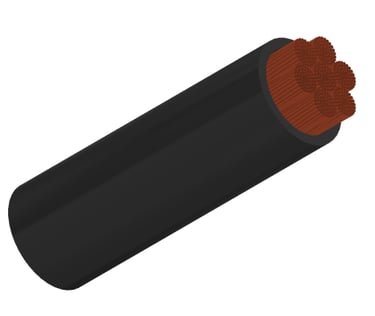
Unlike standard electrical cables, flexible welding leads must withstand the unique challenges of welding environments—intense heat, mechanical abrasion, oil exposure, and frequent movement across job sites. The heavy-duty EPR jacket welding cable delivers reliable performance in these demanding conditions, providing consistent electrical conductivity while maintaining structural integrity throughout extended service life. For welding professionals, contractors, and industrial facilities, this cable represents more than just an electrical connection; it's a fundamental component that eQnsures safety, efficiency, and quality in every welding operation.
The engineering behind this 600V arc welding cable reflects decades of industry experience and technological advancement. By combining superior conductor materials with advanced insulation systems, manufacturers have created a product that meets the rigorous demands of modern welding applications while maintaining the flexibility needed for practical installation and daily use.
Standards and Certifications
Quality assurance in industrial electrical products begins with rigorous adherence to established standards. The portable arc-welding cable 600V meets comprehensive certifications including ICEA S-75-381/NEMA WC 58, ASTM B 172, ASTM B 33, CAN/CSA C22.2 No. 96, and UL 1581. These international standards represent the culmination of extensive testing protocols and safety evaluations developed by leading industrial organizations.
ICEA S-75-381 and NEMA WC 58 standards specifically address portable and power feeder cables for use in mines, providing detailed specifications for construction, materials, and performance characteristics. ASTM B 172 governs rope-lay stranded copper conductors having a bunch-stranded member, ensuring the conductor flexibility essential for welding applications. ASTM B 33 establishes requirements for tinned soft or annealed copper wire, which enhances corrosion resistance and electrical connectivity.
The CAN/CSA C22.2 No. 96 certification ensures compliance with Canadian electrical safety standards, while UL 1581 covers reference standards for electrical wires, cables, and flexible cords. These certifications collectively guarantee that both heavy-duty and medium-duty EPR welding cables maintain consistent performance and safety across various welding applications, from small fabrication shops to large-scale industrial operations.
For procurement managers and safety officers, these certifications provide confidence that the cable meets stringent quality benchmarks. They also ensure regulatory compliance across different jurisdictions, simplifying specification and approval processes for multi-site operations or international projects.
Construction Details and Material Selection
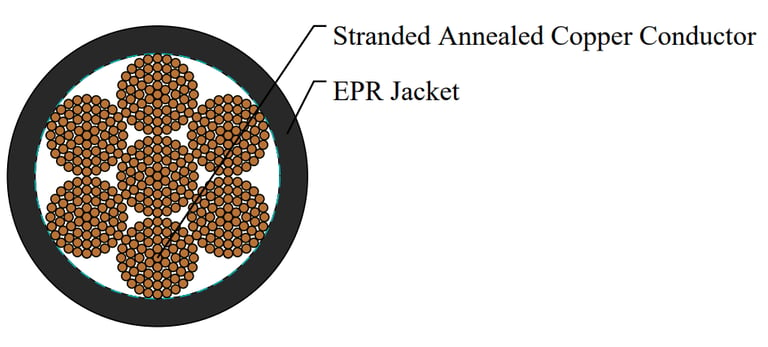
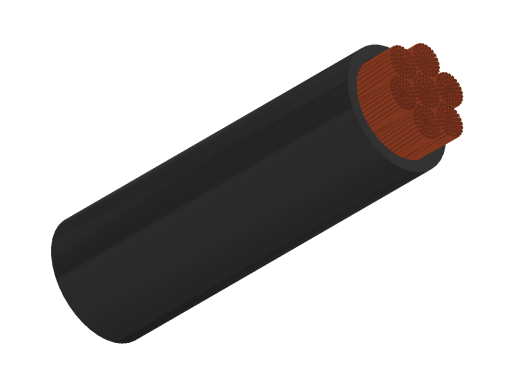
The foundation of any high-performance welding cable lies in its conductor design. The portable arc-welding cable 600V features Class K/M stranded annealed copper conductor, representing the pinnacle of conductor flexibility and electrical performance. Class K stranding incorporates fine individual copper wires arranged in a rope-lay configuration, providing exceptional flexibility that allows the cable to withstand repeated bending and flexing without conductor damage or performance degradation.
Annealed copper undergoes a controlled heating process that enhances ductility and reduces internal stresses, resulting in superior electrical conductivity compared to hard-drawn alternatives. This combination of fine stranding and annealing ensures that the conductor maintains low electrical resistance while delivering the flexibility required for demanding welding operations where cables must navigate around obstacles, equipment, and workpieces.
The jacket system represents equally critical engineering. The heavy-duty or medium-duty Ethylene Propylene Rubber (EPR) jacket offers outstanding abrasion resistance and weather resistance, protecting the conductor from mechanical damage, UV exposure, ozone degradation, and temperature extremes. EPR rubber maintains flexibility across a wide temperature range, from cold outdoor environments to the intense heat generated near welding arcs.
For specialized applications, manufacturers offer optional materials including CSP (Chlorosulfonated Polyethylene), PCP (Polychloroprene), NBR (Nitrile Butadiene Rubber), and PVC (Polyvinyl Chloride) outer jackets. Each material provides distinct advantages: CSP offers superior chemical resistance, PCP delivers excellent flame resistance, NBR provides oil resistance, and PVC offers economical protection for lighter-duty applications.
The reinforced two-layer jacket option introduces an additional protective dimension. By incorporating reinforcing fiber between jacket layers, this construction significantly enhances mechanical strength and abrasion resistance, extending cable service life in particularly harsh environments such as shipyards, heavy equipment repair facilities, and structural steel fabrication operations.
Mechanical and Thermal Performance Specifications
Practical cable performance extends beyond electrical characteristics to include mechanical handling properties. The 600V arc welding cable features a minimum bending radius of 6 times the outer diameter (6×OD), enabling easy handling and routing in confined spaces and complex work environments. This relatively small bending radius proves invaluable when installing cables in crowded fabrication shops, navigating around machinery, or working in structural frameworks where tight routing is necessary.
A generous bending radius specification prevents internal conductor damage, jacket cracking, and premature cable failure. When cables are bent too sharply, individual conductor strands can break, insulation can crack, and overall cable integrity becomes compromised. The 6×OD specification provides optimal balance between flexibility and protection, ensuring long service life even with frequent repositioning.
Thermal performance represents another critical specification. The maximum conductor operating temperature of +90℃ fully meets the demands of high-temperature arc welding applications. While the welding arc itself generates temperatures exceeding 6,000℃, the cable must withstand radiant heat, heat conducted through the electrode holder and workpiece connections, plus the resistive heating from current flow through the conductor itself.
The 90℃ rating ensures that flexible welding leads maintain insulation integrity and mechanical properties even during sustained high-current operations. This temperature capability positions the cable as a dependable choice for various industrial welding scenarios, including SMAW (Shielded Metal Arc Welding), GTAW (Gas Tungsten Arc Welding), and GMAW (Gas Metal Arc Welding) processes that impose different thermal stresses on cable systems.
Application Scenarios and Use Cases
The primary application of portable arc-welding cable 600V involves connecting electrode holders and welding machines in the secondary circuit of electric arc welding systems. This seemingly straightforward function encompasses diverse scenarios across multiple industries, each presenting unique operational requirements and environmental challenges.
In industrial manufacturing facilities, these cables connect stationary welding stations to various workpieces throughout production areas. Assembly lines for automotive components, machinery manufacturing, and metal fabrication operations rely on dependable welding connections that maintain consistent performance through thousands of welds. The cable's durability ensures minimal maintenance interruptions while its flexibility facilitates equipment repositioning as production layouts evolve.
Construction sites present particularly demanding conditions. Outdoor welding operations for structural steel installation, pipeline construction, and building framework assembly expose cables to weather extremes, construction debris, and constant movement across uneven terrain. The heavy-duty welding cable construction withstands these challenges while maintaining electrical safety standards essential on multi-trade job sites.
Equipment repair and maintenance operations demand versatile cable solutions. Mobile repair operations, shipyard maintenance, railway car repair, and mining equipment servicing require cables that can be quickly deployed, routed through complex equipment spaces, and retrieved for relocation to the next repair site. The combination of flexibility and durability makes these cables ideal for such portable applications.
Specialized applications include underwater welding support systems, where the cable portion above water must resist marine environment exposure, and aerospace manufacturing, where quality standards and traceability requirements demand certified cable products meeting rigorous specifications.
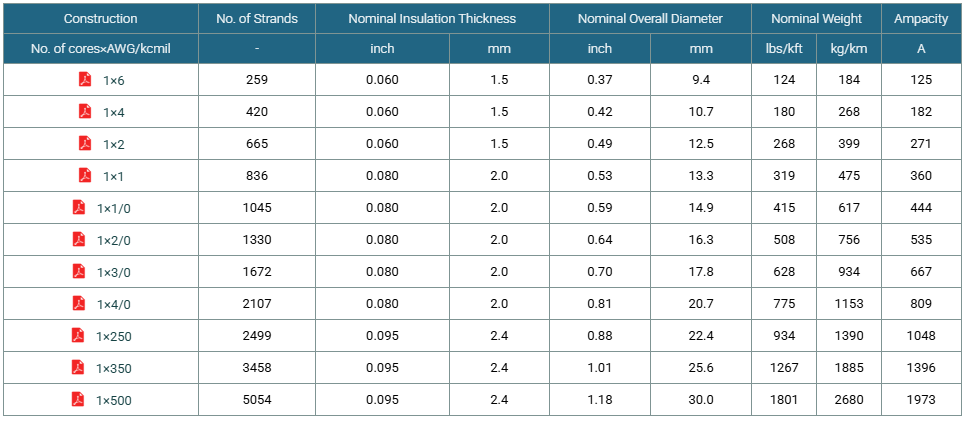
Common Cable Issues and Solutions
Q: Why does my welding cable become stiff and difficult to handle in cold weather?
A: Cable stiffness in cold temperatures results from jacket material losing flexibility as temperatures drop. Standard PVC jackets can become rigid below 0℃, making cable handling difficult and increasing the risk of jacket cracking. The EPR jacket on this 600V arc welding cable maintains flexibility down to -40℃, ensuring easy handling in winter conditions. For extreme cold environments, storing cables indoors when not in use and allowing them to gradually adjust to outdoor temperatures before heavy manipulation can prevent damage.
Q: What causes premature cable failure near connection points?
A: Connection point failures typically result from excessive bending stress near lugs and terminals. When cables are bent sharply immediately adjacent to connections, repeated flexing causes conductor strand breakage and jacket deterioration. Always maintain the minimum bending radius of 6×OD, and consider using strain relief devices at connection points. Installing the cable with gentle curves rather than sharp angles significantly extends service life.
Q: How do I prevent cable damage from weld spatter and hot metal?
A: While the EPR jacket provides excellent heat resistance, direct exposure to molten spatter will damage any cable. Elevate cables above ground level when possible, route them away from direct weld zones, and use protective cable covers or sleeves in high-exposure areas. For particularly challenging environments, consider the reinforced two-layer jacket construction with fiber reinforcement, which provides enhanced protection against mechanical damage and thermal exposure.
Q: Why does my cable overheat during high-current welding operations?
A: Cable overheating indicates undersized conductors for the welding current being used. Verify that the cable ampacity rating matches or exceeds your welding machine's output current at the duty cycle you're operating. Additionally, ensure good electrical connections at both ends—loose or corroded connections create resistance that generates excess heat. Poor-quality crimps or damaged lugs should be replaced immediately, as connection point resistance compounds heating issues.
Q: Can I repair damaged welding cable or should I replace it?
A: Minor abrasion to the outer jacket that doesn't penetrate to the conductor can be temporarily protected with electrical-grade rubber tape designed for 600V applications. However, any damage exposing the conductor, any conductor strand breakage, or any section that has been overheated (indicated by discolored or melted insulation) requires cable replacement. The cost of cable replacement is minimal compared to the safety risks and potential equipment damage from using compromised cables.
Product Advantages and Competitive Strengths
The portable arc-welding cable 600V distinguishes itself through several competitive advantages that directly address the practical needs of welding operations. The flexible Class K stranded copper conductors deliver superior performance compared to less-flexible conductor designs, reducing operator fatigue during cable positioning while ensuring consistent electrical performance through countless bending cycles.
The durable EPR jacket construction provides exceptional longevity in harsh industrial environments. Unlike cables with inferior jacket materials that crack, harden, or degrade after limited exposure to oils, UV radiation, or temperature extremes, EPR maintains its protective properties throughout extended service, reducing replacement frequency and total ownership costs.
Full compliance with ASTM standards and international certifications ensures reliable long-term performance in critical welding applications. This compliance eliminates specification uncertainties, simplifies procurement processes, and provides documentation necessary for safety audits and regulatory inspections.
The professional-grade quality positioning makes this heavy-duty welding cable the optimal choice for connecting electrode holders and welding machines in demanding industrial settings. While economy cables may offer lower initial costs, their reduced service life, higher failure rates, and safety concerns ultimately result in greater total expenses when accounting for replacements, downtime, and risk exposure.
Detailed Product Specifications
The comprehensive specifications of the 600V arc welding cable demonstrate its engineering excellence. The 600V voltage rating ensures safe operation in medium-power welding systems, providing adequate insulation margin above typical welding machine secondary voltages ranging from 15V to 40V open circuit. This voltage rating also accommodates voltage spikes and transients common in arc welding systems.
The Class K/M stranded annealed copper conductor delivers excellent flexibility and electrical conductivity for consistent welding performance. Copper's low electrical resistance minimizes voltage drop along cable runs, ensuring maximum welding energy reaches the electrode. The annealing process further reduces resistance while the fine stranding provides the mechanical flexibility essential for daily handling.
The heavy-duty or medium-duty Ethylene Propylene Rubber jacket provides durable abrasion protection suitable for harsh working conditions. EPR's molecular structure offers inherent resistance to ozone, weathering, and aging, maintaining protective properties throughout the cable's service life without requiring special storage conditions or protective treatments.
The maximum operating temperature of +90℃ accommodates high-temperature welding environments without performance degradation, ensuring insulation integrity even during sustained high-duty-cycle operations. This temperature rating represents continuous operation capability, with brief exposure to higher temperatures during emergency conditions not compromising cable safety.
The minimum bending radius of 6 times the outer diameter facilitates installation in complex job site configurations while protecting internal components from mechanical stress damage. Together, these specifications demonstrate comprehensive advantages in performance, durability, and safety standards compliance.
Conclusion and Call to Action
The portable arc-welding cable 600V represents an essential investment for professional welding operations demanding reliability, safety, and performance. Whether your operations involve industrial manufacturing, construction, or equipment maintenance, selecting quality flexible welding leads directly impacts productivity, safety, and operational costs.
For welding operations with specialized requirements—including reinforced two-layer jackets for extreme abrasion exposure, specialized outer jacket materials for chemical or oil resistance, or custom lengths and terminations—manufacturers offer comprehensive customization services tailored to specific arc welding applications.
We encourage you to contact qualified cable manufacturers for detailed quotations and technical consultation. Professional technical support teams can analyze your specific operational conditions, welding equipment specifications, and environmental factors to recommend the ideal welding cable solution for your needs. Investing in properly specified, certified 600V arc welding cable ensures safe, efficient, and cost-effective welding operations for years to come.
How to Reach Us
Get in Touch
SiteMap
Product Catalogue
Festoon Cable
Shore Power Cable


Scan to add us on WeChat