
Professional 600V Portable Arc-Welding Cable | Flexible Welding Leads for Industrial Arc Welding Systems
Shop durable 600V portable arc-welding cables with class K/M copper conductors and EPR jackets. Flexible welding leads for electric arc welding systems. ICEA/NEMA certified.
hongjing.Wang@Feichun
11/24/202511 min read
Introduction & Overview
In the demanding world of industrial welding operations, the quality and reliability of your equipment can make the difference between seamless productivity and costly downtime. Among the critical components that ensure safe and efficient arc welding processes, portable arc-welding cables serve as the vital link between power sources and electrode holders. These flexible welding leads are specifically engineered to deliver consistent electrical current while withstanding the harsh conditions typical of welding environments.
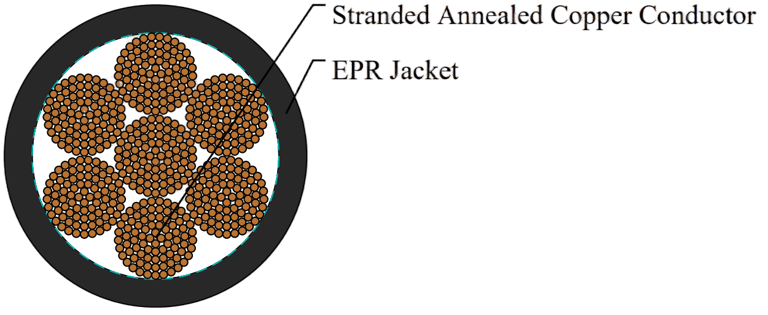
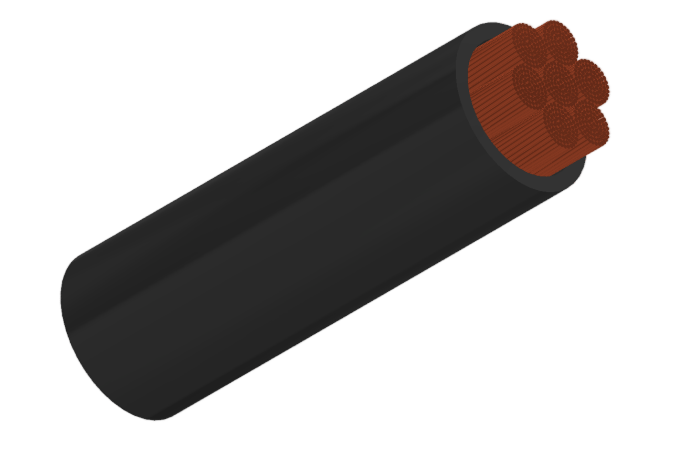
A 600V portable arc-welding cable represents the industry standard for secondary circuit applications, connecting arc welding machines to electrode holders or welding guns. Unlike standard electrical cables, these specialized conductors must accommodate the high amperage demands of welding operations while maintaining exceptional flexibility for ease of handling. The 600V welding cable featured in this guide incorporates Class K/M stranded annealed copper conductors encased in heavy-duty or medium-duty Ethylene Propylene Rubber (EPR) jackets, delivering superior performance in industrial applications ranging from shipbuilding to automotive repair.
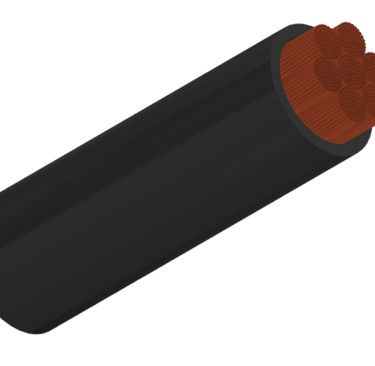
The importance of selecting quality welding cables cannot be overstated. Inferior cables can lead to voltage drops, overheating, premature failure, and potential safety hazards. Professional-grade portable arc-welding cables with proper certifications ensure reliable power delivery, operator safety, and long-term cost-effectiveness through extended service life and reduced maintenance requirements.
Applications & Use Cases
The primary application for 600V portable arc-welding cable lies in serving as secondary circuit welding leads that connect the welding power source to the electrode holder or welding torch. These arc welding secondary circuit flexible leads must deliver high amperage while remaining flexible enough for operators to maneuver comfortably throughout the work area.
Industrial sectors that rely heavily on these flexible welding leads include heavy equipment manufacturing facilities, where large structural components require extensive welding operations. Shipbuilding yards utilize thousands of feet of industrial welding cable daily, as welders navigate complex vessel structures. Construction sites depend on durable welding cable to withstand outdoor conditions, frequent repositioning, and exposure to weather elements. Automotive repair shops and fabrication facilities require reliable arc welding cable for precision work on vehicle frames and custom metalwork.
Equipment compatibility is another crucial consideration. These cables work seamlessly with various arc welding machines, including Shielded Metal Arc Welding (SMAW) equipment, Metal Inert Gas (MIG) welders, and Tungsten Inert Gas (TIG) welding systems. The flexible welding cable must accommodate the specific amperage requirements of each welding process while maintaining consistent performance across different duty cycles.
Working environments for professional grade portable arc-welding cable vary considerably. Indoor workshops benefit from the cable's flexibility and durability during repetitive use. Construction sites expose cables to abrasion, UV radiation, and temperature extremes. Industrial facilities may subject cables to oil, chemicals, and mechanical stress. Each environment demands cables that can maintain electrical integrity while resisting physical degradation.
Technical Specifications & Standards
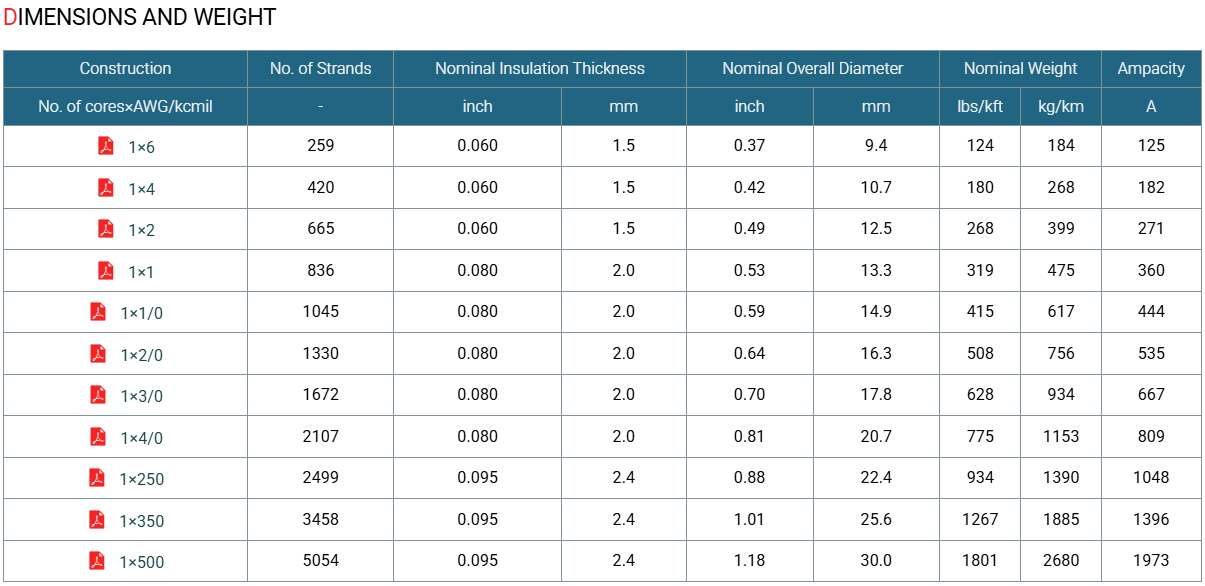
Understanding the technical specifications of Class K/M copper conductor welding cable 600V is essential for selecting the appropriate cable for your application. The 600V voltage rating indicates the maximum voltage the insulation system can safely withstand, providing adequate safety margins for typical arc welding applications operating at 230V to 460V.
The conductor consists of Class K/M stranded annealed copper, representing one of the most flexible conductor classifications available. This Class K/M cable configuration utilizes numerous fine copper strands that enhance flexibility while maintaining excellent electrical conductivity. The annealing process softens the copper, further improving flexibility and reducing work hardening during repeated bending cycles.
The heavy-duty EPR jacketed welding cable 600V features an Ethylene Propylene Rubber jacket that provides exceptional resistance to abrasion, cuts, oils, and weather exposure. EPR offers superior performance compared to standard PVC alternatives, particularly in temperature extremes and harsh industrial environments. Medium-duty EPR options provide balanced protection for less demanding applications while maintaining cost-effectiveness.
Compliance with industry standards ensures reliability and safety. The ICEA S-75-381 NEMA WC 58 welding cable designation confirms the cable meets comprehensive specifications established by the Insulated Cable Engineers Association and the National Electrical Manufacturers Association. Additional compliance with ASTM B 172 ensures proper copper wire specifications, while ASTM B 33 compliance verifies tinned copper wire quality when applicable. CAN/CSA C22.2 No. 96 certification demonstrates compliance with Canadian standards, and UL 1581 testing confirms the cable meets Underwriters Laboratories requirements for electrical and mechanical properties.
This UL certified portable arc-welding cable provides assurance of quality and safety for procurement managers and safety officers who must verify equipment compliance with regulatory requirements.
Construction & Design Features
The construction of industrial portable arc-welding cable NEMA certified to meet rigorous performance standards begins with the conductor core. The Class K/M copper stranded conductor utilizes significantly more strands than standard Class B conductors, resulting in exceptional flexibility. This Welding cable Class K/M copper stranded conductor construction allows the cable to withstand millions of bending cycles without conductor fatigue or breakage.
Each copper strand undergoes annealing to enhance ductility and flexibility. The stranding pattern optimizes both flexibility and current-carrying capacity, ensuring minimal voltage drop even during high-amperage welding operations. Superior electrical conductivity reduces resistive heating, improving energy efficiency and extending cable service life.
The heavy-duty EPR jacket provides multiple protective functions. Its abrasion resistance protects against scraping across rough concrete floors, steel gratings, and sharp metal edges common in welding environments. The flexibility of EPR maintains pliability in cold weather conditions where PVC jackets become stiff and prone to cracking. Temperature resistance allows the jacket to withstand exposure to hot spatter and elevated ambient temperatures without degradation.
For specialized applications, custom welding cable jacket materials CSP PCP NBR offer alternatives to standard EPR. Chlorosulfonated Polyethylene (CSP) provides enhanced resistance to oils, ozone, and weather exposure. Polychloroprene (PCP) offers excellent abrasion resistance and flexibility across a wide temperature range. Nitrile Butadiene Rubber (NBR) delivers superior oil resistance for environments with heavy petroleum product exposure. PVC options provide economical solutions for light-duty indoor applications.
Advanced configurations include two-layer reinforced welding cable construction, featuring reinforcing fiber between inner and outer jacket layers. This design significantly increases mechanical strength and resistance to tearing while maintaining flexibility. The reinforcing layer distributes stress across the cable structure, preventing jacket separation and extending service life in demanding applications.
Mechanical & Thermal Properties
The 90°C rated portable arc-welding cable industrial specification indicates the maximum continuous conductor operating temperature of +90°C (194°F). This temperature rating provides adequate thermal capacity for typical welding duty cycles while ensuring jacket integrity during prolonged use. The EPR insulation system maintains its electrical and mechanical properties throughout this temperature range, unlike some polymer alternatives that soften or degrade at elevated temperatures.
The minimum bending radius of 6×OD (six times the cable's outer diameter) represents a critical specification for installation and use. Exceeding this bending limit can damage conductor strands, compromise jacket integrity, and reduce cable service life. For example, a cable with a 0.75-inch outer diameter should not be bent to a radius smaller than 4.5 inches. This generous flexibility allows welders to route cables through confined spaces and around obstacles without risking damage.
Durability benefits of proper construction become evident in real-world applications. The combination of Class K/M copper and EPR jacketing significantly reduces cracking and splitting that plague inferior cables. The cable maintains flexibility even after extended exposure to cold temperatures, whereas PVC-jacketed alternatives become brittle and prone to failure. In harsh environments, weather-resistant and oil-resistant options ensure consistent performance despite exposure to moisture, UV radiation, petroleum products, and chemical contaminants.
Advantages & Benefits
The superior flexibility of flexible arc welding leads for electrode holders manufactured with Class K/M conductors cannot be overstated. This flexibility allows tight wrapping for storage without damaging the conductor or jacket. Welders can easily manipulate the cable during operations, reducing fatigue during extended welding sessions. The cable naturally conforms to irregular surfaces and routes through complex equipment layouts without requiring excessive force.
Enhanced durability translates directly to cost savings through extended service life and reduced replacement frequency. The heavy-duty EPR jacket withstands abrasion from dragging across rough surfaces, resists cuts from sharp edges, and maintains integrity despite exposure to weld spatter. This durability reduces unplanned downtime caused by cable failures and eliminates the safety hazards associated with damaged insulation.
Compliance and certification provide peace of mind for procurement managers and safety officers. Meeting ICEA/NEMA, ASTM, CSA, and UL standards ensures the cable performs as specified and meets regulatory requirements for industrial electrical equipment. Third-party testing and verification remove uncertainty from the purchasing decision, while documentation supports compliance reporting and safety audits.
Cost-effectiveness emerges from the balance of initial investment and total cost of ownership. While premium cables command higher upfront prices than economy alternatives, their extended service life, reduced failure rates, and minimal maintenance requirements deliver superior value over time. The reliable performance at competitive pricing makes professional-grade cables the economical choice for operations prioritizing productivity and safety.
Customization options address specialized requirements that standard configurations cannot accommodate. Flexible jacket materials allow optimization for specific environmental conditions. Dual-layer construction provides additional protection in extremely demanding applications. Custom conductor sizes accommodate unique amperage requirements. This flexibility ensures optimal performance across diverse welding operations.
Comparison & Why Choose This Cable
Comparing this arc welding cable with standard welding cables reveals significant performance differences. Standard cables often utilize Class B conductors with fewer, larger strands that reduce flexibility and increase susceptibility to fatigue failure. The Class K/M conductors in professional-grade cables provide dramatically improved flexibility and durability, justifying the modest price premium.
The advantages of Class K/M conductors versus other grades become evident during long-term use. Class B conductors work-harden more rapidly, leading to stiffness and eventual strand breakage. Class K/M conductors maintain flexibility through millions of bending cycles, substantially extending service life. The finer stranding also improves current distribution, reducing hot spots and resistive losses.
Benefits of EPR jacket over PVC alternatives include superior temperature performance, enhanced flexibility in cold conditions, better abrasion resistance, and improved chemical resistance. PVC jackets become brittle in cold weather and soften in hot conditions, while EPR maintains consistent properties across a wider temperature range. The abrasion resistance of EPR significantly exceeds that of PVC, critical for cables frequently dragged across rough surfaces.
Superior performance in demanding industrial environments justifies selecting premium cables for critical applications. The combination of Class K/M copper and EPR jacketing delivers reliability that inferior alternatives cannot match, reducing costly downtime and safety incidents.


Installation & Maintenance Tips
Proper cable handling begins with correct storage practices. Coil portable arc-welding cable bulk wholesale pricing options in large, loose loops rather than tight coils that stress the conductor and jacket. Store cables in dry, temperature-controlled environments away from direct sunlight and chemical exposure. Avoid storing cables near sharp objects or heavy equipment that could damage the jacket.
Connection to electrode holders and welding machines requires attention to detail. Ensure all connections are clean, tight, and properly sized for the cable. Use cable lugs appropriate for the conductor size and terminal configuration. Apply dielectric grease to threaded connections to prevent corrosion and facilitate future disconnection. Verify polarity and secure all fasteners to prevent arcing or overheating.
Regular inspection and maintenance procedures extend cable life and prevent failures. Before each use, visually inspect the entire cable length for cuts, abrasion, exposed conductors, or jacket damage. Check connections for looseness, corrosion, or overheating evidence. Test continuity and insulation resistance periodically, especially after the cable has been subjected to unusual stress or environmental exposure.
Care instructions to extend cable lifespan include avoiding excessive bending beyond the minimum radius specification, preventing mechanical damage from sharp edges or heavy equipment, and cleaning cables regularly to remove accumulated contaminants. Replace damaged cables immediately rather than attempting field repairs that compromise safety and performance.
Safety guidelines for arc welding operations mandate proper cable sizing for the welding current, adequate insulation integrity, secure connections, and regular inspections. Never use damaged cables, and ensure all welding equipment is properly grounded. Follow manufacturer specifications for duty cycle and amperage ratings to prevent overheating.
Common Cable Problems and Solutions
Problem: Premature Jacket Cracking
Jacket cracking often results from excessive bending, exposure to incompatible chemicals, or UV degradation. Solution: Verify the minimum bending radius is maintained during use and storage. Select appropriate jacket materials for the operating environment—use CSP for enhanced weather resistance or NBR for oil-heavy environments. Store cables away from direct sunlight when not in use.
Problem: Conductor Strand Breakage
Broken conductor strands reduce current-carrying capacity and create hot spots. Solution: This typically indicates exceeding the minimum bending radius or using cables with inadequate flexibility classification. Upgrade to Class K/M conductors for improved flexibility and specify heavier gauge cables if mechanical stress is unavoidable.
Problem: Connection Overheating
Overheating at terminals indicates loose connections, corrosion, or undersized cable lugs. Solution: Ensure all connections are properly torqued according to manufacturer specifications. Use appropriately sized cable lugs and apply anti-corrosion compounds. Regularly inspect and clean connections, retightening as necessary.
Problem: Excessive Cable Stiffness in Cold Weather
PVC-jacketed cables become rigid and difficult to handle in cold conditions. Solution: Specify EPR-jacketed cables that maintain flexibility across a wider temperature range. For extreme cold, consider specialized low-temperature jacket formulations.
Problem: Rapid Jacket Abrasion
Cables dragged across rough surfaces show premature wear. Solution: Use heavy-duty EPR jackets or two-layer reinforced construction. Implement cable management practices that minimize dragging, such as overhead cable reels or cable protectors in high-traffic areas.
Frequently Asked Questions
What does "600V" mean for welding cables?
The 600V rating indicates the maximum voltage the cable insulation system can safely withstand. This provides adequate safety margin for typical arc welding applications operating at voltages up to 460V, with additional capacity for voltage spikes and transients.
What is Class K/M copper conductor?
Class K/M represents one of the most flexible conductor classifications, utilizing numerous fine copper strands. This construction provides exceptional flexibility for applications requiring frequent repositioning and tight bending radii while maintaining excellent electrical conductivity.
Why choose EPR jacket over PVC?
EPR offers superior abrasion resistance, maintains flexibility across wider temperature ranges, resists oils and chemicals more effectively, and provides better long-term durability in harsh industrial environments compared to PVC alternatives.
Can I customize the jacket material?
Yes, alternative jacket materials including CSP, PCP, NBR, and PVC are available upon request to optimize performance for specific environmental conditions such as extreme weather, oil exposure, or chemical resistance requirements.
What is the minimum bending radius?
The minimum bending radius is 6 times the cable's outer diameter (6×OD). Bending cables tighter than this specification can damage conductors and compromise jacket integrity, reducing service life and creating safety hazards.
How long do welding cables last?
Service life depends on usage patterns, environmental conditions, and maintenance practices. Properly maintained Class K/M cables with EPR jackets typically provide 5-10 years of service in industrial applications, significantly outlasting economy alternatives.
Is this cable UL certified?
Yes, the cable complies with UL 1581 testing standards and meets all applicable ICEA, NEMA, ASTM, and CSA certifications, ensuring quality, safety, and performance meet industry requirements.
Certifications & Standards
The comprehensive certification portfolio demonstrates the cable's adherence to rigorous industry standards. ICEA S-75-381/NEMA WC 58 establishes specifications for portable and power feeder cables for use at 600V or less, defining conductor requirements, insulation properties, and testing procedures.
ASTM B 172 specifies requirements for annealed copper wire rope strands, ensuring conductor quality and performance characteristics. ASTM B 33 addresses tinned soft or annealed copper wire specifications when applicable. These standards guarantee consistent conductor quality and electrical properties.
CAN/CSA C22.2 No. 96 provides Canadian certification for portable power cables, essential for projects in Canadian jurisdictions. UL 1581 establishes comprehensive testing procedures for electrical wires, cables, and flexible cords, covering electrical, mechanical, and environmental performance.
Quality assurance processes include incoming material inspection, in-process testing, and final product verification. Third-party testing and verification by recognized laboratories provide independent confirmation of compliance. This multi-layered approach ensures every cable meets or exceeds published specifications.
Conclusion
Selecting the right portable arc-welding cable for your operation requires understanding the relationship between construction quality, performance characteristics, and total cost of ownership. The 600V portable arc-welding cable with Class K/M copper conductors and EPR jackets represents the professional standard for demanding industrial applications, delivering superior flexibility, durability, and safety compliance.
Whether you're equipping a fabrication shop, construction operation, or manufacturing facility, investing in certified, properly constructed welding cables ensures reliable performance, operator safety, and long-term cost-effectiveness. The combination of industry-standard certifications, premium materials, and proven construction techniques makes these cables the preferred choice for professionals who demand the best from their welding equipment.
For optimal results, specify cables that meet your specific amperage requirements, environmental conditions, and flexibility needs. Consider customization options for specialized applications, and implement proper handling and maintenance procedures to maximize service life. With the right cable selection and care, your welding operations will benefit from reduced downtime, improved safety, and enhanced productivity for years to come.
How to Reach Us
Get in Touch
SiteMap
Product Catalogue
Festoon Cable
Shore Power Cable


Scan to add us on WeChat