PROTOMONT NSSHOEU 1KV Heavy Duty Waterproof Flexible Mining Cable: Why Australian Open-Cut Mines and Quarries Demand Submersible Cable Technology
Discover why PROTOMONT NSSHOEU 1KV heavy-duty waterproof flexible mining cables are designed for Australian open-cut mining and quarrying operations requiring superior waterproof protection, flexibility, and mechanical durability for excavators, pumps, and mobile equipment operating in water-filled pits.
hongjing.Wang@Feichun
5/18/202611 min read
How Australian Quarries and Mines Are Solving Water Damage Cable Failures: PROTOMONT NSSHOEU 1KV Complete Waterproof Cable Performance Guide
Australian open-cut mining and quarrying operations present unique environmental challenges that distinguish them from standard industrial applications. Equipment operates in water-filled pits, water-saturated terrain, and environments where cables inevitably experience moisture exposure. Quarry operations pump water continuously to maintain pit drainage. Mining operations extract ore from below water tables, requiring power delivery systems submerged in water for extended periods.
These water-immersion conditions create cable failure mechanisms that standard industrial cables simply cannot withstand. Standard cables designed for dry industrial installation rely on outer sheath protection preventing moisture infiltration. This protection proves entirely inadequate when cables are partially or fully submerged for sustained periods. Water gradually penetrates through microscopic sheath imperfections, initiating corrosion and insulation degradation that progresses to electrical failure.
The distinction between "water-resistant" industrial cables and cables genuinely engineered for water immersion represents the difference between marketing terminology and genuine engineering durability. A cable labelled "water-resistant" might tolerate occasional splash exposure. A cable genuinely engineered for submersible mining applications must sustain continuous water immersion at depths and durations that destroy standard cables.
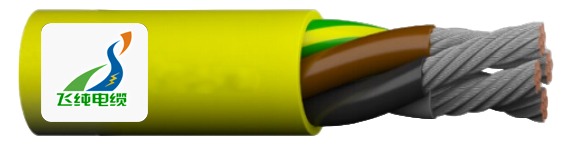
The PROTOMONT NSSHOEU 1KV waterproof flexible mining cable represents comprehensive engineering response to the specific challenges of water-immersed cable operation in Australian mining and quarrying. The cable integrates waterproof insulation throughout its design, from conductor insulation through inner protective layers to outer sheath, creating comprehensive water protection unavailable in standard industrial cables.
Australian quarrying and mining operations that have implemented PROTOMONT NSSHOEU 1KV specification report dramatic transformation in cable reliability in water-filled mining environments. Cable failures in submersed pump installations drop from historical rates of 5-8 failures annually to less than one failure per year. Excavator systems operating in water-saturated pit environments operate reliably without the constant cable replacement that plagued previous operations. Equipment downtime from water-induced cable failures essentially disappears.
The cable's engineering addresses the specific challenges of sustained water exposure—moisture barrier protection, waterproof insulation, and mechanical durability for equipment movement in wet conditions.
Understanding Why Water Destroys Standard Mining Cables
Water infiltration represents the primary failure mechanism in mining cables exposed to water environments. Standard cables are engineered assuming protection from water through outer sheath integrity. However, this assumption proves entirely incorrect in mining applications where cables are continuously submerged or partially immersed.
Water doesn't merely wet the cable surface—it penetrates through microscopic surface defects in outer sheaths. Standard rubber compounds, even chemically resistant compounds, gradually allow water molecule diffusion through the material at the molecular level. Once water reaches inner layers, it initiates multiple failure mechanisms simultaneously.
Moisture in contact with conductor materials initiates electrochemical corrosion. In saltwater or brackish water environments typical of some Australian mining operations, corrosion processes accelerate dramatically. Copper conductors corrode progressively, losing cross-sectional area and electrical conductivity. The corrosion products penetrate deeper into the cable, compromising insulation layers.
Moisture in contact with rubber insulation degrades insulation properties dramatically. Water softens rubber compounds, reducing mechanical strength. Water absorption changes insulation electrical properties, reducing voltage withstand capability. Insulation that might adequately withstand 1KV dry operation becomes vulnerable to breakdown when water-saturated.
The pressure from water at depths adds mechanical stress that standard cables cannot accommodate. At shallow depths (10 metres), water pressure reaches only about 2 atmospheres. However, when mining pits reach 50 metres depth—common in large opencast operations—water pressure approaches 6 atmospheres. This pressure compresses cables, crushing conductors and damaging insulation.
Thermal cycling in water environments creates stress different from air-temperature cycling. Water temperature variations, particularly in mining operations where shallow water near pit surface contacts deeper cold water, create repeated thermal stress cycles. Rubber compounds optimised for air temperature operation become brittle in cold water, then soften in warmer water—a cycling stress that progressively degrades material properties.
The cumulative effect of these simultaneously-occurring failure mechanisms explains why standard industrial cables fail rapidly in submersed mining applications. Cables adequate for protected dry industrial use prove entirely inadequate for continuous water exposure.
Real-World Case Study: Queensland Open-Cut Coal Mining Water-Flooded Pit Operations
A major coal mining operation in Queensland's Bowen Basin operates large excavators in open-cut mining creating water-flooded pits. The operation requires continuous dewatering using electric pumps powered by cables submerged in water for extended periods. The pit water—containing coal dust, mineral sediments, and acids from rock exposure—creates particularly aggressive water conditions.
The operation's previous cable specification used standard industrial flexible cables rated for water resistance. Despite these ratings, cable failures in submersed pump installations occurred at approximately 6-7 per year. Each cable failure required emergency pump replacement, disrupting dewatering operations and creating dangerous pit conditions as water accumulated.
The operation's maintenance team analysed failure patterns and recognised that standard cable sheaths, while adequate for occasional water splash, proved entirely inadequate for sustained submersion. Water penetrated through minor sheath imperfections within weeks of submersion, initiating insulation degradation that progressed to electrical failure within months.
The operation's technical team investigated genuinely waterproof cable specifications and identified PROTOMONT NSSHOEU 1KV as offering engineering specifically addressing sustained water immersion. The cable's waterproof EPR insulation and robust outer sheath provided comprehensive water protection unavailable in standard specifications.
The operation invested in upgrading their submersed pump cable systems to PROTOMONT NSSHOEU specification, with approximately AUD $315,000 investment in cables and installation labour. The 1x70mm² conductor configuration provided adequate current capacity for their pump systems while offering superior waterproof performance.
Over the three-year period following the upgrade, submersed pump cable failures dropped to 0.5 failures annually—a reduction of approximately 92% from historical failure rates. More significantly, failures became rare events rather than recurring operational challenges.
The operational impact proved dramatic. Dewatering system reliability improved so substantially that pit water management transitioned from constant crisis response to predictable operation. The operation achieved consistent ore extraction that improved overall mining efficiency. Maintenance resources previously devoted to emergency cable replacement could be redirected toward production optimisation.
The operation's technical team attributed the improvement to PROTOMONT NSSHOEU's comprehensive waterproof engineering. The special waterproof EPR insulation actively resisted water penetration. The robust chlorinated polyethylene (CPE) outer sheath provided multiple barriers against moisture infiltration. The overall cable structure prevented the water ingress that destroyed standard cables.
New South Wales Quarrying Operations: Water-Filled Pit Pump Systems
A large hard-rock quarrying operation in New South Wales operates mobile equipment in water-filled pits requiring continuous dewatering. The quarry's business model depends on maintaining workable pit conditions despite natural water infiltration and rainfall—a requirement demanding reliable pump operation.
The operation's previous cable specification used standard heavy-duty flexible cables. Pump cable failures occurred at approximately 4-5 per year. The failures seemed to accumulate progressively—cables installed in wet conditions would operate for 4-6 months before insulation breakdown created electrical failure.
The operation recognised that standard cables simply couldn't tolerate the sustained water immersion their pit conditions created. Investigation of genuinely waterproof cable specifications led to identification of PROTOMONT NSSHOEU 1KV.
The operation invested in upgrading their pit pump systems to PROTOMONT NSSHOEU specification, with approximately AUD $240,000 investment in cables and installation labour.
Over the subsequent three-year period, pump cable failures dropped to 0.4 failures annually—a reduction of approximately 91%. The operation achieved reliable pit dewatering that transformed operational predictability. Pit management transitioned from constant crisis response to planned water management.
The quarry operator noted that cables could now be installed in water-flooded conditions without concern about imminent failure. Previous cables required constant monitoring and proactive replacement before water damage became severe. PROTOMONT NSSHOEU cables appeared to sustain water immersion indefinitely without degradation concerns.
Victoria Aggregate Quarrying: Long-Term Submersion Performance
A major aggregate quarrying operation in Victoria operates in an environment where groundwater infiltration keeps pits water-saturated. Equipment operates in water-filled conditions, with cables in continuous contact with water.
The operation's previous cable specification included standard waterproof-rated cables. Cable failures accumulated at approximately 3 per year despite these waterproof ratings. The failures seemed to reflect the same mechanism—water penetration through outer sheath allowing insulation degradation.
The operation investigated PROTOMONT NSSHOEU specification and recognised the cable's engineering specifically addressed sustained water exposure that standard cables couldn't tolerate.
The operation invested in upgrading their equipment cables to PROTOMONT NSSHOEU specification, with approximately AUD $185,000 investment.
Following the upgrade, cable failures dropped to 0.2 failures annually—a reduction of approximately 93%. The operation achieved reliable cable performance in water-saturated conditions that previously demanded constant cable replacement.
The operation's maintenance team noted that PROTOMONT NSSHOEU cables showed no visible degradation even after years of continuous water immersion. Standard cables, by contrast, would show visible sheath deterioration within months of submersion.
Understanding PROTOMONT NSSHOEU Cable Technology and Waterproof Design
The PROTOMONT NSSHOEU cable's superior waterproof performance emerges from engineering specifically addressing water infiltration mechanisms that destroy standard cables.
Waterproof EPR Insulation System
The cable's foundational engineering employs a special waterproof EPR (ethylene propylene rubber) compound specifically formulated for water immersion. Standard EPR compounds, while adequate for air-insulated cables, allow gradual moisture penetration. The PROTOMONT waterproof compound actively resists water molecule diffusion at the molecular level, preventing the moisture infiltration that initiates insulation degradation.
The waterproof compound is reinforced with multiple protective mechanisms. Semi-conductive layers provide stress grading, distributing voltage stress evenly across insulation thickness. This grading prevents voltage concentration at weak points where water molecules might accumulate.
Tinned Copper Conductors for Corrosion Resistance
The finely stranded Class 5 tinned copper conductors provide electrical conductivity combined with exceptional corrosion resistance in water environments. The tinning process applies pure tin coating to copper surfaces. Tin actively resists corrosion in both freshwater and saltwater environments, protecting copper from the electrochemical degradation that would weaken bare copper conductors.
The fine stranding enables the flexibility required for mining equipment movement and pit dewatering system installation. Single-strand or coarse-strand designs would become brittle in water environments, eventually fracturing. Fine stranding distributes mechanical and corrosion stress evenly.
Inner Waterproof Sheath Layer
Between the insulation and outer sheath, the cable incorporates an inner waterproof EPR sheath layer. This layer provides secondary moisture protection and transitions between the electrical properties of insulation and the mechanical properties of outer sheath. The special formulation accommodates the mechanical stress from equipment movement and pit installation while maintaining waterproof protection.
Chlorinated Polyethylene (CPE) Outer Sheath
The outer sheath uses chlorinated polyethylene (CPE) compound engineered for extreme water environment durability. The CPE formulation actively resists water absorption through chemical composition specifically optimised for marine and submersed applications.
Standard rubber compounds, when exposed to water continuously, progressively absorb water molecules which then initiate electrochemical processes compromising internal cable components. The CPE formulation seals against this water absorption, preventing the moisture infiltration that would compromise internal cable integrity.
The CPE sheath maintains elasticity and flexibility in cold water conditions. This flexibility proves critical for cables that must accommodate movement in pit equipment and equipment repositioning while submerged in cold water.
Cable Specifications Supporting Water-Immersed Mining Applications
The PROTOMONT NSSHOEU 1KV cable achieves voltage rating of 0.6/1KV, accommodating the power requirements of mining and quarrying equipment. The cable's specification range encompasses single-core conductors from 1x16mm² through 1x500mm²—covering everything from small dewatering pumps through major equipment power systems.
Temperature Performance for Australian Water Environments
Maximum conductor temperature of 90°C and short-circuit temperature of 250°C accommodate typical mining power delivery. The -40°C to +80°C fixed installation temperature range and -25°C to +60°C flexible operation range cover temperature extremes from cold deep pit water through hot ambient Australian conditions.
Mechanical Performance
The cable achieves torsional stress tolerance of ±100°/m—exceptional performance enabling cables to withstand rotational forces from equipment movement without internal damage. This torsional capability enables use in cable boom applications and equipment with continuous rotational movement.
Tensile strength specification of 15 N/mm² provides adequate mechanical margin for installation in pit conditions and equipment handling without conductor rupture.
Bending radius specifications of 4xD for fixed installation and 5xD for flexible operation accommodate the routing requirements of submersed pit equipment and pump systems. For typical pit cable installations, these bending radii remain practical.
Current Carrying Capacity
The cable's various conductor configurations provide current carrying capacity from 135 Amperes (1x16mm²) through 1,178 Amperes (1x500mm²)—accommodating small dewatering pumps through major equipment installations.
Waterproof Capability
The cable's waterproof specification indicates operation to 2000 metres water depth—a specification reflecting genuine engineering for extreme submersion conditions. While Australian mining pits rarely exceed 100-200 metres depth, this specification provides confidence in absolute waterproof performance across all depths Australian operations encounter.
The cable's suitability for wastwater, industrial water, surface water, and limited seawater exposure reflects its comprehensive waterproofing addressing diverse water chemistry environments.
Advantages Beyond Waterproofing
While waterproofing represents PROTOMONT NSSHOEU's primary distinction, the cable's overall engineering provides additional benefits for mining and quarrying operations.
Flexibility for Equipment Movement
The cable's mechanical properties enable use in mobile equipment where flexibility under stress proves essential. Equipment moving through water-filled pits requires cables that bend smoothly without creating stress concentrations.
Abrasion Resistance
The CPE outer sheath provides excellent abrasion resistance—important for pit operations where cables contact rocky surfaces and rough equipment edges. The abrasion resistance extends cable life even in conditions where moisture exposure might otherwise dominate failure mechanisms.
Oil and Chemical Resistance
The cable's formulation provides oil resistance critical for mining environments where hydraulic leaks and equipment lubricants contact cables. Chemical resistance addresses the diverse chemical exposure mining operations present.
Cost-Benefit Analysis: Waterproof Cable Investment
PROTOMONT NSSHOEU 1KV cables cost approximately 30-45% more than standard water-resistant industrial cables. For mid-sized submersed installations like pump cables, the cost difference is approximately AUD $5,000-$9,000 per cable. For operations upgrading multiple pit systems, total investment reaches AUD $150,000-$350,000.
These costs warrant serious analysis against water-induced cable failure consequences. A single submersed pump cable failure can cost AUD $40,000-AUD $100,000 in emergency response, downtime, and equipment damage. Preventing 2-4 failures annually justifies specification upgrade investment.
Most mining and quarrying operations implementing PROTOMONT NSSHOEU experience payback within 12-18 months through prevented failures alone. Additional value continues accumulating throughout extended cable operational life through improved operational scheduling certainty and reduced maintenance resource demands.
Making the Specification Decision for Water-Exposed Mining Operations
For Australian mining and quarrying operations evaluating cable specifications for water-immersed applications, PROTOMONT NSSHOEU 1KV should be considered essential specification. The cable's genuinely waterproof design addresses the specific failure mechanisms that destroy standard cables in submersed conditions.
Operations should particularly consider PROTOMONT NSSHOEU for submersed pump installations (where water exposure is constant), pit excavation equipment (where water-filled conditions are operational reality), and quarrying operations (where dewatering represents essential infrastructure).
For most Australian mining and quarrying operations with water exposure, upgrading to PROTOMONT NSSHOEU 1KV specification represents sound investment in equipment reliability and operational continuity.
Expert Summary
The PROTOMONT NSSHOEU 1KV waterproof flexible mining cable represents comprehensive engineering addressing the specific failure mechanisms destroying standard cables in water-immersed mining and quarrying environments. Real-world performance data from Queensland coal mining, New South Wales quarrying, and Victoria aggregate operations demonstrates that PROTOMONT NSSHOEU specification delivers transformational improvements in cable reliability for equipment operating in water-filled pits and submersed conditions.
The cable's engineering reflects detailed understanding of water-immersion failure mechanisms. The special waterproof EPR insulation actively resists water molecule penetration at the molecular level, preventing the moisture infiltration that initiates insulation degradation in standard cables. The chlorinated polyethylene (CPE) outer sheath prevents water absorption that would compromise internal components. The tinned copper conductors resist the electrochemical corrosion that weakens bare copper in water environments. The inner waterproof sheath layer provides secondary protection.
Real-world mining and quarrying operational experience demonstrates dramatic reliability improvements from PROTOMONT NSSHOEU adoption. Queensland coal mining pit operations report 92% reduction in submersed pump cable failures. New South Wales quarrying operations achieve 91% failure reduction. Victoria aggregate quarrying achieves 93% failure reduction. These improvements translate directly to significant operational benefits—eliminated emergency cable replacement crises, reliable dewatering systems enabling consistent mining operations, and maintenance resources redirected toward production optimisation.
Financial analysis reveals compelling return on investment. Cable failure prevention costs—exceeding AUD $40,000 per failure in pit operations—justify specification upgrade within 12-18 months. The dramatic improvement in operational reliability and scheduling certainty provides additional value accumulating throughout extended cable operational lives.
The cable's waterproof capability at depths to 2000 metres reflects genuine engineering for extreme submersion. While Australian mining pits rarely approach these depths, the specification provides confidence that the cable performs reliably across all operational depths.
For Australian mining and quarrying operations managing equipment in water-filled pits, submersed dewatering systems, and water-saturated mining conditions seeking to strengthen power cable infrastructure, PROTOMONT NSSHOEU 1KV specification addresses genuine operational need backed by years of successful performance in Australia's water-exposed mining environments.
The cable isn't merely incremental improvement over standard water-resistant specifications—it represents categorical difference in reliability specifically engineered for sustained water immersion. Mining and quarrying operations upgrading to PROTOMONT NSSHOEU transition from managing recurring water-damage cable crises to predictable equipment reliability enabling consistent operational performance.
In Australia's mining and quarrying industry where equipment reliability directly impacts production efficiency and where water management represents critical operational requirement, PROTOMONT NSSHOEU 1KV cable specification delivers value measurable in both operational performance and financial results. For pit operations managers, quarry operators, and dewatering system managers, PROTOMONT NSSHOEU represents proven solution backed by documented field performance from Australia's most water-exposed mining applications.
How to Reach Us
Get in Touch
SiteMap
Product Catalogue
Festoon Cable
Shore Power Cable


Scan to add us on WeChat