PUR-HF D12Y11YU11Y: Comprehensive Guide to Low Voltage Reeling Cable with PUR Sheathing
Discover the TROMMELFLEX PUR-HF D12Y11YU11Y low voltage reeling cable with PUR sheathing. Flexible cable for high mechanical stress applications with 0.6/1 kV rating, 180 m/min reeling speed, and halogen-free design. Technical specifications, core configurations, and current capacity included.
hongjing.Wang@Feichun
11/26/20259 min read
Introduction to Professional-Grade Reeling Cable Technology
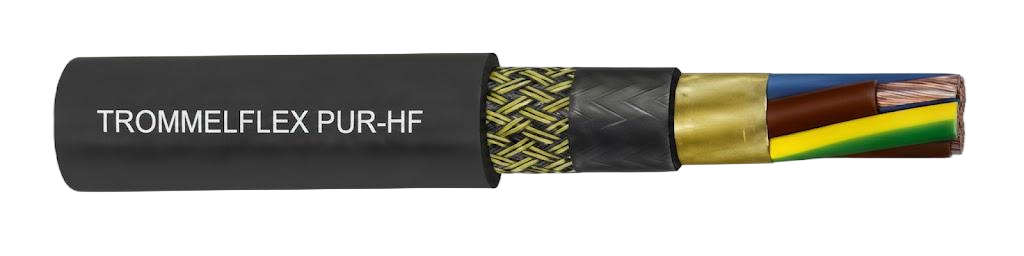
The D12Y11YU11Y represents a specialized category of flexible low voltage reeling cables engineered specifically for applications demanding exceptional resistance to high mechanical stress. This cable designation indicates a sophisticated construction featuring halogen-free polyurethane sheathing, designed to withstand the rigorous demands of industrial environments where conventional cables would fail prematurely.
As industrial automation and mobile machinery continue to advance, the requirement for reliable power transmission solutions in dynamic applications has become increasingly critical. The D12Y11YU11Y low voltage reeling cable addresses these challenges through its optimized design, combining flexibility with mechanical robustness. This cable finds extensive use in reeling operations, festoon systems, and applications requiring continuous movement under varying load conditions.
Electrical Specifications and Performance Parameters
The D12Y11YU11Y operates at a rated voltage of 0.6/1 kV (600/1000V), positioning it firmly within the low voltage category suitable for industrial power distribution and control systems. The maximum permissible operating voltage AC reaches 0.7/1.2 kV, while DC applications can operate up to 0.9/1.8 kV, providing adequate safety margins for voltage fluctuations commonly encountered in industrial environments.
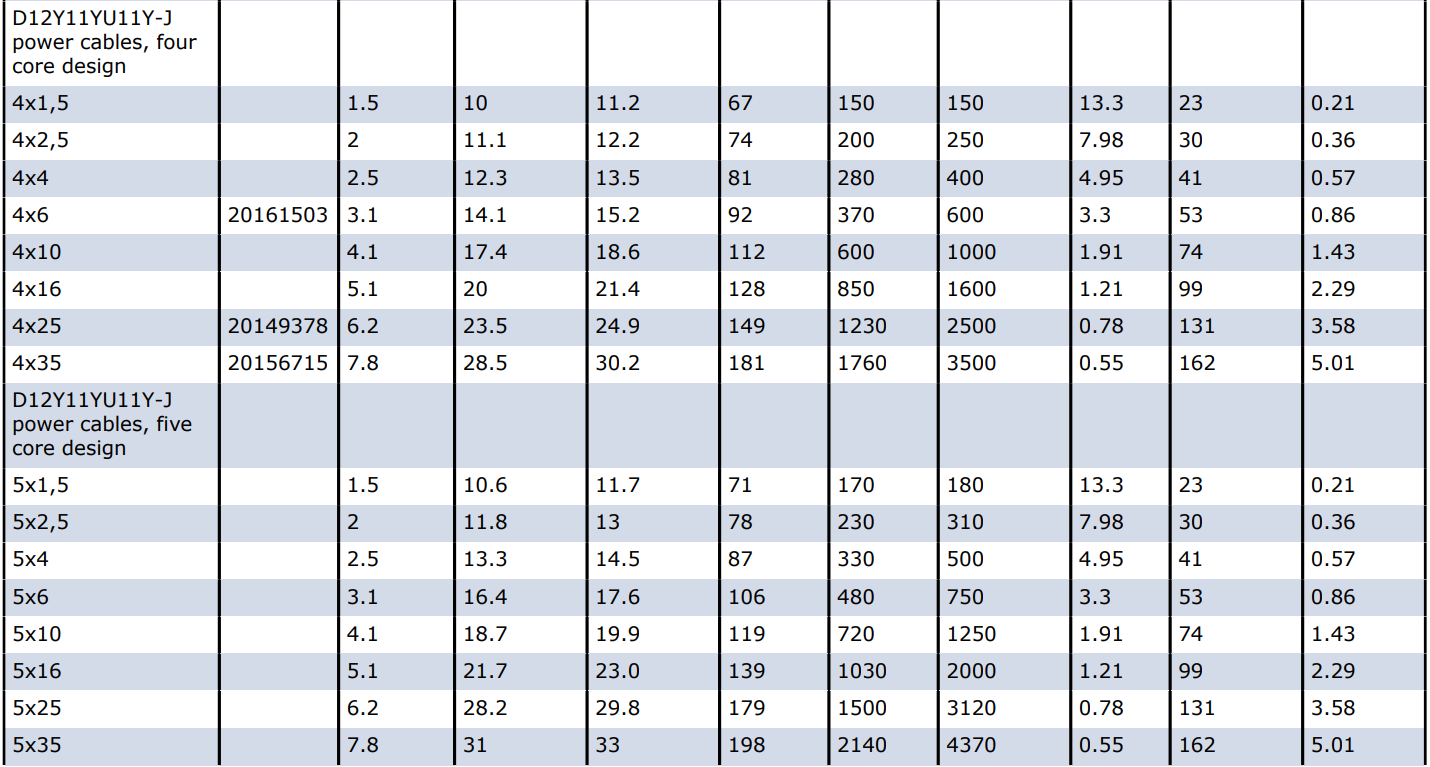
Quality assurance is demonstrated through rigorous AC test voltage requirements of 4 kV sustained for five minutes, ensuring insulation integrity under stress conditions. Current carrying capacity follows DIN VDE 0298-4 standards, with specific amperage ratings varying according to conductor cross-section and installation method. For instance, a 4x25 mm² configuration delivers 131 amperes, while a 5x35 mm² arrangement provides 162 amperes under standard conditions.
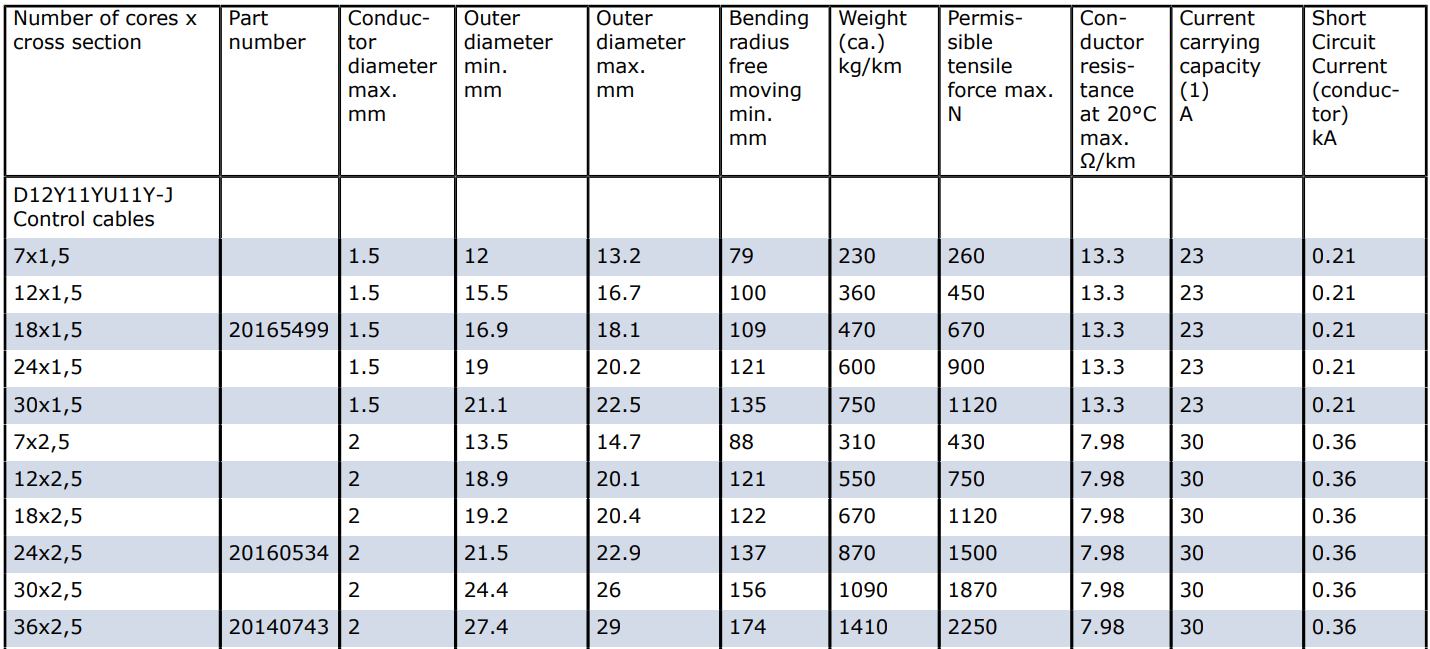
The conductor resistance values at 20°C range from 13.3 Ω/km for 1.5 mm² conductors to 0.55 Ω/km for 35 mm² conductors, directly impacting voltage drop calculations essential for proper system design. Short circuit current capacity varies proportionally with conductor size, from 0.21 kA for smallest conductors to 5.01 kA for the largest 35 mm² configurations.
Thermal Performance Characteristics
Temperature management represents a critical aspect of cable performance and longevity. The D12Y11YU11Y demonstrates impressive thermal capabilities with a maximum permissible conductor temperature of 90°C during normal operation, allowing full utilization of current carrying capacity without premature aging.
During short circuit conditions, the conductor can withstand temperatures up to 250°C, providing adequate thermal margin for protective device operation. This short circuit temperature rating ensures cable integrity is maintained during fault conditions, preventing catastrophic failure and maintaining safety.
The ambient temperature range for flexible operation spans from -40°C to +80°C, significantly broader than many competing cable designs. This extended range makes the cable suitable for extreme climate installations, from arctic conditions to tropical environments. For fixed installation applications, the range extends even further to -50°C minimum, accommodating permanent outdoor installations in the harshest climates.

Mechanical Strength and Flexibility Features
The mechanical performance characteristics define the suitability of this cable for demanding reeling applications. With a maximum tensile load capacity of 25 N/mm² on the conductor, the D12Y11YU11Y provides robust resistance to pulling forces encountered during normal operation. This tensile rating, while lower than rubber-sheathed alternatives rated at 30 N/mm², still delivers excellent performance for most high mechanical stress applications.
Torsional stress capacity of ±50°/m enables the cable to withstand twisting forces inherent in reeling operations where cable wraps around drums or passes through guide systems. The minimum bending radius specification of 6 × D (where D represents outer diameter) ensures the cable maintains structural integrity during installation and operation, preventing internal damage to conductors and insulation.
Travel speed capability represents a defining characteristic for reeling applications. The D12Y11YU11Y supports reeling operations up to 180 m/min without restriction, though consultation with manufacturers is recommended for speeds exceeding this threshold. Festoon system applications similarly operate reliably up to 180 m/min, covering the vast majority of industrial conveyor, crane, and automated storage systems.
Conductor Design and Construction
The conductor utilizes plain copper of flexible class 5 stranding per DIN EN 60228 and DIN VDE 0295 standards. Class 5 stranding provides superior flexibility compared to lower classes, essential for repeated bending cycles in reeling operations. The fine stranding construction distributes mechanical stress across numerous individual wire strands, preventing fatigue failures common in rigid conductor designs.
Conductor diameters vary according to cross-sectional area, ranging from 1.5 mm maximum diameter for 1.5 mm² conductors to 7.8 mm for 35 mm² conductors. This graduated sizing ensures optimal current density while maintaining flexibility proportional to power transmission requirements.
The absence of tinning on copper conductors in this particular cable type represents a design choice balancing cost and performance. While tinned conductors offer enhanced corrosion resistance, the comprehensive sheathing system provides adequate environmental protection for most applications.
Insulation System Technology
The insulation system employs a halogen-free compound based on polyester, delivering enhanced mechanical and electrical characteristics compared to conventional PVC insulation. This halogen-free formulation eliminates toxic gas generation during fire scenarios, critical for enclosed spaces and occupied facilities.
Core identification follows DIN VDE 0293-308 standards for cables up to five cores, utilizing color coding for rapid identification during installation and maintenance. Cables with six or more cores employ natural-colored insulation with black numbering, maintaining clear identification while managing manufacturing complexity and cost.
The insulation thickness varies according to voltage rating and conductor size, providing adequate dielectric strength while minimizing overall cable diameter. This optimization proves essential in reeling applications where cable diameter directly impacts drum capacity and minimum bending radius requirements.
Advanced Sheath System Architecture
The sheath system represents a sophisticated multi-layer construction designed to balance protection, flexibility, and durability. The inner sheath utilizes polyurethane halogen-free compound, providing the first barrier against environmental contamination while maintaining flexibility during movement.
Between inner and outer sheaths, an open braiding support layer constructed from synthetic fibers reinforces the cable structure. This reinforcement distributes mechanical stress across the cable circumference, preventing localized damage and extending service life under continuous flexing.
The outer sheath employs polyurethane halogen-free, flame retardant compound in black opaque finish. This formulation delivers exceptional abrasion resistance essential for drum reeling applications where cable surfaces continuously contact guide rollers and drum surfaces. The flame retardant properties provide critical fire safety, particularly in applications near welding operations or high-temperature processes.
Available Core Configurations
Control Cable Configurations
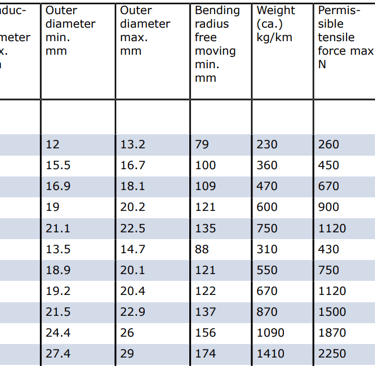
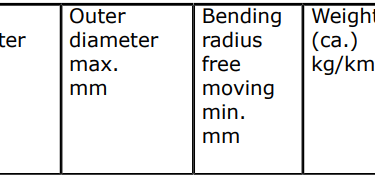
Control cable variants accommodate signal transmission and low-power distribution requirements. Seven-core through thirty-six-core configurations in 1.5 mm² and 2.5 mm² conductor sizes address diverse control system architectures. The 12x1.5 mm² configuration, for example, measures 15.5-16.7 mm outer diameter, weighs approximately 360 kg/km, and provides permissible tensile force of 450 N.
Larger configurations like 36x2.5 mm² reach outer diameters of 27.4-29 mm with weights approaching 1410 kg/km, suitable for complex automation systems requiring numerous discrete control circuits within a single cable assembly.
Power Cable Configurations
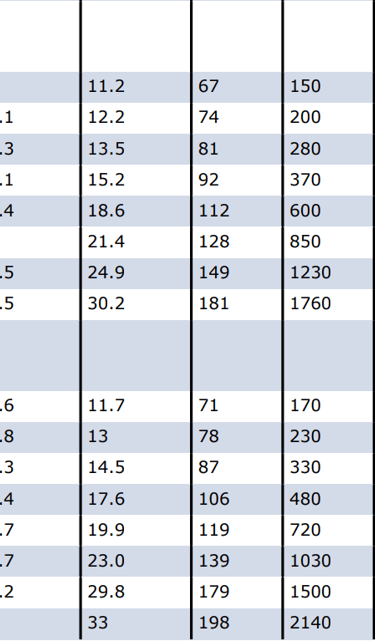
Four-core power cable designs ranging from 4x1.5 mm² through 4x35 mm² serve three-phase systems with neutral or equipment requiring four separate power conductors. The 4x25 mm² variant demonstrates typical specifications with 23.5-24.9 mm outer diameter, 1230 kg/km weight, and 2500 N permissible tensile force, delivering 131 amperes current capacity.
Five-core power cables accommodate three-phase systems with separate neutral and protective earth conductors, essential for ensuring electrical safety in mobile equipment. The 5x25 mm² configuration provides 131 amperes capacity within a 28.2-29.8 mm diameter profile, weighing 1500 kg/km.
Chemical and Environmental Resistance
Fire resistance performance aligns with IEC 60332-1 standards, demonstrating controlled flame propagation characteristics essential for electrical installations. The halogen-free composition ensures that combustion products, should fire occur, remain significantly less toxic than conventional PVC cables.
Water resistance capabilities prove exceptional, with permanent submersion ratings up to 50 meters diving depth in non-potable water applications. This specification enables use in sewage treatment facilities, marine environments, and outdoor installations subject to flooding or continuous moisture exposure.
The polyurethane sheath formulation provides inherent resistance to oils, coolants, and many industrial chemicals. UV radiation resistance ensures outdoor installations maintain integrity despite continuous solar exposure, while ozone resistance prevents surface cracking in high-voltage environments or near ozone-generating equipment.
Application Scenarios in Industrial Environments
Crane and Hoist Systems
Overhead crane installations represent primary applications for this cable type. The continuous reeling action as cranes traverse facility spans demands cables capable of thousands of flex cycles without failure. The 180 m/min travel speed capability accommodates even high-speed overhead crane systems common in steel mills and large-scale manufacturing facilities.
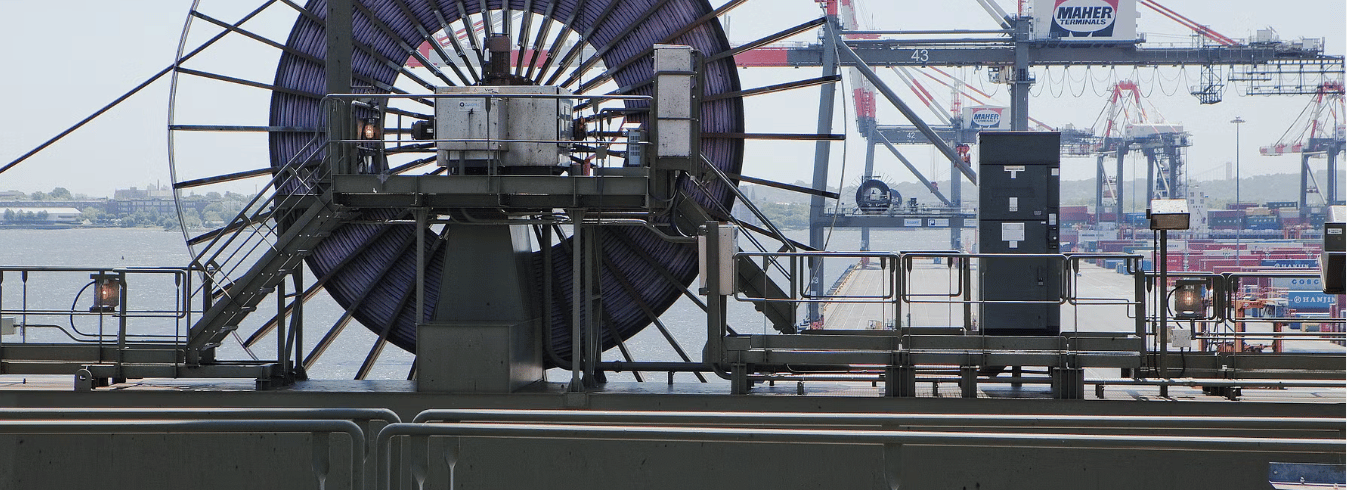
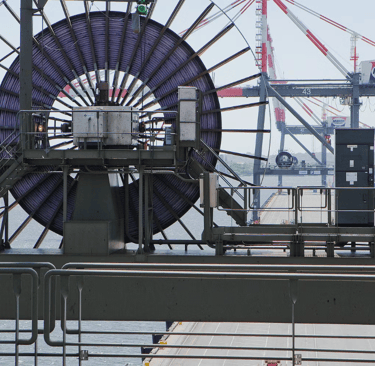
Container handling cranes in ports and intermodal facilities benefit from the cable's water resistance and robust mechanical properties, maintaining reliable operation despite exposure to salt spray and continuous movement.
Automated Storage and Retrieval Systems
Modern warehouses employ sophisticated automated storage systems where shuttle vehicles continuously traverse aisles, retrieving and storing inventory. The D12Y11YU11Y provides reliable power and control signal transmission to these mobile units, with flexibility ensuring reliable operation through countless acceleration and deceleration cycles.
Mining and Extraction Operations
Underground mining equipment utilizes reeling cables for mobile machinery operating in challenging conditions. The extended temperature range accommodates deep mine heat, while mechanical robustness withstands the abrasive environment. Water resistance proves essential in wet mining operations where equipment regularly encounters groundwater seepage.
Manufacturing Process Equipment
Continuous production lines often incorporate mobile equipment requiring flexible power connections. Robotic welding stations, automated guided vehicles, and transfer systems all benefit from the cable's combination of flexibility and durability, maintaining production uptime critical for lean manufacturing operations.
Common Cable Issues and Solutions
Question: What causes premature cable failure in reeling applications?
Answer: Premature failures typically result from exceeding minimum bending radius specifications, improper drum sizing, or inadequate cable support. Ensuring drum diameter provides at least 6 × cable outer diameter prevents excessive bending stress. Regular inspection for surface damage, particularly at guide roller contact points, enables early detection of developing problems before catastrophic failure occurs.
Question: How should cable length be calculated for reeling applications?
Answer: Cable length calculation must account for drum diameter, number of wraps, and required extension length. Include additional length for connections and strain relief, typically 5-10% beyond calculated requirements. Insufficient length creates excessive tension, while excessive length risks tangling or dragging.
Question: Can this cable operate in both reeling and festoon configurations?
Answer: Yes, the D12Y11YU11Y supports both reeling operations up to 180 m/min and festoon system installations at similar speeds. However, cable support spacing in festoon systems must maintain proper sag without exceeding minimum bending radius at support points.
Question: What maintenance procedures extend cable service life?
Answer: Regular visual inspections should identify surface abrasions, cuts, or deformation. Clean cable surfaces periodically to remove accumulated contaminants that accelerate wear. Monitor cable temperature during operation to detect overloading conditions. Replace cables showing significant surface damage or reduced flexibility before complete failure occurs.
Question: How does ambient temperature affect current carrying capacity?
Answer: Published current ratings assume 30°C ambient temperature. Higher ambient temperatures require derating, while lower temperatures permit increased loading. Consult derating factors in DIN VDE 0298-4 for precise adjustments based on actual installation conditions.
Installation Guidelines and Best Practices
Proper installation begins with verifying drum dimensions provide adequate bending radius. Calculate drum diameter ensuring the ratio exceeds six times cable outer diameter. Inspect guide rollers for smooth rotation and proper alignment, as misaligned guides create lateral stress accelerating wear.
Route cables to avoid sharp edges, hot surfaces, and areas where falling objects might impact the cable. When transitioning from mobile to fixed sections, install strain relief adequate for the cable weight and tensile forces. Secure fixed cable sections at regular intervals preventing excessive sag while avoiding over-tightening that restricts natural cable movement.
Connection terminations require proper strain relief preventing conductor pullout under tension. Use cable glands or connectors rated for the cable diameter and environmental conditions. Verify adequate IP ratings for wet locations or areas subject to dust contamination.
Storage and Handling Recommendations
Store cables on reels or drums preventing kinks and excessive bending. Maintain storage temperatures within the specified ambient range, avoiding extremes that might affect sheath compounds. Protect stored cables from direct sunlight, standing water, and chemical contamination.
During handling, avoid dropping cable reels or dragging cables across abrasive surfaces. Use appropriate lifting equipment for heavy cables, as improper handling can create internal conductor damage not visible externally. Inspect cables before installation, verifying no damage occurred during transportation or storage.
Conclusion
The D12Y11YU11Y low voltage reeling cable represents a sophisticated engineering solution for demanding industrial applications requiring reliable power transmission under continuous mechanical stress. Its halogen-free polyurethane sheathing combines flexibility with exceptional durability, while the comprehensive range of core configurations accommodates diverse system requirements.
With rated voltage of 0.6/1 kV, operational temperature range from -40°C to +80°C, and travel speeds up to 180 m/min, this cable addresses the vast majority of industrial reeling applications. The water-resistant construction extends applicability to challenging environments, while fire-resistant properties ensure safety in occupied facilities.
Proper cable selection, installation, and maintenance practices maximize service life and reliability, delivering cost-effective performance in crane systems, automated equipment, mining operations, and manufacturing processes. Understanding the technical specifications and operational limitations enables engineers and technicians to successfully implement this cable technology, ensuring reliable industrial operations for years to come.
How to Reach Us
Get in Touch
SiteMap
Product Catalogue
Festoon Cable
Shore Power Cable


Scan to add us on WeChat