PUR (N)TSCGEH3S 6/10 kV Medium Voltage Trailing Cable for Mining: Durable, Flexible Power Supply Cable for Large Mobile Equipment
Discover the PUR (N)TSCGEH3S 6/10 KV medium voltage trailing cable—engineered for reliable power supply to mining equipment like shovels and draglines. Features extreme abrasion resistance, flexible operation to -50°C, and durable orange or yellow outer sheath. Explore specifications and applications.
hongjing.Wang@Feichun
10/23/202515 min read
Introduction to the PUR (N)TSCGEH3S 6/10 kV Trailing Cable
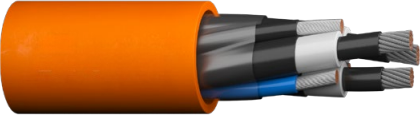
In the demanding environment of modern mining operations, power supply reliability is paramount. The PUR (N)TSCGEH3S 6/10 kV medium voltage trailing cable represents a premium solution engineered specifically for the harsh conditions encountered in opencast and underground mining applications. This specialized cable delivers consistent, reliable power to large mobile equipment including shovels, draglines, and excavators, where conventional cables would fail under extreme mechanical stress.
The 6/10 KV medium voltage trailing cable for mining is designed to withstand the most challenging operational scenarios, from severe abrasion and tearing forces to extreme temperature fluctuations. Its advanced polyurethane outer sheath provides exceptional durability while maintaining flexibility even in arctic conditions, making it an indispensable component for mining operations worldwide.
What is a Medium Voltage Trailing Cable?
A medium voltage trailing cable is a specialized power transmission cable designed for mobile equipment that requires both electrical power delivery and mechanical durability. Unlike standard power cables used in fixed installations, trailing cables must endure constant movement, flexing, dragging across rough terrain, and exposure to abrasive materials.
The term "trailing cable mining" refers to cables that literally trail behind mobile equipment as it moves across mining sites. These cables form the critical link between stationary power sources and mobile machinery, operating under conditions that would destroy conventional cables within days or weeks.
Medium voltage power supply cables in the 6/10 kV range occupy a crucial position between low-voltage portable cables and high-voltage transmission lines. This voltage rating provides an optimal balance between power transmission efficiency and safety, allowing substantial electrical loads to be delivered over considerable distances while minimizing power losses and maintaining manageable insulation requirements.
The distinction from standard power cables extends beyond voltage ratings. Trailing cables incorporate specialized construction features including reinforced outer sheaths, enhanced flexibility designs, and superior mechanical strength to withstand tensile forces, torsional stress, and repeated bending cycles that characterize mining equipment operations.
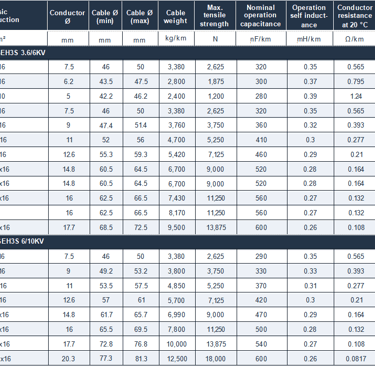
Product Specifications & Technical Features
Voltage Rating and Compliance Standards
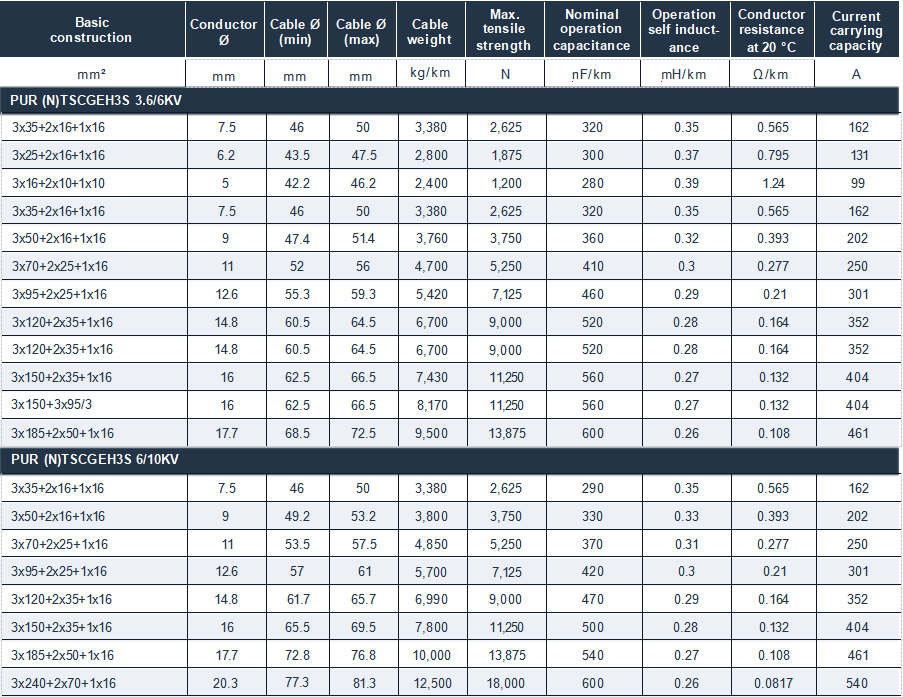
The PUR cable 6/10 KV is rated for 6/10 kV (U₀/U), with a maximum operating voltage (Um) of 12 kV. This voltage designation indicates the cable's capability to operate at 6 kV phase-to-ground and 10 kV phase-to-phase, providing substantial power transmission capacity for large mining equipment. The cable meets stringent international standards including DIN VDE 0250-813 for general specifications, EN 50525-2-21 for electrical parameters, and IEC 60332-1-2 for fire performance requirements.
Construction Materials and PUR Outer Sheath
The cable features a sophisticated multi-layer construction optimized for mining environments. The outer sheath utilizes polyurethane (PUR), a thermoplastic elastomer that delivers exceptional performance characteristics. PUR provides superior abrasion resistance compared to traditional rubber or PVC compounds, while maintaining flexibility across an extraordinary temperature range.
The conductor consists of finely stranded tinned copper (class 5), providing excellent electrical conductivity and flexibility. Surrounding the conductor, semi-conductive EPR (ethylene propylene rubber) layers ensure uniform electrical field distribution, while the primary insulation uses specialized EPR rubber compounds engineered for medium voltage applications.
Durability Features: Abrasion and Tear Resistance
The abrasion resistant mining cable incorporates multiple protective elements that extend operational life in harsh environments. The PUR outer sheath exhibits exceptional resistance to mechanical wear, with tear-resistant properties that prevent propagation of damage from cuts or punctures. This cold resistant trailing cable maintains its protective qualities even under extreme mechanical stress.
Testing demonstrates the cable's ability to withstand severe abrasion equivalent to continuous dragging across sharp rock surfaces. The polyurethane compound resists cutting forces that would penetrate conventional cable sheaths, while its chemical composition provides inherent resistance to oils, fuels, acids, and alkaline substances commonly encountered in mining operations.
Temperature Range and Cold Flexibility
One of the most remarkable specifications of this cold resistant -50°C cable is its operational capability down to -50°C in flexible applications. This extreme cold-weather performance ensures reliable operation in arctic mining operations, high-altitude sites, and regions experiencing severe winter conditions.
The cable maintains full flexibility at temperatures where conventional cables become rigid and prone to cracking. Maximum conductor temperatures reach 90°C during normal operation, with short-circuit ratings up to 250°C. For fixed installations, the ambient temperature range extends from -50°C to +80°C, while flexible operations accommodate -50°C to +60°C.
Color Options and Visibility
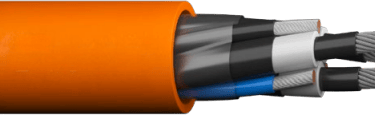
Standard color offerings include high-visibility orange and yellow outer sheaths, specifically selected to enhance cable identification and safety on mining sites. The bright coloration ensures equipment operators can easily identify cable positions, reducing the risk of accidental damage. Custom color options are available for operators requiring specific identification schemes or compliance with regional safety regulations.
Conductor Configuration Details
The cable features a 3x35+2x25/2+1x(6 OF) conductor configuration, comprising three main power conductors of 35 mm² cross-section, two pilot/control conductors of 25/2 mm², and an integrated optical fiber element with six fibers. This configuration enables both power transmission and communication/monitoring capabilities within a single cable assembly.
The cores are arranged around a semiconductive central filler containing aramid yarns for mechanical strength. Split earth conductors are distributed in the interstices between main conductors, ensuring effective grounding and safety. The entire assembly is protected by polyester reinforcement and the PUR outer sheath, creating a robust, durable structure capable of withstanding the demanding conditions of mining operations.
Applications in Mining Operations
Primary Use Cases: Shovel Power Supply and Dragline Operation
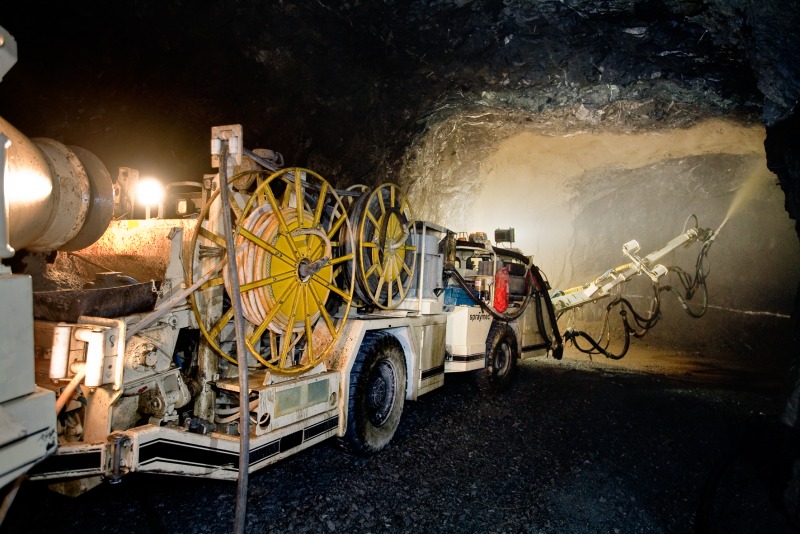
The trailing cable for mining shovels and draglines serves as the lifeline for these massive machines that form the backbone of opencast mining operations. Electric rope shovels, some exceeding 2,000 tons in weight with bucket capacities over 100 cubic meters, require continuous, reliable power supply to maintain productivity. The cable must accommodate the shovel's working radius while withstanding the constant repositioning movements as the machine excavates material.
Draglines, among the largest mobile equipment on earth, present equally demanding cable requirements. These machines, with booms extending over 100 meters and buckets weighing 150 tons or more, operate 24 hours daily in critical path operations. The mobile equipment power cable mining applications demand absolute reliability, as cable failures result in costly downtime affecting entire mining operations.
Large Mobile Equipment Compatibility
Beyond shovels and draglines, the cable supports various large mobile equipment including bucket-wheel excavators, mobile crushers, and continuous miners. Bucket-wheel excavators, capable of moving 12,000 cubic meters of material per hour, require substantial power delivery through cables that must withstand the machine's complex movement patterns.
The cable's design accommodates equipment operating on both tracked and wheeled platforms, adapting to different movement characteristics and terrain conditions. Its flexibility allows integration with cable reeling systems, whether mono-spiral reels or cylindrical drum arrangements, while maintaining electrical integrity and mechanical strength throughout operational cycles.
Mining Environments: Underground and Surface Applications
In underground mining environments, the cable faces additional challenges including confined spaces, potential water exposure, and limited ventilation. The flame-retardant properties meeting EN/IEC 60332-1-2 standards ensure fire safety in underground operations where fire hazards pose extreme risks. The cable's resistance to oils, fuels, and mining chemicals maintains insulation integrity despite exposure to various contaminants.
Surface mining applications expose cables to ultraviolet radiation, temperature extremes, and severe mechanical abuse from contact with rocks, equipment, and abrasive overburden materials. The UV-resistant PUR sheath prevents degradation from solar exposure, while the robust construction withstands impacts and crushing forces common in surface operations.
Operational Scenarios: Fully Flexible Operation Requirements
The durable mining cable must perform reliably through countless flexing cycles as equipment moves, turns, and operates throughout shift operations. Torsional stress ratings of ±100°/m accommodate cable twisting that occurs during equipment rotation and repositioning. The minimum bending radius specifications—6 times cable diameter for fixed installations, 10 times for flexible operation, and 20 times for S-type directional changes—ensure cable longevity while maintaining electrical performance.
Reeling operations subject cables to additional stresses. The cable supports reeling speeds up to 120 meters per minute for medium voltage applications, with rewinding speeds reaching 100 meters per minute. These dynamic loading conditions, combined with static tensile strengths of 25 N/mm², ensure the cable maintains integrity throughout its operational life.
Advantages & Performance Benefits
Extreme Robustness for Harsh Mining Conditions
The flexible power supply cable delivers unmatched robustness in mining environments where equipment failures translate directly to lost productivity and revenue. Its multi-layer construction distributes mechanical stresses effectively, preventing localized failures that initiate cable degradation. The combination of EPR insulation and PUR sheathing creates a synergistic protective system that outperforms either material individually.
Field experience demonstrates operational lifespans exceeding five years in the most demanding applications, compared to 12-18 months for standard cables. This long-lasting trailing cable performance results from engineering decisions prioritizing durability over initial cost, recognizing that cable replacement expenses include not just material costs but also equipment downtime, labor, and lost production.
Enhanced Flexibility Compared to Standard Cables
The cable maintains flexibility characteristics that facilitate handling, installation, and operation. Unlike rigid cables requiring heavy machinery for positioning, this flexible mining cable can be maneuvered by maintenance crews using standard equipment. The flexibility extends throughout the cable's temperature operating range, eliminating the brittleness problems that plague conventional cables in cold environments.
Enhanced flexibility translates to reduced minimum bending radii, allowing tighter routing around equipment and through confined spaces. This characteristic proves particularly valuable in underground operations where space constraints limit cable path options. The flexibility also reduces mechanical stress on connection points and terminations, minimizing failures at these critical interfaces.
Superior Protection Against Cutting and Abrasion Hazards
Mining environments present constant threats from sharp rocks, equipment edges, and abrasive materials. The PUR outer sheath provides exceptional cut resistance, requiring significantly greater force to penetrate compared to rubber or PVC alternatives. When cuts do occur, the tear-resistant properties prevent crack propagation that would otherwise expose inner layers to damage.
Abrasion testing demonstrates wear resistance superior to chlorinated polyethylene and standard rubber compounds. The polyurethane molecular structure absorbs and distributes impact energy, preventing the surface degradation that accelerates cable failure. This superior protection against cutting and abrasion hazards directly translates to reduced maintenance requirements and longer service intervals.
Extended Lifespan and Reduced Maintenance Costs
The weather resistant mining cable design philosophy prioritizes total cost of ownership rather than initial purchase price. Extended operational lifespans reduce the frequency of cable replacements, minimizing the disruptive downtime required for change-outs. Maintenance costs decrease as inspection intervals extend and repair requirements diminish.
Financial analysis consistently demonstrates that premium trailing cables deliver lower total costs despite higher initial investments. Calculating the sum of purchase price, installation costs, maintenance expenses, and downtime-related losses reveals that durable cables like the PUR (N)TSCGEH3S provide superior return on investment. Mining operations report cost savings of 30-40% over five-year periods when comparing premium cables to standard alternatives.
Reliable Power Delivery in Challenging Environments
Electrical performance remains stable throughout the cable's operational envelope, maintaining low loss characteristics even under thermal cycling and mechanical stress. The semi-conductive layers ensure uniform field distribution, preventing partial discharge development that leads to insulation breakdown. Nominal operation capacitance and self-inductance values remain consistent, supporting proper equipment operation and power quality.
The cable's design minimizes voltage drop across typical installation lengths, ensuring equipment receives adequate voltage for optimal performance. This reliable power delivery maintains equipment productivity and prevents the inefficiencies associated with under-voltage operation. In applications where productivity directly determines mining operation profitability, reliable power delivery provides measurable economic benefits.


Outer Sheath & Customization Options
Standard Color Offerings: Orange and Yellow
The high-visibility orange and yellow sheaths serve critical safety functions beyond mere identification. The bright colors remain visible under varying lighting conditions, including the low-light environments common in early morning and evening shifts. Visibility reduces accident risks by ensuring operators, spotters, and maintenance personnel can identify cable positions relative to equipment and personnel.
Color consistency across cable lengths facilitates visual inspection, allowing maintenance crews to identify degraded sections through color changes indicating UV exposure or chemical attack. The color stability of polyurethane surpasses alternatives, maintaining identification capabilities throughout the cable's operational life.
Enhanced Visibility and Safety Identification
Mining safety protocols increasingly emphasize visual management systems where color coding communicates critical information instantly. Orange sheaths typically designate medium-voltage trailing cables, distinguishing them from low-voltage power cables, control cables, and hose assemblies. This instant identification reduces confusion during maintenance activities and emergency responses.
Reflective stripe options further enhance visibility, particularly valuable for equipment operating during nighttime shifts. These reflective elements remain effective even when cables are partially covered with dust or debris, maintaining identification capabilities under realistic field conditions. Enhanced visibility features demonstrate how cable design extends beyond electrical and mechanical requirements to encompass comprehensive safety considerations.
Custom Color Options for Specific Requirements
Operators requiring specific identification schemes can specify custom sheath colors to match corporate standards or regulatory requirements. Some jurisdictions mandate specific colors for voltage classes or equipment types, necessitating custom formulations. The manufacturing process accommodates color customization without compromising the mechanical and electrical properties that define cable performance.
Custom colors also support fleet management systems where different colors identify cables assigned to specific equipment or operational areas. This organizational approach simplifies inventory management, maintenance scheduling, and cable rotation programs designed to maximize fleet utilization and lifespan.
Protective Properties of PUR Material
Beyond color and visibility, the PUR material provides inherent protective qualities that enhance cable longevity. The material's microbiological resistance prevents bacterial and fungal degradation in wet environments. Ozone resistance maintains sheath integrity despite exposure to electrical discharges and atmospheric ozone at high altitudes.
The PUR formulation incorporates stabilizers preventing UV degradation, heat aging, and hydrolysis—common failure modes affecting polyurethane materials. These stabilizers maintain the sheath's protective qualities throughout extended service periods, ensuring that the outer sheath continues protecting internal components throughout the cable's operational life.
Regulatory Standards & Compliance
International Standards Adherence
The cable's compliance with DIN VDE 0250-813 ensures conformity with German engineering standards recognized throughout European mining operations. EN 50525-2-21 compliance verifies electrical parameter specifications including conductor resistance, capacitance, and inductance values. These standards provide objective verification that cable performance meets industry requirements for medium voltage trailing applications.
IEC 60332-1-2 fire performance standards ensure the cable resists flame propagation, critical for underground operations where fire presents catastrophic risks. The testing protocols verify that individual cables do not propagate flames vertically, containing fire hazards and providing personnel evacuation time during emergencies.
Safety Certifications for Mining Equipment
GOST certification for Russian Federation markets demonstrates compliance with standards governing mining cable specifications in major mineral-producing regions. These certifications facilitate equipment deployment across international mining operations, ensuring consistent performance standards regardless of project location.
The standards adherence extends to mechanical testing protocols defined in DIN VDE 0298-3, verifying tensile strength, bending radius limitations, and torsional stress capabilities. Chemical behavior testing per IEC 60811-404 validates resistance to oils, acids, and alkaline substances, ensuring cables maintain integrity despite chemical exposures common in mining environments.
Quality Assurance and Testing Protocols
Manufacturing quality assurance programs implement testing at multiple production stages, from raw material verification through finished product validation. Conductor resistance measurements ensure copper purity and stranding quality. Insulation thickness measurements verify conformity with design specifications, while high-potential testing validates dielectric strength.
Completed cables undergo sample testing including bending tests, abrasion tests, and environmental exposure simulations. These tests verify that production cables replicate the performance characteristics validated during initial design qualification. Quality documentation accompanies cable shipments, providing traceability and verification of compliance with specifications.


Installation & Maintenance Guidelines
Proper Installation Procedures
Correct installation practices significantly influence cable performance and longevity. Cable handling during installation must avoid exceeding minimum bending radius specifications, preventing internal damage to conductors and insulation layers. Installation teams should employ cable rollers or guides when routing cables across rough terrain, minimizing abrasion during positioning.
Termination quality critically affects reliability. Mining cable installation requires trained technicians using appropriate termination kits designed specifically for the cable construction. Proper termination ensures moisture sealing, mechanical strain relief, and electrical integrity at vulnerable connection points. Inadequate terminations represent common failure points, negating the cable's inherent durability advantages.
Routine Maintenance Requirements
Trailing cable maintenance programs should include regular visual inspections identifying physical damage, abrasion patterns, and sheath deterioration. Inspection frequency depends on application severity, with the harshest environments requiring weekly inspections while less demanding applications may extend to monthly intervals.
Electrical testing programs should include insulation resistance measurements and high-potential testing during scheduled maintenance periods. These tests identify insulation degradation before failures occur, enabling proactive replacement and avoiding catastrophic failures during operation. Visual inspections should document cable condition through photographs, establishing degradation trends that inform replacement timing decisions.
Safety Precautions During Use
Operating procedures must ensure personnel maintain appropriate clearances from energized cables. Medium voltage presents serious electrocution hazards, requiring strict adherence to electrical safety protocols. Lockout/tagout procedures must be implemented before performing any maintenance on cable systems, with verification of de-energization using appropriate voltage testing equipment.
Ground fault protection systems should be integrated into power distribution designs, immediately disconnecting power when insulation failures occur. These protective systems prevent sustained electrical faults that could cause fires, equipment damage, or personnel injuries. Regular testing verifies ground fault protection functionality, ensuring safety systems operate when needed.
Storage and Handling Recommendations
Cable storage should protect materials from UV exposure, temperature extremes, and physical damage. Indoor storage in controlled environments optimizes cable condition, though field storage may be necessary at remote mine sites. When outdoor storage is unavoidable, cables should be covered with UV-protective materials and elevated to prevent water accumulation.
Handling procedures should utilize appropriate equipment sized for cable weight and diameter. Large-diameter trailing cables may weigh several kilograms per meter, requiring mechanical handling equipment. Proper handling techniques prevent kinking, excessive bending, and crushing that could damage cables before installation.
Case Studies & Industry Applications
Real-World Deployment Examples
A major copper mining operation in South America replaced standard trailing cables with PUR (N)TSCGEH3S cables across their shovel fleet. The operation reported cable life extensions from an average of 14 months to over 60 months, reducing annual cable costs by 65% despite higher initial purchase prices. The extended lifespan eliminated two replacement cycles per five-year period, saving approximately $180,000 per shovel in combined material and downtime costs.
An Arctic iron ore operation in northern Canada selected the cable specifically for its cold-weather performance. Operating in temperatures routinely reaching -45°C, previous cables failed regularly during winter months, requiring expensive emergency replacements and causing production losses during the most productive operating season. The cold-resistant cable maintained flexibility and reliability throughout winter operations, enabling consistent year-round production schedules.
Performance Results in Various Mining Operations
Underground coal mining operations reported superior performance compared to conventional cables in high-moisture environments. The PUR sheath's moisture resistance prevented the water ingress problems that plagued previous cable installations, extending cable life from 18 months to 48 months in wet underground conditions. The improvement eliminated the frequent cable replacements that disrupted production schedules and increased operational costs.
Open-pit gold mining operations documented reduced maintenance requirements after transitioning to PUR cables. The abrasion resistance significantly reduced the frequency of sheath repairs and section replacements, decreasing maintenance labor costs by approximately 40%. The maintenance efficiency improvements freed technical personnel for other critical tasks while improving overall cable reliability.
Testimonials from Mining Equipment Operators
Equipment operators consistently report improved confidence in cable reliability with premium trailing cables. One shovel operator with 20 years' experience noted: "We used to worry constantly about cable failures, especially in cold weather. Since switching to these PUR cables, we've virtually eliminated those concerns. The cables just work, shift after shift, regardless of conditions."
Maintenance supervisors emphasize the operational benefits: "The extended cable life has transformed our maintenance planning. Instead of emergency reactive replacements, we now schedule cable changes during planned maintenance shutdowns. This predictability allows better resource planning and eliminates the overtime and rush delivery costs associated with emergency replacements."
Why Choose PUR (N)TSCGEH3S for Your Mining Operations?
Summary of Unique Benefits and Differentiators
The reliable trailing cable for mining equipment combines multiple advantages into a comprehensive solution addressing the complete spectrum of mining application challenges. The extreme cold-weather capability, exceptional abrasion resistance, chemical resistance, and superior flexibility create a unique combination unavailable in alternative cable designs.
The integrated optical fiber capability provides future-proofing for operations implementing advanced monitoring and communication systems. As mining operations increasingly adopt digital technologies for equipment monitoring, predictive maintenance, and automated control systems, the optical fiber elements enable these capabilities without requiring separate communication cable installations.
Investment Justification and ROI Considerations
Financial analysis supports premium cable investments through reduced total cost of ownership. The combination of extended operational life, decreased maintenance requirements, and eliminated emergency replacement events generates return on investment typically occurring within 24 to 36 months in demanding applications.
Beyond direct cost savings, reliability improvements generate indirect benefits including improved equipment utilization, enhanced safety performance, and reduced stress on maintenance personnel. These factors, while difficult to quantify precisely, contribute substantially to operational efficiency and workforce satisfaction.
Reliability and Consistency in Demanding Environments
The cable's proven performance across diverse mining operations worldwide demonstrates reliability that transcends individual application specifics. Whether in arctic conditions or tropical environments, surface or underground operations, the cable delivers consistent performance meeting operational requirements.
This reliability consistency enables standardization across mining fleets, simplifying inventory management, maintenance training, and procurement processes. Standardization benefits extend throughout the equipment lifecycle, reducing the complexity and costs associated with managing multiple cable specifications.
Long-Term Cost Savings Through Durability
The durability advantages translate directly to long-term cost savings through multiple mechanisms. Extended cable life reduces material costs, installation labor expenses, and equipment downtime for replacements. Decreased maintenance requirements lower labor costs while improving workforce allocation efficiency. The cumulative effect generates substantial savings over typical mining project timeframes of 10-20 years.
Evaluating cable performance over complete mine life cycles rather than short-term periods reveals the true economic value of premium cables. When total costs are properly calculated, premium cables consistently deliver superior economics despite higher initial investments.
Conclusion
The PUR (N)TSCGEH3S 6/10 kV medium voltage trailing cable represents the pinnacle of mining cable engineering, combining advanced materials, sophisticated design, and rigorous manufacturing standards into a comprehensive solution for demanding applications. Its exceptional durability, extreme cold-weather capability, and superior flexibility address the complete spectrum of challenges characterizing modern mining operations.
For mining operations prioritizing reliability, safety, and long-term cost efficiency, this professional mining power solution delivers measurable benefits across all performance dimensions. The cable's proven performance in diverse applications worldwide demonstrates its capability to meet and exceed the demanding requirements of large mobile equipment operations.
Investing in premium trailing cables represents a strategic decision that influences operational efficiency, cost performance, and safety outcomes throughout mining project lifecycles. The comprehensive advantages of the PUR (N)TSCGEH3S cable justify its specification for critical applications where reliability cannot be compromised and total cost of ownership determines true value.
For inquiries regarding the PUR (N)TSCGEH3S 6/10 kV trailing cable or to discuss specific application requirements, contact qualified cable manufacturers specializing in mining applications. Technical consultation services can evaluate your specific requirements and recommend optimal cable configurations ensuring superior performance and reliability for your operations.
How to Reach Us
Get in Touch
SiteMap
Product Catalogue
Festoon Cable
Shore Power Cable


Scan to add us on WeChat