(SB-SAM) (N)TSCGEWOEU 6/20 KV Cable for Excavators in Opencast Mines | Heavy-Duty Power Supply & Connection Cable with High Abrasion Resistance
Discover the (SB-SAM) (N)TSCGEWOEU 6/20 KV heavy-duty cable designed for excavators and large material handling machines in opencast mines. Ideal for power supply and connection under extreme mechanical stress, with superior abrasion and chaffing resistance in trailing operations.
hongjing.Wang@Feichun
10/15/202511 min read
Introduction
The mining industry demands cable solutions that deliver power, control, and reliability in the harshest conditions imaginable. In opencast mining operations where excavators, draglines, and other large material handling machines operate continuously under extreme mechanical stress, the quality and durability of power supply cables directly impact operational efficiency, safety, and profitability. The (SB-SAM) (N)TSCGEWOEU medium voltage flexible trailing cable represents an advanced engineering solution specifically designed to meet these demanding requirements.
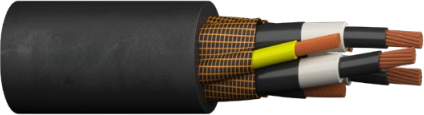
This specialized cable serves as a power supply or connection cable for large material handling machines, particularly excavators in opencast mines that are subject to extremely high mechanical stresses. What distinguishes this cable from conventional power cables is its optimized wall thickness design and exceptional resistance to the abrasion and chaffing stresses characteristic of trailing operations. In mining environments where equipment mobility, mechanical wear, and environmental exposure converge, selecting the appropriate cable technology becomes a critical decision that affects everything from equipment uptime to worker safety.
The world's need for minerals is expected to increase significantly in the coming decades, with production of minerals such as graphite, lithium, and cobalt potentially increasing substantially by 2050. This growing demand places additional pressure on mining operations to maintain continuous productivity while simultaneously improving safety standards and operational efficiency. The (SB-SAM) (N)TSCGEWOEU cable addresses these challenges through its specialized construction and material properties designed specifically for the unique stresses of opencast mining applications.
Key Features
Voltage Rating and Electrical Performance
The (SB-SAM) (N)TSCGEWOEU cable is available in three voltage configurations to accommodate different mining equipment requirements: 3.6/6 kV, 6/10 kV, 8.7/15 kV, and 12/20 kV. The cable's rated voltage ranges from 3.6/6 (7.2) kV to 12/20 (24) kV, with test voltages from 11 kV to 29 kV. This flexibility allows mining operators to select the optimal voltage rating for their specific equipment and power distribution requirements.
The electrical design incorporates EPR rubber insulation with specialized compounds that provide excellent electrical properties while maintaining mechanical flexibility. The cable's construction includes semi-conductive layers that ensure uniform electric field distribution, reducing the risk of partial discharge and extending cable service life even under continuous high-voltage operation.
Optimized Wall Thickness Design
The distinguishing feature of the (SB-SAM) variant is its optimized wall thickness, which provides an ideal balance between mechanical protection and cable flexibility. This design achieves up to 30% reduction in cable size and 40% weight reduction without compromising performance. For mining operations, this translates to easier cable handling, reduced mechanical stress on cable reels and handling equipment, and improved maneuverability in confined mining spaces.
The optimized construction also contributes to better thermal management. By reducing unnecessary insulation thickness while maintaining electrical safety margins, the cable achieves improved heat dissipation, allowing higher current carrying capacity relative to its overall diameter. This efficiency becomes particularly important in continuous-duty mining applications where thermal cycling can affect cable longevity.
Superior Abrasion and Chaffing Resistance
The cable is particularly suitable for applications in which abrasion and chaffing stresses are to be expected in trailing operation. The outer sheath utilizes polychloroprene (PCP) special compound that provides exceptional resistance to mechanical wear, oils, and environmental exposure. This rubber compound has been specifically formulated to withstand the continuous abrasion that occurs when cables trail behind moving equipment across rough mining terrain.
In trailing operations, cables are subject to multiple mechanical stresses simultaneously: dragging across abrasive surfaces, contact with sharp rocks and minerals, compression under equipment weight, and repeated flexing. The (SB-SAM) cable's construction addresses each of these challenges through its multi-layer protective design and carefully selected materials that maintain integrity even after prolonged exposure to these harsh conditions.
Mechanical Stress Tolerance
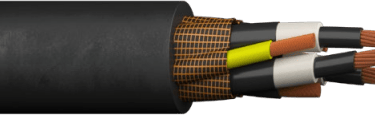
The cable features a torsional stress tolerance of +/- 100 °/m and a permanent tensile strength of 20 N/mm² static. These specifications indicate the cable's ability to withstand twisting forces and pulling loads that commonly occur during mining operations. The cable's construction includes finely stranded copper conductors and split earth conductors positioned in the interstices between main conductors, providing both excellent electrical conductivity and mechanical flexibility.
The reinforcement system incorporates polyester braiding that distributes mechanical loads evenly across the cable structure, preventing localized stress concentrations that could lead to premature failure. This engineering approach ensures that even when subjected to dynamic loads during equipment movement, the cable maintains its structural integrity and electrical performance.
Applications
Large Material Handling Machines
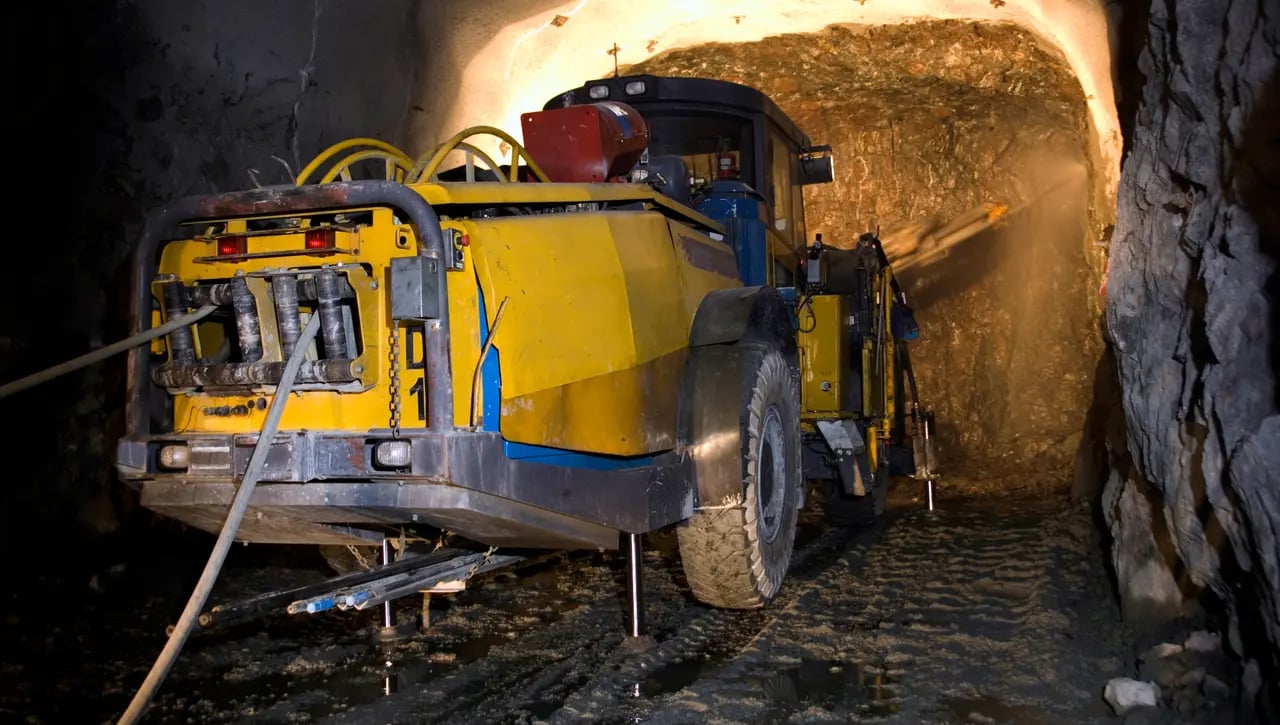
The primary application for (SB-SAM) (N)TSCGEWOEU cables is powering large material handling machines in opencast mining operations. Excavators, dumpers, and mobile crushers rely on these flexible medium voltage cables that can withstand high mechanical stresses. These machines operate continuously, often 24 hours per day, requiring power cables that deliver uninterrupted electrical service while accommodating constant equipment movement.
Excavators in opencast mines typically operate on uneven terrain, requiring cables that can flex repeatedly without fatigue failure. The cable must maintain electrical continuity while being dragged across mining pit floors, pulled over berms and spoil piles, and subjected to sudden jerks during equipment repositioning. The (SB-SAM) cable's optimized construction provides the necessary flexibility and durability for these demanding applications.
Opencast Mining Operations
Opencast mining operations involve large-scale mining that requires highly mobile, heavy-duty machinery with flexible and durable power cables. Unlike underground mining where cables may be installed in relatively protected environments, opencast mining exposes cables to direct sunlight, temperature extremes, moisture, dust, and continuous mechanical wear.
The (SB-SAM) cable's materials are specifically chosen to withstand these environmental challenges. The cable operates effectively in ambient temperatures ranging from -30°C to 60°C in flexible installation, ensuring reliable performance across the temperature variations common in mining regions worldwide. The flame retardant properties in accordance with EN/IEC 60332-1-2 standards provide essential safety protection in environments where fire hazards may exist.
Power Distribution Systems
Beyond direct equipment connection, (SB-SAM) cables serve in semi-mobile power distribution systems within mining sites. These applications include connections between substations and mobile equipment staging areas, temporary power feeds for drilling operations, and distribution to auxiliary equipment such as lighting towers and ventilation systems. The cable's combination of voltage capability, mechanical durability, and environmental resistance makes it suitable for these diverse applications.

Technical Specifications
Cable Construction and Materials
The (SB-SAM) (N)TSCGEWOEU cable features a sophisticated multi-layer construction designed to optimize both electrical and mechanical performance. The conductor consists of finely stranded copper, tinned, class 5, providing excellent conductivity and flexibility. The tinning process protects the copper from oxidation, ensuring long-term electrical performance even in harsh environments.
The insulation system includes a semi-conductive EPR inner layer, EPR rubber insulation using specialized compounds, and a semi-conductive NBR easy-strip outer layer. This three-layer insulation system provides uniform electric field distribution, excellent dielectric properties, and ease of termination during cable installation and repair.
The protective earth conductor is split into three sections positioned in the interstices between main conductors, providing effective grounding while maintaining cable flexibility. This design ensures that fault currents can be safely conducted to ground, protecting personnel and equipment from electrical hazards.
Electrical Properties
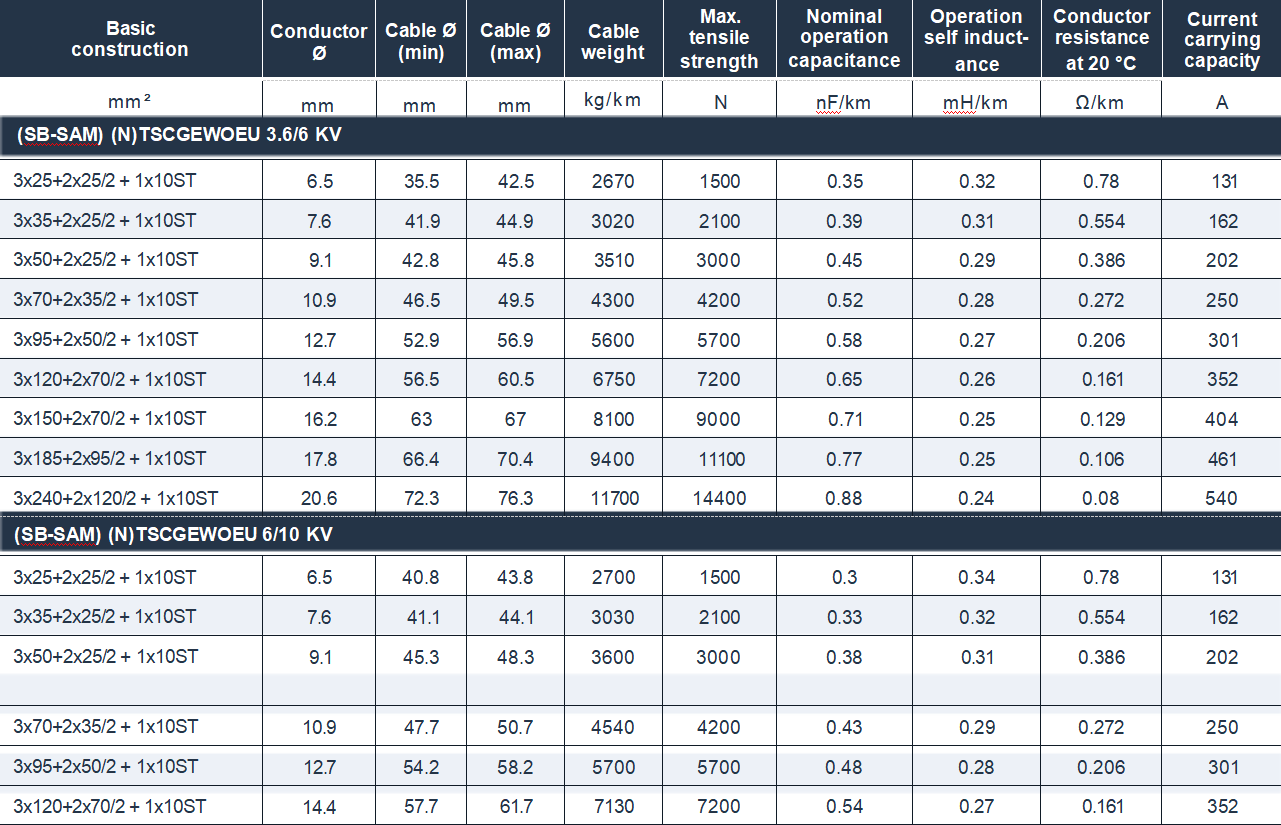
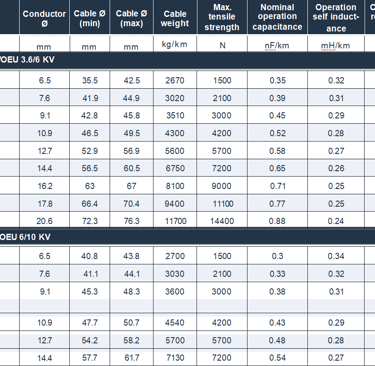
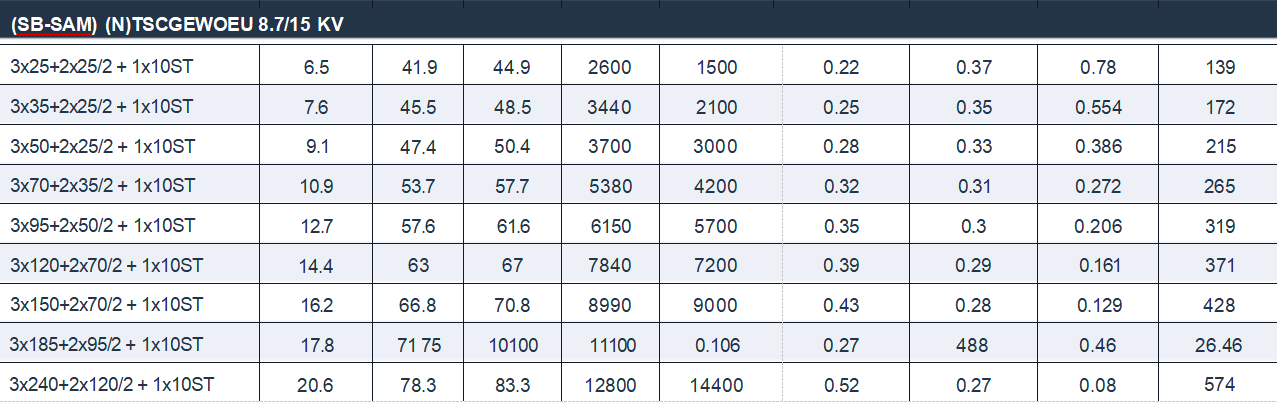
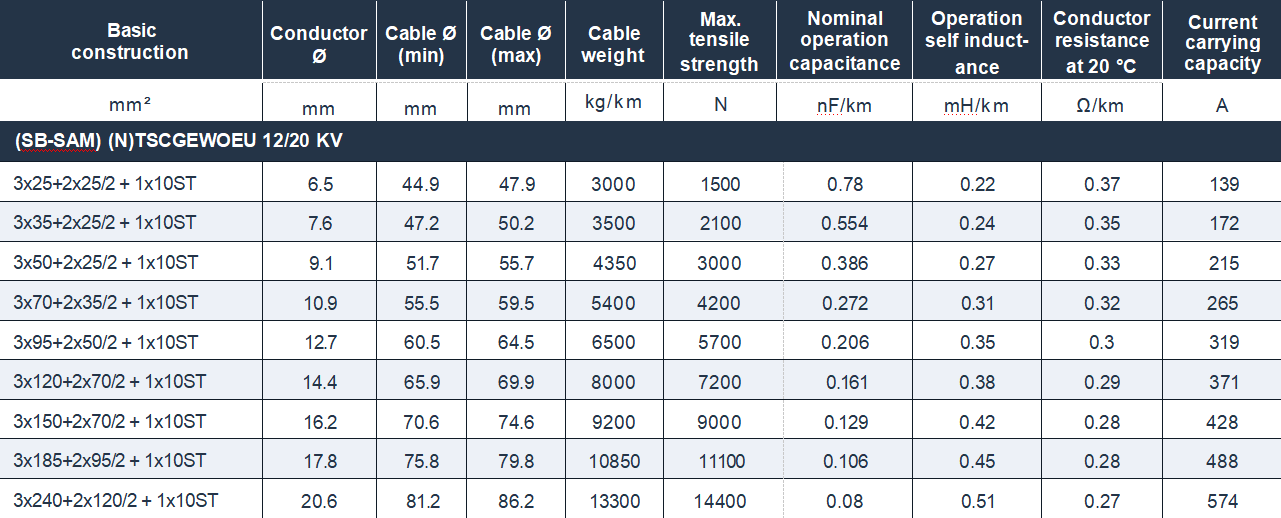
For the 6/10 kV variant with 3x50+2x25/2+1x10ST configuration, the cable exhibits the following electrical characteristics:
Conductor resistance at 20°C: 0.386 Ω/km for 50 mm² conductors
Nominal operation capacitance: 300 nF/km
Operation self inductance: 0.31 mH/km
Current carrying capacity: 202 A
These electrical parameters demonstrate the cable's capability to transmit substantial power while maintaining acceptable voltage drop and power factor characteristics across typical mining power distribution distances.
Mechanical Properties
The cable's bending radius follows VDE 0298-3 standards: 6 x D for fixed installation and 10 x D for flexible operation, where D represents the cable's outer diameter. For example, a cable with 50 mm outer diameter requires a minimum bending radius of 300 mm during installation and 500 mm during operation. These specifications ensure that bending stresses remain within safe limits, preventing conductor or insulation damage.
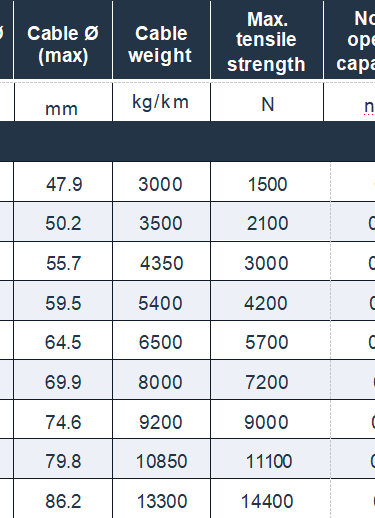
The maximum tensile strength varies with conductor size, ranging from 1,500 N for 25 mm² conductors to 14,400 N for 240 mm² conductors. This substantial tensile capability allows the cable to support its own weight in vertical installations and withstand the pulling forces encountered during equipment movement and cable handling operations.
Standards Compliance
The cable meets multiple international standards including DIN VDE 0250-813 for general requirements, EN 50525-2-21 for electrical parameters, and DIN VDE 0298-3 for mechanical parameters. Additionally, the cable has obtained GOST certification for the Russian Federation and complies with DIN EN 60332-1-2/IEC 60332-1-2 fire performance standards.
These certifications demonstrate that the cable has undergone rigorous testing to verify its performance characteristics, safety features, and suitability for demanding industrial applications. Compliance with these standards provides mining operators with confidence that the cable will perform reliably in their specific operating environments.
Benefits for Mining and Heavy Industry
Increased Durability and Operational Reliability
The (SB-SAM) cable's specialized construction delivers exceptional durability in opencast mining applications. The cable is engineered for longevity, reducing downtime and maintenance costs through its resistance to the multiple stress factors present in mining environments. The combination of abrasion-resistant outer sheath, flexible conductor design, and optimized insulation system creates a cable that maintains performance throughout extended service periods.
Mining operators report significantly extended cable service life compared to standard industrial cables when using properly specified mining cables in trailing applications. This longevity translates directly to reduced replacement costs and fewer operational interruptions for cable maintenance or emergency repairs. The cable's ability to withstand mechanical abuse means fewer cable failures that could halt excavator operations and impact mining productivity.
Reduced Downtime and Maintenance Costs
Cables designed for extended life span reduce downtime and maintenance costs, a critical consideration in mining operations where equipment utilization rates directly impact profitability. Every hour that an excavator or other major equipment sits idle due to cable failure represents significant lost production. The (SB-SAM) cable's robust construction minimizes these interruptions.
The cable's design also facilitates easier maintenance when service is required. The semi-conductive NBR outer layer features easy-strip properties, simplifying the termination process during cable installation or repair. This characteristic reduces the time and skill level required for cable servicing, allowing maintenance personnel to complete repairs more quickly and return equipment to service faster.
The optimized wall thickness reduces cable weight, making handling easier for maintenance crews and reducing the physical demands of cable replacement operations. Lighter cables also place less stress on cable management systems, potentially extending the service life of cable reels, festoon systems, and other cable handling equipment.
Enhanced Safety in Extreme Working Conditions
Safety represents a paramount concern in mining operations, and cable design plays a crucial role in maintaining safe working conditions. The cable features flame retardant properties in accordance with EN/IEC 60332-1-2 standards, helping to prevent fire propagation in the event of electrical faults or external fire exposure. This fire resistance is particularly important in mining environments where combustible materials may be present and evacuation options may be limited.
The cable's robust grounding system, incorporating split earth conductors throughout the cable length, ensures effective fault current conduction in the event of insulation failure. This design protects personnel from electric shock hazards and enables protective devices to quickly detect and clear faults, minimizing equipment damage and safety risks.
The cable withstands extreme temperatures, oil, fuel, moisture, acids, bases, UV irradiation, and ozone, maintaining its protective properties even when exposed to the diverse chemical and environmental hazards present in mining sites. This comprehensive resistance prevents premature insulation degradation that could lead to electrical failures and associated safety hazards.
Environmental Performance
Modern mining operations increasingly focus on environmental responsibility and sustainability. Mining operations aim for fully electrified, data-driven fleets as part of the transition toward clean energy and greater energy efficiency. Reliable power cables are essential infrastructure enabling this transition.
The cable's long service life contributes to environmental sustainability by reducing the frequency of cable replacement and the associated waste generation. Extended cable life means fewer cables entering the waste stream and reduced consumption of raw materials for cable manufacturing. The cable's efficient design, with optimized wall thickness, also reduces material usage during manufacturing, contributing to resource conservation.
Common Questions About Mining Cable Applications
Q: How do I determine the correct cable size for my excavator?
A: Cable sizing depends on several factors: the excavator's power requirements (typically specified in kW or HP), operating voltage, cable length from power source to equipment, and duty cycle. Calculate the full-load current draw, apply appropriate safety factors (typically 125% of full-load current), and consider voltage drop limitations (usually 3-5% maximum). For a typical large excavator drawing 200 A at 6 kV, the 3x50+2x25/2+1x10ST configuration provides adequate current capacity with proper margin. Always consult with qualified electrical engineers for specific installations.
Q: What causes premature cable failure in trailing applications?
A: The most common causes include excessive abrasion from dragging across sharp or abrasive surfaces, repeated flexing beyond the cable's minimum bending radius specifications, crush damage from equipment running over cables, chemical exposure from oils or fuels, and thermal cycling from overloading. The (SB-SAM) cable addresses these issues through its abrasion-resistant outer sheath, flexible conductor design, chemical-resistant materials, and optimized thermal characteristics. Proper cable management practices, including maintaining adequate bending radii and preventing cable contact with sharp objects, significantly extend cable service life.
Q: Can this cable be repaired in the field if damaged?
A: Yes, medium voltage mining cables can be field-repaired using appropriate techniques and materials. Minor sheath damage may be addressed with specialized repair wraps or encapsulation systems. More significant damage requiring conductor or insulation repair typically necessitates cutting out the damaged section and installing a field-applicable joint using heat-shrink or cold-applied jointing systems. However, repairs must be performed by qualified personnel following manufacturer specifications and relevant electrical codes. Proper repairs can restore cable to full service capability, though some mining operations prefer cable replacement for critical applications to ensure maximum reliability.
Q: What maintenance practices extend cable service life?
A: Regular visual inspection for sheath damage, abrasion, cuts, or deformation should be performed weekly during equipment operation. Monitor cable temperature during heavy loading to detect potential overload conditions. Maintain cable management systems (reels, festoons, cable guides) in good condition to ensure smooth cable handling without excessive wear. Keep cables clean and free from oil, fuel, and chemical contamination. Verify that cable bending radii meet minimum specifications during equipment movement. Implement cable rotation practices where possible, using multiple cables in rotation to distribute wear evenly. Document cable installation dates and maintain service records to predict replacement timing before failures occur.
Q: How does ambient temperature affect cable performance?
A: Cable current carrying capacity decreases with increasing ambient temperature because the cable's ability to dissipate heat diminishes. The (SB-SAM) cable is rated for ambient temperatures from -30°C to 60°C in flexible installation. At elevated temperatures approaching 60°C, consider derating the cable's current capacity by 10-20% depending on installation conditions. In extremely cold conditions below -30°C, cable flexibility may be reduced, requiring extra care during handling to prevent insulation cracking. The cable's materials are selected to maintain adequate flexibility across the rated temperature range, but operators should be aware that mechanical handling becomes more challenging at temperature extremes.
Conclusion
The (SB-SAM) (N)TSCGEWOEU 6/20 KV medium voltage flexible trailing cable represents a specialized engineering solution developed specifically for the extreme demands of opencast mining operations. Its optimized wall thickness design, superior abrasion resistance, and comprehensive mechanical and electrical properties make it the optimal choice for powering excavators and other large material handling equipment in environments characterized by continuous mechanical stress, environmental exposure, and operational criticality.
The cable's design ensures efficient power transmission and operational safety through its advanced technology and robust construction. Mining operators selecting this cable benefit from extended equipment uptime, reduced maintenance costs, enhanced worker safety, and the confidence that their power infrastructure can withstand the harsh realities of mining operations.
As mining operations continue to scale up and electrification becomes increasingly important for environmental and efficiency goals, the role of reliable, durable power cables becomes even more critical. The (SB-SAM) cable's proven performance in demanding mining applications worldwide demonstrates its capability to meet these challenges.
For detailed technical specifications, cable selection assistance, or pricing information specific to your mining operation, contact qualified cable suppliers who can provide comprehensive datasheets and engineering support. Proper cable selection and installation, combined with appropriate maintenance practices, ensures optimal performance and maximizes return on investment in mining power infrastructure.
How to Reach Us
Get in Touch
SiteMap
Product Catalogue
Festoon Cable
Shore Power Cable


Scan to add us on WeChat