

SHD-GC Three-Conductor Round Portable Power Cable 2kV | Heavy-Duty CPE Jacket Mining Cable
Heavy-duty SHD-GC three-conductor portable power cable with 2kV rating and CPE jacket. Designed for mining equipment, conveyors & continuous miners. ICEA & NEMA certified.
hongjing.Wang@Feichun
1/14/20266 min read
Introduction & Product Overview
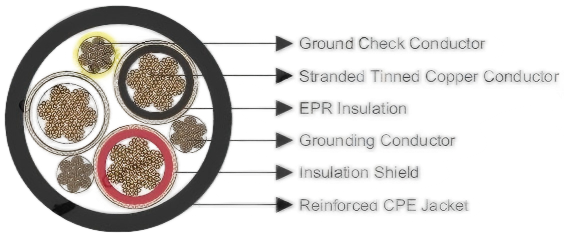
The SHD-GC three-conductor portable power cable represents a pinnacle of engineering excellence in mining power distribution systems. This 2kV rated cable features a robust construction specifically engineered to withstand the harsh environmental conditions encountered in underground mining operations. With its reinforced CPE jacket and comprehensive grounding system, this cable delivers reliable power to critical mining equipment while maintaining the highest safety standards.
Designed in accordance with ICEA S-75-381 and NEMA WC 58 specifications, the SHD-GC cable incorporates advanced materials and construction techniques that ensure long-term performance in demanding applications. The cable's three-conductor configuration, combined with dedicated grounding and ground check conductors, provides comprehensive electrical protection for personnel and equipment in continuous mining operations.
Key Applications & Use Cases
Underground Mining Operations
The heavy-duty three-conductor mining cable excels in powering longwall shearer systems, where reliable electrical performance is non-negotiable. Longwall shearer power cable applications require exceptional mechanical strength and electrical integrity, as these machines operate continuously in confined spaces with significant vibration and movement. The SHD-GC cable's flexible construction allows it to follow the shearer's path while maintaining electrical continuity and safety.
Continuous miner cable specifications demand cables that can endure frequent repositioning, exposure to coal dust, and potential impact from falling debris. The SHD-GC cable meets these challenges through its extra-heavy-duty CPE jacket, which provides superior abrasion resistance and tear strength compared to conventional mining cables.
Mobile Equipment Connectivity
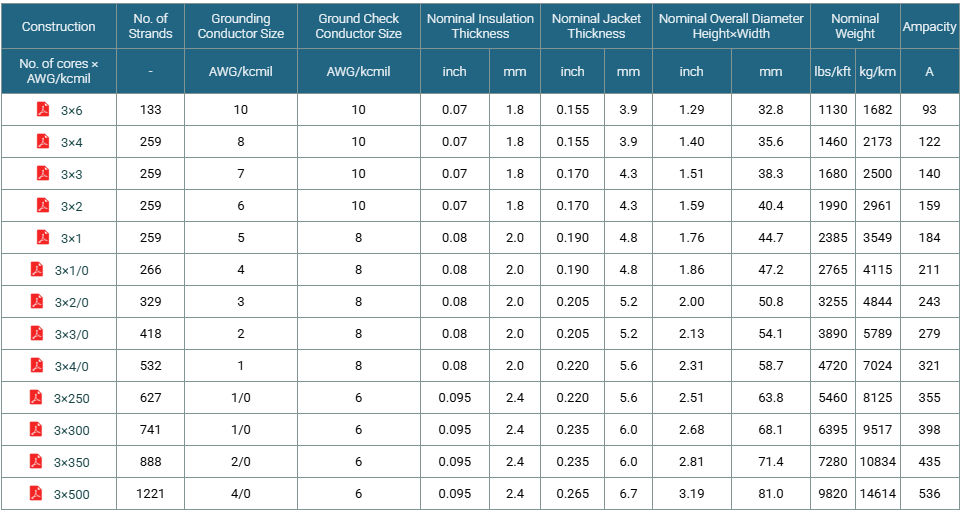
Portable mining equipment such as loaders, drills, and shuttle cars rely on flexible power cables that can withstand constant movement and repositioning. The portable mining equipment power cable design of the SHD-GC series incorporates a minimum bending radius of six times the cable's outer diameter, allowing for tight routing around equipment without compromising the integrity of conductors or insulation systems.
Conveyor and pump power applications benefit from the cable's robust construction and chemical resistance properties. In wet mining environments where water accumulation is common, the CPE jacket mining power cable construction prevents moisture ingress and maintains insulation resistance over extended operational periods.
Grounding and Safety Systems
The integrated mining equipment grounding conductor cable system incorporates both a dedicated grounding conductor and a ground check conductor with distinctive yellow polypropylene insulation. This dual-grounding approach ensures continuous equipment protection while enabling real-time monitoring of ground continuity—a critical safety feature in underground mining environments where electrical faults pose severe hazards.
Technical Specifications & Construction
Conductor Composition
The cable employs stranded annealed tinned copper three-conductor cable construction manufactured to ASTM B 172 standards for copper conductors and ASTM B 33 specifications for the tinning process. Tinned copper provides superior corrosion resistance in humid mining environments and ensures consistent electrical performance over the cable's operational lifetime. The stranded conductor design delivers the flexibility required for portable applications while maintaining low electrical resistance.
Insulation System
EPR insulation mining cable technology provides excellent electrical properties across a wide temperature range. Ethylene Propylene Rubber (EPR) offers superior resistance to heat, ozone, and weathering compared to alternative insulation materials. The EPR insulation system supports a maximum operating temperature of +90°C, accommodating the thermal loads generated by high-current mining equipment.
A tinned copper or textile braid insulation shield system surrounds each conductor, providing electrostatic shielding and ensuring uniform voltage stress distribution across the insulation. This metallic shielding enhances electrical protection and reduces electromagnetic interference that could affect sensitive control systems.
Ground Check Conductor Design
The ground check conductor cable mining feature distinguishes the SHD-GC cable from standard portable power cables. The ground check conductor with yellow polypropylene insulation enables continuous monitoring of grounding system integrity through specialized ground fault detection equipment. This real-time monitoring capability allows operators to identify grounding issues before they escalate into safety hazards.
Jacket Construction
The reinforced heavy-duty portable power cable features an extra-heavy-duty CPE (Chlorinated Polyethylene) jacket that provides exceptional mechanical protection. CPE offers superior abrasion resistance, oil resistance, and flame retardancy compared to conventional jacket materials. The reinforced construction incorporates additional wall thickness and enhanced polymer formulations that extend cable service life in abrasive mining environments.
For applications requiring additional mechanical protection, a two-layer jacket option with reinforcing fiber is available. This construction provides enhanced crush resistance and cut-through protection for cables exposed to extreme mechanical stress.
Performance & Durability Features
Environmental Resistance
The 2kV mining power cable with CPE jacket construction excels in harsh underground environments characterized by moisture, abrasive coal dust, and chemical exposure. The CPE jacket's inherent resistance to acids, alkalis, and hydrocarbon-based compounds ensures consistent performance even when cables are exposed to diesel fuel, hydraulic oil, or cutting fluids commonly present in mining operations.
Temperature cycling—a common challenge in mining operations where equipment heat alternates with ambient mine temperatures—poses minimal risk to EPR-insulated cables. The EPR insulation system maintains flexibility and electrical properties across the full operating temperature range, preventing premature aging and insulation failure.
Mechanical Durability
The underground mining equipment cable design incorporates features that resist the mechanical stresses inherent to portable applications. The extra-heavy-duty jacket withstands repeated flexing, dragging across rough mine floors, and incidental impact from equipment movement. The reinforced construction distributes mechanical stress across the jacket cross-section, preventing localized damage that could compromise internal components.
The minimum bending radius specification of six times the outer diameter ensures that installation practices do not exceed the cable's mechanical limitations. This design parameter protects conductor strands from work-hardening and prevents insulation deformation that could reduce dielectric strength.
Common Cable Issues and Solutions
Problem: Premature Jacket Abrasion
Question: Why does the cable jacket show excessive wear in certain applications?
Answer: Premature jacket abrasion typically results from dragging cables across sharp rock surfaces or allowing them to contact rotating machinery. To mitigate this issue, implement cable management practices that minimize contact with abrasive surfaces. Use cable slings or protective sleeves at high-wear points, and ensure proper cable routing that prevents contact with moving equipment components. The SHD-GC cable's extra-heavy-duty CPE jacket provides superior abrasion resistance, but no cable can withstand continuous contact with sharp edges or grinding surfaces.
Problem: Ground Fault Indications
Question: What causes intermittent ground fault alarms when the cable appears undamaged?
Answer: Intermittent ground faults often result from moisture infiltration at cable terminations rather than cable body damage. Inspect all termination points for proper sealing and ensure that strain relief devices adequately support the cable weight to prevent stress concentration at connector interfaces. The ground check conductor provides early warning of grounding system degradation, allowing corrective action before complete ground failure occurs. Verify that ground fault detection equipment is calibrated correctly and that alarm thresholds are appropriate for the application.
Problem: Reduced Flexibility in Cold Conditions
Question: Why does cable handling become difficult during winter operations or in cold mine sections?
Answer: Standard CPE jackets may stiffen at extremely low temperatures, though they maintain electrical integrity. For operations in consistently cold environments, specify cables with low-temperature-grade CPE or consider alternative jacket materials such as PCP, which retains flexibility at lower temperatures. Allow cables to gradually warm to ambient temperature before handling during cold weather, and avoid forcing tight bends when the jacket feels stiff.
Problem: Conductor Overheating
Question: What causes excessive cable temperature during normal equipment operation?
Answer: Conductor overheating typically indicates that cable ampacity is insufficient for the connected load or that poor connections create resistance heating. Verify that the cable conductor size matches or exceeds the equipment's full-load current requirements, accounting for ambient temperature derating factors in confined mine spaces. Inspect all terminations for tightness and proper contact pressure. Oxidation on tinned copper surfaces is minimal, but contamination at connection points can increase contact resistance. The cable's +90°C temperature rating provides a safety margin, but sustained operation near this limit accelerates insulation aging.
Installation and Maintenance Best Practices
Proper installation practices maximize the SHD-GC cable's operational lifespan. When routing cables through mine sections, maintain adequate clearance from equipment edges and moving parts. Support cables at regular intervals to prevent excessive sag, which can lead to damage if equipment passes beneath unsupported cable spans.
Implement regular visual inspections to identify jacket damage, conductor exposure, or termination degradation before these issues compromise safety. Document cable routing and maintain accurate records of cable age and service history to support predictive maintenance programs.
Test ground continuity regularly using the ground check conductor system. This proactive approach identifies grounding deterioration before complete ground loss occurs, maintaining personnel protection throughout the cable's service life.
Conclusion
The SHD-GC cable represents a comprehensive solution for portable power distribution in demanding mining environments. Its combination of heavy-duty mining cable construction, advanced insulation systems, and comprehensive grounding features addresses the unique challenges of underground mining operations. Whether powering longwall shearers, continuous miners, or portable equipment, this three-conductor portable power cable delivers reliable performance while maintaining the highest safety standards.
By selecting cables that meet rigorous industry standards including ICEA S-75-381, NEMA WC 58, and CAN/CSA C22.2 No. 96, mining operators ensure compliance with regulatory requirements while protecting personnel and equipment investments. The availability of customization options and alternative jacket materials allows the cable to be optimized for specific operational conditions, providing a tailored solution that balances performance, durability, and cost-effectiveness.
How to Reach Us
Get in Touch
SiteMap
Product Catalogue
Festoon Cable
Shore Power Cable


Scan to add us on WeChat