
SHD-PCG Three-Conductor Round Portable Power Cable 2kV: Complete Technical Guide
Discover the SHD-PCG three-conductor 2kV portable power cable—heavy-duty shielded power cable designed for longwall shearers. Features EPR insulation, CPE jacket, and meets ICEA/NEMA standards. Learn construction, specs & applications.
hongjing.Wang@Feichun
1/13/20267 min read
The mining industry demands electrical solutions that can withstand the harshest operational environments while maintaining consistent performance. Among these critical components, the SHD-PCG three-conductor round portable power cable 2kV stands as a cornerstone for longwall mining operations, particularly in powering shearer equipment that forms the backbone of modern coal extraction.
Understanding the SHD-PCG Cable System
The SHD-PCG cable represents an advanced design in industrial power transmission technology. This heavy-duty shielded power cable integrates multiple conductor types within a single, robust assembly—specifically engineered for demanding mining applications where equipment mobility and operational reliability are non-negotiable requirements.
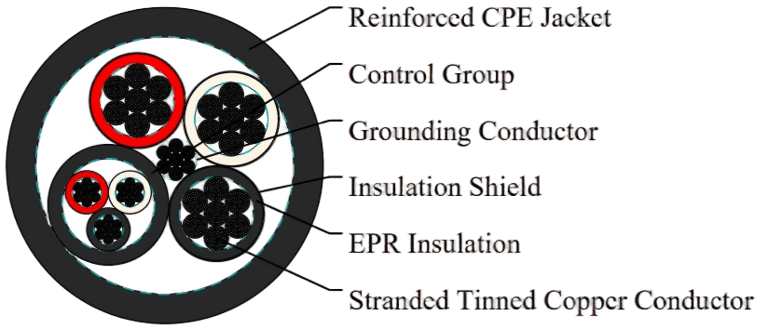
At its core, this three-conductor power cable features a unique configuration: three shielded power conductors responsible for transmitting electrical energy, three unshielded control conductors managing signal transmission and equipment communication, and a centrally positioned grounding conductor ensuring comprehensive electrical safety. This 3+3+G arrangement delivers both power distribution and control functionality through one consolidated cable system, reducing installation complexity while enhancing operational efficiency.
Primary Applications in Longwall Mining Operations
Longwall Shearer Power Systems
The longwall shearer cable application represents the most critical deployment scenario for SHD-PCG cables. Longwall mining—a highly mechanized extraction method used predominantly in underground coal operations—relies on massive shearer machines that traverse along the coal face, cutting material as they progress. These powerful machines require uninterrupted electrical supply capable of handling substantial loads while simultaneously maintaining control circuit integrity.
The 2kV portable power cable designation indicates this system's voltage rating, positioning it perfectly for medium-voltage mining equipment applications. The 2,000-volt capacity provides sufficient power delivery for large mining machinery while remaining within safe operational parameters for underground industrial environments.
During shearer operations, cables experience continuous flexing, dragging across uneven surfaces, exposure to coal dust, moisture infiltration risks, and potential impact from falling debris. The SHD-PCG construction addresses each challenge through specialized material selection and robust engineering.
Extended Mining Equipment Applications
Beyond longwall shearers, this mining equipment cable serves various heavy-duty applications including:
Continuous miners requiring mobile power supplies
Shuttle cars transporting extracted material
Roof bolters ensuring tunnel stability
Conveyor systems moving materials to surface operations
Drilling equipment for exploratory and production activities
Each application benefits from the cable's unique combination of power transmission capacity and integrated control conductor functionality, eliminating the need for separate control cable runs.
Industry Standards and Compliance Framework
ICEA and NEMA Certification
The SHD-PCG cable adheres to ICEA S-75-381 NEMA WC 58 certified cable standards, representing the gold standard for portable mining cables in North American markets. The Insulated Cable Engineers Association (ICEA) and National Electrical Manufacturers Association (NEMA) jointly developed these specifications to ensure consistent quality, performance benchmarks, and safety parameters across the industry.
This certification confirms the cable meets rigorous testing protocols including voltage withstand tests, conductor resistance measurements, insulation thickness verification, jacket integrity assessments, and environmental exposure simulations. Procurement managers can specify ICEA/NEMA compliance with confidence, knowing the cable has undergone independent validation.
Material Standards Compliance
The industrial power cables construction incorporates materials meeting specific ASTM standards:
ASTM B 172 governs the copper conductor specifications, ensuring proper conductivity, tensile strength, and elongation properties. The standard mandates specific purity levels and physical characteristics that guarantee optimal electrical performance.
ASTM B 33 addresses tinning standards for conductors. The application of tin coating to copper conductors prevents oxidation, enhances solderability for terminations, and provides additional corrosion resistance—critical factors in humid mining environments where moisture presence is constant.
International Compliance
For operations spanning multiple jurisdictions, the cable's compliance with CAN/CSA C22.2 No. 96 requirements ensures acceptance in Canadian mining operations. This multi-region approval simplifies procurement for international mining corporations operating across North American territories, eliminating the need for region-specific cable variants.
Advanced Cable Construction Details
Power Conductor Engineering
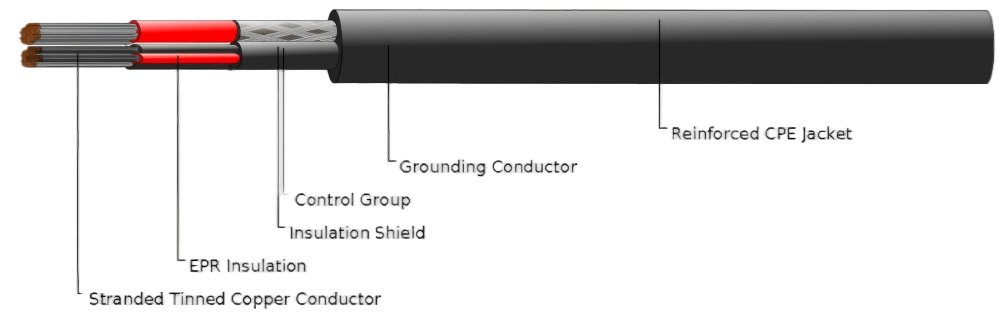
The power conductors utilize stranded annealed tinned copper conductors, a design choice that balances flexibility with conductivity. Stranding involves twisting multiple thin copper wires together, creating a conductor that maintains flexibility through repeated bending cycles—essential for portable applications where cables coil and uncoil continuously.
Annealing—a heat treatment process—softens the copper, enhancing flexibility while maintaining sufficient tensile strength. The tin coating provides long-term corrosion protection, particularly important given the damp, chemically active environment typical in underground mining operations.
EPR Insulation System
EPR insulation cable technology employs Ethylene Propylene Rubber, a synthetic rubber compound offering exceptional electrical insulation properties combined with environmental resistance. EPR maintains its dielectric strength across wide temperature ranges, resists ozone degradation, withstands moisture exposure, and demonstrates superior flexibility compared to alternative insulation materials.
The insulation system achieves a maximum conductor operating temperature of +90°C, allowing sustained operation under high-load conditions without degradation. This thermal capacity proves essential during peak demand periods when shearer equipment operates continuously for extended shifts.
Electromagnetic Shielding
Each power conductor incorporates a tinned copper and textile braid shield, providing comprehensive electromagnetic interference (EMI) protection. This shielded conductor cable construction prevents external electromagnetic fields from inducing unwanted currents within the conductors while simultaneously containing the electromagnetic emissions generated by the cable's own power transmission.
The shielding proves particularly valuable in mining environments where multiple electrical systems operate in proximity, potentially creating interference that could disrupt control signals or measurement systems.
Control Conductor Integration
The three separate control conductors—color-coded black, white, and red for operational clarity—feature their own EPR insulation and collective thermosetting jacket protection. This control cable with power conductors integration enables sophisticated equipment control schemes including:
Emergency stop circuits requiring dedicated signal paths
Equipment status monitoring systems
Speed and position feedback mechanisms
Interlock circuits preventing unsafe operational conditions
Communication protocols between surface control rooms and underground equipment
The physical separation between power and control conductors, combined with the power conductor shielding, ensures signal integrity even during maximum power transmission.
Grounding Conductor Design
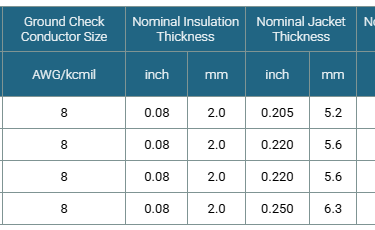
The centrally positioned grounding conductor serves multiple safety functions. Its location at the cable's core provides mechanical protection while maintaining electrical accessibility at termination points. The tinned copper conductor construction ensures low-resistance grounding paths essential for:
Fault current dissipation during insulation failures
Static charge drainage preventing spark risks in potentially explosive atmospheres
Personnel protection through rapid circuit protection device activation during ground faults
Equipment frame grounding maintaining safe touch potentials
Outer Jacket Protection
The extra-heavy-duty CPE jacketed power cable employs Chlorinated Polyethylene, a material specifically engineered for severe service conditions. CPE demonstrates exceptional resistance to:
Abrasion from dragging across rough rock surfaces
Crushing forces from equipment passage or debris impact
Chemical attack from lubricants, fuels, and mining process chemicals
Flame propagation, meeting mining industry flammability requirements
Ultraviolet degradation during above-ground storage or temporary surface deployment
The reinforced construction incorporates additional material thickness beyond standard jacket specifications, extending service life in punishing mining environments.
Technical Performance Characteristics
Flexibility and Bending Parameters
The minimum bending radius specification of 6×OD (six times the cable's outer diameter) represents a critical installation parameter. Tighter bending stresses conductors and insulation, potentially causing premature failure. This specification balances flexibility requirements for equipment mobility against the need to preserve cable integrity through thousands of flexing cycles.
For example, a cable with 50mm outer diameter requires a minimum bending radius of 300mm. Installation teams must ensure cable routing maintains these clearances around corners, over obstacles, and through equipment entry points.
Thermal Management
The temperature-rated industrial power cables 90°C specification defines safe continuous operating limits. During peak load conditions, conductor resistance generates heat that the insulation system must tolerate without degradation. The 90°C rating provides adequate margin above typical operating temperatures while establishing clear limits for protective device settings and conductor sizing calculations.
Environmental factors influence thermal performance. In deeper mine workings where ambient temperatures may reach 30-40°C, the temperature rise permitted above ambient decreases correspondingly, potentially requiring conductor oversizing for demanding applications.
Addressing Common Cable Challenges
Problem: Premature Jacket Failure
Question: Why do mining cables sometimes fail at the jacket level before conductors show signs of wear?
Solution: Jacket failure typically results from exceeding minimum bending radius specifications, exposure to incompatible chemicals, or mechanical damage from sharp objects. Regular visual inspections should identify surface cuts, abrasion patterns, or discoloration indicating chemical attack. Implementing proper cable handling procedures, using protective sleeving in high-wear areas, and selecting appropriate jacket materials (CSP, PCP, NBR, or PVC alternatives) for specific environmental conditions prevents premature failure.
Problem: Control Signal Interference
Question: What causes intermittent control system malfunctions despite intact conductors?
Solution: EMI from the power conductors or external sources can compromise control signal integrity. The shielded power cable construction addresses this through individual conductor shields, but proper grounding at both cable ends is essential. Floating shields or poor ground connections reduce shielding effectiveness. Additionally, verify control conductor connections haven't loosened due to vibration—a common issue in mobile mining equipment.
Problem: Moisture Intrusion
Question: How does water penetration affect cable performance and longevity?
Solution: The EPR insulation chlorinated polyethylene jacket cable design resists moisture ingress, but damaged areas or improperly sealed terminations create entry points. Water tracking along conductor strands degrades insulation resistance, potentially causing ground faults or phase-to-phase faults. Implementing proper termination techniques using heat-shrink boots or resin-potted assemblies, combined with regular insulation resistance testing, identifies developing problems before catastrophic failure occurs.
Customization Options for Specialized Requirements
The custom jacketed mining power cables available through specialized manufacturers address unique operational challenges. Alternative jacket materials include:
CSP (Chlorosulfonated Polyethylene): Enhanced ozone and weather resistance for cables with partial outdoor exposure
NBR (Nitrile Rubber): Superior oil and hydrocarbon resistance for areas with significant lubrication system presence
PVC: Cost-effective option for less demanding applications or temporary installations
Two-layer jacket configurations incorporate reinforcing fiber interlayers between inner and outer jacket layers, dramatically improving cut and abrasion resistance for extremely harsh conditions. This construction extends service life in applications where cable replacement involves significant operational downtime and expense.
Purchasing and Implementation Considerations
When specifying heavy-duty mining cable systems, evaluate suppliers based on:
Manufacturing certification and quality system documentation
Technical support capabilities for application-specific guidance
Lead time consistency and inventory availability
Termination and testing services
Warranty terms reflecting confidence in product longevity
The industrial cable standards compliance verification should include documentation reviews confirming adherence to specified ICEA, NEMA, ASTM, and CSA standards. Request mill test reports providing actual measured values for conductor resistance, insulation thickness, and jacket properties for each production lot.
Conclusion
The SHD-PCG three-conductor round portable power cable 2kV represents a sophisticated engineering solution addressing the multifaceted challenges of modern mining operations. Its integrated power and control conductor design, combined with robust shielding and heavy-duty jacket construction, delivers the reliability and longevity that underground mining environments demand. Understanding the cable's construction principles, performance characteristics, and proper application parameters ensures optimal equipment performance while maximizing safety and operational efficiency in these demanding industrial settings.
How to Reach Us
Get in Touch
SiteMap
Product Catalogue
Festoon Cable
Shore Power Cable


Scan to add us on WeChat