
Special Cable Types Commonly Used by Overseas Clients: Port Crane & Mining Cables for Singapore Port, Dubai Port, and Indonesia Mines
Explore the most commonly used special cable types for overseas port and mining projects. This guide covers port crane cables, reeling cables, festoon cables, and mining cables used in Singapore ports, Dubai ports, and Indonesia mining environments, with insights into application conditions, standards, and selection logic.
hongjing.Wang@Feichun
1/27/20268 min read
Introduction
In international infrastructure projects, special cables are far from universal products. Each overseas port and mining operation presents unique challenges demanding carefully engineered solutions. Climate conditions, equipment operation modes, regulatory standards, and maintenance requirements vary dramatically across regions, making the selection of appropriate special cable types a critical engineering decision.
This guide explores three key markets where specialized applications are essential: Singapore's high-tech container ports, Dubai's extreme-temperature facilities, and Indonesia's challenging mining environments. Understanding the distinct requirements of port crane cables and mining cables in these regions enables engineers and procurement teams to make informed decisions that minimize downtime and reduce long-term operating costs.
Special Cable Requirements in Singapore Ports: High-Standard, High-Frequency Container Terminal Operations
Typical Port Equipment Applications
Singapore's ports rank among the world's busiest container terminals. The cable infrastructure must meet exceptional performance standards across multiple equipment types:
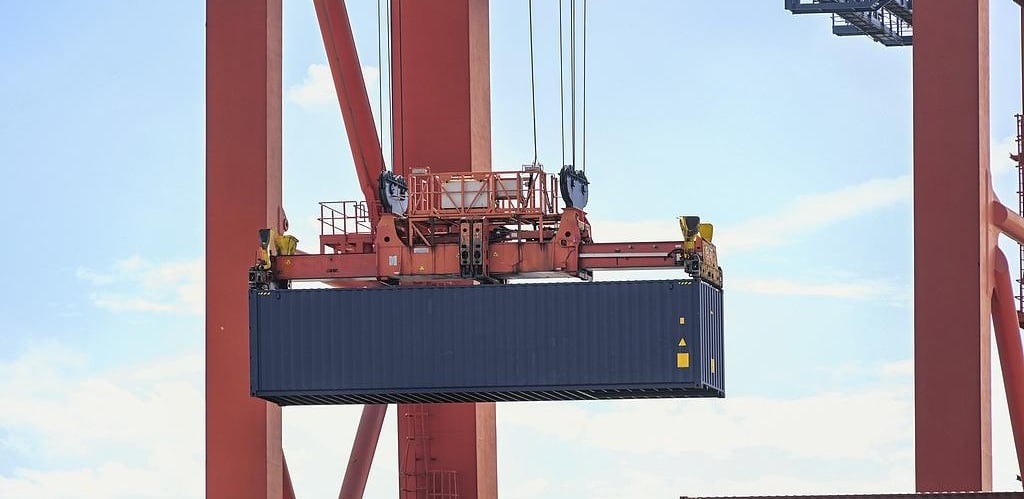
Ship-to-Shore (STS) Container Cranes require special cables for port cranes that withstand continuous flexing cycles during loading operations. These massive cranes handle thousands of containers daily with precision timing.
Rubber-Tyred Gantry (RTG) and Rail-Mounted Gantry (RMG) Cranes serve container yards, moving continuously along fixed paths while stacking containers multiple levels high. Cable systems must accommodate constant movement without performance degradation.
Automated Stacking Cranes (ASC) represent cutting-edge automation where cable reliability becomes critical due to minimal human intervention. Any failure can cascade into significant operational disruptions.
Cable Reeling Systems manage the complex task of storing and deploying cables as equipment moves across vast distances.
Environmental and Operational Conditions
Singapore's equatorial climate creates punishing conditions for electrical infrastructure. High temperatures (28-32°C) combined with humidity exceeding 80% create persistent stress on insulation materials. Strong salt mist accelerates corrosion and degrades protective jackets.
High operating frequency means cables experience thousands of flexing cycles daily. Increasing automation demands absolute reliability since equipment operates with minimal supervision. Singapore port authorities require adherence to IEC, VDE, and BS standards, with focus on long-term reliability and service life.
Commonly Used Special Cable Types in Singapore Ports
Reeling cables for port cranes form the backbone of power distribution. These cables exhibit high flexibility for continuous coiling, superior tensile strength for long travel distances (exceeding 100 meters), and excellent resistance to cyclic mechanical stress. Fine-wire conductor stranding maximizes flexibility without sacrificing current capacity.
Festoon cables for RTG and RMG cranes optimize for abrasion resistance and continuous movement. Unlike reeling applications, festoon cables hang in loops from mobile carriers, requiring jacket compounds that resist wear while maintaining electrical integrity.
Control and signal cables for automated port systems serve as the terminal's nervous system. Comprehensive electromagnetic interference (EMI) shielding prevents signal corruption in environments with large motors and variable frequency drives, essential for automated positioning and tracking systems.
Key Selection Considerations for Singapore Port Clients
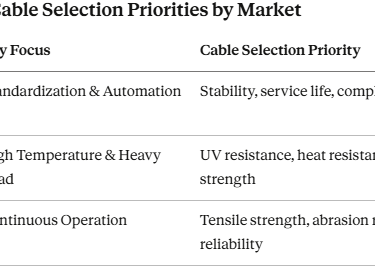
Compliance with international standards serves as baseline, not a differentiator. Suppliers must demonstrate proven application experience in port cable solutions for Singapore ports with reference projects in demanding environments.
Stable performance under continuous operation remains critical. Singapore ports cannot tolerate frequent maintenance interruptions, making cable longevity more valuable than initial cost savings. Procurement teams request detailed MTBF data and lifecycle performance calculations.


Special Cable Types for Dubai Ports: High Temperature, Strong UV, and Heavy-Duty Environments
Typical Port Equipment
Dubai's facilities handle diverse cargo types requiring specialized equipment:
Container Quay Cranes operate under harshest temperature conditions globally, with ambient temperatures reaching 45-50°C. Cable systems must maintain performance when surface temperatures exceed 70°C.
Bulk Ship Loaders and Unloaders handle materials from grain to minerals, creating challenges from dust contamination and mechanical impact during continuous vessel loading operations.
Portal Cranes and Heavy-Duty Port Machinery require cables combining high current capacity with mechanical robustness for heavy lifting operations.
Environmental Challenges
The Middle East presents unique stressor combinations. Extreme ambient temperatures approaching 50°C push standard designs beyond thermal limits. Heat accumulation in enclosed routes further elevates conductor temperatures.
Strong ultraviolet radiation relentlessly degrades polymer jackets through photochemical reactions. Inadequate UV stabilization causes surface cracking within months, creating moisture ingress pathways.
Sand and dust exposure creates abrasion challenges, while high mechanical loads from heavy lifting place continuous stress on cable tensile elements and strain relief systems.
Common Special Cables Used in Dubai Port Projects
High-temperature reeling cables for port cranes utilize specialized insulation (XLPE or EPR systems) maintaining dielectric strength and mechanical properties at temperatures where standard PVC would fail.
Heavy-duty crane cables with reinforced tensile elements incorporate aramid fibers or steel wire reinforcement preventing elongation under load. In heavy-lift applications, cable self-weight plus dynamic loads can exceed 1000 kg in longer runs.
Oil-resistant and chemical-resistant cables for port applications use chloroprene or chlorosulfonated polyethylene jacket compounds resisting degradation from hydraulic fluids, diesel fuel, and cleaning chemicals.
Cable Selection Logic for Middle East Ports
Mechanical stability under high temperatures becomes the primary criterion for high temperature port cables for Dubai ports. Cables must demonstrate minimal performance variation across full ambient ranges.
UV resistance and aging performance require careful evaluation through accelerated testing simulating Middle East conditions. Field performance data from regional installations provides validation.
Suitability for heavy-duty port crane operations encompasses tensile strength for vertical runs, flexibility for drum winding at elevated temperatures, and abrasion resistance for contact with guide systems.Special Cable Types for Dubai Ports: High Temperature, Strong UV, and Heavy-Duty Environments
Typical Port Equipment
Dubai's facilities handle diverse cargo types requiring specialized equipment:
Container Quay Cranes operate under harshest temperature conditions globally, with ambient temperatures reaching 45-50°C. Cable systems must maintain performance when surface temperatures exceed 70°C.
Bulk Ship Loaders and Unloaders handle materials from grain to minerals, creating challenges from dust contamination and mechanical impact during continuous vessel loading operations.
Portal Cranes and Heavy-Duty Port Machinery require cables combining high current capacity with mechanical robustness for heavy lifting operations.
Environmental Challenges
The Middle East presents unique stressor combinations. Extreme ambient temperatures approaching 50°C push standard designs beyond thermal limits. Heat accumulation in enclosed routes further elevates conductor temperatures.
Strong ultraviolet radiation relentlessly degrades polymer jackets through photochemical reactions. Inadequate UV stabilization causes surface cracking within months, creating moisture ingress pathways.
Sand and dust exposure creates abrasion challenges, while high mechanical loads from heavy lifting place continuous stress on cable tensile elements and strain relief systems.
Common Special Cables Used in Dubai Port Projects
High-temperature reeling cables for port cranes utilize specialized insulation (XLPE or EPR systems) maintaining dielectric strength and mechanical properties at temperatures where standard PVC would fail.
Heavy-duty crane cables with reinforced tensile elements incorporate aramid fibers or steel wire reinforcement preventing elongation under load. In heavy-lift applications, cable self-weight plus dynamic loads can exceed 1000 kg in longer runs.
Oil-resistant and chemical-resistant cables for port applications use chloroprene or chlorosulfonated polyethylene jacket compounds resisting degradation from hydraulic fluids, diesel fuel, and cleaning chemicals.
Cable Selection Logic for Middle East Ports
Mechanical stability under high temperatures becomes the primary criterion for high temperature port cables for Dubai ports. Cables must demonstrate minimal performance variation across full ambient ranges.
UV resistance and aging performance require careful evaluation through accelerated testing simulating Middle East conditions. Field performance data from regional installations provides validation.
Suitability for heavy-duty port crane operations encompasses tensile strength for vertical runs, flexibility for drum winding at elevated temperatures, and abrasion resistance for contact with guide systems.
Special Cable Types for Indonesia Mining Projects: High Humidity, Mud, and Continuous Movement
Typical Mining Equipment Applications
Indonesia's mining sector relies on mobile equipment requiring reliable power across challenging terrain:
Bucket Wheel Excavators represent the largest mobile machines, requiring mining reeling cables delivering megawatts while accommodating continuous rotation. Failure can halt production for hours or days.
Stacker Reclaimers work with excavators, moving material to processing systems. These experience similar demands with added complexity of frequent direction changes.
Belt Conveyor Systems span kilometers requiring flexible cables for continuous movement applications resisting moisture, abrasion, and potential falling material impacts.
Mobile Crushers and Mining Machinery add uneven terrain and vibration complexity, demanding multi-axis movement accommodation without fatigue failure.
Mining Environment Characteristics
Indonesia's tropical climate creates persistently challenging conditions. Heavy monsoon rainfall creates standing water and mud. Humidity rarely drops below 70%, creating continuous moisture stress on sealing systems.
Long-term continuous operation is standard, with equipment running 20+ hours daily. Cables experience rapid flexing cycle accumulation, with failure mechanisms progressing faster than in less demanding applications.
Frequent mechanical impact occurs as cables drag across rocky ground or experience falling debris impacts. Cable routes rarely provide organized, protected pathways.
Maintenance convenience becomes critical given remote locations and limited specialized personnel availability. Designs facilitating field repair gain favor with operators.
Commonly Used Mining Cable Types
Mining reeling cables for mobile equipment dominate power distribution to large machines. These heavy duty cables for mining equipment feature:
Multiple concentric tensile layers handling self-weight and dynamic loads
Thick abrasion-resistant jackets with wear indicators
Conductor sizes from 35mm² to 240mm² or larger
Special filling compounds preventing moisture wicking
Flexible trailing and drag cables for mining machinery accommodate equipment dragging cables behind machines. Enhanced jacket thickness (3-5mm or more), integral strain relief, and tear resistance differentiate these from standard designs.
Abrasion-resistant power cables for conveyor systems withstand years of harsh exposure while maintaining electrical integrity through multiple jacket layers with sacrificial outer layers.
Key Concerns of Indonesia Mining Clients
Indonesian operators prioritize reliability under harsh conditions. Remote locations mean failures result in significant production losses before replacement arrival.
Risk control extends beyond specification to proper installation, adequate protection systems, and backup inventory. Engineers specify cables with redundancy features or rapid temporary repair capabilities.
Ease of replacement influences selection, with preference for designs not requiring specialized tools. Cable weight factors into handling considerations with limited lifting equipment.
Common Cable Problems and Solutions
Problem 1: Premature Cable Failure in High-Cycle Applications
Question: Why do some port crane cables fail before expected service life in high-frequency operations like Singapore's automated terminals?
Solution: Mismatches between rated flex life and actual duty cycles are the primary cause. Manufacturers specify ratings based on standardized tests that may not replicate real-world patterns. Engineers should request detailed flex cycle testing data comparing actual equipment profiles. Proper drum sizing (20-25 times cable diameter minimum) and appropriate tensile load management extend cable life significantly.
Problem 2: Insulation Degradation in Extreme Heat
Question: How can operators prevent rapid deterioration where ambient conditions regularly exceed standard ratings?
Solution: Specify temperature-rated insulation systems (XLPE, EPR, or silicone rubber) rather than standard PVC softening above 70°C. Implement temperature monitoring on critical routes ensuring operating temperatures remain within limits. Consider derating cables during extreme periods or designing with larger conductors to reduce resistive heating. Maximize natural ventilation and minimize solar heat gain.
Problem 3: Water Ingress in Mining Cables
Question: What causes persistent moisture problems in mining reeling cables for Indonesia mines despite "water-resistant" specifications?
Solution: Water ingress occurs through unsealed cable ends, damaged jackets, or moisture wicking along conductors. Solutions include specifying cables with radial water barriers (swelling tapes between layers), ensuring proper termination sealing with appropriate glands and compounds, and implementing regular visual inspections identifying jacket damage before penetration. For critical applications, longitudinal water blocking in conductor interstices prevents wicking even with compromised jackets.
Problem 4: Unexpected Cable Elongation
Question: Why do some reeling cables for container cranes experience excessive elongation causing drum winding problems and mechanical failure?
Solution: Inadequate tensile element design is usually responsible. Cable self-weight in vertical runs combined with dynamic loads during acceleration can exceed poorly designed cable strength. Specify cables with documented tensile ratings including safety factors (typically 5:1 minimum). Steel wire armoring, aramid fiber reinforcement, or combinations provide options. Proper drum winding tension and regular elongation inspection allow proactive replacement.
Conclusion
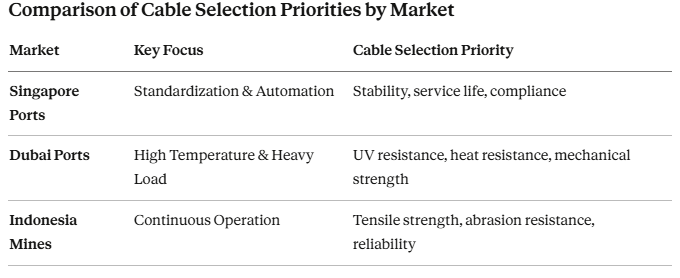
The key insight from examining special cable types across diverse markets is that successful selection requires understanding different environments demand different engineering priorities. There is no universal "best cable"—only appropriate cables for specific conditions.
Singapore's ports teach that compliance, proven reliability, and long service life justify premium investments where downtime costs exceed cable costs. Dubai's conditions demonstrate environmental factors must be quantified and matched against specifications, not assumed covered by generic ratings. Indonesia's operations remind us practical considerations like maintenance ease can equal electrical performance importance.
Understanding application scenarios proves more valuable than offering universal solutions. Successful suppliers invest time understanding operational patterns, environmental stresses, maintenance capabilities, and long-term objectives before proposing solutions.
Correct cable selection reduces total ownership cost by minimizing unplanned downtime, extending replacement intervals, and reducing maintenance labor. Engineering-oriented communication focused on matching characteristics to requirements rather than promoting features improves overseas project success rates and builds long-term relationships based on demonstrated value.
For engineers and procurement teams on international projects: invest time upfront characterizing application requirements, environmental conditions, and operational patterns. Share detailed information with cable suppliers and evaluate responses based on how well they address specific challenges rather than generic promotions. This approach consistently delivers better outcomes and establishes foundations for ongoing technical collaboration as projects evolve.
How to Reach Us
Get in Touch
SiteMap
Product Catalogue
Festoon Cable
Shore Power Cable


Scan to add us on WeChat