
SPREADERFLEX 3GSLTOE 0.6/1kV Spreader Cable | Heavy Duty Basket Operation for Cold Environments
Discover the SPREADERFLEX 3GSLTOE, a robust 0.6/1kV spreader cable designed for gravity-fed collector basket operations. Featuring specialized PUR sheathing and Aramid support for high mechanical stress and temperatures down to -40°C. Ideal for load-lifting equipment.
hongjing.Wang@Feichun
12/1/202515 min read
Product Overview
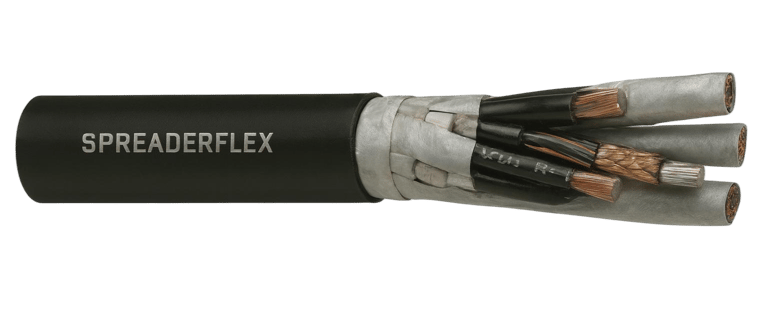
The SPREADERFLEX 3GSLTOE represents a specialized feeder cable for load-lifting equipment engineered to meet the demanding requirements of gravity-fed collector basket operations. This heavy duty spreader cable for cold environments is specifically designed for mobile equipment such as container crane spreaders, where cables must endure extreme mechanical stress while suspended vertically and coiled within confined basket systems.
Unlike conventional flexible cables, the SPREADERFLEX 3GSLTOE addresses the unique challenge of maintaining structural integrity under gravitational loading combined with rapid vertical movement. The PUR sheathed basket cable 3GSLTOE delivers exceptional performance in applications where traditional cable designs fail due to elongation, torsional instability, or sheath degradation under abrasion and temperature extremes.
The key differentiator of this high mechanical stress spreader cable lies in its construction philosophy: every design element—from the central Aramid support structure to the specialized PUR compound outer sheath—is optimized for basket operation rather than adapted from general-purpose cable designs. This purpose-built approach ensures reliable operation in cold environments down to -40°C during flexible operation, making it ideal for outdoor container terminals, shipyards, and industrial facilities in northern climates.
Application Scope
Primary Use Cases
The SPREADERFLEX 3GSLTOE finds its primary application as a feeder cable for load-lifting equipment in three critical scenarios:
Container Crane Spreaders: Modern container handling equipment utilizes spreaders—the latching mechanisms that secure containers during lifting. These spreaders require continuous electrical power and often control signals while moving vertically at speeds up to 160 m/min. The gravity-fed collector basket cable must coil and uncoil smoothly within the basket mounted on the spreader, accommodating hoisting heights that can exceed 50 meters in modern port installations.
Gravity-Fed Collector Baskets: This specialized cable guidance system relies on the cable's own weight to maintain proper coiling within a cylindrical or conical basket. The SPREADERFLEX 3GSLTOE's balanced core arrangement and central support element prevent the cable from tangling or kinking during the countless cycles of extension and retraction that occur during normal operation.
Vertical Hoisting Equipment: Beyond container handling, this spreader cable serves applications in mining hoists, construction elevators, and industrial lifting platforms where vertical cable runs combined with basket storage systems are employed. The cable's high tensile strength support structure ensures it can withstand the static load of its own weight plus the dynamic forces generated during acceleration and deceleration.
Operating Conditions
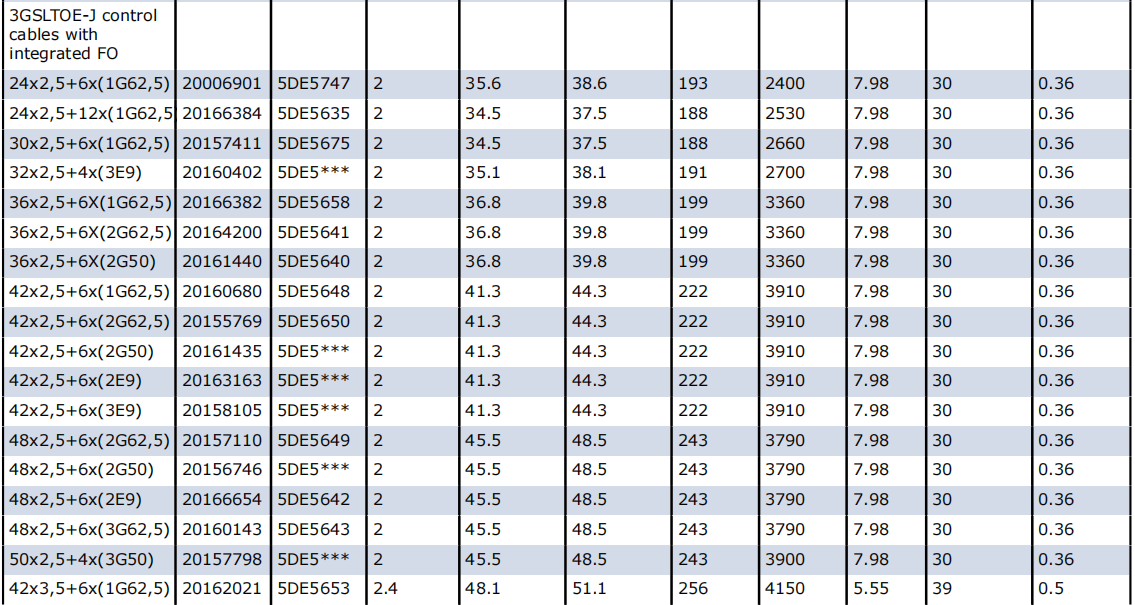
The 3GSLTOE-J-O technical specifications reflect design optimization for harsh operating conditions that would quickly degrade standard cables:
High Mechanical Stress Environments: The cable withstands continuous flexing cycles combined with torsional forces and abrasion against basket walls. The special PUR compound outer sheath provides superior resistance to mechanical wear compared to standard rubber formulations, extending service life in applications where cables may contact metal surfaces thousands of times per day.
Outdoor and Indoor Installations: The 0.6/1kV crane cable construction includes comprehensive weather resistance (UV, ozone, and moisture) making it suitable for both exposed outdoor installations in port environments and indoor industrial facilities. The oil resistance (acc. to DIN EN 60811-404) ensures compatibility with the hydraulic systems commonly found on crane equipment.
Temperature Extremes: The cable maintains flexibility and electrical performance across a remarkable temperature range: -40°C to +80°C during flexible operation, with fixed installation capability extending down to -50°C. This cold-environment capability is critical for operations in northern ports, cold-storage facilities, and winter outdoor applications where conventional cables become brittle and prone to insulation cracking.
Optimized Travel Speeds: Designed for hoist speeds up to 160 m/min, the cable accommodates the rapid vertical movement required by modern high-productivity container handling equipment while maintaining proper basket coiling dynamics.
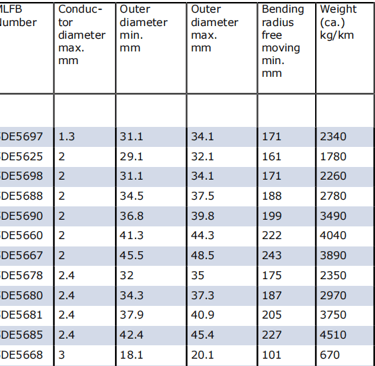
Technical Design & Construction
Conductor Design
The SPREADERFLEX 3GSLTOE employs bare electrolytic copper conductors manufactured to Class FS (extremely fine stranded) specifications. This conductor class, which exceeds the flexibility requirements of standard Class 5 or Class 6 conductors, consists of numerous individual wire strands with diameters optimized for maximum flexibility while maintaining electrical conductivity.
The extremely fine stranding serves multiple purposes in basket operation applications. First, it allows the cable to coil smoothly within the confined radius of the basket without work-hardening that would eventually lead to conductor fracture. Second, the fine stranding distributes mechanical stress across many individual wires rather than concentrating strain in fewer, larger conductors. Third, the flexibility facilitates the complex bending patterns that occur as the cable transitions from the vertical suspended section into the coiled basket section.
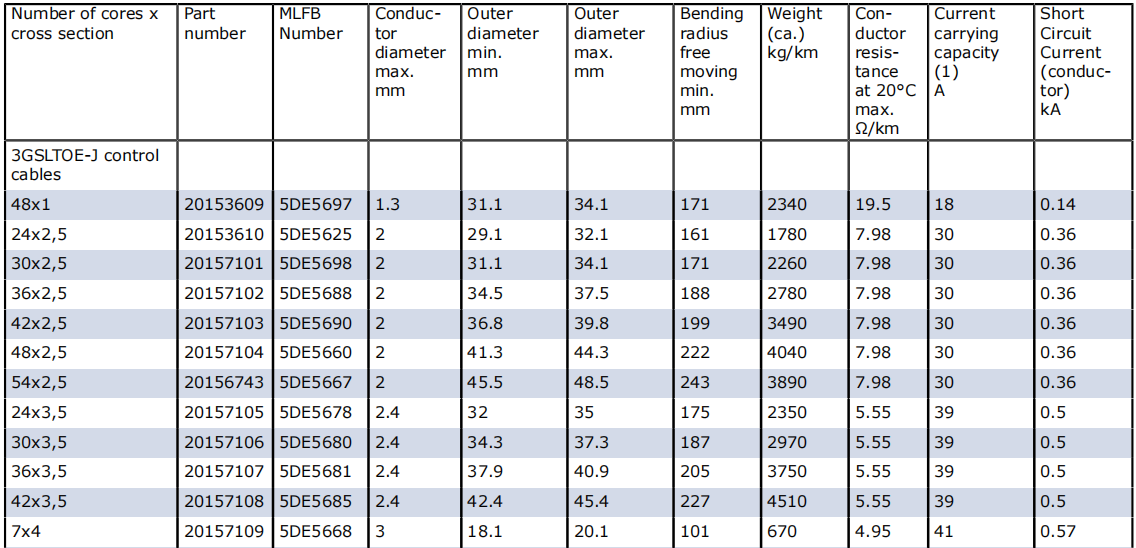
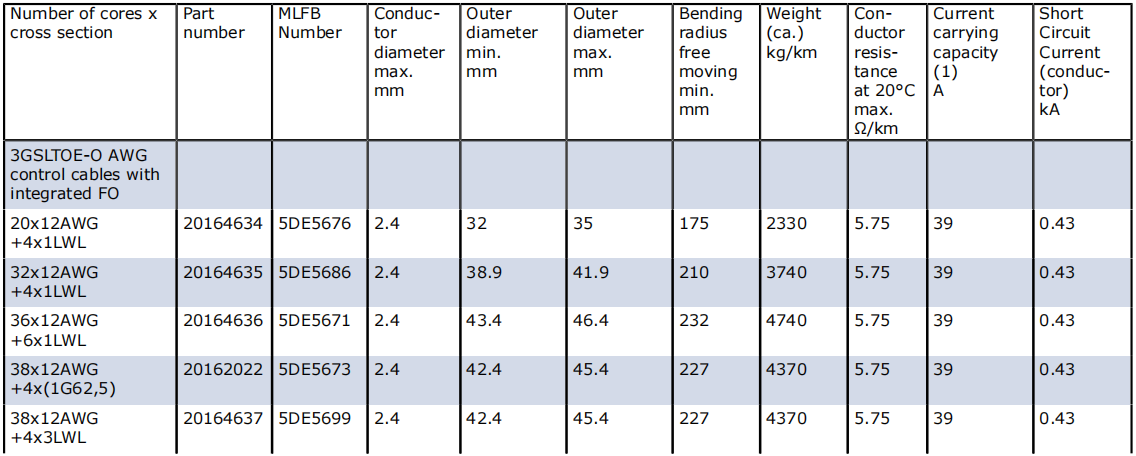
Available conductor cross-sections range from control cores (1.5 mm² to 2.5 mm²) up to power cores (4 mm² to 12 AWG), with specific configurations designed to accommodate both power transmission and control signaling within a single cable assembly.
Insulation System
The insulation employs a special EPR (Ethylene Propylene Rubber) compound designated as Type 3GI3, which provides superior electrical stability across the cable's operating temperature range. This insulation compound maintains its dielectric properties at -40°C—a temperature at which many standard insulation materials become brittle and prone to cracking under flexing.
The EPR formulation offers several advantages for basket operation cables:
Low-Temperature Flexibility: Unlike PVC compounds that stiffen significantly at cold temperatures, EPR retains elasticity and flexibility, preventing insulation cracks that would lead to electrical failures.
Electrical Stability: The compound maintains consistent dielectric constant and dissipation factor across temperature extremes, ensuring reliable signal transmission for control cores even during rapid temperature changes.
Resistance to Compression: The insulation resists permanent deformation when cores are pressed together during tight coiling in the basket, maintaining electrical isolation between adjacent conductors.
Core identification follows optimized coding: light-colored insulation with black printed numbers for power and control cables, with the earth conductor marked in green-yellow coloring for immediate visual recognition during installation and maintenance.
Support Element Architecture
The central support element represents the most critical design innovation in the SPREADERFLEX 3GSLTOE construction. This support structure consists of Aramid threads (high-strength synthetic fibers with tensile strength exceeding steel by weight) woven around lead ball cords, creating a flexible yet incredibly strong central core.
Engineering Rationale: In gravity-fed basket systems, the cable must support its own weight when fully extended—potentially 50 meters or more of vertical suspension. Without adequate support, copper conductors would elongate under this tensile load, leading to permanent deformation and eventual conductor failure. The central Aramid support element bears this tensile load, relieving stress on the copper conductors.
Safety Factor Design: The support element is rated to provide a safety factor of 5 when the cable is suspended vertically for 50 meters. This means the support structure can withstand five times the actual static load, providing substantial margin for dynamic forces during acceleration, deceleration, and any shock loading that might occur during emergency stops.
Basket Coiling Dynamics: The lead ball cord component provides just enough mass distribution to help the cable coil predictably within the basket. Without this carefully engineered mass balance, lightweight cables tend to tangle or coil unevenly, leading to kinking and premature failure.
For larger cross-sections and higher core counts, alternative support designs employ a round rubber filler with embedded Aramid threads, providing similar tensile support while accommodating the geometry of larger cable assemblies.
Core Arrangement Strategy
The SPREADERFLEX employs a two-stage core arrangement optimized for basket operation:
Bundle Formation: Individual cores are first laid up into bundles with carefully calculated lay lengths (typically 15 x cable diameter for individual cores). This bunching reduces the overall diameter compared to parallel arrangements while maintaining flexibility.
Bundle Assembly: These core bundles are then laid up around the central support element with a lay length of approximately 10 x cable diameter. This arrangement ensures balanced weight distribution around the central axis, preventing the cable from developing preferential bending directions that would compromise basket coiling.
The result is a cable that remains round in cross-section even under bending stress, facilitating smooth entry and exit from the basket and preventing the flat-spotting that can occur with poorly designed core arrangements.
Outer Sheath Technology
The special PUR (Polyurethane) compound outer sheath represents advanced polymer engineering for mechanical protection:
Abrasion Resistance: PUR compounds offer superior abrasion resistance compared to conventional rubber (PCP) or thermoplastic sheaths. In basket operations, the cable repeatedly contacts metal basket walls, particularly at entry and exit points. The PUR sheath withstands this continuous abrasion without exposing underlying cable layers.
Tear Propagation Resistance: The sheath formulation resists tear propagation—if a surface cut occurs, the PUR compound's molecular structure prevents the cut from extending deeper into the sheath under flexing stress.
Cold Temperature Performance: The PUR compound maintains flexibility and impact resistance down to -40°C, preventing the sheath cracking that occurs with standard materials at cold temperatures.
Color Coding: The black outer sheath provides professional appearance while offering inherent UV resistance (black pigments absorb rather than transmit UV radiation, protecting underlying cable components).

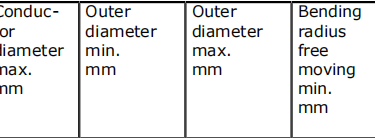

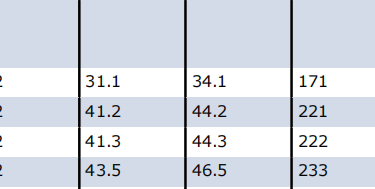
Technical Specifications - Detailed Analysis
Electrical Performance Parameters
Voltage Rating Structure: The SPREADERFLEX 3GSLTOE carries a rated voltage designation of 0.6/1 kV, following international notation where the first value (0.6 kV or 600V) represents the voltage between any conductor and earth, while the second value (1 kV or 1000V) represents the voltage between phase conductors.
The maximum permissible operating voltage extends to 0.7/1.2 kV for AC systems and 0.9/1.8 kV for DC systems. This 20% overvoltage margin (for 0.6/1 kV rated cables) provides operational headroom for voltage fluctuations common in industrial power distribution systems, particularly during motor starting or regenerative braking conditions on crane drives.
The AC test voltage of 3.5 kV applied for 5 minutes during manufacturing quality control ensures insulation integrity and provides confidence that the cable can withstand transient overvoltages that may occur during switching operations or lightning-induced surges in outdoor installations.
Current Carrying Capacity: Current ratings depend on conductor cross-section, number of loaded cores, and installation conditions. The technical documentation provides values based on DIN VDE 0298-4 for rubber cables laid on surfaces at 30°C ambient temperature. For basket operation, additional derating may apply due to limited heat dissipation within the coiled cable mass, requiring consultation with the manufacturer for specific high-duty-cycle applications.
Data Transmission Capability: The cable design accommodates special bus elements (ASI-Bus, Profibus, CAN-Bus, Industrial Ethernet) through dedicated twisted shielded pairs, or alternatively integrates fiber optics for transmitting all bus protocols with complete immunity to electromagnetic interference. This hybrid capability allows single-cable solutions for modern cranes requiring both power distribution and sophisticated control networking.
Temperature Performance Envelope
The SPREADERFLEX 3GSLTOE operates across one of the widest temperature ranges available in flexible power cables:
Flexible Operation Range: -40°C to +80°C represents the temperature limits during dynamic flexing. The lower limit of -40°C far exceeds most standard cables (typically limited to -25°C or -30°C) and addresses the reality of outdoor container terminal operations in northern climates where ambient temperatures regularly fall below -30°C during winter months.
Fixed Installation Range: -50°C to +80°C extends the lower temperature capability for stationary sections of cable that may not be actively flexing but must remain electrically functional. This is relevant for cable sections at the basket mounting points or connection terminals.
Conductor Temperature Limits: The maximum permissible conductor temperature of 90°C during operation ensures adequate thermal margin below the degradation temperature of the EPR insulation. During short-circuit conditions, the conductor may briefly reach 250°C without permanent insulation damage—a critical safety feature that prevents insulation failure from escalating fault conditions.
Mechanical Performance Parameters
Travel Speed Optimization: The specified maximum hoist speed of 160 m/min (2.67 m/s) reflects extensive testing of basket coiling dynamics. At higher speeds, the cable's inertia can cause irregular coiling patterns within the basket, leading to overlapping wraps and potential kinking. The 160 m/min limit ensures reliable operation across the cable's service life.
Basket Dimension Recommendations: The engineering recommendation specifies minimum basket diameter of 30 x D (where D = cable overall diameter) and basket height of approximately 45 x D. These proportions ensure:
Adequate coil diameter to prevent excessive bending stress (maintaining bending radius within cable specifications)
Sufficient basket height to accommodate maximum cable payout without coil-over-coil stacking that could cause pinching
Proper sidewall clearance to prevent cable abrasion during dynamic movement
For example, a cable with 40 mm overall diameter would require a basket with minimum 1200 mm diameter and approximately 1800 mm height.
Bending Radius Compliance: While specific minimum bending radius values follow DIN VDE 0298 part 3 standards, the basket operation design inherently maintains appropriate radii through the dimensional recommendations above. The cable's construction prevents the tight-radius bending that would occur with smaller basket diameters.
Installation Instructions: Critical for basket operation, the cable must be laid into the basket in a counter-clockwise direction (viewing from above), following the natural lay of the cable construction. Detailed installation instructions available from the manufacturer provide specific guidance for initial basket loading and tension adjustment to ensure optimal coiling behavior.
Chemical and Environmental Resistance
Oil Resistance: Qualification according to DIN EN 60811-404 (paragraph 10) ensures compatibility with hydraulic oils, lubricants, and diesel fuels commonly encountered in crane environments. The test protocol involves immersion in ASTM Oil No. 2 at 100°C for 24 hours, after which the sheath must maintain its mechanical properties within specified limits.
Weather Resistance: The combination of UV-resistant PUR sheath and weather-resistant EPR insulation provides unrestricted use in outdoor environments. The cable resists:
Ozone degradation (common in industrial atmospheres and near electrical equipment)
UV radiation damage (critical for outdoor installations with direct sunlight exposure)
Moisture ingress (essential for reliable operation in rain, snow, and high-humidity conditions)
Water Resistance: Verified through long-term immersion testing, the cable construction prevents water penetration that would degrade insulation resistance or promote conductor corrosion. The PUR sheath provides effective moisture barrier, while the core arrangement minimizes capillary paths for water migration.
Key Benefits for Operators
Reliability in Cold Climates
The SPREADERFLEX 3GSLTOE's performance in freezing conditions delivers tangible operational benefits for cold-climate facilities. Standard cables often experience brittle fracture of outer sheaths when flexed at temperatures below -20°C, leading to expensive emergency replacements and operational downtime. The PUR sheath compound maintains elasticity at -40°C, preventing the micro-cracking and eventual catastrophic sheath failure that plagues conventional cables in cold environments.
This cold-weather reliability translates to reduced maintenance costs in several ways:
Extended Service Life: Cables that remain flexible in cold weather accumulate less damage per flex cycle, extending replacement intervals from 2-3 years (typical for standard cables in cold climates) to 5-7 years or more.
Reduced Emergency Repairs: Cold-weather cable failures typically occur during the coldest periods—precisely when replacement is most difficult and expensive. The SPREADERFLEX's proven low-temperature performance virtually eliminates these costly emergency interventions.
Year-Round Operations: Facilities in extreme climates can maintain full operational capacity without seasonal derating or operational restrictions due to cable limitations.
Enhanced Tensile Strength and Basket Performance
The integrated central Aramid support element provides mechanical advantages that directly impact operational reliability:
Prevention of Cable Elongation: Copper conductors subjected to sustained tensile loads will creep (permanently elongate) over time. This elongation causes the cable to become progressively longer, disrupting basket coiling patterns and eventually requiring cable replacement. The Aramid support bears the tensile load, preventing conductor creep and maintaining consistent cable length throughout its service life.
Proper Basket Stacking: Cables without adequate support structure tend to coil unevenly within baskets, with some wraps tighter than others. This uneven coiling leads to cable-on-cable pinching and accelerated wear. The SPREADERFLEX's balanced construction and support element promote uniform coiling, with each wrap lying smoothly beside the previous one.
Dynamic Load Absorption: During rapid acceleration or emergency stopping, dynamic forces can momentarily exceed static loads by factors of 2-3x. The Aramid support's high tensile modulus absorbs these shock loads without transferring destructive forces to the copper conductors.
Reduced Downtime Through Material Optimization
Every component of the SPREADERFLEX 3GSLTOE is selected to minimize maintenance requirements and prevent the common failure modes of basket operation cables:
Abrasion-Induced Sheath Failure: The PUR compound's superior abrasion resistance addresses the primary cause of basket cable failures. Conventional rubber sheaths wear through at basket entry/exit points after 12-18 months of intensive use; the SPREADERFLEX typically operates 3-5 years before showing significant sheath wear.
Conductor Fatigue Fracture: The extremely fine stranded (Class FS) conductors distribute flex-induced stress across many individual wires rather than concentrating it in fewer larger strands. This reduces work-hardening and delays the onset of conductor strand breakage that eventually causes circuit opens.
Installation-Related Damage: The cable's construction tolerates the installation stresses of basket loading better than standard designs. The central support prevents core separation during initial installation, while the robust sheath resists damage from contact with basket edges during threading.
Data Transmission Options
Modern crane systems increasingly require sophisticated control networks operating alongside power distribution. The SPREADERFLEX 3GSLTOE accommodates these requirements through several hybrid design options:
Fiber Optic Integration
Fiber optic elements can be integrated within the cable structure to provide interference-free data transmission for crane automation systems, positioning feedback, and diagnostic monitoring. The optical fibers (available in G62.5/125, G50/125, or E9/125 specifications) reside within protective tubes laid alongside the power cores.
The advantages of fiber integration include:
Electromagnetic Immunity: Optical fibers transmit data via light pulses, making them completely immune to electromagnetic interference from VFD motor drives, welding equipment, and radio frequency sources common in industrial environments.
High Bandwidth: Gigabit-level data rates support modern crane automation protocols, video transmission for operator assistance systems, and high-resolution positioning feedback.
Reduced Cable Count: A single hybrid power/fiber cable replaces separate power and control cable installations, simplifying basket loading and reducing basket size requirements.
Fieldbus Integration
Alternatively, dedicated twisted shielded pairs optimized for industrial bus protocols (ASI-Bus, Profibus, CAN-Bus, Industrial Ethernet) provide cost-effective integration for control networks that don't require fiber optic bandwidth. These pairs feature:
Impedance Control: Precision manufacturing maintains characteristic impedance within specifications for reliable high-speed digital signaling.
Shield Optimization: Copper braid shields with >80% coverage provide electromagnetic compatibility (EMC) performance meeting EN 55011/55022 emission limits.
Mechanical Robustness: The twisted pairs integrate into the cable's core bundle structure, ensuring they experience the same mechanical environment and flex-life as power conductors.
Common Challenges and Solutions
Problem: Premature Sheath Wear at Basket Entry Point
Symptoms: Visible sheath abrasion or cutting at the point where cable enters the basket from vertical suspension.
Root Cause: Excessive lateral cable movement during operation causes repeated contact with basket edge. This can result from improper basket sizing, inadequate cable tensioning, or swaying induced by wind or crane movement.
Solution:
Verify basket diameter meets minimum 30 x D specification
Install guided entry funnel with radiused edge at basket entry point
Adjust initial cable tension to minimize lateral movement
Consider upgrading to next larger cable size if operating near maximum speed limits
Problem: Uneven Basket Coiling with Progressive Tangling
Symptoms: Cable wraps overlap irregularly, creating tight spots and loose sections within basket. Progressive worsening over weeks of operation.
Root Cause: Cable installed with incorrect rotational direction, or cable elongation due to inadequate support element specification.
Solution:
Confirm cable is wound counter-clockwise when viewed from above
Verify cable length hasn't increased beyond original specification (indicating conductor creep)
For chronic cases, consult manufacturer regarding support element upgrade
Implement regular basket inspection protocol to catch early signs of coiling irregularity
Problem: Electrical Failures at Cold Temperatures
Symptoms: Intermittent circuit opens or insulation failures occurring primarily during cold weather operation.
Root Cause: Cable not rated for actual operating temperature, or installation damage to insulation that manifests as failures when insulation becomes less flexible at cold temperatures.
Solution:
Verify installed cable is SPREADERFLEX 3GSLTOE with -40°C rating, not standard cable
Inspect cable for installation damage (pinch points, excessive bending during initial basket loading)
Check that minimum bending radii are maintained throughout cable path
Consider environmental heating for basket area if temperatures regularly fall below -40°C
Problem: Reduced Service Life in High-Cycle Applications
Symptoms: Cable requiring replacement after 12-18 months despite apparently correct installation and operation.
Root Cause: Duty cycle exceeds cable design parameters (cycles per day, travel speed, or vertical travel distance).
Solution:
Document actual operational parameters: cycles per day, typical and maximum speeds, vertical travel distance
Consult manufacturer with operational data for cable specification review
Consider upgrade to larger conductor size or alternative support element design
Implement cable rotation program where multiple cables share duty cycle
Recommended Installation Practices
Proper installation is critical for achieving design service life. Key practices include:
Basket Loading Procedure: Thread cable through basket in counter-clockwise direction (viewed from above), maintaining moderate tension to ensure even initial coiling. Avoid introducing twists during installation—the cable should lie flat without spiral tendency.
Connection Termination: At spreader electrical connections, provide strain relief that transfers mechanical loads to the cable's support element rather than to conductor terminations. Use cable glands rated for the cable diameter with compression elements that grip the outer sheath.
Initial Commissioning: During first operational cycles, observe basket coiling behavior at slow speed. Make tension adjustments as needed to achieve smooth, even coiling. Document this baseline configuration for future reference.
Periodic Inspection: Establish inspection schedule (quarterly for high-cycle installations, annually for moderate use) to check for:
Sheath wear at basket entry/exit points
Evenness of basket coiling
Any signs of cable elongation (change in vertical hang length)
Electrical continuity and insulation resistance testing
Reference Standards and Compliance
The SPREADERFLEX 3GSLTOE design references multiple international and national standards:
DIN VDE 0250: German standard for rubber-insulated flexible cables, providing baseline construction and testing requirements. The SPREADERFLEX is "based on" this standard, meaning it meets or exceeds requirements while incorporating application-specific enhancements.
DIN VDE 0298: Installation and application guidelines for power cables, specifically Part 3 (application guidance) and Part 4 (current carrying capacity).
DIN EN 60811-404: Test methods for insulating and sheathing materials, specifically oil resistance testing protocols.
GOST-R: Russian certification indicating compliance with Russian Federation technical regulations, essential for equipment exported to Russia and CIS countries.
These standards provide the technical foundation, though the cable's specialized basket operation features go beyond minimum standard requirements to deliver superior performance in this demanding application.
Conclusion
The SPREADERFLEX 3GSLTOE 0.6/1kV spreader cable represents specialized engineering for one of the most demanding cable applications: gravity-fed collector basket operation on load-lifting equipment. Its purpose-built construction—from the central Aramid support element through the cold-resistant PUR sheath—addresses the unique challenges of vertical suspension, rapid coiling/uncoiling cycles, and operation in extreme environmental conditions.
For operators of container cranes, industrial hoists, and material handling equipment in cold climates, this heavy duty spreader cable for cold environments delivers tangible benefits: extended service life, reduced emergency repairs, and reliable year-round operation. The combination of -40°C cold flexibility, high tensile strength support, and superior abrasion resistance makes it the optimal choice for basket operation applications where standard cables fail prematurely.
When specifying cables for new installations or replacement projects, close attention to the 3GSLTOE-J-O technical specifications, particularly the basket sizing recommendations and installation procedures, ensures achieving the cable's full performance potential. For complex installations or applications with unusual duty cycles, manufacturer consultation provides application-specific engineering support to optimize cable selection and installation practices.
The SPREADERFLEX 3GSLTOE exemplifies how specialized cable design, informed by decades of field experience and rigorous testing, can solve the challenging requirements of modern material handling equipment operating in demanding environments worldwide.
How to Reach Us
Get in Touch
SiteMap
Product Catalogue
Festoon Cable
Shore Power Cable


Scan to add us on WeChat