
The Cost of Choosing the Wrong Cable Jacket in Port and Crane Applications
Wrong cable jacket selection in port and crane systems triggers cracking, abrasion, and corrosion failures. Explore real-world cases and the true lifecycle cost of getting it wrong.
hongjing.Wang@Feichun
6/10/202619 min read
Why Cable Jacket Selection Is a Critical Engineering Decision
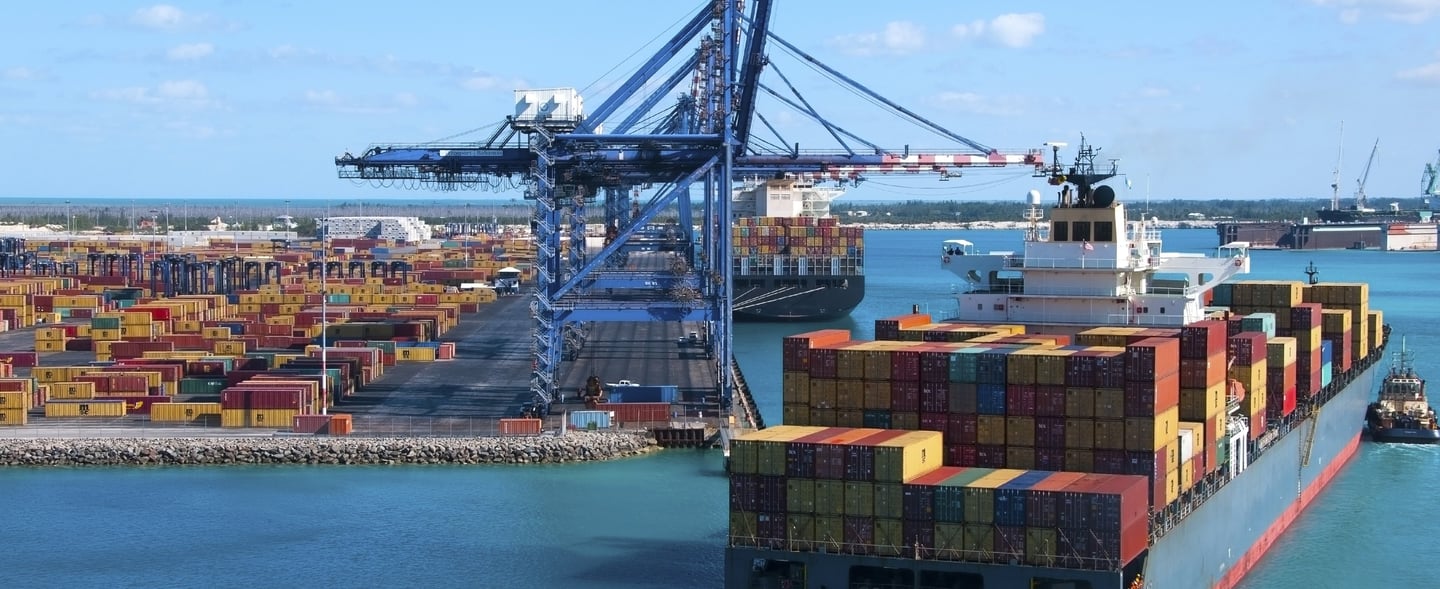
Ask most procurement teams about the cable jacket on a crane system and you'll get a shrug. It's the outer layer, the bit that wraps around the conductors, the part nobody thinks about until it splits open on a wet Tuesday morning halfway through a shift. That casual attitude is precisely where the trouble starts. In port and crane applications, the cable jacket isn't simply a protective skin. It's the failure control boundary of the entire system — the single component standing between the working environment and everything that makes the cable function.
When engineers talk about reliability in heavy lifting and materials handling, the conversation tends to drift toward motors, drives, brakes, and structural steel. The cable, and especially its jacket, gets treated as a commodity line item. Buy the cheapest one that meets the voltage rating and move on. But that thinking quietly ignores a hard truth that anyone who has run a port terminal or a mine site already knows in their bones: when the jacket goes, the whole system tends to go with it. A cracked sheath lets moisture in. Moisture compromises the insulation. Compromised insulation triggers an earth fault. An earth fault trips the crane. And suddenly a component that cost a few dollars per metre has shut down an asset worth millions, with cargo stacked up and ships waiting offshore on demurrage.
That's the part the spreadsheet never captures at the point of purchase. The initial cable price is a tiny fraction of what the wrong jacket choice actually costs over the life of the installation. Lifecycle cost — replacement frequency, downtime, labour, recalibration, contractual penalties, reputational damage — dwarfs the sticker price by orders of magnitude. Choosing a jacket material that can't handle the abrasion, the oil, the salt air, or the constant flexing isn't saving money. It's deferring a far bigger bill and adding interest on top.
This article walks through what actually happens when the wrong jacket gets specified. We'll look at the real failure modes engineers see in the field, dig into documented incidents and operator reports from industry forums and safety bodies, put hard numbers on the hidden costs, and then compare the common jacket materials so the next specification decision is made on engineering grounds rather than purchase price alone. The failures are real. The financial losses are real. And in more than a few cases, the safety consequences have been catastrophic. Let's get into it.
Real-World Cable Jacket Failure Modes in Crane Applications
Before we look at specific incidents, it helps to understand the mechanisms — the actual physical ways a cable jacket gives up. Most failures in port and crane environments fall into one of five categories, and almost every documented case is a variation on these themes. Understanding the mechanism is what lets you match the material to the application rather than guessing.
Jacket Cracking — Mechanical Fatigue Failure
This is the classic high-flex failure, and it's the one that catches out installations running cheap or inappropriate jacket compounds. Crane systems — festoon cables, reeling drum cables, pendant control cables, drag chain cables — flex continuously. In a busy container terminal, a crane might cycle thousands of times a day, every day, for years on end. Each bend introduces a tiny amount of mechanical stress into the jacket material. A material with poor fatigue resistance can't absorb that stress indefinitely.
What happens is insidious. The cracks start at the micro-scale, invisible to a walk-by inspection. They form in the regions of highest bending stress, often where the cable enters a gland or wraps around a sheave. Over thousands of cycles, those micro-cracks propagate. They join up. Eventually you get full sheath rupture — a visible split that exposes the inner cores. And here's the kicker: once the jacket is breached, moisture finds its way in. In a port environment, that moisture is salt-laden and conductive. Insulation failure follows, then earth faults, then a tripped system. The whole chain of events traces back to a jacket compound that simply wasn't rated for the flex cycles it was being asked to survive. This is overwhelmingly common in port cranes running around the clock, where there's no quiet overnight period to ease the duty cycle.
Abrasion Failure — Mechanical Wear in Harsh Environments
Where cracking is about internal stress, abrasion is about the outside world physically grinding the jacket away. Cables in port and crane applications get dragged. They scrape across metal rails, over gravel and aggregate surfaces, through cable chains and guide rollers, against structural steelwork. Every pass removes a little more material from the jacket surface.
The failure progression is straightforward but unforgiving. The jacket thins. Then it wears through entirely in localised spots. Then the inner insulation layers — which were never designed to take mechanical contact — are exposed to the same abrasive forces. From there it's a short road to conductor exposure and electrical failure. Ship loaders and container cranes are particularly prone to this, because their cables are constantly in motion across surfaces that were never designed to be cable-friendly. A jacket with poor abrasion resistance in this setting is on borrowed time from day one, and the wear rate can be three to five times higher than a properly specified material, which we'll quantify later.
Chemical Corrosion — Marine and Industrial Exposure
Port terminals sit at the intersection of two aggressive chemical environments: the marine atmosphere and heavy industry. Salt spray coats everything. Ozone, generated by electrical equipment and present in coastal air, attacks polymer chains. Acidic industrial pollutants — exhaust, process chemicals, airborne particulates — add to the assault. For a cable jacket, this is a slow chemical siege.
The result is degradation of the jacket polymer at the molecular level. The material embrittles, losing the flexibility it needs to handle movement. The surface begins to peel and flake. Once-supple sheathing becomes hard and crazed, and at that point even normal flexing will crack it. This kind of failure is especially severe at coastal port terminals, where the combination of salt, ozone, and humidity runs constantly and never lets up. A jacket compound with poor chemical and ozone resistance ages dramatically faster in these conditions, and the failure often shows up as widespread surface degradation rather than a single localised fault — meaning you're not patching one spot, you're replacing the run.
Oil Swelling — Hydrocarbon Exposure Failure
Heavy machinery leaks. That's not a criticism, it's just reality. Hydraulic oil, grease, gear lubricants, cutting fluids — these are everywhere around cranes and mining equipment, and cable jackets routinely sit in contact with them. The problem is that many jacket compounds, PVC being the obvious example, absorb hydrocarbons. The oil migrates into the polymer matrix.
When a jacket absorbs oil it swells. It expands, softens, and loses mechanical strength. A softened, swollen jacket can no longer protect the conductors from abrasion or impact, and its dimensional stability is gone, which causes problems at glands and terminations. You'll see this constantly in mining environments and around heavy hydraulic machinery, where oil contact is unavoidable. Specifying an oil-resistant jacket here isn't a luxury — it's the difference between a cable that lasts its design life and one that turns to mush within a couple of seasons.
UV Degradation — Outdoor Exposure Failure
Australia's sun is brutal, and outdoor port cranes, stacker-reclaimers, and stockyard equipment cop the full force of it year-round. Ultraviolet radiation breaks down the chemical bonds in polymer jackets through a process of photo-degradation. Over time, an unprotected or poorly stabilised jacket discolours, then chalks, then embrittles.
The visible signs — fading, a chalky surface residue — are the early warning. What follows is surface cracking as the embrittled material loses its ability to flex, and eventually structural failure of the sheath. This is a common and predictable failure in outdoor port cranes and stacker systems, and it's entirely avoidable with a properly UV-stabilised jacket compound. The frustrating thing about UV failure is how slow and quiet it is. By the time it's obvious, the damage has been accumulating for years, and the cable is well past the point of recovery.
Real-World Failure Cases from Industry and Field Reports
The failure modes above aren't theoretical. They show up again and again in maintenance reports, safety bulletins, and the day-to-day experiences operators share with each other. The following cases — drawn from industry maintenance documentation, a published safety flash, and a collection of real operator reports from heavy equipment forums — put faces to the failure mechanisms. The links are included so you can read the original accounts yourself.
Port Crane Maintenance Failure Reports
Across port crane maintenance records, continuous-flex cables show up as one of the most persistent headaches. The recurring culprits are insulation damage, torsional stress, and jacket abrasion — and they cluster together because they tend to cascade. Torsional stress fatigues the jacket, the fatigued jacket abrades or cracks, the breach lets the environment at the insulation, and the insulation fails. These are among the most common failure types in port operations precisely because the duty cycle is so relentless: high-frequency movement, heavy loads, and an unforgiving coastal environment all at once. When maintenance teams log their most frequent cable interventions, flex-related jacket and insulation failures sit right at the top of the list.
IMCA Safety Flash Case — Crane Wire Rope Failure Incident
The marine and offshore industry's safety body, IMCA, has documented incidents that show just how catastrophic undetected degradation can become. In one published case, a cargo vessel was unloading a wind turbine nacelle when the crane's wire rope failed. The root cause was corrosion and wear that had progressed undetected — the same insidious, hidden degradation pattern we see in cable jackets, just expressed in steel rope rather than polymer.
The consequence was severe. The wire rope broke suddenly, and the nacelle — weighing around 69 tonnes — fell back onto the vessel's deck. There was no warning. The degradation had been accumulating quietly, below the threshold of routine visual inspection, until the moment it reached failure. The lesson translates directly to cable jacket management: degradation that can't be seen is the most dangerous kind, because it doesn't announce itself until the system has already failed. Whether it's a steel rope or a polymer sheath, the principle holds — undetected wear and corrosion turn an ordinary lifting operation into a catastrophe.
OEM Maintenance Documentation References
The major crane OEMs maintain detailed service infrastructure precisely because they understand this risk. Konecranes, one of the largest players in the industrial crane space, provides official service reporting that covers safety inspection records, production risk evaluation, and detailed repair and maintenance logs. These records are made available to operators through the customer portal system (yourKONECRANES), giving asset owners visibility into the condition and history of their equipment.
Konecranes manuals and technical documentation are also distributed through maintenance portals and service networks, ensuring that the people responsible for keeping cranes running have access to the specifications, inspection criteria, and maintenance procedures they need. The existence of this kind of structured documentation tells you something important: the OEMs treat condition monitoring and proactive maintenance as core to safe operation, not as an optional extra. When the manufacturer is building portals around inspection records and risk evaluation, that's a signal worth heeding.
Heavy Equipment Forums Real-World Case Studies
Some of the most candid accounts of cable and wiring failure come not from glossy technical documents but from the operators and technicians who deal with these problems hands-on. The Heavy Equipment Forums community has documented numerous real-world cases that illustrate the failure mechanisms we've described. Here are seven of them, with links to the original threads.
Case 1: Electrical Wiring Breakage Failure Source: https://www.heavyequipmentforums.com/threads/electrical-wiring-nightmare.93304/page-2
In this case, an operator reported repeated wire breakage in the electrical system. The insulation was described as soybean-based — a bio-derived compound that proved prone to failure — and the system experienced frequent electrical malfunction as conductors broke. It's a pointed reminder that material chemistry matters: a jacket or insulation compound that looks fine on a datasheet can fail repeatedly in service if it isn't suited to the mechanical and environmental demands of the application.
Case 2: Crane Control Pendant Cable Internal Wire Breakage Source: https://www.heavyequipmentforums.com/threads/auto-crane-control-pendant.98582/
Here the dominant maintenance issue was internal wire breakage inside a pendant control cable. The operator stated plainly that this was the most frequent maintenance failure they dealt with over time. Pendant cables get flexed, swung, dropped, and dragged constantly, and that relentless mechanical cycling drives fatigue failure of the internal conductors. This case is a textbook illustration of high fatigue failure in crane control cables — and a clear argument for specifying a jacket and conductor construction built for continuous flexing.
Case 3: Hydraulic Sensor Wire Breakage Affecting Load Accuracy Source: https://www.heavyequipmentforums.com/threads/boom-truck-crane-issues.27002/
This case carries a genuine safety sting. A wire running from a hydraulic sensor to the LMI (Load Moment Indicator) system had broken. After the repair, the load reading showed a 20% deviation from the true value. On a crane operating near its load limit, a 20% error in the load indication is a dangerous miscalculation waiting to happen — it could mean lifting a load the crane can't safely handle while the operator believes everything is within limits. It's a stark demonstration of how a single broken internal conductor can compromise the safety systems that everyone is relying on.
Case 4: Electrical and Hydraulic System Failure After Welding Activity Source: https://www.heavyequipmentforums.com/threads/crane%20electrical%20and%20hydraulic%20issue.50764/
In this case, a crane malfunctioned after welding work was carried out on the vehicle. The likely cause was that the battery wasn't disconnected during welding, allowing stray welding current to damage the system's electrical components. It highlights how sensitive modern crane electrical systems are to improper handling — and how a maintenance procedure done wrong can cascade into electrical damage across the system. Good cable and connection integrity matters, but so does respecting the vulnerability of the electrical system during ancillary work.
Case 5: Wiring Wear Near Brake Coil System Source: https://www.heavyequipmentforums.com/threads/30-t-overhead-crane-with-a-binding-problem.93832/
Troubleshooting a binding problem on a 30-tonne overhead crane led to a recommendation to inspect the wiring running from the rectifier to the brake coil. Wear was observed in exposed wiring near mechanical components — exactly the abrasion mechanism we described earlier. When wiring runs close to moving mechanical parts without adequate protection, the jacket gets worn away over time. This case confirms the abrasion risk in exposed crane wiring systems and the importance of protecting cables wherever they pass near moving machinery.
Case 6: Corroded Electrical Wiring in Skyjack Equipment Source: https://www.heavyequipmentforums.com/threads/skyjack-wheels-turn-but-won't-drive-or-lift.87059/
A Skyjack machine whose wheels would turn but which wouldn't drive or lift led to a recommendation to inspect for loose, broken, or heavily corroded wires. The electrical failure was ultimately traced back to wiring degradation, with corrosion identified as the primary root cause. This is the chemical corrosion mechanism in action — environmental exposure degrading the wiring until electrical continuity is lost. It's a reminder that corrosion doesn't just attack steel; it attacks the electrical pathways that keep equipment functioning.
Case 7: Hoisting Cable Failure During Lifting Operation Source: https://www.heavyequipmentforums.com/threads/failed-becket.66459/
Finally, a case with an immediate and dramatic consequence. During the lifting of an OSB wood bundle, the hoisting cable failed and the load dropped from a height of around 8 feet. The failure of the lifting line meant an instant, uncontrolled drop of the load. While this is a lifting rope rather than an electrical cable, the principle is the same as the IMCA case: when the component that carries the load or the signal fails, the consequences are immediate and potentially catastrophic. There's no graceful degradation — just sudden failure and a falling load.
Summary of Forum Evidence
Step back and look at these cases together, and a clear pattern emerges. Across all of them, the same recurring failure mechanisms keep surfacing: internal conductor breakage from repeated flexing, insulation degradation under environmental stress, abrasion in exposed wiring zones, corrosion leading to electrical discontinuity, and sensor signal failure caused by broken conductors. These aren't exotic, one-off problems. They're the predictable consequences of cables and jackets that weren't matched to the mechanical and environmental demands of their application. Every one of them maps directly back to the five failure modes we opened with — and every one of them could have been mitigated by better material selection at the specification stage.
The Hidden Cost of Choosing the Wrong Cable Jacket
Here's where the argument moves from engineering to economics, because that's the language procurement decisions actually get made in. The case for a better jacket compound isn't sentimental — it's financial. When you total up replacement cycles, downtime, labour, and the knock-on operational losses, the cheap jacket turns out to be staggeringly expensive. Let's break the numbers down.
Cable Replacement Cost and Lifecycle Reduction
A well-specified crane cable should last somewhere in the range of 5 to 10 years in normal service. That's the benchmark. But in harsh port environments — salt, abrasion, constant flex, oil contact, UV — that lifespan gets compressed to around 3 to 5 years even for a decent cable. Now specify the wrong jacket material on top of that harsh environment, and the replacement cycle shortens dramatically further. You're no longer replacing cables on a comfortable multi-year schedule; you're doing it far more often, and each replacement carries the full burden of cost and disruption.
The arithmetic is unforgiving. If the right jacket would have given you eight years and the wrong one gives you three, you're buying and installing that cable nearly three times as often over the same period. Every one of those extra replacement cycles is a fresh hit of material cost, labour cost, and — most painfully — downtime cost. The supposedly cheaper cable has quietly become a recurring expense.
Downtime Cost Impact — The Critical Business Loss
This is the number that should stop any procurement manager in their tracks. Container crane downtime can cost up to around USD 35,000 per day. That figure comes from the revenue model of high-frequency container movement — a container crane is a money-printing machine when it's running, moving boxes on and off ships at a rate that translates directly into terminal revenue. When it stops, that revenue stops with it, and the costs start piling up.
It's worth sitting with how that breaks down. According to Konecranes, unexpected crane downtime can result in losses running into thousands of dollars per hour. That figure isn't just lost throughput — it includes lost productivity across the whole operation, labour sitting idle while the crane is down, and contractual penalties that kick in when the terminal can't meet its service commitments to shipping lines. Even a short interruption creates losses that compound quickly, because in a port everything downstream depends on the cranes keeping the cargo moving. A crane that's down for a day on a USD 35,000-per-day operation has burned more money in that single day than the entire cable installation cost. And the cause? Quite possibly a cracked jacket on a cable that should have been specified for the environment.
Installation and Replacement Cost Burden
Replacing a crane cable isn't a quick swap. It's a substantial job that ties up skilled people and equipment. A typical replacement requires a crew of two to four electricians working together — these are not entry-level tasks, and the cables involved are heavy, long, and routed through awkward spaces. The work itself takes somewhere between 8 and 16 hours per replacement cycle, depending on the complexity of the routing and the access constraints.
When you add it all up — the technicians' time, the testing, the commissioning, and the system recalibration that has to follow — the total labour cost lands at roughly USD 3,000 to 8,000 per job. And that's just the labour, sitting on top of the cable material cost and entirely separate from the downtime losses accumulating while the crane is out of service. Remember Case 3 above, where a repaired sensor wire left a 20% load reading error? That's why recalibration and proper commissioning are non-negotiable parts of the job, and why the labour bill is what it is. Multiply that USD 3,000 to 8,000 across the extra replacement cycles forced by a poor jacket choice, and the cost stacks up fast.
Indirect Operational Losses
The direct costs are only half the story. When a crane goes down, the ripple effects spread well beyond the immediate repair bill. Cargo handling schedules slip, throwing the whole terminal's planning into disarray. Ships that can't be loaded or unloaded on time trigger shipping penalties and contractual breaches, with demurrage charges accumulating while vessels wait. And there's a longer-term cost that never shows up on any single invoice: the damage to client relationships. A terminal that develops a reputation for unreliability loses the trust of the shipping lines that are its lifeblood, and that lost confidence translates into lost business over time. Reduced port throughput efficiency becomes a structural problem rather than a one-off event. These indirect losses are hard to quantify precisely, but anyone who runs a terminal knows they're real and often larger than the direct costs.
Material Efficiency Impact — PUR vs PVC Example
To make this concrete, consider the difference between polyurethane (PUR) and PVC jacketing under controlled abrasion testing. Under DIN 53516 test conditions — the standard abrasion resistance test — PUR cable shows significantly lower abrasion loss than PVC. In rough, abrasive environments, PVC wears something like three to five times faster than PUR. That's not a marginal difference; it's the difference between a cable that survives and one that's grinding itself toward failure.
This is where the lifecycle argument crystallises. Yes, PUR carries a higher initial material cost. But that higher upfront cost is routinely offset — and then some — by the longer service life and the reduced downtime that come with it. If PVC wears three to five times faster, you're replacing it three to five times as often, paying the labour bill each time, and eating the downtime losses each time. The PUR cable that cost more on day one ends up costing far less over the life of the installation. The cheap option only looks cheap if you stop counting at the purchase order.
Cable Jacket Material Comparison and Engineering Implications
Once the cost case is clear, the next question is practical: which material do you actually specify? There's no single right answer — the best choice depends on the specific blend of abrasion, oil, UV, flex, temperature, and budget your application throws at the cable. Here's how the common jacket materials stack up.
PUR — Polyurethane Jacket Performance
Polyurethane is the workhorse of demanding dynamic applications, and for good reason. It offers extremely high abrasion resistance, which is exactly what you want for cables being dragged across rails and aggregate. It has excellent oil resistance, so the swelling and softening that plagues lesser materials around hydraulic and lubricating oils isn't a problem. Its UV and ozone resistance are strong, making it well suited to outdoor exposure. It stays highly flexible, which matters enormously for continuous movement systems, and it has a long fatigue life under repeated bending cycles — directly addressing the flex-cracking failure mode that takes out so many port crane cables.
The trade-off is cost: PUR carries a higher material cost than the budget options. But as the lifecycle analysis above makes plain, that higher material cost is paired with a lower lifecycle cost. For high-flex, harsh-environment applications — which describes most serious port and crane installations — PUR is frequently the most economically sensible choice once you account for everything beyond the purchase price.
PVC — Polyvinyl Chloride Jacket Performance
PVC is the budget option, and its single biggest selling point is that it's the lowest material cost choice on the table. It offers moderate flexibility and moderate abrasion resistance — adequate for static or lightly loaded applications. But its weaknesses are exactly the ones that matter most in port and crane work. Its oil resistance is poor; it swells and softens on contact with hydrocarbons, which makes it a liability anywhere near hydraulic or lubricating fluids. Its performance drops off in low temperatures, becoming stiff and brittle in the cold. And its service life in dynamic, high-flex applications is short — the very conditions cranes impose.
PVC has its place. For fixed installations in benign environments, it's a perfectly reasonable, economical choice. But specifying it for a high-flex, oil-exposed, abrasive port crane application is asking for the rapid failure cycles described throughout this article. It's the false economy that this entire piece is warning against.
CPE — Chlorinated Polyethylene Jacket Performance
CPE sits in a useful middle ground. It offers good flexibility and notably good cold resistance, which makes it a sensible option in colder climates or refrigerated environments where PVC would stiffen up. Its aging resistance is improved compared to PVC, so it holds up better over time against the slow degradation of environmental exposure. It's well suited to outdoor environments with moderate mechanical stress — situations that are tougher than a benign indoor installation but not as punishing as a 24/7 container crane. For applications that need better durability and weathering than PVC offers but don't justify the cost of premium materials, CPE is worth considering.
TPE / TPU — Thermoplastic Elastomer / Thermoplastic Polyurethane Jacket Performance
At the premium end sit the thermoplastic elastomers and thermoplastic polyurethanes. These materials deliver extremely high abrasion resistance, comparable to or exceeding PUR. Their oil and chemical resistance is excellent, handling the hydrocarbon and chemical assault of industrial environments with ease. They offer very high fatigue life, surviving extremely high numbers of bending cycles — making them ideal for the most demanding continuous-flex applications. And their UV and ozone stability is excellent, suiting them to long-term outdoor exposure.
The cost is mid-to-high, but what you're buying is premium durability across the board. For the most demanding applications — the ones where failure is most expensive and downtime is most painful — TPE and TPU represent the top-tier engineering choice. When the cost of failure is measured in tens of thousands of dollars per day, the premium on a TPE or TPU jacket is easily justified.
Industry Standards Governing Cable Jacket Performance
None of this material selection happens in a vacuum. A framework of international and national standards governs how cable jackets are constructed, tested, and classified, and understanding them is part of making a defensible specification decision. Here are the key ones relevant to port and crane cable jacket performance.
IEC 60228 sets the standard for conductor structure and electrical classification — defining the conductor classes and their construction, which underpins the electrical performance of the cable.
IEC 60811 establishes the mechanical testing methods for insulation and sheath materials, providing the standardised procedures by which jacket compounds are evaluated for their mechanical properties.
DIN EN 60811-501 represents the latest mechanical test methods for non-metallic materials, the current reference for assessing how jacket and insulation compounds perform under mechanical stress.
DIN VDE 0245 / 0812 are the crane and flexible cable specification standards, defining the requirements specifically for the kinds of cables used in lifting and continuous-flex applications.
DIN VDE 0295 covers conductor resistance and structure requirements, ensuring conductors meet defined electrical and dimensional criteria.
DIN 53516 is the abrasion resistance test standard — the very test referenced earlier in the PUR versus PVC comparison, and the basis for validating the abrasion performance claims that drive material selection.
Specifying against these standards isn't bureaucratic box-ticking. It's how you ensure that the jacket material you're buying actually performs the way the datasheet says it will, and how you create an objective, defensible basis for choosing one material over another.
SEO Keywords and Target Search Intent
For readers and content teams looking to surface this information, the relevant search themes include: port crane cable failure causes, crane cable jacket cracking cost, PUR vs PVC cable performance comparison, crane downtime cost per hour, heavy equipment cable failure case study, IEC 60811 cable testing standard explanation, and port environment cable selection guide. These reflect the genuine questions engineers, procurement teams, and maintenance managers are asking when they confront cable jacket decisions and failures.
Conclusion: Why This Is a System Decision, Not a Material One
Pull all of this together and the central message becomes unavoidable. Choosing the wrong cable jacket isn't a material issue — it's a system risk multiplier. A single poor decision at the specification stage propagates outward, shortening replacement cycles, multiplying downtime, inflating labour costs, triggering contractual penalties, and in the worst cases creating genuine safety hazards. The real-world cases we've examined, from the IMCA nacelle incident to the operator reports of broken pendant cables and corroded wiring, show both the safety risks and the massive financial losses that flow from getting this wrong.
The right way to make the decision is to assess three things together: the environment the cable will live in, the motion dynamics it will endure, and the full lifecycle cost of the choice. Not the purchase price. The purchase price is the smallest number in the entire equation, and letting it drive the decision is exactly how installations end up with cracked jackets, tripped cranes, and ships waiting offshore.
Expert Summary
If there's one thing decades of field experience in heavy lifting and materials handling drive home, it's that the cable jacket is a quiet predictor of an installation's reliability. The components that fail most disruptively are rarely the ones that get the most attention at procurement — they're the humble, overlooked ones like the jacket compound. The discipline that separates a well-run port or mine from a troubled one is the willingness to make material decisions on engineering grounds, validated against recognised standards like IEC 60811 and DIN 53516, and justified on lifecycle cost rather than sticker price.
The pattern in the evidence is consistent and clear: nearly every catastrophic cable and conductor failure traces back to a degradation mechanism — fatigue, abrasion, corrosion, oil swelling, or UV breakdown — that the chosen material wasn't equipped to resist. Match the material to the mechanism, specify against the standards, and account for the true cost of failure, and the cable jacket stops being a liability and becomes what it should be: a reliable failure control boundary protecting an asset worth millions. Get it wrong, and you'll pay for the difference many times over — in dollars, in downtime, and occasionally in something far more serious than money. The choice, made well, is one of the highest-leverage engineering decisions in the entire system. Treat it accordingly.
How to Reach Us
Get in Touch
SiteMap
Product Catalogue
Festoon Cable
Shore Power Cable




Scan to add us on WeChat