Type 241 1.1–11 kV Mining Cable | AS/NZS 1802 Certified Semiconductive Screened Cable Australia
Type 241 1.1–11 kV semiconductive screened mining cable compliant with AS/NZS 1802. Flexible EPR insulated power cable for underground mining, including continuous miners, pumps, and longwall systems in Australia.
hongjing.Wang@Feichun
5/6/202618 min read
Product Overview
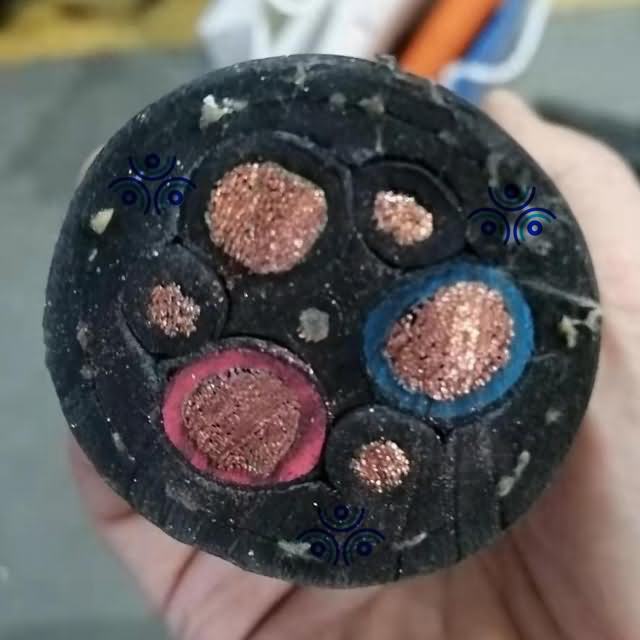
Type 241 1.1–11 kV is a semiconductive screened elastomer cable designed for demanding mining environments across Australia. Built to AS/NZS 1802, this flexible power cable is widely used for mobile mining equipment, including continuous miners, pump feeders, monorail systems, and longwall operations.
Unlike traditional metallic screened cables, Type 241 uses a semiconductive elastomer screen to deliver improved flexibility, durability, and handling performance in harsh underground conditions. This innovative design represents a significant advancement for Australian mining operations seeking reliable, compliant power distribution in some of the world's most challenging environments.
The cable's sophisticated engineering combines practical flexibility with robust environmental protection, making it the go-to choice for operators who demand both safety and operational efficiency. Whether you're managing a major coal mining operation in Queensland, metal mining in Western Australia, or underground construction projects across Australia, understanding Type 241's capabilities ensures optimal system design and peak operational performance.
Key Features
Voltage Rating and Flexibility
The Type 241 cable operates across a range of 1.1/1.1 kV up to 11/11 kV, providing versatility for different circuit configurations and equipment requirements. This broad voltage capability makes it suitable for main feeders, branch circuits, and mobile equipment applications across diverse mining operations.
The highly flexible construction distinguishes Type 241 from traditional mining cables. This flexibility isn't merely a convenience—it's engineered into every aspect of the cable design, enabling easier installation, faster deployment, and superior performance in constrained underground spaces where equipment must move frequently and cable routes change with operational demands.
Semiconductive Elastomer Screening
The most distinctive feature of Type 241 is its semiconductive elastomer screen rather than traditional metallic shielding. This innovative approach delivers enhanced performance characteristics that directly benefit Australian mining operators.
Semiconductive screening provides electrical shielding equivalent to metallic screens whilst eliminating the stiffness and handling challenges of rigid metal-screened designs. The elastomer material matches the flexibility of the insulation, allowing the entire cable to bend and flex without internal stress concentrations that can lead to insulation failure.
For mining operations, this translates to cables that install faster, route more easily through congested underground passages, and withstand the repeated flexing associated with mobile equipment and trailing cable applications.
Core Configuration
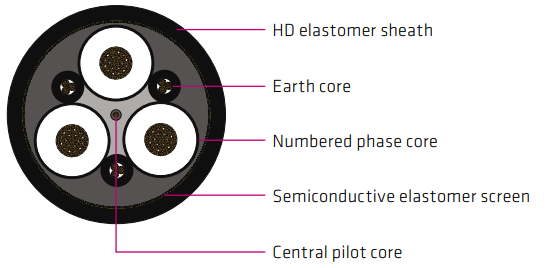
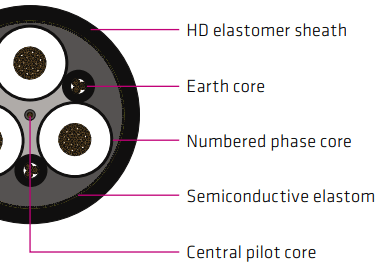
The cable features a sophisticated three-core construction with three separate earth cores plus one central pilot core—a total of seven conductive elements. This configuration provides:
Three power cores for primary circuit current
Three earth cores for safety grounding and fault protection
One central pilot core for monitoring, control, and auxiliary circuits
This multi-core arrangement ensures comprehensive electrical distribution whilst maintaining the separation required for safe mining operations. The three earth cores provide redundancy and distributed grounding, critical for equipment safety in the conductive underground environment where mining equipment operates.
EPR Insulation System
Type 241 uses EPR (Ethylene Propylene Rubber) insulation rated R-EP-90, delivering exceptional thermal and electrical stability. The R-EP-90 designation indicates the insulation maintains its electrical properties at continuous operating temperatures up to 90°C—suitable for high-demand mining operations running equipment at substantial load factors.
Each core carries durable printed identification at intervals less than 300 millimetres, allowing maintenance teams and operators to quickly identify specific circuits even in the poorly lit underground environment. The black semiconductive insulation screen beneath the outer sheath aids phase identification and provides additional insulation protection.
Heavy-Duty Sheath Protection
The outer sheath employs an open weave reinforcement layer beneath a heavy-duty HD-85-PCP elastomer covering. This construction provides mechanical protection against the abrasion, impact, and rough handling typical in mining environments whilst maintaining the flexibility necessary for mobile applications.
The HD-85-PCP specification represents enhanced durability beyond standard industrial cable, reflecting the demanding conditions underground mining equipment experiences. The reinforcement layer distributes mechanical stress, preventing puncture or splitting from sharp objects or impact damage.
Australian Standards Compliance
Type 241 conforms to AS/NZS 1802—the Australian and New Zealand standard for mine cables. This compliance is non-negotiable for mining operations in Australia. It ensures the cable meets stringent safety requirements, performance standards, and testing protocols expected by mining safety regulators and industry authorities across the country.
Typical Applications
Continuous Miners
Continuous miners represent the backbone of modern underground coal mining. These machines operate continuously throughout shifts, requiring robust power supplies that deliver consistent performance under substantial load. The Type 241 cable's flexibility makes it ideal for continuous miner applications because it accommodates the equipment's movement and positioning adjustments without risk of damage.
The cable's ability to handle frequent repositioning is particularly valuable in Australian coal mining, where continuous miners constantly move to follow the coal seam. The EPR insulation maintains integrity across the maximum operating temperature of 90°C, ensuring reliable performance even during intensive operation periods when equipment runs at full capacity.
Trailing cables supplying continuous miners must withstand repeated flexing, occasional impacts, and the pulling forces associated with equipment movement. Type 241's flexible design and reinforced sheath handle these demands without the insulation cracking or conductor connections degrading.
Pump Feeder Cables
Underground water management and dewatering require reliable pump systems. Type 241 serves as the feeder supply for pump stations scattered throughout mining operations. Whether managing water ingress in deep underground workings or supporting processing operations, this cable ensures consistent power delivery to critical pumping infrastructure.
Its resistance to water exposure—handling immersion and temporary coverage—makes it particularly suitable for the moist, sometimes wet conditions typical of Australian underground operations. The tinned copper conductors resist corrosion from prolonged water contact, and the elastomer sheath prevents water ingress that could compromise insulation integrity.
Pump feeders often run through wet areas or alongside water management infrastructure, exposing cables to moisture and chemical-laden water. Type 241's environmental resistance ensures these circuits remain reliable throughout their operational life.
Monorail Systems Supplying DCBs
Monorail systems that supply Distribution Control Boxes (DCBs) distribute power and control signals throughout underground mining operations. These elevated cable routes experience tension and occasional impact as equipment moves along the monorail. The Type 241's construction with three earth cores and reinforced sheath design handles the mechanical demands of overhead monorail systems where cables experience constant stress.
The flexibility of Type 241 allows routing along curved monorail paths without requiring expensive rigid conduit systems. The three earth cores provide safety redundancy for the control circuits supplied through these systems.
Longwall Mining Equipment
Longwall operations—the most productive underground mining method—require complex electrical distribution supporting automated cutting and haulage systems. Type 241 provides the flexibility and durability needed to support the sophisticated cable routing required for modern longwall installations.
The cable's ability to handle both power and control circuits through its multi-core design simplifies electrical architecture in longwall systems. Its environmental resistance ensures reliable operation in the challenging conditions along the longwall face where dust, moisture, and mechanical stress concentrate.
Mobile and Trailing Cables
Any application requiring cables to move with equipment—whether continuous miner trailing cables, mobile pump connections, or flexible links between fixed and mobile electrical infrastructure—benefits from Type 241's flexible design. The semiconductive screen eliminates the stiffness associated with traditional metallic screens, making cables easier to handle and less prone to installation-related damage.
Cable Construction
Conductor Specifications
Material Composition: Tinned copper conductors provide corrosion resistance and superior reliability in the underground environment. The tinning process applies a thin layer of tin to the copper surface, preventing oxidation and corrosion that would otherwise degrade connection reliability over time.
Configuration: The cable features three power cores plus three earth cores with one central pilot core. This seven-element construction ensures comprehensive electrical distribution. Each element uses tinned copper conductor with appropriate cross-sectional area for its intended duty.
The conductor sizing ranges from small control circuits to large power feeds. Available sizes span from 6 mm² to 300 mm² nominal area, accommodating applications from auxiliary circuits to main feeder lines supplying substantial current.
Why Tinned Copper Matters: In the corrosive underground mining environment, bare copper degrades through oxidation. The oxide layer increases electrical resistance at connections, potentially causing heating and connection failure. Tinned copper resists this degradation, maintaining reliable electrical contacts throughout the cable's operational life.
Insulation System
EPR (R-EP-90) Insulation: The primary insulation uses Ethylene Propylene Rubber formulated for 90°C continuous operation. This rating ensures the insulation maintains its mechanical properties and electrical performance even during extended periods of high-load operation.
The R-EP-90 designation indicates the material has been tested and certified for the specified temperature rating under Australian and international standards. This certification is essential—mining operations require assurance that cable insulation won't degrade or become brittle during operation.
Core Identification: Each power core carries durably printed colour codes and numerical identification at intervals less than 300 millimetres. In the poorly lit underground environment where most mining equipment operates, this printed identification allows maintenance teams to quickly identify specific circuits without removing cable insulation.
The printed identification is durable—designed to withstand handling, moisture exposure, and the decades-long operational life mining cables typically enjoy. Unlike adhesive labels that can peel away, the printed identification remains legible throughout the cable's service life.
Black Semiconductive Insulation Screen: Beneath the outer sheath lies a black semiconductive screen that serves dual purposes. It provides additional electrical insulation protection and assists in phase identification through its appearance. The matte black finish contrasts with the outer sheath, helping technicians visually confirm they're working with the correct cable.
This screen also functions as an equipotential surface for the cable, ensuring uniform electrical stress distribution across the insulation rather than concentration in weak areas that might eventually lead to failure.
Screening System
Semiconductive Elastomer Screen: This innovative non-metallic screen represents the key technological advancement of Type 241 cables. Unlike traditional metallic braids or foils, the semiconductive elastomer screen provides electrical shielding through a thin, conductive elastomer layer applied over the insulation.
The semiconductive material—typically carbon-filled rubber—provides controlled electrical conductivity. This conductivity is sufficient for electromagnetic shielding and equipotential purposes but doesn't create the stiffness problems associated with metallic screens.
Benefits Over Metallic Screening:
Flexibility: The elastomer screen flexes with the insulation, allowing tighter bends without internal stress
Installation ease: Cables route more easily through tight spaces and around obstructions
Reduced damage risk: The forgiving elastomer won't kink or crack like rigid metallic screens
Faster installation: No special techniques required for routing and securing
Better handling: Lighter feel and easier to manipulate during installation and maintenance
For Australian mining operations managing tight installation budgets and demanding production schedules, these practical advantages compound into measurable operational improvements.
Pilot Core
Function and Design: The single central pilot core serves multiple critical functions. In mining operations, this core typically connects to monitoring systems that supervise cable condition, detect faults, or provide communication between distributed equipment nodes.
The pilot core's central location protects it from mechanical damage that might affect external cores. Its extensible design means it accommodates cable flexing without suffering stress-induced failures.
Maximum DC Resistance Specifications:
For power cores up to 35 mm²: ≤ 5.5 Ω/100 m For power conductors above 35 mm²: ≤ 3 Ω/100 m
These specified resistance limits ensure voltage drop remains within acceptable ranges for the equipment supplied. Lower resistance in larger conductors reflects their greater cross-sectional area and the importance of minimising voltage drop in high-current applications.
Earth Cores
Configuration: Three flexible earth cores with semiconductive elastomer covering are positioned in the cable interstices—the spaces between the primary power cores. This distributed arrangement provides several advantages.
Safety Redundancy: Three separate earth paths ensure continued grounding protection even if one earth core sustains damage. This redundancy is critical in mining operations where safety cannot be compromised.
Distributed Grounding: Three cores distributed around the cable periphery ensure more uniform current distribution in fault conditions, reducing hot spots that might eventually lead to insulation damage.
Flexibility: The semiconductive elastomer covering these earth cores matches the flexibility of the power core insulation, preventing the earth cores from becoming stress points that might crack insulation during flexing.
Sheath Characteristics
Construction Layers: The outer sheath comprises two distinct elements—an open weave reinforcement layer beneath a heavy-duty HD-85-PCP elastomer covering.
Open Weave Reinforcement: This layer, typically comprised of textile fibres in an open pattern, distributes mechanical stress over a larger area. When the cable experiences impact or abrasion, the reinforcement layer prevents point loads from concentrating on the elastomer sheath. This distribution dramatically improves resistance to puncture and tearing.
HD-85-PCP Specification: HD indicates heavy-duty construction, providing mechanical protection beyond standard industrial cables. The 85 designation indicates the hardness and physical properties of the elastomer compound. PCP identifies the specific formulation optimised for mining and industrial applications.
The heavy-duty specification reflects the harsh underground mining environment where cables must withstand sharp rocks, mechanical impact, and the rough handling inherent in mining operations.
Electrical Properties
Resistance and Conductivity
The electrical resistance specified for Type 241 varies with conductor size, allowing designers to select appropriate conductor areas for specific applications. Smaller conductors (6-35 mm²) carry lower currents and experience higher resistive losses. Larger conductors (50-300 mm²) carry substantial currents with lower losses.
Practical Implications: Voltage drop over cable runs depends directly on cable resistance. A 50-metre run of 6 mm² cable might experience several percent voltage drop, whilst the same run using 300 mm² cable might experience less than 0.5% drop. Cable selection must balance current capacity against acceptable voltage drop.
For continuous miners and other high-demand equipment, selecting appropriately sized conductors prevents voltage drop that would reduce equipment performance or trigger protection system nuisance trips.
Reactance and Capacitance
Type 241 specifications include reactance (inductive reactance) and capacitance values essential for proper protection system operation. These electrical properties ensure the cable behaves predictably in fault conditions, allowing overcurrent protection devices to detect and clear faults correctly.
Capacitance to earth—measured in microfarads per phase per kilometre—indicates the cable's tendency to store electrical charge in its electric field. For earth-fault detection systems common in Australian mining operations, this capacitance value directly impacts system sensitivity and reliability.
Temperature Coefficients
The cable's electrical properties vary with temperature. At the specified maximum operating temperature of 90°C, conductor resistance increases compared to the reference temperature (typically 20°C). This temperature coefficient is factored into design calculations to ensure the cable operates within its thermal limits.
Mining operations running equipment continuously at full load benefit from Type 241's thermal stability. The EPR insulation maintains its electrical properties even when the conductor reaches its maximum rated temperature, ensuring reliable protection system operation throughout the operational range.
Installation Conditions
Free Air Installation
Type 241 performs reliably when installed in free air—above ground routes or well-ventilated underground passages. Free air installation benefits from natural cooling, allowing higher continuous current ratings compared to cables in ducts or buried installations.
For surface portions of mining electrical systems—feed cables to mine portal facilities or connections between surface equipment and underground systems—free air installation provides cost-effective cable routing. The cable's resistance to solar radiation and weather exposure ensures reliable long-term operation in Australian outdoor conditions without protective conduit.
Underground Duct Installation
Many mining operations route cables through underground ducts for protection and organisation. Type 241's flexibility enables installation in ducts without the forcing or struggle sometimes encountered with stiffer cables. This ease of installation reduces installation time and risk of insulation damage from sharp duct edges.
Ducts provide protection from mechanical damage and manage cable routing in congested underground areas. The durable outer sheath prevents duct abrasion from damaging the cable, and the flexible design accommodates future cable replacement or addition without disrupting the duct system.
Mobile Equipment Applications
Where cables must move with equipment—trailing cables for continuous miners, flexible connections to pump motors, and cables supplying mobile electrical equipment—Type 241 excels. Its flexible design accommodates repeated flexing without cracking the insulation or degrading conductor connections.
Mobile equipment requires cables that can withstand constant bending as the equipment operates. The semiconductive screen's flexibility ensures the screen doesn't crack and lose electrical continuity—a failure mode sometimes encountered with rigid metallic-screened cables subjected to repeated flexing.
Heavy-Duty Machine Applications
Fixed mining machines—such as stationary pump installations, hoist systems, or underground conveyor equipment—require robust cable connections that remain stable throughout extended operational periods. Type 241's reinforced sheath and multiple earth cores provide the mechanical and electrical robustness these applications demand.
Even in fixed installations, occasional repositioning or maintenance work might require limited cable movement. Type 241's flexibility accommodates these occasional demands without sustaining damage.
Environmental Performance
Chemical Exposure Resistance
Mining environments expose cables to potential chemical hazards from processing operations, hydraulic systems, diesel fuel, and environmental contamination. Type 241 demonstrates very good to frequent chemical resistance, protecting against degradation from these exposures.
The elastomer sheath and semiconductive screen resists degradation from common mining chemicals including mineral processing reagents, diesel fuel, and hydraulic fluids. This chemical resistance ensures cables maintain integrity throughout their operational life without requiring protective sleeves or conduit in all situations.
Mechanical Impact and Abrasion
Underground mining involves heavy impacts—fallen rock, dragged equipment, accidental damage during operations. The Type 241's reinforced sheath is rated for heavy mechanical impact, absorbing and distributing impact forces rather than puncturing or splitting.
The open weave reinforcement layer beneath the HD-85-PCP outer sheath distributes impact forces over a larger area, preventing point loads from penetrating the elastomer. This design ensures cables subjected to the rough handling inherent in mining operations remain serviceable throughout their operational life.
Water and Moisture Exposure
Australian underground mines often feature water ingress, whether from aquifers, dewatering operations, or processing water. Type 241 handles immersion and temporary water coverage without performance degradation. The tinned copper conductors resist corrosion, and the elastomer sheath prevents water ingress that could compromise insulation integrity.
The semiconductive insulation screen provides an equipotential surface that minimises electrical stress concentration in wet conditions. Should water contact the cable, the semiconductive screen ensures fault currents distribute evenly rather than concentrating in weak areas.
Solar Radiation and Weather Exposure
For the portions of cable systems exposed to Australian sun and weather—particularly important for surface portions and mine portal areas—Type 241 resists solar radiation damage and weather exposure. This means cable systems maintain integrity throughout their lifespan without requiring protective conduit in all situations.
The elastomer sheath formulation includes ultraviolet stabilisers that resist degradation from sunlight exposure. This durability is essential for cables exposed to intense Australian sunlight, particularly at higher altitudes or during summer months when UV radiation intensity peaks.
Temperature Performance and Reliability
Maximum Operating Temperature
The Type 241 operates reliably at continuous maximum operating temperature of 90°C, suitable for high-load conditions during intensive mining operations. This thermal capacity prevents insulation degradation during peak demand periods when equipment runs continuously at full capacity.
The 90°C rating reflects the EPR insulation's thermal stability. At this temperature, the insulation maintains mechanical strength and electrical properties, ensuring reliable protection system operation and preventing premature insulation degradation.
For continuous miners and other equipment running extended shifts at substantial load factors, the 90°C rating ensures the cable operates safely without thermal stress limiting equipment performance.
Minimum Operating Temperature
The minimum operating temperature of minus 25°C provides a safety margin for emergency situations and ensures the cable doesn't become brittle during temporary cold snaps. Whilst most Australian mining locations rarely experience temperatures below freezing, higher-altitude operations and occasional winter cold snaps can impose these conditions.
The elastomer compounds used in Type 241 insulation and sheath maintain flexibility at low temperatures, preventing brittleness that might lead to insulation cracking when cables are handled or bent during cold conditions.
Thermal Stability During Operation
The cable's thermal stability under load is critical for mining operations running equipment continuously. Unlike some insulation materials that degrade rapidly once thermal limits are approached, EPR maintains consistent properties even when operating at the maximum rated temperature. This stability ensures protection systems respond predictably and equipment operates reliably throughout extended duty cycles.
Why Choose Type 241 Cable?
Type 241 cables are engineered for Australian mining conditions where flexibility, durability, and safety are critical. The semiconductive screening design reduces stiffness compared to metallic screened cables, making it ideal for equipment that requires frequent movement and bending.
Practical Advantages
Installation Efficiency: The flexible construction allows faster cable installation without specialised equipment. For mining operations managing tight budgets and ambitious expansion schedules, faster installation reduces project timelines and labour costs.
Maintenance Accessibility: Cables route more easily through congested underground areas, and their flexibility means maintenance teams can access cable routes without extensive preparation. This accessibility reduces downtime when maintenance or fault diagnosis becomes necessary.
Equipment Longevity: The cable's environmental resistance and robust construction ensure long service life. Cables installed decades ago remain serviceable today, providing a long-term investment return that offsets initial installation costs.
Safety Compliance: As/NZS 1802 compliance ensures the cable meets stringent Australian mining safety requirements. Mining operations can be confident that Type 241 cables meet regulatory expectations and support safe equipment operation.
Cost-Benefit Analysis
Whilst Type 241 represents an investment in electrical infrastructure, its total cost of ownership compares favourably to alternatives:
Lower installation costs compared to rigid metallic-screened cables
Reduced maintenance requirements due to environmental durability
Extended lifespan from superior corrosion and degradation resistance
Minimal downtime from cable failures, supporting production targets
Safety compliance reducing regulatory risk
For mining operations running on tight operational margins, these cost savings compound into significant economic benefits across the operational lifetime.
Operational Reliability
Type 241's track record across Queensland coal mines, New South Wales underground operations, and metal mining throughout Australia demonstrates proven reliability in demanding conditions. Mining operators report consistent performance across diverse applications and geographical locations.
The flexible design simplifies equipment maintenance—technicians can reposition trailing cables without damage, reducing costs associated with cable replacement. The environmental resistance means cables survive the harsh underground conditions that would degrade less robust alternatives.
Technical Considerations for Selection
Conductor Size Selection
Selecting the appropriate conductor size requires balancing several factors:
Current Capacity: The conductor must carry the maximum circuit current without excessive temperature rise. Larger conductors handle more current with lower resistive heating.
Voltage Drop Limits: Over longer cable runs, conductor resistance causes voltage drop. Applications sensitive to supply voltage require larger conductors to maintain voltage within acceptable limits.
Installation Constraints: Larger conductors mean heavier cables and more substantial installation forces. Space constraints in existing duct systems might limit available conductor sizes.
Economic Considerations: Larger conductors increase cable cost. Designs must balance cost against voltage drop and thermal considerations.
For continuous miners and pump feeders in Australian operations, conductor sizes in the 35-95 mm² range typically balance performance and cost-effectiveness. Main feeders might require larger conductors, whilst control circuits use smaller sizes.
Voltage Rating Selection
The appropriate voltage rating depends on the mining operation's electrical infrastructure. Smaller mines or isolated equipment might use 1.1/1.1 kV supplies. Larger operations with substantial power demands might employ 3.3/3.3 kV or 6/6 kV supplies. Major mining operations might utilise 11/11 kV supplies for main feeder systems.
Type 241's availability across this entire voltage range allows standardised cable selection across diverse mining applications, simplifying procurement and logistics.
Installation Environment Assessment
Before finalising cable specifications, assess the intended installation environment:
Will cables experience regular water exposure or operate in wet areas?
Are chemical hazards present (mineral processing, hydraulic systems)?
Will cables experience mechanical stress or frequent repositioning?
Are temperature extremes expected (high-altitude operations, tropical heat)?
What are the physical space constraints for cable routing?
These environmental factors influence cable selection and ensure chosen cables match the actual conditions they'll experience.
Installation Best Practices
Planning and Pre-Installation Assessment
Establish a clear routing plan before installing Type 241 cables in your mining operation. Whilst the cable's flexibility allows creative routing, proper planning prevents costly reinstallation. Consider future expansion when routing cables, and leave appropriate slack for equipment movement and maintenance access.
Identify potential hazards along the routing path—sharp edges, chemical exposure areas, water accumulation zones. Address these hazards through conduit, protective sleeving, or route modification before cable installation.
Handling and Storage
Even flexible cables require proper handling during storage and pre-installation. Store cables in dry conditions and avoid exposing them to sharp objects, extreme temperatures, or direct sunlight during storage. The tinned copper conductors resist corrosion, but the external sheath benefits from covered storage.
Proper reel storage prevents cable distortion. Avoid storing reels in direct sunlight or in wet areas where moisture might degrade the sheath. Store reels on their sides to distribute weight evenly rather than concentrating load on one edge.
Installation Techniques
The semiconductive screen design allows straightforward installation without the specialised techniques sometimes required for rigid metal-screened cables. Standard cable pulling techniques work effectively, but avoid excessive force that could damage the sheath or insulation.
Use appropriate pulling equipment rated for the cable weight and length. For longer pulls through ducts, consider installing cable in sections rather than attempting a single continuous pull that might impose excessive tension.
Termination Practices
Termination follows standard procedures for cables of this rating. Ensure proper earthing of the three earth cores and pilot—never leave these floating even in standby systems. Improper earthing creates shock hazards and prevents protection systems from operating correctly in fault conditions.
Use termination equipment rated for the cable voltage and current. Proper crimping or bolted connections ensure reliable electrical contact that maintains integrity throughout the cable's operational life.
Protection and Routing
After installation, protect cables from obvious hazards. Routes through high-traffic areas might require protective conduit or sleeves. Cables passing near heat sources should be protected or routed away to prevent insulation degradation.
Secure cables to prevent movement that might cause mechanical stress. For trailing cables on mobile equipment, allow sufficient slack to accommodate equipment movement without tension.
Maintenance and Inspection
Regular visual inspection identifies potential issues before they become serious. Check for obvious sheath damage, water ingress, and cable degradation. The reinforced sheath provides excellent protection, but underground environments can be harsh, and preventive inspection prevents unexpected downtime.
During equipment shutdowns or maintenance periods, inspect accessible cable sections for deterioration. Address any identified damage before returning equipment to service. The investment in preventive inspection is far less than the cost of unplanned downtime.
Real-World Performance in Australian Mining
Across Queensland's coal fields, New South Wales underground operations, and metal mining throughout Australia, Type 241 has proven itself in demanding conditions. Its flexibility makes installation faster than older rigid systems, its durability withstands the mechanical challenges of mining operations, and its environmental resistance handles moisture, chemical exposure, and temperature variations without compromising performance.
Mining operations report:
Reduced installation costs compared to rigid metallic-screened alternatives
Faster installation timelines due to superior flexibility
Improved maintenance accessibility—technicians can access cable routes more readily
Extended cable lifespan through superior environmental resistance
Reliable performance across diverse geological and climatic conditions
The cable's proven track record across diverse Australian mining applications gives operators confidence that Type 241 represents proven technology, not experimental designs requiring field validation.
Expert Summary
Type 241 1.1–11 kV semiconductive screened cable represents modern mining cable engineering applied to demanding Australian underground conditions. Its flexible construction, conformance to Australian standards (AS/NZS 1802), environmental durability, and practical installation advantages make it the preferred choice for continuous miners, pump feeders, monorail systems, and other mobile mining equipment across the Australian mining industry.
The semiconductive screen technology moves away from older, rigid metal-screened designs, offering operators significant practical advantages: flexibility in routing, faster installation, reduced costs, and improved maintainability. Environmental performance across chemical exposure, mechanical impact, water ingress, and temperature extremes ensures reliable long-term operation in the demanding underground mining environment.
The cable's sophisticated construction—three power cores, three earth cores, one pilot core, tinned copper conductors, EPR insulation, and reinforced HD-85-PCP sheath—reflects engineering optimised for mining realities. This isn't generic industrial cable; it's specifically designed for the conditions Australian mining operations actually experience.
For mining operations evaluating cable specifications for underground installations, Type 241 delivers the combination of technical performance, practical installation advantages, and operational reliability that modern Australian mining demands. Whether outfitting a new operation, upgrading existing systems, or expanding production capacity, understanding this cable's capabilities ensures optimal system design and operational performance.
The investment in quality cable infrastructure pays dividends throughout the cable's operational lifetime, supporting the safety, efficiency, and profitability that define successful Australian mining operations. In an industry where downtime costs escalate rapidly and safety cannot be compromised, selecting proven cable technology like Type 241 represents prudent engineering and sound business decision-making.
How to Reach Us
Get in Touch
SiteMap
Product Catalogue
Festoon Cable
Shore Power Cable


Scan to add us on WeChat