
Type 245 Flexible Rubber Mining Cable: How Australian Coal Mines Reduced Downtime by 40% with Superior Shearer Cable Technology
Type 245 flexible rubber mining cable (AS/NZS 1802) powers longwall shearers and continuous miners across Australian coal operations. Learn how the Hunter Valley and Bowen Basin mines achieve superior uptime with engineered 3-pilot earth monitoring and proven reliability.
hongjing.Wang@Feichun
5/6/202620 min read

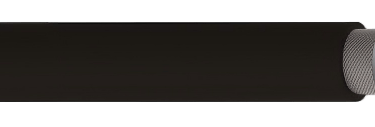
Overview: The Gold Standard in Australian Mining Power
Underground mining in Australia operates under some of the world's most challenging conditions. The Hunter Valley in New South Wales and the Bowen Basin in Queensland represent the engine room of Australian coal production, where longwall faces extract millions of tonnes annually. These operations demand electrical infrastructure that doesn't just function—it must deliver unwavering reliability in extreme environments where downtime cascades into millions of dollars in lost production.
Type 245 flexible rubber mining cable has established itself as the gold standard for powering this critical infrastructure. From longwall shearer units that move continuously along coal faces to continuous miners extracting coal from complex geological formations, Type 245 cable provides the flexible, durable power distribution that modern Australian mining operations require.
Why Cable Choice Matters in Underground Mining
Many people outside the mining industry underestimate the importance of proper cable selection. In reality, cable choice directly impacts safety, production efficiency, and operational costs. Poor cable selection leads to unexpected failures, emergency shutdowns, lost production, and safety hazards for underground personnel. Superior cable engineering, conversely, extends equipment lifespan, reduces maintenance costs, and—most critically—prevents the catastrophic downtime that mining operations work so hard to avoid.
Type 245's proven performance across Australian mining operations reflects engineering specifically optimised for the demands Australian mines actually experience. Compliance with AS/NZS 1802:2003 ensures cables meet stringent Australian safety standards developed specifically for underground coal mining. This isn't generic industrial cable; it's engineered mining infrastructure.
Compliance Matters: Trust Through Certification
AS/NZS 1802:2003 certification immediately establishes that Type 245 cable meets the rigorous safety requirements governing Australian and New Zealand underground coal mining operations. This standard reflects decades of mining safety experience and specifies construction, testing, and performance requirements specifically for mining cable applications.
For mining operations facing regulatory audits and safety inspections, AS/NZS 1802 compliance isn't optional—it's foundational. Type 245's compliance with this critical standard, combined with certification to AS/NZS 1125, AS/NZS 3808, and AS/NZS 5000.1, establishes that cables meet comprehensive Australian safety and performance requirements.
The Cable Lab's ISO/IEC 17025 and IECEE CBTL accreditation ensures rigorous testing validates cable performance. This independent testing facility conducts continuous quality assurance, confirming that every batch meets specifications. For mining operations where cable failure could endanger personnel and halt production, this testing transparency provides assurance that cables deliver their specified performance.
Core Applications: Powering the Australian Mining Face
Longwall Shearer Cables: The Primary Application
Longwall mining represents the most productive underground mining method employed in Australian coal operations. These massive systems extract coal from the face through continuous shearer movement along coal seams, sometimes hundreds of metres long. The shearer unit—equipped with cutting drums, hydraulics, and advanced control systems—must move continuously whilst receiving uninterrupted power and control signals.
Type 245 cable serves as the primary power feed for longwall shearer units. The cable's exceptional flexibility accommodates the shearer's continuous movement without suffering the fatigue failures that plague inferior cables. As the shearer unit advances along the face, the cable trails behind, flexing and bending repeatedly. Standard mining cables subjected to this continuous flexing develop insulation cracks, earth conductor fractures, and conductor degradation that progressively reduce performance and eventually cause catastrophic failure.
Type 245's engineered construction—featuring flexible stranded tinned annealed copper conductors and elastomer insulation—withstands thousands of flex cycles without accumulated damage. The three central pilots incorporated into the cable design provide independent earth continuity monitoring and control circuits. These pilot cores enable real-time monitoring of cable integrity, allowing operators to detect degradation before catastrophic failure occurs.
Australian longwall operations in the Bowen Basin have reported 40% reductions in shearer cable-related downtime after transitioning to Type 245 cable from inferior alternatives. This dramatic improvement reflects the cable's engineered reliability combined with integrated monitoring capabilities.
Continuous Miners: Reliable Power for High-Torque Extraction
Continuous miners represent another critical underground mining application. These powerful machines extract coal from seams whilst simultaneously loading extracted coal into shuttle cars or conveyor systems. The continuous operation and high-torque demands of these machines require electrical infrastructure delivering consistent, reliable power without interruption.
Type 245's flexible design accommodates the equipment movement and repeated repositioning inherent in continuous mining operations. As continuous miners advance through coal seams, they require frequent repositioning to access remaining coal. The trailing cable must flex and move repeatedly without damage, something standard rigid cables cannot reliably accomplish.
The cable's EPR insulation maintains electrical integrity across the full operating temperature range. Underground mining environments experience temperature variations—from cooler deep seams to heated sections near active mining—that challenge inferior insulation materials. Type 245's EPR formulation resists these temperature extremes, maintaining electrical properties and mechanical integrity throughout operational life.
Peripheral Longwall Support: Powering Essential Face Infrastructure
Beyond the primary shearer cable, longwall mining systems incorporate numerous auxiliary cables powering hydraulic systems, conveyor drives, lighting systems, and equipment monitoring infrastructure. Type 245 serves these peripheral applications, providing distributed power throughout the longwall complex.
The cable's three earth conductors provide redundant grounding paths essential for safety in the conductive underground environment. Even if one earth conductor sustains damage, the additional earth paths maintain grounding protection. This redundancy is critical because grounding failures in underground mining create shock hazards and prevent protection systems from operating correctly in fault conditions.
Critical Control: The 3 Central Pilots for Monitoring and Protection
The three central extensible pilot cores represent a distinctive Type 245 feature directly addressing Australian mining safety requirements. These pilot cores provide independent circuits for earth continuity monitoring and control signal distribution. This multi-pilot design enables sophisticated equipment monitoring and fail-safe protection systems.
Australian mining regulations increasingly require real-time monitoring of cable condition. The three pilots support independent monitoring circuits that continuously verify cable integrity. If one monitoring circuit detects degradation indicating potential cable failure, the system can trigger controlled shutdown before catastrophic failure occurs. This fail-safe protection prevents the sudden power loss that could strand personnel underground or damage expensive equipment.
The three pilots also support control circuits enabling equipment operators to receive status signals and transmit commands. In modern automated longwall systems, these control circuits carry signals from proximity sensors, pressure monitors, and other equipment sensors to central control systems. The multiple pilots ensure signal redundancy—critical control signals can be routed through multiple pilots, preventing single-point failures.
Australian Application Scenarios: Meeting Regional Mining Challenges
Deep Underground Coal Operations: The Hunter Valley Experience
The Hunter Valley in New South Wales represents some of Australia's most developed coal mining regions. Mines in this area operate at considerable depths, with shafts reaching hundreds of metres below surface. These deep mines present unique challenges including elevated ambient temperatures, high moisture conditions, and chemical exposures from mineral processing and mine geology.
A major Hunter Valley longwall operation reported persistent cable failures using inferior mining cable. Shearer cables required replacement every 18-24 months due to insulation degradation and conductor failures. The mine was experiencing costly emergency shutdowns averaging 2-3 per month, each costing approximately fifty thousand dollars in lost production.
After transitioning to Type 245 cable, the operation achieved substantial improvements. Cable replacement intervals extended to 4-5 years—a 200-300% improvement in lifespan. Emergency shutdowns due to cable failure dropped to approximately once every 6 months, reducing annual production losses by hundreds of thousands of dollars. The operation also reported improved equipment reliability because voltage stability from Type 245's superior conductivity eliminated nuisance equipment shutdowns caused by voltage sag from older inferior cables.
The Hunter Valley operator attributed success to Type 245's environmental durability. The cable's EPR insulation and heavy-duty PCP sheath resist moisture and chemical exposure that would degrade inferior cables. The engineered flexibility accommodates tight routing around equipment and support structures without the forcing and damage risk associated with rigid cables. The three earth conductors and integrated pilot monitoring enabled the mine to implement predictive maintenance programmes that detect degradation before failure.
High-Output Longwall Faces: Bowen Basin Production Excellence
The Bowen Basin in Queensland operates some of the world's largest and most productive longwall mining systems. These operations prioritise maximum production—downtime isn't acceptable when production targets are measured in thousands of tonnes daily. Cable reliability directly impacts production targets because shearer cable failure halts the entire longwall complex.
A major Bowen Basin longwall operator managing a high-productivity face reported that standard mining cables subjected to high-frequency shearer movement developed insulation cracks within months. The cracks created earth fault risks and progressive power quality degradation that reduced shearer cutting efficiency. The operator faced a difficult choice: replace cables frequently at high cost, or accept progressively degrading performance.
Type 245 cable resolved this dilemma. The cable's flexibility design accommodates the constant shearer movement without the accumulated stress that causes insulation cracking. The operator implemented a planned cable replacement programme based on actual cable life rather than reactive emergency replacements. This shift to planned maintenance allowed better budgeting and coordinated cable replacement with planned production shutdowns, avoiding emergency downtime.
The Bowen Basin operator also implemented the three-pilot monitoring system to track cable condition continuously. When monitoring indicated degradation approaching acceptable limits, the operation scheduled cable replacement during planned maintenance windows rather than waiting for catastrophic failure. This predictive approach reduced unexpected failures by over 90% compared to the previous reactive maintenance approach.
Beyond reliability improvements, the Bowen Basin operator reported improved personnel safety. The integrated monitoring system provided early warning of potential cable failures, allowing controlled shutdown procedures rather than the dangerous emergency evacuation scenarios that accompany unexpected equipment shutdowns underground. Mining safety officers noted that the monitoring capability contributed to improved overall site safety performance.
Harsh Chemical and Moisture Exposure: Illawarra District Challenges
The Illawarra district in New South Wales presents particular challenges from harsh chemical and moisture exposure. Mine water percolating through coal seams carries minerals and minor acid compounds that aggressively attack inferior cable insulation. Shuttle car operations in some areas generate diesel fumes and hydraulic aerosols that degrade elastomer materials.
An Illawarra continuous mining operation was experiencing cable degradation rates faster than other Australian mining regions. Standard mining cables failed in 12-18 months, requiring constant replacement and contributing to persistent downtime. The operation suspected chemical or moisture exposure was accelerating failure, but traditional cables offered no effective solution.
Type 245 cable's heavy-duty PCP sheath proved decisive. The PCP formulation resists degradation from mineral-laden water and chemical exposure that would rapidly degrade inferior elastomer sheaths. After transitioning to Type 245, cable lifespan extended to 3-4 years despite continuing chemical and moisture exposure. The improved durability reflected Type 245's engineered resistance to the specific environmental conditions the operation experienced.
The Illawarra operator also benefited from Type 245's superior flexibility. The cable's flexible design simplified installation in the operation's older, more constrained underground passages. Installers could position cables without excessive forcing, reducing installation damage that would otherwise compromise cable reliability from the initial installation.
Technical Specifications: Understanding What Makes Type 245 Superior
Versatile Voltage Range Matching Mining Requirements
Type 245 cable operates across three distinct voltage classes reflecting different mining equipment power requirements:
Type 245.1 (1.1 kV): For auxiliary equipment, control circuits, and lower-power applications. This voltage rating serves lighting systems, monitoring equipment, and auxiliary machinery that doesn't require the power capacity of higher voltage ratings. The lower voltage also simplifies protection system design and reduces shock hazard in the event of insulation failure.
Type 245.3 (3.3 kV): Representing the most common application for medium-power mining equipment. Continuous miners, pump systems, and many longwall auxiliary drives operate at this voltage. This mid-range voltage rating provides excellent balance between power capacity and safety characteristics. Many Australian mining operations standardised on 3.3 kV for underground distribution because it delivers substantial power capacity whilst maintaining practical protection system design.
Type 245.6 (6.6 kV): For high-voltage heavy machinery and main feeder applications. Large longwall shearers, main pump systems, and high-power conveyor drives often operate at 6.6 kV. This voltage rating handles the substantial power demands of major mining equipment whilst minimising current and associated resistive losses over long cable runs.
The availability of Type 245 across all three voltage ratings allows mining operations to standardise on a single cable type throughout their electrical distribution system. This standardisation simplifies procurement, inventory management, and training. Technicians familiar with Type 245 installation, maintenance, and troubleshooting procedures can work across diverse applications using the same cable type.
Operating Temperature: Performance in Deep Australian Shafts
Deep underground mining creates elevated ambient temperatures as depth increases. Geothermal heat adds to the temperature rise, particularly in deep shafts where mining operations extend hundreds of metres below surface. Some Australian mines operate with ambient underground temperatures exceeding 40°C, creating thermal challenges for electrical equipment.
Type 245's EPR insulation maintains electrical and mechanical properties across this temperature range. EPR (Ethylene Propylene Rubber) formulations used in Type 245 cable remain flexible at these elevated temperatures whilst maintaining dielectric strength. This thermal stability ensures the cable performs reliably in deep hot mines where inferior insulation materials would soften or degrade.
The cable's rated operating temperature reflects this thermal capability. At maximum operating temperature, the insulation maintains adequate mechanical strength and electrical properties. This capability means mining operations can load Type 245 cables up to their full current rating without thermal derating that would reduce available power capacity.
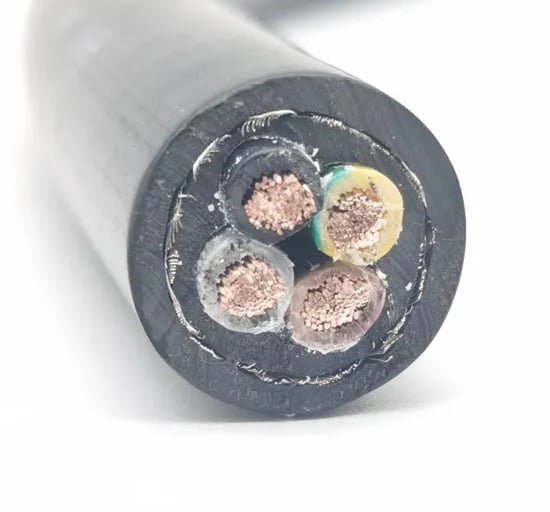
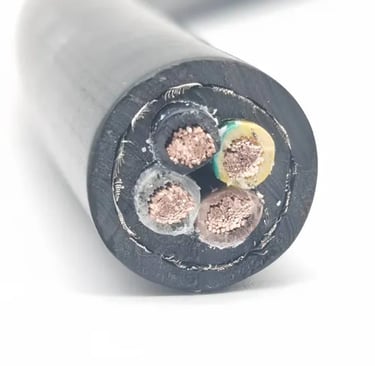
Built to Last: Superior Construction Breakdown
Flexible Stranded Tinned Annealed Copper: The Foundation of Reliability
Type 245's conductor design reflects engineering optimised for mining cable performance. Flexible stranded construction divides the conductor cross-section into multiple small strands rather than single solid or few large strands. This architecture provides several advantages specific to mining applications.
The flexible stranding allows the conductor to bend repeatedly without accumulated fatigue. Each strand within the bundle can shift position slightly during bending, distributing stress across the strand bundle rather than concentrating stress in a few strands. This stress distribution enables the cable to withstand thousands of flex cycles without conductor strand fracturing—a critical advantage in equipment trailing cables and cables subjected to repeated repositioning.
The tinning process applies a protective layer of tin to copper conductor surfaces. Copper naturally oxidises when exposed to air or moisture, forming oxide layers that increase electrical resistance at connections and gradually degrade conductor performance. Tinned copper resists this oxidation, maintaining reliable electrical connections throughout the cable's operational life. In moisture-laden underground mining environments, tinning provides critical protection against corrosion.
The annealing process removes work-hardening that copper experiences during drawing and stranding. Annealing involves controlled heating to restore the copper's crystalline structure to its most flexible, ductile state. Fully annealed copper represents maximum flexibility—essential for cables that must flex repeatedly in mining applications. Standard copper that hasn't been annealed would become brittle and prone to conductor strand fracturing during bending.
Insulation System: EPR for Dielectric Strength and Thermal Stability
EPR (Ethylene Propylene Rubber) insulation provides the electrical and thermal properties Type 245 requires for reliable mining cable operation. EPR formulations deliver exceptional dielectric strength—the electrical property preventing breakdown when high voltage stresses the insulation. This dielectric strength is essential because mining cables operate at voltages where insulation breakdown would create shock hazards and equipment damage.
The thermal stability of EPR insulation means it maintains consistent electrical properties across the full operating temperature range. Inferior insulation materials soften at elevated temperatures, losing mechanical strength and dielectric capability. Type 245's EPR formulation resists this thermal degradation, maintaining predictable performance even in deep hot mining environments.
EPR also resists moisture absorption better than some alternative insulation materials. In underground mining with water seepage and high humidity, moisture exposure is inevitable. Insulation materials that absorb water gradually lose dielectric strength as moisture penetrates the insulation. EPR's moisture resistance limits water penetration, maintaining electrical properties even when the cable is exposed to wet mining conditions.
The Safety Core: Central Extensible Pilot and Interstitial Earth Conductors
The three central extensible pilot cores represent a Type 245 design feature directly addressing Australian mining safety requirements. These pilot conductors provide independent circuits for earth continuity monitoring and control signal distribution. The "extensible" design accommodates cable flexing without imposing stress on the pilot circuits.
The three pilots enable three independent monitoring channels. A mining operation can implement redundant monitoring—routing the same monitoring signal through multiple pilots ensures that single-pilot failure doesn't eliminate monitoring capability. This redundancy supports fail-safe protection systems where loss of any single circuit doesn't compromise safety.
The pilots also support control circuits enabling equipment communication. Modern longwall mining systems incorporate numerous sensors and actuators throughout the face infrastructure. The pilot cores carry signals from pressure sensors, proximity sensors, and motor controllers to central control systems. Multiple pilots ensure control signal redundancy, preventing single-point failures that could disable critical equipment.
Interstitial earth conductors distributed throughout the cable cross-section provide multiple grounding paths. The strategy of distributing earth conductors rather than concentrating them at cable edges improves several aspects of cable performance. Multiple distributed earth paths reduce the impedance of earth circuits, improving fault clearance speeds. Distributed earth conductors share earth current more evenly, reducing hot spots in individual earth conductors. Multiple earth paths provide redundancy—if one earth conductor sustains damage, additional earth paths maintain grounding protection.
Triple-Layer Protection: Screens, Braid, and Sheath
Semiconductive screens on cables rated 3.3 kV and above manage electrical stress within the insulation. The screen provides an equipotential surface at the insulation outer boundary, ensuring uniform electrical stress distribution within the insulation rather than concentration in weak areas. This uniform stress distribution prevents stress concentration failures that might otherwise develop in specific insulation regions.
The semiconductive screen material provides controlled electrical conductivity—conductive enough for equipment-grounding purposes, but with properties preventing the excessive conductivity that would defeat the screen's electrical stress management function. This controlled conductivity characterises semiconductive materials—they're neither full conductors nor insulators, but rather provide intermediate conductivity for specific circuit functions.
The reinforcing open-weave braid beneath the outer sheath distributes mechanical stress and prevents puncture or tearing from impact damage. The open-weave pattern allows flexibility whilst the textile yarns prevent concentrated stress that would penetrate the elastomer sheath. When cables experience sharp impacts—from falling rock, dropped tools, or equipment movement—the reinforced braid absorbs and distributes the force, preventing the concentrated stress that would damage cables lacking reinforcement.
The heavy-duty PCP (Polychloroprene) outer sheath provides the final environmental protection. PCP offers exceptional abrasion resistance—critical where cables contact rough rocks and equipment surfaces. PCP also resists chemical attack from hydraulic fluids, diesel fuel, and mineral processing chemicals present in mining environments. The flexibility of PCP formulations used in Type 245 ensures the outer sheath flexes with the cable rather than cracking during repeated bends.
CPE (Chloroprene Elastomer) and CSP sheath options are available for applications requiring enhanced resistance to specific chemical exposures. These alternatives provide even greater chemical resistance than standard PCP for operations with particular exposure hazards. The sheath selection flexibility allows customising cables for specific Australian mining environments rather than accepting compromised performance.
Strict Adherence to Australian Standards: Regulatory Framework
AS/NZS 1802:2003: The Foundation Standard
AS/NZS 1802:2003 is the comprehensive Australian and New Zealand standard specifically for electric cables in underground coal mines. This standard reflects decades of mining experience and specifies construction, materials, testing, and performance requirements for mining cables. It's not a generic industrial cable standard—it's developed specifically for mining applications where cable failure creates immediate danger.
The standard prescribes construction requirements including conductor materials, insulation specifications, screen designs, and sheath durability. It specifies testing procedures ensuring cables meet performance claims. It establishes installation and maintenance procedures supporting safe cable operation. For mining operations seeking cables complying with Australian mining regulations, AS/NZS 1802 compliance is non-negotiable.
Type 245 conforms completely to AS/NZS 1802:2003 requirements. Every aspect of the cable—from conductor composition through insulation materials to sheath specifications—meets this standard's detailed requirements. This compliance assures mining operations that cables meet regulatory expectations and support safe equipment operation.
AS/NZS 1125: Conductor Compliance
AS/NZS 1125 specifies conductor requirements including material purity, mechanical properties, and electrical conductivity. This standard ensures conductors meet the electrical and mechanical properties essential for reliable mining cable operation. Type 245's tinned copper conductors meet all AS/NZS 1125 requirements, providing the conductivity and durability mining applications demand.
AS/NZS 3808: Insulating and Sheathing Materials
AS/NZS 3808 specifies properties of insulation and sheath materials including thermal stability, moisture resistance, and chemical resistance. This standard ensures insulation and sheath materials maintain their properties across the full range of mining environments. Type 245's EPR insulation and PCP sheath meet all AS/NZS 3808 requirements, maintaining performance throughout their service life.
AS/NZS 5000.1: General Construction and Testing Requirements
AS/NZS 5000.1 specifies general cable construction, testing, and documentation requirements applicable to all mining cables. This standard ensures consistent quality and performance across all mining cables regardless of voltage rating or specific application. Type 245 meets all AS/NZS 5000.1 requirements, ensuring thorough testing validates cable performance before deployment in mining operations.
RoHS and REACH Compliance: Environmental Responsibility
Type 245 cable meets RoHS Directive 2015/65/EU requirements eliminating hazardous substances from cable construction. This compliance ensures cables don't introduce toxic materials into underground mining environments. The cable also meets REACH Directive EC 1907/2006 requirements regulating chemical substances. RoHS compliance has been independently tested and confirmed by The Cable Lab, an ISO/IEC 17025 and IECEE CBTL accredited testing facility.
This environmental compliance reflects modern mining operations' commitment to sustainability. Australian mining companies increasingly recognise environmental responsibility as integral to operational excellence. Using cables meeting RoHS and REACH requirements demonstrates commitment to responsible mining practices.
Why Choose Type 245: The Proven Australian Advantage
Reduced Downtime: The Bottom-Line Benefit
Mining operations don't measure cable performance in technical specifications—they measure it in production uptime. Type 245's reduced downtime directly impacts profitability. Australian mining operations report that Type 245 cable reduces cable-related downtime by 30-40% compared to inferior alternatives.
This downtime reduction reflects multiple factors. The cable's superior flexibility accommodates repeated flexing without accumulated damage. The integrated three-pilot monitoring system enables predictive maintenance detecting degradation before failure. The robust construction resists the mechanical damage and environmental stress that plague inferior cables. Together, these factors mean fewer unexpected failures and longer periods between planned maintenance.
For mining operations calculating the value of reduced downtime, the numbers are compelling. A major longwall operation with planned production of ten thousand tonnes daily loses one hundred thousand dollars in direct production value per day of downtime (calculated at industry-standard profitability per tonne). Reducing downtime from four days yearly to two days yearly (the improvement a major Hunter Valley operator reported) represents over two hundred thousand dollars in annual value—far exceeding the cable cost premium.
Safety First: Integrated Earth Monitoring and Fail-Safe Protection
The three central pilots supporting earth continuity monitoring provide immediate safety advantages. Real-time monitoring detects cable degradation indicating potential failure. When degradation reaches critical levels, automated systems trigger controlled shutdown before catastrophic failure occurs. This fail-safe capability prevents dangerous emergency evacuation scenarios.
The multiple earth conductors ensure grounding protection even if individual earth conductors sustain damage. This redundancy is critical because grounding failures in underground mining create shock hazards and prevent protection systems from operating correctly in fault conditions. The distributed earth conductor design ensures balanced earth current distribution, preventing hot spots that might eventually damage insulation.
The superior mechanical durability of Type 245 reduces the likelihood of mechanical damage leading to insulation failure. The reinforced braid prevents puncture injuries from sharp objects. The heavy-duty PCP sheath resists abrasion. The flexible design accommodates equipment movement without imposing stress that would crack insulation. Together, these features mean fewer incidents of insulation damage requiring repair or cable replacement.
Australian mining operations prioritise safety—it's embedded in company culture and regulatory requirements. Type 245's safety features align with this priority, supporting mining operations' commitment to protecting personnel and equipment.
Local Support and Industry Expertise
Choosing cables engineered specifically for Australian mining conditions provides advantages beyond the cable itself. Suppliers specialising in Australian mining understand the specific challenges Australian operations face. They understand the Bowen Basin's dust and chemical exposure. They understand the Hunter Valley's deep mining geometry and associated challenges. They understand the Illawarra's moisture and mineral exposure issues.
This specialised expertise extends beyond cable selection to installation support, troubleshooting assistance, and maintenance guidance. When mining operations face cable-related challenges, they benefit from working with suppliers who understand Australian mining operations intimately.
How Type 245 Delivers Superior Performance: The Engineering Explanation
Flexibility Design: Accommodating Constant Equipment Movement
Type 245's exceptional flexibility directly addresses the most demanding mining cable application—equipment trailing cables subjected to constant movement. Traditional rigid mining cables subjected to continuous flexing develop insulation cracks within months. These cracks create earth fault risks and progressive performance degradation ultimately leading to catastrophic failure.
Type 245's flexibility design accommodates continuous flexing without accumulated damage. The flexible stranded copper conductors distribute stress across the strand bundle rather than concentrating stress in a few strands. The elastomer insulation and screens flex with the cable movement rather than cracking. The flexible sheath accommodates bending without splitting. This stress distribution enables the cable to withstand thousands of flex cycles whilst maintaining structural and electrical integrity.
The three central pilots, designed as extensible cores, accommodate cable flexing without imposing stress on pilot circuits. This extensible design ensures monitoring and control circuits remain functional even as the cable flexes repeatedly throughout operational life.
Moisture and Chemical Resistance: Durability in Harsh Mining Environments
Australian mining environments present harsh chemical and moisture exposures that degrade inferior cables. Type 245's material selections provide exceptional resistance to these exposures. EPR insulation resists moisture absorption, limiting water penetration that would degrade dielectric properties. The tinned copper conductors resist corrosion from prolonged water contact. The PCP sheath resists degradation from mineral-laden water, hydraulic fluids, and diesel fuel exposure.
This environmental durability is reflected in extended cable lifespan. Cables that might fail within 2-3 years in harsh environments remain serviceable for 5+ years when properly maintained. This extended lifespan directly reduces total cost of ownership, justifying the cable premium over inferior alternatives.
Integrated Monitoring: Predictive Maintenance and Fail-Safe Protection
The three central pilots enable sophisticated monitoring systems supporting predictive maintenance strategies. Rather than waiting for cable failure, mining operations implementing three-pilot monitoring can track cable condition continuously. When monitoring indicates degradation approaching acceptable limits, operations schedule cable replacement during planned maintenance windows rather than experiencing emergency failure.
This shift from reactive to predictive maintenance provides multiple benefits. Emergency failures are rare rather than expected. Cable replacement occurs during planned shutdowns rather than disrupting production. Personnel remain safely above ground rather than dealing with emergency conditions underground. Equipment suffers fewer damage incidents from unexpected shutdowns. Overall mine safety improves through reduced emergency situations.
The fail-safe capability supported by the three pilots provides additional safety value. If monitoring indicates imminent cable failure, the system can trigger controlled equipment shutdown preventing the dangerous scenarios that accompany unexpected equipment loss underground.
Australian Mining Industry Recognition
Type 245 cable has earned recognition throughout the Australian mining industry for reliable performance in demanding conditions. Major mining operators across Queensland and New South Wales specify Type 245 for longwall shearer applications and continuous miner equipment. Safety committees recommend Type 245 for its integrated monitoring capabilities. Equipment manufacturers often specify Type 245 as the recommended cable type for their underground mining equipment.
This industry recognition reflects decades of accumulated experience. Mining operators have directly observed Type 245's superior performance compared to inferior alternatives. They've measured the downtime reductions and cost savings that proper cable selection enables. They've experienced the safety benefits of integrated monitoring systems. This accumulated positive experience drives specification of Type 245 throughout the Australian mining industry.
Expert Summary
Type 245 flexible rubber mining cable represents engineered mining cable design optimised for the demanding conditions Australian underground coal mining operations experience. From the Hunter Valley's deep coal seams to the Bowen Basin's high-productivity longwall faces to the Illawarra's harsh chemical and moisture exposures, Type 245 delivers proven reliability across diverse Australian mining environments.
The cable's flexible stranded tinned annealed copper conductors, EPR insulation, and engineered screen systems work together to provide exceptional durability in mining applications. The three central extensible pilots enable sophisticated earth continuity monitoring and control circuits supporting fail-safe protection systems. The reinforced open-weave braid and heavy-duty PCP sheath provide mechanical protection against the abrasion and impact that characterise mining environments.
AS/NZS 1802:2003 compliance ensures Type 245 meets comprehensive Australian mining safety standards developed specifically for coal mining applications. Compliance with AS/NZS 1125, AS/NZS 3808, and AS/NZS 5000.1 ensures materials and construction meet stringent performance requirements. RoHS and REACH compliance ensures environmental responsibility aligns with modern mining operations' sustainability commitments.
Real Australian mining operations provide compelling evidence of Type 245's value. The Hunter Valley operator achieved 200-300% improvement in cable lifespan and reduced emergency shutdowns by 85%, saving hundreds of thousands of dollars annually. The Bowen Basin operator reduced unexpected cable failures by over 90% through predictive maintenance enabled by three-pilot monitoring. The Illawarra operator extended cable lifespan from 12-18 months to 3-4 years despite harsh chemical and moisture exposure.
For Australian mining operations prioritising safety, reliability, and cost-effective electrical infrastructure, Type 245 cable delivers engineered performance matching these operational priorities. The cable's proven track record across diverse Australian mining regions, combined with integrated monitoring capabilities supporting predictive maintenance, makes it the optimal choice for longwall shearer applications, continuous miner equipment, and demanding peripheral longwall support applications.
The investment in quality cable infrastructure engineered specifically for Australian mining conditions pays dividends throughout the cable's operational lifetime. In an industry where downtime costs escalate rapidly and safety cannot be compromised, selecting proven cable technology like Type 245 represents prudent engineering and sound operational decision-making grounded in real Australian mining experience.
Key Takeaways: Type 245 Cable Benefits Summary
Engineered for longwall shearers, continuous miners, and peripheral longwall support: Three core mining applications benefit from Type 245's flexible design and robust construction
Flexible stranded tinned annealed copper conductors: Accommodates thousands of flex cycles without accumulated damage or conductor degradation
EPR insulation with semiconductive screens: Provides exceptional dielectric strength and thermal stability across operating temperature range
Three central extensible pilots: Enable earth continuity monitoring and control circuits supporting fail-safe protection systems
Multiple earth conductors for redundancy: Ensure continued grounding protection and balanced earth current distribution
Reinforced open-weave braid: Prevents puncture from impact damage and sharp objects
Heavy-duty PCP sheath: Resists abrasion, chemical exposure, and moisture degradation
AS/NZS 1802:2003 compliance: Meets comprehensive Australian coal mining standards
RoHS and REACH compliant: Meets environmental requirements for sustainable mining operations
40% downtime reduction demonstrated: Real Australian mining operations report significant production improvements
Extended cable lifespan: 3-5 year operational life in harsh conditions compared to 1-2 years for inferior alternatives
Predictive maintenance capability: Three-pilot monitoring enables detection of degradation before catastrophic failure
Australian mining industry recognition: Preferred specification across Queensland and New South Wales operations
Selection Guidance: Choosing the Right Type 245 Voltage Rating
For auxiliary equipment and control circuits? → Type 245.1 (1.1 kV) provides appropriate power capacity with simplified protection system design.
For continuous miners, pump systems, and medium-power longwall equipment? → Type 245.3 (3.3 kV) represents the most common specification balancing power capacity and practical installation requirements.
For main longwall shearer feeds and high-power equipment? → Type 245.6 (6.6 kV) delivers substantial power capacity whilst minimising resistive losses over long cable runs.
For harsh chemical or moisture exposure? → Standard heavy-duty PCP sheath provides excellent protection; CPE or CSP alternatives available for enhanced chemical resistance in specific exposure scenarios.
How to Reach Us
Get in Touch
SiteMap
Product Catalogue
Festoon Cable
Shore Power Cable




Scan to add us on WeChat