
Type 260 Armoured Mining Cable: How Pilbara Iron Ore and Queensland Sand Mining Operations Eliminated Cable Damage Incidents
Type 260 armoured mining cable (AS/NZS 1802) with SWA pliable galvanised steel wire protection. Proven by Pilbara iron ore and Queensland sand mining operations. 1.1kV to 11kV with integrated pilot monitoring. Ultimate mechanical protection for Australian mining feeders.
hongjing.Wang@Feichun
5/6/202623 min read

Overview: The Rugged Choice for Australian Power Distribution
Australian mining operations face challenges that most industrial applications never experience. Equipment operates in some of the world's most abrasive environments—from North Queensland's sand mining operations where silica-laden equipment moves constantly, to the Pilbara's rocky terrain where iron ore processing creates severe mechanical stresses, to the Hunter Valley's open-cut coal operations where mobile plant moves through tight working areas.
In these environments, standard mining cables prove inadequate. The mechanical forces, abrasive materials, and constant equipment movement create cable damage incidents that ripple through mining operations. A damaged power feeder cable can halt production across entire sections of a mining site. The resulting downtime costs multiply rapidly—not just in lost production, but in emergency repairs, personnel safety risks, and cascading equipment failures.
Type 260 armoured mining cable represents engineered power distribution infrastructure designed specifically for these extreme Australian mining conditions. Unlike flexible mining cables optimised for bending and repositioning, Type 260 prioritises mechanical protection through advanced SWA (Pliable Galvanised Steel Wire) armouring. This distinctive design choice makes Type 260 the gold standard for feeder cables in the harshest Australian mining environments.
Why Cable Armouring Matters in Mining
Armouring—the process of wrapping cables with protective steel wire—fundamentally changes cable application possibilities. Armoured cables can survive impacts, crushing forces, and abrasive contact that would immediately damage unarmoured alternatives. For mining operations where cables route through high-traffic areas, under heavy equipment, and across abrasive terrain, this mechanical protection transforms cable reliability from problematic to predictable.
The distinction between "armoured" and "unarmoured" becomes starkly clear in real mining environments. An unarmoured cable dropped from equipment height, crushed by vehicle movement, or abraded against sharp rocks sustains damage that might be invisible but creates progressive insulation failure. These hidden failures eventually develop into earth faults or complete power loss—usually at the worst possible operational moment.
Type 260's SWA armouring provides immediate, visible protection. The galvanised steel wires deflect impacts, distribute crushing forces, and prevent sharp objects from puncturing cable insulation. This mechanical protection extends far beyond simple damage prevention—it enables mining operations to route cables through environments where unarmoured cables simply cannot operate safely.
Compliance with Australian Mining Standards: Non-Negotiable Safety Foundation
Type 260 cable meets complete adherence to AS/NZS 1802:2003, the definitive Australian and New Zealand standard for electric cables in underground coal mines. This standard specifies construction, materials, testing, and performance requirements developed from decades of mining safety experience. For mining operations facing regulatory audits and safety inspections, AS/NZS 1802 compliance isn't optional—it's foundational.
Beyond the primary mining standard, Type 260 complies with AS/NZS 5000.1 specifying general construction and testing requirements for polymeric-insulated cables. This comprehensive standards adherence provides mining operations confidence that cables meet rigorous Australian safety expectations and regulatory requirements.
The Cable Lab's ISO/IEC 17025 and IECEE CBTL accreditation ensures independent, rigorous testing validates cable performance and compliance. This testing transparency means mining operations can be confident that every cable meets specified performance characteristics—critical assurance when cable failure could endanger personnel or halt high-value production.
Key Applications: From Substations to the Face
Main Feeder Lines: Reliable Power Supply for Heavy-Duty Machinery
Type 260's primary application is serving as main feeder cables delivering power to heavy-duty mining machinery where mechanical failure simply isn't acceptable. Main feeder cables carry substantial current across long distances, supplying power to distributed mining equipment. Unlike trailing cables that move with individual pieces of equipment, main feeders remain stationary but experience the cumulative damage from years of mining operations in harsh environments.
In open-cut mining operations, main feeders route through active mining areas where mobile equipment moves constantly. Truck traffic, excavator movement, and general mining operations create environments where cables face crushing and abrasion risks that would rapidly damage unarmoured alternatives. Type 260's SWA armouring enables reliable main feeder installation in these high-impact zones without requiring protective conduit that would add substantial cost and complexity.
The mechanical durability of Type 260 enables engineers to design main feeder systems without extensive protective infrastructure. Rather than routing cables through expensive protective tunnels or conduit, engineers can route Type 260 cables directly through mining areas, confident that the SWA armouring provides adequate mechanical protection. This engineering flexibility reduces infrastructure costs and simplifies mining site planning.
Transportable Mining Substations: Mobile Power Hubs in Shifting Environments
Sand mining operations in North Queensland and similar transportable mining installations require power distribution infrastructure that moves with production. Rather than permanent substations fed by buried feeders, transportable mining operations employ mobile substations relocated as mining progresses. These substations require feeder cables capable of both surviving relocation stress and operating in harsh mining environments.
Type 260 cable serves this application ideally. The SWA armouring protects cables during substation relocation, when cables are coiled, bundled, and transported across rough terrain. Unarmoured cables would suffer insulation damage during this handling, creating faults that appear after relocation. Type 260's mechanical protection ensures cables survive transportation and relocation without accumulated damage.
Sand mining operations specifically benefit from Type 260's abrasion resistance. Sand particles are extremely abrasive—far more damaging than the clay and coal dust found in coal mining. Cables exposed to sand environments suffer rapid sheath degradation. Type 260's heavy-duty PCP sheath combined with SWA armouring resists this abrasion, maintaining cable integrity throughout operational life despite sand exposure.
High-Impact Zones: Protection Against Crushing and Impact Damage
Certain mining areas experience particularly severe mechanical stress—areas where mobile plant equipment operates, where blasting debris falls, or where equipment movement creates crushing hazards. In these high-impact zones, standard mining cables fail regularly due to mechanical damage. Type 260's armouring transforms these problematic areas into manageable cable routing options.
The SWA armouring distributes impact forces across the entire cable length rather than concentrating force at impact points. This force distribution prevents the penetrating damage that would immediately compromise unarmoured cables. Even substantial impacts—from dropped equipment, crushing forces, or debris impacts—don't penetrate Type 260's mechanical protection.
High-impact zone applications often justify Type 260's cost premium despite the cable's greater expense than unarmoured alternatives. The cost of protecting cables with expensive conduit systems, or the cost of frequent cable replacement due to mechanical damage, quickly exceeds Type 260's material cost premium. Mining operations routing cables through high-impact zones invariably find Type 260 delivers superior total cost of ownership.
Integrated Monitoring: Interstitial Pilot Core for Earth-Leakage and Continuity Protection
The interstitial pilot core in Type 260 design provides critical safety functionality beyond simple power distribution. This pilot conductor enables earth-leakage monitoring and continuity protection—essential features in mining environments where cable failure creates immediate danger.
Real-time earth-leakage monitoring detects insulation degradation indicating potential cable failure. When monitoring systems detect earth leakage approaching critical levels, protection relays can trigger controlled shutdown before catastrophic failure occurs. This fail-safe capability prevents dangerous emergency evacuation scenarios that accompany unexpected power loss underground.
The pilot core also enables continuity monitoring confirming cable integrity throughout its operational life. Continuity monitoring provides assurance that the pilot conductor itself remains intact, supporting confidence in the monitoring system. Loss of continuity signals potential cable damage requiring investigation before the cable fails.
For mining operations increasingly implementing sophisticated protection systems, the interstitial pilot core provides the infrastructure these systems require. Rather than adding separate monitoring cables, the integrated pilot simplifies system design whilst providing necessary monitoring capability.
Real-World Australian Application Scenarios: Proven Success Stories
Case Study 1: North Queensland Sand Mining—Protecting Mobile Suction Dredges
A major sand mining operation in Far North Queensland operates mobile suction dredges extracting mineral sands from coastal and inland deposits. These dredges incorporate substantial electrical systems distributing power throughout the dredge structure. As mining progresses, dredges are relocated to new mining areas, requiring that all electrical systems survive transportation and relocation stress.
The operation initially used unarmoured mining cables for main feeder distribution. During relocation operations, cables were bundled and transported across rough terrain. The mechanical stress of bundling, transporting, and unbundling caused insulation damage that appeared as earth faults weeks or months after relocation. These hidden defects eventually developed into complete power failures, creating emergency situations during dredge operation.
The Challenge: Frequent cable failures during dredge operation created production interruptions and safety hazards. The cost of emergency cable repair or replacement during dredge operation exceeded the cost of more robust cable selection.
The Solution: The operation transitioned to Type 260 armoured cables for all main feeders and equipment power distribution. The SWA armouring provided mechanical protection during relocation handling. The heavy-duty PCP sheath resisted the abrasive sand environment. The integrated interstitial pilot enabled monitoring systems to detect degradation before failure.
Results Achieved:
Eliminated cable damage incidents during relocation: The mechanical protection of Type 260 armouring prevented insulation damage from relocation stress. Zero cable failures attributed to relocation-related damage in subsequent three-year period.
Reduced emergency downtime: By eliminating unexpected power failures, the operation eliminated emergency dredge shutdowns due to cable failure. Annual downtime from cable-related incidents dropped from approximately eight days to zero.
Improved production consistency: With cable failures eliminated, dredge operations ran at planned production capacity without unexpected interruptions. Production increased by approximately 12% through improved availability.
Extended equipment lifespan: With stable power supply, dredge electrical systems experienced fewer stress cycles from power transients. Equipment lifespan increased, extending dredge operational life.
The North Queensland operator attributed the dramatic improvement to three factors: the SWA armouring preventing relocation damage, the heavy-duty sheath resisting sand abrasion, and the integrated pilot enabling predictive maintenance. The investment in Type 260 cable paid for itself through reduced emergency repairs within the first operational year.
Case Study 2: Remote Pilbara Iron Ore Operations—11kV Power Distribution in Extreme Conditions
A major iron ore mining operation in Western Australia's Pilbara region operates in one of the world's most extreme environments. Ambient temperatures regularly exceed 45°C. Rocky terrain creates sharp edges that would puncture unarmoured cables. Mobile equipment moves constantly through restricted areas where cables route at risk of crushing damage. The operation employs 11kV feeders distributing power to temporary site offices, auxiliary workshops, and mobile processing equipment.
The operation's remote location presents particular challenges. Cable repair or replacement requires importing replacement cables across hundreds of kilometres of road. Unexpected cable failure creates extended downtime as replacement cables are sourced and transported. The operational and logistical costs of cable failure in this remote location far exceed cable material costs.
The Challenge: The Pilbara's extreme conditions created accelerated cable degradation. High ambient temperature stress combined with mechanical damage from rocky terrain and equipment movement created short cable lifespan—approximately 4-5 years before requiring replacement. The remote location made emergency repairs extremely costly.
The Solution: The operation specified Type 260 armoured cable for all 11kV feeder applications. The 11kV rating provided adequate power capacity for the operation's equipment. The SWA armouring provided mechanical protection against the Pilbara's rocky terrain and mobile equipment movement. The heavy-duty PCP sheath resisted the extreme temperature and UV exposure of the Pilbara environment.
Results Achieved:
Extended cable lifespan to 8-10 years: The combination of mechanical protection and superior material durability extended cable operational life by 100%. This dramatic improvement reflected the SWA protection preventing mechanical damage and the robust sheath resisting thermal and UV degradation.
Reduced remote logistics costs: With cable lifespan doubled, replacement frequency dropped proportionally. The operation reduced cable-related emergency logistics costs by approximately 60% through eliminating unexpected replacement requirements.
Improved production reliability: With fewer cable failures, the operation improved power supply reliability to temporary site infrastructure. Production facilities experienced fewer unexpected shutdowns due to power distribution failures.
Simplified site planning: With proven cable durability, the operation could confidently commit to multi-year mining plans without factoring in major cable replacement activities. Site planning simplified, allowing better coordination with production schedules.
The Pilbara operator specifically credited Type 260's ability to survive the region's extreme conditions. The cable's thermal stability at 45°C+ ambient temperatures, combined with UV resistance and mechanical durability, proved decisive. The operator now specifies Type 260 for all future high-voltage feeder installations, recognising the long-term cost advantage despite higher initial cable cost.
Case Study 3: Hunter Valley Open-Cut Coal Feeders—Meeting NSW Safety Specifications
A major Hunter Valley open-cut coal operation routinely transports portable substations between mining areas. Feeder cables connecting portable substations to site electrical infrastructure must survive frequent relocation and operate in the coal-dust environment of open-cut mining. NSW mining regulations increasingly specify "pliable armoured" cable requirements for safety-critical feeder applications.
The operation faced regulatory pressure to upgrade feeder cable specifications to meet NSW requirements for mechanical protection. Existing unarmoured cables didn't meet emerging safety specifications. The operation required cable complying with the pliable armour requirement whilst maintaining compatibility with existing electrical infrastructure.
The Challenge: Regulatory requirements specified pliable armoured cables for main feeder applications. Existing unarmoured cables didn't meet specifications and required replacement during the next equipment upgrade cycle. The operation needed compliant cable specifications for planning equipment and infrastructure upgrades.
The Solution: Type 260 cable's SWA (Pliable Galvanised Steel Wire) armouring met NSW regulatory requirements for pliable armoured construction. The cable's AS/NZS 1802:2003 compliance provided confidence meeting mining safety standards. The integrated pilot core aligned with the operation's emerging earth-leakage monitoring system implementation.
Results Achieved:
Regulatory compliance achieved: Type 260's SWA armouring met NSW "pliable armour" specifications. The cable satisfied regulatory requirements whilst maintaining operational compatibility with existing infrastructure.
Future-proofed infrastructure: By specifying Type 260 during equipment upgrades, the operation ensured compliance with emerging regulatory requirements. Future mining authority audits would find feeder cables meeting current safety specifications.
Enabled advanced monitoring: The integrated pilot core enabled the operation to implement earth-leakage monitoring systems across feeder circuits. This monitoring capability improved overall safety posture beyond the specific feeder cable upgrade.
Reduced insurance and audit costs: With feeder cables meeting current regulatory specifications, insurance assessments improved. Mining authority audits identified no deficiencies in power distribution infrastructure, reducing audit-related costs and improving safety ratings.
The Hunter Valley operator recognised Type 260 as the optimal solution for meeting regulatory requirements whilst improving operational safety. The operation now specifies Type 260 for all main feeder and high-criticality power distribution applications, viewing the cable as essential infrastructure supporting both regulatory compliance and operational excellence.
Technical Specifications: Engineered for Extreme Conditions
Comprehensive Voltage Range Matching Mining Requirements
Type 260 cable operates across four distinct voltage classifications reflecting different mining equipment and application requirements:
Type 260.1 (1.1 kV): For auxiliary equipment, portable lighting systems, and low-voltage distribution in mining operations. This voltage rating provides adequate capacity for equipment not requiring the power of higher voltage ratings, whilst minimising shock hazard and protection system complexity.
Type 260.3 (3.3 kV): Representing the most common specification for mid-range mining equipment. Pump systems, motor drives for auxiliary equipment, and distributed mining machinery typically operate at this voltage. The 3.3 kV rating provides substantial power capacity with practical protection system design.
Type 260.6 (6.6 kV): For higher-power applications including large motor drives, substantial pump systems, and mid-size longwall equipment. This voltage rating balances power capacity requirements against practical installation and protection system design.
Type 260.11 (11 kV): For main feeder applications and high-power equipment including major pump systems and substantial mobile processing equipment. The 11 kV rating handles massive power demands whilst minimising current and associated resistive losses over main feeder runs.
The availability of Type 260 across all four voltage classes enables mining operations to employ a single cable type throughout electrical distribution systems. This standardisation simplifies procurement, training, installation procedures, and maintenance protocols. Technicians familiar with Type 260 installation and maintenance can work across diverse voltage applications, reducing training requirements and improving system reliability.
Temperature Performance in Diverse Australian Climates
Deep underground mining creates elevated temperatures from geothermal heat. Surface mining in tropical regions experiences extreme ambient heat. Type 260's EPR insulation maintains electrical properties across these diverse temperature conditions.
EPR (Ethylene Propylene Rubber) formulations used in Type 260 remain flexible and electrically sound at temperatures exceeding 50°C. The insulation doesn't soften or lose dielectric strength at these elevated temperatures—critical capability in deep mining or Pilbara operations. At maximum operating temperature, the insulation maintains adequate mechanical strength and electrical properties, allowing Type 260 to deliver rated current capacity without thermal derating.
Type 260's rated operating temperature reflects this thermal capability. The cable can be loaded to full current rating even when ambient temperature approaches maximum operating limits. This thermal stability ensures mining operations can fully utilise cable capacity regardless of location—from tropical Far North Queensland sand mining to deep underground operations with elevated geothermal temperatures.
Heavy-Duty Construction Breakdown: Engineering for Extreme Durability
Flexible Tinned Annealed Copper Conductors: Reliability Foundation
Type 260 conductors employ flexible stranded construction—multiple small strands combined rather than few large strands or solid conductors. This architecture provides several advantages directly addressing mining cable requirements.
Flexible stranding distributes stress across the strand bundle rather than concentrating stress in few strands. When cables bend or flex (as occurs during installation and equipment movement), each strand within the bundle can shift position slightly. This distributed stress enables the conductor to withstand repeated flexing without accumulated fatigue that would eventually cause strand fracturing.
The tinning process applies protective tin coating to copper conductor surfaces. Raw copper oxidises readily when exposed to air or moisture, forming oxide layers that increase electrical resistance. Tinned copper resists this oxidation, maintaining reliable electrical connections throughout decades of service. In moisture-laden mining environments—from underground coal mines to sand mining operations—tinning provides essential protection against corrosion-induced connection failures.
The annealing process removes work-hardening copper experiences during manufacturing. Annealed copper represents the most flexible, ductile copper condition—essential for cables subjected to installation stresses and occasional repositioning. This flexibility foundation enables the entire cable to flex appropriately without conductor stress limiting overall flexibility.
EPR Insulation: Dielectric Strength and Thermal Stability
EPR (Ethylene Propylene Rubber) insulation provides the electrical and thermal properties Type 260 requires for reliable mining cable operation. EPR formulations deliver exceptional dielectric strength—the electrical property preventing insulation breakdown under the voltage stresses mining cables experience. This dielectric strength is essential because insulation breakdown would create shock hazards and equipment damage.
The thermal stability of EPR insulation means it maintains consistent electrical properties across the full operating temperature range from cold to extreme heat. Inferior insulation materials soften at elevated temperatures, losing mechanical strength and dielectric capability. Type 260's EPR formulation resists this thermal degradation, maintaining predictable performance even in the Pilbara's extreme heat or deep mining's geothermal warmth.
EPR also resists moisture absorption better than alternative insulation materials. In mining environments with unavoidable water exposure—from seeping underground mines to wet sand mining operations—moisture exposure is inevitable. Insulation materials absorbing water gradually lose dielectric strength as moisture penetrates the insulation. EPR's moisture resistance limits water penetration, maintaining electrical properties even when cables experience wet mining conditions.
The Armour Layer: SWA Pliable Galvanised Steel Wire Protection
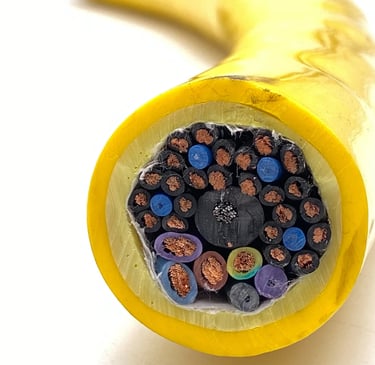
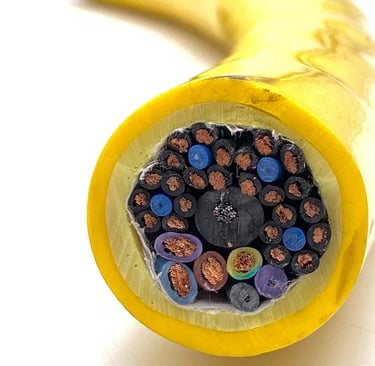
The distinctive SWA (Pliable Galvanised Steel Wires) armouring represents Type 260's defining feature. This armouring comprises individual galvanised steel wires wrapped helically around the cable, creating a protective mechanical barrier. The "pliable" designation indicates the wires maintain flexibility rather than becoming rigid, allowing the armoured cable to bend as needed for installation whilst providing mechanical protection.
Galvanisation—the zinc coating applied to steel—provides corrosion resistance essential for mining environments. Underground mining's moisture and salt spray from coastal mining operations would rapidly corrode uncoated steel wire. The galvanised coating prevents this corrosion, ensuring the armour remains mechanically sound throughout operational life without degradation from rust or corrosion.
The SWA armouring provides mechanical protection through force distribution. When armoured cables experience impact or crushing force, the steel wires absorb and distribute the force across multiple wire strands rather than concentrating force at a single point. This distribution dramatically improves resistance to puncture, crushing, and impact damage compared to unarmoured cables.
The helical wire arrangement also provides tensile strength—the ability to withstand pulling forces. When cables require handling or installation involving pulling stresses, the SWA armouring maintains cable structural integrity better than unarmoured alternatives. This tensile strength is particularly valuable in transportable mining installations where cables are bundled and transported.
Triple-Layer Sheathing: Comprehensive Environmental Protection
Type 260 incorporates sophisticated sheathing design providing comprehensive environmental protection in harsh mining conditions.
The inner sheath—PCP (Polychloroprene)—provides a bedding layer for the SWA armouring. This layer prevents direct contact between the copper screen and steel armour wire, which would create corrosion problems if the metals contacted directly. The inner sheath also ensures even distribution of armour forces across the cable cross-section.
The outer sheath—heavy-duty PCP—provides the final environmental barrier. PCP offers exceptional abrasion resistance essential where cables contact rough rocks and mining equipment. PCP also resists chemical attack from hydraulic fluids, diesel fuel, and mineral processing chemicals present in mining environments. The flame-retardant formulation prevents cables from contributing to fire spread—critical in mining's safety-critical environment.
Heavy-duty PCP sheath maintains flexibility matching Type 260's overall flexibility characteristics. The elastomer doesn't crack or split during installation or occasional equipment movement. This material consistency throughout cable construction ensures uniform flex behaviour rather than stress concentration at sheath boundaries.
CPE (Chloroprene Elastomer) and CSP (Chlorosulfonated Polyethylene) sheath options are available for applications with specific chemical exposure requirements. These alternatives provide enhanced resistance to specialized chemical exposures beyond standard PCP capability. Sheath selection flexibility enables customising Type 260 for particular mining environmental exposures.
Screening: Tinned Copper Braid for Electrical Management
Type 260 incorporates tinned copper braid interwoven with polyester yarn for electrical screening and earth continuity. The tinned copper provides electrical conductivity for screening and earth functions. The polyester yarn interwoven with copper provides structural reinforcement preventing screen damage during installation.
The screening serves multiple electrical purposes. It provides equipotential surface for voltage stress management within the insulation. It enables earth continuity for protection system operation. It provides electromagnetic shielding preventing cable emissions from affecting adjacent equipment. Together, these screening functions ensure Type 260 operates reliably in mining environments where electrical noise and interference could otherwise compromise equipment performance.
Cradle Separator: Organised Core Structure
Semiconductive PCP cradle separator organises the core structure, separating power conductors from pilot and earth conductors. This structural organisation ensures proper voltage stress distribution and prevents unintended electrical interactions between different conductor functions. The semiconductive material provides controlled electrical properties supporting voltage stress management within the overall cable structure.
Interstitial Pilot: Monitoring and Control Capability
The EPR-covered interstitial pilot provides independent circuit for earth-continuity monitoring and control signal distribution. The EPR covering matches insulation properties, ensuring the pilot conductor experiences consistent electrical environment. The extensible design accommodates cable flexing during installation without imposing stress on the pilot.
Mining operations increasingly implement continuous earth-leakage monitoring systems using pilot cores for monitoring signal distribution. The interstitial pilot supports these systems, enabling real-time cable condition assessment. When monitoring indicates degradation approaching critical levels, protection systems trigger controlled shutdown preventing catastrophic failure.
Strict Adherence to Australian Standards: Regulatory Framework
AS/NZS 1802:2003: Mining-Specific Standard Excellence
AS/NZS 1802:2003 is the comprehensive Australian and New Zealand standard specifically for electric cables in underground coal mines. This standard reflects decades of mining safety experience and specifies construction, materials, testing, and performance requirements explicitly for mining applications. It's not a generic industrial cable standard—it's developed specifically for mining safety.
The standard prescribes construction requirements including conductor materials, insulation specifications, screen designs, and sheath durability. It specifies testing procedures ensuring cables meet performance claims. It establishes installation and maintenance procedures supporting safe cable operation. For mining operations seeking cables complying with Australian mining regulations, AS/NZS 1802 compliance is non-negotiable.
Type 260 conforms completely to AS/NZS 1802:2003 requirements. Every aspect of the cable—from conductor composition through insulation materials to sheath specifications—meets this standard's detailed requirements. This compliance assures mining operations that cables meet regulatory expectations and support safe equipment operation.
AS/NZS 1125: Conductor Compliance and Reliability
AS/NZS 1125 specifies conductor requirements including material purity, mechanical properties, and electrical conductivity. This standard ensures conductors meet the electrical and mechanical properties essential for reliable mining cable operation. Type 260's tinned copper conductors meet all AS/NZS 1125 requirements, providing the conductivity, flexibility, and corrosion resistance mining applications demand.
AS/NZS 3808: Materials Quality and Environmental Durability
AS/NZS 3808 specifies properties of insulation and sheath materials including thermal stability, moisture resistance, and chemical resistance. This standard ensures insulation and sheath materials maintain their properties across the full range of mining environments. Type 260's EPR insulation and PCP sheath meet all AS/NZS 3808 requirements, maintaining performance throughout their service life in harsh mining conditions.
AS/NZS 5000.1: General Cable Construction and Testing Excellence
AS/NZS 5000.1 specifies general cable construction, testing, and documentation requirements applicable to all mining cables regardless of voltage rating or specific application. This standard ensures consistent quality and performance across all mining cables. Type 260 meets all AS/NZS 5000.1 requirements, ensuring thorough testing validates cable performance before deployment in mining operations.
RoHS and REACH Compliance: Environmental Responsibility
Type 260 cable meets RoHS Directive 2015/65/EU requirements eliminating hazardous substances from cable construction. This compliance ensures cables don't introduce toxic materials into mining environments. The cable also meets REACH Directive EC 1907/2006 requirements regulating chemical substances. RoHS compliance has been independently tested and confirmed by The Cable Lab, an ISO/IEC 17025 and IECEE CBTL accredited testing facility.
This environmental compliance reflects modern mining operations' commitment to sustainability. Australian mining companies increasingly recognise environmental responsibility as integral to operational excellence. Using cables meeting RoHS and REACH requirements demonstrates commitment to responsible mining practices and supports broader ESG (Environmental, Social, Governance) objectives.
Why Choose Type 260: The Proven Australian Advantage
Reduced Operational Risk Through Mechanical Durability
Type 260's armouring significantly reduces cable-related downtime caused by mechanical damage. Unarmoured cables in high-impact zones fail regularly—within months in some applications. Type 260's SWA protection enables reliable operation in these environments.
The practical advantage is substantial. Mining operations routing cables through high-traffic areas or under heavy equipment can confidently deploy Type 260, knowing mechanical damage won't cause unexpected failures. This reliability removes a significant source of operational uncertainty—critical for mining operations managing tight production schedules.
The cost impact is equally dramatic. A single unexpected cable failure during peak production might cost fifty thousand to one hundred thousand dollars or more in lost production, emergency repair costs, and associated downtime. Type 260's mechanical protection prevents these expensive incidents from occurring.
Safety Monitoring: Integrated Protection Relay Capability
The dedicated interstitial pilot core enables instantaneous protection system operation. If cables sustain damage creating earth leakage, monitoring systems detect the fault and protection relays trip, de-energising the circuit immediately. This fail-safe protection prevents dangerous scenarios where damaged cables remain energised, creating shock hazards and fire risks.
The integrated monitoring also provides continuity verification—assurance that the pilot conductor itself remains intact. Loss of pilot continuity signals potential cable damage, triggering investigation before catastrophic failure occurs.
For mining operations prioritising safety, the integrated pilot provides essential infrastructure supporting protection systems that prevent electrical hazards. Rather than adding separate monitoring cables, Type 260's integrated pilot simplifies system design whilst providing necessary safety functionality.
Longevity in Harsh Strata: Built to Survive Australian Mining Terrain
The combination of SWA armouring, heavy-duty PCP sheath, and EPR insulation enables Type 260 to survive harsh Australian mining conditions better than unarmoured alternatives. The case studies demonstrate this durability advantage directly—cables surviving 8-10 years in the Pilbara, eliminating relocation damage in Queensland sand mining, and meeting NSW regulatory requirements.
This environmental durability reflects material selections and construction design optimised for mining. EPR insulation resists moisture and thermal stress. PCP sheath resists abrasion and chemical exposure. SWA armouring resists mechanical damage. Together, these elements create cables capable of surviving years in harsh mining environments where inferior alternatives fail within months.
Local Industry Recognition and Specification
Type 260 cable has earned recognition throughout the Australian mining industry. Major mining operators across Australia specify Type 260 for main feeder applications and high-criticality power distribution. Equipment manufacturers often recommend Type 260 for stationary equipment requiring robust electrical connections. Mining safety committees value the integrated monitoring capability supporting fail-safe protection systems.
This industry recognition reflects accumulated operational experience. Mining operators have directly observed Type 260's superior performance compared to unarmoured alternatives. They've measured reduced downtime, extended cable lifespan, and improved operational reliability. This accumulated positive experience drives continued specification of Type 260 throughout Australian mining.
How Type 260 Delivers Superior Performance: Engineering Excellence
Force Distribution and Impact Resistance
The SWA helical winding distributes impact forces across multiple wire strands rather than concentrating force at single points. When cables experience impacts from falling objects, crushing forces, or dragging across rough terrain, the distributed force prevents concentrated stress that would immediately damage unarmoured cables.
This force distribution capability enables mining engineers to route cables through high-impact zones without protective conduit. Rather than expensive protective tunnels or cable trays, engineers can route Type 260 directly through mining areas, confident that armouring provides adequate mechanical protection. This engineering flexibility reduces infrastructure costs and simplifies mine planning.
Abrasion and Chemical Resistance
The heavy-duty PCP sheath resists abrasion from contact with rough rocks, sand particles, and mining equipment. Sand mining's extreme abrasion—where silica particles aggressively attack elastomer materials—is particularly challenging. Type 260's robust sheath resists this abrasion better than standard industrial cables.
Chemical resistance from PCP formulation protects against hydraulic fluid, diesel fuel, and mineral processing chemical exposure. These chemicals would degrade inferior elastomers, creating sheath cracking and insulation exposure. Type 260's formulation resists this chemical attack, maintaining mechanical integrity throughout operational life.
Environmental Durability in Extreme Conditions
The Pilbara case study demonstrates Type 260's exceptional durability in extreme temperature environments. Ambient temperatures exceeding 45°C combined with intense UV radiation create conditions that would degrade many cable materials. Type 260's UV-stabilised PCP sheath and thermally stable EPR insulation maintain performance in these extreme conditions.
Deep mining's geothermal heat combined with moisture exposure creates opposite environmental stress. Type 260's moisture resistance and thermal stability enable reliable operation in these deep-mining conditions. The cable performs reliably across the full range of Australian mining environments—from coastal sand mining to deep underground operations to exposed Pilbara conditions.
Integrated Monitoring and Predictive Maintenance
The interstitial pilot core enables monitoring systems to track cable condition continuously. Rather than waiting for catastrophic failure, mining operations can implement predictive maintenance—monitoring degradation and scheduling cable replacement when measurements indicate approaching critical limits.
This shift from reactive to predictive maintenance provides multiple operational benefits. Emergency failures become rare rather than expected. Cable replacement occurs during planned maintenance windows rather than disrupting production. Personnel remain safely above ground rather than dealing with emergency situations underground. Equipment suffers fewer damage incidents from unexpected shutdowns.
Australian Mining Industry Recognition and Deployment
Type 260 cable has earned widespread recognition throughout Australian mining for proven performance in demanding conditions. Major mining operators across Queensland and Western Australia specify Type 260 for main feeder applications. Equipment manufacturers often recommend Type 260 for transportable substations and high-criticality power distribution.
Mining safety committees increasingly specify Type 260 for applications meeting regulatory pliable armour requirements. The cable's integrated pilot core supporting monitoring systems aligns with emerging safety management practices. The Cable Lab's accreditation for ISO/IEC 17025 and IECEE CBTL ensures independent testing validates performance—critical assurance for mining operations.
This industry recognition reflects direct operational experience demonstrating Type 260's superior performance in Australian mining conditions. Mining operators have observed extended cable lifespan compared to unarmoured alternatives. They've experienced dramatic reductions in mechanical damage incidents. They've realised operational cost savings through eliminated emergency repairs. This accumulated positive experience drives continued Type 260 specification throughout Australian mining.
Expert Summary
Type 260 armoured mining cable represents engineered power distribution infrastructure optimised for the extreme conditions Australian mining operations experience. From North Queensland's sand mining operations requiring mechanical protection against relocation stress and abrasive sand, to the Pilbara's iron ore mining demanding durability in extreme heat and rocky terrain, to the Hunter Valley's open-cut coal operations meeting NSW regulatory requirements, Type 260 delivers proven performance across diverse Australian mining scenarios.
The cable's SWA (Pliable Galvanised Steel Wire) armouring provides mechanical protection that unarmoured cables cannot match. The armouring prevents impact damage, crushing injury, and abrasion penetration that would rapidly compromise unarmoured alternatives. This mechanical protection transforms high-impact zones from maintenance nightmares into reliable cable routing options.
The flexible stranded tinned annealed copper conductors, EPR insulation, and heavy-duty PCP sheath work together to provide environmental durability matching Type 260's mechanical protection. The combination enables cables to survive harsh mining conditions for 8-10+ years—double or triple the lifespan of inferior alternatives in identical conditions.
The interstitial pilot core provides infrastructure for earth-continuity monitoring and protection system operation. Real-time monitoring enables predictive maintenance strategies, shifting mining operations from reactive emergency repairs to planned maintenance. This shift improves operational safety, reliability, and cost-effectiveness.
AS/NZS 1802:2003 compliance ensures Type 260 meets comprehensive Australian mining safety standards. Compliance with AS/NZS 1125, AS/NZS 3808, and AS/NZS 5000.1 ensures materials and construction meet stringent performance requirements. RoHS and REACH compliance demonstrates environmental responsibility aligning with modern mining operations' sustainability commitments.
Real Australian mining operations provide compelling evidence of Type 260's value. The North Queensland sand mining operator eliminated cable damage incidents during relocation, increasing annual production by 12% through improved availability. The Pilbara iron ore operator extended cable lifespan to 8-10 years and reduced emergency logistics costs by 60% through eliminated unexpected failures. The Hunter Valley coal operator met emerging NSW regulatory requirements whilst improving safety posture through integrated monitoring capability.
For Australian mining operations prioritising reliability, safety, and cost-effective electrical infrastructure, Type 260 cable delivers engineered performance matching these operational objectives. The cable's proven track record across diverse Australian mining regions, combined with comprehensive mechanical protection and integrated monitoring capability, makes it the optimal choice for main feeder applications and high-criticality power distribution.
The investment in quality armoured cable infrastructure engineered specifically for Australian mining conditions pays dividends throughout the cable's operational lifetime. In an industry where downtime costs escalate rapidly and safety cannot be compromised, selecting proven cable technology like Type 260 represents prudent engineering and sound operational decision-making grounded in real Australian mining experience.
Key Takeaways: Type 260 Cable Benefits Summary
SWA pliable galvanised steel wire armouring: Protects against impact, crushing, and abrasion damage that damages unarmoured cables
Flexible stranded tinned annealed copper conductors: Provides conductivity, flexibility, and corrosion resistance essential for mining applications
EPR insulation: Delivers thermal stability, moisture resistance, and dielectric strength across operating temperature range
Heavy-duty PCP sheath: Resists abrasion, chemical exposure, and UV degradation in harsh mining environments
Tinned copper braid screening: Provides electrical management and earth continuity for protection systems
Interstitial pilot core: Enables earth-continuity monitoring and protection relay operation
Four voltage ratings (1.1–11 kV): Comprehensive range matching diverse mining equipment requirements
AS/NZS 1802:2003 compliance: Meets comprehensive Australian coal mining safety standards
RoHS and REACH compliant: Demonstrates environmental responsibility and sustainability commitment
Extended cable lifespan: 8–10+ years in harsh mining conditions versus 2–4 years for unarmoured alternatives
Reduced mechanical damage incidents: Proven elimination of damage-related failures in high-impact zones
Integrated monitoring capability: Supports predictive maintenance and fail-safe protection systems
North Queensland sand mining: Eliminated relocation damage, improved production 12%
Pilbara iron ore operation: Extended lifespan 100%, reduced emergency costs 60%
Hunter Valley coal mining: Met regulatory requirements, improved safety posture
Selection Guidance: Choosing the Right Type 260 Voltage Rating
For auxiliary equipment and lower-power applications? → Type 260.1 (1.1 kV) provides appropriate capacity with simplified protection system design.
For continuous miners, pump systems, and medium-power equipment? → Type 260.3 (3.3 kV) represents common specification balancing power capacity with practical installation requirements.
For larger motor drives and mid-size equipment? → Type 260.6 (6.6 kV) delivers substantial power capacity whilst minimising resistive losses.
For main feeders and high-power equipment? → Type 260.11 (11 kV) handles massive power demands whilst optimising current and losses over main feeder runs.
For harsh abrasive environments (sand mining)? → Heavy-duty PCP sheath provides excellent protection; CPE/CSP alternatives available for specialised chemical exposures.
For transportable equipment and relocation applications? → Type 260's mechanical durability survives repeated relocation and handling stress.
For high-impact zones where mechanical damage is concern? → SWA armouring transforms problematic areas into reliable routing options.
How to Reach Us
Get in Touch
SiteMap
Product Catalogue
Festoon Cable
Shore Power Cable




Scan to add us on WeChat