

Type 412 1.1/1.1KV Armoured Mining Cable - AS/NZS Feeder Cable with Mechanical Protection for Sand Mining
High-performance 1.1KV armoured mining feeder cable with flexible steel wire armor and green/yellow earth protection. Ideal for sand mining operations, underground mining, and high-impact environments. Meets AS/NZS standards with pliable armor construction for maximum mechanical protection and reduced downtime.
hongjing.Wang@Feichun
11/4/20258 min read
Introduction
Mining operations, particularly in sand extraction and underground environments, demand electrical infrastructure capable of withstanding extreme mechanical stress, abrasive conditions, and potential impact damage. The Type 412 1.1/1.1KV armored mining feeder cable represents a specialized solution engineered specifically for these challenging applications. This AS/NZS compliant mining cable delivers reliable power transmission while providing superior mechanical protection through its innovative pliable armor construction.
In mining environments where equipment downtime translates directly to substantial financial losses, the selection of appropriate power cables becomes critical. A single cable failure can halt operations, affecting productivity and generating costs that far exceed the initial investment in quality cabling infrastructure. The Type 412 mining cable addresses these concerns through its robust design, incorporating flexible steel wire armor cable technology that protects conductors from crushing forces, impact, and abrasion commonly encountered in sand mining operations and underground installations.
This article examines the technical specifications, applications, and benefits of Type 412 cables, providing mining operators and electrical engineers with comprehensive information to make informed decisions about power distribution systems in high-risk environments.
Cable Specifications & Technical Features
Voltage Rating and Classification
The Type 412 cable operates at a voltage rating of 1.1/1.1KV, designed for medium-voltage power distribution in mining applications. This classification indicates both the conductor-to-earth voltage and conductor-to-conductor voltage capability, making it suitable for three-phase power systems commonly employed in mining operations.
Conductor Configuration
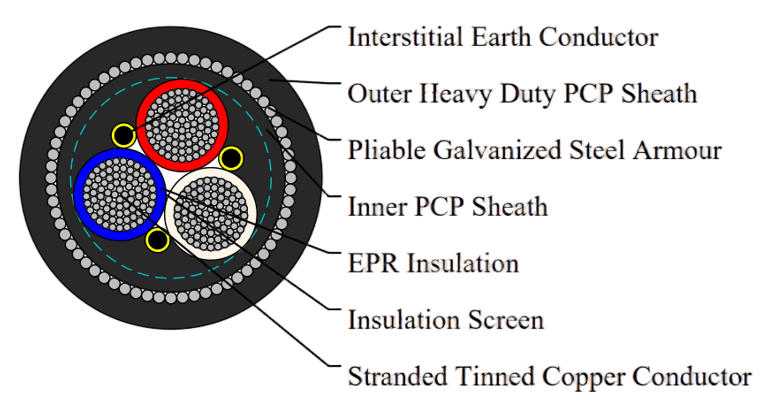
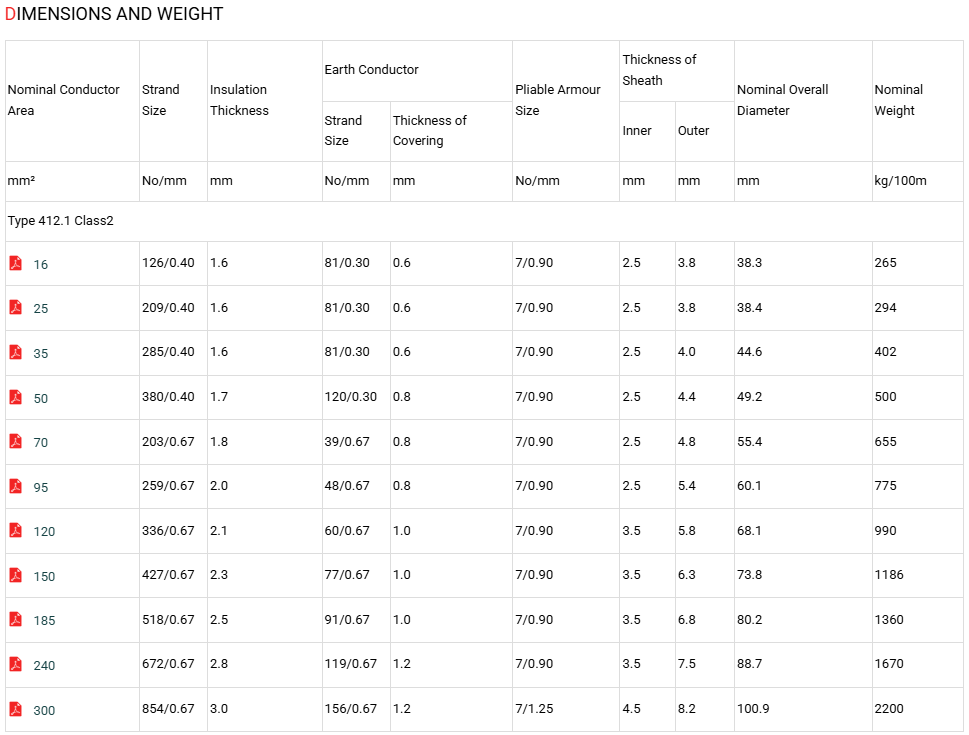
At the core of this mining power cable lies flexible stranded tinned annealed copper conductors. The tinning process applies a thin layer of tin to the copper strands, providing enhanced corrosion resistance—particularly valuable in mining environments where moisture, chemicals, and corrosive substances may be present. The flexible stranded construction ensures the cable maintains pliability despite its armored protection, facilitating installation in confined spaces and around obstacles.
Insulation System
The Type 412 employs Ethylene Propylene Rubber (EPR) insulation, selected for its exceptional electrical properties and resilience in harsh conditions. EPR insulation exhibits:
Superior resistance to heat aging, maintaining integrity across the operating temperature range of -40°C to +80°C
Excellent resistance to moisture and environmental contaminants
Flexibility that complements the cable's overall construction
Long-term stability under mechanical stress
Earth Protection
A dedicated green/yellow earth conductor provides essential safety grounding. This earth conductor features composite construction with tinned copper braiding, ensuring reliable fault current paths and equipment grounding throughout the cable's service life. The distinctive color coding enables quick identification during installation and maintenance operations.
Pliable Armor Construction
The defining feature of this pliable armor cable is its galvanized steel wire armor layer. Unlike rigid conduit or inflexible armor systems, the pliable construction using individual steel wires allows the cable to bend and flex during installation while maintaining comprehensive mechanical protection. The galvanization process coats the steel wires with zinc, providing corrosion resistance and extending service life in damp mining environments.
Standards & Compliance
The Type 412 cable meets rigorous Australian and New Zealand standards, specifically:
AS/NZS 2802:2003 Compliance
This standard specifies requirements for electrical cables for mines and enclosed hazardous areas. Compliance ensures the cable has undergone testing for:
Mechanical impact resistance
Flame propagation characteristics
Environmental performance
Electrical characteristics under load
AS/NZS 1125 Certification
This certification addresses flexible cords and cables, establishing quality benchmarks for construction, materials, and performance. AS/NZS mining cables meeting these standards provide assurance of consistent manufacturing quality and reliability.
Meeting these standards isn't merely a regulatory checkbox—it represents a commitment to safety and performance critical in mining operations where cable failures can endanger personnel and equipment.
Armor Technology & Mechanical Protection
Understanding the Need for Armored Protection
Mining environments present numerous threats to cable integrity:
Impact from falling rocks or equipment: Underground mining and excavation sites face constant risk of impact damage
Crushing forces: Heavy machinery and vehicles routinely traverse areas where cables are installed
Abrasion from shifting materials: Sand mining operations expose cables to abrasive materials that can wear through unprotected sheaths
Sharp edges and protrusions: Mining equipment and infrastructure contain numerous edges that can damage cables during movement or vibration
Steel Wire Armored Cable Advantages
The flexible steel wire armor in Type 412 cables provides comprehensive protection against these threats. Each galvanized steel wire in the armor layer acts as a protective element, distributing impact forces across the cable structure rather than concentrating stress on conductors or insulation. This distributed protection mechanism significantly reduces the risk of penetration or crushing damage.
The pliable nature of the wire armor distinguishes it from rigid protective systems. While maintaining robust mechanical protection, the cable remains flexible enough for practical installation. This combination addresses a common challenge in mining cable deployment: balancing protection with handleability.
Cost Reduction Through Downtime Prevention
Equipment downtime in mining operations generates costs through multiple channels:
Lost production during repair periods
Emergency maintenance labor expenses
Potential damage to connected equipment from power interruptions
Safety risks during emergency repairs
Heavy-duty armored feeder cables for mining like the Type 412 minimize these risks by maintaining power continuity even in harsh conditions. The initial investment in properly protected cables delivers returns through extended service life and reduced maintenance interventions.
Primary Applications
Sand Mining Operations
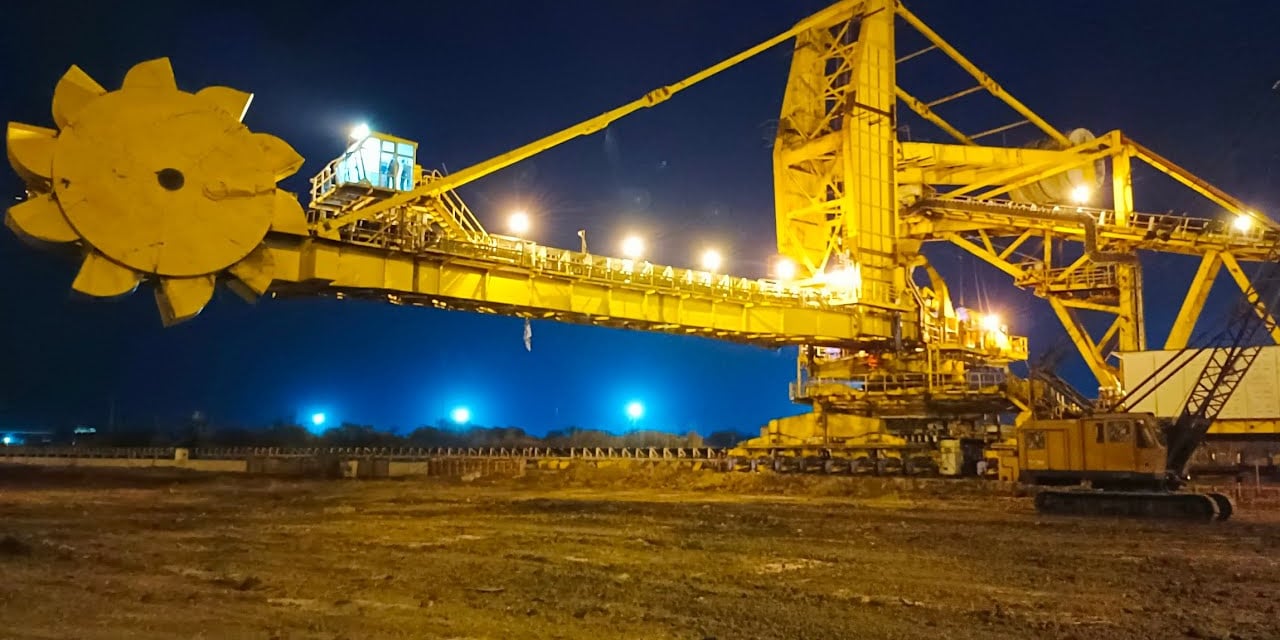
Sand mining presents unique challenges for electrical infrastructure. The abrasive nature of sand particles, combined with the mobile equipment and transportable installations common in these operations, creates an environment where cable damage occurs frequently with inadequately protected cables. Type 412 cables for sand mining operations address these challenges through their armor construction and flexible design.
In sand mining applications, cables may be temporarily installed, relocated as operations progress, and subjected to environmental exposure. The combination of mechanical protection and weather-resistant outer sheath makes Type 412 cables ideal for these dynamic installations.
Underground Mining Power Supply
Underground mining operations require reliable power distribution in confined spaces where cables face threats from:
Rock movement and settlement
Impact from mining equipment
Moisture and groundwater exposure
Temperature variations
The Type 412 cable's armor protection, moisture-resistant construction, and wide operating temperature range make it well-suited for these applications. The cable maintains performance in the -40°C to +80°C range, accommodating both deep underground conditions and surface installations.
Feeder Cables in High-Damage-Risk Areas
Mining feeder cables distribute power from substations to various operational areas. These distribution routes often pass through high-traffic zones, temporary excavation areas, and locations where mechanical protection is essential. The Type 412 specification provides appropriate protection for these critical power distribution links.
Transportable Mining Substations
Mobile or transportable substations require cabling that can withstand repeated installation and relocation. The flexibility and durability of pliable armored feeder cables for underground mining make them suitable for these temporary power distribution systems.
Industrial Heavy-Duty Applications
Beyond mining, Type 412 cables serve industrial facilities requiring mechanical protection, including:
Construction sites with heavy equipment
Manufacturing facilities with mobile machinery
Outdoor industrial installations
Marine and port facilities
Design & Construction Features
Multi-Conductor Configuration
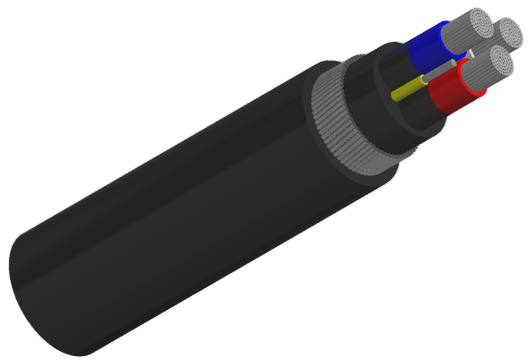
The Type 412 employs a multi-conductor design, typically featuring three main power conductors plus the earth conductor. This configuration supports three-phase power distribution, the standard for industrial and mining applications.
Layered Protection System
The cable's construction incorporates multiple protective layers:
Conductor insulation: EPR insulation on each conductor
Semiconductive tape screening: Reduces electrical stress concentrations
Polyester barrier tape: Provides additional mechanical separation between layers
Inner PCP sheath: Polychloroprene (synthetic rubber) creates a moisture barrier
Steel wire armor: Galvanized flexible wires provide mechanical protection
Outer PCP sheath: Weather-resistant exterior protection
This layered approach creates redundant protection, ensuring that even if outer layers sustain damage, inner layers maintain cable integrity.
Interstitial Pilot Conductor
Some Type 412 configurations include an interstitial pilot conductor—a smaller conductor positioned between main conductors. This pilot conductor can serve monitoring, communication, or control functions, adding functionality without requiring separate cable installations.
Benefits & Advantages
Superior Mechanical Protection
The primary advantage of AS/NZS compliant mining cables with mechanical protection lies in their ability to maintain power continuity despite physical challenges. The armor layer absorbs impacts, resists crushing forces, and prevents penetration from sharp objects that would disable unprotected cables.
Reduced Equipment Downtime
Mining cables that reduce equipment downtime deliver value beyond their purchase cost. By maintaining reliable operation in challenging conditions, Type 412 cables keep mining operations productive. The armor protection prevents many common failure modes, translating to fewer interruptions and lower maintenance costs.
Enhanced Durability in Harsh Conditions
Mining environments accelerate cable aging through multiple stress factors applied simultaneously. The Type 412's comprehensive construction addresses these factors:
Armor protects against mechanical damage
PCP sheaths resist moisture, oils, and chemicals
EPR insulation maintains electrical properties across temperature extremes
Galvanization prevents armor corrosion
This multi-faceted durability extends cable service life, improving return on investment.
Flexibility and Installation Ease
Despite its protective construction, the high-impact resistant mining power cable maintains flexibility. This characteristic simplifies installation, particularly in confined spaces or routes requiring bends. The pliable armor permits bending without specialized equipment, reducing installation time and labor costs.
Long-Term Reliability
Reliability in critical power distribution cannot be overstated. Mining operations depend on continuous power for safety systems, ventilation, lighting, and production equipment. The Type 412's robust construction provides the reliability necessary for these critical applications.
Installation & Handling Considerations
Minimum Bending Radius
While flexible, Type 412 cables have minimum bending radius specifications to prevent damage. Generally, armored cables should not be bent to a radius less than 12 times the overall cable diameter during installation, and not less than 6 times the diameter when not under tension. Adhering to these specifications preserves both the armor and internal conductor integrity.
Cable Routing and Support
Proper installation requires:
Adequate support intervals: Preventing excessive sag that could stress the cable
Protection at entry points: Additional protection where cables enter equipment or junction boxes
Segregation from incompatible materials: Avoiding contact with substances that might degrade the outer sheath
Consideration of thermal environment: Ensuring ambient conditions remain within the cable's operating range
Storage Recommendations
Prior to installation, cables should be stored:
On appropriate reels or in coils to prevent kinking
Protected from direct sunlight and weather exposure
In areas where temperatures remain within acceptable ranges
Away from chemicals or materials that might damage the sheath
Safety Guidelines
Mining operations must follow electrical safety protocols including:
De-energizing circuits before cable handling when possible
Using appropriate personal protective equipment
Following lockout/tagout procedures
Ensuring qualified personnel perform installations
Testing cables before energization
Comparison with Other Cable Types
Type 412 vs. Unarmored Mining Cables
Unarmored mining cables offer flexibility and lower cost but lack mechanical protection. In high-risk environments, the cost savings become negligible when factoring in potential replacement costs and downtime. Type 412 cables represent the appropriate choice where mechanical threats exist.
Advantages Over Rigid Conduit Systems
While rigid conduit provides excellent protection, it lacks flexibility and significantly increases installation complexity and cost. The pliable armor of Type 412 cables delivers comparable protection with greater installation flexibility, making it ideal for:
Temporary installations
Routes requiring bends or curves
Mobile or relocatable equipment connections
Retrofits in existing facilities
Comparison with Higher Voltage Cables
For applications requiring only 1.1KV operation, higher voltage-rated cables represent unnecessary expense. The Type 412 provides appropriate performance for its voltage class while optimizing cost-effectiveness.
Conclusion
The Type 412 1.1/1.1KV armored mining feeder cable represents an engineered solution for mining applications where mechanical protection, reliability, and durability are paramount. Its combination of flexible steel wire armor, quality conductor and insulation materials, and compliance with AS/NZS standards makes it particularly well-suited for sand mining operations, underground installations, and any environment where cables face mechanical threats.
For mining operators evaluating power distribution options, the Type 412 offers compelling benefits: reduced downtime risk, extended service life, and reliable performance in demanding conditions. The cable's pliable armor construction distinguishes it from both unprotected cables and rigid protection systems, providing an optimal balance of protection and practicality.
When planning mining electrical infrastructure, particularly for sand mining or underground operations, consulting with qualified electrical engineers and cable specialists ensures proper specification and installation. The investment in appropriate cable technology—specifically mining cables for mechanical protection and durability—pays dividends through reduced maintenance costs, improved safety, and operational reliability throughout the facility's life cycle.
For mining operations where power continuity directly impacts productivity and profitability, the Type 412 mining cable delivers the mechanical protection and performance characteristics necessary for long-term success in challenging environments.
How to Reach Us
Get in Touch
SiteMap
Product Catalogue
Festoon Cable
Shore Power Cable




Scan to add us on WeChat