
Type G Four-Conductor Round Portable Power Cable 2kV - Industrial Mining Solutions
Explore Type G 2kV four-conductor round portable power cables for mining equipment. ICEA/NEMA compliant, EPR insulation, heavy-duty CPE jacket. Learn specifications, standards, and applications.
hongjing.Wang@Feichun
1/9/20267 min read
When powering mobile mining equipment in demanding underground environments, selecting the right portable power cable is critical for operational safety and efficiency. Type G four-conductor round portable power cables rated at 2kV represent an industry-standard solution engineered specifically for continuous miners, cutting machines, conveyors, and other heavy-duty mining applications. This comprehensive guide explores the technical specifications, construction details, compliance standards, and practical applications of these essential power distribution components.
Introduction to Type G Portable Power Cables
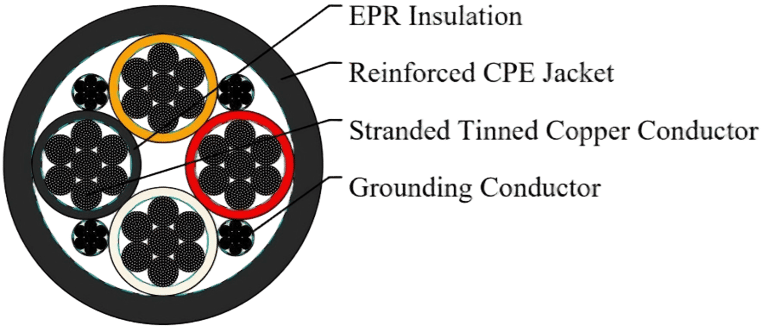
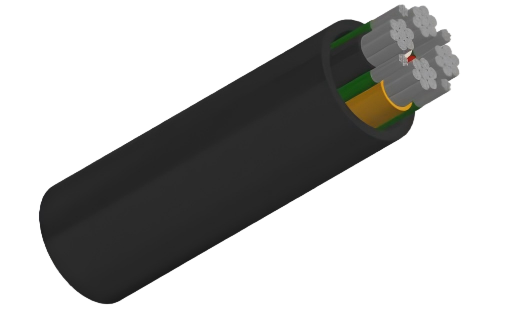
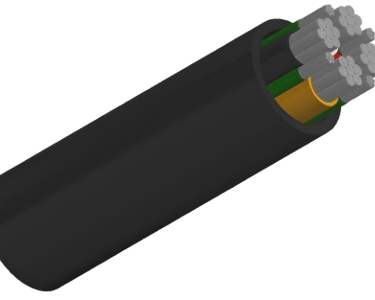
Type G portable power cables are designed as four-conductor configurations that deliver reliable electrical power to mobile and semi-permanent mining equipment. Unlike stationary installation cables, these portable power solutions must withstand repeated flexing, abrasion, moisture exposure, and the mechanical stresses inherent in mining operations. The four-conductor portable power cable for mining includes three insulated phase conductors plus a full-sized grounding conductor, providing both power delivery and critical safety grounding in a single integrated assembly.
The 2kV voltage rating makes these cables suitable for medium-voltage applications commonly found in mining operations, where higher voltages enable more efficient power transmission over extended distances while minimizing voltage drop. Type G 2kV cable specifications adhere to rigorous industry standards that ensure consistent performance across manufacturers and applications.
This industrial-grade power cable design prioritizes durability, flexibility, and safety—three non-negotiable requirements in mining environments where cable failure can result in costly downtime, equipment damage, or personnel hazards.
Application Areas
The versatility of Type G four-conductor cables makes them indispensable across numerous mining operations:
Continuous Miners: These mechanized excavation machines require constant power delivery while moving through coal seams or other mineral deposits. The four-conductor cable for continuous miners must flex repeatedly as the equipment advances, making the cable's mechanical durability paramount.
Cutting and Loading Machines: Portable cable for cutting machines delivers power to equipment that extracts material from working faces. These applications demand cables that can withstand sharp edges, falling rock, and abrasive mineral dust while maintaining electrical integrity.
Conveyor Systems: Mining conveyors transport extracted material from working areas to processing facilities. Power cables for loading equipment and conveyors often span considerable distances and may be dragged or repositioned as mining operations progress to new areas.
Drilling Equipment: Rotary drills, roof bolters, and exploration drilling rigs rely on portable power connections that must perform reliably despite vibration, rotation, and movement.
Pump Systems: Dewatering pumps, slurry pumps, and ventilation systems utilize portable power cables that may be exposed to moisture, chemicals, and temperature extremes.
The mobile mining equipment overview reveals that virtually all portable machinery in underground and surface mining operations depends on robust four-conductor power delivery systems to function safely and efficiently.
International Standards and Compliance
Type G cable ICEA compliance ensures these products meet stringent industry benchmarks. The primary specification governing these cables is ICEA S-75-381/NEMA WC 58, which establishes dimensional, material, and performance requirements for portable and power feeder cables used in mines.
The NEMA WC 58 four-conductor cable standard addresses construction details including conductor sizing, insulation thickness, jacket durability, and voltage ratings. Compliance with this specification ensures interchangeability and reliability regardless of manufacturer.
Conductor materials must meet ASTM B 172 standards for tinned copper construction, ensuring proper electrical conductivity and corrosion resistance. ASTM B 33 specifications further define tinned soft or annealed copper wire requirements.
For operations in Canada, CAN/CSA C22.2 No. 96 provides Canadian compliance standards that align with ICEA specifications while addressing specific regulatory requirements north of the border.
These safety and performance certifications aren't merely bureaucratic requirements—they represent decades of industry experience codified into standards that prevent failures, protect workers, and ensure equipment compatibility across mining operations worldwide.
Cable Construction Details
Understanding the layered construction of Type G cables reveals why they perform reliably in harsh mining environments.
Conductor Specifications
The foundation of any power cable is its conductor system. Type G cables utilize stranded annealed tinned copper construction, where multiple wire strands are twisted together to create flexible conductors that resist work-hardening and breakage from repeated bending.
Tinned copper conductor portable cable advantages include superior corrosion resistance compared to bare copper. The tin coating prevents oxidation and chemical attack from moisture, acids, and alkaline substances commonly encountered in mining. This tinned copper conductor mining cable design maintains low electrical resistance over extended service life, ensuring efficient power transmission and minimal heat generation.
The stranding pattern allows conductors to flex without fatigue failure—a critical characteristic when cables are repeatedly coiled, dragged, and repositioned during mining operations.
Insulation Material
Each conductor receives individual insulation composed of Ethylene Propylene Rubber (EPR), a thermoset elastomer selected for its exceptional electrical and mechanical properties.
EPR insulation 2kV cable benefits include outstanding dielectric strength, meaning the material effectively prevents electrical breakdown between conductors and to ground even under challenging conditions. The insulation maintains its integrity across a wide temperature range, from cold surface operations to heat-producing underground workings.
EPR resists moisture absorption, ozone degradation, and chemical attack, contributing to long service life in hostile environments. Unlike thermoplastic insulation materials that soften at elevated temperatures, EPR maintains its mechanical properties even when conductors approach their maximum operating temperature.
Grounding Conductor
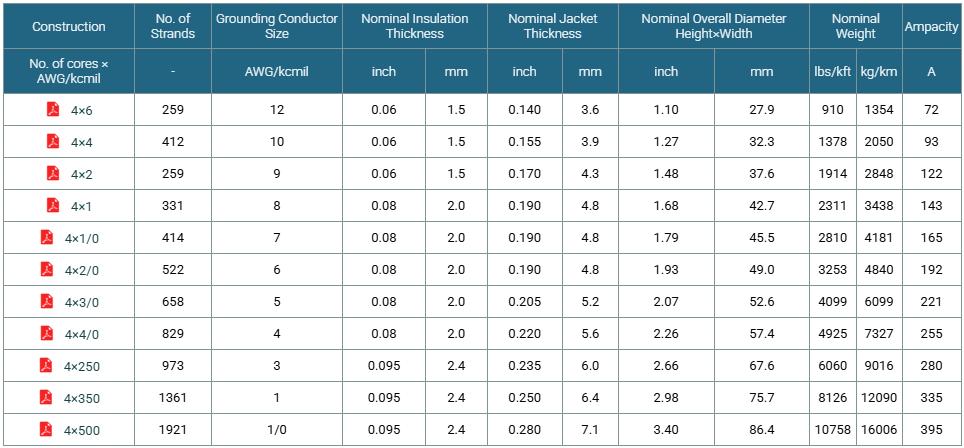
Safety grounding represents a non-negotiable requirement in mining operations. The four-conductor cable grounding specifications require a full-sized tinned copper grounding conductor equal in cross-sectional area to the phase conductors.
This grounding conductor typically features an optional green outer covering for easy identification, though the tinned copper construction itself provides the essential safety function. In fault conditions, the grounding conductor provides a low-impedance path that quickly clears faults and trips protective devices, preventing sustained ground faults that could create shock hazards or ignite flammable atmospheres.
Jacket Material
The outermost protective layer consists of heavy-duty or extra-heavy-duty Chlorinated Polyethylene (CPE), specified in black for standard applications. This heavy-duty CPE jacket portable cable provides mechanical protection against abrasion, crushing, tearing, and impact.
CPE offers superior resistance to oils, chemicals, flame, and weathering compared to many alternative jacket materials. The reinforced mining cable jacket maintains flexibility even in cold temperatures while resisting degradation from ozone and ultraviolet exposure.
For cables with outer diameters exceeding 2.0 inches, extra-heavy-duty jacket construction provides additional mechanical protection appropriate for the larger, heavier cables serving high-power equipment. The increased jacket thickness guards against damage from dragging across rough surfaces, contact with sharp edges, and crushing forces from equipment traffic or rockfalls.
Optional Features and Customizations
While standard CPE jacketing serves most applications, specific mining environments may benefit from alternative materials. Custom jacket materials for portable cables include:
CSP (Chlorosulfonated Polyethylene): Offers enhanced chemical resistance and weatherability, particularly valuable in surface mining applications with extended sun exposure.
PCP (Polychloroprene): Provides excellent oil and flame resistance with good mechanical properties across wide temperature ranges.
NBR (Nitrile Butadiene Rubber): Delivers outstanding oil and fuel resistance for applications near hydraulic equipment or fueling areas.
PVC (Polyvinyl Chloride): A cost-effective option for less demanding applications, though typically not specified for heavy-duty mining use.
The two-layer jacket with reinforcing fibre option incorporates textile reinforcement between inner and outer jacket layers, providing exceptional tear resistance and mechanical strength for applications involving severe abrasion or repeated dragging.
Custom specifications available upon request allow mining operations to optimize cable performance for unique environmental conditions, chemical exposures, or mechanical demands. Benefits of customization for specific mining environments include extended service life, reduced maintenance costs, and improved safety margins in challenging applications.


Common Cable Issues and Solutions
Problem: Premature Jacket Wear
In mining operations, dragging cables across rough surfaces causes accelerated jacket abrasion. This manifests as visible wear patterns, thinning, or exposed reinforcement layers.
Solution: Implement cable protection measures including protective sleeves in high-wear areas, cable trays or guides along frequent travel paths, and regular repositioning to distribute wear. For severe applications, specify extra-heavy-duty jackets or two-layer construction with reinforcing fibre. Establish inspection protocols that identify wear before jacket penetration compromises insulation.
Problem: Reduced Flexibility in Cold Conditions
Surface mining operations in winter months may experience cable stiffening, making installation difficult and potentially causing jacket cracking.
Solution: When possible, store cables in heated areas before deployment. Select jacket materials with superior cold-temperature performance—certain formulations maintain flexibility to -40°C. Allow cables to warm gradually before flexing, and never force cold cables into tight bends that exceed minimum radius requirements.
Problem: Moisture Intrusion at Terminations
Even with excellent jacket materials, cable ends represent vulnerability points where moisture can enter and migrate along conductors, causing corrosion and ground faults.
Solution: Use proper termination kits rated for mining environments that provide environmental sealing. Apply heat-shrink boots or cold-applied termination systems that seal the cable-to-connector interface. Inspect terminations regularly and replace any showing signs of moisture intrusion, corrosion, or mechanical damage.
Problem: Inadequate Ground Continuity
Intermittent ground connections compromise safety systems, potentially leaving equipment frames energized during fault conditions.
Solution: Verify ground conductor integrity through regular testing with low-resistance ohmmeters. Ensure all terminations provide robust mechanical and electrical connection to the grounding conductor. Never use cables with damaged ground conductors—the safety risk far outweighs any short-term cost savings from continued use.
Installation and Handling Guidelines
Proper installation procedures begin before the cable leaves storage. Cables should be stored on reels or in figure-eight coils that prevent kinking and maintain cleanliness. Protect stored cables from prolonged sun exposure, chemical spills, and mechanical damage.
During deployment, avoid dragging cables over sharp edges or through areas contaminated with cutting fluids, battery acid, or corrosive chemicals. When possible, use cable supports, festoon systems, or cable reels that minimize ground contact and mechanical stress.
Environmental protection includes routing cables away from high-traffic areas where they might be run over by heavy equipment. Where cable crossing is unavoidable, use cable bridges or protective covers rated for the expected loads.
Safety considerations require regular inspection schedules that identify damage before it creates hazards. Develop rejection criteria based on jacket damage depth, insulation exposure, conductor visibility, or deformation. Any cable showing signs of damage affecting insulation integrity should be removed from service immediately.
Maintenance tips include periodic cleaning to remove conductive dust or mineral buildup that could create tracking paths, rotation of cable reels to distribute flexing stresses, and documentation of cable history including installation date, service conditions, and inspection results.
Conclusion
Type G four-conductor round portable power cables rated at 2kV represent proven solutions for demanding mining applications. Their robust construction featuring stranded tinned copper conductors, EPR insulation, and heavy-duty CPE jackets delivers reliable performance in continuous miners, conveyors, cutting machines, and other mobile equipment.
Compliance with ICEA S-75-381/NEMA WC 58 standards ensures these cables meet rigorous industry requirements for electrical performance, mechanical durability, and safety. The flexibility to specify alternative jacket materials and custom configurations allows optimization for specific operational environments.
Understanding proper installation techniques, respecting mechanical and thermal limitations, and implementing proactive maintenance programs maximizes service life and safety. When selecting portable power cables for mining equipment, Type G four-conductor designs offer the combination of performance, durability, and compliance that modern mining operations demand.
For detailed specifications tailored to your specific equipment requirements, consult with cable specialists who can recommend optimal conductor sizes, jacket materials, and accessories for your application.
How to Reach Us
Get in Touch
SiteMap
Product Catalogue
Festoon Cable
Shore Power Cable


Scan to add us on WeChat