
Type G-GC 2kV Three-Conductor Portable Mining Power Cable
Industrial-grade Type G-GC 2kV three-conductor portable power cable for mining equipment. Heavy-duty EPR insulation, grounding & ground check conductors. NEMA WC 58 compliant.
hongjing.Wang@Feichun
1/12/20268 min read
Introduction
In the demanding world of underground and surface mining operations, the reliability of electrical power delivery systems can mean the difference between productive operations and costly downtime. Type G-GC three-conductor round portable power cable represents a specialized industrial solution engineered specifically for the unique challenges of mobile mining equipment. These cables must withstand constant movement, heavy vibration, exposure to moisture and chemicals, and the rigorous physical demands of mining environments while maintaining consistent electrical performance.
Proper power cable selection is not merely a matter of technical specification—it is a critical safety consideration that directly impacts worker protection, equipment longevity, and operational efficiency. The Type G-GC 2kV portable power cable has been designed with these priorities in mind, delivering reliable power to mobile mining equipment while incorporating essential safety features such as dedicated grounding and ground check conductors. This comprehensive approach to cable design ensures that mining operations can maintain continuous productivity without compromising on safety standards or regulatory compliance.
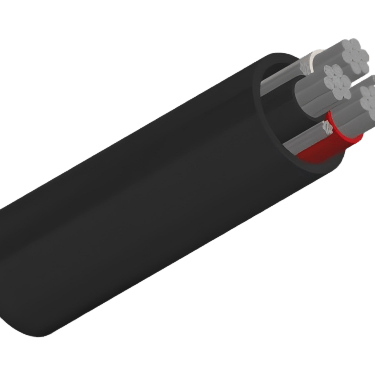
Industrial Mining Applications for Type G-GC Three-Conductor Cables
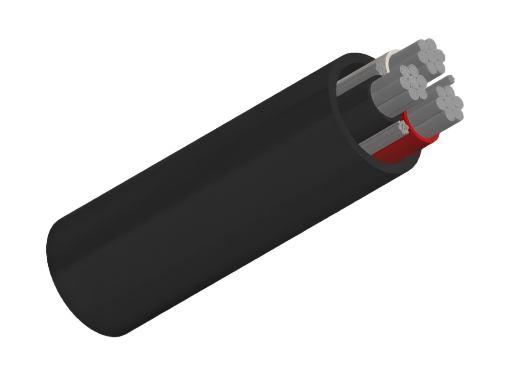
The Type G-GC portable mining cable serves as the electrical lifeline for a wide range of mobile mining equipment that forms the backbone of modern extraction operations. Continuous miners, which cut and load coal or other minerals in a single operation, rely on these cables to deliver consistent power during extended cutting cycles. The cable's flexibility and durability make it ideal for following these machines through confined underground spaces where traditional rigid wiring systems would be impractical.
Roof bolters, essential for maintaining mine safety by installing support bolts in mine ceilings, require portable power solutions that can move with the equipment while maintaining ground continuity. AC shuttle cars and mobile loaders, which transport extracted materials from the mining face to collection points, depend on Type G-GC cables that can withstand the constant flexing and movement inherent in their operation. Cutting machines and various pumping systems for site dewatering and slurry management also benefit from the robust construction of these three-conductor round cables.
What distinguishes Type G-GC cables from standard portable power cables is their specific design for ground continuity requirements. Mining environments present unique electrical hazards, and the integrated ground check conductor allows operators to continuously monitor the integrity of the grounding system. This feature is particularly valuable in wet or humid mining conditions where grounding effectiveness is paramount to worker safety. The cable's construction ensures that mobile equipment maintains proper electrical grounding even during movement, reducing the risk of electrical shock hazards in potentially explosive mining atmospheres.
Type G-GC Cable Construction & Specifications
Core Conductor Materials
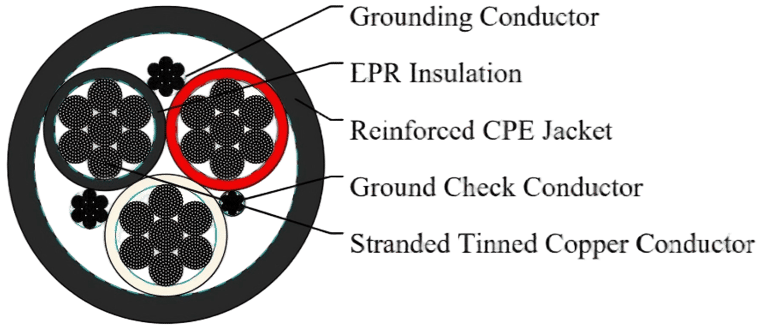
The foundation of any portable power cable lies in its conductor construction, and Type G-GC cables utilize stranded annealed tinned copper conductors to achieve optimal performance. The stranding pattern provides the mechanical flexibility necessary for cables that must bend and flex thousands of times during their service life. Annealing the copper increases its ductility, allowing the conductors to withstand the physical stress of mobile equipment operations without developing fatigue fractures.
The tinning process—coating the copper strands with a thin layer of tin—offers significant advantages in high-vibration mining environments. Tinned copper conductor cable resists corrosion far more effectively than bare copper when exposed to moisture, chemical contaminants, and the sulfur compounds often present in mining atmospheres. This corrosion resistance extends cable service life and maintains low contact resistance at terminations and connections. The tinned copper grounding conductor provides reliable fault current paths even after years of exposure to harsh mining conditions, ensuring that protective devices operate correctly when needed.
Insulation System
The insulation system of Type G-GC mining equipment cables employs Ethylene Propylene Rubber (EPR), a material specifically chosen for its superior electrical and mechanical properties. EPR insulation cable offers excellent dielectric strength at the 2kV voltage rating while maintaining flexibility across a wide temperature range. Unlike some thermoplastic insulations that become brittle at low temperatures or soft at elevated temperatures, EPR maintains consistent mechanical properties throughout the cable's operating temperature range.
The maximum conductor operating temperature of +90°C allows these cables to handle significant electrical loads without insulation degradation. This thermal stability is essential for mining equipment that may operate continuously for extended shifts, generating sustained conductor heating. The EPR formulation used in Type G-GC cables also provides excellent resistance to ozone, weathering, and many chemicals encountered in mining environments.
A distinctive feature of the Type G-GC design is the ground check conductor with yellow polypropylene insulation. This smaller conductor, run alongside the main power conductors, allows operators to verify ground continuity without interrupting equipment operation. The bright yellow insulation provides easy visual identification during installation and maintenance. The tinned copper grounding conductor, separate from the ground check conductor, may include an optional green outer covering for additional visual identification and mechanical protection.
Protective Jacket
The outer protection of Type G-GC cables consists of reinforced heavy-duty and extra-heavy-duty Chlorinated Polyethylene (CPE) jackets. CPE was selected for its exceptional resistance to abrasion, oils, chemicals, and flame propagation. The standard black jacket color not only provides professional appearance but also contains carbon black, which enhances UV resistance for cables used in surface mining applications.
Heavy-duty chlorinated polyethylene mining cable jackets provide sufficient protection for most mining applications, but extra-heavy-duty constructions are available for cables exceeding 2.0 inches in outer diameter or for applications involving extreme physical abuse. These heavier jackets incorporate additional thickness and often include reinforcing fibers between layers to resist tearing and puncture damage.
The CPE formulation used in Type G-GC cables maintains flexibility at low temperatures while providing excellent resistance to hot oil and fuel spills common in mining equipment areas. This combination of properties ensures that the cable jacket protects the internal components effectively throughout the cable's service life, even when subjected to the dragging, impact, and compression forces typical of mobile mining equipment operations.
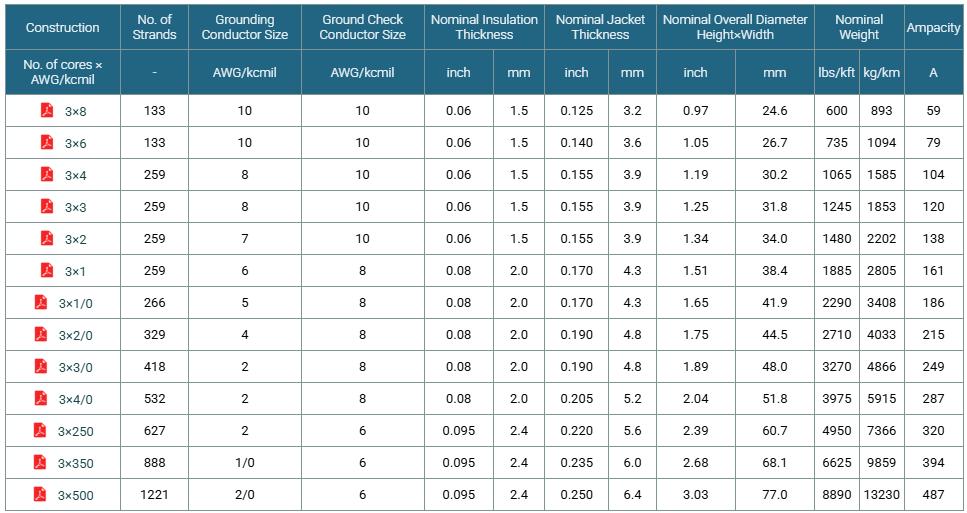
Industry Standards & Regulatory Compliance
International & National Standards
Type G-GC portable power cables are manufactured in accordance with multiple internationally recognized standards that ensure consistent quality, safety, and performance. ICEA S-75-381 mining power cable specifications provide detailed requirements for portable power cable construction, materials, and testing procedures specific to mining applications. Compliance with this standard ensures that cables meet the rigorous mechanical and electrical performance criteria necessary for safe mining operations.
NEMA WC 58 compliant cable certification addresses additional requirements for portable and power feeder cables used in mines. This standard covers conductor sizing, insulation thickness, jacket requirements, and performance testing that validates the cable's suitability for mining environments. Manufacturers must demonstrate compliance through comprehensive testing programs that verify electrical properties, mechanical strength, and environmental resistance.
The conductor materials themselves are manufactured to meet ASTM B 172 standards for annealed copper wire and ASTM B 33 specifications for tinned copper wire. These standards ensure consistent electrical conductivity, mechanical properties, and tinning quality across production batches. For operations in Canada, CAN/CSA C22.2 No. 96 compliance provides assurance that cables meet Canadian electrical safety requirements for mining applications.
These standards matter for mining safety because they establish minimum performance criteria based on decades of industry experience and accident investigation. Cables that meet these specifications have been proven through testing and field use to provide reliable service while minimizing electrical hazards. Regulatory authorities often require compliance with these standards, making them essential for legal operation of mining facilities.


Why Choose Type G-GC Three-Conductor Portable Power Cables
The integrated ground check and grounding conductors reduce installation complexity by providing all necessary electrical paths in a single cable assembly. Rather than running separate grounding conductors alongside power cables, the Type G-GC design incorporates these essential safety components within the cable structure. This integration simplifies cable handling, reduces the number of connections that must be maintained, and ensures that grounding conductors move with the power conductors.
Proven reliability in high-demand mobile mining operations has made Type G-GC cables the standard choice for many mining companies. Field experience across thousands of installations has demonstrated that these cables consistently deliver reliable performance in applications ranging from small-scale underground mines to large surface mining operations. This track record provides confidence that specified cables will perform as expected when properly installed and maintained.
The cost-effective solution combining safety and performance makes Type G-GC cables an economically sound choice. While premium materials and construction techniques result in higher initial cable costs compared to general-purpose portable cables, the total cost of ownership typically favors the Type G-GC design. Reduced downtime from cable failures, lower replacement frequency, and improved worker safety all contribute to favorable economics over the cable's service life.
Compliance with major international mining safety standards eliminates concerns about regulatory acceptance. Mining operations face regular inspections by government safety agencies and insurance underwriters who verify that electrical systems meet applicable codes and standards. Type G-GC cables' compliance with ICEA S-75-381, NEMA WC 58, and other recognized standards streamlines approval processes and demonstrates commitment to safety best practices.
Common Questions About Type G-GC Mining Power Cables
What makes Type G-GC different from standard portable cables?
The ground check mining equipment cable 2kV design incorporates dedicated ground check and grounding conductors that are not typically found in general-purpose portable cables. Standard Type W portable cables, while robust and suitable for many industrial applications, lack the integrated ground monitoring capability that Type G-GC provides. This distinction is critical in mining environments where continuous ground verification is essential for worker safety and where regulatory requirements often mandate such capabilities.
The grounding conductor portable mining cable configuration also uses tinned copper for all conductors, including the grounding paths, whereas some standard portable cables may use bare copper for grounding conductors. The tinning provides superior corrosion resistance in the damp, chemically active environments typical of mining operations.
Is Type G-GC suitable for continuous outdoor use?
The heavy-duty CPE jacket is specifically designed for outdoor mining environments and provides excellent resistance to sunlight, ozone, weathering, and temperature extremes. Unlike some cable jackets that deteriorate rapidly when exposed to UV radiation and weather, CPE formulations used in Type G-GC cables maintain their mechanical properties through years of outdoor exposure.
For continuous outdoor use in surface mining applications, the black jacket color containing carbon black provides enhanced UV resistance. The jacket's resistance to oils, fuels, and chemicals commonly found in mining equipment areas ensures that incidental spills and splashes do not degrade the cable's protective covering. However, cables should still be routed to avoid standing water when possible and should be inspected regularly for mechanical damage that could compromise the jacket's protective function.
Can I customize the jacket material?
Multiple jacket options are available to address specific application requirements. Manufacturers can provide CSP, PCP, NBR, or PVC jackets when specified, though lead times and minimum order quantities may apply for non-standard constructions. The selection of alternative jacket materials should be based on detailed analysis of the application's chemical exposure, temperature range, mechanical stress, and environmental conditions.
When considering customization, it's important to consult with the cable manufacturer's technical team to ensure that the selected materials are compatible with the cable's voltage rating, conductor configuration, and intended use. Some jacket materials may require different installation and handling procedures, and these considerations should be addressed during the specification process. Manufacturers can provide detailed specifications and application guidance to help select the optimal configuration for specific mining operations.
Conclusion
Type G-GC three-conductor portable mining power cables represent a mature, well-proven technology for powering mobile mining equipment safely and reliably. The combination of tinned copper conductors, EPR insulation, integrated ground check capability, and heavy-duty CPE jackets addresses the full spectrum of challenges presented by mining environments. Compliance with industry standards provides assurance of consistent quality and regulatory acceptance.
For mining operations selecting portable power cables, the Type G-GC design offers compelling advantages in safety, reliability, and total cost of ownership. The cable's construction reflects decades of field experience and continuous improvement in materials and manufacturing processes. Whether powering continuous miners in underground coal operations, supporting roof bolters in hard rock mining, or energizing shuttle cars in surface operations, Type G-GC cables deliver the performance that modern mining operations demand.
How to Reach Us
Get in Touch
SiteMap
Product Catalogue
Festoon Cable
Shore Power Cable


Scan to add us on WeChat