
Type G-GC Three-Conductor Flat Portable Power Cable 2kV: Complete Technical Guide for Mining Applications
Type G-GC 2kV three-conductor flat portable power cable for AC mining equipment. EPR insulation, CPE jacket, meets ICEA & NEMA standards. Heavy-duty industrial mining cable.
hongjing.Wang@Feichun
1/12/20267 min read
Introduction to Type G-GC Mining Power Cables
In the demanding environment of underground mining operations, electrical power distribution requires specialized cable solutions that can withstand extreme mechanical stress, moisture exposure, and continuous movement. The Type G-GC three-conductor flat portable cable represents a purpose-engineered solution designed specifically for alternating current (AC) mining equipment operating at 2000 volts.
This heavy-duty portable cable for mining serves as the critical electrical link between power sources and mobile mining machinery, delivering reliable performance in conditions where conventional cables would fail. Understanding the technical specifications, applications, and proper selection criteria for Type G-GC cables ensures both operational safety and equipment longevity in mining environments.
Technical Construction and Specifications
Conductor Design
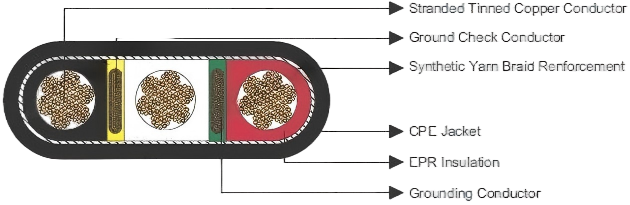
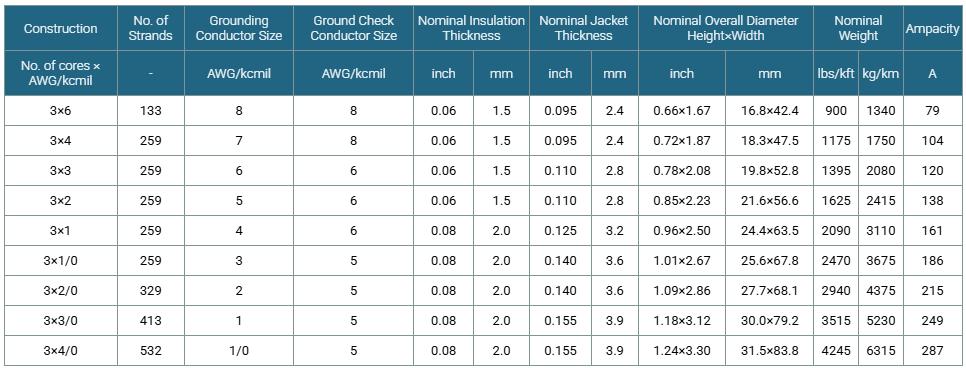
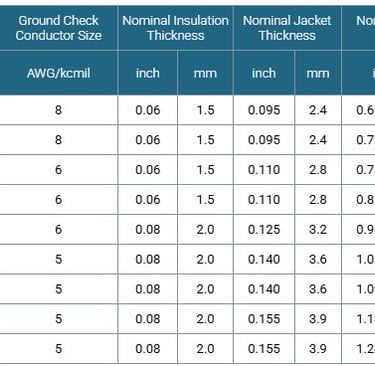
Type G-GC cables utilize flexible stranded copper conductors conforming to Class B stranding per ASTM B8 standards. The conductor construction incorporates fine wire stranding to provide the flexibility necessary for portable applications while maintaining excellent electrical conductivity. Available conductor sizes typically range from 8 AWG through 4/0 AWG, with larger sizes accommodating higher current requirements for powerful mining equipment.
The three-conductor configuration provides both phase conductors and a grounding conductor within a single flat cable assembly, simplifying installation and reducing trip hazards in confined underground workspaces.
EPR Insulation System
Each conductor features Ethylene Propylene Rubber (EPR insulation) rated for 2000 volts. EPR offers superior electrical properties compared to traditional rubber compounds, including:
Excellent dielectric strength maintaining insulation integrity at rated voltage
Resistance to corona degradation in high-voltage applications
Flexibility retention across wide temperature ranges (-40°C to +90°C)
Superior resistance to moisture, ozone, and chemical exposure
Enhanced thermal aging characteristics for extended service life
The EPR insulation mining cable construction provides a continuous temperature rating of +90°C, allowing cables to carry higher current loads without insulation degradation.
CPE Jacket Protection
The outer jacket consists of Chlorinated Polyethylene (CPE), a thermoset compound specifically formulated for mining environments. This industrial power cable jacket delivers exceptional protection against:
Abrasion from contact with rough rock surfaces and equipment
Cuts and gouges from sharp edges
Flame propagation meeting stringent mining safety requirements
Oil, grease, and chemical exposure common in mining operations
Moisture ingress and water immersion
Sunlight and ozone degradation
Alternative jacket materials including Chlorosulfonated Polyethylene (CSPE) may be specified for applications requiring enhanced chemical resistance or specific performance characteristics.
Flat Cable Geometry
The flat configuration of this flat portable power cable provides distinct advantages in mining applications. The rectangular cross-section creates a lower profile that resists rolling and twisting during cable handling. This geometry also distributes weight more evenly, reducing stress concentration points that could lead to premature failure in round cable designs.
Standards and Regulatory Compliance
Type G-GC cables are manufactured in accordance with multiple industry standards ensuring consistent quality and performance:
ICEA S-75-381 (NEMA WC 58): This primary standard governs portable and power feeder cables for use in mines, specifying construction requirements, testing protocols, and performance criteria.
MSHA Approval: Cables meet Mine Safety and Health Administration requirements for use in underground coal mines and other mining operations.
Flame Test Standards: Products pass flame resistance testing per applicable mining safety regulations, preventing fire propagation in underground environments.
Compliance with these standards ensures that Type G-GC cables meet the stringent safety and performance requirements demanded by mining operations worldwide
Mining Applications and Use Cases
Shuttle Car Power Supply
AC mining equipment cable applications include powering shuttle cars that transport excavated material from continuous miners to conveyor systems. The continuous flexing, dragging, and exposure to abrasive coal dust makes this one of the most demanding cable applications. Type G-GC cables' robust construction withstands the constant movement and mechanical stress inherent to shuttle car operations.
Portable Drilling Equipment
Portable drill cable mining applications require cables that can be repeatedly coiled, uncoiled, and dragged across rough surfaces. Roof bolting machines, longwall drills, and exploration drilling equipment all rely on Type G-GC cables to deliver power while maintaining flexibility through thousands of flex cycles.
Cutting and Loading Machinery
Continuous miners, roadheaders, and loading machines utilize Type G-GC cables for mobile power distribution. These cables must withstand vibration, impact, and exposure to water spray used for dust suppression while maintaining electrical integrity.
Conveyor Systems and Material Handlers
While some conveyor systems use fixed installation cables, portable and relocatable conveyors benefit from the durability and flexibility of Type G-GC construction, particularly during mine expansion or reconfiguration.
Mechanical and Thermal Performance Characteristics
Bending Radius Requirements
Proper cable installation requires adherence to minimum bending radius specifications to prevent conductor damage and insulation stress. For Type G-GC cables, the recommended minimum bending radius equals 6 times the overall cable diameter (6×OD). For example, a cable with a 2-inch overall diameter should not be bent around a radius smaller than 12 inches during installation or operation.
Exceeding bending limits can cause:
Conductor strand breakage reducing current-carrying capacity
Insulation compression creating electrical stress points
Premature jacket cracking and moisture ingress
Reduced cable service life
Temperature Performance
The temperature rated mining cable 90°C construction allows continuous operation at elevated temperatures without insulation degradation. This thermal performance enables:
Higher current carrying capacity compared to lower-rated cables
Reliable operation in high-ambient-temperature mine environments
Reduced voltage drop through optimal conductor sizing
Extended cable life through reduced thermal aging
The low-temperature flexibility rating of -40°C ensures cables remain flexible during cold weather surface operations or in mines with refrigerated air systems.
Customization Options and Engineering Solutions
Custom Jacket Mining Cable Options
While CPE jackets represent the standard specification, alternative materials can be specified for unique operating conditions:
CSPE (Hypalon) Jackets: Provide enhanced resistance to acids, alkalis, and petroleum products where chemical exposure exceeds standard conditions.
Reinforced Constructions: Additional reinforcement layers can be incorporated between insulation and jacket for extreme abrasion resistance in particularly harsh applications.
Color Coding: Custom jacket colors facilitate cable identification in complex installations with multiple voltage levels or circuit functions.
Conductor Configuration Variations
While three-conductor flat construction represents the most common configuration, cable manufacturers can engineer variations including:
Different conductor size combinations for unbalanced loads
Additional grounding conductors for enhanced safety
Integrated pilot or control conductors for equipment signaling


How to Select Mining Portable Cable for Your Application
Proper Type G-GC cable specifications selection requires evaluation of several critical parameters:
Current Carrying Capacity
Calculate the maximum continuous current draw of connected equipment, then select a conductor size providing adequate ampacity with appropriate temperature rise. Consider that cable ampacity decreases when cables are coiled on reels or bundled together, restricting heat dissipation.
Voltage Drop Calculations
For extended cable runs, calculate voltage drop to ensure equipment receives adequate voltage for proper operation. Excessive voltage drop reduces motor efficiency and can cause equipment malfunction.
Mechanical Stress Assessment
Evaluate the severity of mechanical stress including:
Frequency of cable movement and repositioning
Exposure to impacts from mobile equipment
Dragging distances and surface conditions
Coiling and uncoiling frequency
Environmental Factors
Consider temperature extremes, moisture exposure, chemical contact, and other environmental conditions that may require enhanced jacket materials or special constructions.
Common Cable Problems and Solutions
Problem: Premature Jacket Wear
Question: Why does the cable jacket show excessive wear after only months of service?
Solution: Premature jacket wear typically results from:
Dragging cables across sharp rock edges rather than using cable handling equipment
Insufficient jacket thickness for the application severity
Operating below minimum bending radius specifications
Chemical exposure exceeding jacket material resistance
Implementing proper cable handling procedures, specifying reinforced jackets for severe conditions, and training personnel on bending radius requirements addresses most premature wear issues.
Problem: Conductor Failure
Question: What causes conductor breaks in portable mining cables?
Solution: Conductor failures generally stem from:
Repeated bending below minimum radius specifications creating fatigue
Overloading cables beyond rated ampacity causing thermal damage
Impact damage compromising conductor integrity
Inadequate cable support allowing excessive strain
Regular cable inspection, proper sizing for application loads, and adherence to installation guidelines prevent most conductor failures.
Problem: Electrical Breakdown
Question: Why do cables experience insulation breakdown before expected service life?
Solution: Premature insulation failure typically results from:
Operating voltage exceeding cable rating
Moisture ingress through damaged jackets
Thermal degradation from persistent overloading
Mechanical damage creating stress points in insulation
Using appropriately rated cables, maintaining jacket integrity through proper handling, and implementing overcurrent protection systems protects against insulation breakdown.
Problem: Connector and Termination Issues
Question: How can we reduce failures at cable terminations and connectors?
Solution: Termination problems often arise from:
Improper connector installation techniques
Inadequate strain relief allowing pull forces on connections
Moisture ingress at termination points
Connector ratings insufficient for application
Following manufacturer termination procedures, using proper strain relief devices, applying environmental sealing at connections, and selecting appropriately rated connectors ensures reliable termination performance.
Advantages of Type G-GC Flat Configuration
The flat geometry provides multiple operational benefits:
Reduced Trip Hazards: The low profile creates less obstruction in walkways and equipment paths compared to round cables of equivalent capacity.
Improved Cable Management: Flat cables stack more efficiently on reels and in cable trays, optimizing storage and deployment.
Enhanced Stability: The wide footprint resists rolling and twisting, maintaining proper orientation during dragging operations.
Better Heat Dissipation: The increased surface area relative to cross-sectional area improves heat transfer, enhancing current-carrying capacity.
Maintenance and Inspection Protocols
Implementing regular inspection programs extends cable service life and prevents unexpected failures:
Visual Inspection: Examine jackets for cuts, abrasions, and deformation before each shift
Electrical Testing: Perform periodic insulation resistance testing to identify degradation
Connector Inspection: Check terminations for corrosion, looseness, and damage
Documentation: Maintain cable history records tracking installations, repairs, and test results
Cables showing significant damage should be removed from service immediately and either repaired by qualified personnel or replaced.
Conclusion
The Type G-GC 2kV mining power cable represents a specialized engineering solution addressing the unique challenges of portable power distribution in mining environments. Through robust EPR insulation, protective CPE jackets, and flat configuration optimized for mining applications, these cables deliver reliable performance in conditions that would quickly destroy conventional power cables.
Proper cable selection based on thorough application analysis, adherence to installation best practices, and implementation of regular maintenance protocols ensures safe, reliable electrical power delivery to critical mining equipment. Understanding the technical specifications, performance characteristics, and proper application of Type G-GC cables enables mining operations to maximize equipment uptime while maintaining the highest safety standards.
Whether powering shuttle cars, drill rigs, cutting machines, or conveyor systems, Type G-GC three-conductor flat portable cables provide the durability, flexibility, and electrical performance demanded by modern mining operations.
How to Reach Us
Get in Touch
SiteMap
Product Catalogue
Festoon Cable
Shore Power Cable


Scan to add us on WeChat