
Type G-GC Three-Conductor Mining Power Cable 2kV: Comprehensive Guide to Flat & Round Portable Cables
Discover Type G-GC mining power cables 2kV—flat and round portable options for AC shuttle cars, drills, and loading machines. EPR insulation, CPE jacket, ICEA/NEMA certified. Heavy-duty portable power cable for underground mining equipment.
hongjing.Wang@Feichun
11/14/202511 min read
In the demanding world of underground mining operations, reliable power distribution is not just a convenience—it's a critical safety requirement. Type G-GC portable mining power cables represent the industry standard for delivering electrical power to mobile AC mining equipment. These specialized cables are engineered to withstand the harsh conditions found in mining environments, where abrasion, impact, moisture, and continuous flexing can quickly degrade inferior power distribution systems.
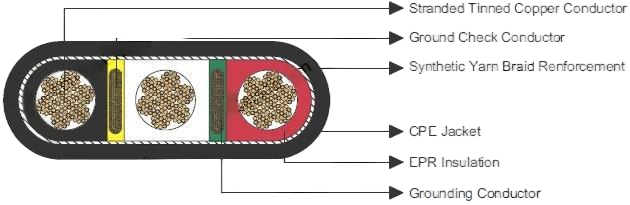
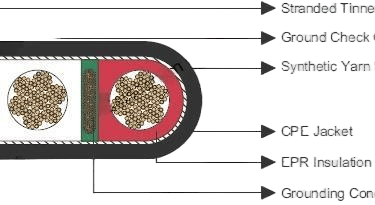
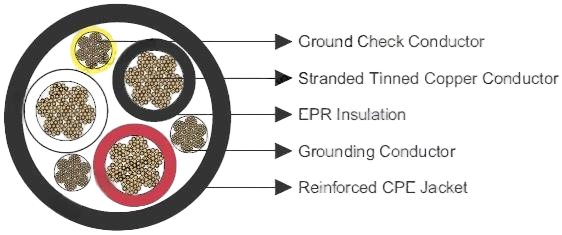
Type G-GC three-conductor mining cables are available in two distinct configurations: flat parallel and round portable designs. Both configurations share the same robust construction principles while offering unique advantages suited to different operational requirements. The flat parallel mining power cable advantages include space-efficient design and reduced tangling, while round portable mining cable benefits encompass uniform weight distribution and enhanced flexibility in confined spaces.
These cables serve as the lifeline for AC mining equipment including shuttle cars, drills, cutting machines, and loading machines. Their 2kV voltage rating provides sufficient capacity for heavy-duty applications while maintaining safety margins required by mining industry regulations. The combination of superior insulation materials, reinforced construction, and compliance with multiple industry standards makes Type G-GC cables the preferred choice for mining operations worldwide.
Introduction to Type G-GC Mining Power Cable 2kV
Product Specifications & Standards Compliance
The Type G-GC three-conductor flat portable power cable 2kV and its round counterpart are designed to meet or exceed the most stringent industry standards. Compliance with ICEA S-75-381/NEMA WC 58 standards ensures that these mining equipment cables deliver consistent performance across various operating conditions. These standards specify requirements for construction, materials, testing procedures, and performance characteristics that directly impact cable reliability and safety.
ASTM B 172 specifications govern the conductor materials, ensuring that only high-quality stranded annealed tinned copper conductors are used. This specification guarantees optimal conductivity and corrosion resistance—essential properties for underground mining equipment power cable applications where moisture and chemical exposure are common. ASTM B 33 standards further define the tinning process, which provides an additional layer of protection against oxidation and enhances the mechanical properties of conductor strands.
CAN/CSA C22.2 No. 96 approval demonstrates that these portable mining cables meet Canadian safety standards, expanding their applicability across North American mining operations. This multi-standard certification approach ensures that operators can confidently deploy Type G-GC cables regardless of jurisdictional requirements. The mining cable safety and performance standards aren't merely bureaucratic requirements—they represent decades of accumulated knowledge about failure modes, safety risks, and operational best practices in mining environments.
Construction & Material Composition
Conductor Design and Materials
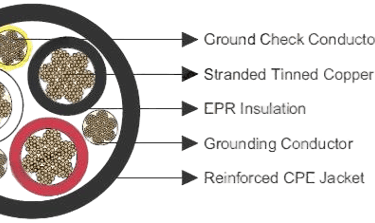
At the heart of every Type G-GC mining power cable lies a stranded annealed tinned copper conductor. The stranding configuration provides flexibility necessary for repeated bending cycles experienced during mining equipment operation. Annealing—a heat treatment process—reduces work hardening and increases the conductor's ability to withstand mechanical stress without fracturing. Tinning adds a protective tin coating that prevents copper oxidation, ensures consistent electrical contact, and facilitates termination procedures.
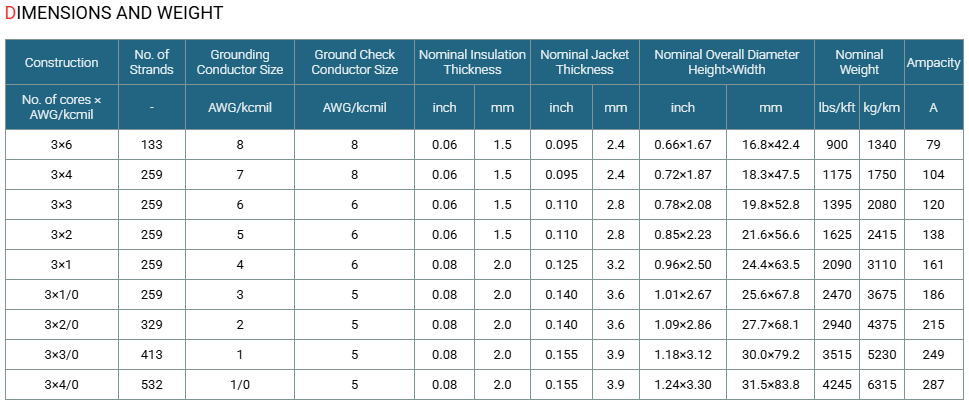
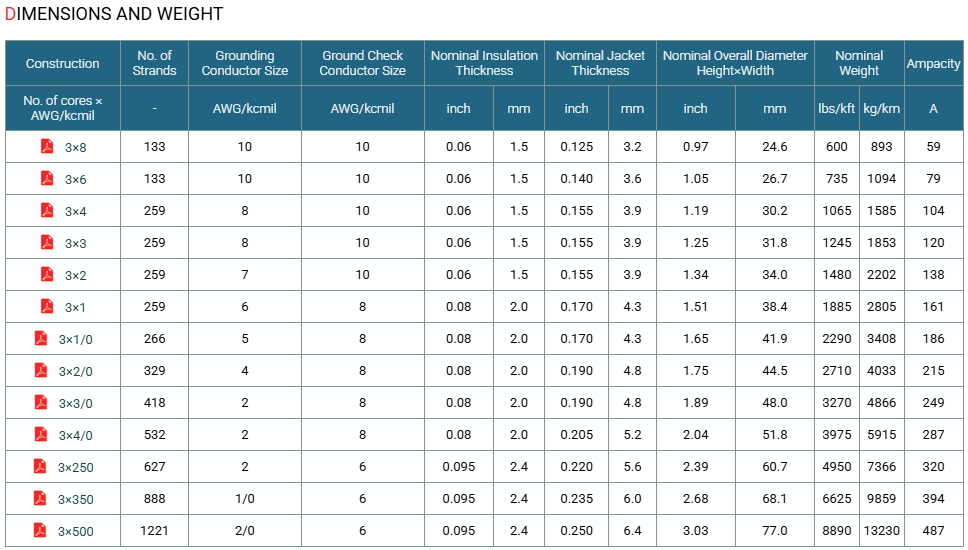
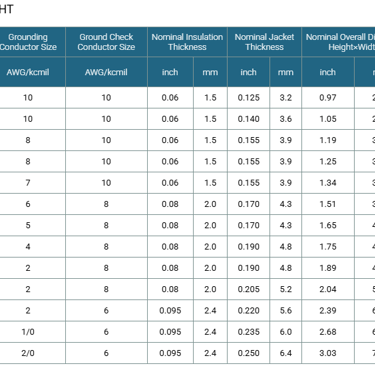
The three-conductor mining cable configuration includes phase conductors, a ground check conductor, and a grounding conductor. This arrangement provides both operational power delivery and comprehensive safety monitoring. The conductor gauge selection depends on the current-carrying requirements of the specific application, with larger gauges specified for mining shuttle car power cable and other high-demand equipment.
Insulation System: EPR Performance
Ethylene Propylene Rubber (EPR) insulation cable technology represents a significant advancement over older insulation materials. EPR insulation offers exceptional heat resistance properties, maintaining its dielectric strength even under sustained overload conditions. Unlike PVC insulation, which can become brittle in cold environments, EPR insulation remains flexible across a wide temperature range—a crucial characteristic for mining drill power cable specifications that must function reliably in varying underground conditions.
The EPR insulation system provides excellent resistance to moisture, ozone, and many chemicals commonly encountered in mining environments. This resistance translates to longer service life and reduced maintenance costs compared to cables with less robust insulation materials. The insulation thickness is precisely calculated to withstand the 2kV mining cable voltage rating with appropriate safety factors, ensuring reliable operation even under adverse conditions.
Ground Check and Grounding Conductors
Safety in mining operations depends on effective grounding systems and continuous ground integrity monitoring. The ground check conductor features yellow insulation for easy identification, allowing maintenance personnel to perform routine ground continuity tests without cable disassembly. This monitoring capability enables proactive detection of ground path degradation before it creates hazardous conditions.
The grounding conductor, with its optional green outer covering, provides the low-impedance path necessary for safe fault current dissipation. In the event of insulation failure or equipment fault, this conductor ensures that protective devices operate quickly, minimizing equipment damage and personnel risk. The color-coded conductor identification system simplifies installation, reduces connection errors, and facilitates troubleshooting.
Reinforcement and Jacket Construction
Between the conductor assembly and outer jacket, a synthetic yarn reinforcement layer enhances mechanical strength and provides a cushioning effect that distributes stress across the cable structure. This reinforcement prevents the outer jacket from directly contacting sharp conductor edges during flexing, extending jacket life and maintaining cable integrity.
The heavy-duty mining power cable 2kV features a chlorinated polyethylene (CPE) jacket that delivers outstanding abrasion and impact resistance. CPE jacket cable technology combines the durability of thermoset rubber with the processing advantages of thermoplastic materials. The result is a tough, weather-resistant outer covering that withstands the punishing conditions found in underground mining operations. For larger conductor sizes, extra-heavy-duty mining cable jacket specifications provide additional thickness for enhanced protection against mechanical damage.


Applications in Mining Operations
AC Shuttle Cars
AC shuttle cars represent one of the most demanding applications for Type G-GC three-conductor round portable power cable 2kV. These vehicles transport coal or ore from the mining face to conveyor systems, requiring continuous power delivery while navigating rough underground terrain. The cable must flex repeatedly as the shuttle car moves, resist abrasion from contact with rough surfaces, and maintain electrical integrity despite being dragged across the mine floor.
The portable power delivery system for shuttle cars typically employs either flat or round cable configurations depending on the specific equipment design. Flat cables offer advantages in managing cable deployment and retrieval systems, while round cables may provide better performance in applications involving significant twisting or multi-directional movement.
Mining Drills and Cutting Machines
Mining drills impose high-demand power requirements with significant starting currents and continuous operation under load. The Type G-GC mining drill power cable must deliver stable power while enduring vibration, impact from falling debris, and exposure to drilling fluids. The EPR insulation's excellent electrical properties ensure consistent performance even when cables are subjected to these challenging conditions.
Cutting machines, used to excavate coal or rock faces, require reliable power distribution to maintain productivity. Cable failures in cutting machine applications result not only in equipment downtime but also in production delays that can impact entire mining operations. The robust construction of Type G-GC cables minimizes these risks, providing the reliability cutting operations demand.
Loading Machines
Loading machines require continuous operation support through cables that can withstand constant movement and mechanical stress. These machines often operate in confined spaces where cables must bend sharply and may be pinched between equipment and tunnel walls. The underground mining equipment compatibility of Type G-GC cables encompasses these demanding applications, with construction features specifically designed to prevent damage in such scenarios.
Design Advantages: Flat Parallel vs. Round Portable Cables
Flat Parallel Configuration Benefits
The Type G-GC three-conductor flat portable power cable 2kV offers several distinct advantages in specific mining applications. The space-efficient design allows cables to lie flat against mine floors, reducing tripping hazards and minimizing the vertical clearance required for cable routing. This characteristic proves particularly valuable in low-seam mining operations where overhead clearance is limited.
Easier coiling and storage represents another significant benefit. Flat cables naturally form neat, stable coils that resist tangling and require less storage space than equivalent round cables. This advantage extends to cable deployment systems, where flat cables feed more predictably from reels or cable handlers. Reduced tangling in underground environments translates directly to operational efficiency—miners spend less time managing cable snarls and more time on productive activities.
Round Portable Configuration Advantages
The Type G-GC three-conductor round portable power cable 2kV provides uniform weight distribution that facilitates handling and reduces localized stress points. This balanced construction helps prevent premature fatigue in applications involving frequent cable movement or repositioning. The traditional compatibility with existing equipment makes round cables the preferred choice when upgrading power systems in operations using legacy cable handling infrastructure.
Enhanced flexibility in tight spaces stems from the round cable's ability to bend equally in all directions. While flat cables excel at bending in their narrow dimension, they resist twisting. Round cables accommodate both bending and twisting, making them ideal for applications where cable paths involve complex three-dimensional routing or where equipment movement creates torsional stress on the cable.


Customization & Optional Features
Alternative Jacket Materials
While CPE represents the standard jacket material for Type G-GC cables, alternative materials address specific operational requirements. CSP (chlorosulfonated polyethylene) jackets provide enhanced oil and chemical resistance, making them suitable for mining environments where hydraulic fluid exposure is common. PCP (polychloroprene) jackets offer excellent flame resistance and weathering properties, though they may not match CPE's abrasion resistance.
NBR (nitrile butadiene rubber) jackets deliver superior oil resistance and flexibility in cold temperatures, while PVC (polyvinyl chloride) offers an economical alternative for less demanding applications. The selection among these chlorinated polyethylene mining cable alternatives depends on specific environmental factors, budget constraints, and performance priorities.
Two-Layer Jacket Construction
For extreme mining conditions, a two-layer reinforced mining cable option provides enhanced durability through a unique construction approach. The inner jacket layer bonds to the cable core, providing primary environmental protection. A reinforcing fiber layer adds mechanical strength, and the outer jacket completes the assembly with maximum abrasion and impact resistance. This construction extends cable lifespan in applications involving severe mechanical abuse, such as continuous-miner operations or high-traffic equipment corridors.
The superior impact and abrasion resistance of two-layer construction justifies the additional cost in critical applications where cable failure consequences extend beyond simple replacement expenses. Mining operations can specify custom mining power cable solutions incorporating two-layer jackets for particular cable routes or equipment types known to generate excessive cable wear.
Performance Characteristics & Benefits
The 2kV mining cable voltage handling capability provides adequate headroom for typical 600V and 1000V mining equipment while accommodating voltage transients and surges without insulation stress. This rating ensures reliable operation across the full range of AC mining cable applications commonly encountered in underground operations.
Temperature range and operational stability distinguish Type G-GC cables from inferior alternatives. The combination of EPR insulation and CPE jacket maintains performance across typical underground temperature variations, from near-freezing conditions in some deep mines to elevated temperatures near heat-generating equipment. The cables retain flexibility in cold environments while resisting degradation in warm conditions.
Mechanical strength and flexibility represent a carefully balanced design optimization. Insufficient flexibility leads to cable damage during handling and operation, while inadequate mechanical strength results in premature failure under load. Type G-GC cables achieve this balance through proper conductor stranding, appropriate insulation thickness, and optimized jacket design.
Chemical and abrasion resistance in mining environments directly impacts cable service life and operational reliability. Mine atmospheres may contain corrosive gases, while cable surfaces contact coal dust, rock particles, hydraulic fluids, and cleaning agents. The materials selected for Type G-GC cable construction resist degradation from these exposures, maintaining electrical and mechanical properties throughout the cable's service life.
Common Cable Problems and Solutions
Issue: Premature Jacket Abrasion
Problem: Cables routed across rough mine floors or sharp equipment edges exhibit accelerated jacket wear, exposing reinforcement layers or insulation.
Solution: Implement protective measures including cable trays for stationary routing, grooved floor channels in high-traffic areas, and installation of abrasion-resistant sleeves at known wear points. For severe applications, specify extra-heavy-duty CPE jacket cables or two-layer jacket construction. Regular inspection schedules should identify developing wear patterns before jacket penetration occurs.
Issue: Ground Check Conductor Failure
Problem: Ground continuity monitoring systems indicate open circuits in the ground check conductor, preventing equipment operation even though main conductors remain functional.
Solution: Ground check conductor failures typically result from improper termination practices or mechanical damage during cable handling. Ensure terminations use appropriate strain relief that prevents conductor pull-out under tension. Train personnel on proper cable handling techniques that avoid sharp bends near terminations. Consider specifying increased ground check conductor gauge for applications involving frequent cable movement.
Issue: Cable Stiffness in Cold Temperatures
Problem: Cables become difficult to handle and route during cold weather or in refrigerated mining environments, increasing installation time and creating safety hazards.
Solution: While EPR insulation maintains flexibility across wide temperature ranges, CPE jackets may stiffen in extreme cold. For operations in consistently cold environments, specify NBR jacket alternatives that maintain flexibility at lower temperatures. Alternatively, implement cable pre-warming procedures before installation and use insulated cable storage areas to maintain workable temperatures.
Issue: Inconsistent Reeling Behavior
Problem: Flat cables twist or bunch during reeling operations, causing deployment difficulties and potential cable damage.
Solution: Flat parallel mining power cable advantages include reduced tangling, but improper reel design can create handling problems. Ensure cable reels feature appropriate flanges to guide flat cables during winding. Install guide rollers that maintain proper cable orientation throughout the deployment path. For applications with significant twisting, consider round cable configurations that better accommodate torsional stress.
Issue: Electrical Failure Under High Load
Problem: Cables exhibit overheating, insulation degradation, or complete failure when powering high-current equipment.
Solution: Verify that cable conductor gauge matches the continuous current requirements of connected equipment, including appropriate derating factors for ambient temperature and bundling conditions. Inspect terminations for proper contact pressure—inadequate termination crimping creates high-resistance connections that generate heat. Consider upgrading to larger conductor sizes if load calculations reveal insufficient capacity in existing cables.
Installation & Safety Considerations
Proper handling and storage practices significantly impact cable service life. Store cables in clean, dry environments away from sharp objects, chemicals, and direct sunlight. Support cable reels to prevent flat spots from developing during long-term storage. Before installation, inspect cables for shipping damage, jacket cuts, or deformation.
Installation guidelines for mining equipment emphasize proper strain relief at terminations, adequate support along cable runs, and protection from mechanical damage. Avoid exceeding manufacturer-specified minimum bend radius, which can damage conductor strands or insulation. Use appropriate pulling tensions during installation to prevent conductor stretch or jacket damage.
The color-coded conductor identification system facilitates correct phase connections and simplifies troubleshooting. Train all personnel on color code conventions to prevent connection errors that could create shock hazards or equipment damage. Document cable routing and conductor assignments to support future maintenance activities.
Grounding and ground-check monitoring procedures form the foundation of mining cable safety. Perform ground continuity tests before each shift, document test results, and investigate any anomalies immediately. Establish clear protocols for removing damaged cables from service and ensure replacement cables meet the same specifications as original installations.
Why Choose Type G-GC Mining Power Cables
Industry-leading standards compliance ensures that Type G-GC cables meet comprehensive safety, performance, and quality requirements. The ICEA NEMA compliant mining cable certification process involves rigorous testing and ongoing quality assurance that protects mining operations from inferior products.
Superior durability in challenging mining environments stems from careful material selection and robust construction techniques. While initial costs may exceed budget alternatives, the cost-effective solution for mining operations emerges when considering total ownership costs including installation, maintenance, and replacement expenses.
Flexible customization options allow mining operations to optimize cable specifications for particular applications. Whether specifying alternative jacket materials, custom conductor configurations, or special marking requirements, manufacturers can accommodate diverse operational needs.
Proven reliability with AC mining equipment comes from decades of field experience and continuous product improvement. Type G-GC cables power mining operations worldwide, demonstrating consistent performance across varied geological conditions, mining methods, and equipment types.
Conclusion
Type G-GC three-conductor mining power cables represent the culmination of extensive engineering development focused on meeting the unique demands of underground mining operations. Whether specified in flat parallel or round portable configurations, these cables deliver reliable power distribution to critical AC mining equipment while withstanding the mechanical abuse, environmental challenges, and safety requirements inherent to mining applications.
The combination of stranded annealed tinned copper conductors, EPR insulation, synthetic reinforcement, and heavy-duty CPE jackets creates a cable assembly capable of extended service in conditions that quickly destroy inferior alternatives. Compliance with ICEA, NEMA, ASTM, and CSA standards provides assurance that these cables meet rigorous industry requirements for safety and performance.
By understanding the construction features, application requirements, and available customization options, mining operations can select optimal cable configurations that maximize equipment uptime, enhance personnel safety, and deliver long-term value. Proper installation practices, regular maintenance, and attention to operating conditions ensure that Type G-GC mining power cables continue providing reliable service throughout their design life, supporting the productivity and safety objectives essential to successful mining operations.
How to Reach Us
Get in Touch
SiteMap
Product Catalogue
Festoon Cable
Shore Power Cable


Scan to add us on WeChat