
Type G Three-Conductor Round Portable Power Cable 2kV: Comprehensive Guide for Mining Applications
Type G three-conductor round portable power cable rated 2kV for mobile mining equipment. EPR insulation, heavy-duty CPE jacket. ICEA S-75-381 standard. 59–487A ampacity range.
hongjing.Wang@Feichun
1/8/20268 min read
Mining operations demand robust electrical infrastructure capable of withstanding the harshest industrial environments. Among the critical components ensuring operational continuity and worker safety, Type G three-conductor round portable power cable stands as an essential solution for mobile mining equipment. Rated at 2000V and engineered to meet ICEA S-75-381 and NEMA WC 58 standards, these cables deliver reliable power distribution while maintaining exceptional flexibility and durability in demanding underground and surface mining conditions.
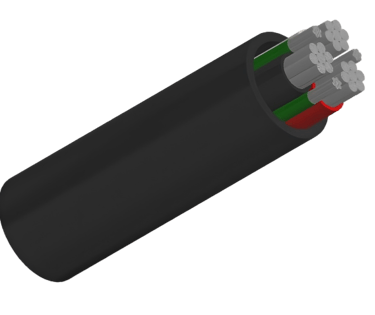
Understanding Type G Portable Power Cable Construction
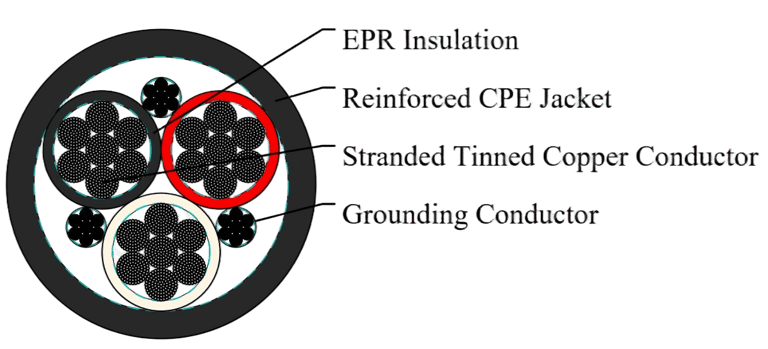
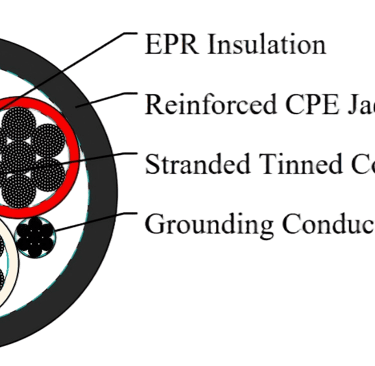
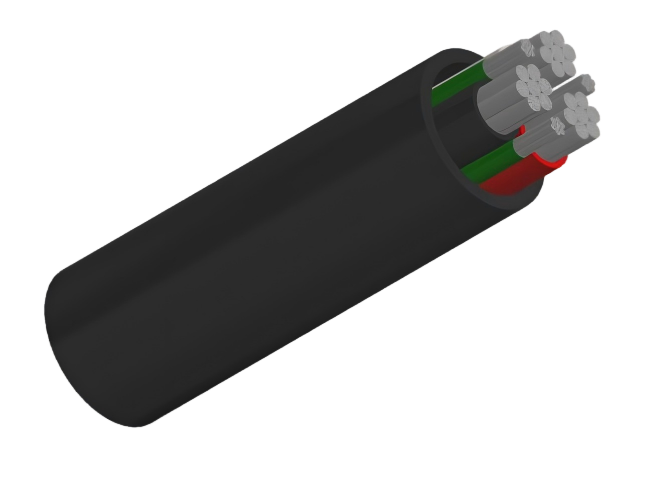
Type G portable power cables feature a sophisticated construction designed specifically for heavy-duty mining applications. The cable consists of three primary conductors manufactured from stranded annealed tinned copper, with strand counts varying by conductor size—from 133 strands in 8 AWG configurations to 1,221 strands in 500 kcmil variants. This rope-lay stranding technique maximizes flexibility while maintaining electrical conductivity, essential characteristics for equipment that requires constant repositioning during mining operations.
The tinned copper conductors serve multiple purposes beyond basic electrical conduction. The tin coating prevents conductor deterioration in corrosive mining environments and ensures optimal compatibility with Ethylene Propylene Rubber (EPR) insulation. This combination has proven effective in preventing premature cable failure, a critical consideration given the high cost of production downtime in mining operations.
Each conductor receives EPR insulation, a material selection that distinguishes Type G cables from alternatives using PVC or XLPE insulation. EPR demonstrates superior performance across multiple parameters: it maintains flexibility across a temperature range from -55°C to 150°C, resists ozone degradation, and provides excellent moisture and chemical resistance. These properties translate to exceptional service life—often exceeding 40 years in demanding applications—compared to 20-30 years for conventional insulation materials.
The cable assembly incorporates a dedicated grounding conductor, typically ranging from AWG 10 to 2/0 depending on the main conductor size. This grounding conductor, also constructed from tinned copper and optionally covered with green identification, serves as a critical safety feature for operator protection. The grounding system enables ground check functionality, allowing equipment operators to verify proper grounding before energizing mobile machinery.
Completing the construction, a heavy-duty or extra-heavy-duty Chlorinated Polyethylene (CPE) jacket encases the entire cable assembly. The black CPE jacket provides mechanical protection against abrasion, impact, cutting, and crushing forces common in mining environments. Cables exceeding 2.0 inches in outer diameter require extra-heavy-duty jackets to ensure adequate protection. Alternative jacket materials including CSP, PCP, NBR, and PVC are available for specific environmental requirements, with two-layer reinforced jacket options for extreme-duty applications.
Mining Applications and Equipment Compatibility
Type G three-conductor cables power a diverse range of mobile mining equipment across both underground and surface operations. In underground coal mines, these cables commonly supply continuous miners—machines that simultaneously cut and load coal from the mining face. The cables must accommodate constant equipment movement while maintaining power delivery and grounding integrity, requirements that Type G construction fulfills through its flexible design and rugged jacket protection.
Cutting and loading machines in metal mines present similar demands, requiring cables that can withstand repeated bending cycles without insulation damage or conductor fatigue. The minimum bending radius of 6 times the cable's outer diameter ensures operators can maneuver equipment without exceeding mechanical stress limits. This specification prevents insulation cracking and conductor breakage that could lead to equipment shutdown or safety hazards.
Conveyor systems, both fixed and portable variants, rely on Type G cables for power distribution in locations where rigid conduit installation proves impractical. The cable's portability enables rapid system reconfiguration as mining operations advance to new areas. Similarly, drilling equipment, boring machines, and pump systems benefit from the cable's combination of electrical capacity and mechanical durability.
Shuttle cars and material transport equipment operate in particularly challenging conditions, frequently dragging cables across uneven surfaces while navigating tight spaces. The heavy-duty CPE jacket resists abrasion and cutting from contact with rock, metal surfaces, and other equipment. The cable's flexibility prevents kinking during sharp turns, maintaining power continuity during critical transport operations.
Both DC and AC mining equipment can utilize Type G cables, though applications differ based on voltage requirements and grounding needs. AC equipment particularly benefits from the integrated grounding conductor, which provides essential operator protection against induced voltages and fault currents. For applications requiring additional safety monitoring, Type G-GC variants incorporate a ground check conductor that continuously monitors grounding system integrity.
Technical Specifications and Ampacity Ratings
Type G portable power cables conform to multiple industry standards ensuring consistent performance and safety compliance. ICEA S-75-381 and NEMA WC 58 establish construction requirements, while ASTM B 172 and ASTM B 33 specify copper conductor characteristics. Canadian mining operations reference CAN/CSA C22.2 No. 96, and UL 1650 compliance addresses North American market requirements.
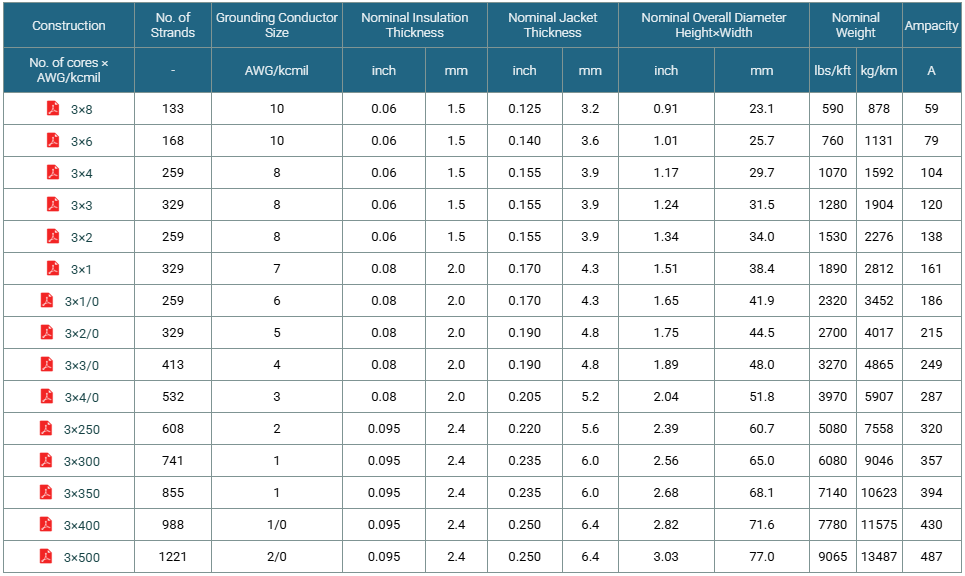
The cables operate at a maximum voltage of 2000V with conductor temperatures reaching 90°C during normal operation. Ampacity ratings vary by conductor size, establishing current-carrying capacity under standardized conditions of 90°C conductor temperature and 40°C ambient air temperature. The smallest configuration, 3×8 AWG, carries 59 amperes, while the largest standard offering, 3×500 kcmil, delivers 487 amperes of continuous current capacity.
Mid-range configurations provide intermediate capacity: 3×2 AWG handles 138A, 3×1/0 AWG carries 186A, 3×4/0 AWG delivers 287A, and 3×350 kcmil provides 394A. These ratings enable proper cable selection based on connected equipment power requirements, with appropriate derating factors applied for installation conditions differing from standard test parameters.
Physical dimensions and weight vary proportionally with conductor size. A 3×8 AWG cable typically measures approximately 0.8 inches in outer diameter and weighs around 275 pounds per 1,000 feet, while a 3×500 kcmil configuration approaches 2.5 inches in diameter and weighs approximately 3,200 pounds per 1,000 feet. These specifications inform logistical planning for cable transportation, storage, and handling during installation.
Addressing Common Cable Challenges in Mining Operations
Mining environments present numerous challenges that can compromise cable performance and longevity. Understanding these issues and implementing appropriate solutions ensures reliable operation and maximizes return on investment.
Problem: Premature insulation degradation in wet underground environments
Solution: EPR insulation in Type G cables specifically addresses moisture exposure concerns. Unlike PVC, which can absorb water and degrade, EPR maintains its electrical and mechanical properties when continuously exposed to moisture. The CPE jacket provides an additional barrier, preventing water ingress at the cable surface. For applications involving frequent submersion or extremely wet conditions, consider Type SHD-GC cables with additional shielding for voltages above 2kV.
Problem: Cable damage from dragging and abrasion during equipment movement
Solution: Proper cable handling procedures significantly extend service life. Implement cable reeling systems that minimize ground contact during equipment operation. When floor contact is unavoidable, establish designated cable routes free from sharp rocks and metal debris. The extra-heavy-duty CPE jacket option provides enhanced abrasion resistance for high-wear applications. Regular inspection schedules should identify surface damage before it penetrates to insulation layers.
Problem: Insulation failure at tight bends near equipment connections
Solution: Strict adherence to the minimum bending radius of 6 times the outer diameter prevents mechanical stress concentration. Install strain relief devices at equipment connection points to distribute bending forces over larger areas. Training operators to recognize improper cable routing prevents repeated stress cycles that accelerate insulation fatigue. During storage, cables should be coiled with diameter appropriate to their size, avoiding tight coils that create permanent set or insulation damage.
Problem: Grounding system failures compromising operator safety
Solution: Regular ground continuity testing verifies the integrity of the grounding conductor throughout its length. Visual inspection should identify any green covering damage on the ground conductor. For AC equipment applications, Type G-GC cables with dedicated ground check conductors provide continuous monitoring capability, alerting operators to grounding system degradation before dangerous conditions develop.
Problem: Thermal overload reducing cable lifespan
Solution: Proper ampacity selection based on actual connected load and installation conditions prevents chronic overheating. Consider ambient temperature variations—summer surface operations may experience 50°C ambient temperatures requiring significant derating from standard 40°C ratings. Bundle configurations where multiple cables run together require additional derating to account for reduced heat dissipation. Installing temperature monitoring at critical connection points provides early warning of thermal issues.
Type G Cable Advantages in Mining Operations
The economic justification for Type G three-conductor portable power cables extends beyond initial purchase cost to encompass total lifecycle value. Reduced equipment downtime from cable failures directly impacts production metrics—each hour of unplanned downtime in mining operations typically costs thousands to tens of thousands of dollars in lost production, making reliability a paramount concern.
The wide temperature operating range ensures consistent performance across seasonal variations and geographical locations. Surface mining operations in northern climates experience winter temperatures well below -40°C, while underground operations in deep mines may encounter elevated temperatures approaching 50°C. Type G cables maintain flexibility and electrical properties across this entire spectrum, eliminating seasonal cable changes and associated labor costs.
Compliance with ICEA, NEMA, and CSA standards ensures regulatory acceptance across North American mining operations. This standardization simplifies procurement, enables competitive bidding, and ensures replacement cables meet identical performance specifications. The tinned copper conductors and EPR insulation represent proven technology with decades of field performance data, reducing technical risk compared to newer, less-proven cable designs.
The rugged construction withstands harsh mining environments including exposure to chemicals, oils, and solvents common in mining operations. The CPE jacket resists degradation from diesel fuel, hydraulic fluid, and lubricants that contact cables during equipment maintenance and operation. This chemical resistance prevents premature jacket failure that could expose insulation to moisture and mechanical damage.
Selecting the Right Type G Configuration
Proper cable selection requires careful consideration of application-specific parameters. Begin by determining maximum continuous current requirements for connected equipment, adding appropriate safety margins for starting currents and future load growth. Cross-reference this current requirement with ampacity tables, applying derating factors for actual installation conditions including ambient temperature, bundling with other cables, and elevation above sea level.
Voltage drop calculations ensure adequate voltage reaches equipment terminals under full load conditions. Excessive voltage drop reduces equipment performance and can cause motor overheating. For long cable runs, larger conductor sizes may be necessary to maintain acceptable voltage regulation even when ampacity requirements could be met with smaller conductors.
The grounding conductor size is predetermined by ICEA standards based on the main conductor size, ensuring adequate fault current capacity. Verify that the standardized grounding conductor meets specific application requirements, particularly for equipment with high ground fault currents or installations requiring enhanced grounding system performance.
For applications requiring maximum service life in extreme conditions, consider two-layer reinforced jacket construction. This option provides additional mechanical protection and can double jacket service life in particularly abrasive environments. The incremental cost is often justified by reduced replacement frequency and associated installation labor.
Conclusion
Type G three-conductor round portable power cable rated at 2kV represents a mature, reliable solution for mobile mining equipment applications. The combination of EPR insulation, tinned copper conductors, integrated grounding, and heavy-duty CPE jacket addresses the multiple challenges present in mining environments—from mechanical abuse and chemical exposure to temperature extremes and moisture. Compliance with ICEA S-75-381 and related standards ensures consistent quality and regulatory acceptance, while the proven track record of 40+ year service life in demanding applications demonstrates long-term value. Proper selection based on ampacity requirements, careful installation following minimum bend radius guidelines, and regular maintenance inspection programs maximize return on investment while ensuring operator safety and equipment reliability. As mining operations continue advancing into deeper, more challenging environments, Type G portable power cables remain an essential component of safe, efficient mobile equipment operation.
How to Reach Us
Get in Touch
SiteMap
Product Catalogue
Festoon Cable
Shore Power Cable


Scan to add us on WeChat