
Type SHD-GC Three-Conductor Round Portable Power Cable 2kV with TPU Jacket: The Ultimate Heavy-Duty Mining Solution
Type SHD-GC three-conductor round portable power cable 2kV with TPU jacket and EPR insulation. Heavy-duty 90°C rated for mining shovels, dredges, and draglines. ICEA/ASTM certified. Ground check conductor for safety monitoring.
hongjing.Wang@Feichun
1/15/202610 min read
Introduction:
In the demanding world of industrial mining operations, electrical infrastructure must withstand extreme conditions while maintaining unwavering reliability. The Type SHD-GC three-conductor round portable power cable represents the pinnacle of mining cable engineering, specifically designed for heavy-duty applications where conventional cables simply cannot meet performance requirements. This 2kV rated cable serves as the electrical lifeline for critical mining equipment including draglines, electric shovels, dredging machinery, and high-capacity power feeders.
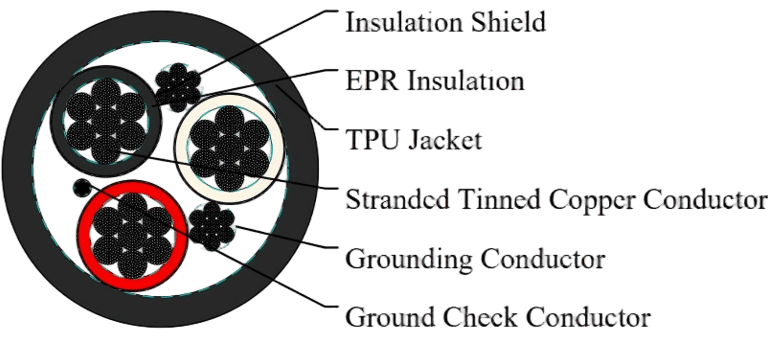
What distinguishes the SHD-GC cable 2kV specifications from standard mining cables is its comprehensive approach to safety, durability, and operational excellence. The cable features ethylene propylene rubber (EPR) insulation rated for continuous 90°C operation, a thermoplastic polyurethane (TPU) jacket engineered for superior abrasion resistance, and—most critically—an integrated ground check conductor that provides real-time cable integrity monitoring. This combination of advanced materials and intelligent design creates a power transmission solution capable of operating reliably in the harshest mining environments for extended service periods.
The heavy duty TPU jacket mining cable construction addresses the most common failure modes experienced in mining applications: mechanical damage from dragging across rough terrain, chemical degradation from exposure to oils and solvents, and thermal stress from heavy load cycles. Unlike conventional rubber-jacketed alternatives, the TPU outer layer maintains flexibility even at temperatures approaching -40°C while providing exceptional resistance to cuts, tears, and punctures that would quickly compromise lesser cables.
Applications & Industries: Where SHD-GC Cables Excel
The three-conductor round portable power cable mining applications span virtually every sector of the extraction industry. In surface mining operations, dragline excavators—some of the largest mobile equipment ever constructed—rely on SHD-GC cables to deliver consistent power during continuous operation cycles that can extend 24 hours per day. These massive machines require cables that can withstand repeated flexing, dragging across uneven surfaces, and exposure to mineral dust, moisture, and temperature extremes.
Electric mining shovels present similar challenges but with the added complexity of more frequent repositioning and higher cycle rates. The 90°C rated portable power cable construction ensures that thermal buildup during peak loading conditions doesn't compromise insulation integrity or accelerate aging. Dredging operations introduce yet another environmental variable: constant exposure to water, often combined with corrosive minerals or industrial runoff. The TPU jacket's excellent moisture resistance and chemical stability make SHD-GC cables ideal for these submersible or semi-submersible applications.
Beyond mobile mining equipment, these cables serve critical roles in temporary and semi-permanent power distribution networks within mining sites. Auxiliary power feeders, drill rig connections, and processing plant distribution systems all benefit from the cable's combination of portability and durability. The round configuration facilitates easier handling and coiling compared to flat mining cables, while the three-conductor design simplifies installation compared to running multiple single-conductor cables.
International Standards & Certifications: Compliance That Ensures Quality
The SHD-GC cable's design adheres to the most rigorous international standards governing mining cable construction. Primary among these is ICEA S-75-381/NEMA WC 58, the definitive standard for portable and power feeder cables rated 2001-8000 volts. This specification establishes minimum requirements for conductor sizing, insulation thickness, shielding effectiveness, and jacket performance that ensure safe operation in industrial environments.
Material quality is verified through ASTM B 172 for tinned copper conductors and ASTM B 33 for tinned copper shielding components. These specifications guarantee that conductor materials possess the necessary electrical properties, corrosion resistance, and mechanical strength to perform reliably throughout the cable's service life. The tinning process itself provides an additional layer of oxidation protection particularly valuable in damp mining environments.
Canadian operations benefit from the cable's compliance with CAN/CSA C22.2 No. 96, ensuring compatibility with Canadian electrical code requirements. This multi-standard certification approach eliminates concerns about regional compliance variations and demonstrates the cable's suitability for international mining projects spanning multiple jurisdictions.
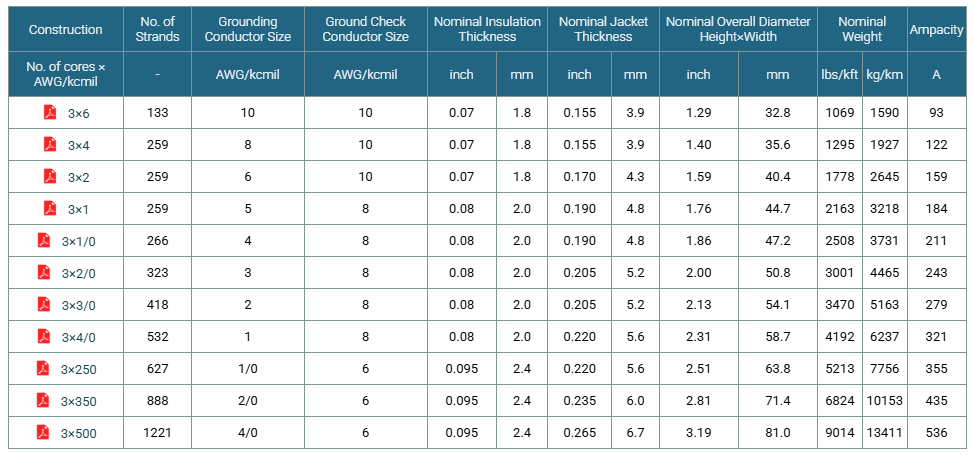
Cable Construction & Materials: Engineering for Extreme Conditions
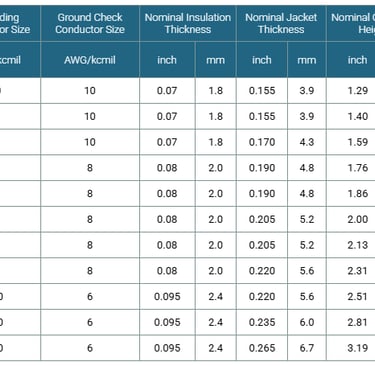
At the core of every SHD-GC cable lies stranded tinned copper conductors engineered for maximum flexibility while maintaining excellent current-carrying capacity. The stranding configuration allows the cable to flex repeatedly without work-hardening and conductor breakage—a critical consideration for portable applications involving frequent repositioning. Tinning the copper strands provides enhanced corrosion resistance compared to bare copper, extending service life in moisture-rich environments.
The EPR insulated cable with ground check design employs ethylene propylene rubber as the primary electrical insulation. EPR offers an exceptional balance of properties: excellent dielectric strength, resistance to heat aging, flexibility across wide temperature ranges, and inherent resistance to moisture and many chemicals. The 90°C continuous operating temperature rating allows the cable to handle sustained high loads without insulation degradation, while the material's resilience ensures reliable performance even during overload conditions.
Surrounding the insulated conductors is a tinned copper or textile braid shield that serves multiple protective functions. This shielding layer provides mechanical protection for the underlying insulation, offers a degree of electromagnetic interference mitigation, and creates a low-impedance ground path that enhances system safety. The braid construction maintains flexibility while providing robust coverage across the cable's entire length.
TPU Jacket Technology & Advantages: Superior Protection for Demanding Applications
The thermoplastic polyurethane jacket represents a significant advancement over traditional rubber compounds used in mining cables. Custom mining cable solutions increasingly specify TPU for its remarkable combination of properties that directly address the most common failure mechanisms in portable power cables. The material exhibits outstanding abrasion resistance—often surpassing conventional rubber by factors of three to five in standardized testing. This translates directly to extended service life when cables are dragged across rock, concrete, or metal surfaces during daily operations.
Oil resistance constitutes another critical advantage. Mining equipment inevitably leaks hydraulic fluids, lubricants, and other petroleum-based substances that rapidly degrade conventional rubber jackets. TPU maintains its integrity even with prolonged exposure to these chemicals, preventing the softening, swelling, or cracking that leads to premature cable replacement. This chemical stability extends to exposure to many solvents, weak acids, and alkalis commonly encountered in mining and processing operations.
The jacket's flame retardancy meets stringent mining safety standards without requiring halogenated compounds that produce toxic fumes during combustion. This becomes particularly important in underground or enclosed mining operations where smoke toxicity poses serious hazards. UV resistance prevents degradation when cables are stored or used outdoors, maintaining jacket properties throughout the cable's service life.
Perhaps most remarkably, TPU maintains flexibility at temperatures as low as -40°C—a temperature at which many rubber compounds become stiff and prone to cracking. This low-temperature performance proves essential for mining operations in northern climates or high-altitude locations where sub-freezing temperatures are routine.
Ground Check Conductor Safety Feature: Real-Time Cable Integrity Monitoring
The integrated ground check conductor safety monitoring system represents a unique safety feature that distinguishes SHD-GC cables from conventional Type G and Type W alternatives. This dedicated conductor, insulated in distinctive yellow for easy identification, runs the entire length of the cable alongside the main power conductors. Its purpose is to provide continuous verification that the cable's grounding system remains intact and functional.
In operation, the ground check conductor connects to monitoring equipment that can detect changes in resistance indicating potential ground path degradation. When a cable experiences mechanical damage that compromises the grounding shield—even if the insulation on power conductors remains initially intact—the monitoring system alerts operators before a dangerous fault condition develops. This early warning capability allows maintenance teams to address cable damage during planned downtime rather than responding to emergency failures.
The ground check system proves particularly valuable in preventing electrical shock hazards. Mining equipment operators work in environments where standing water, metal surfaces, and high-power electrical systems create multiple paths to ground. A compromised cable grounding system can result in equipment frames becoming energized, creating potentially fatal shock hazards. The continuous monitoring provided by the ground check conductor helps ensure that protective grounding remains effective throughout the cable's service period.
Mechanical & Thermal Specifications: Design Parameters for Reliable Operation
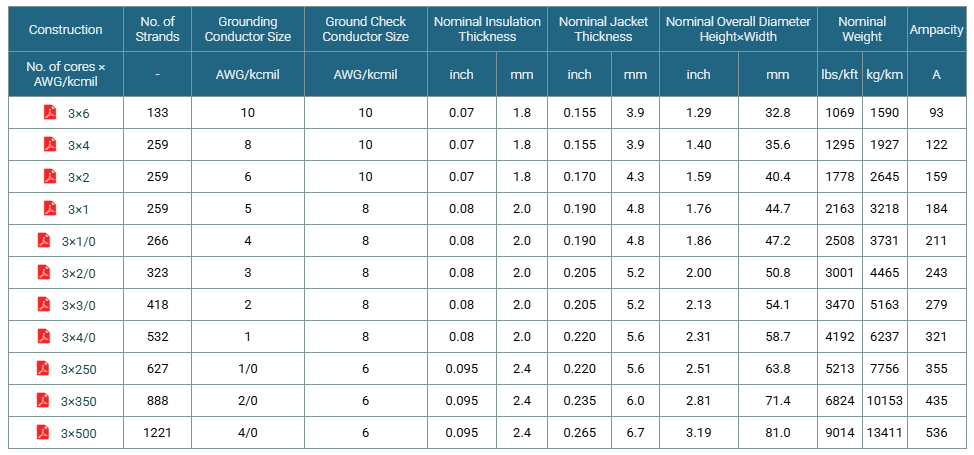
The cable's mechanical specifications reflect careful optimization for portable power applications. The minimum bending radius of 6× outer diameter ensures that the cable can be coiled, deployed, and routed around obstacles without damaging internal components. This relatively generous bending radius—compared to the tighter specifications sometimes seen in fixed installation cables—acknowledges the handling realities of mining operations where cables must be frequently moved, stored on reels, and deployed across irregular terrain.
The +90°C maximum conductor temperature rating provides substantial thermal capacity for handling peak loads and transient overload conditions. In practical terms, this allows the cable to deliver full rated current even in elevated ambient temperatures or when exposed to solar heating. The EPR insulation's thermal performance ensures that even at this maximum temperature, the material maintains its electrical and mechanical properties without accelerated aging.
These thermal and mechanical specifications work in concert with the cable's overall construction to provide operational reliability. The combination of flexible conductor stranding, resilient EPR insulation, and protective TPU jacketing creates a cable assembly that resists the fatigue failures common in portable power applications while maintaining electrical performance throughout its design life.
Customization Options: Tailored Solutions for Specialized Requirements
While the standard SHD-GC configuration with TPU jacket meets the majority of mining cable applications, manufacturers offer several customization options to address specific operational requirements. Alternative jacket materials include chlorosulfonated polyethylene (CSP), polychloroprene (PCP, also known as neoprene), nitrile rubber (NBR), and polyvinyl chloride (PVC). Each material offers particular advantages for specialized environments.
CSP jackets provide enhanced resistance to ozone and weathering for cables used primarily in outdoor applications. PCP offers excellent flame resistance and performs well in moderate chemical exposure scenarios. NBR excels in applications involving heavy oil exposure but less severe mechanical abuse. PVC represents an economical option for less demanding applications where the full performance spectrum of TPU isn't required.
For the most severe applications, two-layer reinforced jacket constructions provide additional mechanical protection. These configurations typically employ an inner layer for chemical and electrical properties combined with an outer layer optimized for abrasion resistance. The dual-layer approach allows engineers to optimize each layer for specific protective functions, creating cables capable of operating in extraordinarily harsh conditions.
Performance Comparison: SHD-GC vs. Alternative Mining Cables
Understanding the SHD-GC vs. Type G cable comparison helps clarify when the premium investment in SHD-GC technology delivers optimal value. Standard Type G mining cables feature rubber jackets and lack the integrated ground check conductor. While Type G cables perform adequately in many mining applications, they typically exhibit shorter service lives in high-abrasion environments and provide no active safety monitoring capability.
Type W cables, designed primarily for welding applications, offer excellent flexibility but lack the robust construction and voltage rating necessary for mining power distribution. The thinner jacket specifications and reduced insulation thickness make Type W unsuitable for portable power feeders serving heavy mining equipment.
The SHD-GC design combines the durability of Type G construction with enhanced materials and the safety advantage of ground integrity monitoring. In applications where cable replacement involves significant downtime costs or where worker safety justifies premium cable investment, SHD-GC technology delivers clear advantages despite higher initial purchase costs.
Cost-Benefit & ROI Analysis: Justifying Premium Cable Investment
While SHD-GC cable 2kV specifications command premium pricing compared to conventional mining cables, the total cost of ownership calculation frequently favors the higher-performance option. Cable replacement in active mining operations involves not only the material cost but also equipment downtime, labor for installation, and potential production losses during changeover.
A typical scenario might involve a dragline operation where standard Type G cable requires replacement every 18-24 months due to jacket degradation and mechanical damage. Upgrading to SHD-GC cable with its superior TPU jacket and robust construction might extend service life to 36-48 months. The elimination of even a single cable replacement cycle saves thousands of dollars in downtime costs while reducing the safety risks associated with cable change-out operations.
The ground check monitoring capability provides additional value through accident prevention. A single prevented electrical incident involving injury or equipment damage easily justifies the incremental cost of SHD-GC technology across an entire mining operation's cable inventory.
Common Cable Problems & Solutions
Problem: Premature jacket cracking in cold weather operations Solution: The TPU jacket's exceptional low-temperature flexibility (-40°C) specifically addresses this issue. Unlike conventional rubber that becomes brittle in freezing conditions, TPU maintains pliability and resistance to impact damage even in arctic mining operations.
Problem: Cable failure from chemical exposure to hydraulic fluids Solution: The chemical resistance profile of TPU jacketing provides superior protection against petroleum-based fluids, hydraulic oils, and most industrial chemicals encountered in mining. For extreme chemical environments, NBR jacket alternatives offer even greater oil resistance.
Problem: Undetected ground system degradation leading to shock hazards Solution: The integrated ground check conductor provides continuous monitoring of ground path integrity, alerting operators to developing problems before dangerous conditions arise. This monitoring capability is unique to SHD-GC designs and cannot be retrofitted to conventional mining cables.
Problem: Excessive heating during peak load operations Solution: The 90°C conductor temperature rating and EPR insulation's superior thermal performance allow the cable to handle sustained high loads without degradation. Proper ampacity derating for ambient temperature and installation conditions ensures thermal performance margins remain adequate.
Installation, Maintenance & Support: Maximizing Cable Performance
Proper installation begins with appropriate cable handling during deployment. The 6×OD minimum bending radius must be observed during coiling and routing to prevent internal damage. Cable reels should be sized appropriately, and cables should never be pulled over sharp edges or corners without adequate protection. When multiple cables run in parallel, sufficient spacing prevents mutual heating that could require ampacity derating.
Maintenance best practices include regular visual inspection for jacket damage, periodic testing of the ground check conductor integrity, and thermal monitoring during peak load periods. Cables showing significant jacket wear should be retired before insulation exposure occurs, as replacing a cable with minor jacket damage prevents the far more serious consequences of insulation failure.
Technical support services typically include application engineering assistance for proper cable selection, ampacity calculations accounting for specific installation conditions, and guidance on complementary components such as cable connectors and strain relief systems. Manufacturers often provide installation training for maintenance personnel to ensure that these premium cables deliver their full performance potential.
Conclusion: Powering Mining Operations with Confidence
The Type SHD-GC three-conductor round portable power cable represents a significant advancement in mining cable technology, combining premium materials, intelligent safety features, and robust construction in a package designed specifically for the most demanding industrial applications. Its 2kV voltage rating, EPR insulation, protective TPU jacket, and unique ground check conductor create a comprehensive solution that addresses the full spectrum of challenges facing portable power cables in mining environments.
For operations where reliability, safety, and long-term cost-effectiveness take precedence, SHD-GC cables deliver quantifiable advantages over conventional alternatives. The investment in premium cable technology pays dividends through extended service life, reduced maintenance requirements, enhanced worker safety, and minimized operational disruptions.
Request Your Custom Cable Solution Today
Contact our technical sales team to discuss your specific mining cable requirements. We provide detailed specification sheets, ampacity calculations for your installation conditions, and expert guidance on selecting the optimal cable configuration for your application. Our engineering support ensures that you receive a cable solution precisely matched to your operational needs, backed by comprehensive technical documentation and ongoing support throughout your cable's service life.
How to Reach Us
Get in Touch
SiteMap
Product Catalogue
Festoon Cable
Shore Power Cable


Scan to add us on WeChat