
Type SHD-GC Three-Conductor Round Portable Power Cable - 5kV TPU Jacket Mining Feeder Cable
Heavy-duty SHD-GC portable power cable for mining equipment. 5kV TPU jacket, ICEA/NEMA certified. Ideal for draglines, shovels, and power feeders. Tinned copper conductor with EPR insulation.
hongjing.Wang@Feichun
11/21/202511 min read
Introduction & Product Overview
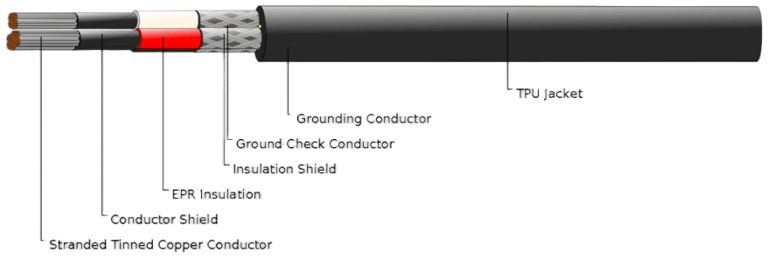
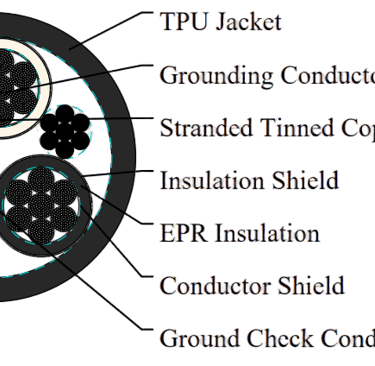
The Type SHD-GC three-conductor round cable represents a pinnacle of engineering in portable power cable technology, specifically designed to meet the demanding requirements of heavy-duty mining and industrial applications. This heavy-duty power cable features a 5kV voltage rating with a robust thermoplastic polyurethane (TPU) jacket, making it an ideal solution for draglines, shovels, dredging equipment, and various mobile power feeder systems operating in challenging environments.
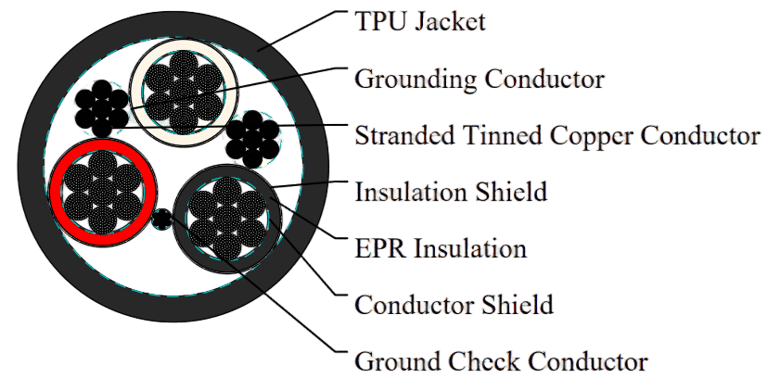
Engineered in full compliance with ICEA S-75-381 and NEMA WC 58 standards, this mining feeder cable delivers exceptional performance across a wide temperature range while maintaining superior flexibility and durability. The three-conductor cable construction incorporates stranded annealed tinned copper conductors, EPR insulation, and a ground check conductor system that ensures both operational efficiency and enhanced safety for personnel and equipment.
The primary advantage of the SHD-GC portable power cable lies in its versatile construction, which balances mechanical strength with flexibility, allowing deployment in applications where cables must endure continuous movement, abrasion, moisture exposure, and temperature extremes. Whether powering a massive dragline in an open-pit mine or supplying electricity to a mobile drilling rig, this mining equipment cable consistently delivers reliable performance under conditions that would compromise lesser alternatives.
Applications & Use Cases in Mining and Industrial Operations
Dragline Equipment Power Supply
Mining dragline power cable applications represent one of the most demanding environments for portable power cables. Draglines, among the largest mobile equipment in mining operations, require continuous, reliable electrical power to operate their massive booms and buckets. The Type SHD-GC cable excels in these applications due to its exceptional flexibility, which allows it to trail behind these behemoths as they reposition across mining sites. The TPU jacket mining cable construction resists the abrasive conditions created by constant contact with rocks, soil, and mining debris, while the tinned copper mining cable conductors maintain excellent conductivity despite exposure to moisture and mineral-laden environments.
Excavators and Shovels
Heavy-duty shovel feeder cable requirements demand products that can withstand repeated flexing cycles and significant mechanical stress. Electric shovels in mining operations operate continuously, loading material into haul trucks while pivoting and extending their dippers through countless cycles daily. The SHD-GC power feeder cable provides the necessary durability through its robust construction, featuring a minimum bending radius of 6 times the outer diameter, which prevents conductor damage during the cable's constant movement. The EPR insulation portable cable design maintains its integrity even when subjected to sharp bends and twists inherent to shovel operations.
Dredging Operations
Dredge and drill power cable applications present unique challenges, including prolonged exposure to water, sediment, and hydraulic fluids. The TPU jacket offers exceptional resistance to moisture ingress, oils, and chemicals commonly encountered in marine and waterway dredging operations. The cable's construction ensures that electrical integrity remains intact even when partially or fully submerged, making it an reliable choice for hydraulic and electric dredges operating in rivers, lakes, and coastal areas.
Drill Power Supply and Mobile Equipment
Mobile equipment power feeder systems, particularly those supporting drilling operations, benefit significantly from the SHD-GC cable's high-temperature mining cable capabilities. Drilling equipment generates substantial heat during operation, and power cables must maintain their insulation properties at elevated temperatures. With a maximum operating temperature of +90°C, this portable power cable continues to perform reliably even when exposed to high ambient temperatures or when routed near heat-generating machinery.
Technical Specifications & Cable Construction
Conductor Properties and Design
The conductor system forms the foundation of the Type SHD-GC cable's exceptional performance. Utilizing stranded annealed tinned copper conductors, the cable achieves optimal current-carrying capacity while maintaining the flexibility necessary for portable applications. The tinning process—applying a thin layer of tin to copper conductors—provides multiple benefits that significantly extend cable service life.
Tinned copper offers superior corrosion resistance compared to bare copper, particularly in mining environments where cables encounter moisture, mineral deposits, and varying pH levels in soil and water. The tin coating acts as a sacrificial barrier, preventing oxidation of the underlying copper and maintaining low-resistance electrical connections throughout the cable's operational life. This corrosion resistance proves especially valuable in coastal mining operations or applications involving exposure to sulfur compounds and other corrosive elements.
Furthermore, tinned copper conductors facilitate superior termination reliability. When installing cable ends and creating electrical connections, the tin coating prevents copper oxidation at termination points, ensuring long-term connection integrity even in harsh environmental conditions.
Insulation System Engineering
The EPR (Ethylene Propylene Rubber) insulation system represents a critical component of the SHD-GC cable's design, providing exceptional dielectric strength rated for 5kV power cable applications. EPR insulation delivers several performance advantages over alternative insulation materials, particularly in portable power cable applications.
EPR demonstrates excellent flexibility across a wide temperature range, from extreme cold to the maximum operating temperature of +90°C. This flexibility remains consistent throughout the cable's service life, unlike some insulation materials that become brittle with age or thermal cycling. The rubber-like properties of EPR also contribute to the cable's ability to absorb mechanical shocks and vibrations without insulation cracking or delamination.
The insulation shield integrated into the cable construction serves multiple functions. It provides a semiconductive layer that ensures uniform electric field distribution across the conductor surface, preventing voltage concentration points that could lead to insulation breakdown. Additionally, the shield facilitates ground fault detection, a critical safety feature in mining operations where rapid fault identification can prevent equipment damage and protect personnel.
The ground check conductor, incorporated within the cable assembly, enables continuous monitoring of insulation integrity. This conductor runs parallel to the main power conductors and connects to ground fault monitoring systems, allowing operators to detect insulation degradation before it progresses to complete failure. This predictive maintenance capability significantly reduces unexpected downtime and enhances operational safety.
Jacket Material Technology
The thermoplastic polyurethane (TPU) jacket distinguishes the SHD-GC cable from alternatives utilizing traditional rubber or PVC outer coverings. TPU offers an exceptional combination of properties that address the specific challenges of mining and heavy industrial applications.
Abrasion resistance represents perhaps the most critical jacket property for portable power cables. TPU demonstrates superior resistance to wear when dragged across rough surfaces, including rocks, concrete, and metal surfaces commonly encountered in mining operations. Comparative testing shows TPU jackets outlasting equivalent PVC and rubber compounds by significant margins in severe abrasion environments.
Chemical resistance proves equally important. Mining operations expose cables to diesel fuel, hydraulic oils, lubricants, and various industrial chemicals. The TPU jacket maintains its integrity when in contact with these substances, preventing jacket deterioration that could expose underlying cable components to environmental damage. Additionally, TPU resists acids, alkalis, and most solvents encountered in industrial settings.
Weather durability extends the cable's service life in outdoor applications. TPU exhibits excellent resistance to ultraviolet radiation, ozone, and temperature extremes. Unlike natural rubber compounds that crack and degrade under prolonged sun exposure, TPU maintains its mechanical properties through years of outdoor service.
For applications requiring enhanced protection, the Type SHD-GC cable can be manufactured with alternative jacket materials. Chlorosulfonated polyethylene (CSP) offers superior weather and ozone resistance for cables in permanent outdoor installations. Polychloroprene (PCP) provides excellent oil resistance combined with good weather performance. Nitrile rubber (NBR) excels in petroleum-based fluid environments. Standard PVC jackets offer an economical option for less demanding applications.
A two-layer jacket option incorporates reinforcing fiber between inner and outer jacket layers, substantially increasing the cable's resistance to cuts, tears, and mechanical damage. This construction proves valuable in applications involving particularly severe mechanical hazards.


Performance Characteristics and Operational Parameters
Voltage Rating and Electrical Properties
The 5kV voltage rating qualifies the Type SHD-GC cable for medium-voltage power distribution in mining and industrial applications. This voltage class provides an optimal balance between power transmission efficiency and safety considerations for mobile equipment. The cable's insulation system provides adequate dielectric strength margins above the rated voltage, ensuring safe operation even under transient voltage conditions that occasionally occur in portable power systems.
Thermal Performance Parameters
Operating temperature capabilities directly impact cable current-carrying capacity and application versatility. The maximum operating temperature of +90°C allows the SHD-GC cable to handle higher current loads than cables rated for lower temperatures. This thermal performance proves particularly valuable in applications where cables may be coiled on reels, bundled with other cables, or routed through confined spaces with limited heat dissipation.
The EPR insulation maintains its mechanical and electrical properties throughout the temperature range, from cold weather operation below -40°C to continuous operation at maximum temperature. This thermal stability ensures consistent performance regardless of ambient conditions or operational heat generation.
Mechanical Flexibility Specifications
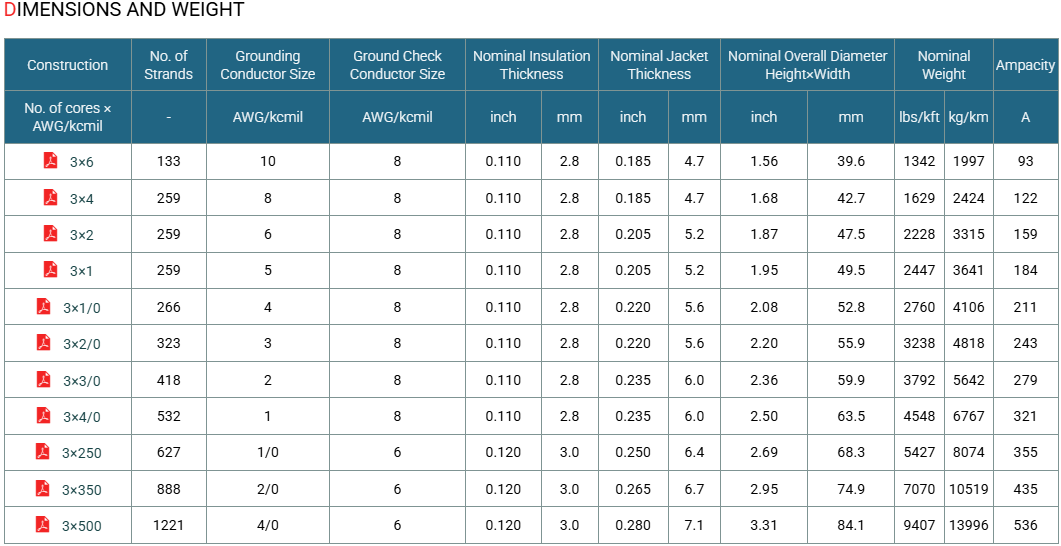
The minimum bending radius specification of 6 times the outer diameter (6×OD) provides guidance for proper cable handling and installation. This relatively small bending radius—compared to some industrial cables requiring 12×OD or greater—reflects the cable's inherent flexibility and ability to navigate tight routing paths and cable reels without risking conductor or insulation damage.
Maintaining proper bending radius proves critical for cable longevity. Excessive bending stresses conductors, potentially causing strand breakage, and can crack insulation, leading to premature failure. Installation crews must observe bending radius limitations during cable deployment, particularly when routing cables around equipment corners or loading cables onto reels.
Standards Compliance and Certifications
ICEA and NEMA Standards
Compliance with ICEA S-75-381 and NEMA WC 58 standards ensures the Type SHD-GC cable meets rigorous industry requirements for portable power cables. These standards specify conductor construction, insulation properties, jacket performance, and testing protocols that verify cable suitability for demanding applications.
ICEA S-75-381 specifically addresses portable and mine power cables, establishing requirements for conductor stranding, insulation thickness, voltage ratings, and jacket properties. Cables manufactured to this standard undergo extensive testing including dielectric strength tests, insulation resistance measurements, cold bend tests, and accelerated aging evaluations.
ASTM Material Standards
Adherence to ASTM B 172 and ASTM B 33 standards governs the quality of copper conductors used in the cable. ASTM B 172 specifies requirements for tinned copper conductors, including tin coating thickness, adhesion properties, and electrical conductivity. ASTM B 33 establishes standards for bare and tinned copper conductor stranding, ensuring proper conductor construction for flexibility and current-carrying capacity.
Canadian Standards Recognition
CAN/CSA C22.2 No. 96 recognition provides certification for use in Canadian mining and industrial operations, ensuring the cable meets Canadian electrical safety requirements. This certification proves essential for mining operations in Canada and for international mining companies standardizing equipment specifications across multiple jurisdictions.


Common Cable Challenges and Solutions
Problem: Premature Jacket Wear in High-Abrasion Environments
Question: Why does the cable jacket wear faster than expected in our dragline application?
Solution: Premature jacket wear typically results from exceeding the cable's abrasion resistance limits or improper cable handling. Ensure the cable route minimizes dragging across sharp edges and highly abrasive surfaces. Consider implementing cable guides, protective conduits for high-wear sections, or upgrading to the two-layer jacket option with reinforcing fiber for enhanced mechanical protection. Regular inspection and rotation of cable position on reels can distribute wear more evenly. Additionally, verify that the cable specification matches application severity—extremely abrasive environments may require CSP or reinforced jacket alternatives.
Problem: Reduced Flexibility in Cold Weather Operations
Question: The cable becomes stiff and difficult to handle during winter operations. Is this normal?
Solution: While EPR insulation maintains good flexibility at low temperatures, all cable materials experience some stiffening in extreme cold. Minimize this effect by storing cables in heated facilities when not in use and allowing time for gradual warm-up before deployment in cold conditions. When operating in consistently cold environments below -30°C, pre-heating cable reels in heated enclosures before use can significantly improve handling characteristics. Avoid sharp bends when cable temperature is below 0°C, as insulation and jacket materials are more susceptible to cracking when cold and flexed. The 6×OD minimum bending radius should be increased in cold conditions to prevent damage.
Problem: Ground Fault Indications Without Obvious Cable Damage
Question: Our ground fault monitoring system shows intermittent faults, but visual inspection reveals no obvious cable damage. What should we investigate?
Solution: Intermittent ground faults often indicate insulation degradation not visible externally. The ground check conductor system detects insulation breakdown before it becomes severe. Common causes include moisture ingress through damaged jacket areas too small to notice visually, insulation damage from excessive bending or crushing, or chemical contamination from prolonged contact with incompatible substances. Perform a systematic insulation resistance test using a megohmmeter to identify the fault location. Inspect cable ends and terminations carefully—many "cable" failures actually originate at poorly made connections or damaged cable entry points. If insulation damage is confirmed, that cable section must be replaced or reconditioned as insulation breakdown progresses rapidly once initiated.
Problem: Overheating During High-Load Operations
Question: The cable feels excessively hot during peak equipment operation. Could this damage the cable?
Solution: Verify that the cable conductor size matches the equipment's current draw. Undersized conductors generate excessive heat through resistive losses. Check that cable is properly deployed—coiled cable on reels cannot dissipate heat effectively and must be fully unwound during operation. Ensure good electrical connections at terminations, as high-resistance connections generate significant heat. If the cable is properly sized and deployed but still runs hot, ambient temperature or cable bundling may be restricting heat dissipation. The maximum operating temperature of +90°C refers to conductor temperature, which is higher than jacket surface temperature. However, if the jacket feels uncomfortably hot to touch (above approximately 60-70°C), investigate for current overload or connection problems.
Problem: Jacket Cracking After Extended Sun Exposure
Question: The cable jacket is developing fine cracks after several years of outdoor storage. Is the cable still safe to use?
Solution: TPU jackets offer excellent UV resistance, but no material is completely immune to degradation from prolonged sun exposure. Fine surface crazing may be cosmetic, but deeper cracks can expose insulation to moisture and mechanical damage. Inspect cracked areas carefully—if cracks penetrate through the jacket to insulation, the cable should be removed from service. For cables with minor surface crazing only, continued use may be acceptable for low-risk applications, but retirement should be planned. Prevent jacket UV damage by storing cables indoors or under protective covers when not in use. For permanent outdoor installations, consider CSP jacket alternatives that offer superior weather resistance.
Problem: Difficulty Achieving Proper Cable Terminations
Question: What are the key considerations for properly terminating this cable to prevent connection failures?
Solution: Successful terminations require meticulous attention to several factors. Remove the outer jacket carefully to avoid nicking conductor insulation. Strip the EPR insulation cleanly to the specified length—ragged or uneven insulation edges can cause voltage stress points. Clean tinned copper conductors thoroughly before installing lugs or terminals—contamination prevents proper electrical contact. Use compression-type connectors appropriate for the conductor size and ensure complete compression with properly calibrated tools. The insulation shield must be properly terminated and grounded according to manufacturer specifications to maintain the cable's electrical properties. Apply appropriate stress relief to prevent movement from stressing the termination point. Finally, protect completed terminations from moisture ingress and mechanical damage with proper sealing and strain relief methods.
Installation and Maintenance Best Practices
Proper installation begins with careful cable route planning. Identify the path that minimizes sharp bends, reduces exposure to mechanical hazards, and allows adequate drainage to prevent water accumulation. When installing in cable trays or conduits, ensure sufficient space for heat dissipation and avoid cramming cables into undersized raceways.
During deployment, observe minimum bending radius requirements at all times. Use cable rollers or guides when pulling cable to reduce friction and prevent jacket abrasion. Never use the cable to pull or lift equipment—dedicated rigging equipment should handle mechanical loads.
Regular inspection protocols should document jacket condition, noting any cuts, abrasions, or cracking. Check cable ends and terminations for corrosion, loose connections, or mechanical damage. Test insulation resistance annually or more frequently in harsh environments, recording results to track degradation trends over time.
Maintenance procedures should include cleaning cables periodically to remove contaminants that might attack jacket materials. Store spare cables in cool, dry locations away from direct sunlight, ozone sources, and chemical exposure. Coil cables with adequate diameter to avoid exceeding minimum bending radius during storage.
Conclusion
The Type SHD-GC three-conductor round portable power cable represents an engineered solution for demanding mining and industrial power distribution applications. Its combination of tinned copper conductors, EPR insulation, TPU jacket protection, and compliance with ICEA S-75-381 and NEMA WC 58 standards delivers reliable performance in environments that challenge lesser cables.
From dragline operations in open-pit mines to dredging equipment in marine environments, this mining equipment cable consistently provides the durability, flexibility, and electrical performance that keep critical equipment operating. Understanding proper selection, installation, and maintenance practices ensures maximum return on cable investment through extended service life and reduced operational disruptions.
For specifications, customization options, or technical consultation on your specific application requirements, contact qualified cable suppliers who can provide detailed engineering support to ensure optimal cable selection for your operational needs.
How to Reach Us
Get in Touch
SiteMap
Product Catalogue
Festoon Cable
Shore Power Cable


Scan to add us on WeChat