
Type SHD-GC Three-Conductor Round Portable Power Cable, CPE Jacket 15kV | Heavy-Duty EPR Insulated Mining Cable for Shearers & Drills
Discover Type SHD-GC three-conductor round portable power cable with CPE jacket 15kV. Heavy-duty EPR insulated for mining shearers, drills & shovels. ICEA S-75-381 compliant, +90°C rated. Shop now!
hongjing.Wang@Feichun
1/16/202610 min read
Introduction to SHD-GC 15kV Portable Power Cable
In the demanding world of underground mining and heavy industrial operations, reliable power transmission is not merely a convenience—it is a critical safety and operational necessity. The Type SHD-GC three-conductor round portable power cable with CPE jacket rated at 15kV represents a pinnacle of engineering designed specifically for the most challenging environments where equipment mobility, mechanical stress, and electrical reliability converge.
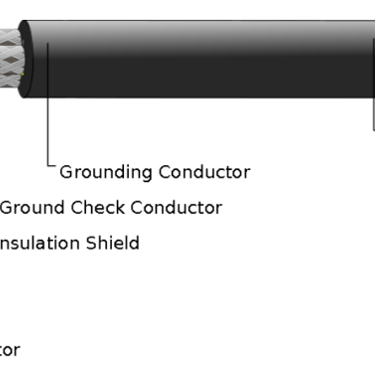
This heavy-duty three-conductor SHD-GC mining cable 15kV for longwall shearers and continuous miners has been engineered to withstand the punishing conditions found in coal mines, hard rock operations, quarries, and dredging applications. Unlike standard industrial cables, the SHD-GC configuration incorporates multiple layers of protection, advanced insulation materials, and robust shielding systems that ensure consistent performance even when subjected to dragging, crushing, moisture exposure, and temperature extremes.
The superior durability of this cable stems from its reinforced extra-heavy-duty chlorinated polyethylene (CPE) jacket, which provides exceptional resistance to abrasion, cuts, oils, and chemicals commonly encountered in mining environments. The flexibility designed into the cable construction allows it to navigate tight bends around machinery and through confined spaces without compromising the integrity of internal conductors or insulation systems. Most importantly, the comprehensive safety features—including multiple grounding systems and conducting shields—protect both equipment and personnel from electrical faults that could prove catastrophic in underground operations.
Key Applications for Maximum Performance
The versatility of the 15kV portable power cable for mobile mining equipment makes it indispensable across numerous heavy industrial applications where conventional fixed wiring would prove impractical or impossible.
Longwall Mining Operations: In longwall coal mining systems, shearers travel along coal faces while connected to trailing cables that must flex continuously without failure. The SHD-GC cable's construction specifically addresses this repetitive flexing requirement, with its reinforced jacket and optimized conductor stranding preventing fatigue failures that plague lesser cables. The cable powers shearer drums, conveyor systems, and roof support controls while maintaining electrical integrity through thousands of operational cycles.
Continuous Miners: These track-mounted machines cut coal or ore from working faces while moving back and forth, requiring cables that can handle constant dragging across rough mine floors. The SHD-GC cable for heavy industrial shovels and continuous miners incorporates abrasion-resistant materials throughout its construction, with the CPE jacket providing a protective barrier against the sharp rock fragments and coal particles that would quickly damage ordinary cable jackets.
Electric Shovels and Draglines: Surface mining operations employ massive electric shovels and draglines that consume enormous amounts of power while moving across uneven terrain. These machines require portable power cables capable of delivering reliable 15kV power through connections that are repeatedly made and broken as equipment repositions. The mechanical robustness of the SHD-GC design ensures connection integrity even in these demanding duty cycles.
Dredging Operations: Marine and riverine dredging equipment operates in environments where cables face unique challenges including moisture exposure, submersion, and the mechanical stresses of floating platforms. The water-resistant properties of the CPE jacket, combined with the corrosion-resistant tinned copper conductors, make this cable ideally suited for dredge pump motors and cutter head drives.
Heavy-Duty Drill Rigs: Whether drilling blast holes in quarries or creating exploration boreholes, drill rigs require portable power connections that can be relocated frequently while maintaining safety and performance. The flexibility and durability of this cable enable rapid setup and teardown without compromising operational safety.
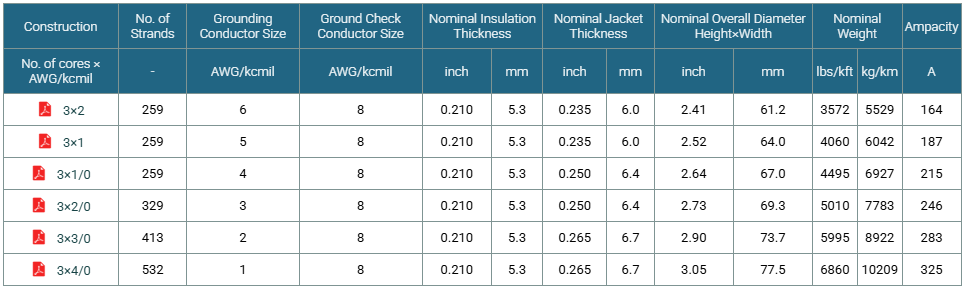
Standards and Compliance for Global Reliability
Industrial power cables must meet rigorous international standards to ensure safety and interoperability across different mining jurisdictions. This ICEA S-75-381 compliant 15kV CPE jacket cable for global mining standards satisfies multiple certification requirements:
ICEA S-75-381/NEMA WC 58: The definitive North American standard for portable and power feeder cables for mining applications, specifying construction requirements, testing protocols, and performance criteria
ASTM B 172: Ensures proper stranding and lay of rope-lay stranded copper conductors, critical for flexibility and fatigue resistance
ASTM B 33: Defines specifications for tinned soft or annealed copper wire, guaranteeing corrosion resistance and reliable electrical connections
CAN/CSA C22.2 No. 96: Canadian safety standard for portable power cables used in mines, covering additional safety requirements specific to Canadian operations
Compliance with these overlapping standards ensures that the cable performs reliably regardless of where mining operations occur, providing mine operators with confidence that their equipment meets or exceeds regulatory requirements in North America and many international jurisdictions that reference these standards.
The multi-standard compliance also facilitates equipment mobility between different mine sites and simplifies procurement processes for mining companies operating in multiple countries, as a single cable specification can satisfy diverse regulatory environments.
Comprehensive Cable Construction Details
Understanding the layered construction of this EPR insulated SHD-GC three-conductor cable with CPE jacket 15kV reveals why it outperforms conventional industrial cables in demanding applications.
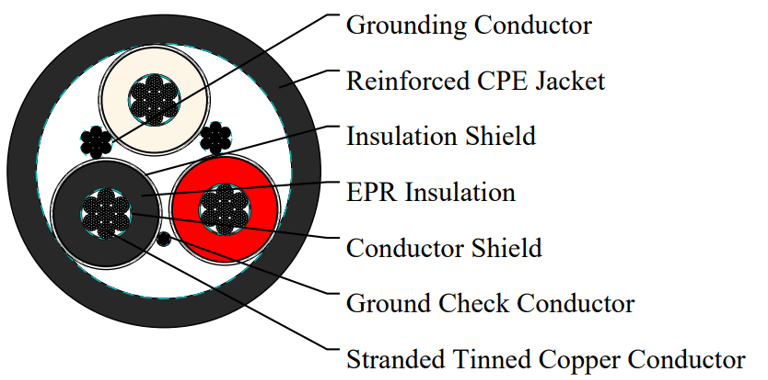
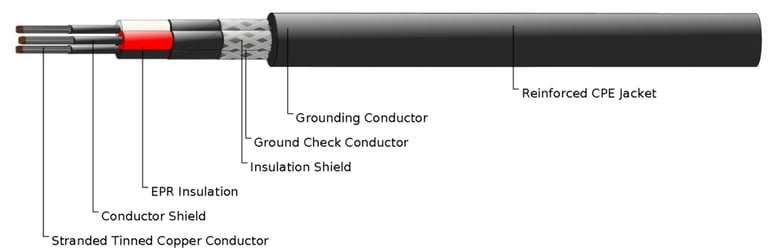
Conductor System: At the cable's core are three phase conductors constructed from stranded annealed tinned copper conforming to ASTM B 33 specifications. The tinning process deposits a thin layer of tin onto each copper strand, providing corrosion protection in damp mine environments while maintaining excellent electrical conductivity. The rope-lay stranding configuration per ASTM B 172 optimizes flexibility, allowing the cable to bend repeatedly without work-hardening the copper strands that would eventually lead to fatigue failures.
Insulation and Shielding Layers: Each phase conductor is surrounded by a semiconducting conducting layer that ensures uniform electrical stress distribution across the insulation surface, preventing corona discharge and extending cable life. Over this layer, ethylene propylene rubber (EPR) insulation provides the primary dielectric barrier, offering excellent electrical properties combined with outstanding resistance to heat, ozone, and moisture. EPR maintains its insulating properties across wide temperature ranges and resists degradation from the oils and chemicals present in mining equipment.
A semiconducting conducting tape encircles the EPR insulation, followed by a tinned copper and textile braid shield that serves multiple functions: it provides mechanical protection to the insulation, creates an equipotential surface that prevents dangerous touch voltages on the cable exterior, and offers a low-impedance path for fault currents that ensures rapid protective device operation during ground faults.
Ground Check and Grounding Systems: A dedicated ground check conductor, consisting of tinned copper with yellow polypropylene insulation, runs alongside the phase conductors. This smaller conductor allows ground continuity testing without disconnecting the main cable, enabling verification of grounding system integrity while equipment remains energized—a crucial safety feature in mining operations where downtime carries significant costs.
The main grounding conductor, also constructed from tinned copper, provides the primary path for fault currents and ensures that all metallic equipment frames remain at ground potential, protecting personnel from electric shock hazards.
Assembly and Jacketing: The three insulated and shielded phase conductors, along with the ground check and grounding conductors, are assembled in a round configuration with appropriate fillers to maintain cable geometry. Multiple serving and binding tapes secure this assembly before application of the final protective jacket.
The reinforced extra-heavy-duty CPE jacket in black represents the cable's first line of defense against mechanical damage. Chlorinated polyethylene offers superior abrasion resistance compared to PVC or standard rubber compounds, while its chemical structure provides excellent resistance to oils, greases, and the various chemicals used in mining operations. The "extra-heavy-duty" designation indicates wall thickness substantially greater than standard jacket specifications, providing additional cut-through resistance and mechanical protection.
Customization Options for Diverse Operating Conditions
While the standard CPE jacket configuration addresses the majority of mining applications, operational environments vary significantly, and custom 15kV portable power cable options for dredges and drills enable optimization for specific conditions.
Alternative Jacket Materials:
CSP (Chlorosulfonated Polyethylene): Offers enhanced ozone resistance and maintains flexibility at lower temperatures than CPE, making it preferable for mines in extremely cold climates or high-altitude operations
PCP (Polychloroprene): Provides excellent flame resistance and maintains good flexibility across temperature ranges, suitable for operations with heightened fire risk concerns
NBR (Nitrile Butadiene Rubber): Delivers superior oil and hydrocarbon resistance, ideal for equipment operating in proximity to fuel storage or hydraulic systems
PVC (Polyvinyl Chloride): A cost-effective option for less demanding applications where abrasion resistance requirements are moderate
Advanced Reinforcement Options: For the most severe mechanical stress environments—such as cables dragged across sharp rock surfaces or subject to crushing forces—a two-layer jacket construction incorporating reinforcing fiber between jacket layers provides extraordinary mechanical protection. This configuration embeds aramid or textile reinforcing fibers within the jacket structure, dramatically increasing tear resistance and cut-through protection while maintaining the cable's flexibility.
Custom configurations can also address specific voltage ratings, conductor sizes, or special color-coding requirements to match particular mine site standards or facilitate cable identification in complex installations.


Mechanical and Thermal Specifications
Proper cable installation and operation depend on understanding and adhering to the mechanical and thermal limits of the 90°C rated heavy-duty SHD-GC cable for high-temp mining applications.
PropertySpecificationSignificanceMinimum Bending Radius8×OD (Outer Diameter)Prevents insulation damage and conductor stress during installation and operationMaximum Conductor Temperature+90°CContinuous operating limit; exceeding this accelerates insulation agingVoltage Rating15kVMaximum line-to-line voltage for safe operationTemperature Range-40°C to +90°COperating envelope for maintaining electrical and mechanical properties
The minimum bending radius of eight times the cable's outer diameter represents a critical installation parameter. Bending the cable more tightly can compress insulation, create stress points in conductors, and potentially damage shielding systems. In practice, this means a cable with a 50mm outer diameter should never be bent around a radius smaller than 400mm. Cable reels, sheaves, and routing paths must all accommodate this requirement to prevent premature failure.
The maximum conductor temperature of +90°C reflects the thermal rating of the EPR insulation system. While the insulation can withstand brief temperature excursions beyond this point, continuous operation at or near maximum temperature accelerates chemical aging processes within the insulation, gradually reducing its dielectric strength and mechanical properties. Proper conductor sizing ensures that expected load currents maintain conductor temperatures well below this limit under normal operating conditions.
Understanding these specifications enables mine engineers to design cable systems that deliver long service life, avoiding the costs and safety risks associated with premature cable failures in underground environments where replacement can be extremely difficult and dangerous.
Why Choose This SHD-GC CPE Jacket Cable?
The Type SHD-GC 15kV three-conductor portable power cable delivers tangible operational advantages that translate directly to improved safety, reduced downtime, and lower total cost of ownership.
Corrosion Resistance: The tinned copper conductors resist oxidation and corrosion in the damp, chemically aggressive environments typical of underground mines. This protection ensures reliable electrical connections and prevents the resistance increases that corroded copper develops, which can lead to heating issues and connection failures.
Abrasion Protection: The reinforced CPE jacket withstands the mechanical abuse of being dragged across mine floors, run over by equipment, and impacted by falling rock. This durability prevents jacket breaches that would expose internal components to moisture and contamination, extending cable service life substantially beyond what ordinary jackets provide.
Electrical Safety: Multiple grounding and shielding systems protect personnel and equipment from electrical faults. The low-impedance fault current paths ensure that protective devices operate rapidly during ground faults, limiting fault duration and reducing arc flash hazards. The ground check conductor enables ongoing verification of grounding system integrity without interrupting operations.
Operational Flexibility: The optimized mechanical design allows cables to navigate the confined spaces and tight bends common in mining operations while maintaining the flexibility needed for equipment mobility. This flexibility reduces physical strain on cable handling equipment and personnel during cable deployment and retrieval.
Temperature Performance: The +90°C rating enables higher current-carrying capacity compared to lower-rated cables, potentially allowing use of smaller, lighter cables for given loads. The wide operating temperature range ensures consistent performance from arctic surface operations to hot, deep underground workings.
For operations managers seeking reliable power solutions for critical mining equipment, contact qualified suppliers for detailed specifications and quotes on Type SHD-GC 15kV three-conductor portable power cable tailored to your specific application requirements.
Frequently Asked Questions
What is the minimum bending radius for SHD-GC 15kV mining cable during installation?
The minimum bending radius is eight times the cable's outer diameter (8×OD). For example, if your cable has an outer diameter of 60mm, the minimum bending radius would be 480mm. Never bend the cable more sharply during installation or operation, as this can damage the insulation, stress conductors, and compromise shielding integrity. When installing on cable reels or routing around obstacles, always verify that bend radii exceed this minimum to ensure long cable service life.
Is this EPR insulated cable suitable for continuous miners operating in wet mine conditions?
Yes, the EPR insulation combined with the CPE jacket provides excellent moisture resistance suitable for wet mining environments. The semiconducting layers and shields are designed to operate reliably even when moisture penetrates the outer jacket. Additionally, the tinned copper conductors resist corrosion from moisture exposure. However, cable terminations and connections must be properly sealed using appropriate glands and sealing compounds to prevent water ingress at these vulnerable points. Regular inspection of connections remains essential in particularly wet operations.
How do I troubleshoot a ground fault indication on my SHD-GC cable?
Begin by de-energizing the circuit and using the ground check conductor to verify grounding system continuity. Test insulation resistance using a megohmmeter rated for at least twice the cable's operating voltage—apply test voltage between each phase conductor and ground, as well as between phase conductors. Readings below 1 megohm indicate potential insulation degradation. Physically inspect the entire cable length for visible jacket damage, paying particular attention to areas where the cable contacts sharp edges or passes through sheaves. Check all terminations for moisture ingress, loose connections, or damaged sealing. If insulation testing indicates a fault but no visible damage is apparent, systematic sectioning may be necessary to isolate the fault location.
What replacement interval should I plan for SHD-GC cables in longwall shearer applications?
Replacement intervals depend heavily on operational factors including coal abrasiveness, shearer duty cycle, cable handling practices, and environmental conditions. Well-maintained cables in favorable conditions can exceed 24 months of continuous operation, while harsh conditions may necessitate replacement every 12-18 months. Implement a proactive maintenance program including monthly visual inspections for jacket damage, quarterly electrical testing of insulation resistance, and immediate investigation of any ground fault indications. Establish retirement criteria based on jacket wear depth, insulation resistance trends, and accumulated mechanical damage rather than arbitrary time intervals. Detailed maintenance records enable data-driven replacement decisions that optimize both safety and cable investment.
Can the SHD-GC cable operate safely at temperatures below -40°C?
The standard CPE jacket specification indicates a lower temperature limit of -40°C, below which the jacket may become stiff and susceptible to cracking during flexing. If your operation experiences temperatures below this threshold, specify CSP (chlorosulfonated polyethylene) jacket material, which maintains flexibility at significantly lower temperatures. Additionally, avoid flexing or coiling cables when they are at extremely low temperatures—allow them to warm naturally before manipulation when possible. For permanently installed cables that don't require frequent flexing, operation slightly below rated temperature may be acceptable, but consult with cable engineers regarding your specific application conditions.
What causes premature shield failure in mining cables, and how can it be prevented?
Shield failures typically result from mechanical damage to the cable that compromises shield continuity or from corrosion of shield wires where moisture has penetrated damaged jackets. Prevention strategies include: implementing proper cable handling procedures that minimize dragging over sharp surfaces; using cable guides and sheaves at appropriate intervals to reduce ground contact; maintaining bend radius specifications during operation; promptly repairing minor jacket damage before moisture penetrates to shield layers; ensuring proper drainage in cable trenches to prevent water accumulation; and selecting jacket materials with superior cut resistance for particularly abrasive environments. Regular electrical testing can detect shield degradation before complete failure occurs, enabling proactive cable replacement or repair.
The Type SHD-GC three-conductor round portable power cable with CPE jacket rated at 15kV represents proven technology for the most demanding mobile mining applications. Its comprehensive engineering approach—from tinned copper conductors through multiple shielding systems to reinforced protective jackets—delivers the reliability and safety that underground operations demand. Whether powering longwall shearers, continuous miners, electric shovels, or dredging equipment, this cable provides the durability and performance necessary for long-term operational success in harsh industrial environments.
How to Reach Us
Get in Touch
SiteMap
Product Catalogue
Festoon Cable
Shore Power Cable


Scan to add us on WeChat